Tag: recipes

  • Labour day steak

    Labour day steak


    Labour Day is a public holiday most Australians enjoy without necessarily thinking about why it exists. We welcome the long weekend, some sleep in, some light the barbecue, and some people spend time with family and friends.

    I welcome the long weekend; I get out of bed before dawn to go for a walk and I am happy spending it alone on my couch watching TV. Mind you I did go into the office today to complete some compulsory training in peace and quiet.

    Behind the public holiday lies a story of workers who argued for something many of us take for granted: a reasonable balance between work, recreation, and rest.

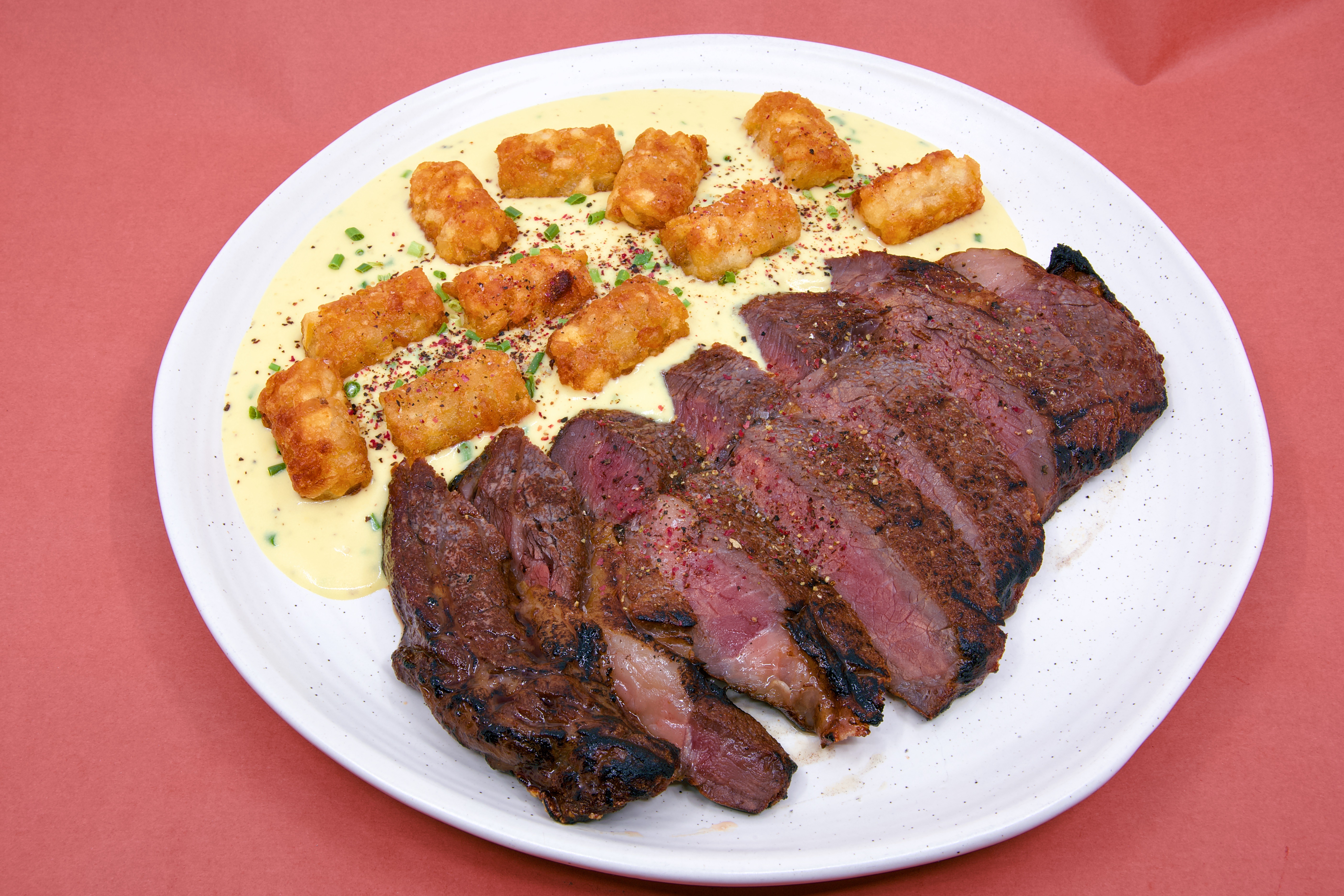
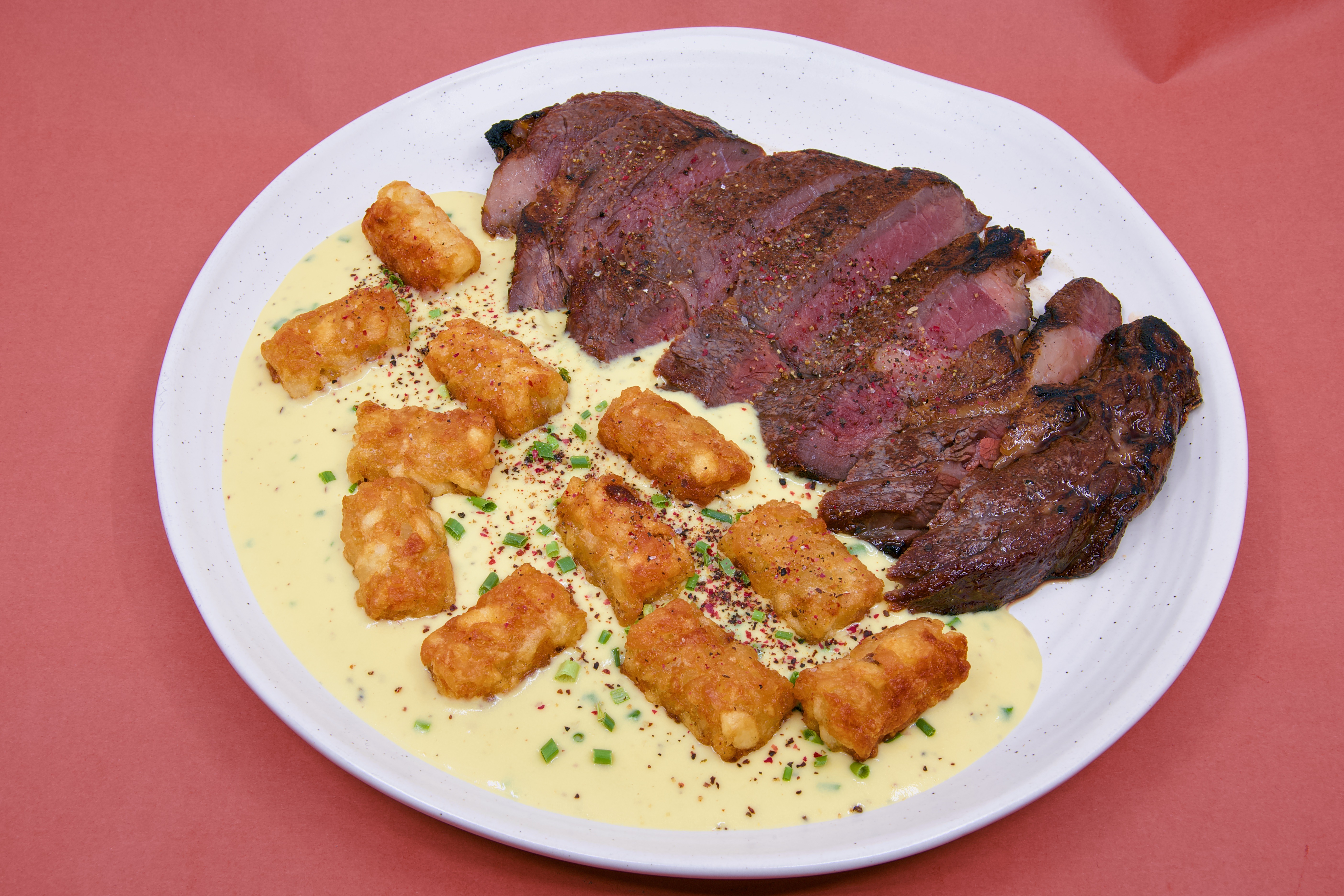
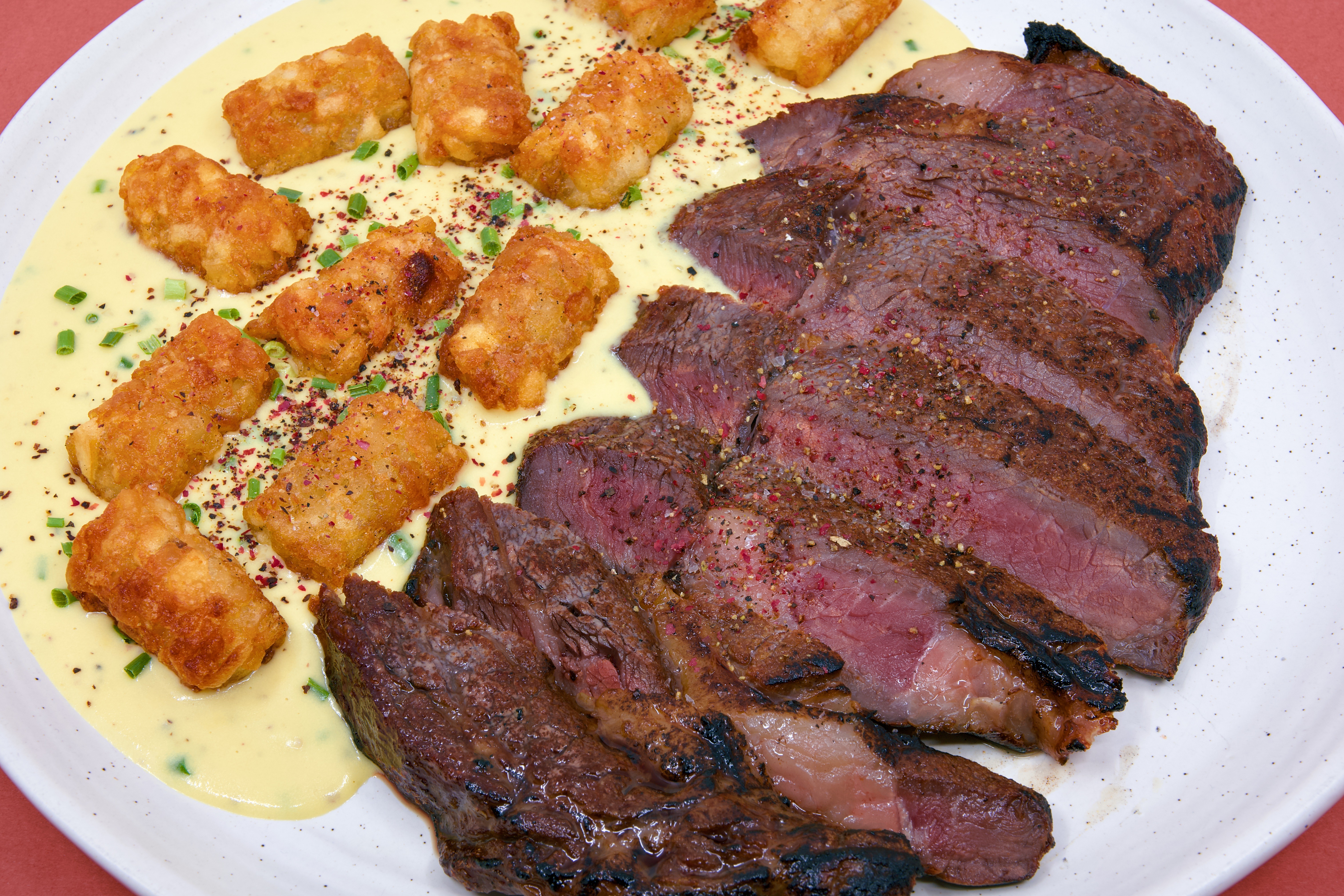
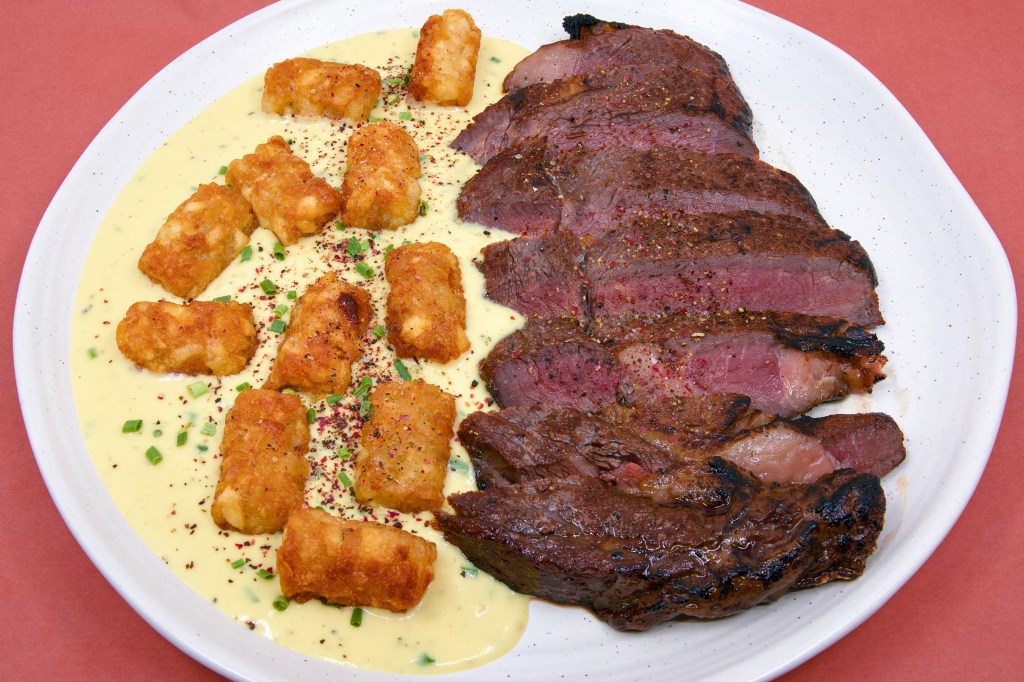
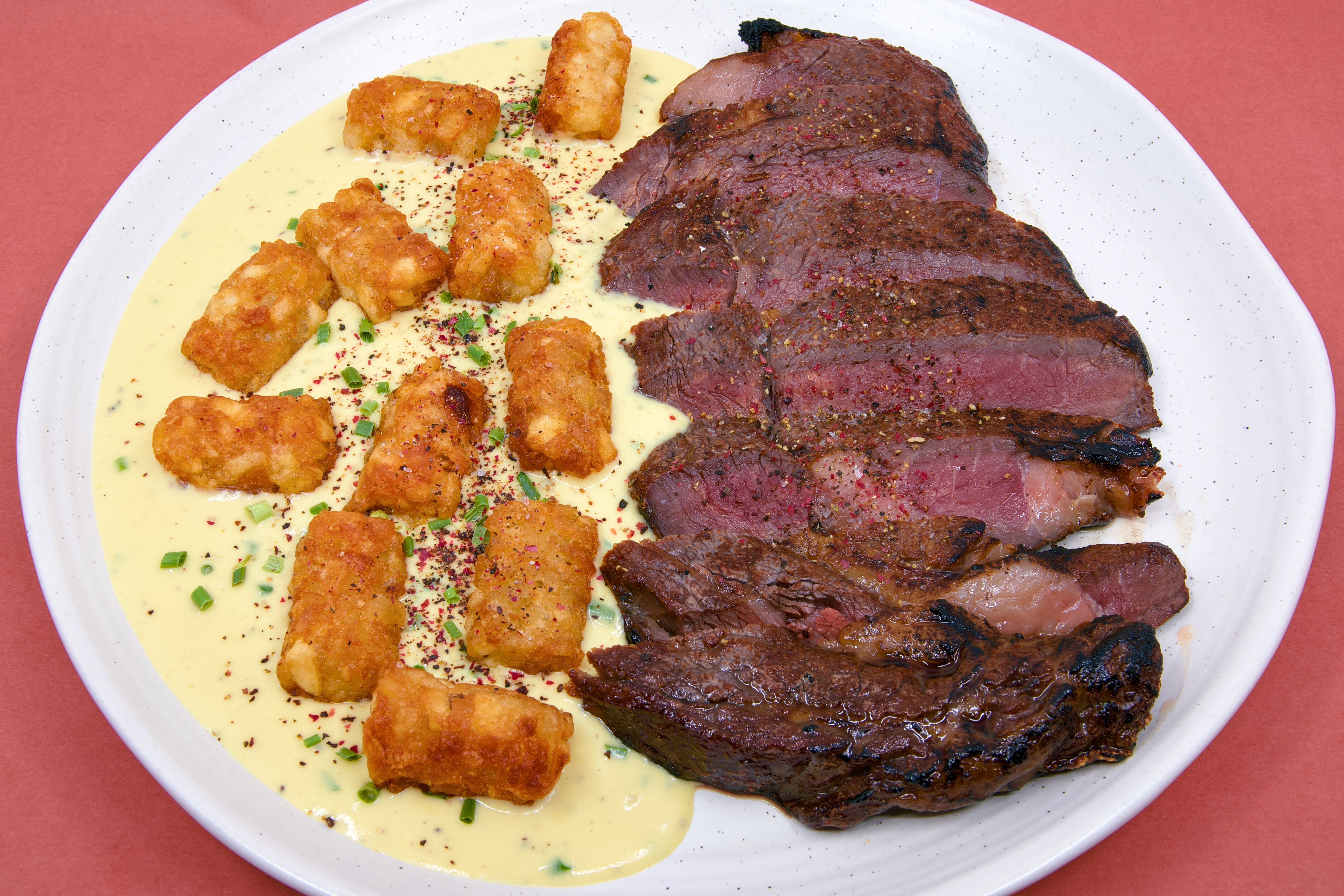
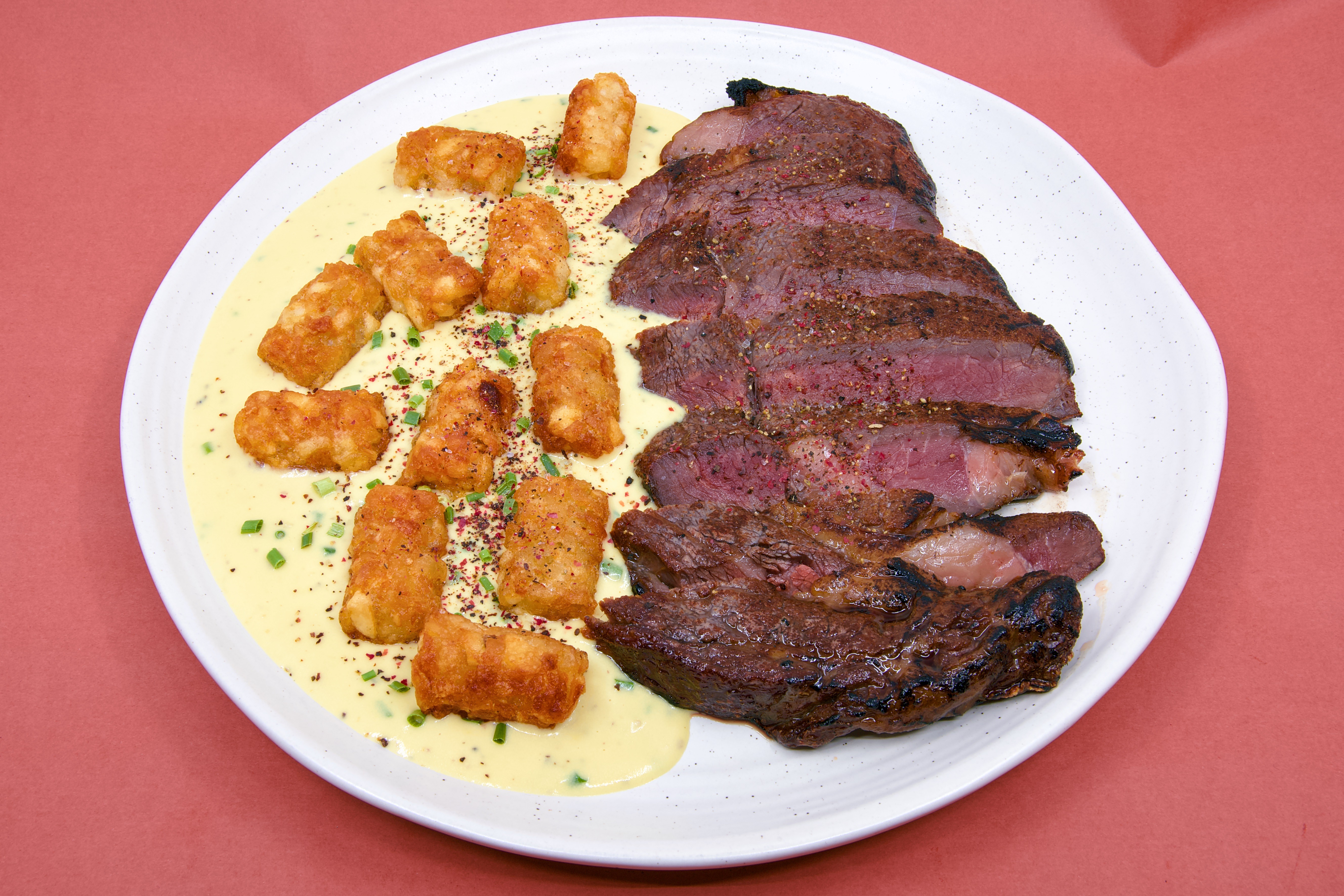
    This Labour Day, I celebrated with a scotch fillet steak, crispy potato gems cooked in beef fat, and a blue cheese sauce.

    What is Labour Day?

    Labour Day marks the achievements of the labour movement and the efforts for fair working conditions in Australia. It celebrates the campaign for the eight-hour working day.

    This idea was revolutionary. In the mid-1800s, many workers worked for 10 to 14 hours a day, six days a week, often in physically demanding and dangerous conditions.

    Labour Day in Australia

    Australia’s Labour Day traces its origins to the Eight Hour Day movement.

    On 21 April 1856, stonemasons working on the construction of the University of Melbourne stopped work and marched through Melbourne demanding shorter working hours. Their campaign succeeded, securing an eight-hour working day without a reduction in pay. This was a landmark achievement and one of the earliest successful campaigns of its kind anywhere in the world.

    It became a symbol for workplace reforms. Over subsequent decades, workers and unions continued campaigning for better conditions, leading eventually to shorter working weeks, workplace safety improvements, paid leave, and other employment protections that Australians now regard as normal.

    What Does Labour Day Mark?

    Labour Day marks:

    • The achievements of Australian workers.
    • The success of the eight-hour day movement.
    • The importance of fair pay and working conditions.
    • The contribution of organised labour and trade unions.
    • The principle that life should include work, rest, and recreation.

    Labour Day recognises that workers are more than economic units. They are parents, partners, community members, volunteers, and citizens.

    Why Do We Have a Labour Day Public Holiday?

    The purpose of the public holiday is both commemorative and practical.

    It commemorates the struggles and victories of previous generations of workers while giving today’s workers a day to enjoy the very work-life balance those campaigns sought to achieve. The holiday reminds Australians that fair working conditions were won through collective action rather than simply granted by employers or governments.

    A long weekend is arguably an expression of the eight-hour movement’s goals.

    What Official Activities Occur on Labour Day?

    Official activities vary between states and territories, but commonly include:

    • Union-organised marches and parades.
    • Community festivals.
    • Speeches by union representatives and political leaders.
    • Ceremonies recognising workers and labour history.
    • Educational events focused on workplace rights and labour history.

    In Queensland, May Day marches remain a prominent tradition, while other states often host commemorative gatherings and community events connected to labour organisations.

    How Many Australians Participate in Official Labour Day Events?

    This is harder to answer precisely.

    While Labour Day marches, parades, and commemorative activities occur, I could not locate an authoritative national statistic showing what proportion of Australians participate in official Labour Day events. Sources describe the events and their significance, but do not provide a national participation rate.

    Anecdotally, participation in official events represents only a small fraction of the Australian population, with most people observing the holiday simply as a public holiday and long weekend.

    Labour day meal

    A public holiday deserves a meal that feels special without requiring a day spent in the kitchen.

    Scotch Fillet Steak

    The dry-brined steak spent one hour in a water bath maintained at 57 °C. This temperature produces an even medium-rare result from edge to edge, preserving tenderness and juiciness.

    Once removed from the bag, the steak was dried thoroughly and finished over a gas barbecue. To achieve a deeper crust, a gas blowtorch assisted with the final sear, creating a caramelised exterior.

    The result was what a scotch fillet should be:

    • Tender.
    • Juicy.
    • Beefy.
    • Browned on the outside.

    Potato Gems in Beef Fat

    Potato gems are already one of humanity’s finer inventions.

    Cooking them in beef fat elevates them to another level.

    The hot beef fat develops a blistered golden crust while enhancing the savoury flavour. The outside becomes wonderfully crisp while the inside remains fluffy and soft.

    Every bite tastes indulgent.

    Blue Cheese Sauce

    The blue cheese sauce added richness and complexity.

    Sharp, salty, creamy, and slightly funky, it complemented the scotch fillet beautifully. Each mouthful balanced the sweetness of the beef, the crunch of the potato gems, and the bold character of the cheese.
    Final Thoughts

    Labour Day is a reminder that the balance between work, rest, and recreation is worth protecting. More than 170 years after some stonemasons marched for the eight-hour day, Australians continue to benefit.

    A long weekend provides an opportunity to reflect on those achievements. It also provides an excuse to cook a scotch fillet steak, crisp some potato gems in beef fat, and drown everything in blue cheese sauce.

    References

    National Museum of Australia. 2024. Eight-hour day.

    State Library Victoria. Origins of the 8-hour day.

    Australian Workers Heritage Centre. 2025. Labour Day History.

    Australian Workers Heritage Centre. 2026. 170 Years of the Eight Hour Day.

    LabourDay.com.au. What is Labour Day?

    ABC News. 2026. Which states get a public holiday today? What event is it?

    Time Out Australia. 2026. What is Australia’s Labour Day public holiday for?
    Fediverse Reactions
  • Beefy soup

    Beefy soup


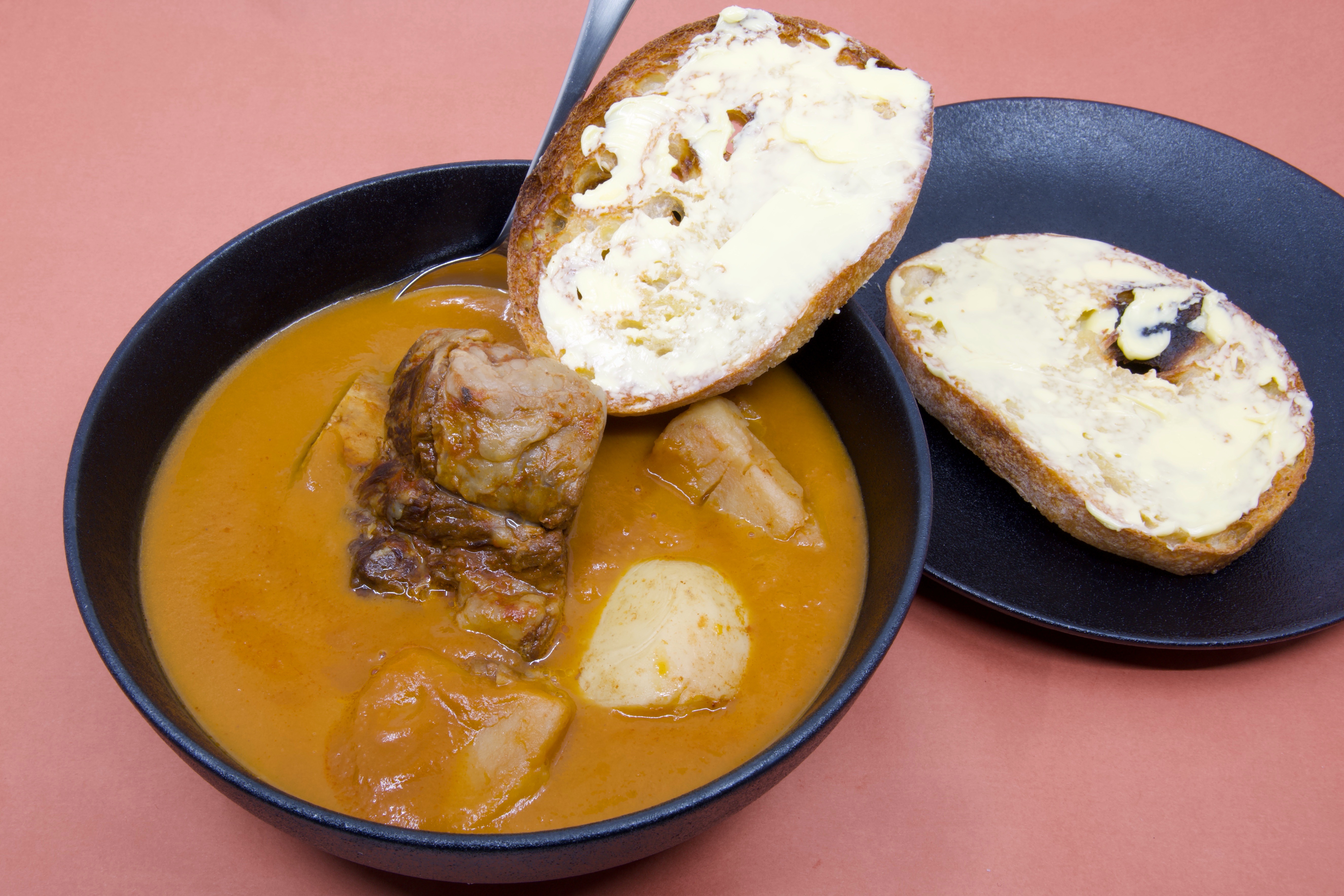
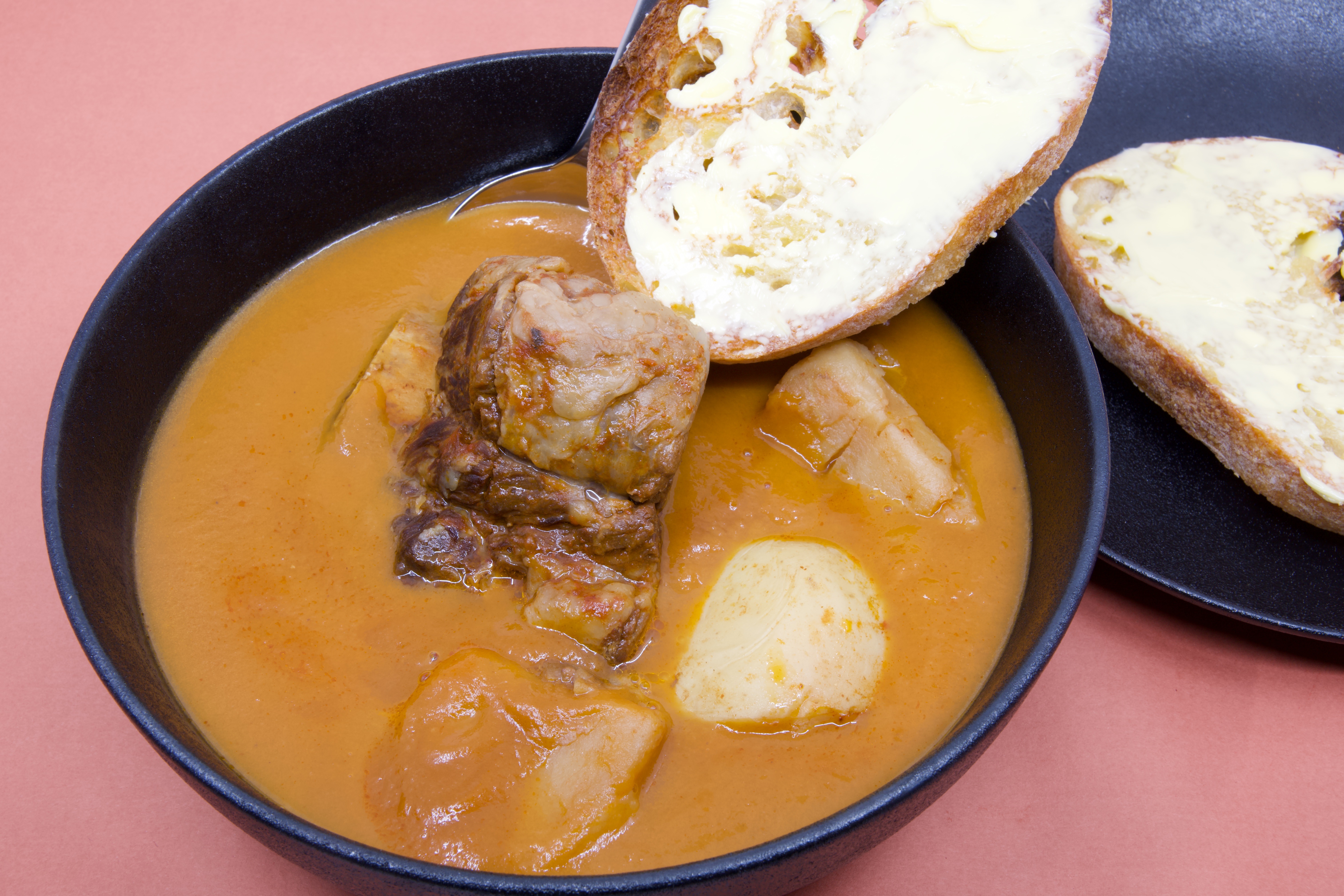
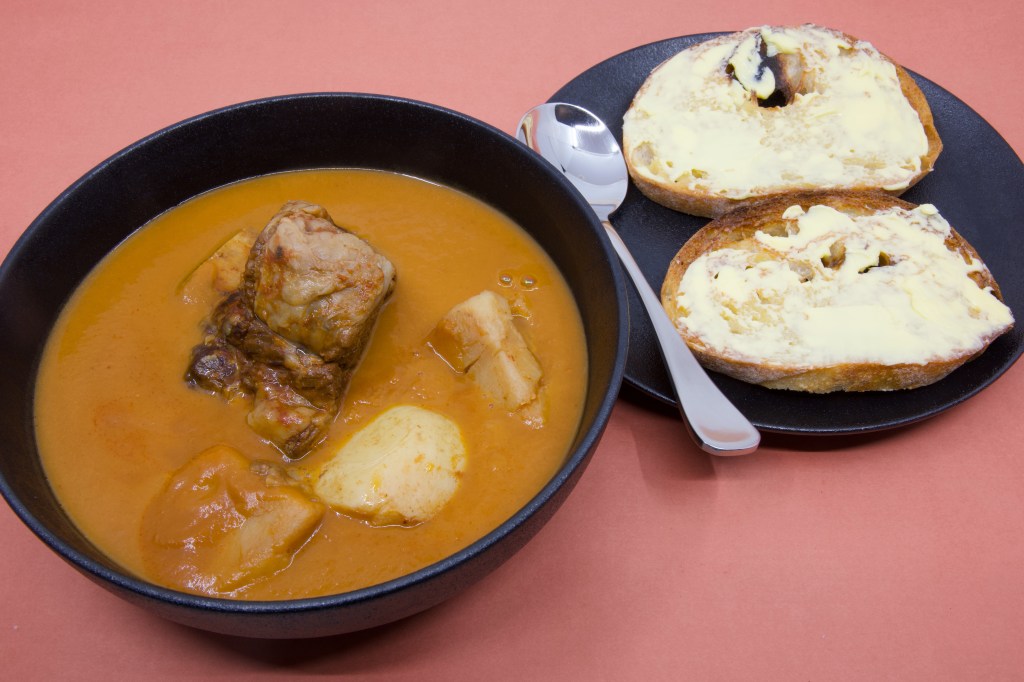
    This beefy soup began with a pressure cooker full of short ribs, vegetables, potatoes, passata, and mixed mammal cooking liquor. It ended, after an overnight pause and a little stick-blender persuasion, as a thick, rich soup with tender beef, soft potato, and extravagantly buttered rye sourdough. It is not a quick dinner, but most of the waiting happens while you are doing something more interesting, like sleeping.

    A dark bowl filled with beef short rib soup sits on a pink background. The smooth orange broth contains one piece of slow-cooked beef short rib and pieces of soft potato. A metal spoon is tucked behind a slice of double-buttered rye sourdough toast resting across the rim of the bowl. The sourdough is heavily spread with cultured butter, and a second buttered slice sits on a matching black plate beside the bowl. The contrast between the dark crockery, creamy butter, and warm-coloured soup creates a hearty and inviting presentation.

    At a glance

    • Serves: 2 generously or one Gary
    • Pressure cooking: 45 minutes at high pressure, followed by natural pressure release
    • Chilling: overnight
    • Reheating: 30 minutes in a 60 °C water bath, plus time to reduce and blend the soup

    Ingredients

    • Beef short ribs, cut across the bone into pieces about 5 cm long
    • 1 fennel bulb, sliced
    • 2 celery stalks, sliced
    • 1 brown onion, sliced
    • Potatoes, cut into bite-sized pieces
    • Passata
    • Mixed mammal cooking liquor, sufficient to provide the pressure cooker’s minimum required liquid and partly cover the ingredients
    • Rye sourdough, thickly sliced
    • Cultured butter, softened
    • Salt, to taste
    • Freshly ground black pepper, to taste

    Yummy Lummy’s note: The exact quantities can vary based on the size of your pressure cooker and your appetite, but do not exceed the manufacturer’s maximum-fill line. Keep enough thin liquid in the pot for the cooker to reach and maintain pressure; passata alone may be too thick.

    Equipment

    • Electric pressure cooker
    • Sharp knife and cutting board
    • Cooking twine
    • Tongs and slotted spoon
    • Fine-mesh strainer or colander
    • Three heatproof bowls or containers
    • Saucepan
    • Stick blender
    • Water-bath circulator and heatproof container
    • Toaster or grill
    • Butter knife

    Day 1: pressure-cook the ribs and vegetables.

    1. Slice the fennel, celery, and brown onion. Cut the potatoes into bite-sized pieces.
    2. Cut the beef short ribs into pieces about 5 cm long. Tie cooking twine firmly around each piece, securing the meat to the bone. This is culinary seatbelting: it keeps the rib and meat together after its energetic trip through the pressure cooker.
    3. Place the fennel, celery, onion, potatoes, passata, and mixed mammal cooking liquor into the pressure cooker. Add the tied rib pieces.
    4. Check that the contents sit below the maximum-fill line and that the cooker contains the minimum volume of thin liquid required by its manufacturer.
    5. Seal the cooker. Cook at high pressure for 45 minutes.
    6. When cooking finishes, leave the cooker untouched and allow the pressure to release naturally. Open it only when the pressure indicator confirms that it is safe.
    7. Using tongs and a slotted spoon, transfer the cooked ribs and potatoes to one container.
    8. Drain the fennel, celery, and onion, reserving them in a second container.
    9. Strain the cooking liquor into a third container. Cool everything promptly, cover, and refrigerate overnight.

    Day 2: turn the vegetables into soup

    1. Set the water bath to 60 °C. Place one chilled rib portion and one potato portion in a suitable sealed bag, and warm them for 30 minutes.
    2. Meanwhile, place the drained fennel, celery, and onion in a saucepan. Add a small amount of the chilled cooking liquor—enough to loosen the vegetables without drowning them.
    3. Bring the mixture to a gentle simmer. Cook uncovered until it begins to reduce, and the flavours concentrate.
    4. Remove the saucepan from direct heat briefly, then blend with a stick blender until thick and smooth. Add a little more cooking liquor if it becomes closer to mashed potato than soup. Return it to a gentle simmer.
    5. Taste, then season with salt and freshly ground black pepper. The cooking liquor may already be salty, so approach the salt cellar with manners.

    Twice-Buttered Rye Sourdough Toast

    1. Toast the rye sourdough until crisp and well browned.
    2. While the toast is still hot, spread it with a thin layer of cultured butter. This first layer melts into the crumb.
    3. Allow the toast to cool slightly.
    4. Spread on a second thin layer of cultured butter. The cooler surface lets this layer remain in golden patches rather than disappearing completely.
    5. Finish the twice-buttered toast with a light sprinkle of flaky salt.

    This is sometimes called two-stage or double buttering. Published descriptions of Nigella Lawson’s method follow the same sequence: butter immediately so the first layer soaks in, wait for the toast to cool, then add a second layer that stays on the surface (Funderburk 2026; Reynolds 2026). I call the result supersaturated toast. It may not be a formal scientific phase, but it is a very satisfactory one.

    To serve

    Ladle the simmering soup into a warm bowl. Remove the reheated rib and potato from the bag, discard the twine, and settle both into the soup. Serve the twice-buttered rye sourdough beside it for dipping, scooping, or quiet contemplation of butter’s excellent career choices.

    A dark bowl filled with beef short rib soup sits on a pink background. The smooth orange broth contains one piece of slow-cooked beef short rib and pieces of soft potato. A metal spoon is tucked behind a slice of double-buttered rye sourdough toast resting across the rim of the bowl. The sourdough is heavily spread with cultured butter, and a second buttered slice sits on a matching black plate beside the bowl. The contrast between the dark crockery, creamy butter, and warm-coloured soup creates a hearty and inviting presentation.

    Food-safety notes

    • Divide the cooked food into shallow containers so it cools quickly. Refrigerate it promptly.
    • Keep the refrigerator at 5 °C or colder.
    • The 60 °C water bath is a gentle warming step. Start with properly chilled food, use a sealed bag suitable for the purpose, and serve immediately after warming.
    • Bring the vegetable soup to a proper simmer before serving. If you are feeding someone who is pregnant, older, immunocompromised, or otherwise vulnerable, reheat the beef and potato until piping hot rather than relying on gentle warming alone.

    References

    Funderburk, C. 2026, ‘Nigella Lawson just taught me her delicious butter rule for the best toast’, The Kitchn, 3 February, accessed 27 September 2026. Notes: Describes Lawson’s two-stage method—one layer on hot toast, followed by a second after cooling.

    Reynolds, L. 2026, ‘Why you should butter toast twice’, Tasting Table, 18 July, accessed 27 September 2026. Notes: Explains how the first layer soaks into the crumb while the second remains on the surface.

    Fediverse Reactions
  • Corned beef and pickle liquor

    Corned beef and pickle liquor


    I had mentioned to someone a few weeks ago that I was enjoying a pickled gherkin with lunch when I made an open sandwich. It was suggested that the liquor[i] from the jar shouldn’t be discarded because it could be used for slow-cooking corned beef.

    I had about a cupful of pickle liquor, so I thought I’d give it a go.

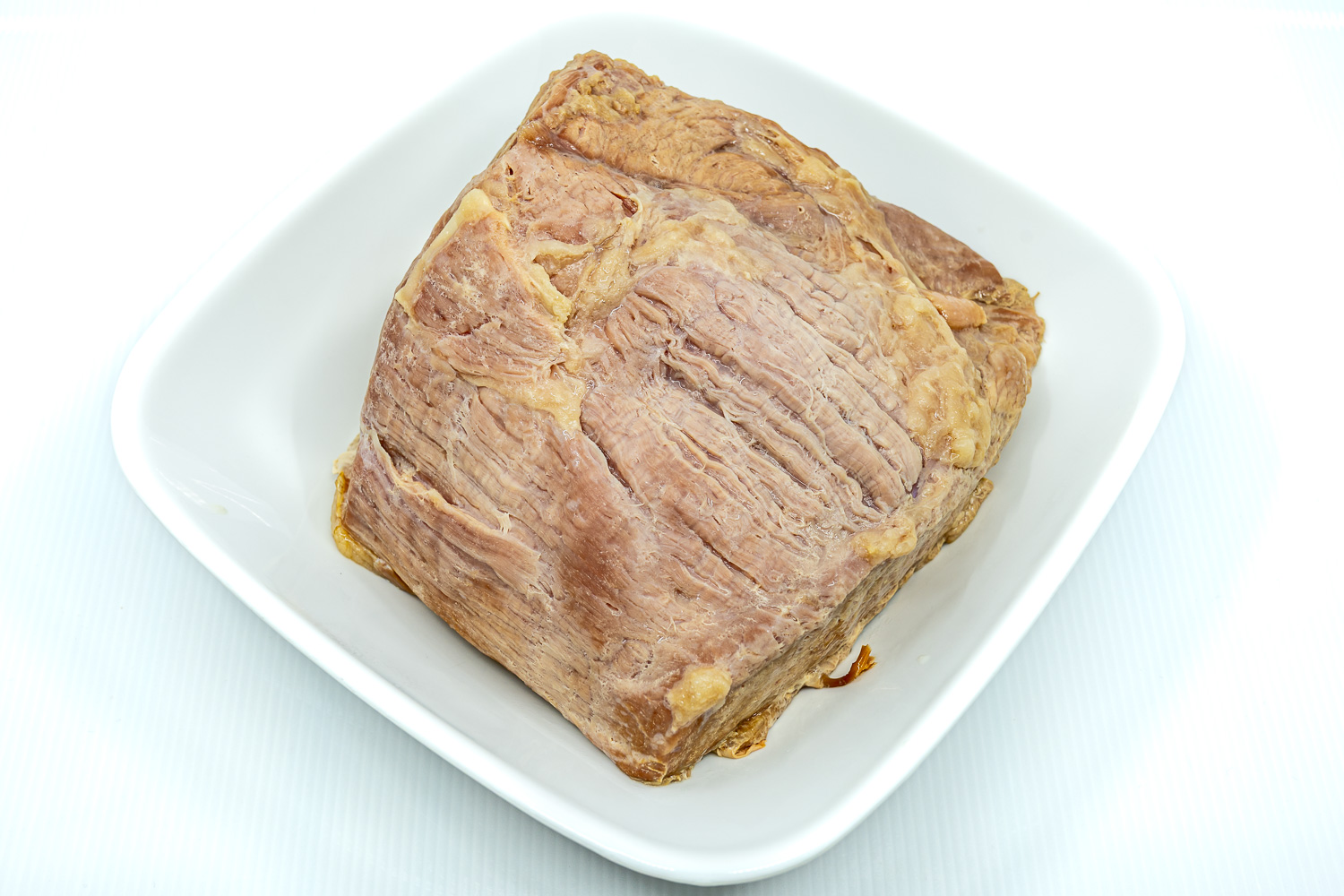
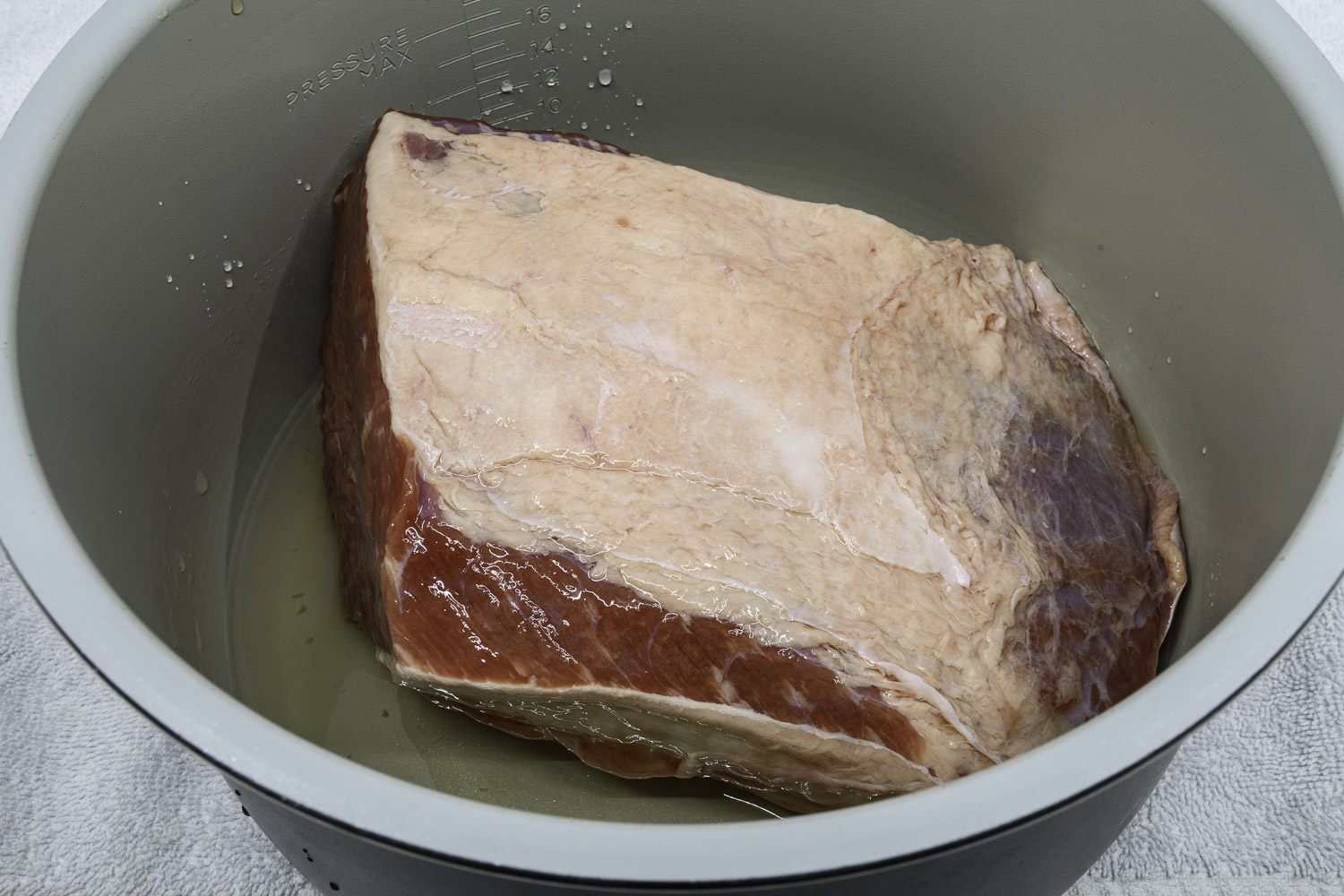
    I bought a piece of corned silverside[ii] (roughly 2 kg at $AUD10/kg) and slowly cooked it with the pickle liquor.

    Recipe

    Ingredients

    • Corned beef silverside
    • Pickle liquor

    Equipment

    • Slow cooker

    Instructions

    1. Place the beef into the cooking vessel.
    2. Add the pickle liquor.
    3. Cook on low heat for 8 hours.
    4. Remove the cooked corned silverside and refrigerate.
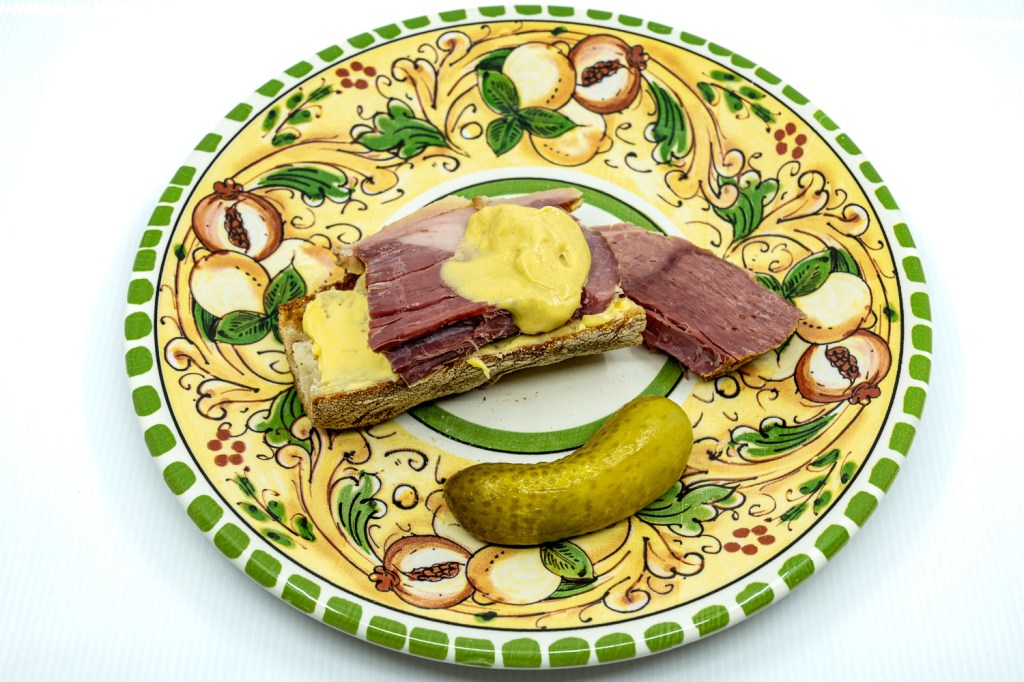
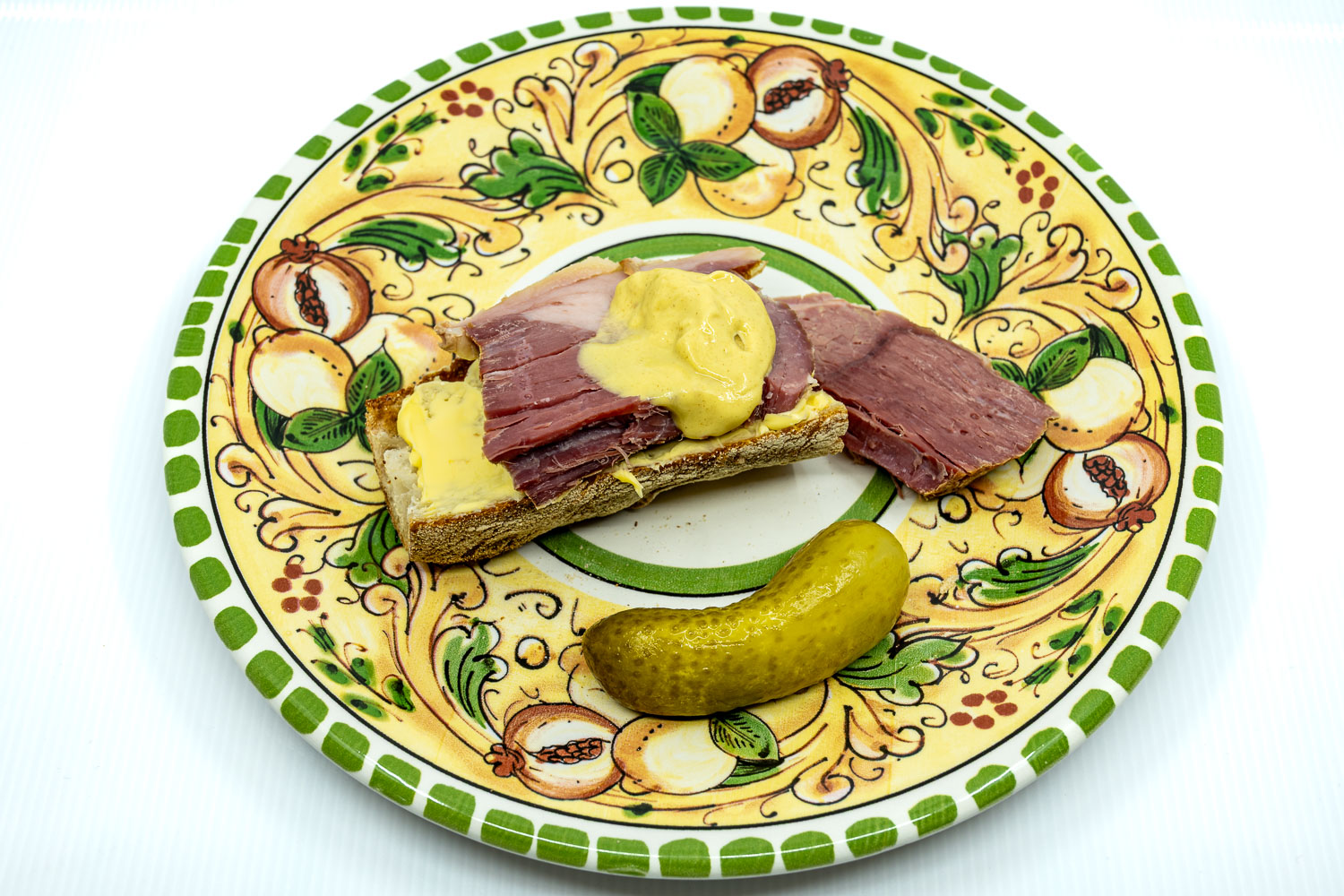
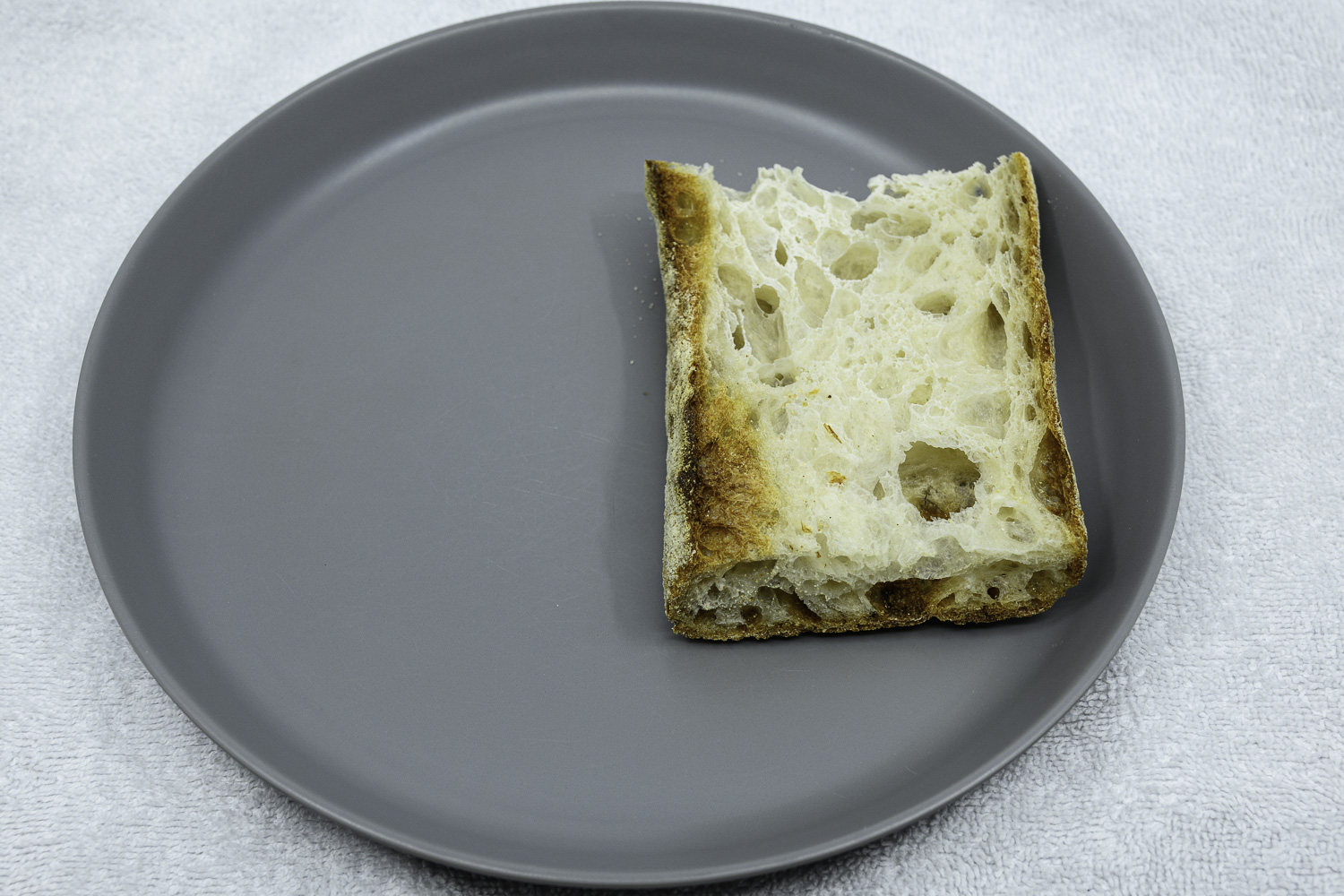
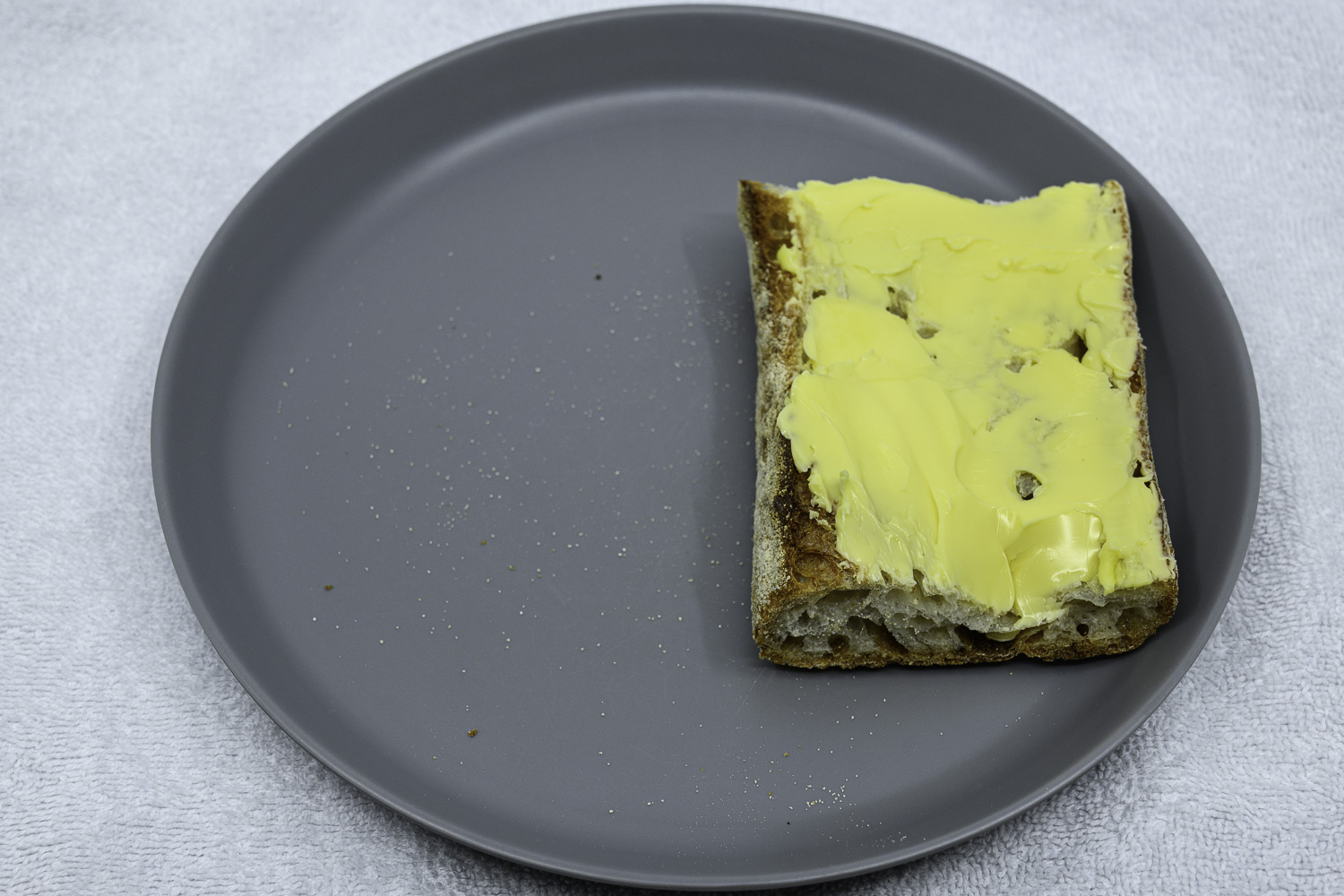
    5. Cut a slice of corned beef and place it on a piece of buttered sourdough bread[iii].
    6. Serve with some mustard and a pickled gherkin[iv].

    Photographs

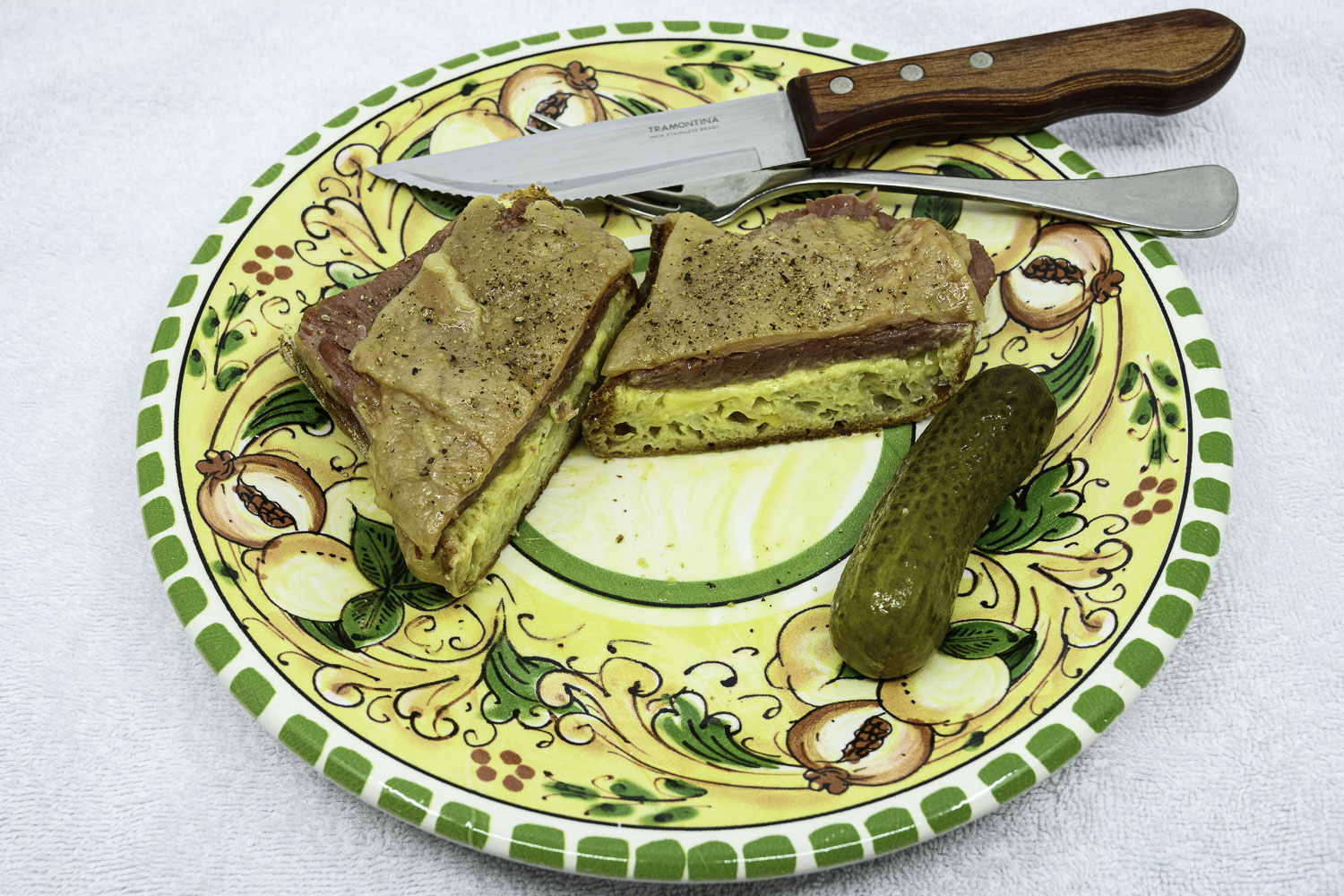
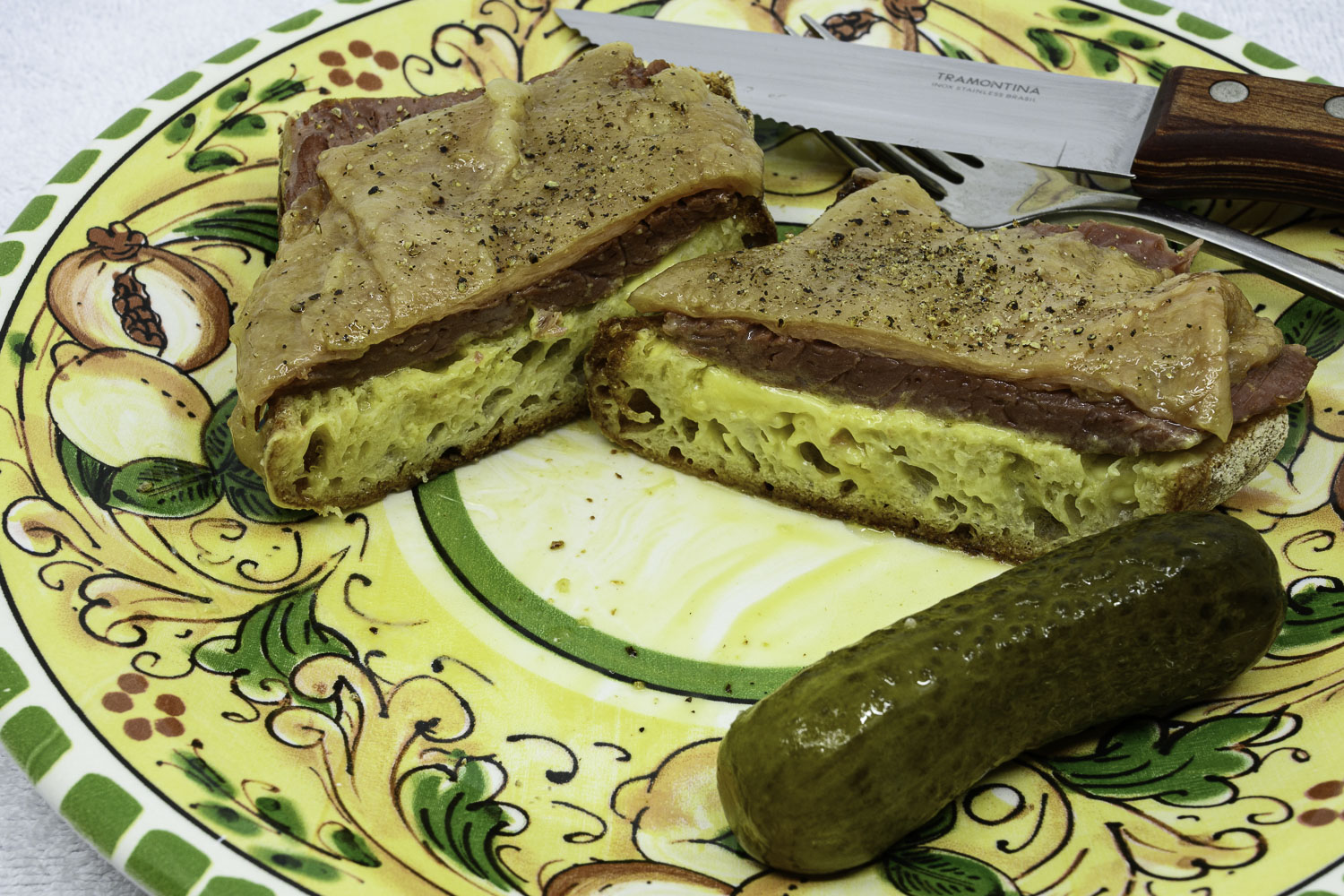
    For lunch, I had tinned corned beef.

    For tea, I had the slowly cooked corned beef silverside.

    Here are the photographs for comparison.

    Thoughts on the meal

    I enjoyed the corned silverside. This version tasted better than my recent effort.


    I used the last of the slowly cooked corned beef silverside, which had been prepared with pickle liquor. I diced the meat along with some gherkins and cooked them in the corned beef cooking liquid. Then, I added mustard, cream, and some cheese.

    I used the last of the slowly cooked corned beef silverside, which had been prepared with pickle liquor. I diced the meat along with some gherkins and cooked them in the corned beef cooking liquid. Then, I added mustard, cream, and some cheese.

    [i] Did you know that pickle liquor is a strong acid solution used in metalworking to clean and descale metal surfaces? Pickle juice is the salty, acidic liquid used to preserve pickles—typically made from water, vinegar, salt, and spices. I like (and prefer) the word liquor because it means liquid in which something has been steeped or cooked.
    [ii] Beef silverside is a large, lean cut from the hindquarter of a cow, known for its coarse texture and low in fat content. It’s popular in Australia, the UK, and New Zealand for roasting, corning, or making biltong.

    [iii] Sourdough bread is a naturally leavened bread made using wild yeast and lactic acid bacteria, giving it a tangy flavour and chewy texture.

    [iv] A gherkin is a small, bumpy cucumber variety that’s typically pickled and enjoyed for its crisp texture and tangy flavour.

  • Corned beef fat sandwich

    Corned beef fat sandwich


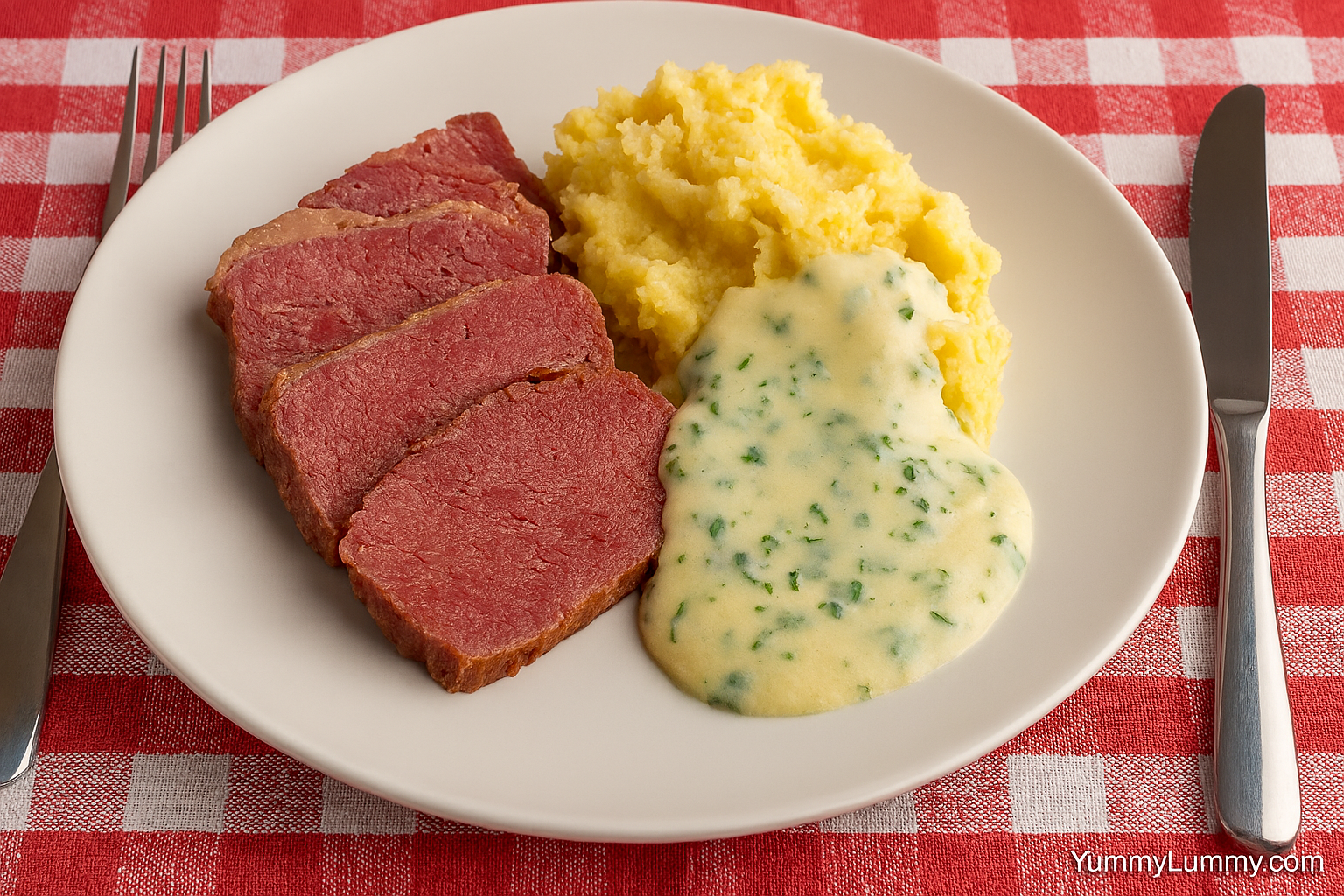
    Create an image of a corned beef meal with a 16:9 aspect ratio for the food blog YummyLummy.com. In the image, include slices of corned beef, a bechamel sauce with parsley, plus buttery potato mash on the side of the plate. Give the image a photographic quality and include cutlery, like a knife and fork, in the image.
    Microsoft Copilot generated corned beef meal.

    In the old days (when I was fat[i]), I would cook corned[ii] beef[iii] with vegetables, mustard, garlic, onions, and additives like Worcestershire sauce. I’d eat it with a white sauce made with refined (read ultra-processed) white flour. I usually have boiled potatoes or potato mash with corned beef and white sauce.

    More recently, if I want corned beef, I buy it in a can[iv] and make a corned beef hash (sans spuds[v] and onions). A lot of people give me a condescending attitude when I mention my consumption of canned corned beef. Their scorn and derision humour me.

    This version is simple and is a low-carbohydrate, minimalist version of corned beef. Apart from the fat sandwich of course. 😉

    Create an image of me sitting and eating a corned beef meal with a 16:9 aspect ratio for the food blog YummyLummy.com. In the image, I am seated at the dinner table with a plate in front of me, featuring slices of corned beef, a bechamel sauce with parsley, and buttery potato mash on the side. Give the image an oil paint quality and include me holding cutlery, like a large, sharp knife and fork, in the picture.
    Microsoft Copilot generated image of me with a plate of corned beef, white sauce, and potato mash.

    Recipe

    Ingredients

    • Corned beef silverside[vi]
    • Water

    Equipment

    • Slow cooker
    • Frypan

    Instructions

    1. Unwrap the meat and wash it under running tap water to remove the brine and sugar.
    2. Place the beef into the cooking vessel.
    3. Add a cup of water.
    4. Slowly cook on low heat for eight hours.
    5. Remove the meat from the slow cooker.
    6. Pass the cooking liquor[vii] through a sieve and refrigerate the broth.
    7. With gloved hands, gently dissect the fat from the flesh using fingers to separate the layer of fat according to the fascial plane.
    8. The fat layer makes for a fantastic sandwich on lavishly buttered white sourdough bread[viii]. There’s nothing like the sensation of the beef fat dripping down your hands and forearms as you slowly take bites from the sandwich and masticate the unctuous beef fat. The only reaction you can have is to smile.
    9. Place the beef into a container and seal it. Refrigerate the meat.
    10. Cut the cold meat into lunch-sized portions.
    11. Dice a portion of cold corned beef and place the diced meat in a frypan.
    12. Add beef broth or water to the frypan and bring it to a simmer until the meat fibres start to separate and soften.
    13. After the water has mostly evaporated, turn off the heat, add a dash of cream and stir.

    Beef silverside fat sandwich.

    Ingredients

    • Cooked corned beef.
    • Frozen sourdough baguette — thawed.
    • Grass-fed butter
    • Freshly cracked pepper corns
    • Dijon mustard

    Instructions

    1. Trowel butter onto a piece of thawed sourdough bread. Freezing sourdough bread develops resistant starch.
    2. Add dollops of Dijon mustard.
    3. Apply a layer of warm fat.
    4. Season with freshly cracked peppercorns.
    5. Cover your lap with a large dish drying cloth and wear a bib.
    6. Roll up your sleeves and get stuck into the sandwich.
    7. Rejoice in the feeling of the fat running down your chin and down your forearms.

    Photographs[ix]

    These are a gallery of photographs. Select one image and scroll through the rest.

    Thoughts on the meal

    I enjoy corned beef hash[x]; it’s a dish I grew up with. Among many other meals, my dad would often make it. He learned to prepare it during his boyhood in the South Pacific during World War II, where fresh meat was hard to come by. The only options available were tinned meat or local game.

    A piece of corned silverside is an affordable option for bulk meat in lunches.

    This piece of beef cost approximately $AUD20, or $AUD10/kilogram. If I can get four meals (possibly six meals), it will work out to about $AUD5/meal.

    The first meal (the fat sandwich) for this piece of beef brought back some great memories when Mum would make corned beef and I’d get the fat and make a sandwich. I savoured every bite of this open sandwich and enjoyed the contrasting flavours of the pickle.

    Questions

    1. Do you like corned beef?
    2. Do you like fat sandwiches?
    3. How would you make a fat sandwich?

    Stay tuned

    I’ll add photographs of how I use the rest of the beef during the week.

    Endnotesꜜ


    [i] The modern clinical term is “clinical adiposity.” I prefer the term fat because it is universally understood.

    [ii] The term corned comes from the old English word corn, which referred to small, hard particles—not just cereal grains. In the case of corned beef, it refers to the large-grained rock salt (sometimes called “corns” of salt) used in the curing process.

    [iii] Corned beef is a type of salt-cured beef, traditionally made from brisket.

    [iv] Canned corned beef is a shelf-stable meat product made primarily from beef, but it includes ingredients to preserve flavour and texture. The ingredients include sodium nitrite, added salt, and a small amount of sugar (which is disappointing). Cooking can convert the nitrites to nitrates.

    [v] “Spud” is a casual or slang term for a potato. For example, “baked spud” or “mashed spuds.” It is used in many English-speaking countries.

    [vi] Beef silverside is a lean, boneless cut of beef taken from the hindquarter of the cow, specifically from the top portion of the round primal, just above the leg muscles. It’s known for its coarse grain and minimal marbling, which makes it a budget-friendly and versatile option in many cuisines.

    [vii] Juice released from cooked meat.

    [viii] Bread is high carbohydrate and not part of a low carbohydrate diet.

    [ix] A note about the images used in this post. The featured image and a couple of other images were generated with Microsoft Copilot and ChatGPT. I’m conscious that there are some bloggers and readers who oppose the use of large language models for generating content. I’m comfortable with using large language models to help with content on YummyLummy.com

    [x] Corned beef hash is a hearty, savoury dish made by combining chopped or shredded corned beef with diced potatoes and onions, then frying the mixture until it’s golden and crispy. It’s a classic comfort food with roots in frugal cooking—originally designed to use up leftovers, especially from a corned beef dinner.

  • Everyday beef brisket

    Everyday beef brisket


    The cost of living is getting higher. How many times a day do we hear or read that in the news and on social media?

    The majority of posts on this blog feature expensive cuts of meat.

    With the cost of food rising, I need to increase my consumption of more economical cuts. I will limit buying the more expensive cuts of meat.

    Most days, lunch is supermarket bought beef mince (ground beef for North American readers).

    To break up the monotony, other “economical” cuts include chuck and brisket.

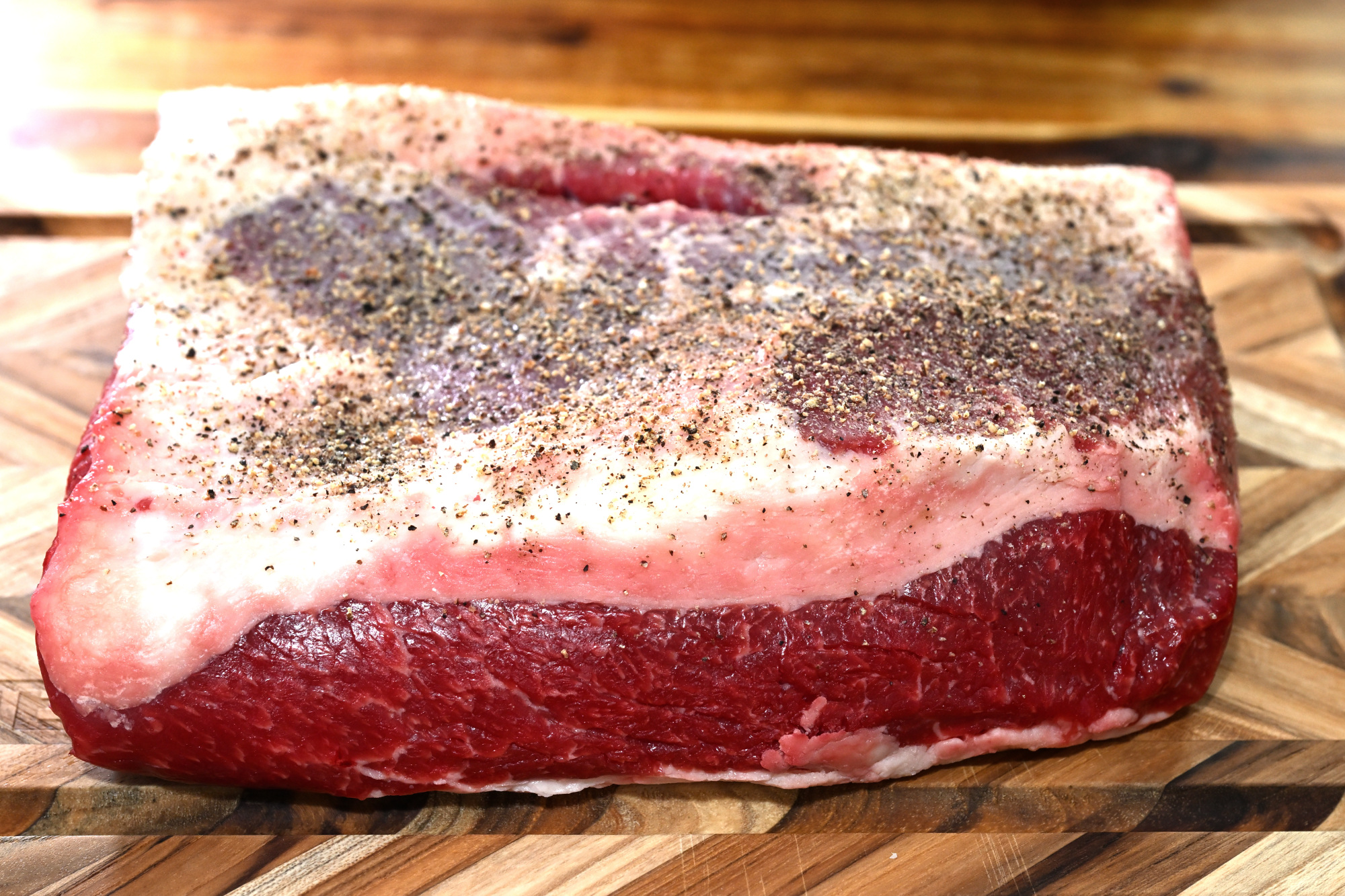
    This beef brisket cost about $AUD30 for about 1.8 kg. That’s roughly $AUD17/kg.

    Most of the scotch fillet steak or rump steak I buy is more expensive than that. This is particularly true if the meat is Coorong Black Angus beef.

    This piece of brisket will give me with eight serves ($AUD3.75).

    Recipe

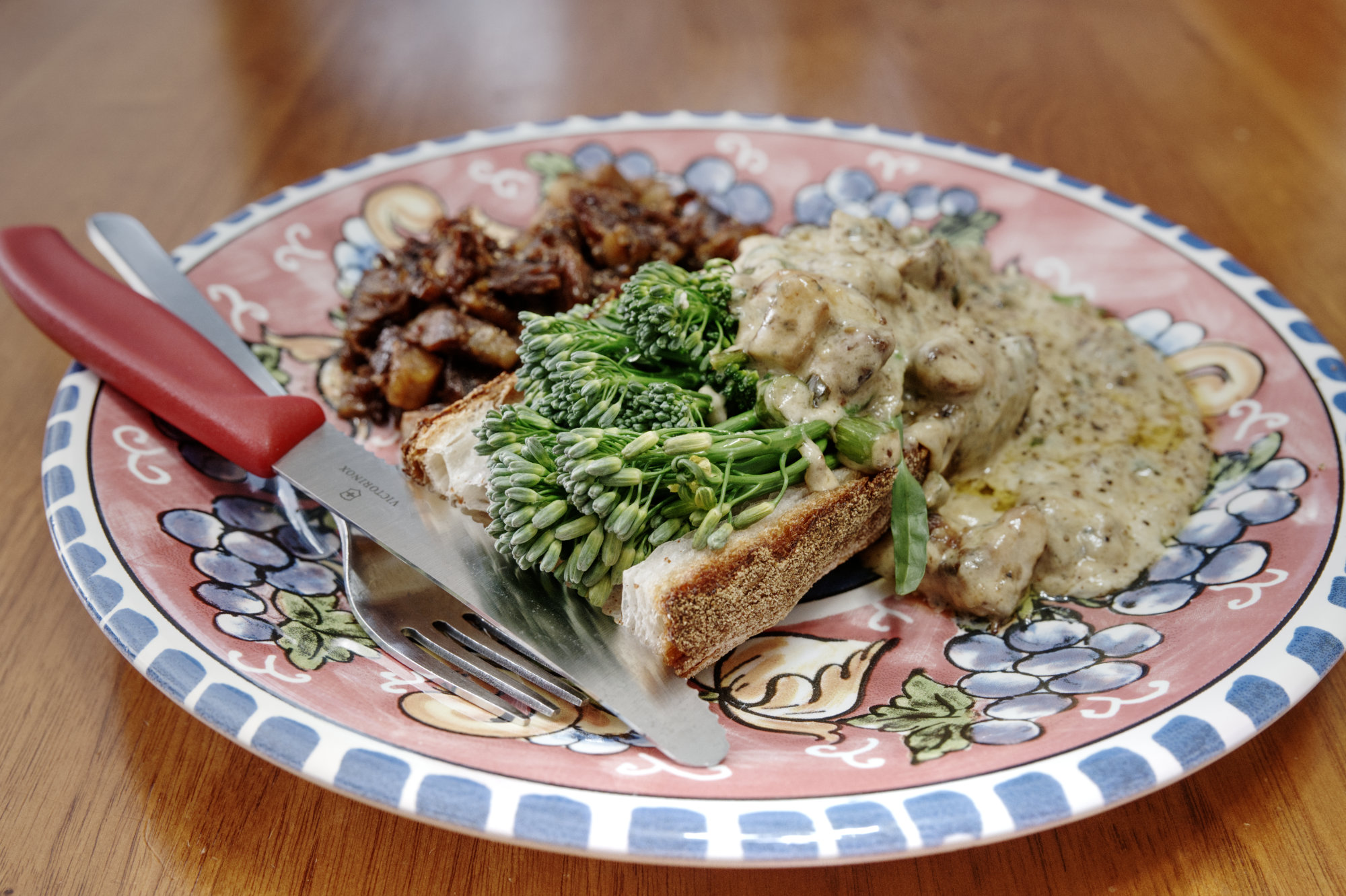
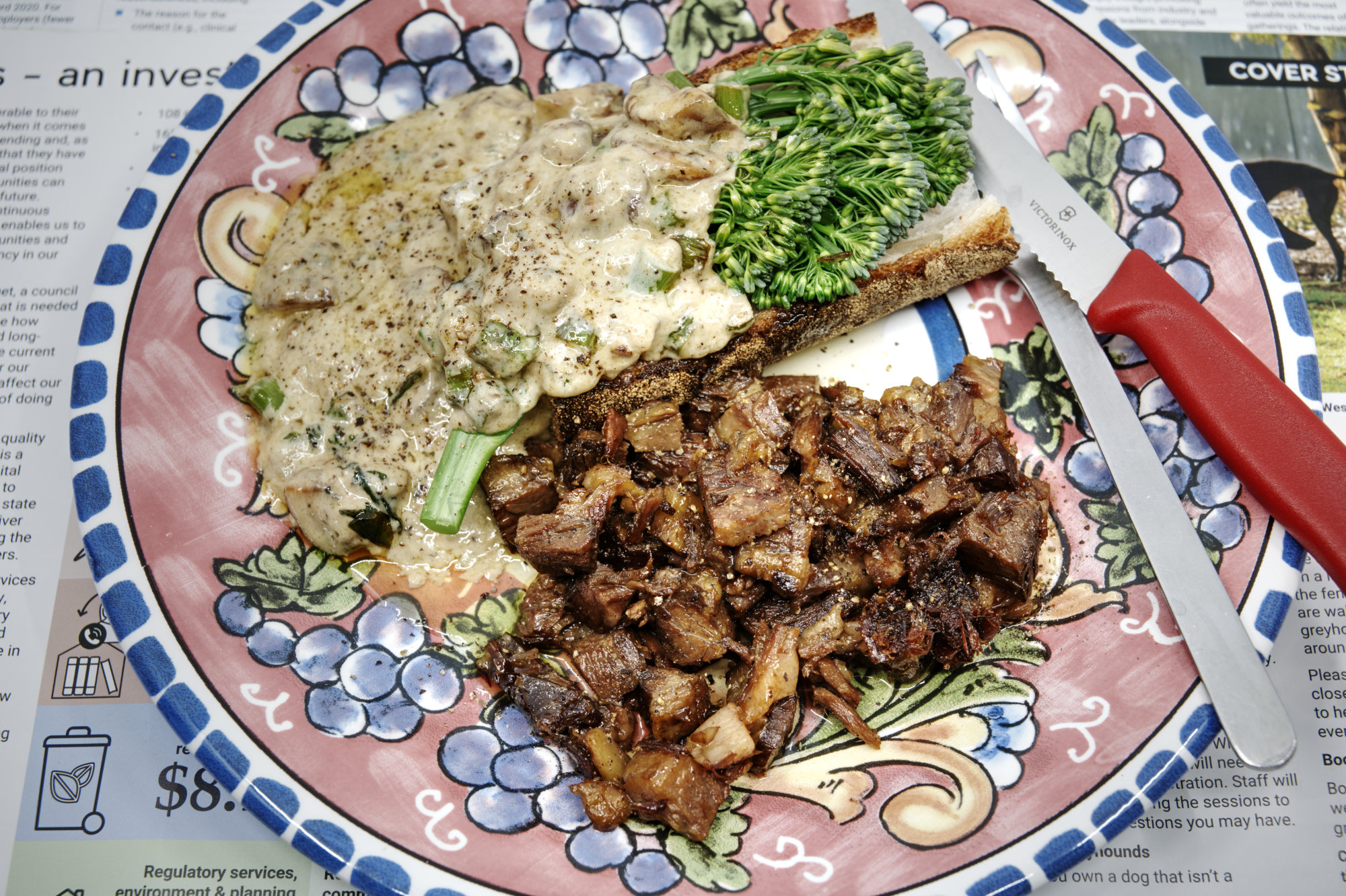
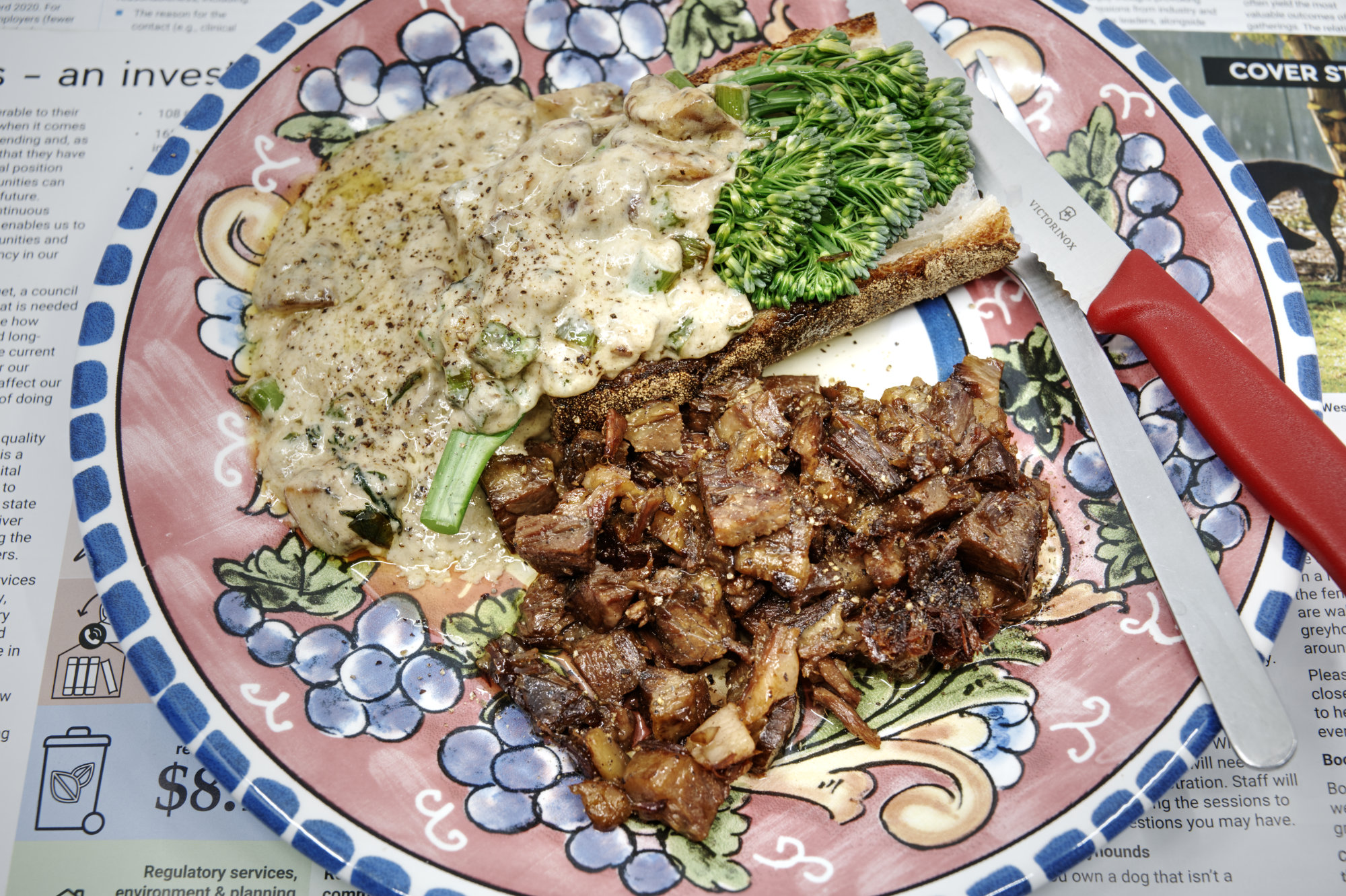
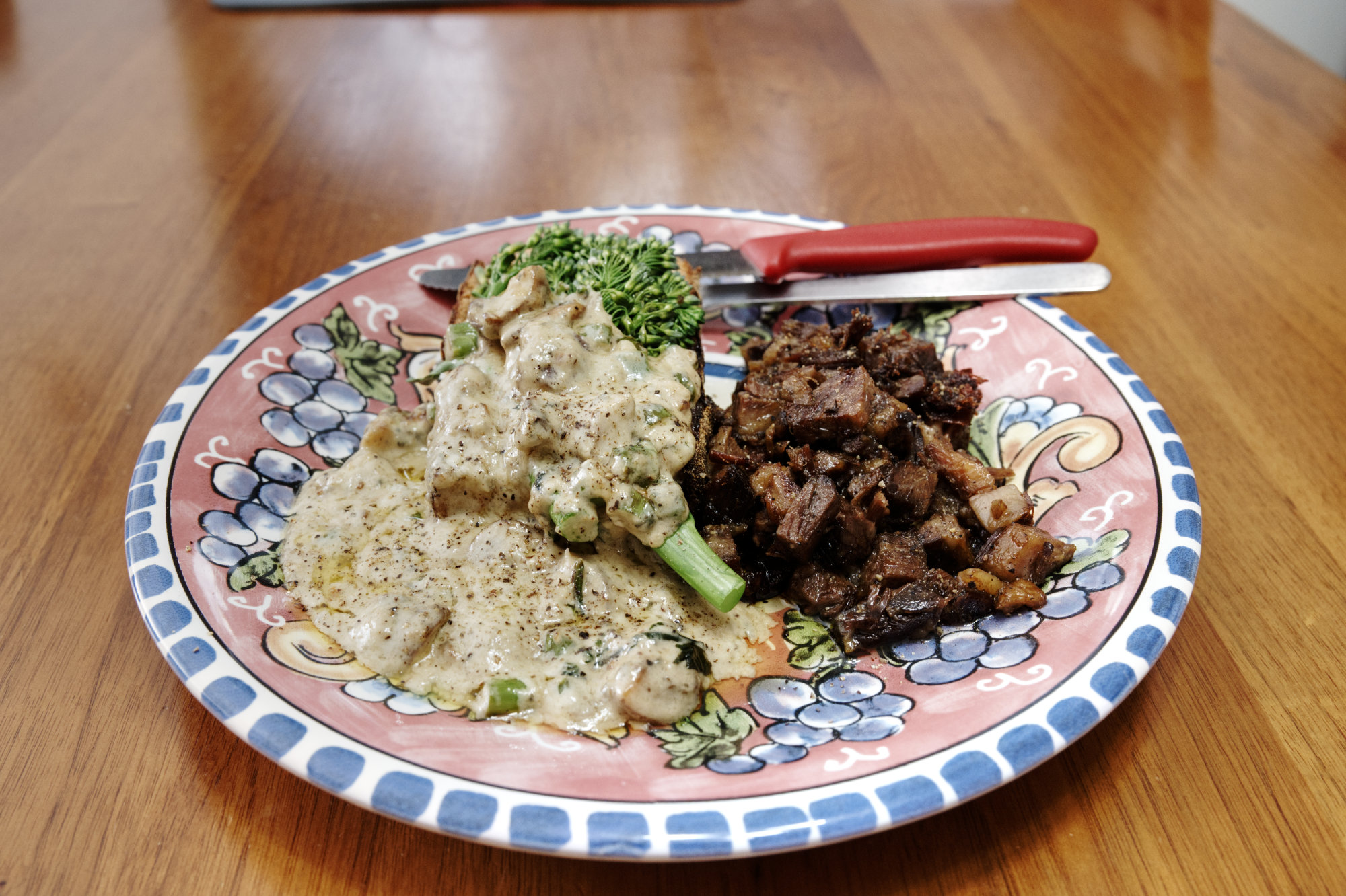
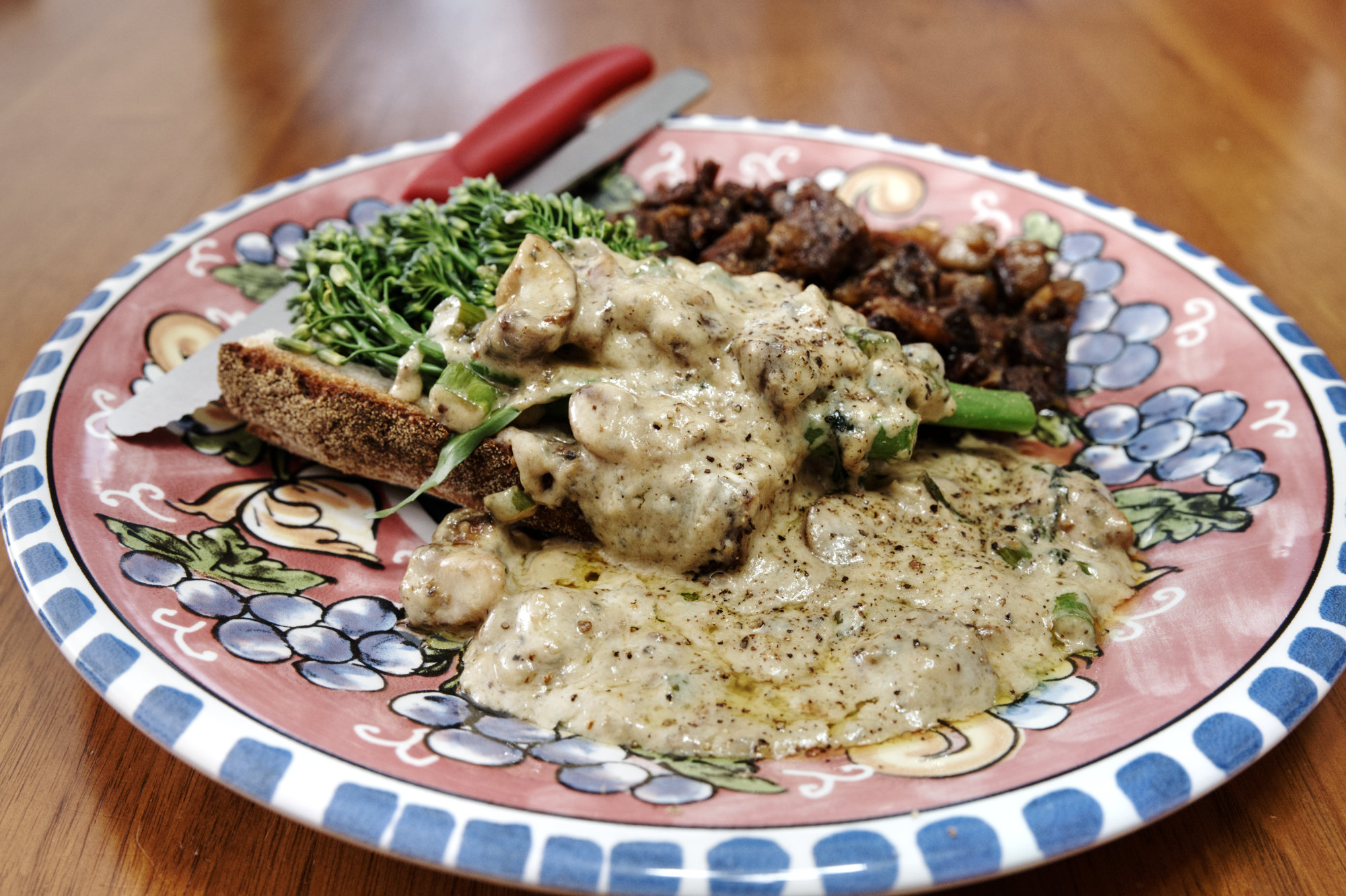
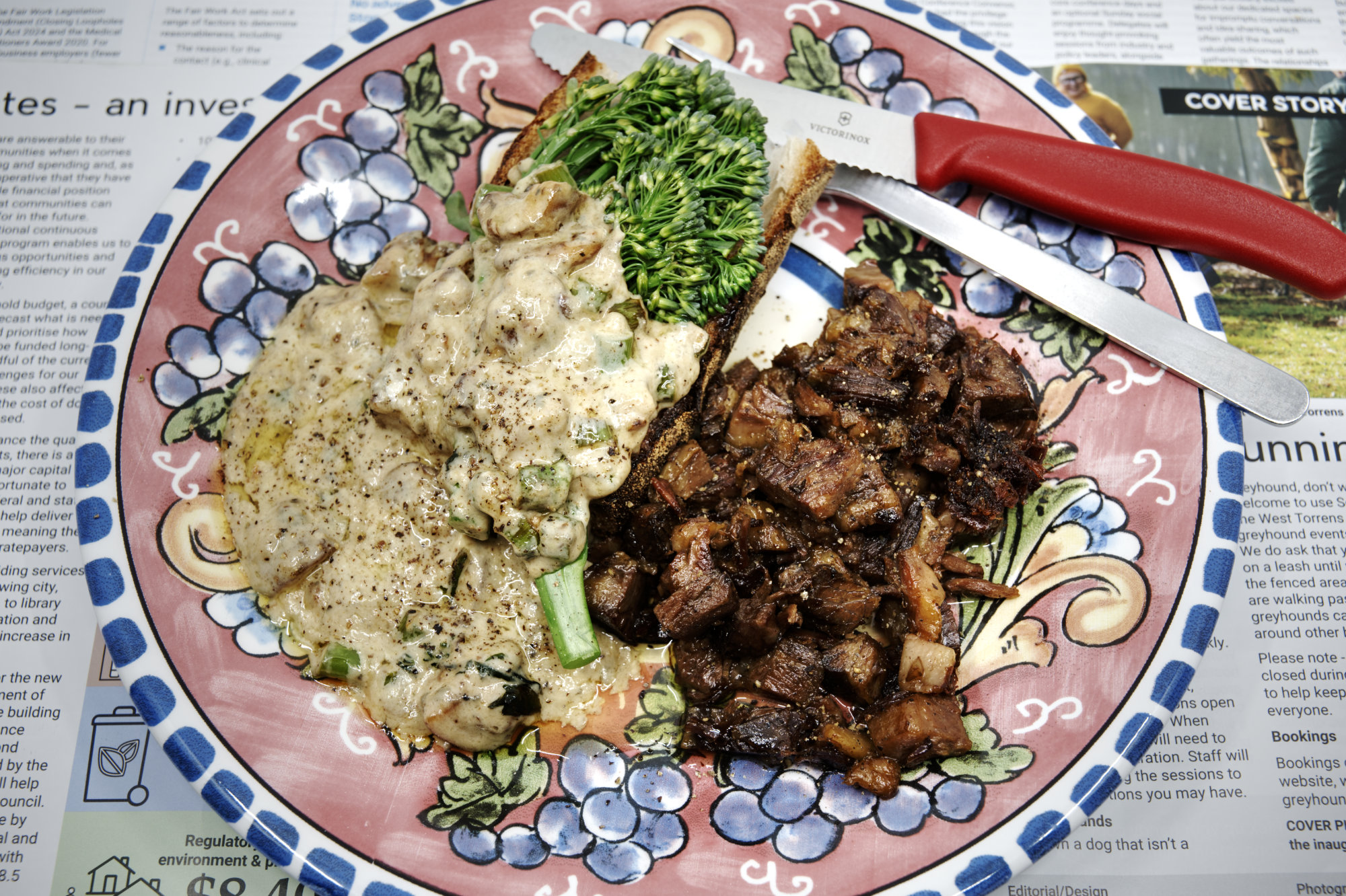
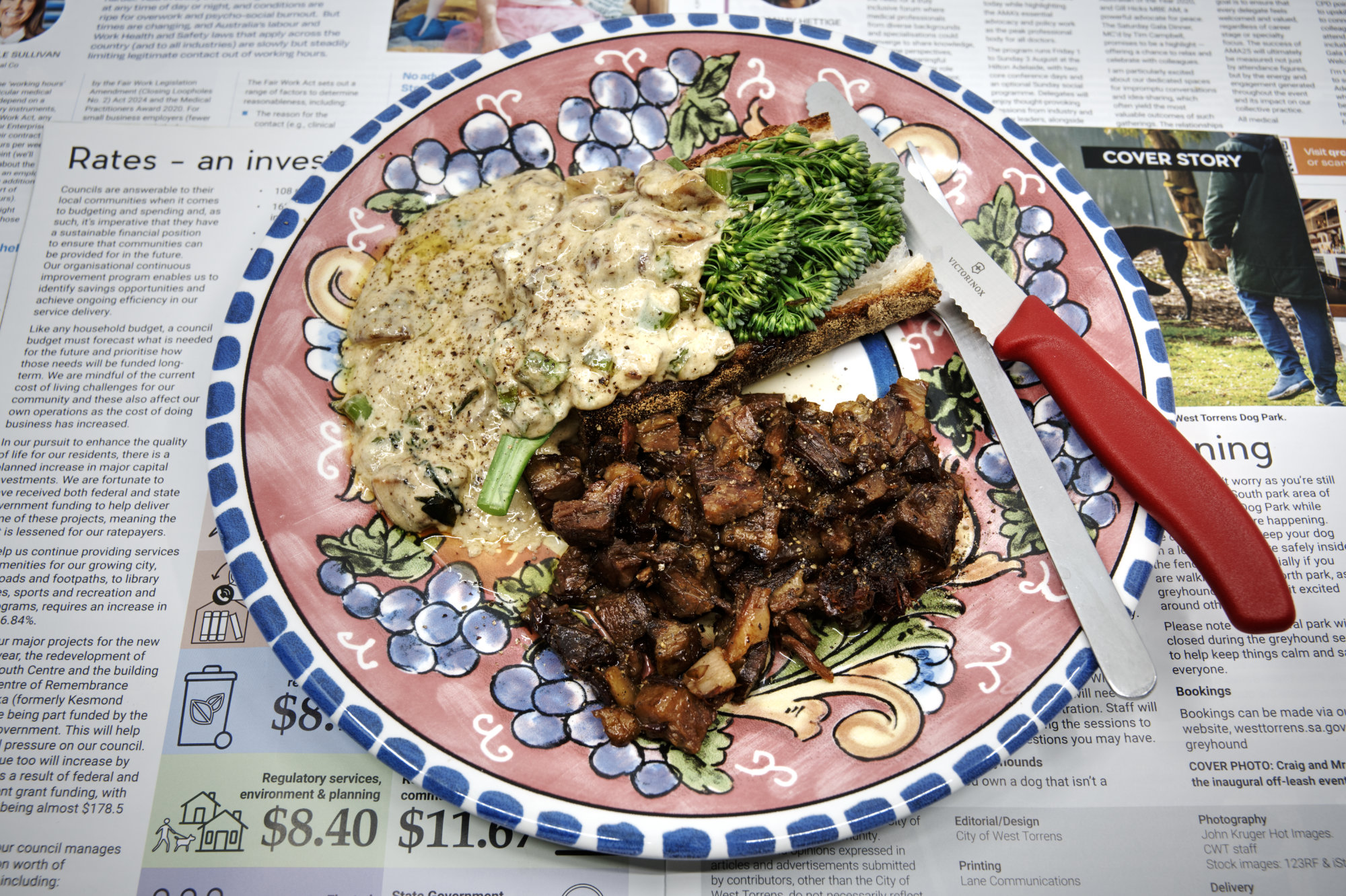
    Tonight I prepared some beef brisket meat with a creamy sauce, some broccolini, and sourdough bread.

    Ingredients

    • Brisket — Initially cooked in a slow cooker for 8 hours. It was then refrigerated. For this meal, the brisket is finely diced.
    • Sourdough bread — organic sourdough bread frozen to develop resistant starch, and then thawed and toasted.
    • Broccolini
    • Swiss brown mushrooms
    • Cream cheese
    • Blue vein cheese
    • Pure pouring cream
    • Beef fat — the fat separated from the cooking liquor from the slow cooker.
    • Beef broth — the cooking liquor from the slow cooker.
    • Butter

    Equipment

    • Frypan
    • Kettle

    Instructions

    1. Add the diced beef, beef broth, and beef fat to the frypan. Gently heat the contents until the liquid has evaporated. Continue heating until the meat has softened. Set the reheated brisket aside.
    2. Sauté the mushrooms in butter. The mushrooms will soften when they have absorbed the water from the butter. Then, add crumbled blue vein cheese and the cream cheese. Stir slowly and thoroughly. Finish with a dash of pure pouring cream and season with freshly cracked black peppercorns.
    3. Parboil the broccolini with boiling water from the kettle.
    4. Place the toasted sourdough bread on a dinner plate. Place the broccolini on the toast. Spoon the brisket next to the bread. Spoon the sauce over the broccolini and bread and let the rest settle next to the meat.

    Thoughts on the meal

    While beef short rib meat is more unctuous, as a cheaper cut, brisket is pretty good.

    Beef and blue vein cheese go well together and combine well on the toast which adds a crunchy mouthfeel.

    The broccolini adds some colour to the dish.

    Photographs

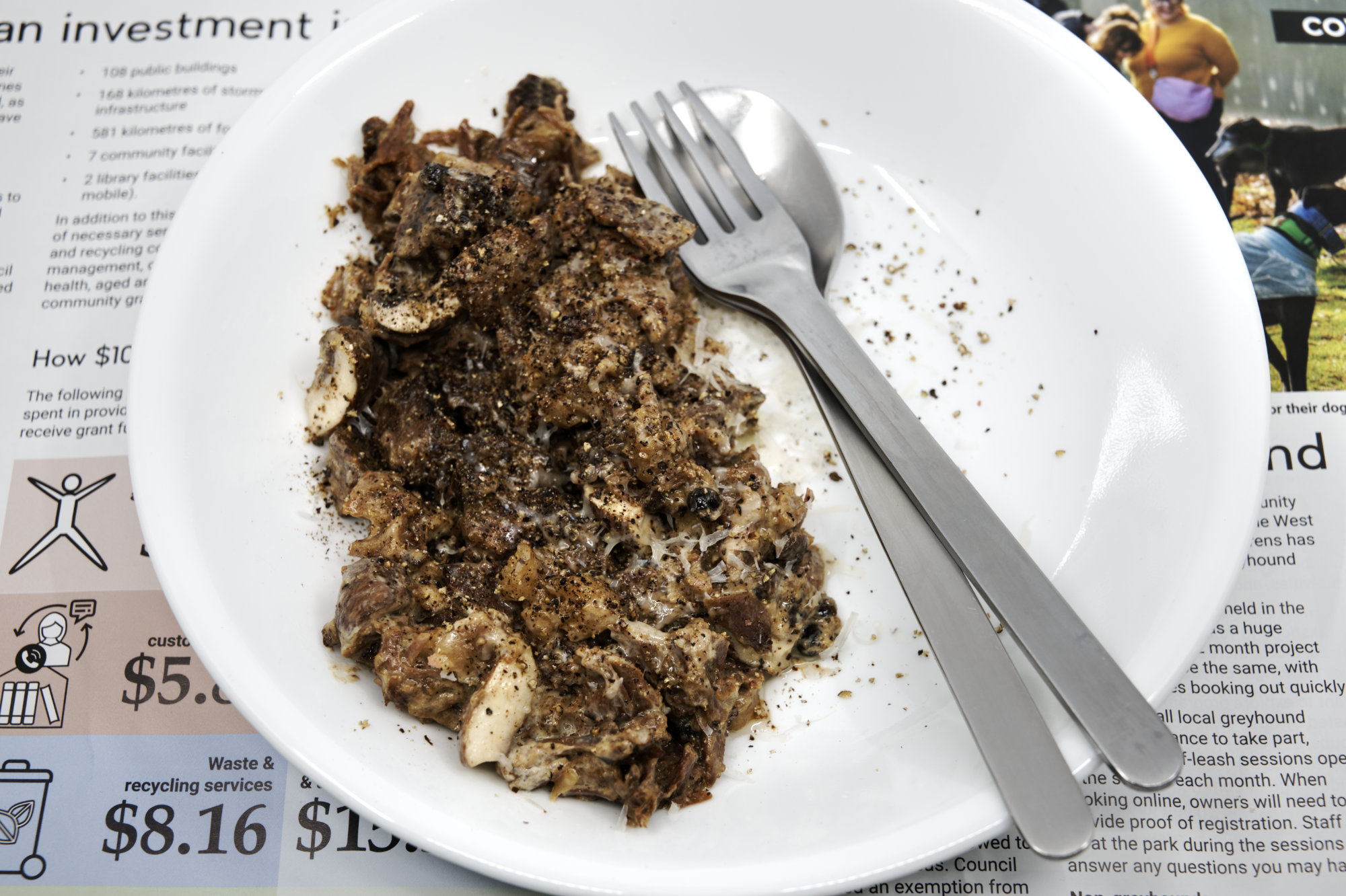
    These are photographs of the meal. Select one and then scroll through the rest.

    Questions

    • What is your favourite “cheap” cut of beef?
    • Do you like brisket? How do you cook it?
    • Do you eat leftovers for lunch?

    Some of the other meals from this brisket

    Other photographs

    Some other photographs from this week.


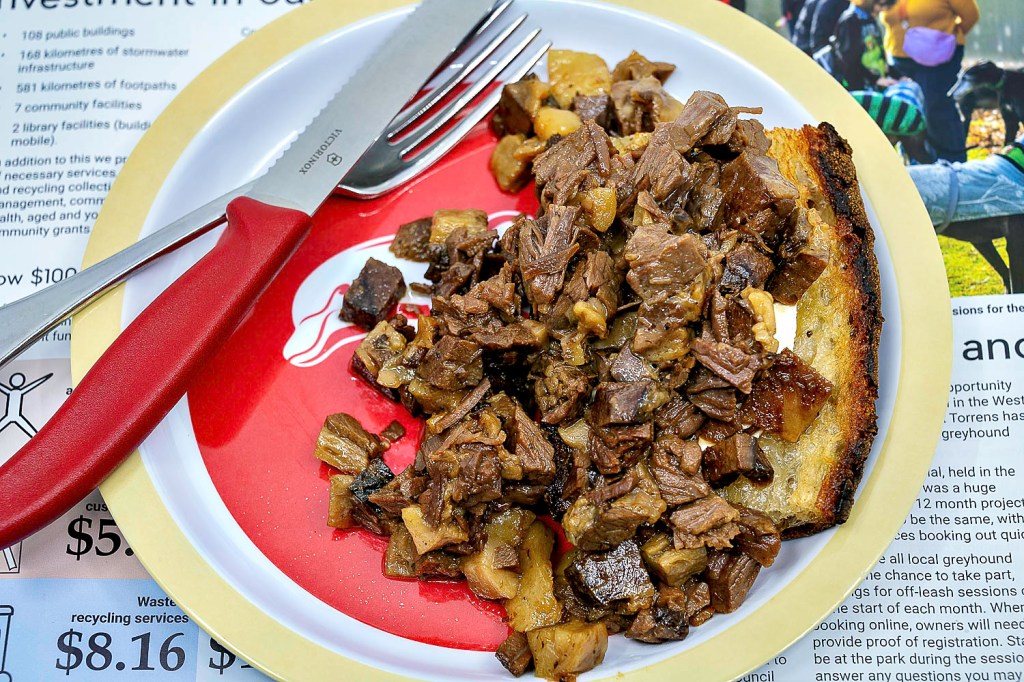
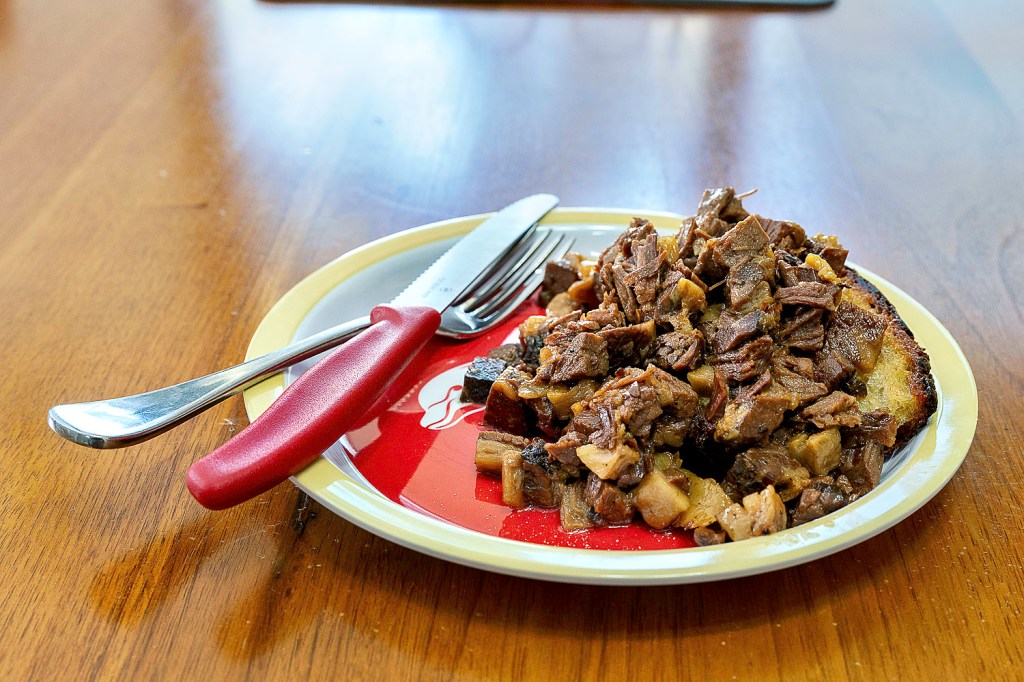
    Beef brisket. Slowly cooked beef brisket reheated in a frypan with beef fat and beef broth. Served on sourdough bread, which had been frozen to develop resistant starch. The photograph features a Dolphins NRL plate.