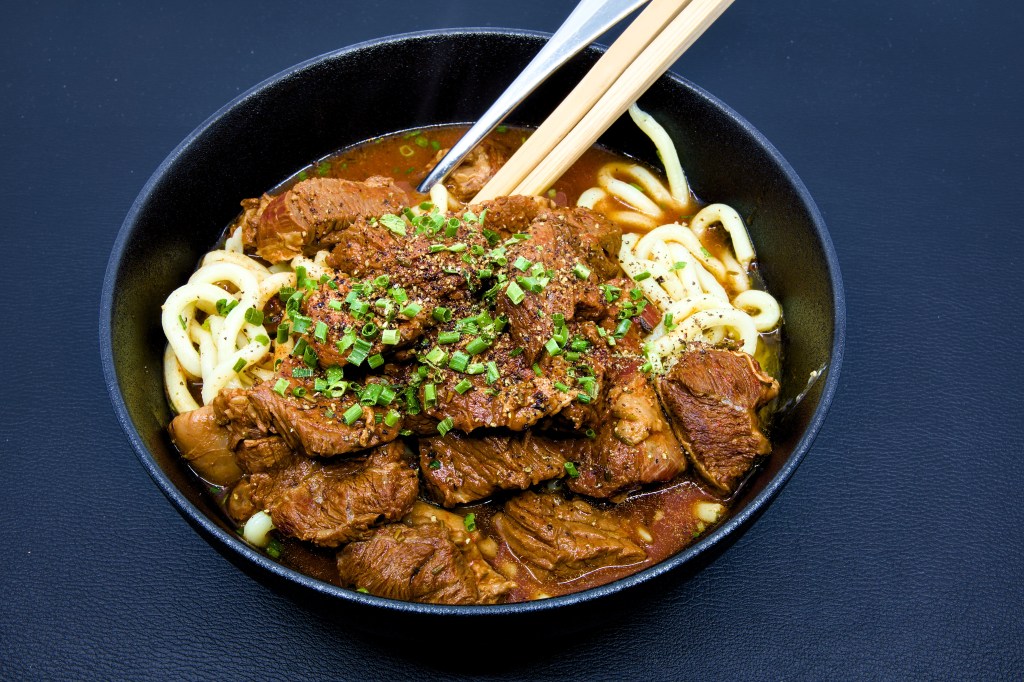
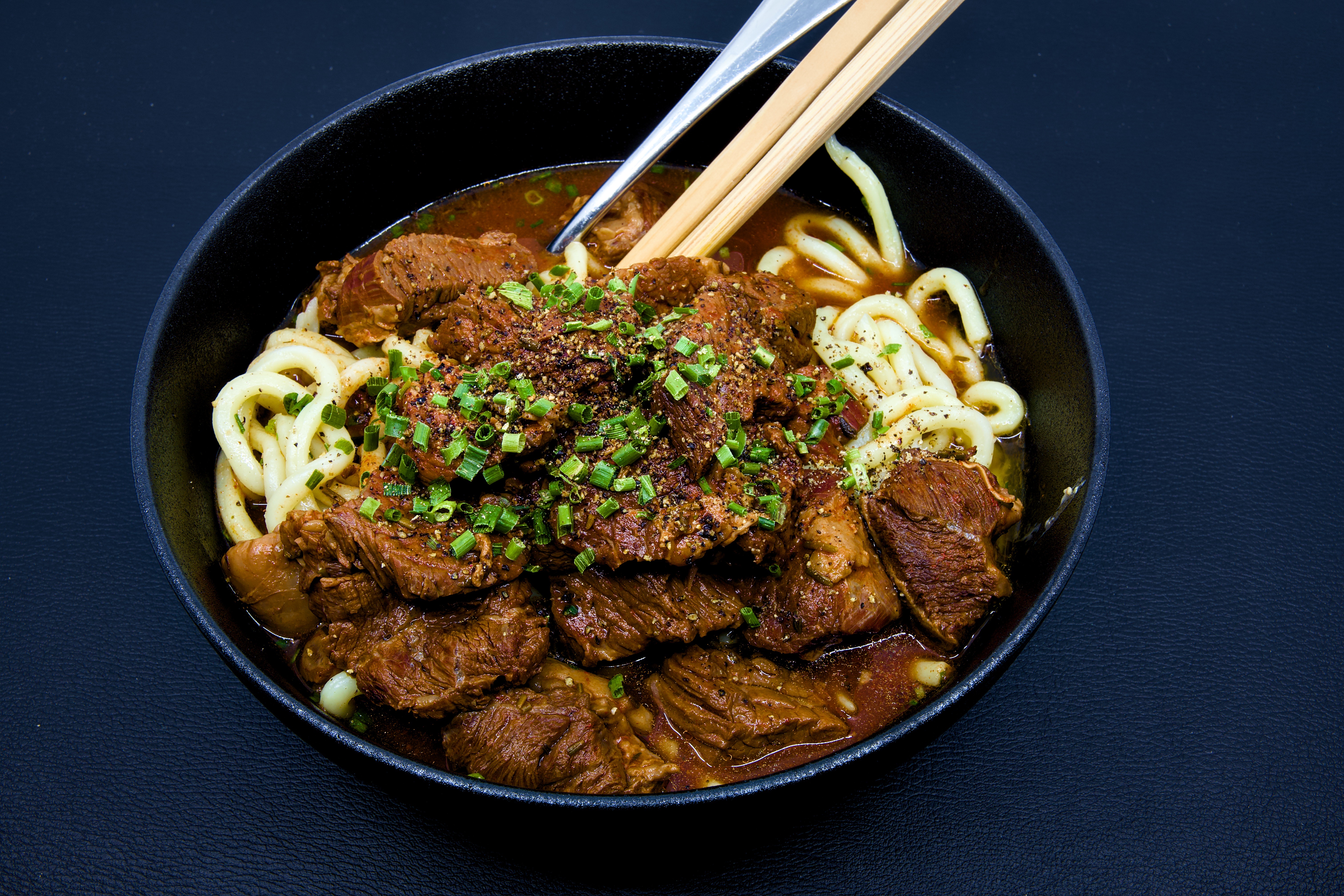
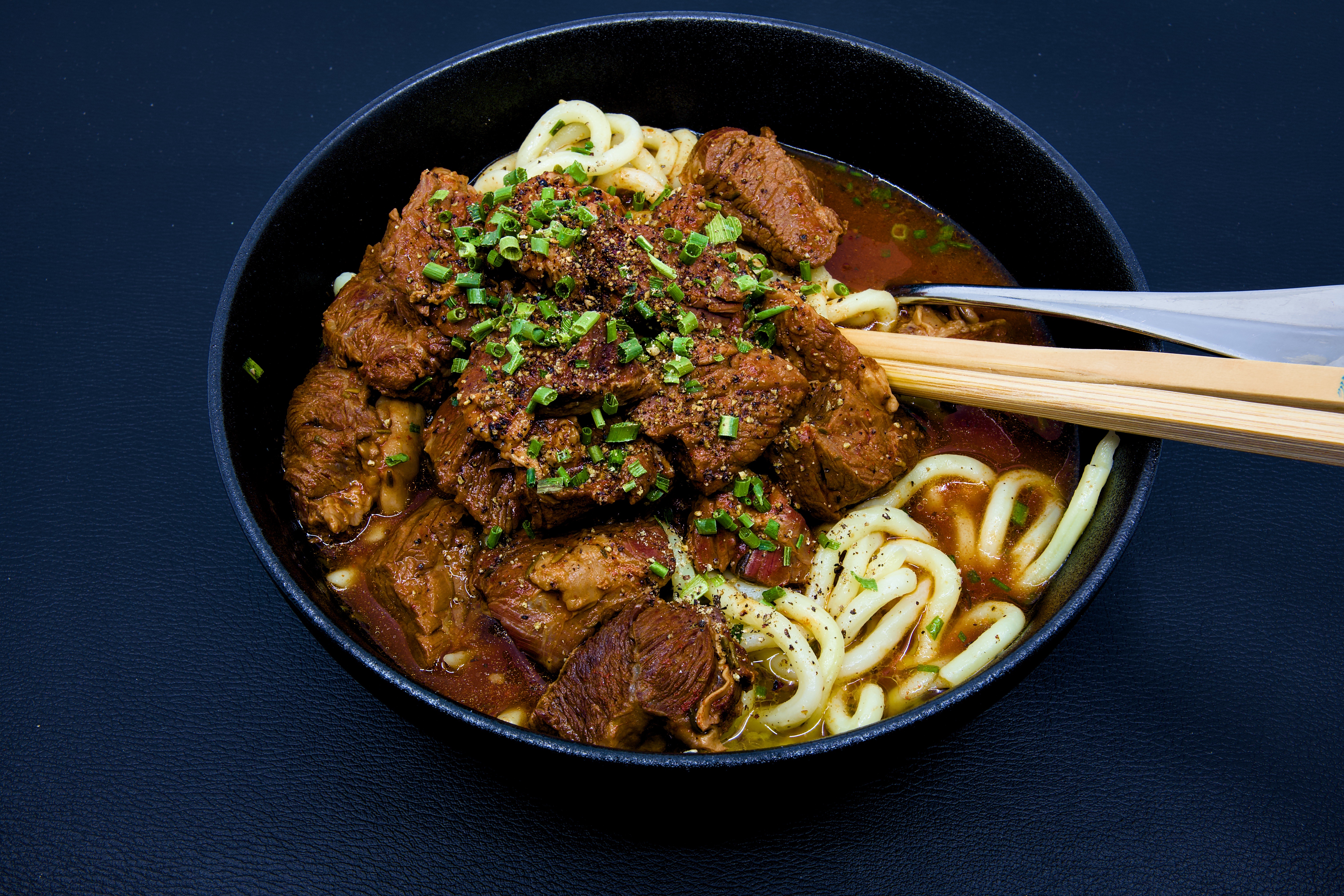
This pressure-cooker meal uses chuck steak, passata, water, Vegemite, and Hokkien noodles.
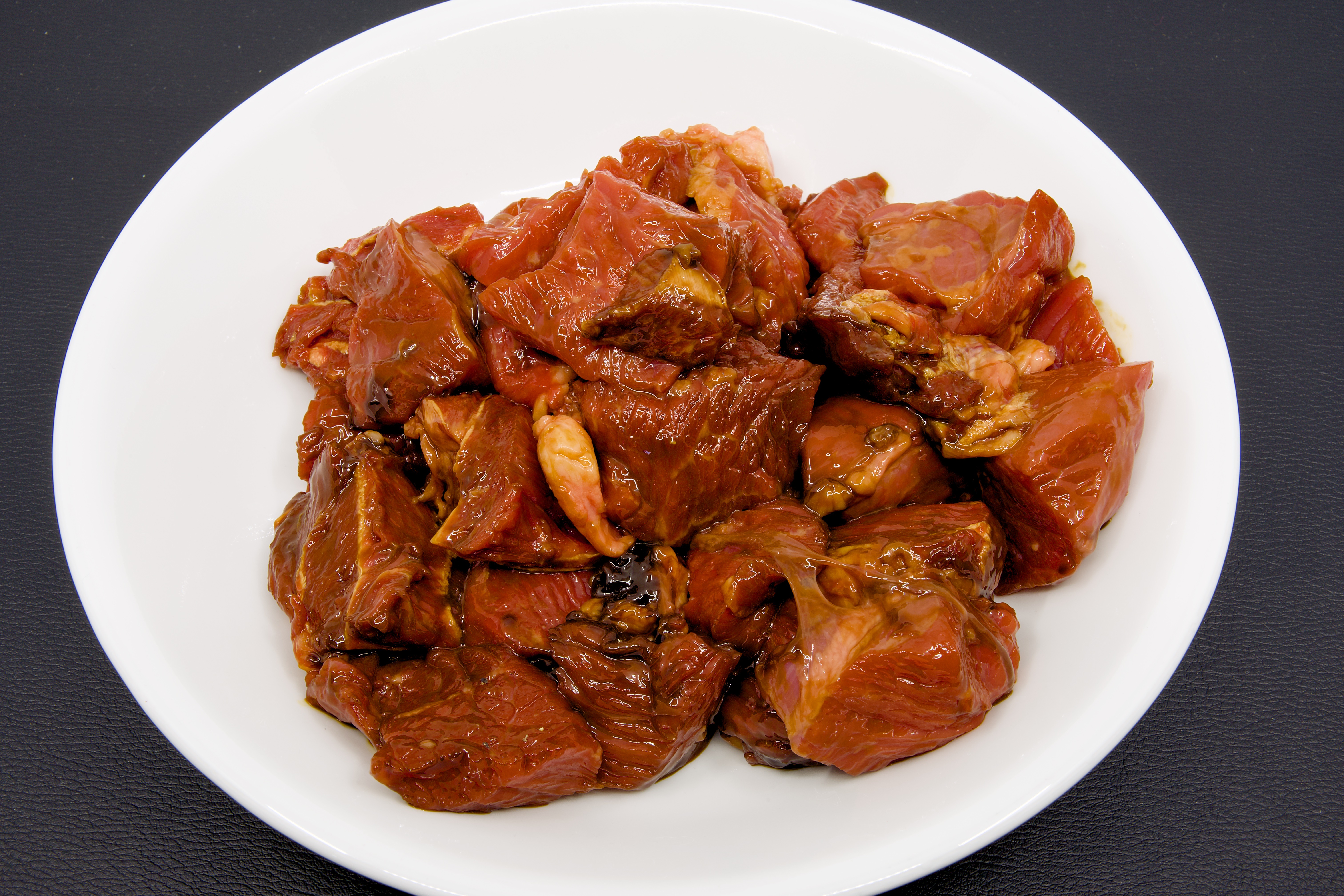
I diced the chuck steak, coated it with Vegemite, and pressure-cooked it in passata and water for 40 minutes. The cooking liquid blended with the beef juices and Vegemite to form a savoury tomato sauce.
I served the beef and noodles in a large, heated bowl and ate the meal with chopsticks and a spoon.
Ingredients
500 g chuck steak
Vegemite, enough to lightly coat the beef
250 mL passata
250 mL water
Hokkien noodles, enough for one generous serving
Equipment
Cutting board
Sharp knife
Large bowl or plate for preparing the beef
Pressure cooker
Measuring jug
Kitchen tongs or spoon
Saucepan or heatproof bowl for preparing the Hokkien noodles, depending on the packet instructions
Colander or strainer
Large serving bowl
Chopsticks
Spoon
Instructions
Prepare the beef
Cut the chuck steak into bite-sized cubes.
Put the diced beef into a bowl.
Add enough Vegemite (about a tablespoon) to coat the surface of the beef lightly.
Use clean hands to rub the Vegemite over the beef pieces.
Pressure cook the beef
Put the Vegemite-coated beef into the pressure cooker.
Add 250 mL of passata.
Add 250 mL of water.
Stir gently to combine the passata and water and distribute the beef through the cooking liquid.
Fit and lock the pressure cooker lid according to the manufacturer’s instructions.
Cook the beef under pressure for 40 minutes.
At the end of the cooking time, release the pressure using a method appropriate for your pressure cooker.
Remove the lid carefully.
Stir the beef through the tomato cooking liquid.
The chuck steak should be tender after pressure cooking, while the passata, water, beef juices, and Vegemite form the sauce for the noodles.
Prepare the Hokkien noodles
Prepare the Hokkien noodles according to the packet instructions.
Drain them well.
Loosen the noodles gently so they are easy to pick up with chopsticks.
Serve
Heat a large serving bowl with hot water.
Discard the water and dry the bowl.
Add the Hokkien noodles to the heated bowl.
Spoon the pressure-cooked beef over the noodles.
Add the tomato cooking liquid according to how much sauce you want.
Serve immediately.
I ate the noodles and pieces of beef with chopsticks and used a spoon for the sauce.
Final thoughts
Chuck steak works well for pressure cooking because it becomes tender while staying in the sauce.
The Vegemite provides seasoning and savoury flavour, while the passata forms the tomato base. Hokkien noodles provide a simple way to serve the beef and sauce together in a bowl.
It is a straightforward beef-and-noodle meal with minimal preparation and one main cooking vessel.
AI Disclaimer
I exploited Microsoft Copilot to correct grammar and spelling. I did not exploit Microsoft Copilot for any other purpose.
This is the sort of meal that rewards patience at the start and then lets the pressure cooker do the heavy lifting. Rendering and roasting the beef bones first creates a rich, savoury foundation, while the beef cheek becomes meltingly tender in a tomato and vegetable braise.
The finished dish is versatile. Serve it over buttered toasted rye sourdough for a rustic cold-weather meal, or ladle it through Hokkien noodles for a comforting bowl of hearty goodness.
Serves
4 to 6 people or one Gary
Equipment
Cast-iron skillet
Pressure cooker
Tongs
Sharp knife
Chopping board
Wooden spoon or silicone spatula
Measuring jug
Large bowl
Ingredients
For the rendered bone base
1 kg beef bones, preferably with some marrow attached
1 teaspoon salt
½ teaspoon freshly ground black pepper
For the braise
1 large beef cheek, approximately 800 g to 1 kg
1 large brown onion, sliced
2 celery stalks, sliced
1 fennel bulb, sliced
700 g passata
500 mL water
1 teaspoon salt, or to taste
1 teaspoon freshly ground black pepper
Reserved rendered beef fat from the bones
Estimated macronutrients by major ingredient
Approximate macronutrients for the main ingredients, before cooking
Ingredient
Amount used
Energy
Protein
Fat
Carbohydrate
Fibre
Beef cheek
800 g to 1 kg
About 887 to 1,109 kcal
About 78 to 97 g
About 34 to 43 g
About 20 to 25 g
Not available
Beef bones and marrow
1 kg bones
Variable
Variable
Variable
Minimal
0 g
Brown onion
1 large, about 150 g
About 53 kcal
About 1.4 g
About 0.2 g
About 11.6 g
About 1.8 g
Celery
2 stalks, about 100 g
About 14 kcal
About 0.7 g
About 0.2 g
About 3 g
About 1.6 g
Fennel bulb
1 bulb, about 230 g
About 71 kcal
About 2.8 g
About 0.5 g
About 17 g
About 7.1 g
Passata
700 g
About 203 kcal
About 11.9 g
About 2.1 g
About 37.8 g
About 9.1 g
Water, salt, and pepper
As listed
Minimal
0 g
0 g
Minimal
0 g
These figures are estimates only. Values vary with meat trim, the amount of marrow rendered into the sauce, passata brand, and final serving size. Beef bone values are especially variable because most of the bone mass is not eaten. This table was generated using a large language model. Large language models can hallucinate and make errors. No attempt has been made to verify the details in the table.
Method
Stage 1: Render and roast the beef bones
Heat a cast-iron skillet over medium heat.
Add the beef bones and season with salt and pepper.
Cook the bones for 20 to 30 minutes, turning occasionally, until they are deeply browned and have released a noticeable amount of beef fat.
Carefully remove the bones and set them aside.
Reserve the rendered fat in the skillet. This fat will be used to build flavour for the braise.
Stage 2: Build the braise
Trim any large pieces of excess surface fat from the beef cheek, but leave enough for flavour.
Add the beef cheek to the cast-iron skillet and brown it on all sides in the rendered beef fat.
Remove the cheek and set aside.
Add the onion, celery, and fennel to the skillet.
Cook for 8 to 10 minutes, stirring regularly, until softened and lightly caramelised.
Transfer the vegetables to the pressure cooker.
Add the browned beef cheek and roasted beef bones.
Pour in the passata and water.
Season with salt and pepper.
Stir gently to combine.
Pressure cook
Secure the lid according to the manufacturer’s instructions.
Cook on high pressure for 70 minutes.
Allow a natural pressure release for 15 to 20 minutes before opening.
Remove the beef cheek and bones.
Discard the bones.
Shred some of the beef cheek using two forks and return the meat to the sauce.
Stir thoroughly and taste for seasoning.
If the sauce is thinner than you prefer, simmer it uncovered for 10 to 15 minutes until slightly reduced.
Serving suggestion 1: Toasted rye sourdough
Toast slices of frozen rye sourdough until crisp and golden.
Spread generously with cultured butter while still hot.
Spoon the braised beef cheek and sauce over the toast.
Serve with extra black pepper.
The slight tang of rye sourdough and cultured butter complements the richness of the beef beautifully.
Serving suggestion 2: Hokkien noodles
Prepare Hokkien noodles according to the packet instructions.
Drain well.
Toss the noodles through the hot braised beef cheek sauce.
Serve in deep bowls with plenty of sauce.
The noodles soak up the tomato-rich braising liquid and turn the dish into something approaching a hearty beef ragù.
Notes on Hokkien noodles
Hokkien noodles originated with migrants from Fujian Province in southern China, historically known as Hokkien in many overseas Chinese communities. They are popular throughout South-East Asia and Australia.
Characteristics include:
A thick, round shape.
A chewy texture.
Usually made from wheat and egg.
Commonly sold fresh, cooked, and vacuum-packed in Australian supermarkets.
They work particularly well with slow-cooked meats because their sturdy texture stands up to rich sauces without becoming mushy. In this recipe, they provide a satisfying contrast to the soft, succulent beef cheek.
Yummy Lummy notes
Beef cheek is one of the great value cuts for pressure cooking.
Rendering and browning the bones first adds depth and body that cannot be achieved with meat alone.
Fennel contributes a subtle sweetness and gentle anise character that softens the acidity of the passata.
Leftovers improve overnight and freeze exceptionally well.
The sauce can also be used as a filling for jaffles, pies, or a baked potato topping.
Footy finals note
This weekend marks the first round of the footy finals. The Dolphins are playing the Warriors in New Zealand this afternoon, and this meal was eaten while watching the footy. Rich beef cheek, tomato, fennel, and rye sourdough feel like the right sort of food for finals rugby league: hearty, savoury, and made for slow eating in front of the television.
Cook’s tip
If the bones contain marrow, scoop the softened marrow into the sauce after pressure cooking and stir it through before serving. It enriches the braising liquid and adds a luxurious mouthfeel without requiring any additional ingredients.