Tag: Short rib

  • Cheeky beef

    Cheeky beef


    Pressure Cooker Beef Cheek

    This is the sort of meal that rewards patience at the start and then lets the pressure cooker do the heavy lifting. Rendering and roasting the beef bones first creates a rich, savoury foundation, while the beef cheek becomes meltingly tender in a tomato and vegetable braise.

    The finished dish is versatile. Serve it over buttered toasted rye sourdough for a rustic cold-weather meal, or ladle it through Hokkien noodles for a comforting bowl of hearty goodness.

    This is a photograph of a multicoloured bowl with Hokkien noodles and leftover beef cheek and beef short rib stew. The utensils include chopsticks and a spoon.

    Serves

    4 to 6 people or one Gary

    Equipment

    • Cast-iron skillet
    • Pressure cooker
    • Tongs
    • Sharp knife
    • Chopping board
    • Wooden spoon or silicone spatula
    • Measuring jug
    • Large bowl

    Ingredients

    For the rendered bone base

    • 1 kg beef bones, preferably with some marrow attached
    • 1 teaspoon salt
    • ½ teaspoon freshly ground black pepper
    This is a photograph of a white bowl containing cooked beef bones that have come out of the pressure cooker.

    For the braise

    • 1 large beef cheek, approximately 800 g to 1 kg
    • 1 large brown onion, sliced
    • 2 celery stalks, sliced
    • 1 fennel bulb, sliced
    • 700 g passata
    • 500 mL water
    • 1 teaspoon salt, or to taste
    • 1 teaspoon freshly ground black pepper
    • Reserved rendered beef fat from the bones

    Estimated macronutrients by major ingredient

    Approximate macronutrients for the main ingredients, before cooking
    IngredientAmount usedEnergyProteinFatCarbohydrateFibre
    Beef cheek800 g to 1 kgAbout 887 to 1,109 kcalAbout 78 to 97 gAbout 34 to 43 gAbout 20 to 25 gNot available
    Beef bones and marrow1 kg bonesVariableVariableVariableMinimal0 g
    Brown onion1 large, about 150 gAbout 53 kcalAbout 1.4 gAbout 0.2 gAbout 11.6 gAbout 1.8 g
    Celery2 stalks, about 100 gAbout 14 kcalAbout 0.7 gAbout 0.2 gAbout 3 gAbout 1.6 g
    Fennel bulb1 bulb, about 230 gAbout 71 kcalAbout 2.8 gAbout 0.5 gAbout 17 gAbout 7.1 g
    Passata700 gAbout 203 kcalAbout 11.9 gAbout 2.1 gAbout 37.8 gAbout 9.1 g
    Water, salt, and pepperAs listedMinimal0 g0 gMinimal0 g

    These figures are estimates only. Values vary with meat trim, the amount of marrow rendered into the sauce, passata brand, and final serving size. Beef bone values are especially variable because most of the bone mass is not eaten. This table was generated using a large language model. Large language models can hallucinate and make errors. No attempt has been made to verify the details in the table.

    Method

    Stage 1: Render and roast the beef bones

    1. Heat a cast-iron skillet over medium heat.
    2. Add the beef bones and season with salt and pepper.
    3. Cook the bones for 20 to 30 minutes, turning occasionally, until they are deeply browned and have released a noticeable amount of beef fat.
    4. Carefully remove the bones and set them aside.
    5. Reserve the rendered fat in the skillet. This fat will be used to build flavour for the braise.

    Stage 2: Build the braise

    1. Trim any large pieces of excess surface fat from the beef cheek, but leave enough for flavour.
    2. Add the beef cheek to the cast-iron skillet and brown it on all sides in the rendered beef fat.
    3. Remove the cheek and set aside.
    4. Add the onion, celery, and fennel to the skillet.
    5. Cook for 8 to 10 minutes, stirring regularly, until softened and lightly caramelised.
    6. Transfer the vegetables to the pressure cooker.
    7. Add the browned beef cheek and roasted beef bones.
    8. Pour in the passata and water.
    9. Season with salt and pepper.
    10. Stir gently to combine.

    Pressure cook

    1. Secure the lid according to the manufacturer’s instructions.
    2. Cook on high pressure for 70 minutes.
    3. Allow a natural pressure release for 15 to 20 minutes before opening.
    4. Remove the beef cheek and bones.
    5. Discard the bones.
    6. Shred some of the beef cheek using two forks and return the meat to the sauce.
    7. Stir thoroughly and taste for seasoning.

    If the sauce is thinner than you prefer, simmer it uncovered for 10 to 15 minutes until slightly reduced.

    Serving suggestion 1: Toasted rye sourdough

    1. Toast slices of frozen rye sourdough until crisp and golden.
    2. Spread generously with cultured butter while still hot.
    3. Spoon the braised beef cheek and sauce over the toast.
    4. Serve with extra black pepper.

    The slight tang of rye sourdough and cultured butter complements the richness of the beef beautifully.

    Serving suggestion 2: Hokkien noodles

    1. Prepare Hokkien noodles according to the packet instructions.
    2. Drain well.
    3. Toss the noodles through the hot braised beef cheek sauce.
    4. Serve in deep bowls with plenty of sauce.

    The noodles soak up the tomato-rich braising liquid and turn the dish into something approaching a hearty beef ragù.

    Notes on Hokkien noodles

    Hokkien noodles originated with migrants from Fujian Province in southern China, historically known as Hokkien in many overseas Chinese communities. They are popular throughout South-East Asia and Australia.

    Characteristics include:

    • A thick, round shape.
    • A chewy texture.
    • Usually made from wheat and egg.
    • Commonly sold fresh, cooked, and vacuum-packed in Australian supermarkets.

    They work particularly well with slow-cooked meats because their sturdy texture stands up to rich sauces without becoming mushy. In this recipe, they provide a satisfying contrast to the soft, succulent beef cheek.

    Yummy Lummy notes

    • Beef cheek is one of the great value cuts for pressure cooking.
    • Rendering and browning the bones first adds depth and body that cannot be achieved with meat alone.
    • Fennel contributes a subtle sweetness and gentle anise character that softens the acidity of the passata.
    • Leftovers improve overnight and freeze exceptionally well.
    • The sauce can also be used as a filling for jaffles, pies, or a baked potato topping.

    Footy finals note

    This weekend marks the first round of the footy finals. The Dolphins are playing the Warriors in New Zealand this afternoon, and this meal was eaten while watching the footy. Rich beef cheek, tomato, fennel, and rye sourdough feel like the right sort of food for finals rugby league: hearty, savoury, and made for slow eating in front of the television.

    Cook’s tip

    If the bones contain marrow, scoop the softened marrow into the sauce after pressure cooking and stir it through before serving. It enriches the braising liquid and adds a luxurious mouthfeel without requiring any additional ingredients.
    Fediverse Reactions
  • Chicken and beef

    Chicken and beef


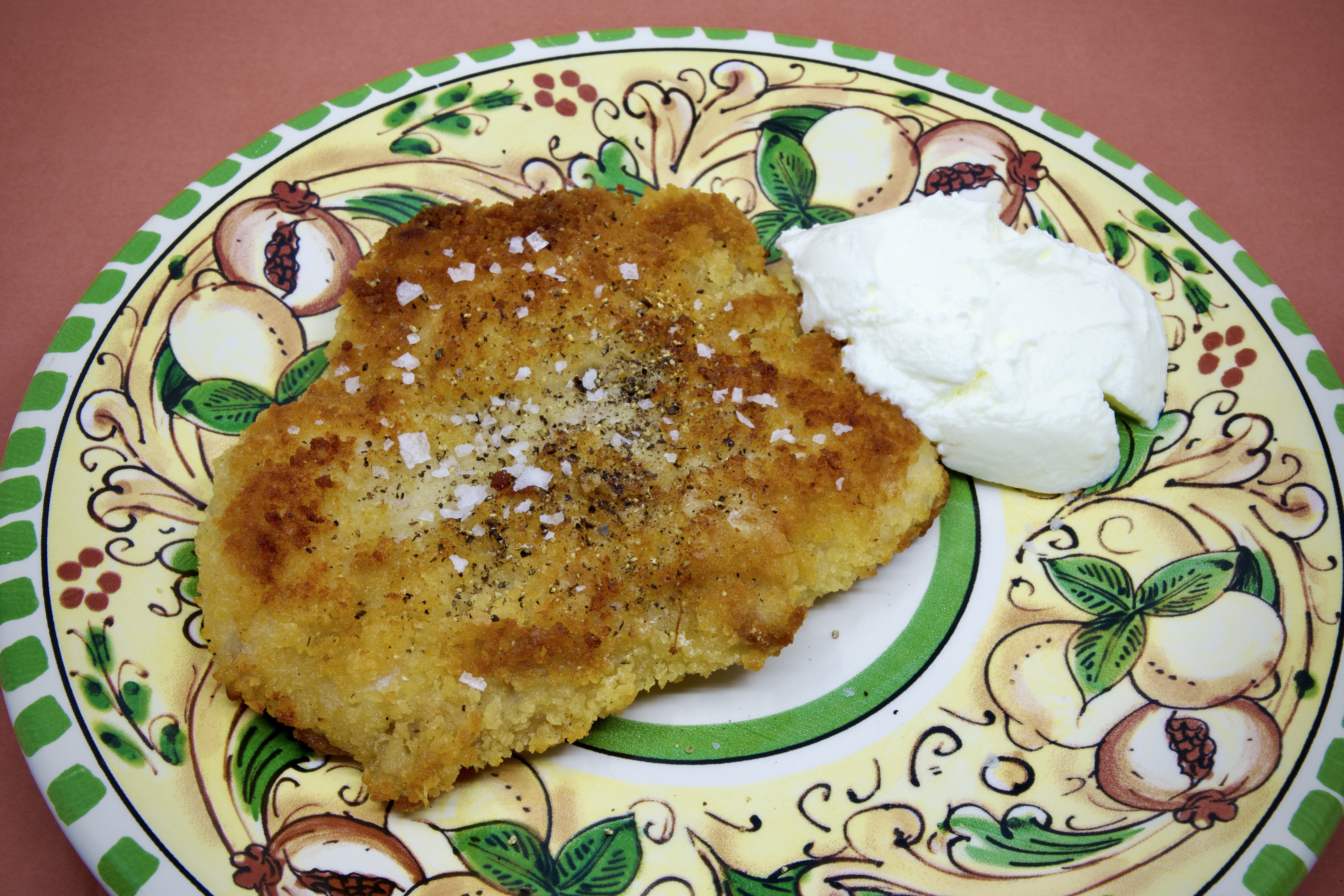
    For today’s “food diary,” I had some crumbed chicken for lunch and beef short rib for tea.

    I bought the crumbed chicken thigh when I bought the crumbed pork yesterday. I ate it with some Greek-style yoghurt.

    Crumbed chicken thigh with Greek-style yoghurt.

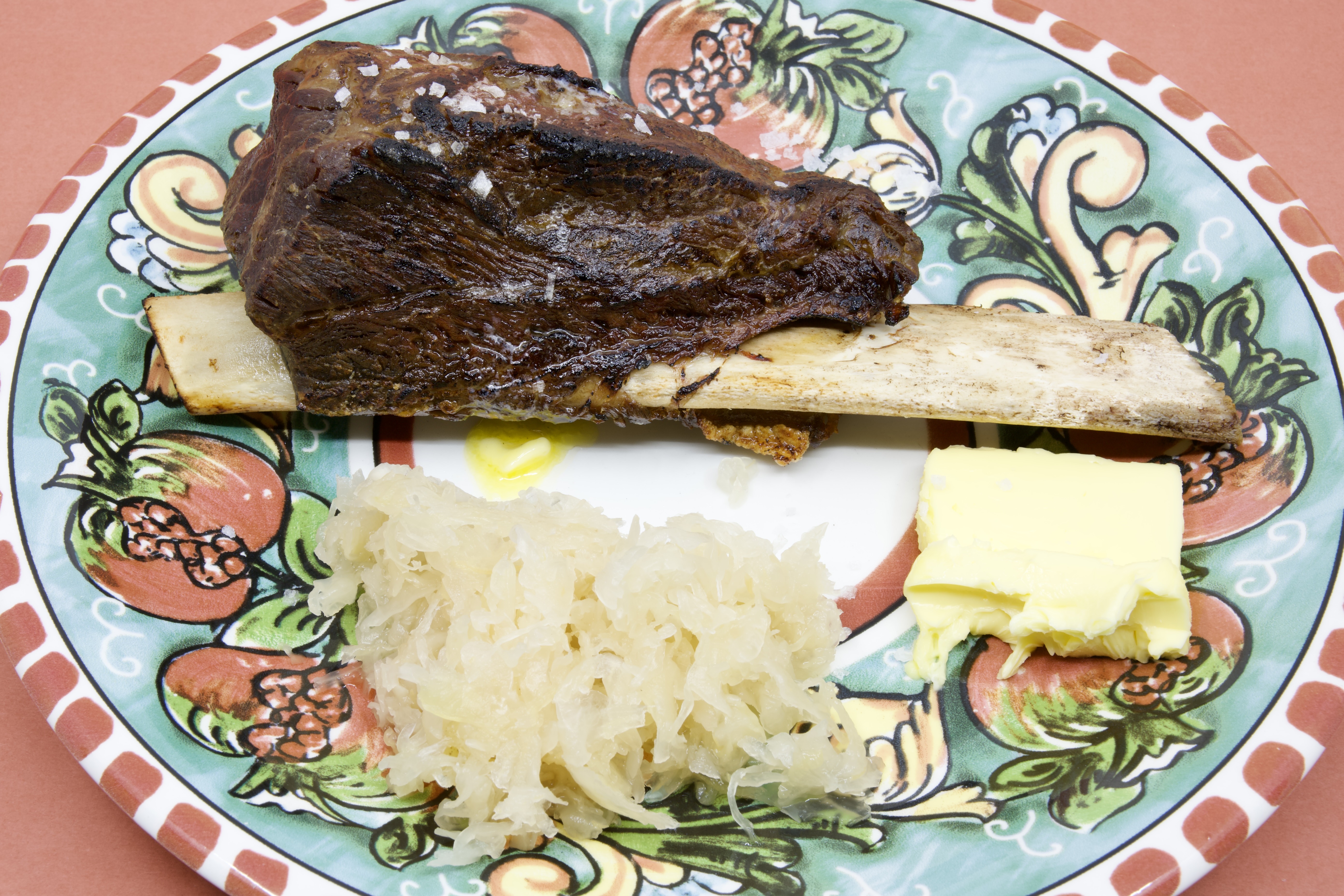
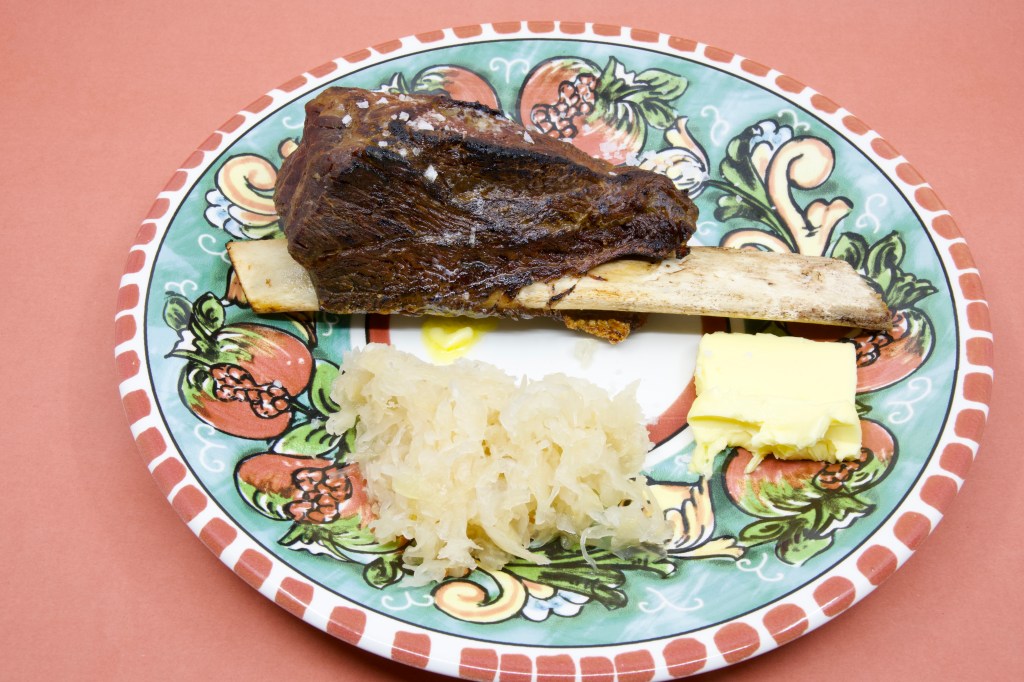
    Dinner was a slow-cooked beef short rib, which I ate with sauerkraut.

    The beef short rib was in the slow cooker with some cooking liquor from a previous meal (which included beef, lamb, and pork). I had it on low heat for eight hours. I seared it on the barbecue grill with a gas torch.

    Beef short rib with Polish sauerkraut and cultured butter. The beef short rib was cooked in the slow cooker for 8 hours on low heat. It was seared on my Weber Q+ With a gas torch.
    Fediverse Reactions
  • Beef short rib with Brussels sprouts!

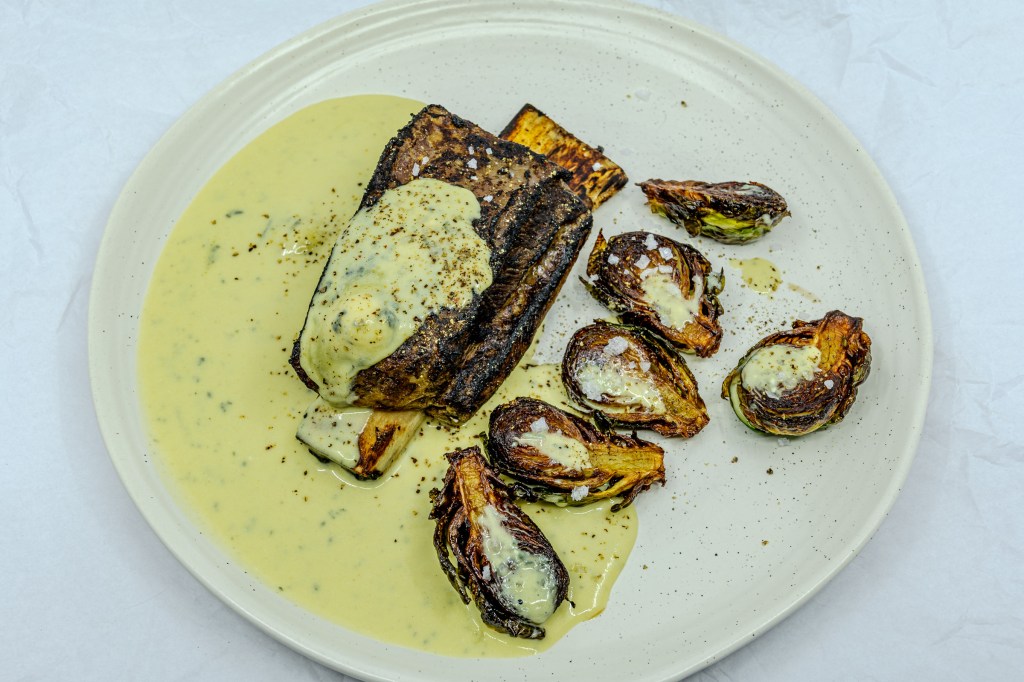
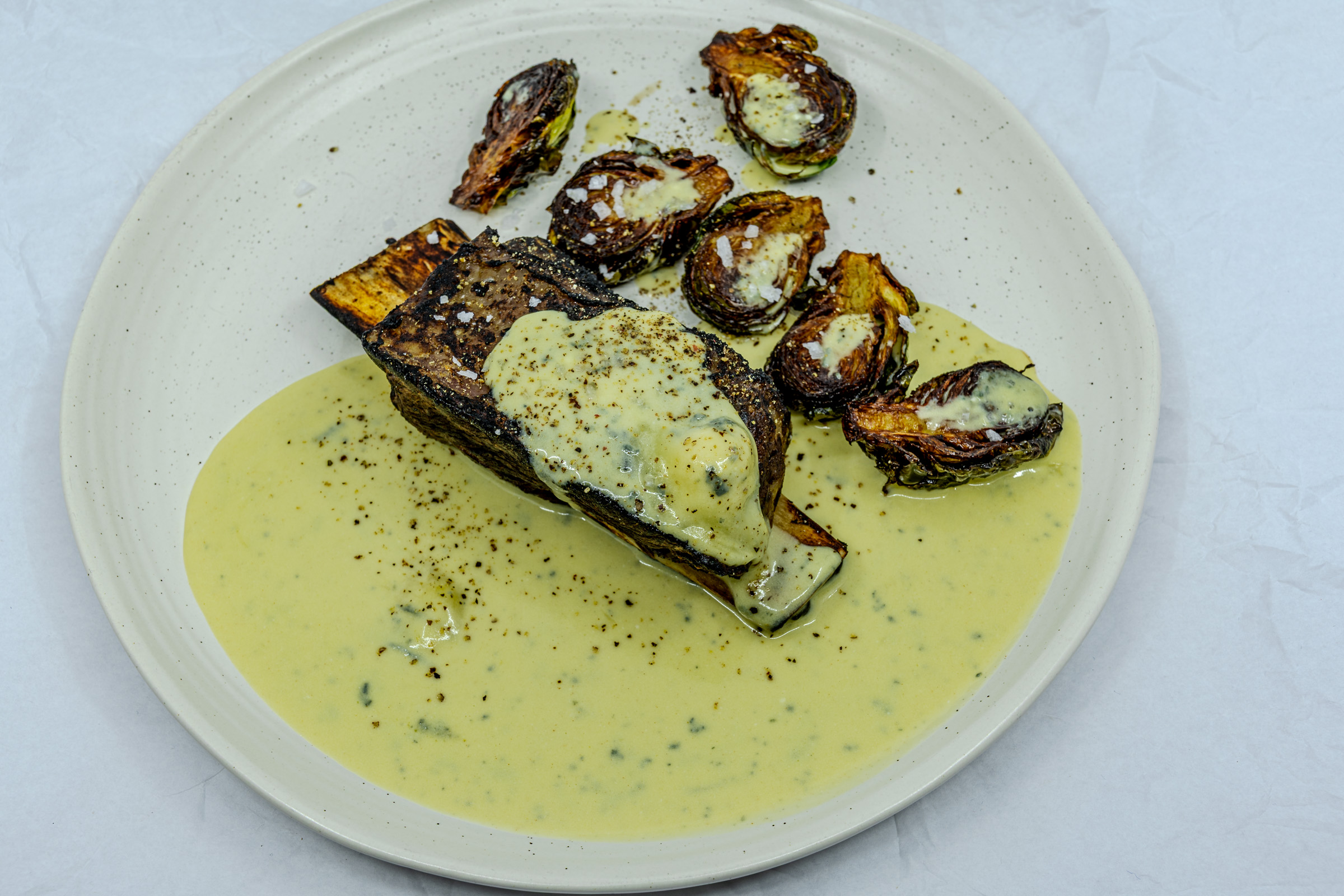
    Beef short rib with Brussels sprouts!


    I had a meeting this week with a former work colleague in Tasmania. Brussels sprouts came up in the conversation. I didn’t like them as a child, even when Mum cooked with bacon.

    These days, though, I like them, especially when parboiled and finished in beef fat on a cast-iron pan. Crispy Brussels sprouts are now a favourite vegetable.

    Barbecue “emergency”

    During the week, I had some meetings that would extend late into the evening, so I carefully orchestrated the evening meal to fit within a short break.

    I had my meat ready and was about to ignite the barbecue. I opened the bottle valve, then opened the barbecue valve and pressed the electric ignition switch. I saw and heard sparks, but saw no flames! The tank had gas. I disconnected the hoses and the regulator and reconnected them to reset the regulator. Still no flame. I removed the grill plates and checked the burners for blockages. Nup, the burners were clean, and all the holes were open. I deduced it was the regulator[i]. It had to be. It was too late in the evening, and I didn’t have time to drive to the hardware store. I had to cook my meat inside on the stove top. I’m sure it would have tasted better cooked on the barbecue.

    The next morning, I drove to the hardware store before work and bought a new regulator. After installing it, I rejoiced at the sight and sound of a gas flame erupting from the burner tubing.

    I use the barbecue nearly every night to cook meat. If the problem had been more difficult, I would have been unhappy.

    Tonight’s meal needed the barbecue to work.

    Recipe

    Slow-cooked beef short ribs with Brussels sprouts fried in beef fat, served with blue-vein cheese and mustard sauce.

    Ingredients

    • Beef short ribs[ii]
    • Salt
    • Water
    • Brussels sprouts[iii]
    • Beef fat
    • Butter
    • Cream
    • Cream cheese
    • Mustard
    • Blue vein cheese[iv]

    Equipment

    • Slow cooker
    • Barbecue
    • Gas torch
    • Saucepan

    Instructions

    1. Cook the beef short ribs with salt and water in the slow cooker. Cook on low heat for 8 hours.
    2. Cut the Brussels sprouts in half (longitudinally).
    3. Parboil the Brussels sprouts for 5 minutes.
    4. Drain the Brussels sprouts, lay them cut side down on a plate, and then place the plate in the freezer.
    5. Remove the ribs and keep one aside.
    6. Dry the surface with absorbent paper.
    7. Heat the barbecue, which contains a shallow cast-iron plate with beef fat from previous cooking sessions.
    8. Place the frozen Brussels sprouts on the cast-iron plate, cut side down.
    9. Heat some butter in a small saucepan, then slowly add the cream, cream cheese, and mustard. Crumble in the blue vein cheese and keep stirring until a sauce forms.
    10. Place the sequestered beef short rib on a hot grill plate to sear the surface.
    11. Add to the searing with a gas torch.
    12. Transfer the beef short rib and Brussels sprouts to a dinner plate.
    13. Drizzle the blue vein cheese and mustard sauce over the meat and Brussels sprouts.
    14. Use a sharp, non-serrated dinner knife to avoid tearing the meat. You want to cut cleanly against the grain. Perfectly cooked meat won’t squash between the knife and bone. The meat will come away from the bone easily and have a bit of “bounce” when pressed.

    Thoughts on the meal

    The meat was tender and combined well with the crispy Brussels sprouts and the creamy, pungent sauce.

    The meat came away from the bone easily but wasn’t mushy. I cut the meat with a sharp knife. It cut easily into bite-sized portions and then combined with sauce and Brussels sprouts for a bite with incredible flavour and mouthfeel.

    I will definitely cook this again.

    Photographs

    This is a gallery of images. Select one and then scroll through them.

    Questions

    How often do you cook with a barbecue?

    Have you ever had a barbecue “emergency?”

    Do you like Brussels sprouts? How do you want them cooked?


    [i] A barbecue gas regulator is a compact device attached to your LPG cylinder that reduces high cylinder pressure to a safe, steady flow for cooking. In Australia, the standard is 2.75 kPa, with modern LCC27 fittings offering improved safety. Regulators are typically sold with hoses (PVC or braided) and may include gauges for monitoring gas levels. They are essential for safe and reliable barbecue operation. I bought the cheapest one I could find. It didn’t come with a gauge.

    [ii] Beef short ribs are a richly marbled cut taken from the chuck, plate, or rib areas, prized for their deep flavour and tenderness when slow-cooked.

    [iii] Brussels sprouts are small, leafy green vegetables that resemble miniature cabbages, belonging to the Brassica oleracea species. They are cultivated for their edible buds.

    [iv] Blue vein cheese (often called blue cheese) is a type of cheese made from cow’s, sheep’s, or goat’s milk that is ripened with cultures of the fungal mould Penicillium roqueforti, giving it distinctive blue, green, or grey veins throughout its body and a strong, pungent flavour.