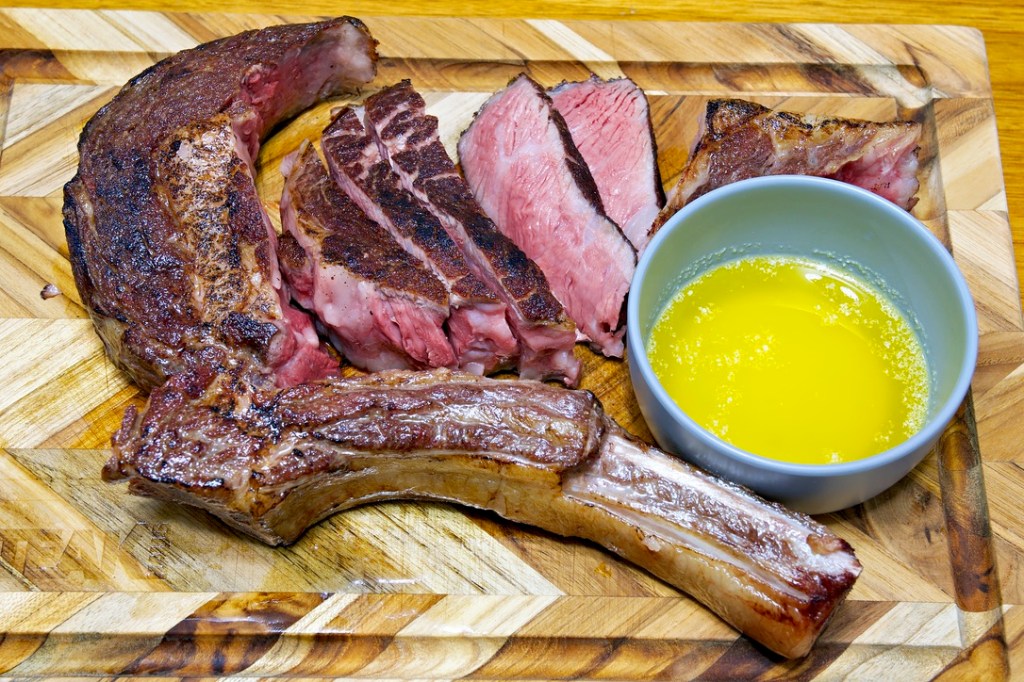
What is the red liquid that comes away from a medium rare steak?
- Myoglobin, not blood: The red liquid is primarily water mixed with myoglobin, a protein found in muscle tissue. Myoglobin stores oxygen in muscle cells and gives meat its red colour.
- Why it looks like blood: Myoglobin is red when exposed to oxygen, which is why it resembles blood. Almost all the actual blood has been drained during processing.
- Cooking changes it: As the steak cooks, myoglobin darkens. That’s why well-done meat looks brown or grey, while rare or medium rare meat retains that reddish hue.
- When people complain or start lowing like a cow, you can explain, it’s not blood. The fact it’s myoglobin mixing with water may not help, but at least it’s not blood.
Temperature and Doneness
- Medium rare steak is typically cooked to an internal temperature of 57–63 °C (135–145 °F).
- At this range, the myoglobin hasn’t fully broken down, so it remains visible in the juices.
The same principle applies to other red meats like lamb. Poultry and pork have much less myoglobin, which is why their juices are clearer and the meat is paler.
