Tag: Beef

  • Long weekend Grand final steak

    Long weekend Grand final steak


    Skip the palaver and jump to the recipe.

    Daylight saving

    My least favourite day of the year is the first Sunday of October.

    Daylight saving time (DST) is the practice of moving the clock forward by one hour during the warmer months to extend evening daylight and reduce morning daylight.

    ⏰ How It Works

    • Start of DST: Clocks are set forward by one hour (e.g., from 2:00 am to 3:00 am), usually in spring.
    • End of DST: Clocks are set back by one hour (e.g., from 3:00 am to 2:00 am), usually in autumn.

    🌞 Purpose

    • To make better use of natural daylight during the evenings.
    • Originally intended to conserve energy by reducing the need for artificial lighting.

    📍 In Australia

    • Observed in: New South Wales, Victoria, South Australia, Tasmania, and the ACT.
    • Not observed in: Queensland, Western Australia, and the Northern Territory.
    • Typical schedule: Begins on the first Sunday in October and ends on the first Sunday in April.

    🧠 Fun Fact

    The idea was popularised by George Hudson, a New Zealand entomologist, in the late 19th century. It gained traction during World War I and World War II as a way to conserve fuel.

    If I led Australia, I’d abolish daylight saving and change the central time zone to be 60 minutes behind the Eastern time zone rather than 30 minutes. I like light at the start of the day, and I like it dark when I climb into bed and want to sleep. When I’m cooking tea, I want the heat of a summer day to be waning rather than peaking.

    I expect few Australians would want me as their leader! 😆

    Labour day

    Monday is Labour Day here. Labour Day is a public holiday that celebrates the achievements of workers and the labour movement, particularly the push for fair working conditions and the eight-hour workday. Its origins trace back to the 19th century, when workers around the world began campaigning for better rights and protections. In other countries, it’s often held on 1 May and known as May Day.

    Grand final

    Tonight, the National Rugby League Grand Final game is being played between the Brisbane Broncos and the Melbourne Storm. I had hoped the Dolphins NRL 🐬 team would have reached the final series, but alas, despite scoring more points than any team this season, they failed to make the “top eight.”

    The Brisbane Broncos are my number 2 team, and the Melbourne Storm are my number 5 team. I rate my rugby league teams on their location and composition. Teams located in the greatest state in the federation sit at the top, followed by teams with a strong Maroons composition or history. That’s why, despite my usual antipathy to much that is in Victoria, the Melbourne Storm ranks higher than teams in New Zealand, New South Wales and the Australian Capital Territory.

    Next year, a new team will enter the competition, namely the Bears, which will be based in Perth. I think it’s a mistake. I would have put the team in Northern New South Wales.

    AI generated.

    🏉 2025 NRL Grand Final Preview

    The 2025 NRL Grand Final promises a thrilling showdown between two powerhouse clubs: the Brisbane Broncos and the Melbourne Storm, kicking off at 7:30 pm AEDT at Accor Stadium, Sydney.

    🔥 Key Storylines

    • Melbourne Storm is chasing their 5th Premiership, having last won in 2020.
    • Brisbane Broncos aim for their 7th title, and their first since 2006.
    • This marks their first Grand Final clash since 2006, reigniting a classic rivalry.

    📊 Form Guide

    • Storm finished 2nd in the regular season (17–7), defeating the Bulldogs and Sharks in the finals.
    • The Broncos surged late to finish 4th, edging the Canberra Raiders and stunning the reigning champions, the Penrith Panthers 16–14 in a comeback victory.

    🧠 Team News

    Melbourne Storm (unchanged lineup):

    • Key players: Ryan Papenhuyzen, Cameron Munster, Harry Grant, Jahrome Hughes
    • Milestone: Trent Loiero plays his 100th first-grade game.

    Brisbane Broncos (one change):

    • Pat Carrigan returns from suspension, replacing Tyson Smoothy.
    • Ben Hunt starts at five-eighth, with Ezra Mam on the bench.

    🧮 Head-to-Head in 2025

    • The teams are 1–1 in their previous meetings this season, setting up a decisive clash.

    📺 How to Watch

    • Australia: Nine Network (free-to-air), Kayo Sports, Foxtel
    • UK: Sky Sports
    • US: Fox Sports (select coverage)

    This Grand Final is expected to be a tactical battle between the Storm’s structured discipline and the Broncos’ explosive flair. With history, redemption, and legacy on the line, fans can expect a gripping contest.

    The other good news for the Brisbane Broncos club is that their women’s team played in the NRLW Grand Final against the Sydney Roosters earlier today. The Broncos defeated the Roosters 22:18.

    It’s been a big week for Brisbane with its Aussie rules team (Brisbane Lions) winning the Aussie rules premiership last week.

    Recipe

    Ingredients

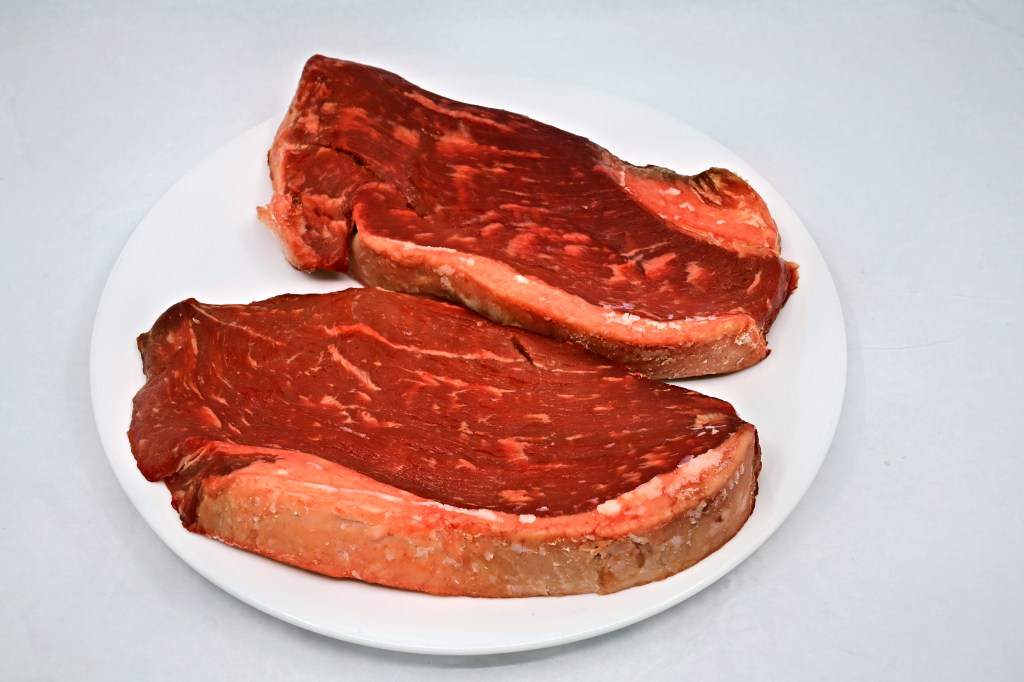
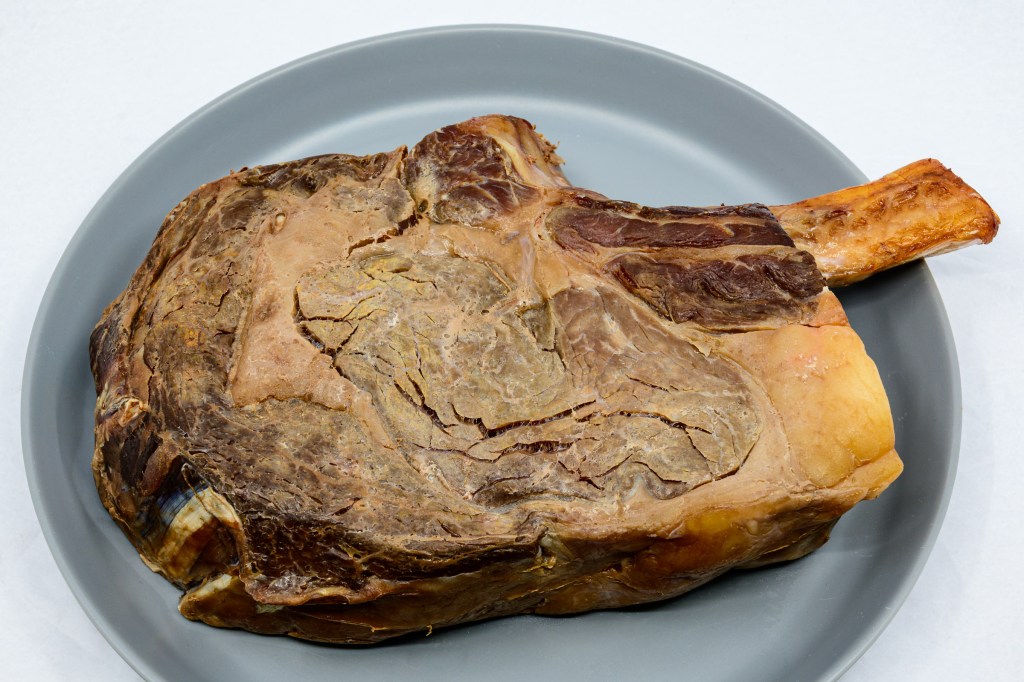
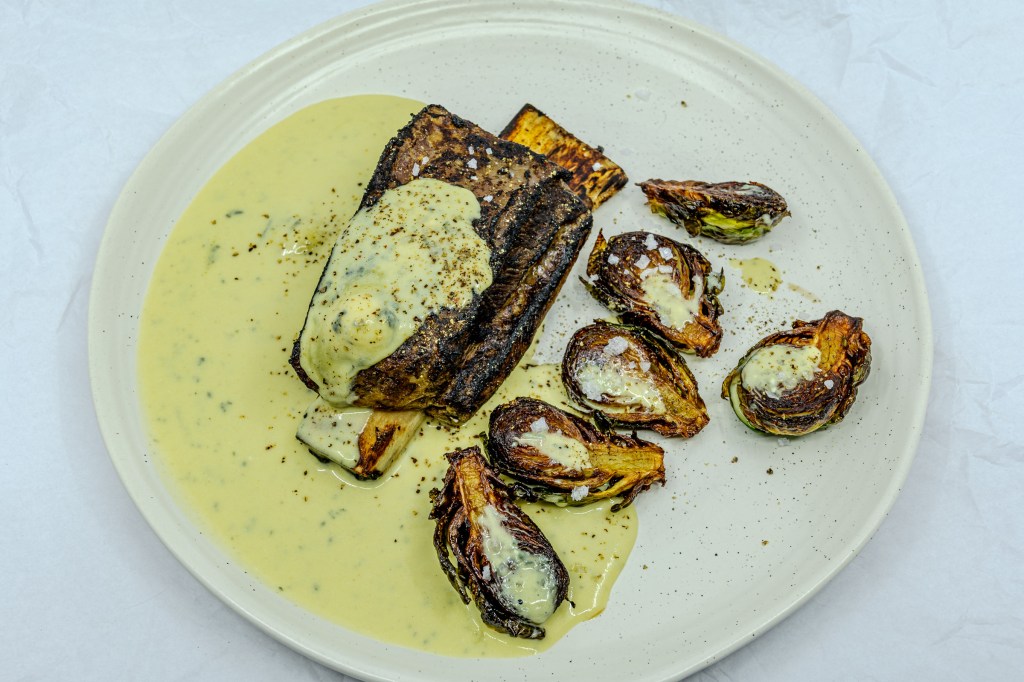
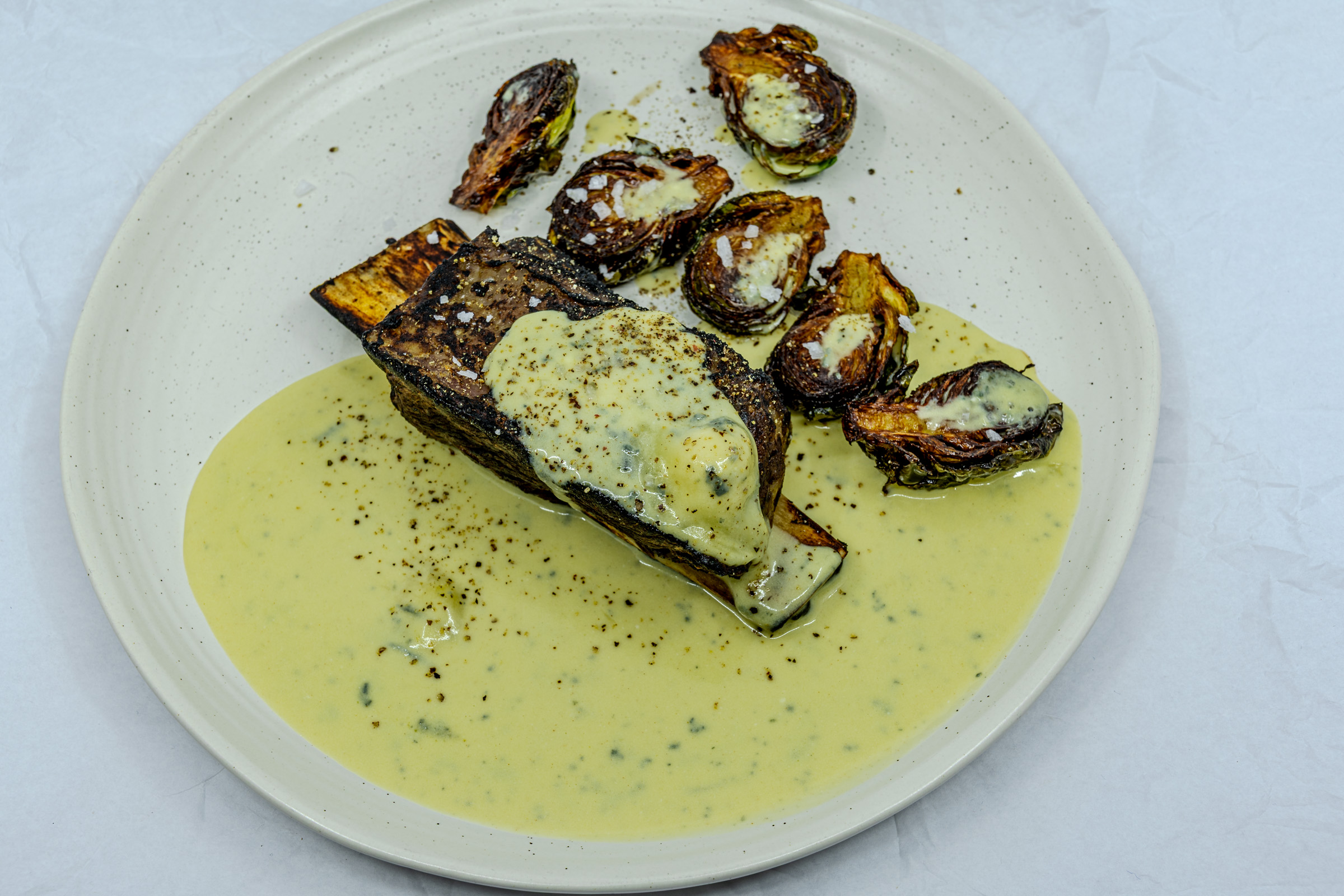
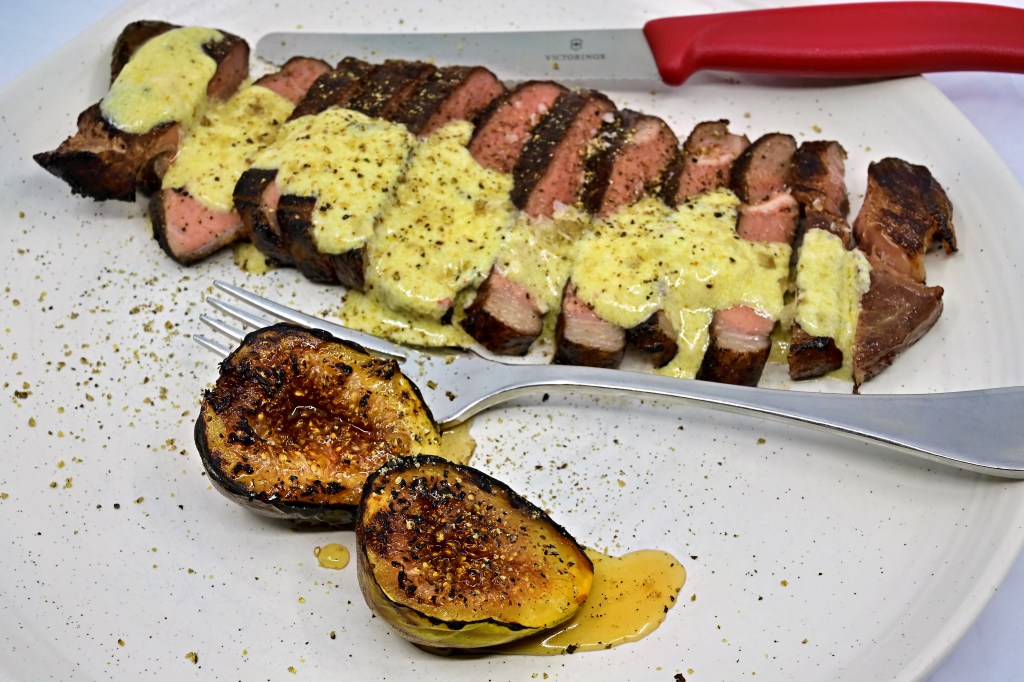
    • Bone in ribeye steak (700 grams at $AUD48/kg)[i]
    • Salt[ii]
    • Pepper[iii]
    • Grass-fed butter[iv]
    • Cream[v]
    • Cream cheese[vi]
    • Blue vein cheese[vii]

    Equipment

    • Water bath
    • Precision cooker
    • Barbecue grill
    • Gas torch
    • Steak knife[viii]

    Instructions

    Meat

    1. Dry brine the steak.
    2. Place the dry-brined steak in a food-safe bag and remove as much air as possible from the bag.
    3. Cook the steak for 3 hours at 57 °C.
    4. Dry the steak’s surfaces with absorbent paper.
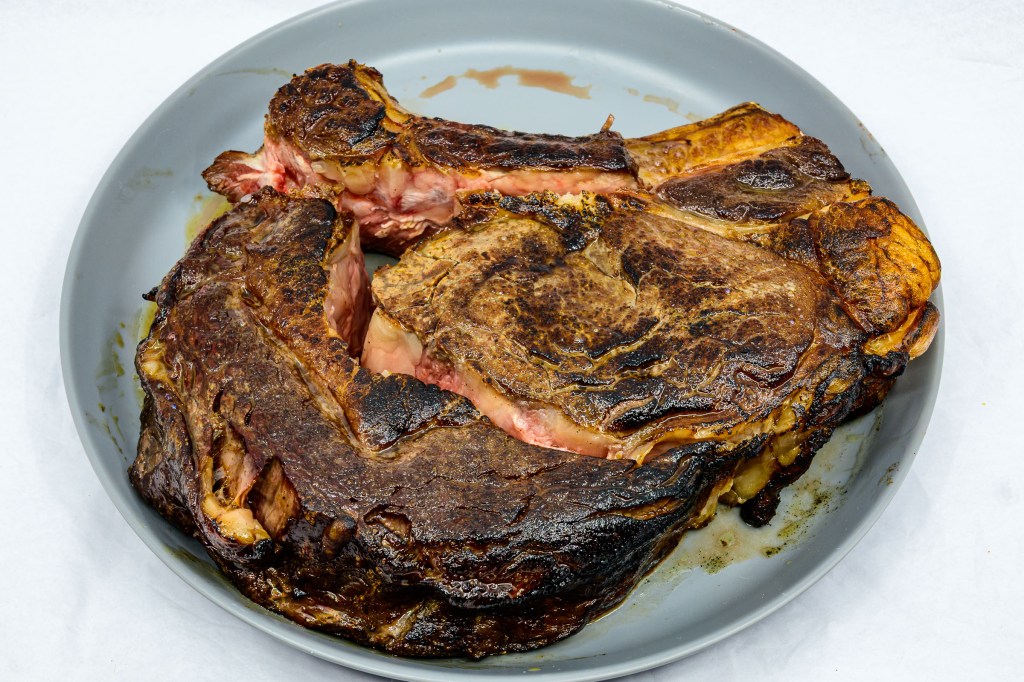
    5. Sear the surfaces with the barbecue grill and gas torch.
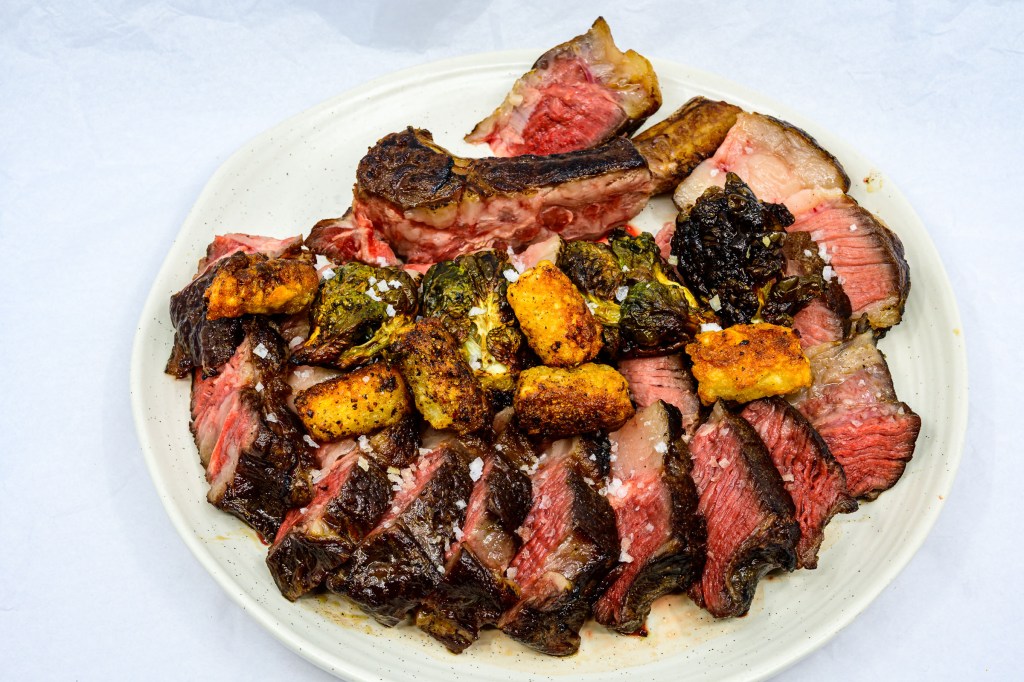
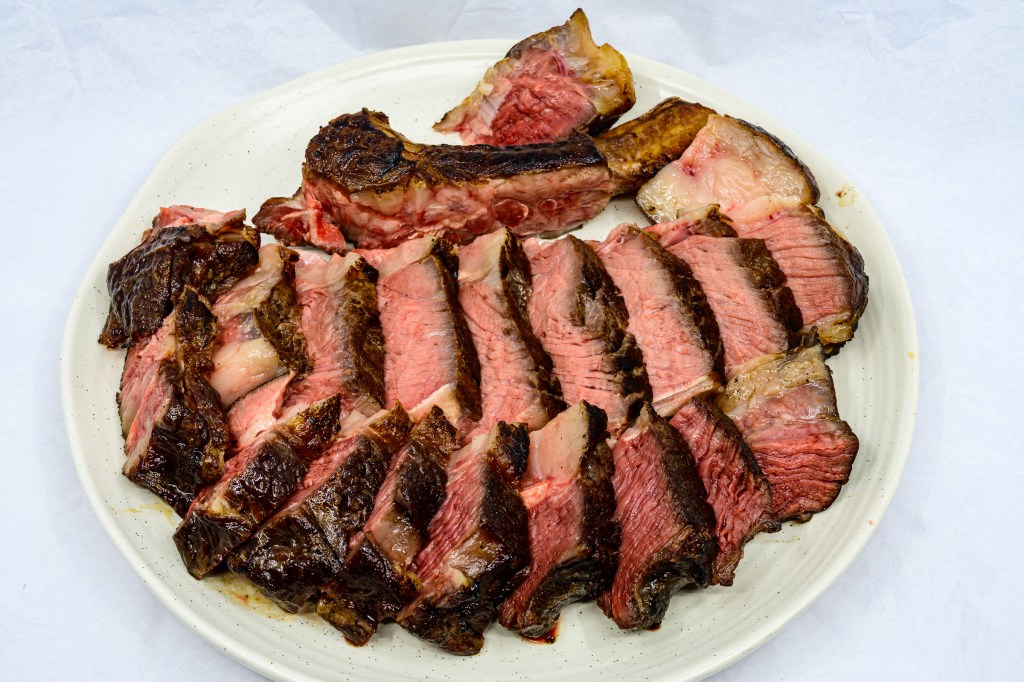
    6. Carve the meat from the bone, then slice it to the desired thickness.

    Sauce

    1. In a small saucepan, add the butter, cream, cream cheese, and blue vein cheese.
    2. Turn on the heat and use wooden chopsticks to stir and make the sauce slowly.

    Vegetables

    1. Parboil some fennel and Brussels sprouts.
    2. Cook the vegetables on the barbecue grill while searing the steak.

    Serving the meal

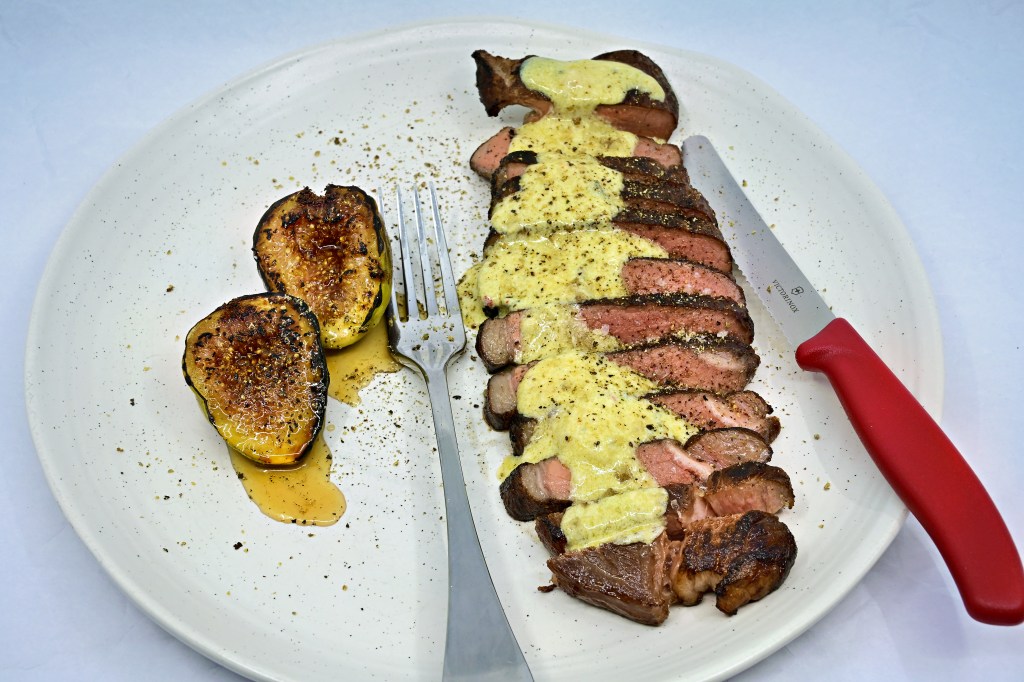
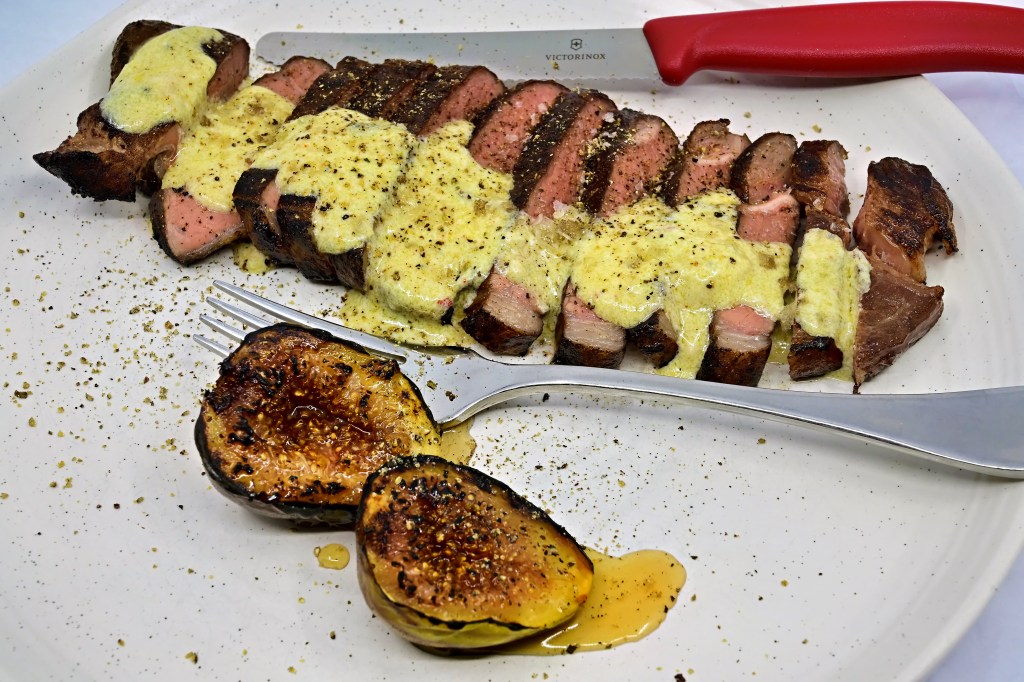
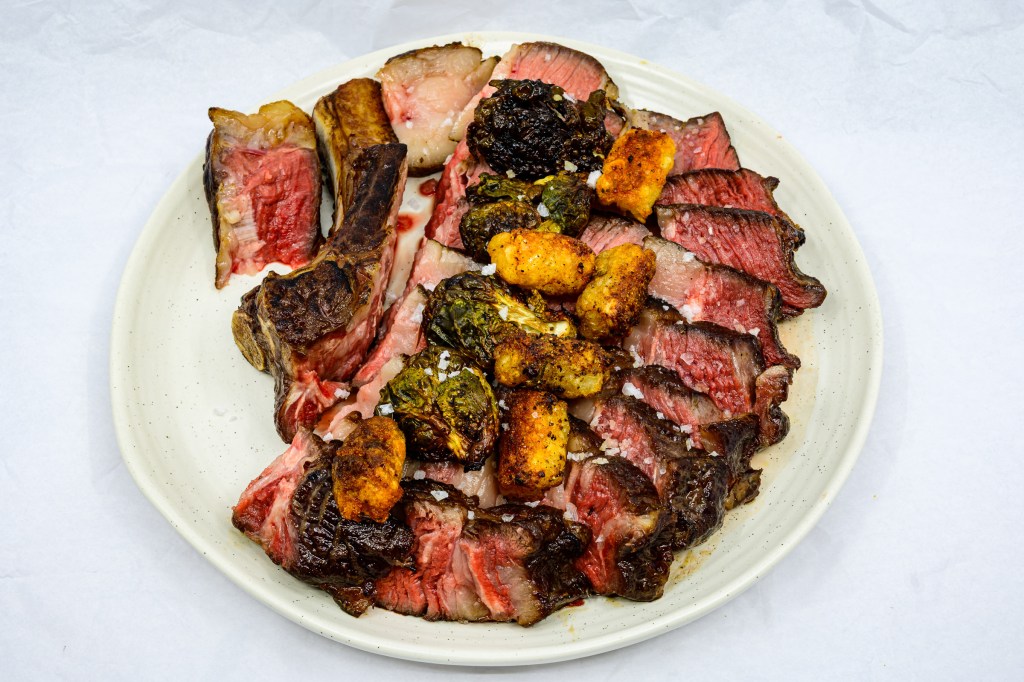
    1. Transfer the sliced meat to a dinner plate.
    2. Place the fennel and Brussels sprouts next to the meat.
    3. Spoon the sauce over and next to the meat.
    4. Season with salt and pepper.
    5. Don’t forget to gnaw on the bone.

    Thoughts on the meal

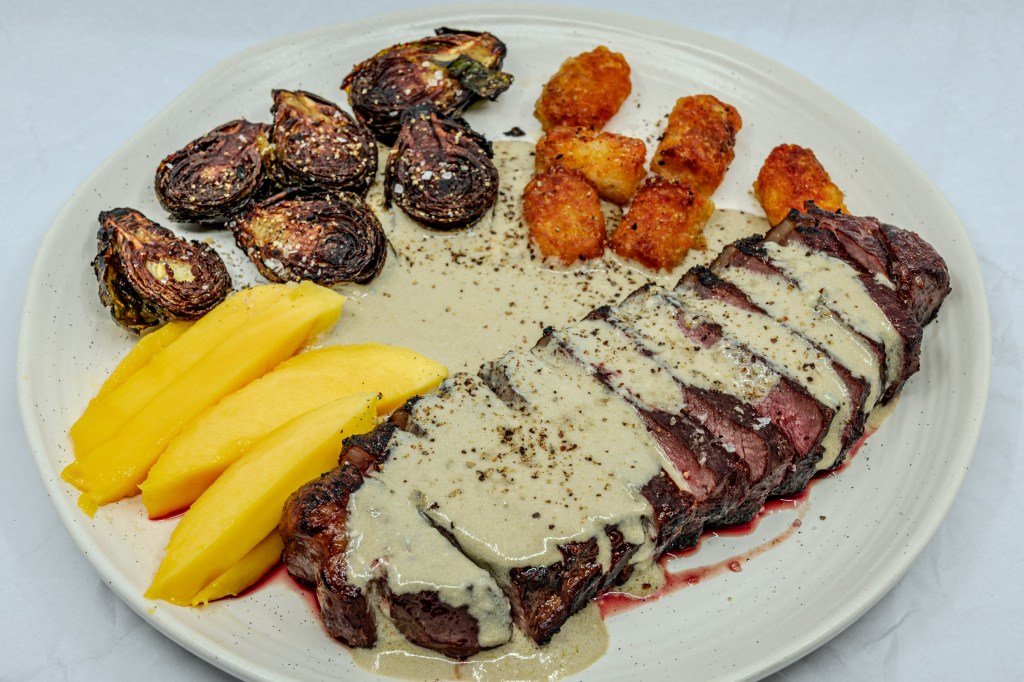
    I enjoyed eating the steak. It was tender and flavoursome. The sauce complemented the beef. The fennel and Brussels sprouts also complemented the funkiness of the sauce.

    Gnawing on the bone at the end was delicious.

    Photographs

    This is a gallery of images. Select one and scroll through the rest.

    Some of the images were created using the Microsoft Copilot.

    Questions

    • What is your opinion of daylight saving time?
    • Do you follow rugby league? Who do you want to win this year’s premiership games?
    • How do you feel about Labour Day?

    [i] This is not an economical cut of beef. I’ve been eating economy-grade steak through the week ($AUD18/kg). Tonight’s steak is a treat.

    [ii] I like to use a flaky finishing salt when serving the steak and a coarse salt when dry brining the steak.

    [iii] I like to freshly grind the peppercorns. I use a pepper mill but if you want a better experience grind the peppercorns with a pestle in a mortar.

    [iv] I buy New Zealand grass-fed butter from Costco because it’s cheaper than grass-fed butter found in regular supermarkets.

    [v] I buy pure pouring cream from Fleurieu Milk on the Fleurieu Peninsula. This cream has no thickeners or additives.

    [vi] I try to buy cream cheese with the least number of additives on the label.

    [vii] I like English Stilton. It has great flavour (the combination of taste, smell, and texture).

    [viii] I recommend a good quality steak knife. A steak knife should be sharp, and it should cut the steak with minimal effort. “Sawing” a steak means the knife isn’t sharp enough.

  • Corned beef hash

    Corned beef hash


    Last week, I cooked corned beef silverside in the slow cooker. It’s provided me with more meals than I expected. Tonight, I cooked a corned beef hash.[i]

    Microsoft Copilot generated image of a floral plate featuring pomegranates with corned beef hash topped with a fried egg.
    Microsoft Copilot generated image of me and a plate of corned beef hash with an egg fried in butter plus a parboiled potato deep fried in beef fat. I'm holding a knife and fork. I have a toothy grin and happiness in my eyes.

    Recipe

    🥔🐂 Ingredients

    • Two tablespoons of butter
    • One small potato
    • One small finely chopped onion.
    • One small green capsicum
    • Two slices of corned beef
    • Half a teaspoon of freshly cracked black pepper.
    • Optional — one fried egg.

    🔪🥘 Instructions

    1. Prepare the potato.
      • Cut the potato into six pieces and par-boil for five minutes.
      • Dry the potato with absorbent paper.
      • Freeze the potato overnight to develop resistant starch.
      • Deep fry the frozen potato pieces in beef fat.
      • Finish the potato on a hot barbecue grill.
    2. Sauté the onion and capsicum.
      • Heat some butter in a frypan over medium heat.
      • Add the onion and capsicum. Cook until softened.
    3. Mix in the Corned Beef
      • Dice the corned beef into small cubes.
      • Add the corned beef to the frypan and add half a cup of water.
      • Bring the water to a simmer and cook until the water evaporates and the corned beef becomes slightly crispy.
    4. Optional Egg Topping
      • In a separate frypan, fry an egg.
      • Serve hash topped with a fried egg for extra richness. The oozy yolk combined well with the fatty, unctuous meat.

    🍳Tips and Variations

    • Make it cheesy: stir in shredded cheddar or mozzarella at the end.
    • I used a microplane to grate some Parmesan cheese over the corned beef, egg, and potato.

    📷Photographs

    This is a gallery of images. Select one and scroll through the rest.

    A note about some of the images.[i]

    Thoughts on the meal

    Tinned corned beef is convenient. This meal tasted better than tinned corned beef. Tinned corned beef has a lot of salt; making it from scratch allowed me to titrate the salt to my preferred taste.

    The potato wasn’t burnt. I seared it on a hot barbecue grill. The potato was delightfully crispy and pillowy soft inside, like good chips should be.

    Questions

    • Do you like corned beef hash?
    • How would you use leftover corned beef?
    • What variations would you recommend?

    🥮Sweet treats

    I had a craving for some pastries. I enjoyed a pavlova roulade, passionfruit fudge vanilla slice, and salted caramel Berliner.


    [i] A note about the images used in this post. The featured image and a couple of other images were generated with Microsoft Copilot and ChatGPT. I’m conscious that there are some bloggers and readers who oppose the use of large language models for generating content. I’m comfortable with using large language models to help with content on YummyLummy.com


    [i] Corned beef hash is a hearty, savoury dish made by combining chopped or shredded corned beef with diced potatoes and onions, then frying the mixture until it’s golden and crispy. It’s a classic comfort food with roots in frugal cooking—originally designed to use up leftovers, especially from a corned beef dinner.

  • Corned beef fat sandwich

    Corned beef fat sandwich


    Create an image of a corned beef meal with a 16:9 aspect ratio for the food blog YummyLummy.com. In the image, include slices of corned beef, a bechamel sauce with parsley, plus buttery potato mash on the side of the plate. Give the image a photographic quality and include cutlery, like a knife and fork, in the image.
    Microsoft Copilot generated corned beef meal.

    In the old days (when I was fat[i]), I would cook corned[ii] beef[iii] with vegetables, mustard, garlic, onions, and additives like Worcestershire sauce. I’d eat it with a white sauce made with refined (read ultra-processed) white flour. I usually have boiled potatoes or potato mash with corned beef and white sauce.

    More recently, if I want corned beef, I buy it in a can[iv] and make a corned beef hash (sans spuds[v] and onions). A lot of people give me a condescending attitude when I mention my consumption of canned corned beef. Their scorn and derision humour me.

    This version is simple and is a low-carbohydrate, minimalist version of corned beef. Apart from the fat sandwich of course. 😉

    Create an image of me sitting and eating a corned beef meal with a 16:9 aspect ratio for the food blog YummyLummy.com. In the image, I am seated at the dinner table with a plate in front of me, featuring slices of corned beef, a bechamel sauce with parsley, and buttery potato mash on the side. Give the image an oil paint quality and include me holding cutlery, like a large, sharp knife and fork, in the picture.
    Microsoft Copilot generated image of me with a plate of corned beef, white sauce, and potato mash.

    Recipe

    Ingredients

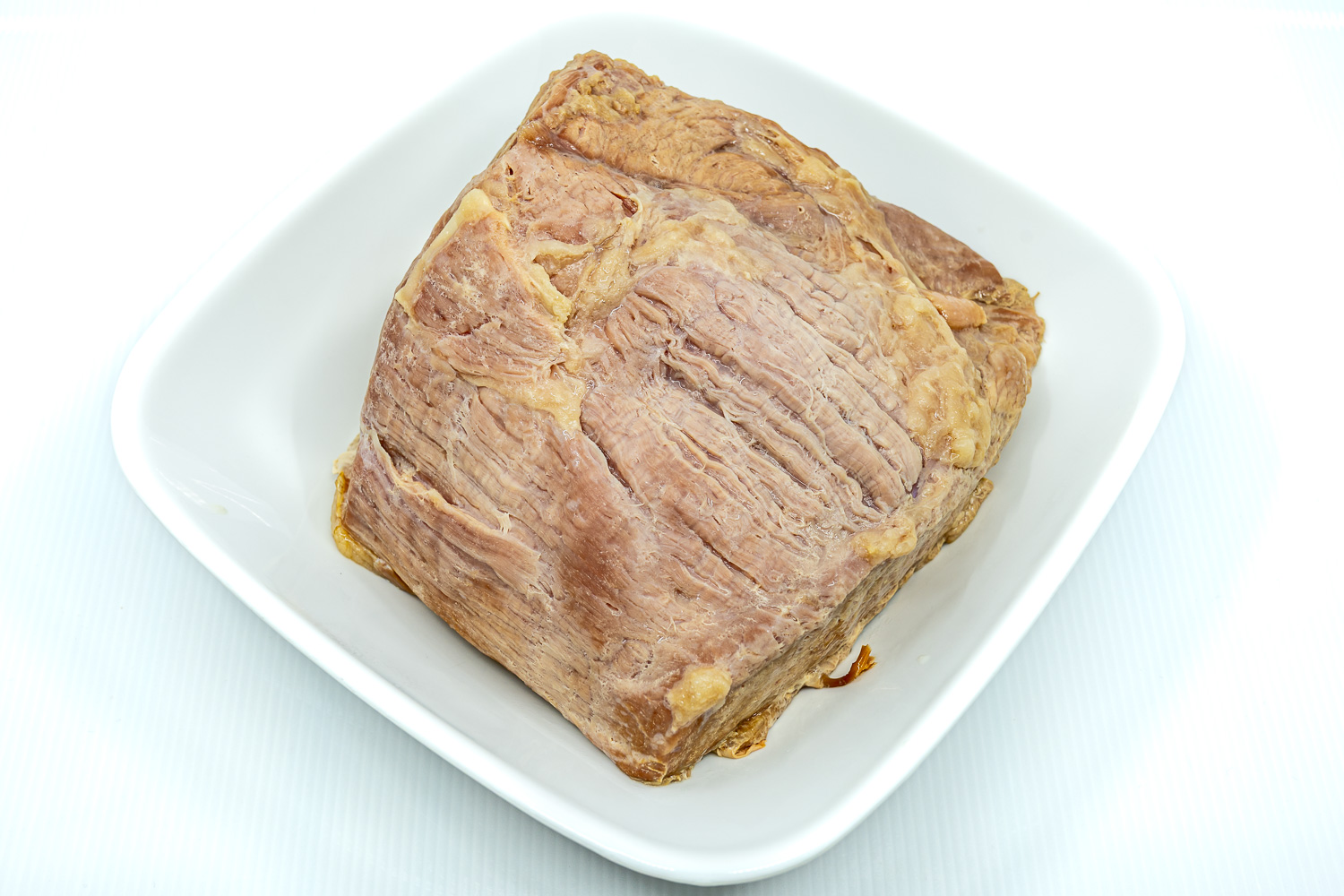
    • Corned beef silverside[vi]
    • Water

    Equipment

    • Slow cooker
    • Frypan

    Instructions

    1. Unwrap the meat and wash it under running tap water to remove the brine and sugar.
    2. Place the beef into the cooking vessel.
    3. Add a cup of water.
    4. Slowly cook on low heat for eight hours.
    5. Remove the meat from the slow cooker.
    6. Pass the cooking liquor[vii] through a sieve and refrigerate the broth.
    7. With gloved hands, gently dissect the fat from the flesh using fingers to separate the layer of fat according to the fascial plane.
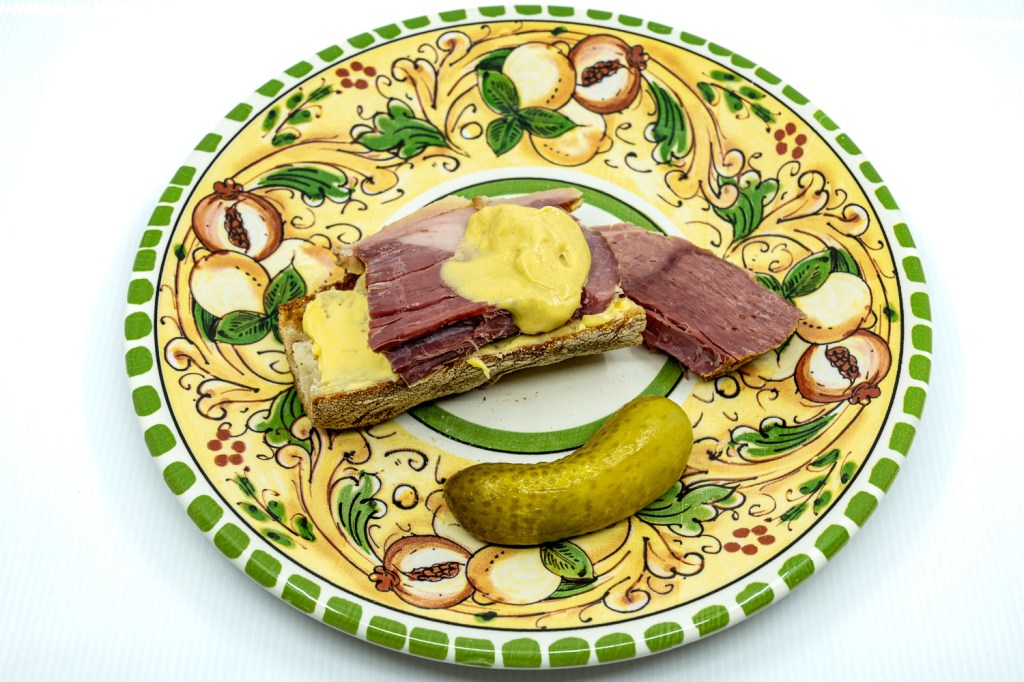
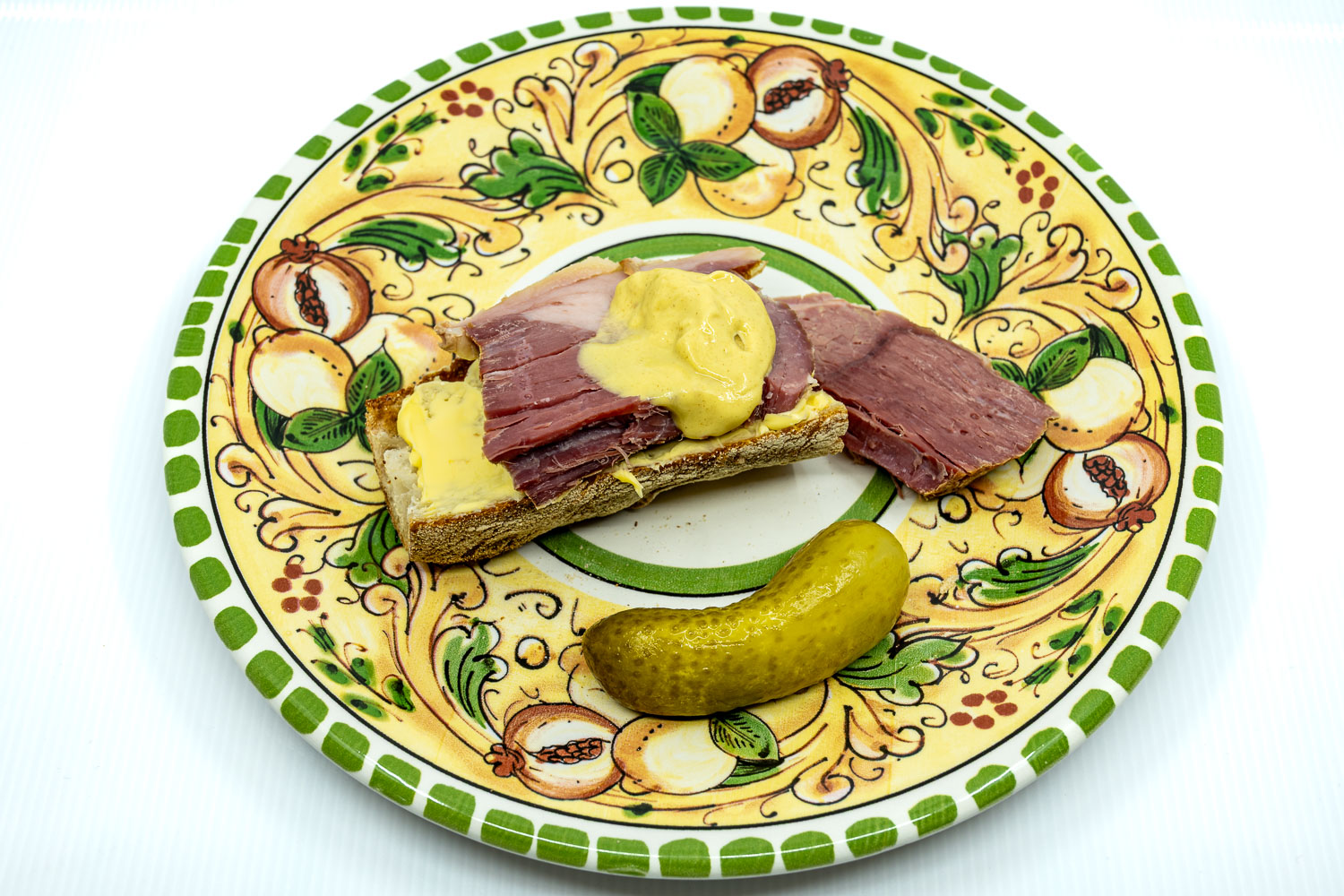
    8. The fat layer makes for a fantastic sandwich on lavishly buttered white sourdough bread[viii]. There’s nothing like the sensation of the beef fat dripping down your hands and forearms as you slowly take bites from the sandwich and masticate the unctuous beef fat. The only reaction you can have is to smile.
    9. Place the beef into a container and seal it. Refrigerate the meat.
    10. Cut the cold meat into lunch-sized portions.
    11. Dice a portion of cold corned beef and place the diced meat in a frypan.
    12. Add beef broth or water to the frypan and bring it to a simmer until the meat fibres start to separate and soften.
    13. After the water has mostly evaporated, turn off the heat, add a dash of cream and stir.

    Beef silverside fat sandwich.

    Ingredients

    • Cooked corned beef.
    • Frozen sourdough baguette — thawed.
    • Grass-fed butter
    • Freshly cracked pepper corns
    • Dijon mustard

    Instructions

    1. Trowel butter onto a piece of thawed sourdough bread. Freezing sourdough bread develops resistant starch.
    2. Add dollops of Dijon mustard.
    3. Apply a layer of warm fat.
    4. Season with freshly cracked peppercorns.
    5. Cover your lap with a large dish drying cloth and wear a bib.
    6. Roll up your sleeves and get stuck into the sandwich.
    7. Rejoice in the feeling of the fat running down your chin and down your forearms.

    Photographs[ix]

    These are a gallery of photographs. Select one image and scroll through the rest.

    Thoughts on the meal

    I enjoy corned beef hash[x]; it’s a dish I grew up with. Among many other meals, my dad would often make it. He learned to prepare it during his boyhood in the South Pacific during World War II, where fresh meat was hard to come by. The only options available were tinned meat or local game.

    A piece of corned silverside is an affordable option for bulk meat in lunches.

    This piece of beef cost approximately $AUD20, or $AUD10/kilogram. If I can get four meals (possibly six meals), it will work out to about $AUD5/meal.

    The first meal (the fat sandwich) for this piece of beef brought back some great memories when Mum would make corned beef and I’d get the fat and make a sandwich. I savoured every bite of this open sandwich and enjoyed the contrasting flavours of the pickle.

    Questions

    1. Do you like corned beef?
    2. Do you like fat sandwiches?
    3. How would you make a fat sandwich?

    Stay tuned

    I’ll add photographs of how I use the rest of the beef during the week.

    Endnotesꜜ


    [i] The modern clinical term is “clinical adiposity.” I prefer the term fat because it is universally understood.

    [ii] The term corned comes from the old English word corn, which referred to small, hard particles—not just cereal grains. In the case of corned beef, it refers to the large-grained rock salt (sometimes called “corns” of salt) used in the curing process.

    [iii] Corned beef is a type of salt-cured beef, traditionally made from brisket.

    [iv] Canned corned beef is a shelf-stable meat product made primarily from beef, but it includes ingredients to preserve flavour and texture. The ingredients include sodium nitrite, added salt, and a small amount of sugar (which is disappointing). Cooking can convert the nitrites to nitrates.

    [v] “Spud” is a casual or slang term for a potato. For example, “baked spud” or “mashed spuds.” It is used in many English-speaking countries.

    [vi] Beef silverside is a lean, boneless cut of beef taken from the hindquarter of the cow, specifically from the top portion of the round primal, just above the leg muscles. It’s known for its coarse grain and minimal marbling, which makes it a budget-friendly and versatile option in many cuisines.

    [vii] Juice released from cooked meat.

    [viii] Bread is high carbohydrate and not part of a low carbohydrate diet.

    [ix] A note about the images used in this post. The featured image and a couple of other images were generated with Microsoft Copilot and ChatGPT. I’m conscious that there are some bloggers and readers who oppose the use of large language models for generating content. I’m comfortable with using large language models to help with content on YummyLummy.com

    [x] Corned beef hash is a hearty, savoury dish made by combining chopped or shredded corned beef with diced potatoes and onions, then frying the mixture until it’s golden and crispy. It’s a classic comfort food with roots in frugal cooking—originally designed to use up leftovers, especially from a corned beef dinner.

  • Beef congee

    Beef congee


    From time to time, I’m adding some starches to my diet. It’s been a while since I’ve eaten any rice. Having just spent a weekend with many Asians, an innate fondness for rice and chopsticks welled up to the surface. I often cook with chopsticks, e.g., when I make blue vein cheese sauce, wooden chopsticks are my go-to tool for stirring and mixing.

    The rice in the congee[i] is problematic. The starch constitutes carbohydrates I do not need. I can partially ameliorate the problem by freezing the cooked rice and converting it to resistant starch to lower the glycaemic index.

    Recipe

    Ingredients

    • Rice
    • Beef broth
    • Beef short ribs
    • Beef chuck steak
    • Water
    • Salt

    Equipment

    • Fast/slow cooker

    Instructions

    1. Wash a cup of uncooked rice and then add it to the slow cooker.
    2. Add a cup of beef broth and enough water to cover the rice by one distal phalange.
    3. Add the beef short ribs and beef chuck.
    4. Add some salt.
    5. Cook for 8 hours.
    6. At the end of 8 hours, add the optional sterilisation by steam under pressure in the pressure cooker. I sometimes do this if I’m using beef broth that has been in the refrigerator for a week or more. While the risk of bacterial contamination is low because of the hygiene precautions I take, this step is belt and braces.
    7. If you use a fast/slow cooker (or similar device), this can be achieved without changing cooking vessels.
    8. Transfer the contents into a large bowl and start to pull the meat and mix it with the rice gruel.
    9. Remove the rib bones.
    10. Refrigerate the congee overnight so the rice develops resistant starch.
    11. Aliquots can now be taken and reheated for small meals, like lunch.

    Reheating

    1. Divide the refrigerated congee into six portions.
    2. Add the portions to vacuum bags and seal the bags.
    3. Reheat the contents in water bath at 80 °C for 45 minutes. The solidified beef fat will melt, and the rice and meat with break up and become softer.
    4. Pour the hot congee into a bowl.
    5. Serve the reheated congee, which has now developed resistant starch, in a bowl and eat with a spoon.
    6. You can add shredded pork and lettuce.

    Photographs

    Select an image and scroll through.

    Thoughts on the meal

    My mother makes my favourite congee. It is chicken congee, and she uses a pressure cooker. She would always use a whole chicken and basic white long-grain rice. Mum would add soy sauce and other Chinese herbs and spices. In serving, we’d have shredded iceberg lettuce, shredded ham, plus extra soy sauce. We’d eat the jook (that’s what we called congee) for an evening meal most of the time in winter. It would keep us warm. If there was any leftover, we may get some reheated for lunch.

    My version of this recipe is a significant departure from my mother’s version. I’m incorporating some of my preferences. There is no soy sauce, no seed oils, no herbs and spices. The flavours come from salt and the meat, and the rib bones, which were in the slow cooker. This congee or jook is also laden with beef fat, gloriously unctuous[ii] beef fat.

    Nutrient values for rice.

    NutrientPer 1 Cup (≈186 g)Per 100 g% Daily Value (1 Cup)
    Calories242 kcal130 kcal~12%
    Carbohydrates53 g28.5 g~18%
    Protein4.4 g2.4 g~9%
    Fat0.4 g0.2 g~1%
    Fibre0.8 g0.4 g~3%
    Sugars0.2 g0.1 g

    Walking Photographs

    Select an image and scroll through.


    [i] noun [mass noun] (in Chinese cooking) broth or porridge made from rice.

    [ii] adjective (of food or drink) having a pleasingly rich taste

  • Everyday beef brisket

    Everyday beef brisket


    The cost of living is getting higher. How many times a day do we hear or read that in the news and on social media?

    The majority of posts on this blog feature expensive cuts of meat.

    With the cost of food rising, I need to increase my consumption of more economical cuts. I will limit buying the more expensive cuts of meat.

    Most days, lunch is supermarket bought beef mince (ground beef for North American readers).

    To break up the monotony, other “economical” cuts include chuck and brisket.

    This beef brisket cost about $AUD30 for about 1.8 kg. That’s roughly $AUD17/kg.

    Most of the scotch fillet steak or rump steak I buy is more expensive than that. This is particularly true if the meat is Coorong Black Angus beef.

    This piece of brisket will give me with eight serves ($AUD3.75).

    Recipe

    Tonight I prepared some beef brisket meat with a creamy sauce, some broccolini, and sourdough bread.

    Ingredients

    • Brisket — Initially cooked in a slow cooker for 8 hours. It was then refrigerated. For this meal, the brisket is finely diced.
    • Sourdough bread — organic sourdough bread frozen to develop resistant starch, and then thawed and toasted.
    • Broccolini
    • Swiss brown mushrooms
    • Cream cheese
    • Blue vein cheese
    • Pure pouring cream
    • Beef fat — the fat separated from the cooking liquor from the slow cooker.
    • Beef broth — the cooking liquor from the slow cooker.
    • Butter

    Equipment

    • Frypan
    • Kettle

    Instructions

    1. Add the diced beef, beef broth, and beef fat to the frypan. Gently heat the contents until the liquid has evaporated. Continue heating until the meat has softened. Set the reheated brisket aside.
    2. Sauté the mushrooms in butter. The mushrooms will soften when they have absorbed the water from the butter. Then, add crumbled blue vein cheese and the cream cheese. Stir slowly and thoroughly. Finish with a dash of pure pouring cream and season with freshly cracked black peppercorns.
    3. Parboil the broccolini with boiling water from the kettle.
    4. Place the toasted sourdough bread on a dinner plate. Place the broccolini on the toast. Spoon the brisket next to the bread. Spoon the sauce over the broccolini and bread and let the rest settle next to the meat.

    Thoughts on the meal

    While beef short rib meat is more unctuous, as a cheaper cut, brisket is pretty good.

    Beef and blue vein cheese go well together and combine well on the toast which adds a crunchy mouthfeel.

    The broccolini adds some colour to the dish.

    Photographs

    These are photographs of the meal. Select one and then scroll through the rest.

    Questions

    • What is your favourite “cheap” cut of beef?
    • Do you like brisket? How do you cook it?
    • Do you eat leftovers for lunch?

    Some of the other meals from this brisket

    Other photographs

    Some other photographs from this week.


    Beef brisket. Slowly cooked beef brisket reheated in a frypan with beef fat and beef broth. Served on sourdough bread, which had been frozen to develop resistant starch. The photograph features a Dolphins NRL plate.