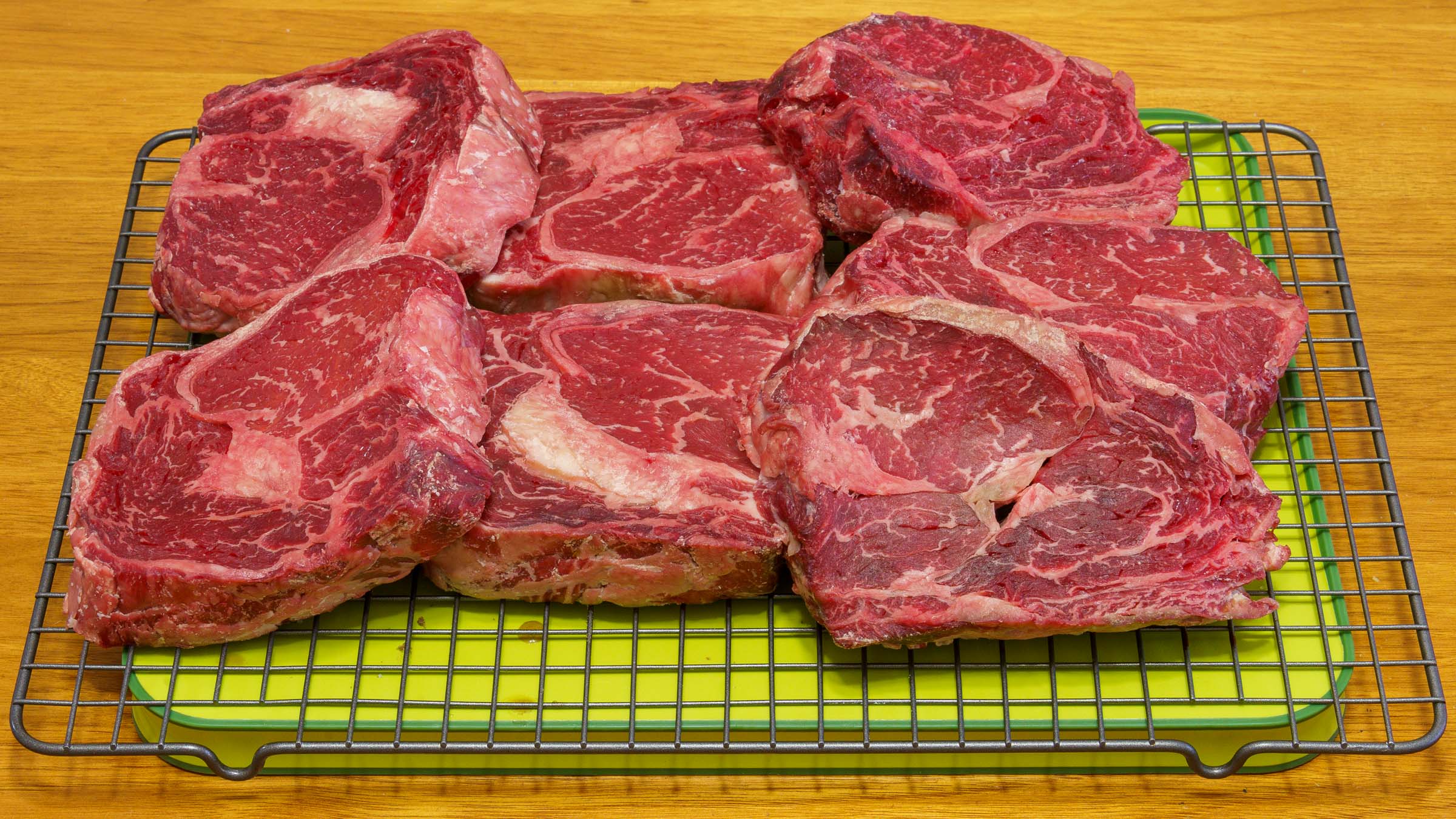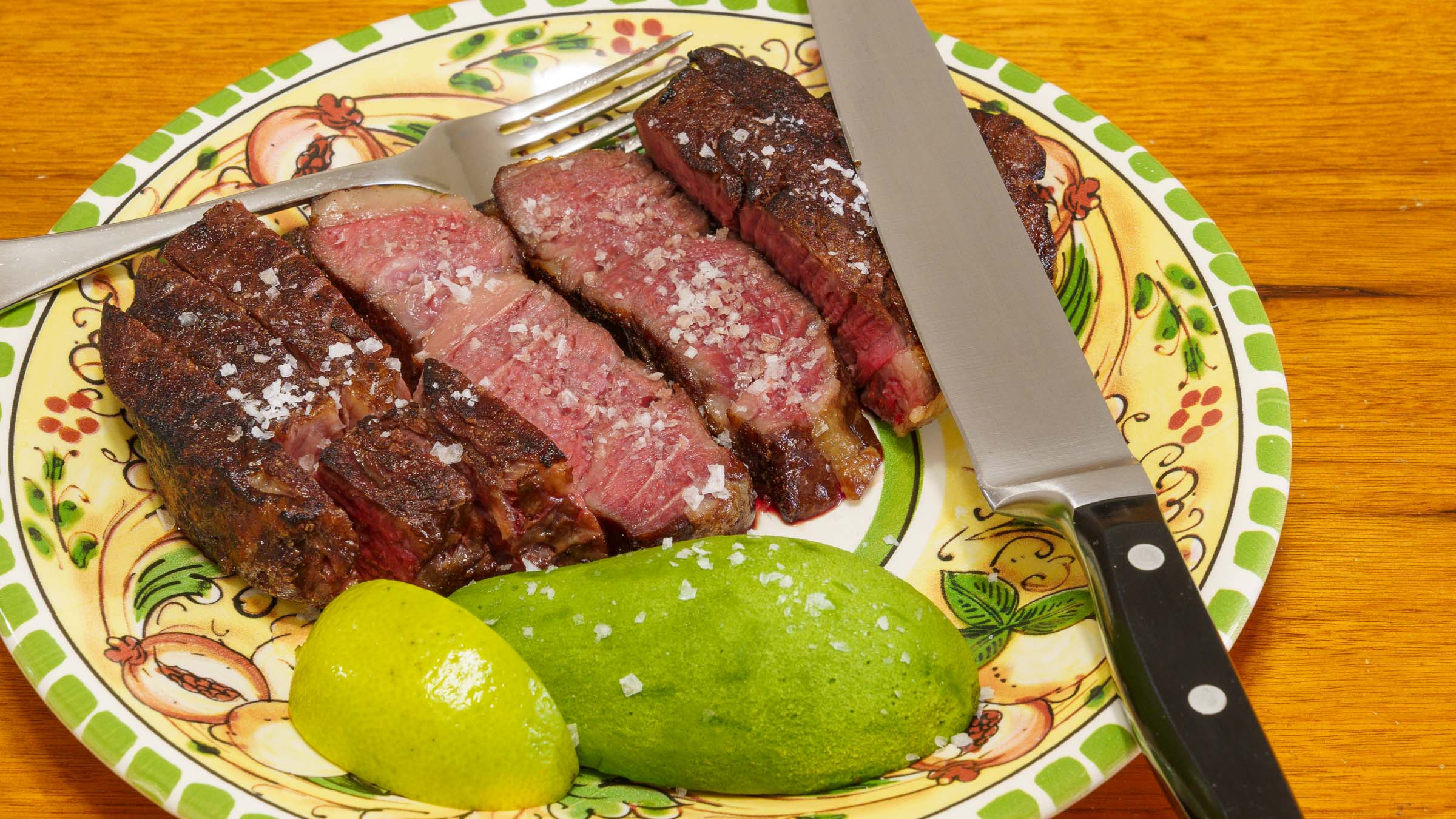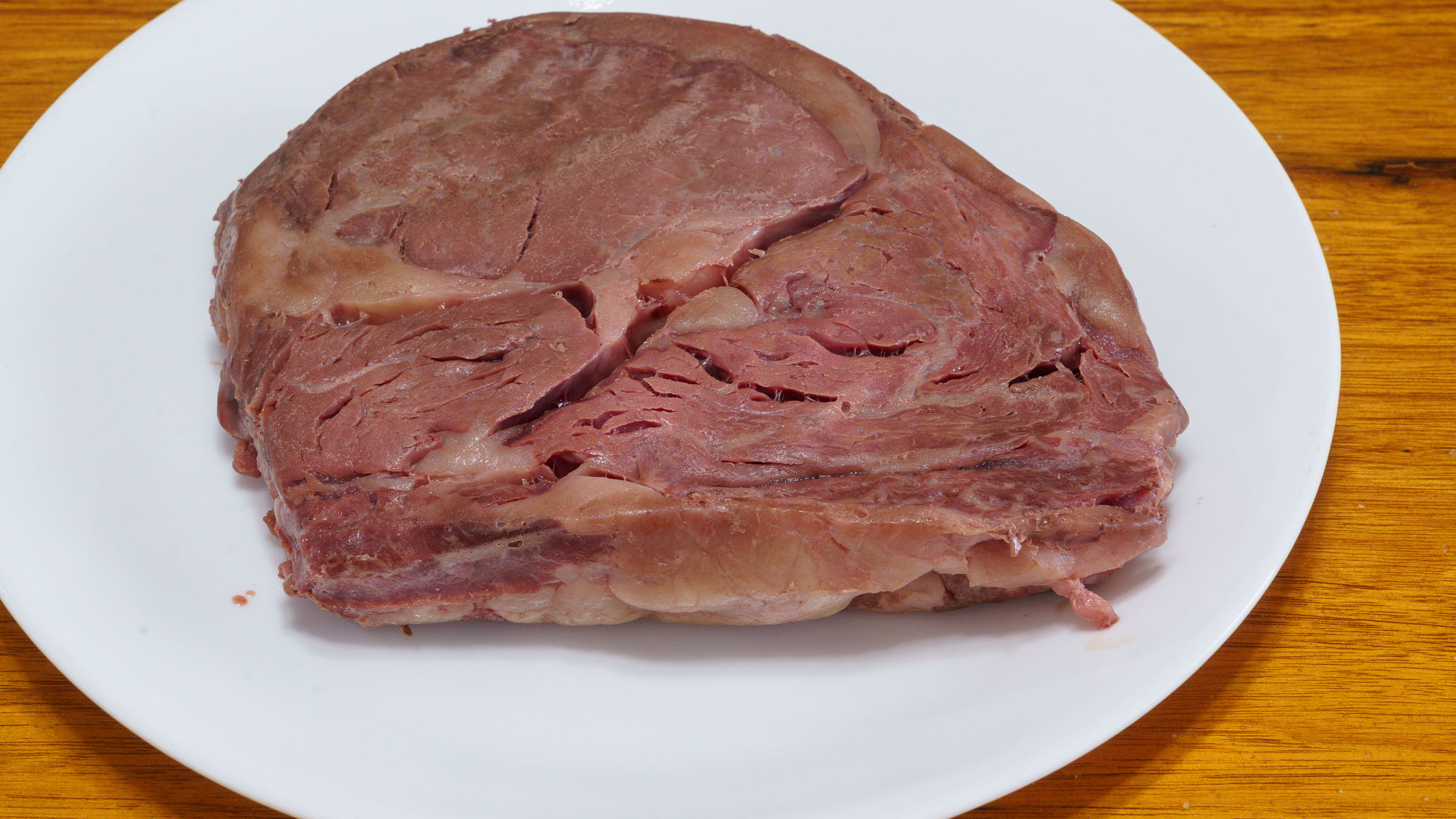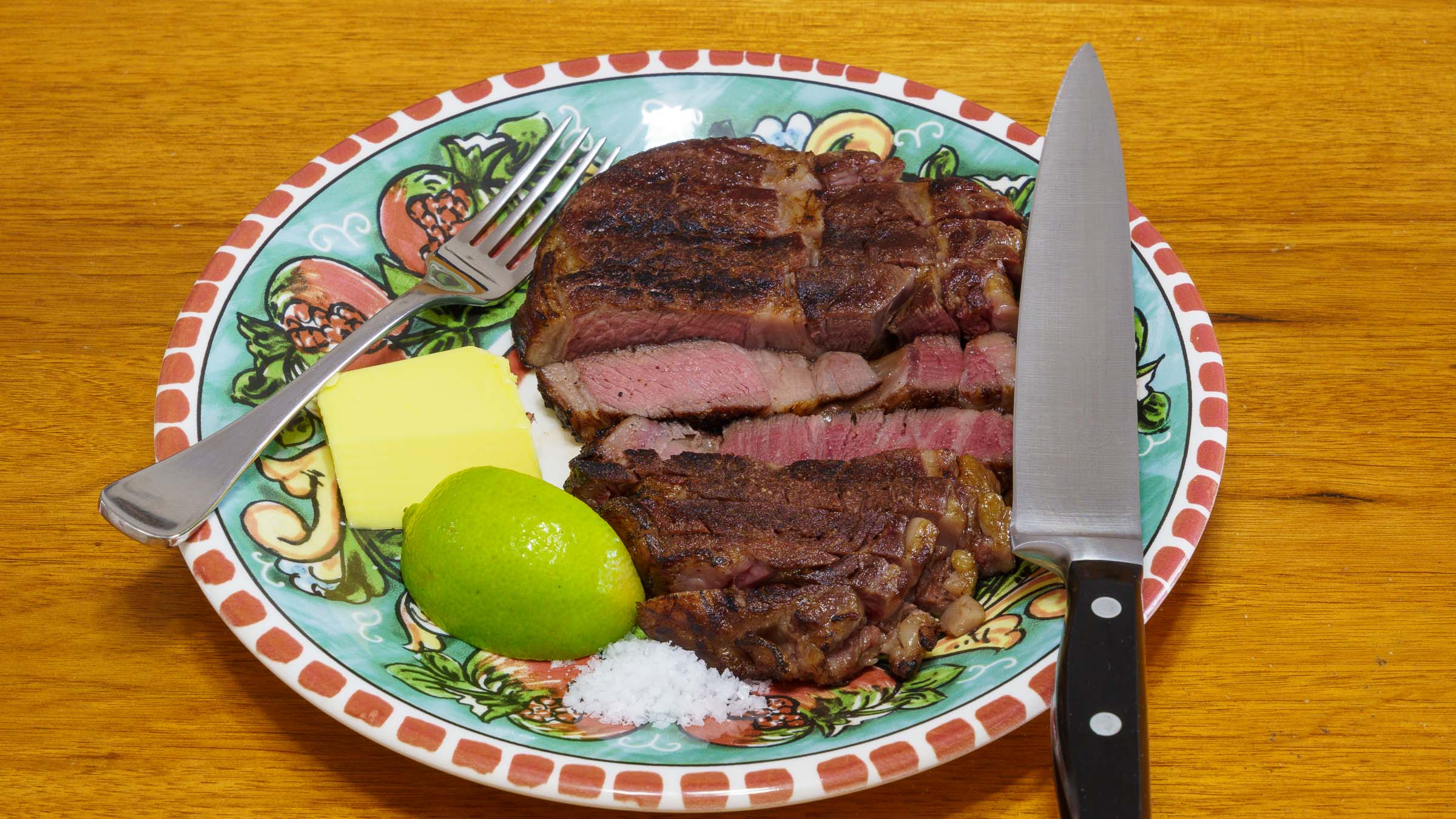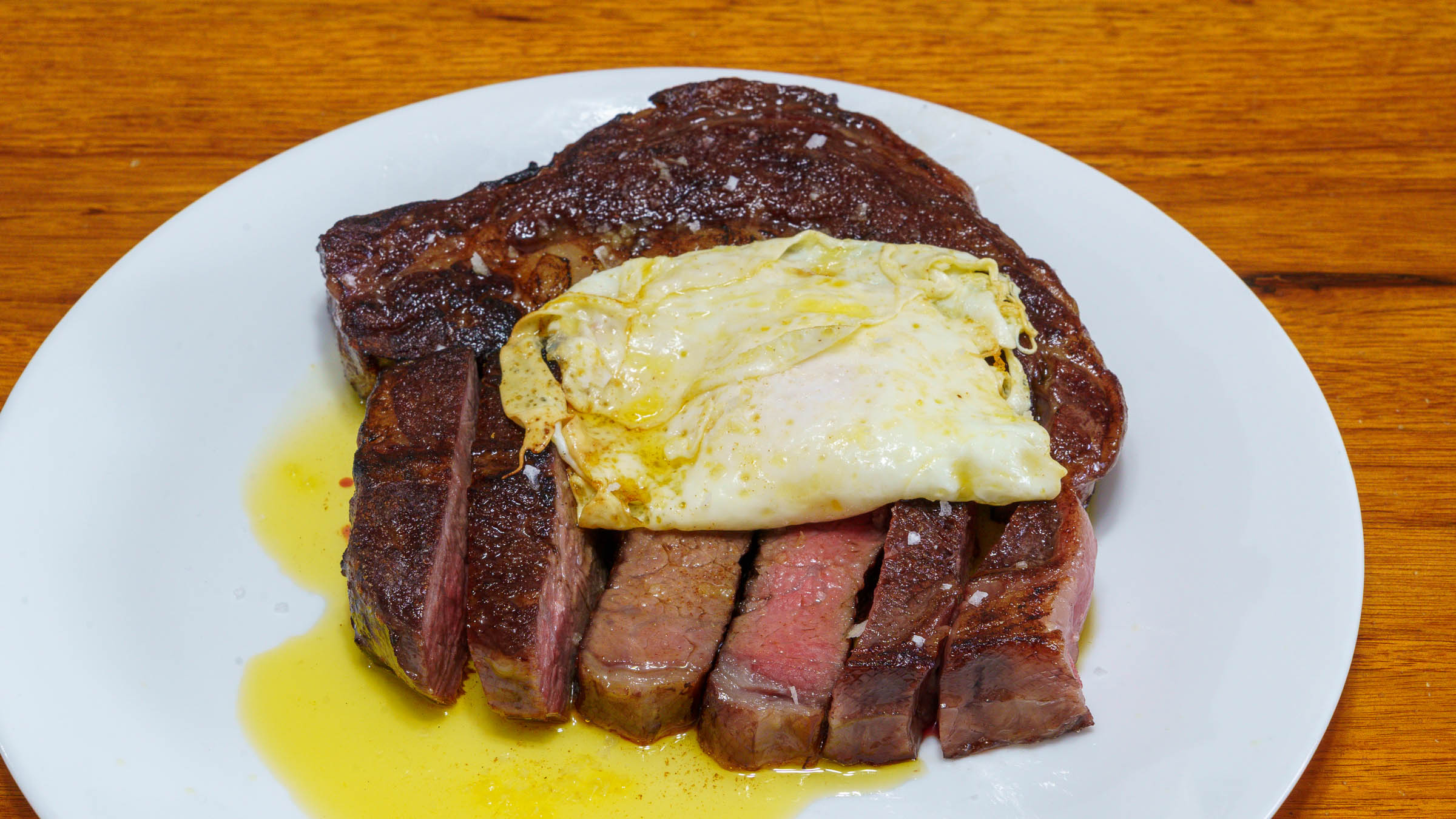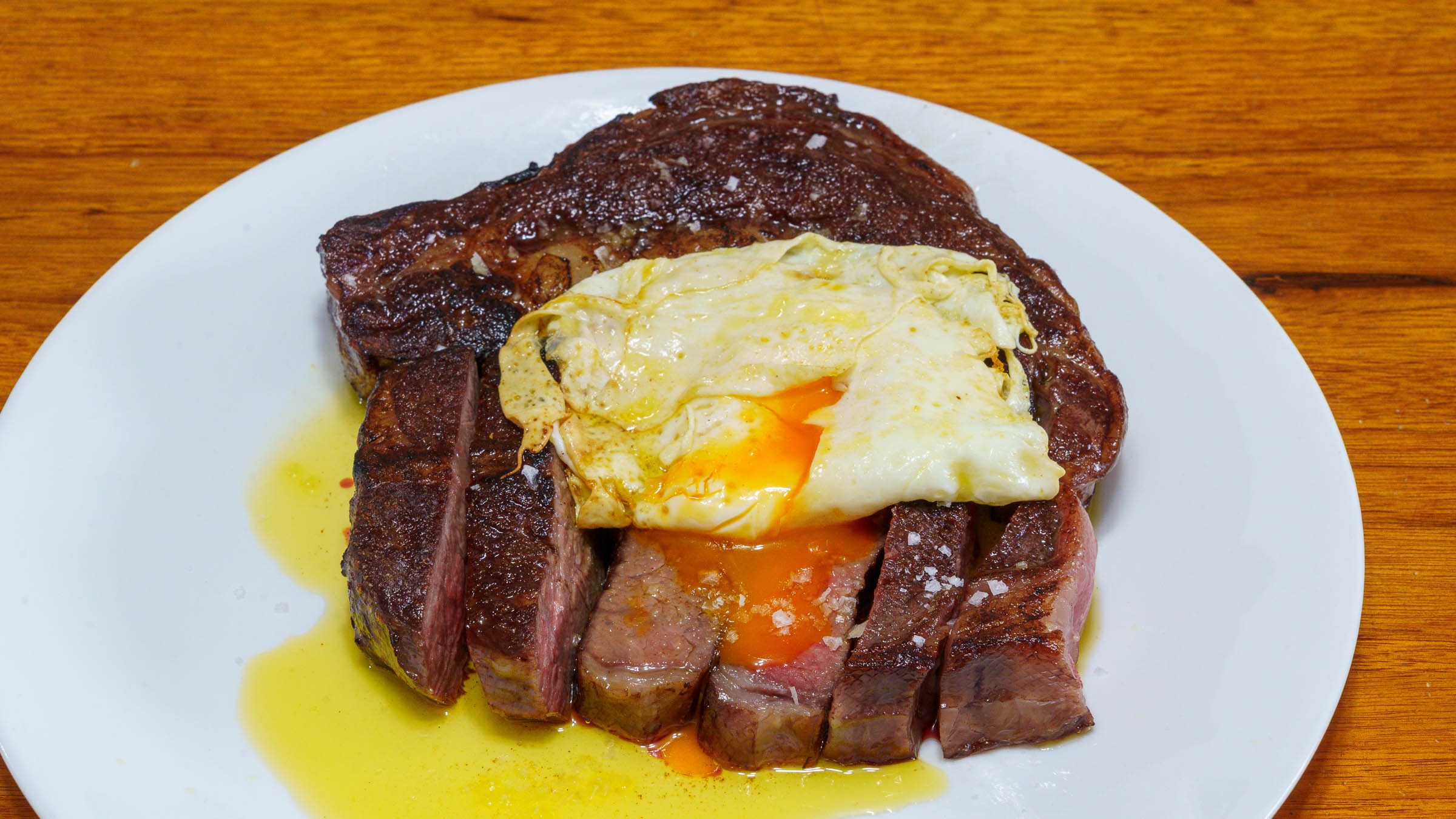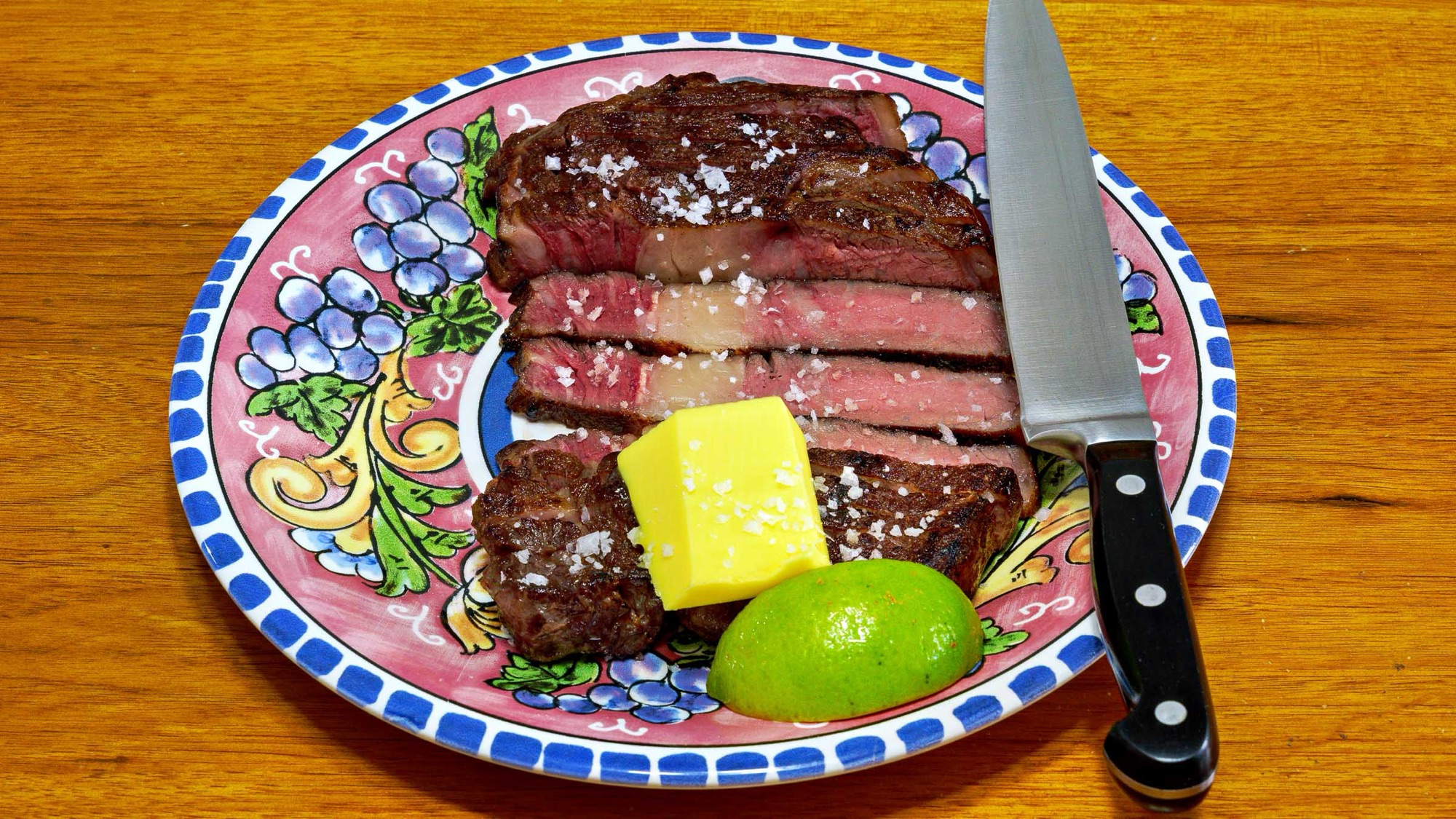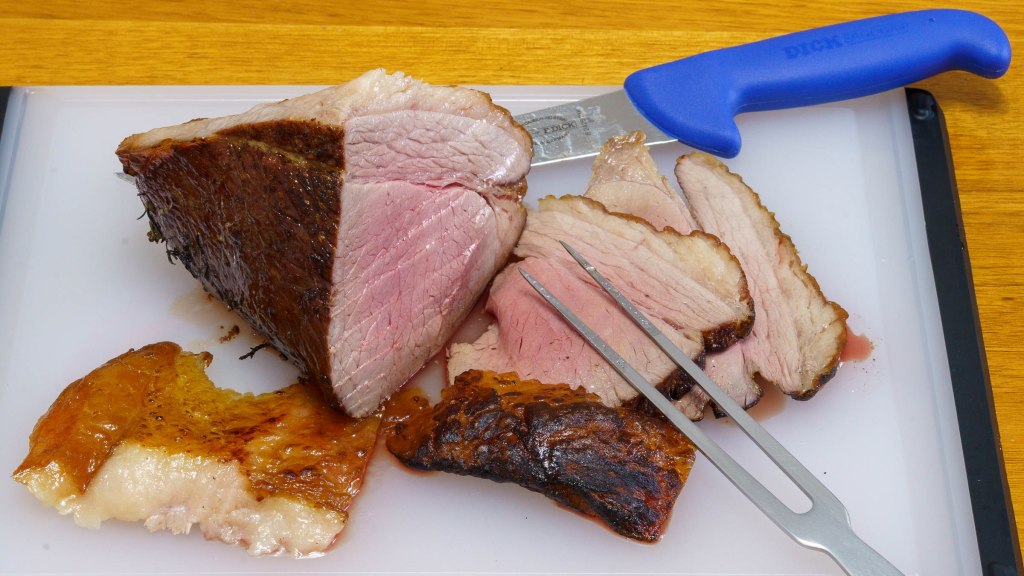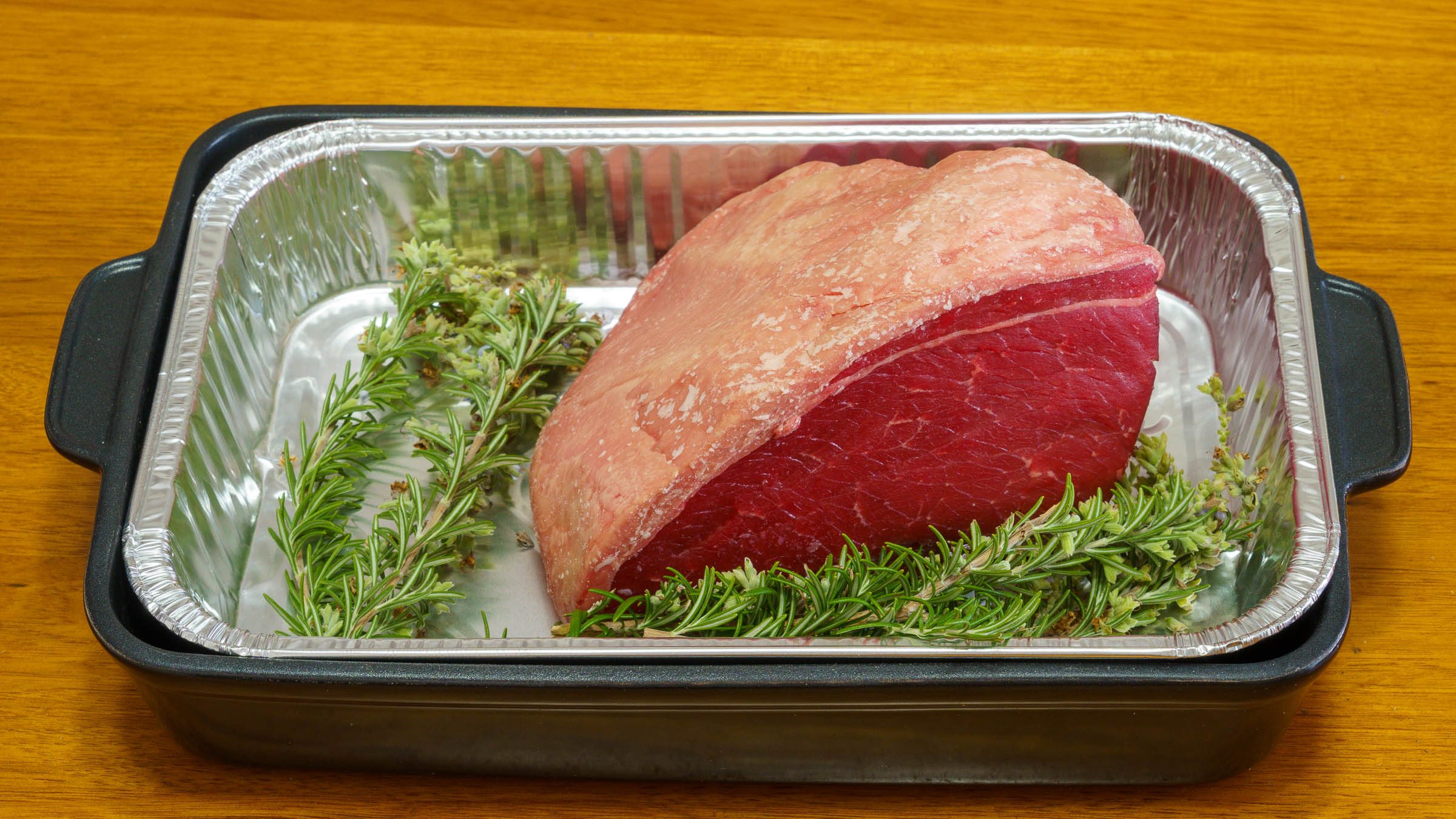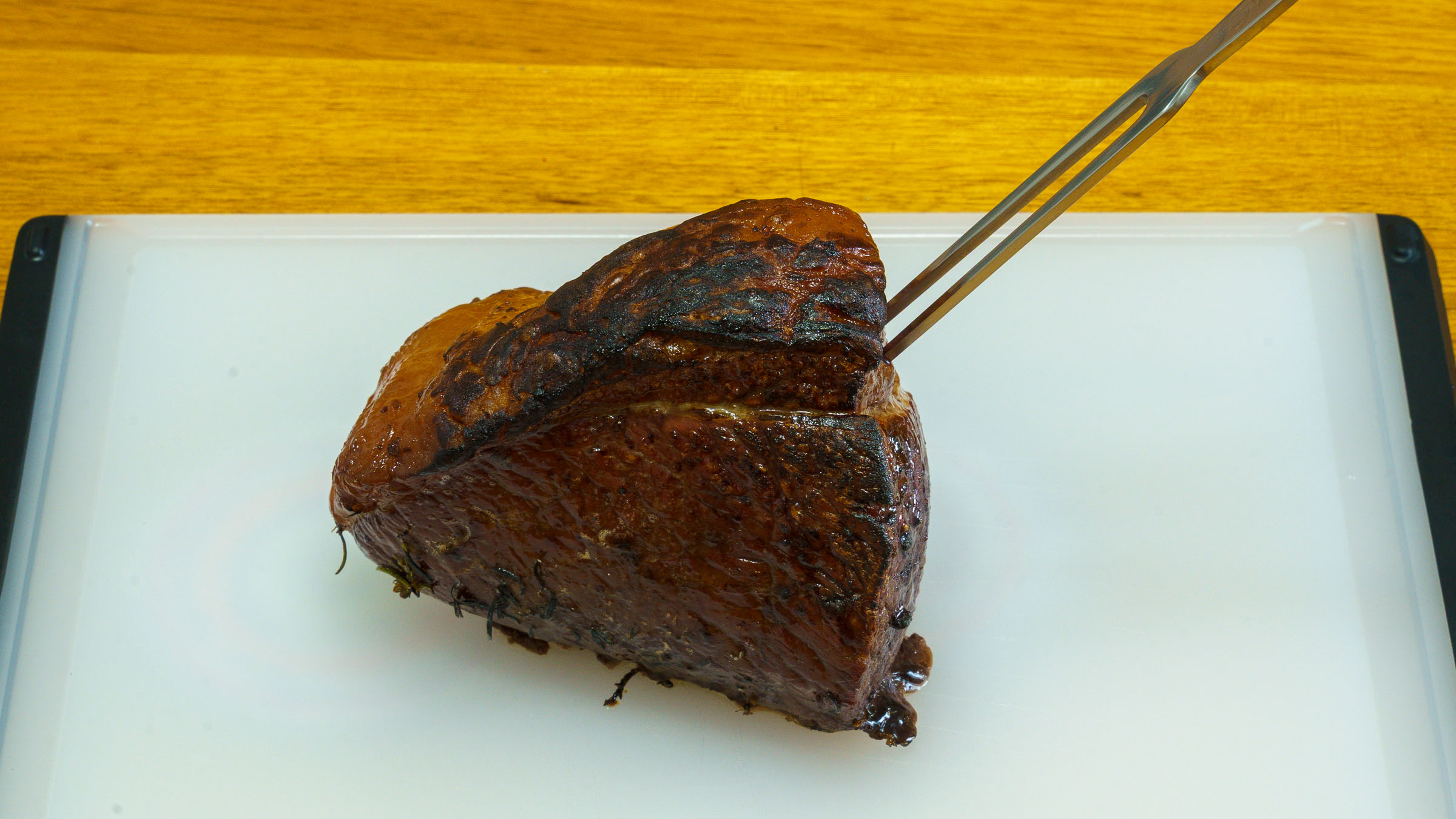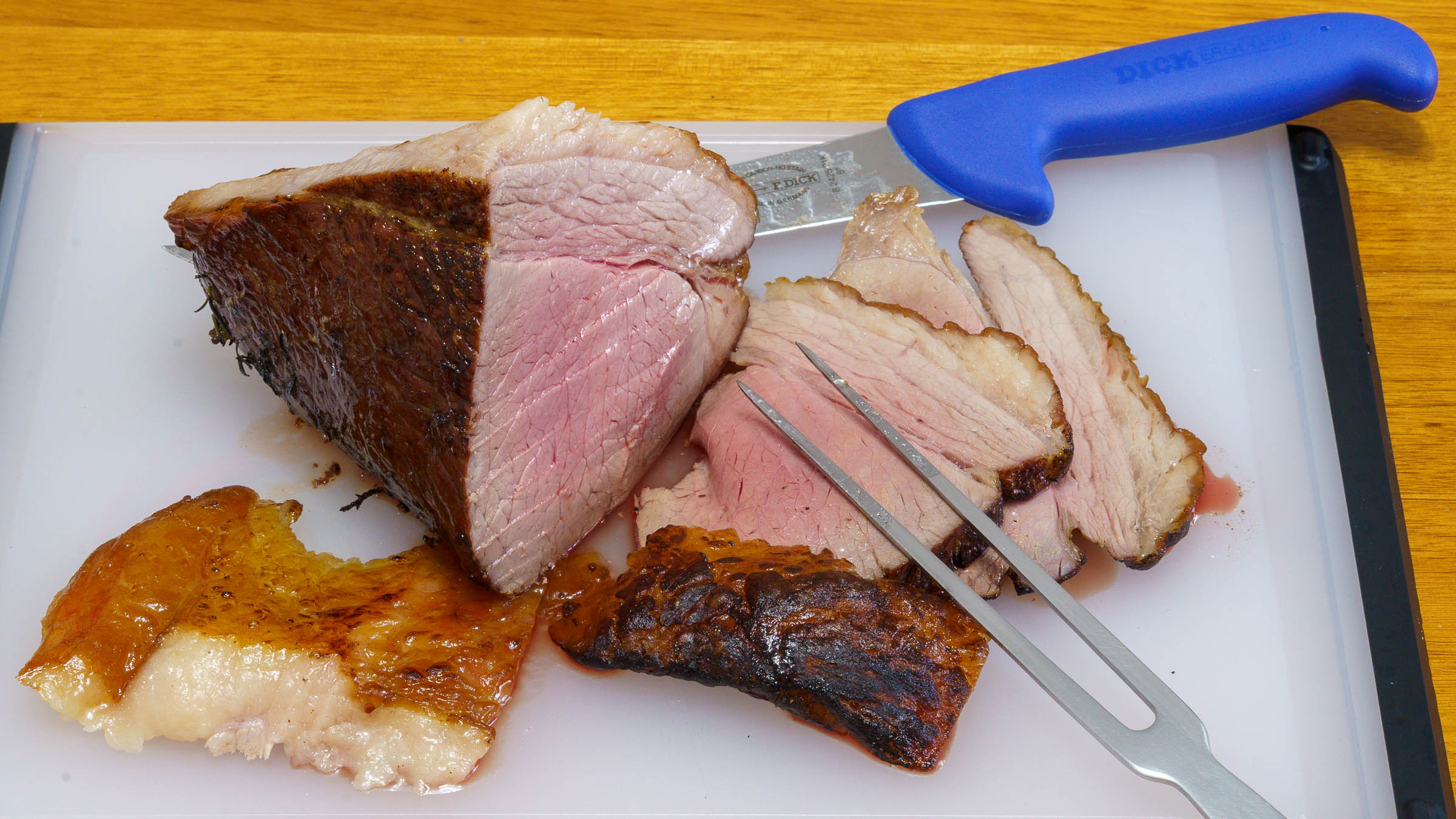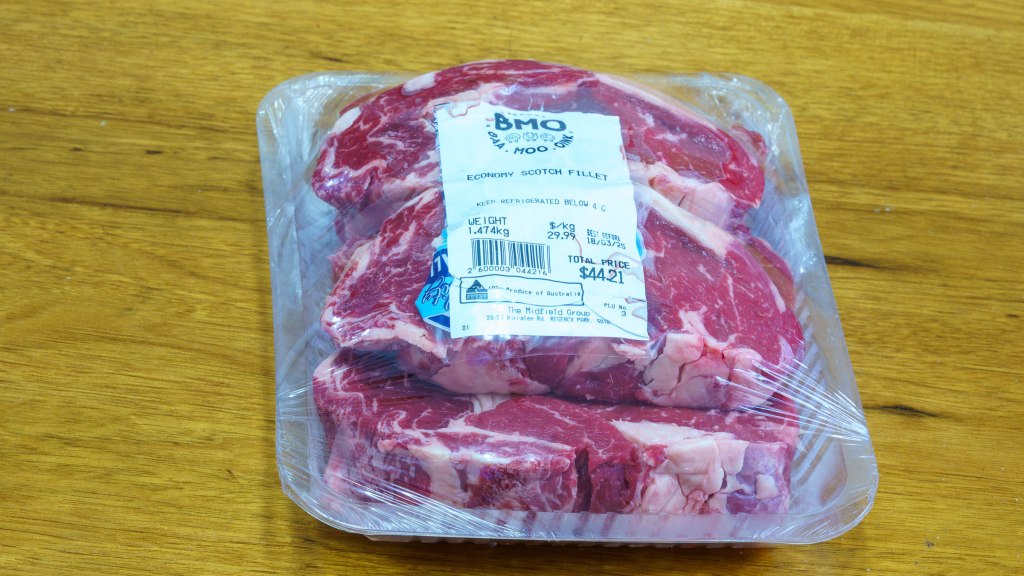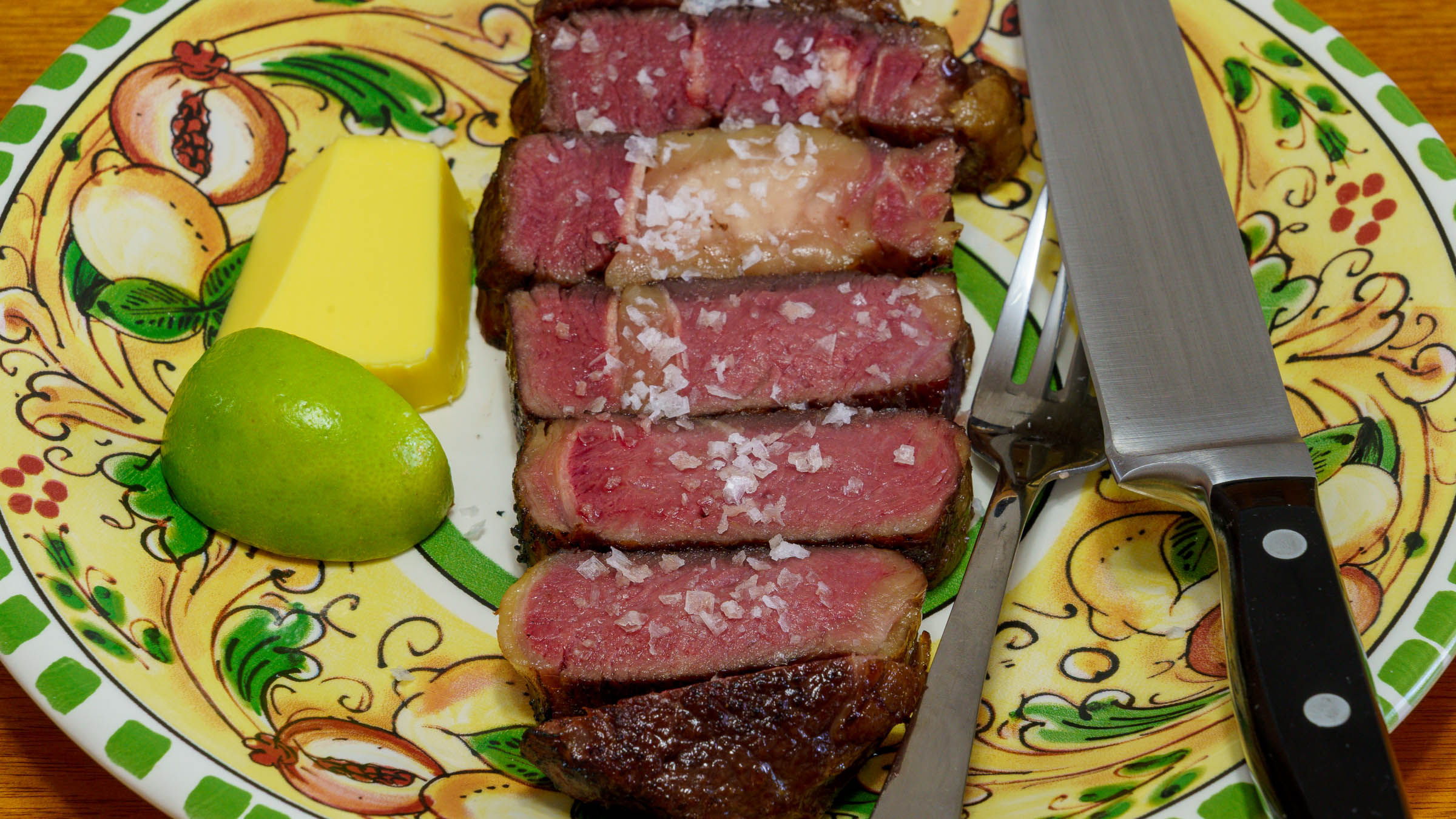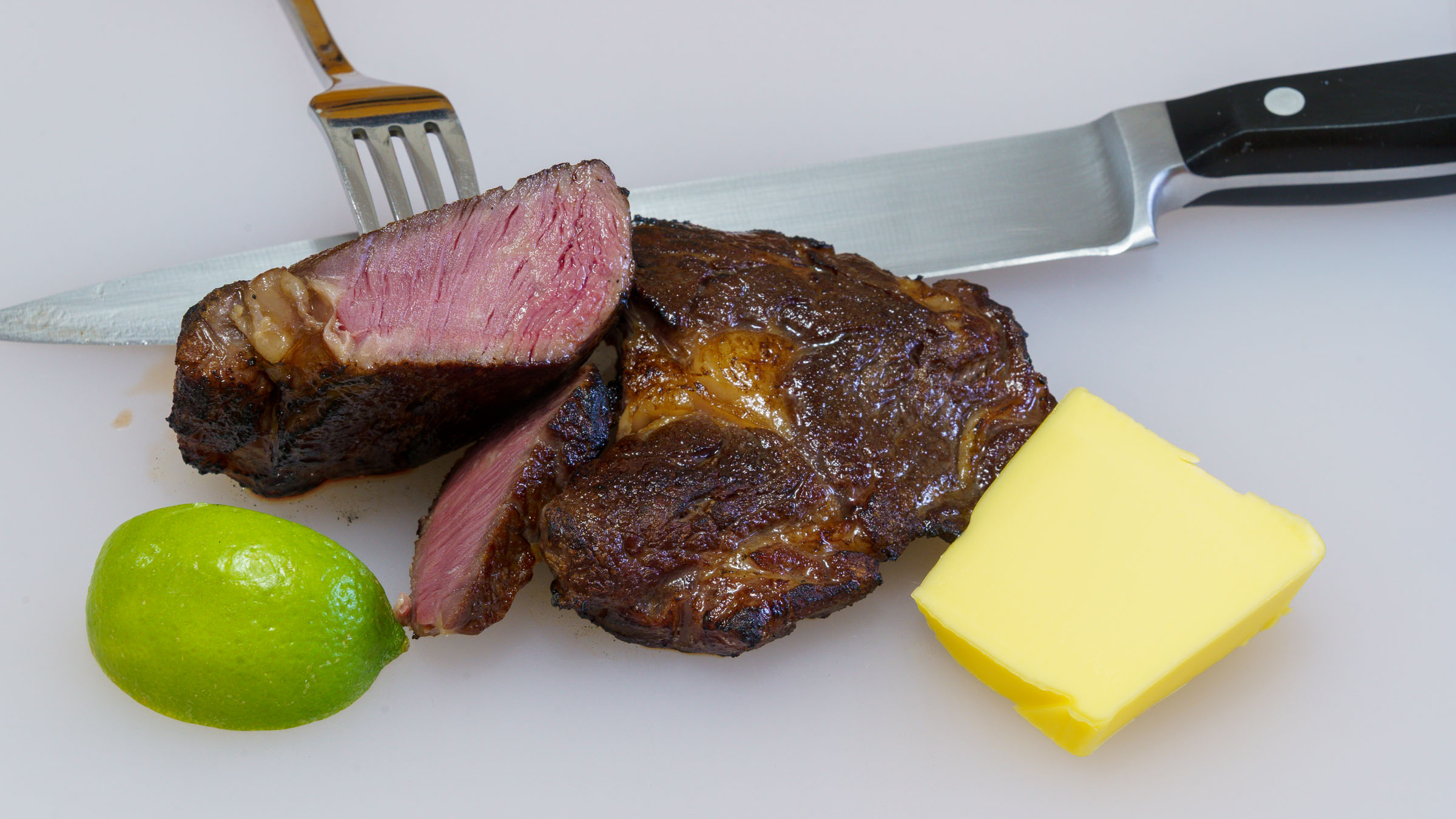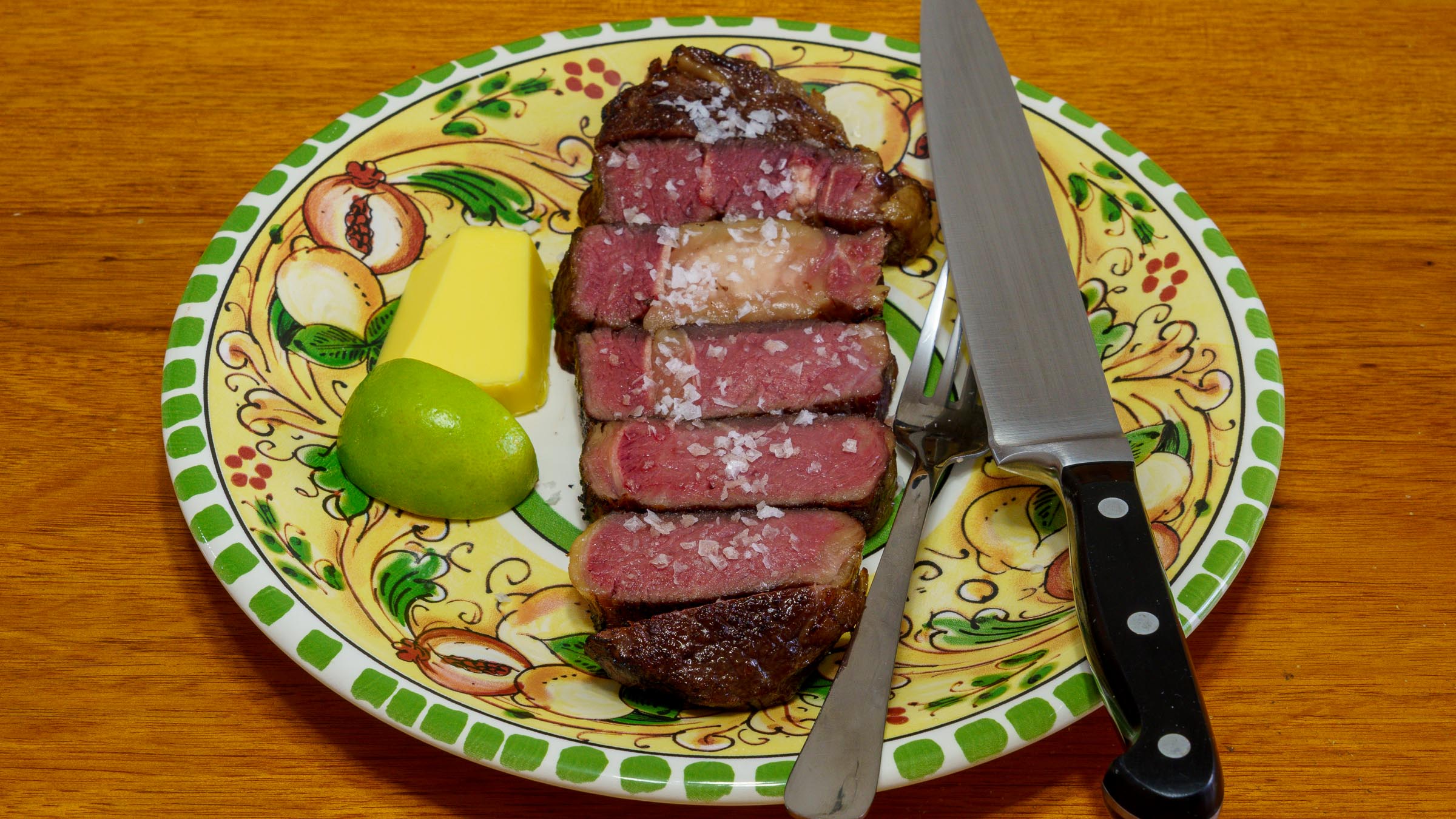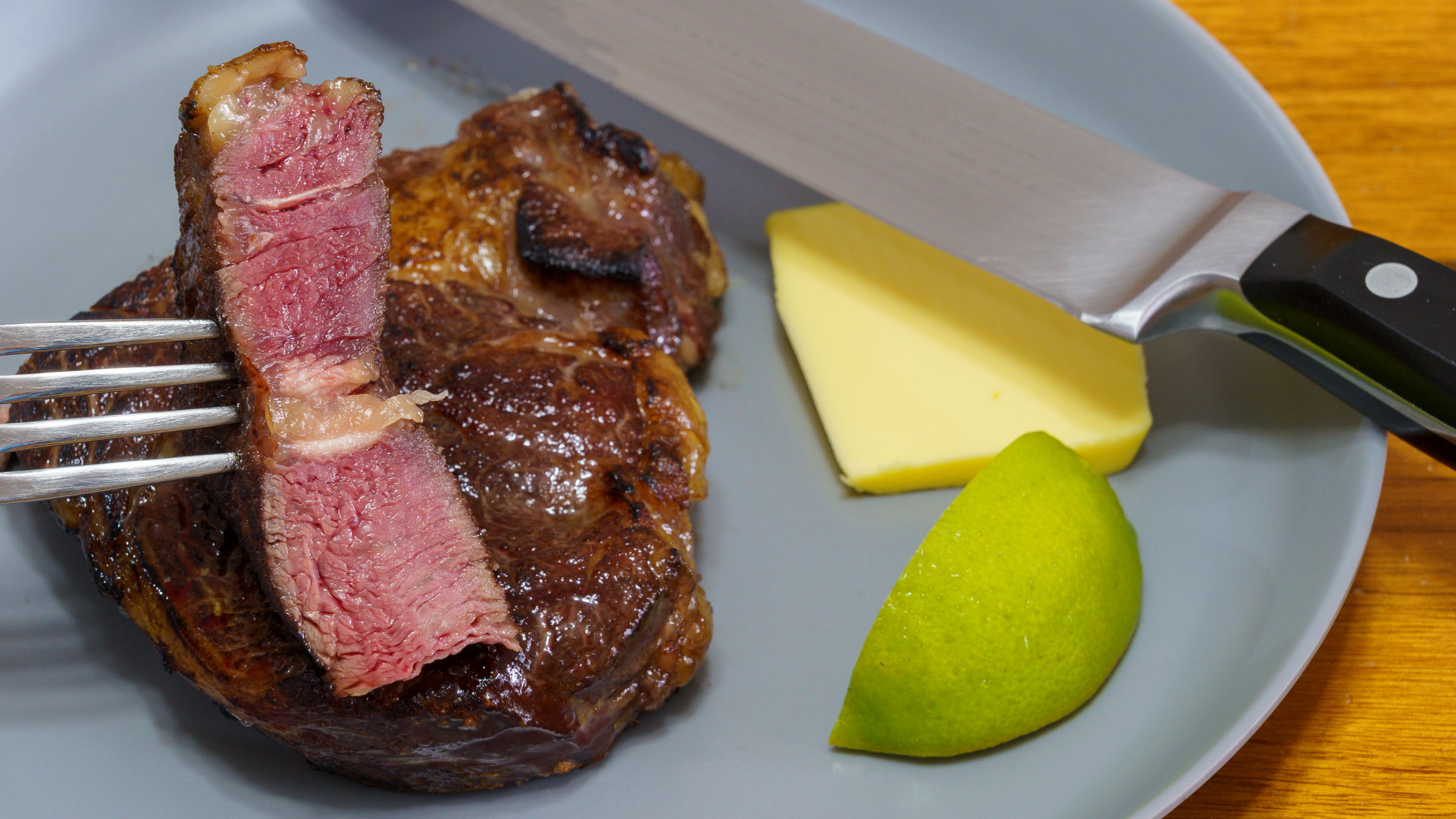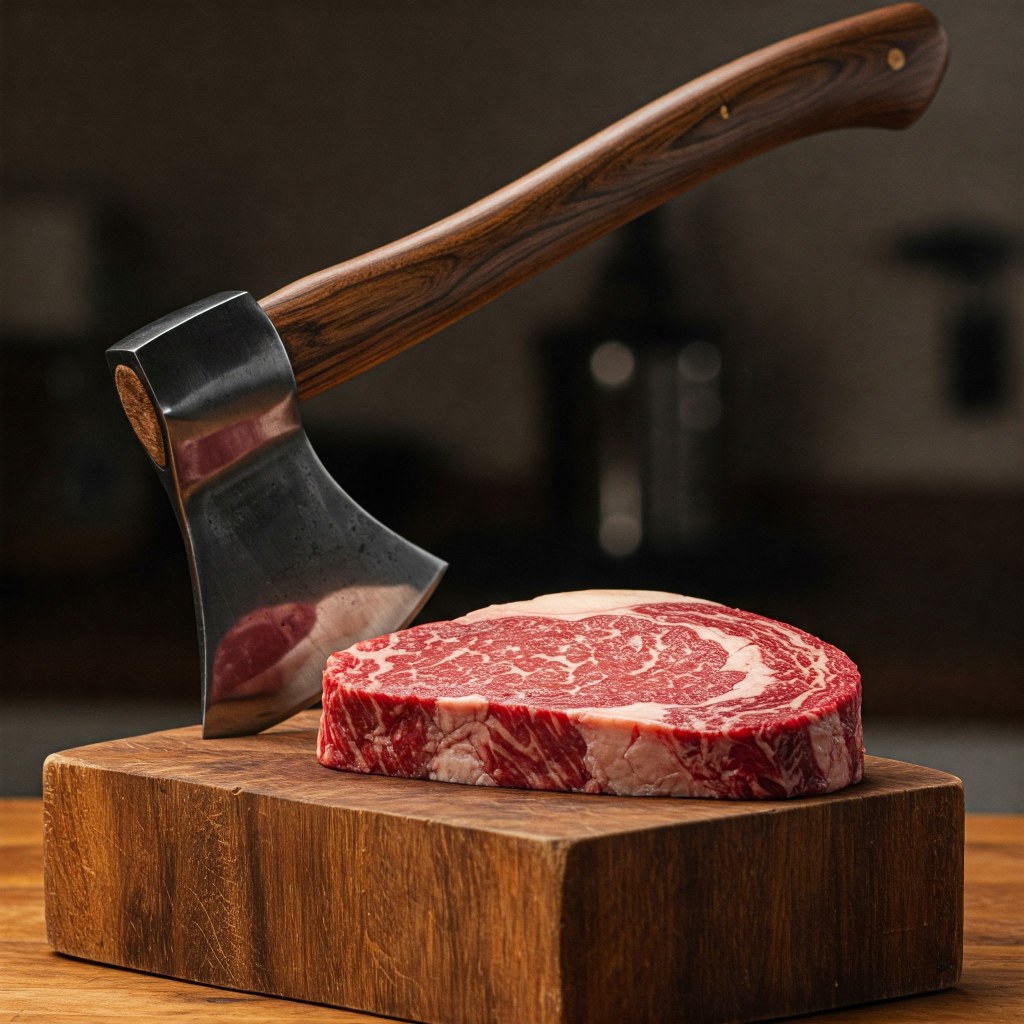
I used Google Gemini to create an essay on tomahawk steak. There may be errors.
I also used Google Gemini to create images; and I needed to use Adobe Photoshop to refine them.
Jump to the recipe if the descriptive palaver doesn’t interest you.
The tomahawk steak is the annoying show-off of restaurant and home cooking. The way its long and thick bone protrudes, coupled with the marbled and flavourful (the combination of taste and smell) meat, attracts attention.1 Frequently seen across social media platforms (Facebook, X, Instagram, Threads, and Bluesky) and on the menus of pretentious wanky restaurants, the tomahawk presents an archaic culinary experience.2
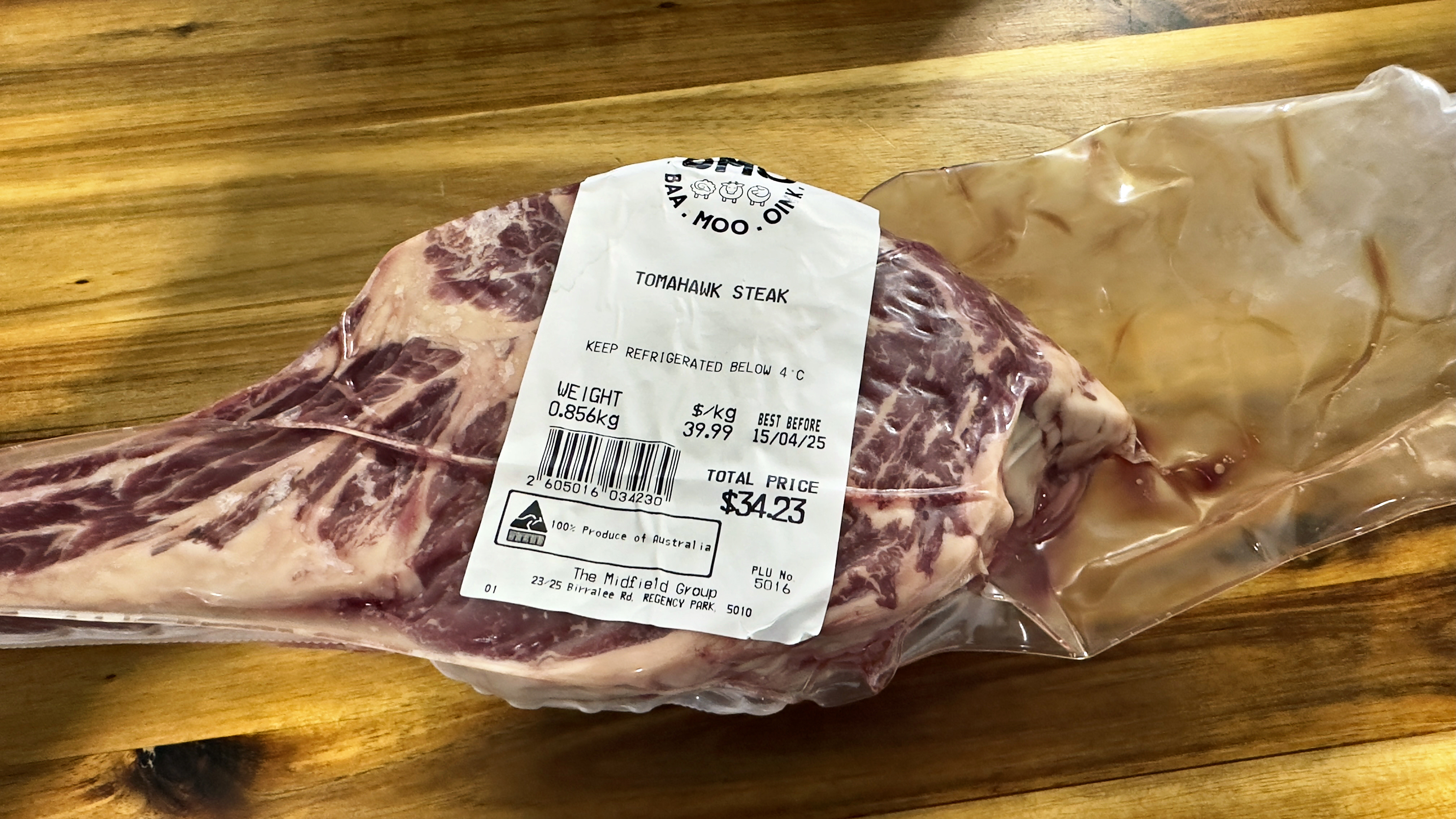
No one likes a show-off. You know that kid (or worse, an adult) who is always boasting about how good they are and how much they know. Rather than demonstrating excellence, they make a song and dance about it. For me, the value of a tomahawk steak is not how it looks. It has a handle, and with a firm grip, I don’t need a knife or a fork.
The anatomy of the tomahawk
Appreciating the tomahawk steak includes understanding its anatomical position. Bovine skeletons include 13 pairs of ribs, protecting the lungs and heart.6 These ribs are connected to the vertebral column along the back and extend ventrally to attach to the sternum.6 The ribs constitute a significant portion of the cow’s axial skeleton.6 The location of these ribs along the body determines the primal cut they belong to. The first six ribs in the shoulder region form part of the chuck cut. The primal rib, encompassing ribs six through twelve, yields the most desired steak cuts, including the ribeye, from which the tomahawk is derived.8 The muscles in the shoulder area surrounding the scapula (shoulder blade) and attached to these initial ribs generally possess moderate toughness.9

The primal rib cut, the anatomical home of the tomahawk, is located beneath the front section of the backbone and primarily serves a structural support function within the animal.10 This particular cut is known for its flavour and marbling, key factors contributing to the meat’s tenderness and succulence.8 Butchery practices clearly define the boundaries of the primal rib: it is separated from the chuck primal cut between the fifth and sixth ribs, and its posterior border lies between the twelfth and thirteenth ribs, effectively encompassing the meat associated with the sixth to the twelfth ribs – a total of seven ribs.11 Within this primal rib section, butchers further divide the meat into sub-primal cuts, which include familiar names such as the ribeye steak, the prime rib roast, and various rib preparations like short ribs and back ribs.12 The tomahawk steak is also classified as a sub-primal cut originating from the primal rib.1 The specific muscle composition and fat distribution inherent to the primal rib region contribute significantly to the qualities found in these beef cuts.
Delving deeper into the tomahawk’s precise origin, it is a thick, bone-in ribeye steak. What distinguishes it is the inclusion of a significant length of the rib bone, which is “frenched,” where meat and fat are removed to expose the bone for presentation.1 The primary muscle responsible for the eating quality of the ribeye and the tomahawk is the longissimus dorsi, often referred to as the rib eye muscle or simply the “eye” of the meat.4 This muscle runs along the back of the cow, situated outside the rib cage, and is characterised by its relative inactivity during the animal’s life, which directly contributes to its tenderness.9 Interestingly, the same longissimus dorsi muscle is also dominant in other highly regarded beef cuts, such as the T-bone and porterhouse steaks.16 The minimal exertion experienced by this muscle group results in tenderness.
What’s in a Name?
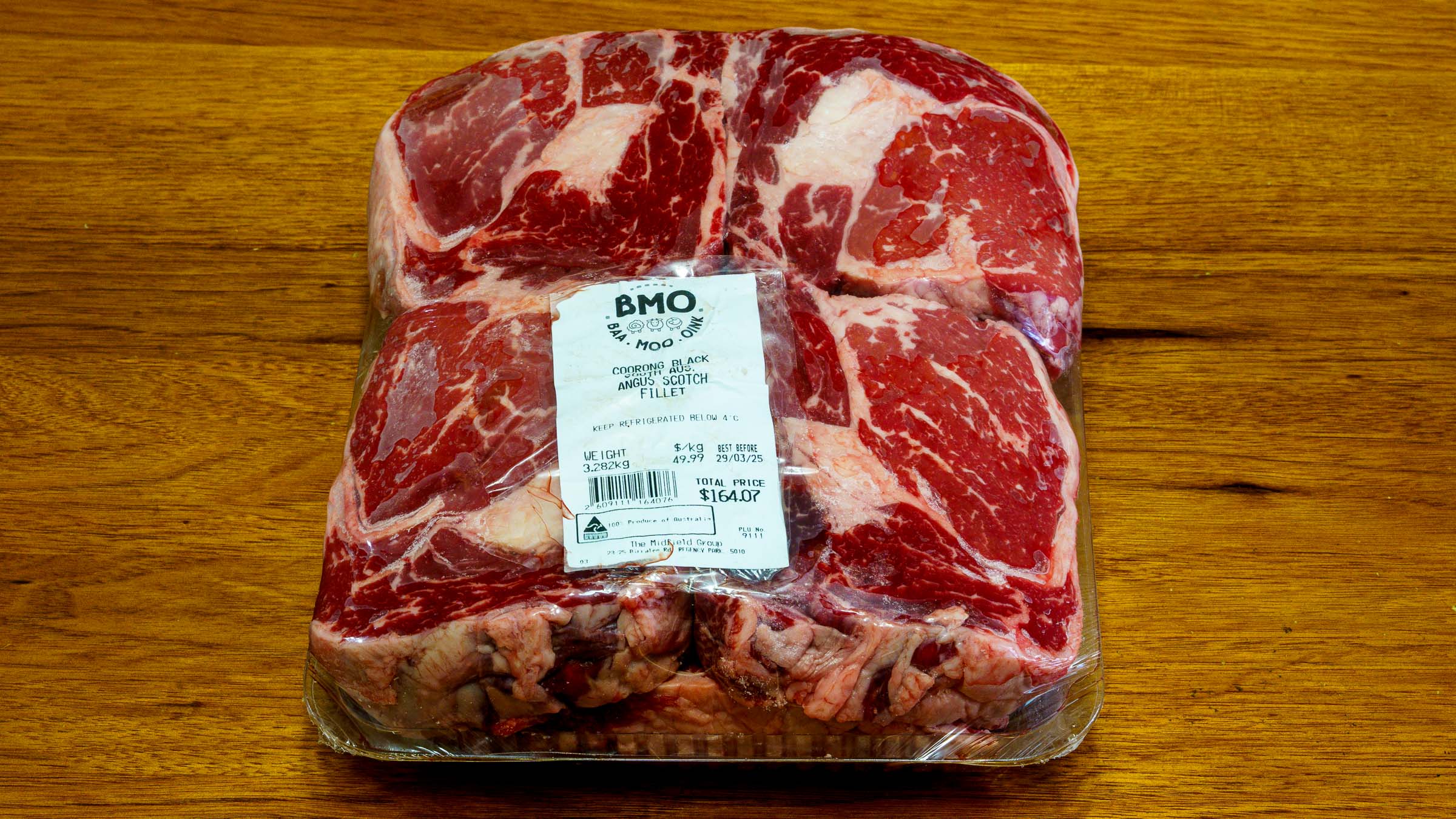
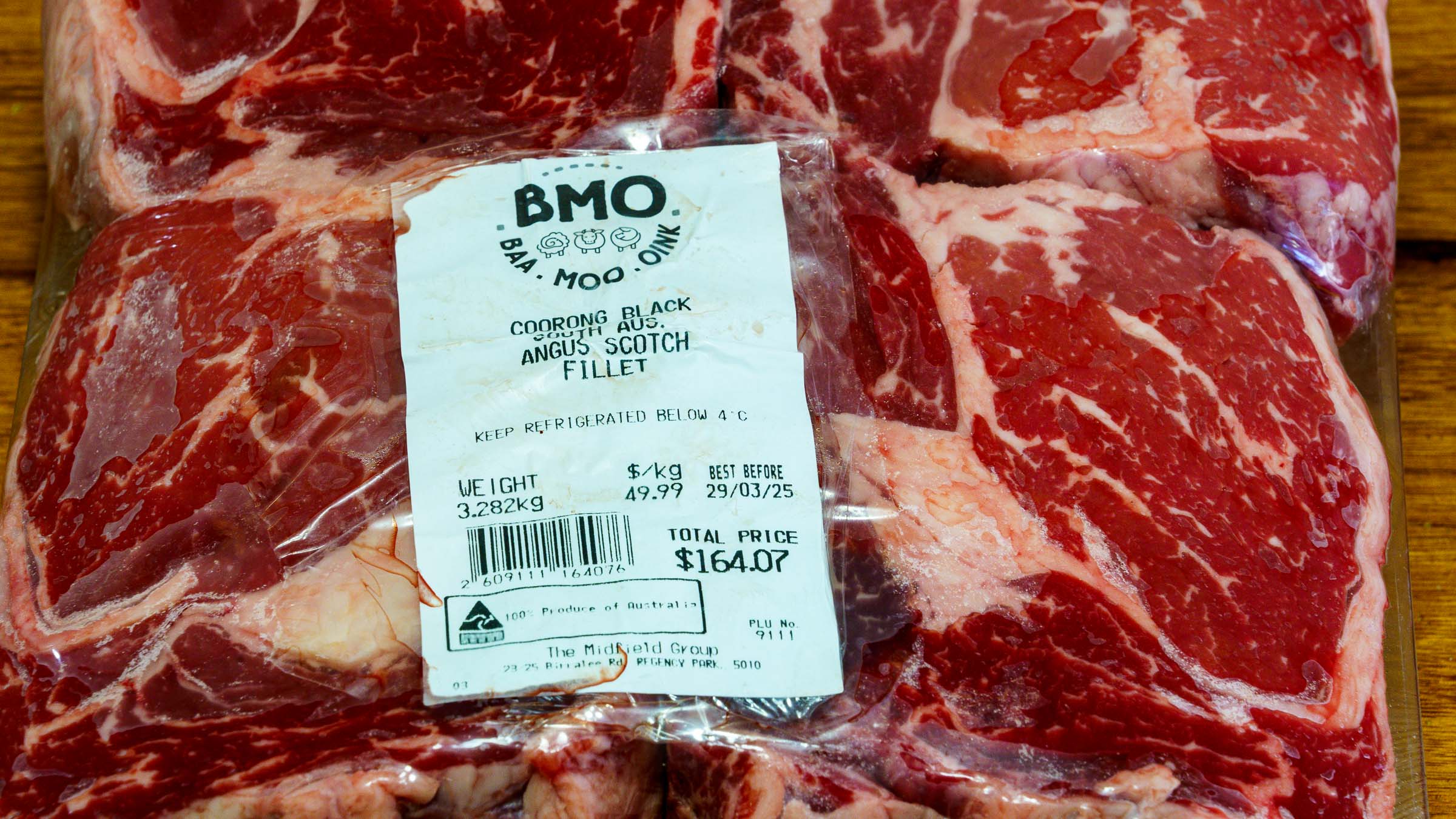
While “tomahawk steak” has gained recognition for its visual impact, it is a bone-in ribeye known by various names across different countries and culinary traditions. In the United States, a bone-in beef rib can be referred to by a multitude of terms, including “rib steak,” “beef rib,” “bone-in beef rib,” “tomahawk steak,” “bone-in rib steak,” “ribeye steak,” or “cowboy cut”.22 In Australia and New Zealand, the equivalent bone-in cut is called a “ribeye,” while the boneless version is known as “Scotch fillet” or, less commonly, “whiskey fillet”.23 In the United Kingdom, “côte de bœuf” and “tomahawk steak” describe the bone-attached rib steak.23
The French distinguish between the bone-in rib steak, known as “côte de bœuf” (literally translating to “beef rib”), and the boneless ribeye, which they call “entrecôte”.23 In Argentina, the terminology varies slightly, with “ancho de bife” used for the rib steak, regardless of whether the bone is present, and “ojo de bife” specifically referring to the ribeye.23 In Spain, a bone-attached rib steak is known as “chuletón,” the same cut with the bone removed is called “entrecote,” a term borrowed from the French.23 The term “cowboy steak” often arises in discussions about the tomahawk, with many considering them interchangeable. However, some differentiate the two based on the length of the frenched rib bone, with the tomahawk rib being longer for pretentious (wanky) presentation.4 Finally, a bone-in rib steak in Italy is recognised as “costata di manzo”.26 The nomenclature highlights the global appeal of this cut, with variations often reflecting the prominence of the bone in its preparation and presentation.
Selecting a tomahawk
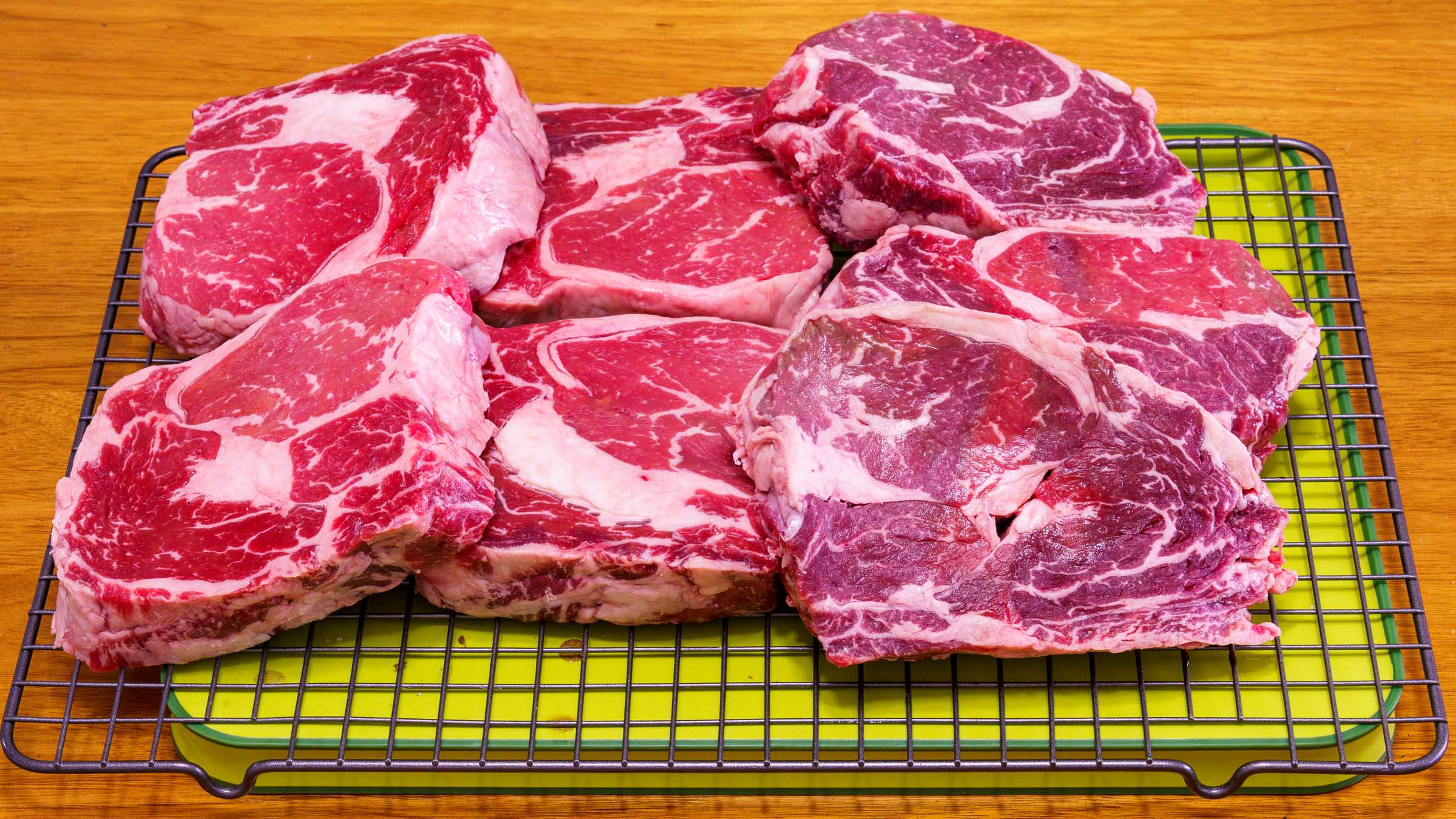
Choosing a quality tomahawk steak at a butcher shop involves consideration of factors that indicate the potential for a good eating experience. Marbling refers to the fine, evenly distributed intramuscular fat that appears as white flecks or streaks throughout the red muscle tissue.4 Marbling fat renders during cooking, infusing the meat with flavour, moisture, and tenderness. For the highest quality, higher grades of marbling is advisable.29 In Australia, beef quality and marbling are assessed using systems like AUS-MEAT, which employs a scale from 0 to 9, and the more comprehensive Meat Standards Australia (MSA) system, which uses a scale from 100 to 1190.39
Another crucial element is the thickness of the steak. A tomahawk should be about five centimetres thick.2 This thickness achieves a well-cooked steak, allowing for a seared crust on the outside while ensuring the interior reaches the desired level of doneness without overcooking. The thickness of the steak is often linked to the thickness of the rib bone itself.2 The colour of the meat is also an important indicator of freshness. When selecting a tomahawk, one should look for a vibrant cherry-red hue.29 It is best to avoid steaks that exhibit any dark or brownish spots, as these may suggest a decline in freshness.37
The appearance of the bone is another factor. Some think the frenched rib bone should be clean and neatly trimmed.4 I don’t mind some meat and fat on the bone so I can enjoy a good bone gnawing and sucking session. Do you like sucking on a bone? The bone should be substantial, typically measuring between 15 and 30 centimetres, contributing to the steak’s distinctive appearance.5 When selecting, consider the ratio of meat to bone, ensuring that you are primarily paying for high-quality beef rather than an excessively large bone.4 I suggest purchasing your steak from a trusted butcher. Butchers can provide insights into the source and grade of the beef, guiding you towards a selection that meets your preferences and needs.5
Cooking the tomahawk
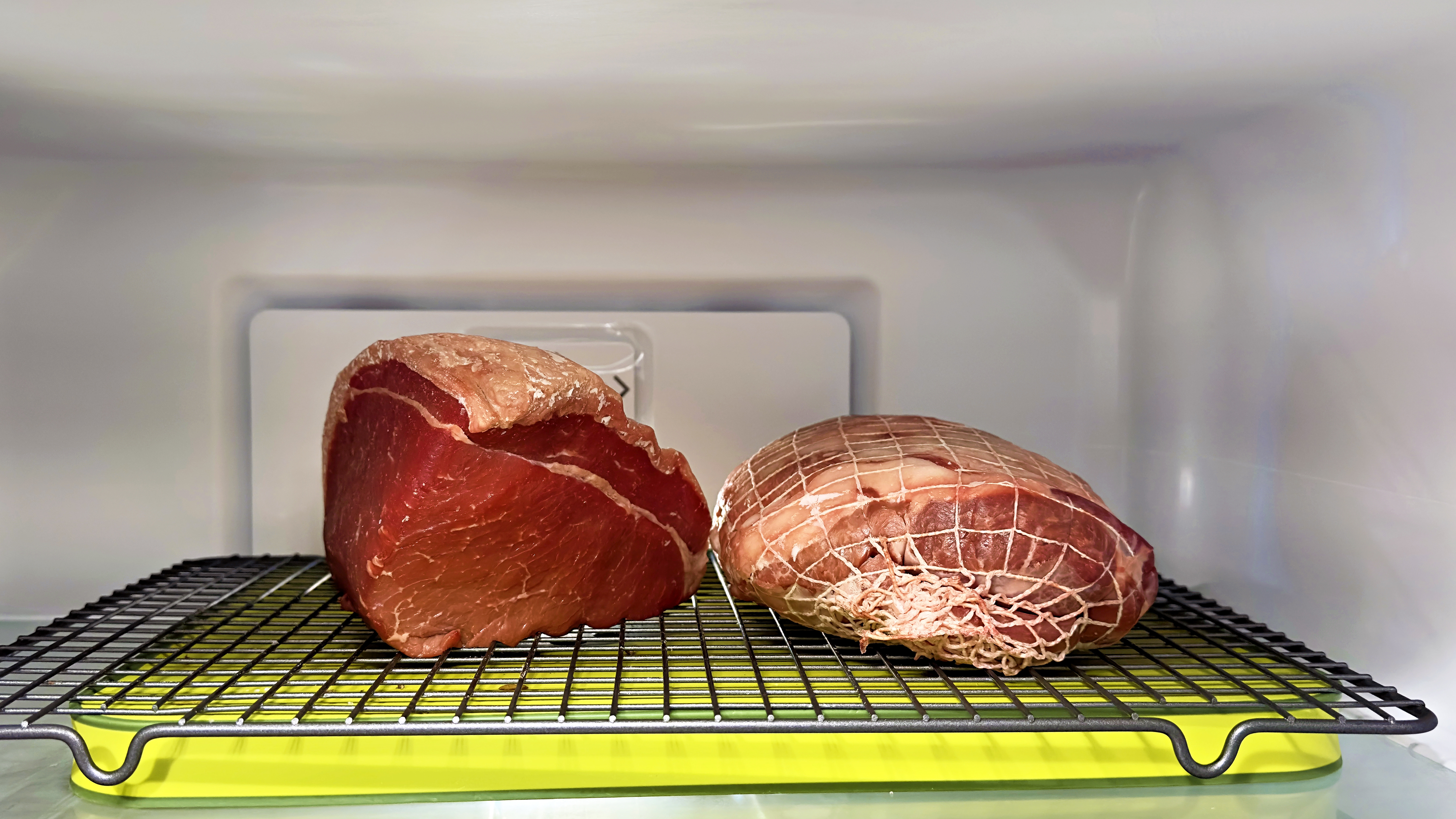
Preparing a tomahawk steak requires some attention to detail. Regardless of the method, some steps are worth taking to achieve good results. Some people allow the steak to sit at room temperature for approximately one hour before cooking.2 Allegedly, this allows the internal temperature of the meat to rise slightly, promoting even cooking throughout. (I’m not convinced). Salt helps enhance the flavours of the beef.47 I like dry brining, where the steak is salted up to 48 hours in advance and left uncovered in the refrigerator, which can intensify the flavour and improve tenderness.47 The exposed rib bone can be wrapped in aluminium foil for presentation purposes and to prevent scorching, although this step is optional.2 A valuable tool is a reliable meat thermometer. Using a thermometer to monitor the internal temperature is an accurate way to achieve the desired level of doneness.2 Finally, once the steak has reached the target temperature, rest for 10 to 15 minutes before slicing and serving.2 This resting period allegedly allows the juices within the meat to redistribute, resulting in a significantly more tender and flavourful final product.
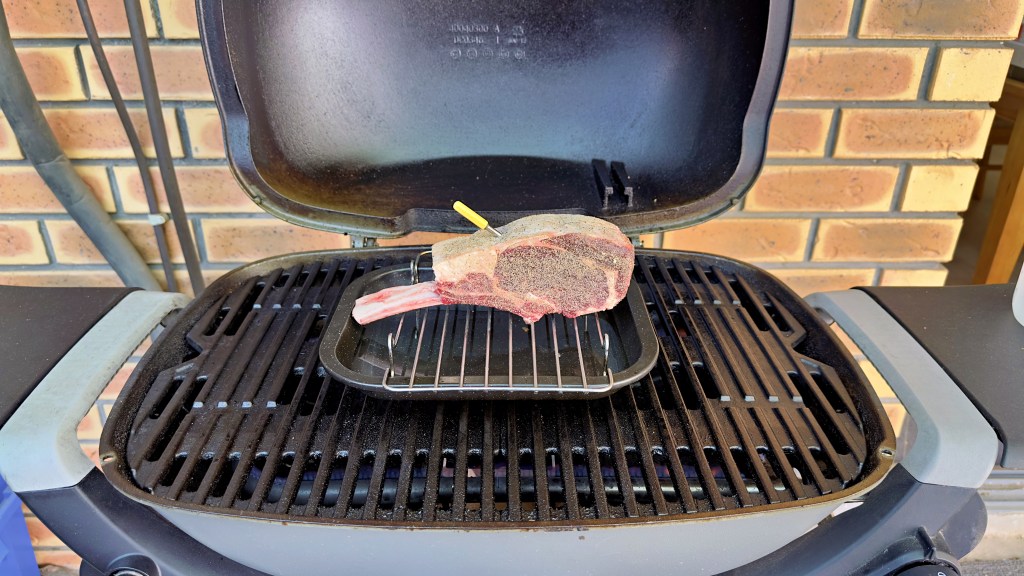
One of the most popular methods for cooking a tomahawk steak is using a barbecue, which can impart a smoky flavour and create a charred exterior.2 Given the thickness of a tomahawk, reverse searing is often favoured. This involves cooking the steak over indirect heat at a lower temperature, typically between 110–135 °C, until it reaches an internal temperature of approximately 46–52 °C for a medium-rare result.30 Following this slow cooking phase, the steak is moved to high direct heat briefly to achieve the desired crust.30 Setting up the barbecue for two-zone cooking, with one side providing high direct heat and the other offering indirect heat, is recommended for this method.30 The searing process usually entails cooking each side of the steak for 1 to 3 minutes over intense heat, around 230–315 °C.30 For an extra layer of flavour, some cooks like to add butter during the searing process.55 For me, it will be easier to use a gas torch.
Another method, when outdoor cooking isn’t feasible, is pan-searing, followed by cooking in the oven.8 This technique allows for the development of a crust on the steak’s surface. The process begins by searing the tomahawk in a hot, heavy-bottomed skillet, such as cast iron, with a high smoke point fat like beef fat.2 The steak is typically seared for 2 to 4 minutes per side until a golden-brown crust forms.2 After searing, the skillet is then transferred to a preheated oven, typically set between 175–220 °C, to allow the steak to finish cooking to the desired internal temperature.56 This oven finishing stage can take anywhere from 9 to 20 minutes, depending on the steak’s thickness and the target level of doneness. Similar to barbecuing, basting the steak with melted butter during the searing can enhance the overall flavour profile.57
The reverse-searing method can also be effectively employed by starting the cooking process in the oven. This approach involves placing the seasoned steak on a wire rack set over a baking sheet and cooking it in a low oven, around 95–135 °C, until the internal temperature is approximately 5–8 °C below the desired final temperature.30 Once this target is reached, the steak is quickly seared in a hot skillet for 1 to 2 minutes per side to develop the crust.30 This method, regardless of whether it begins on the barbecue or in the oven, is consistently recommended for cooking tomahawk steaks due to its ability to manage the cooking process effectively.
While less frequently used than barbecuing or pan-searing, oven-roasting can also be a viable method for cooking a tomahawk steak.2 This technique often involves an initial period of high heat to sear the steak’s exterior before the oven temperature is reduced to allow the interior to cook through to the desired doneness.2 Roasting temperatures typically range from 160–245 °C, and the total cooking time will vary depending on the thickness of the steak and the preferred internal temperature.2 Often, even when oven-roasting, a separate searing step, either before or after roasting, is incorporated to ensure the development of a crust.
The nutritional profile
Understanding the nutritional composition of a tomahawk steak helps provide insights into dietary intake. Precise nutritional values can fluctuate based on several factors, including the specific cut, the grade of beef, and the cooking method employed. Per a 100-gram (sans bone) serving, a tomahawk steak typically contains an approximate range of 135 to 280 calories, 4.2 to 22 grams of fat, 19 to 24 grams of protein, and 0 to 0.9 grams of carbohydrates.78 When considering a more substantial portion, such as a single serving of around 237 to 240 grams (roughly equivalent to one cup), the calorie count can range from 592 to 640, with 47 to 48 grams of fat, 40 to 48 grams of protein, and virtually no carbohydrates.78 It is worth noting that some sources report significantly higher calorie counts for a single tomahawk steak (e.g., 2264 calories) 84, which likely reflects a large individual steak. The proportion of macronutrients in a tomahawk steak generally shows that fat contributes the majority of calories, ranging from approximately 69.2% to 72.6%, while protein accounts for around 27.4% to 30.8%.83 Carbohydrate content is typically minimal or absent. Beyond these macronutrients, the tomahawk steak is also recognised as a good source of protein, iron, potassium, and various B vitamins.84
To provide a comparative perspective, it is helpful to examine the nutritional profile of the porterhouse steak, another premium cut of beef. Similar to the tomahawk, the nutritional values of a porterhouse steak can also vary. On average, a 100-gram serving of porterhouse steak contains approximately 130 to 276 calories, 4.4 to 19.3 grams of fat, 20 to 28.2 grams of protein, and 0 to 0 grams of carbohydrates.86 For a larger serving, around 238 to 250 grams, the calorie content ranges from 560 to 640, with 38.5 to 48 grams of fat, approximately 49 grams of protein, and 0 to 6 grams of carbohydrates.91 One specific source indicates a nutritional breakdown of 139 calories, 5.3 grams of fat, and 22.7 grams of protein per 100 g serving.85 Like the tomahawk, the porterhouse steak is also a good protein, iron, potassium, and B vitamins source.85
The following table provides an approximate nutritional comparison between tomahawk and porterhouse steaks based on the data reviewed:
Approximate Nutritional Comparison (per 100 g)
| Nutrient | Tomahawk Steak (Range) | Porterhouse Steak (Range) |
| Calories | 135–280 | 130–276 |
| Fat (grams) | 4.2–22 | 4.4–19.3 |
| Protein (grams) | 19–24 | 20–28.2 |
| Carbohydrates (grams) | 0–0.9 | 0-0 |
This comparison reveals that tomahawk and porterhouse steaks share a similar nutritional profile. They are relatively high in protein and fat while containing minimal carbohydrates. The specific nutritional content can vary depending on the size of the serving and the degree of fat trimming.
Premarket considerations
Before a tomahawk steak reaches the consumer, it may undergo specific premarket processes that significantly influence its final characteristics, particularly its flavour and tenderness. Two standard processes are dry-ageing and wet-ageing. Dry ageing is a technique where beef is stored in a carefully controlled environment, with specific attention to temperature, humidity, and airflow, for several weeks.4 During this time, moisture evaporates from the meat, leading to a concentration of its natural flavours. Additionally, naturally occurring enzymes within the beef work to break down tough muscle fibres, resulting in enhanced tenderness.4 Dry-aged steaks are often characterised by a more intense, sometimes described as nutty and complex, flavour profile. Some people call it “funky.”
Wet ageing, on the other hand, is a more prevalent and less time-intensive process. In wet-ageing, beef cuts are vacuum-sealed in plastic packaging and then refrigerated for a specific duration.93 This method also leads to improved tenderness through enzymatic activity; however, the same flavour concentration achieved in dry ageing does not occur because the meat is sealed and retains its moisture.93 Consumers should be aware of whether a tomahawk steak has been subjected to dry-aging or wet-aging, as this will have a noticeable impact on the steak’s flavour and potentially its price. Dry-aged steaks are typically more expensive due to the longer duration of the process and the potential for some weight loss in the meat during ageing.
Conclusion
With its presentation and flavour, the tomahawk steak offers a happy culinary experience. Steak enthusiasts can appreciate this cut of beef by understanding its anatomical origins, the various names it goes by around the world, the essential steps for selecting and cooking it, and its nutritional attributes. Whether prepared on the barbecue, pan-seared and finished in the oven, reverse-seared, or even roasted, good preparation and cooking guided by a meat thermometer ensure a good steak.
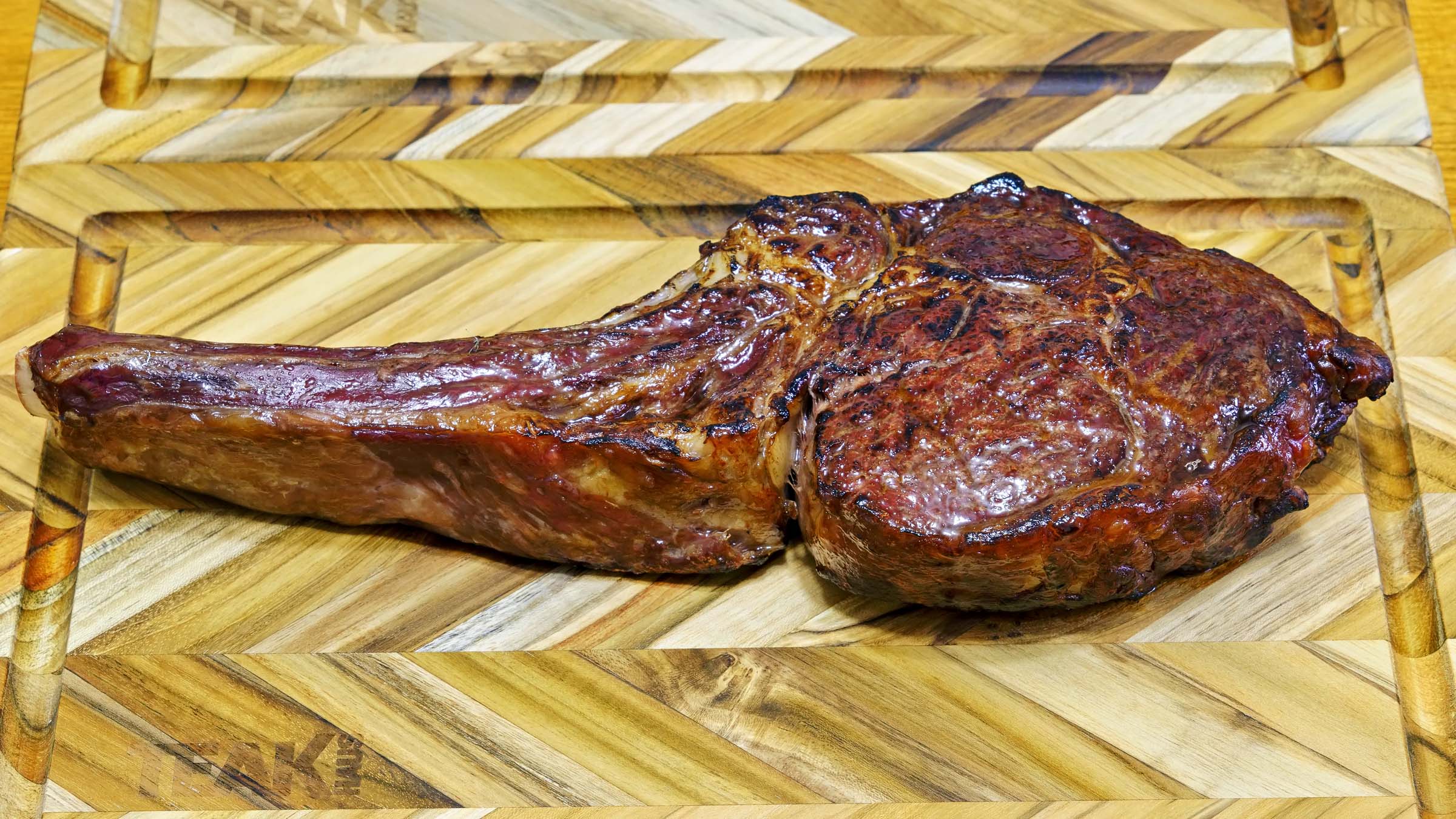
A tomahawk steak means less washing up because I don’t need a knife or a fork.
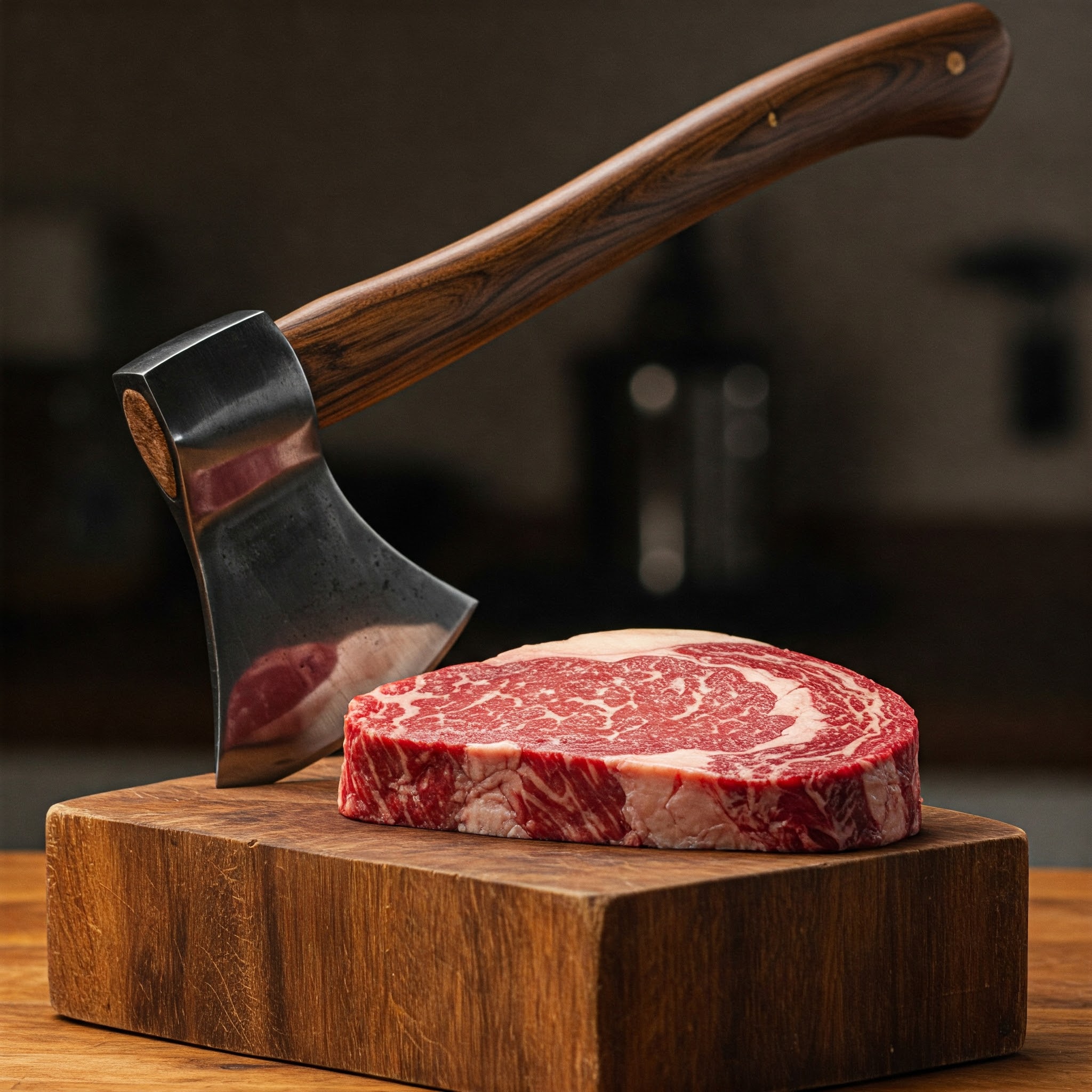
Recipe
Ingredients
- Steak
- Salt
Equipment
- Oven
- Gas torch
- Meat thermometer
Instructions
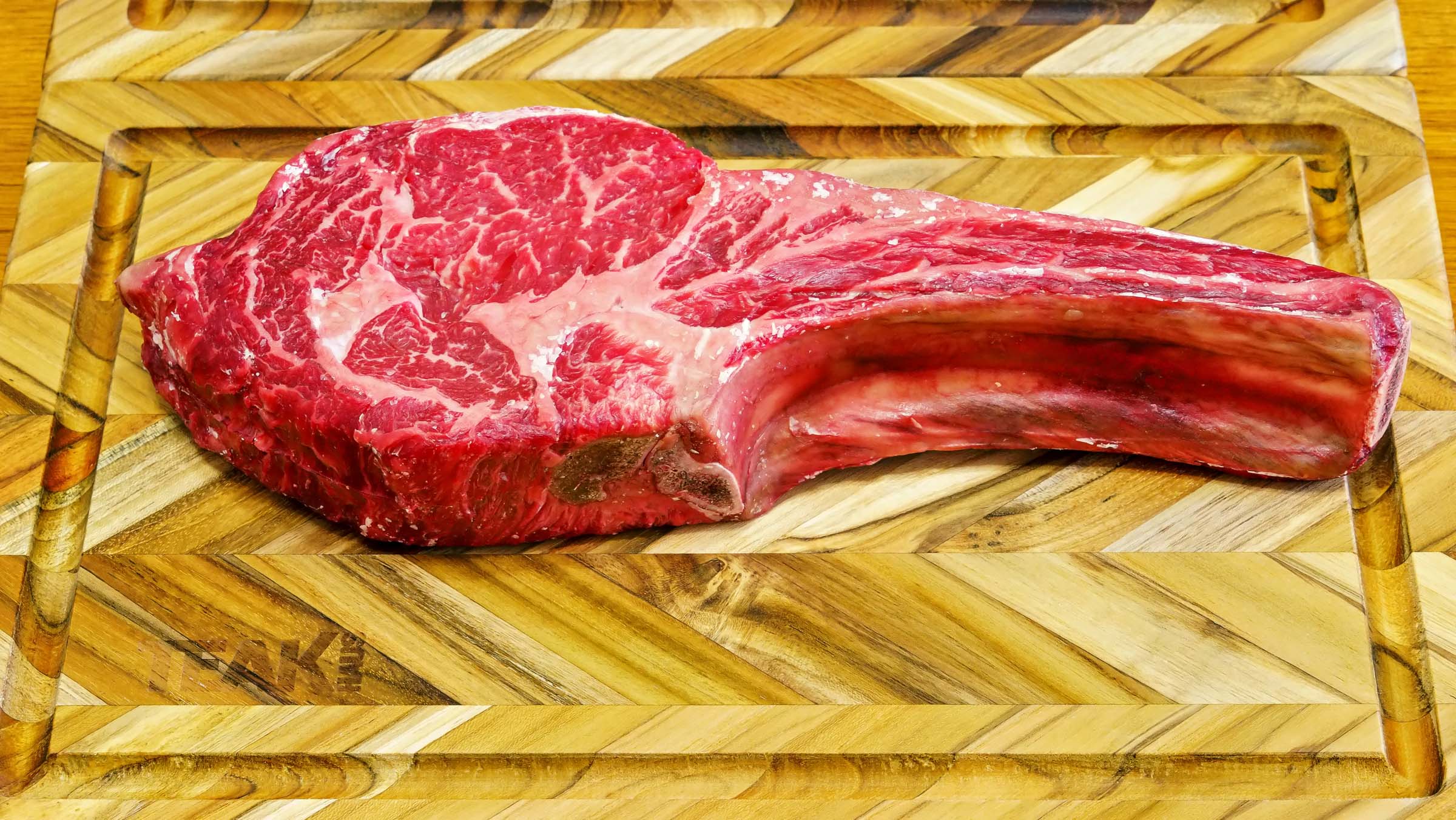
- Dry brine the steak.
- Preheat the oven to 120 °C.
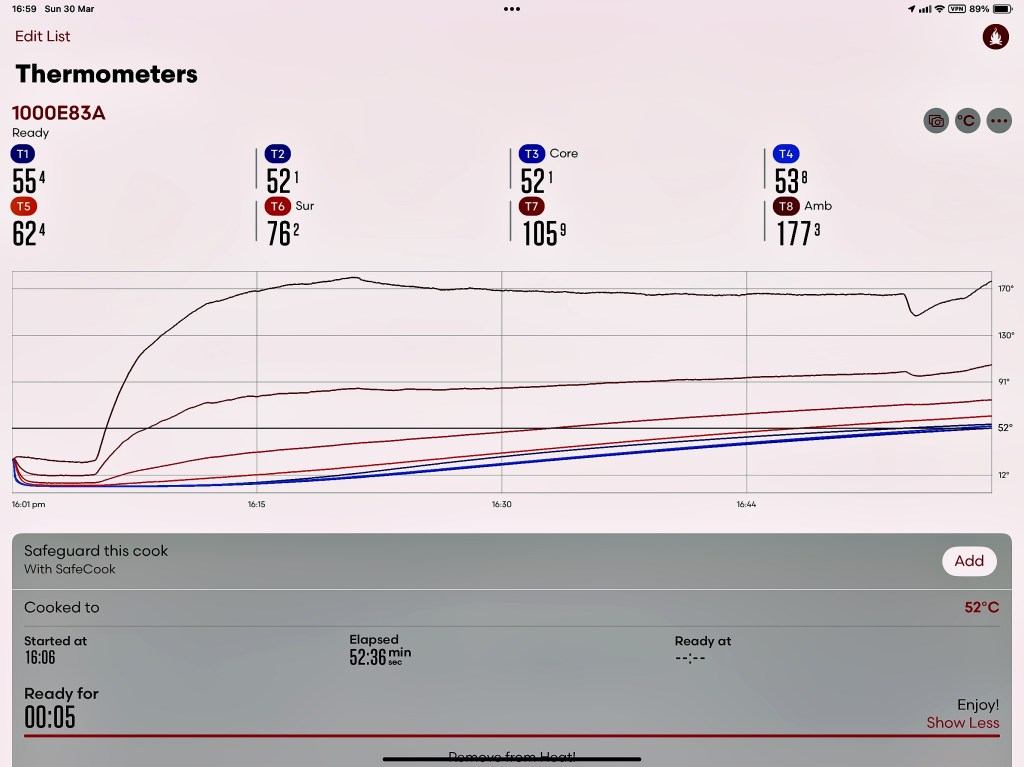
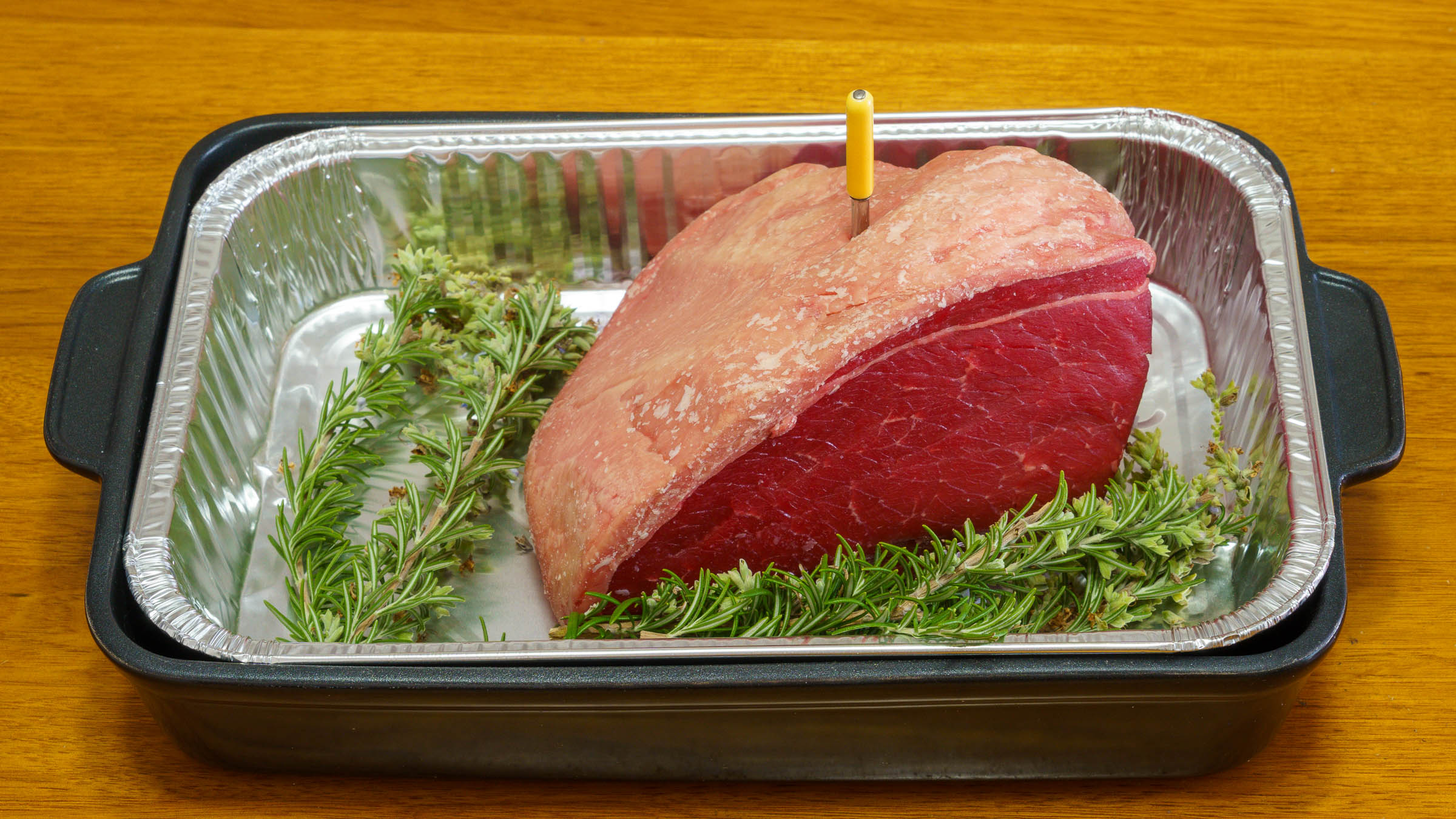
- Insert the meat thermometer.
- Begin cooking the meat until the internal temperature reaches about 52 °C.
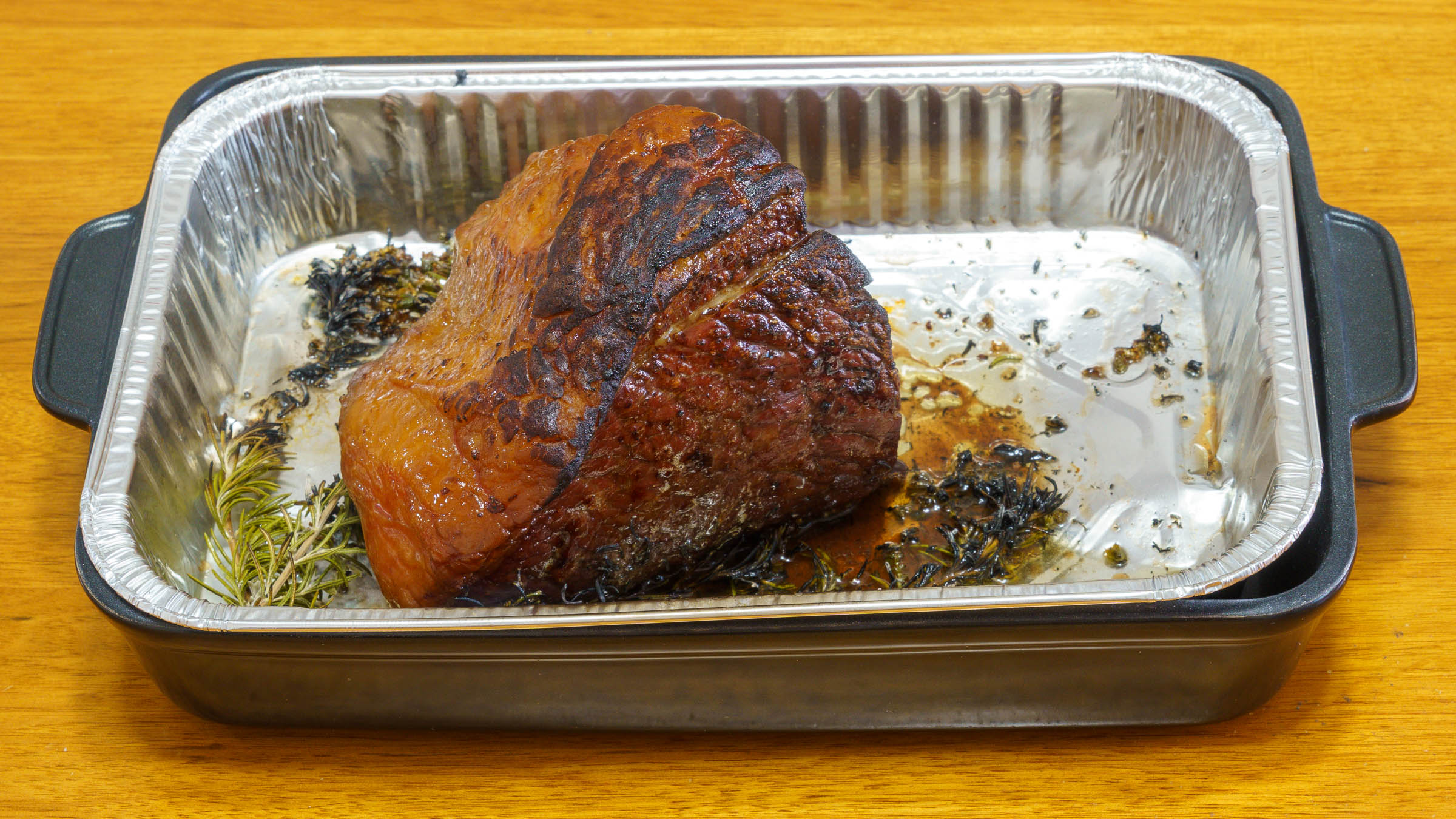
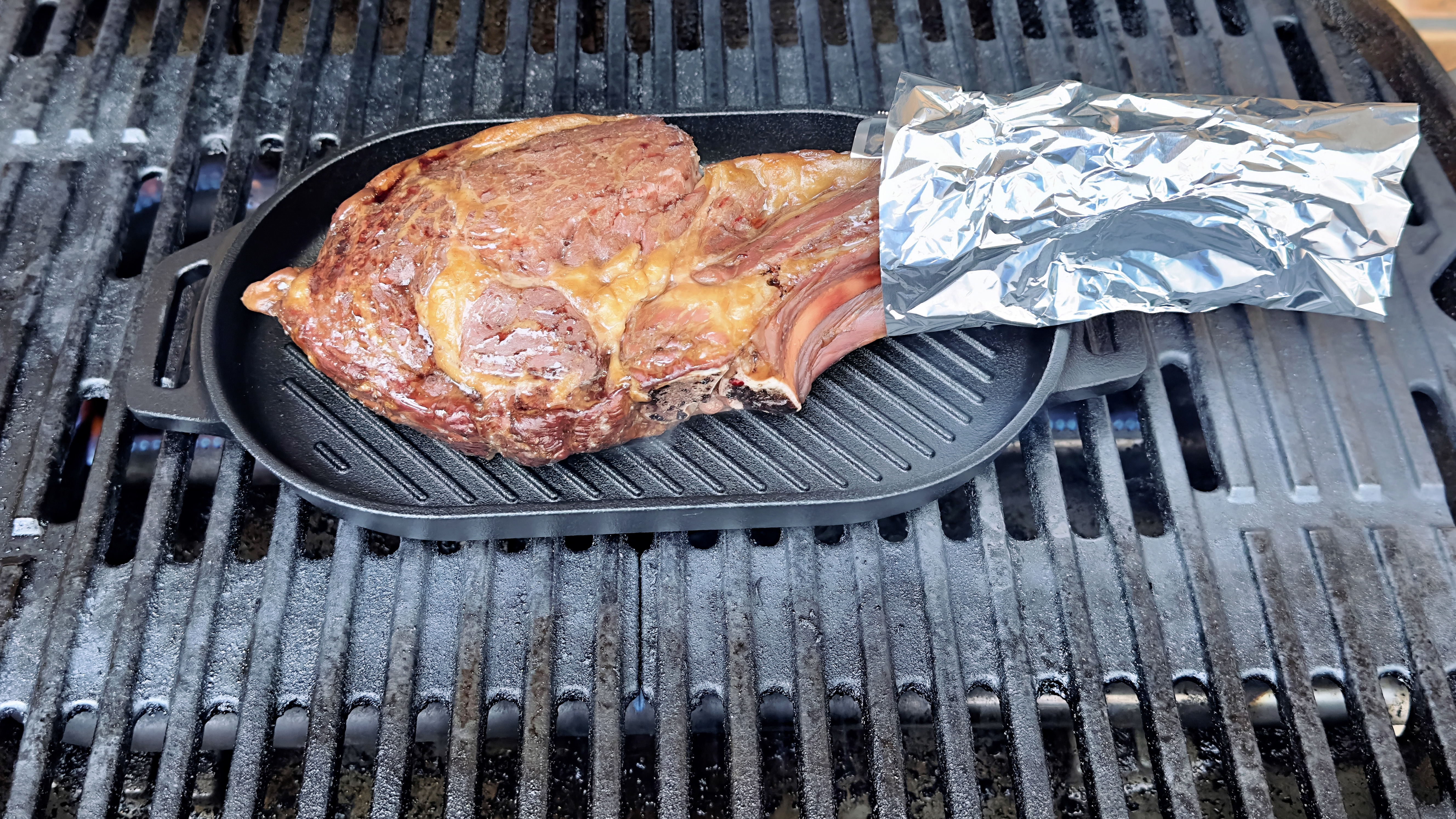
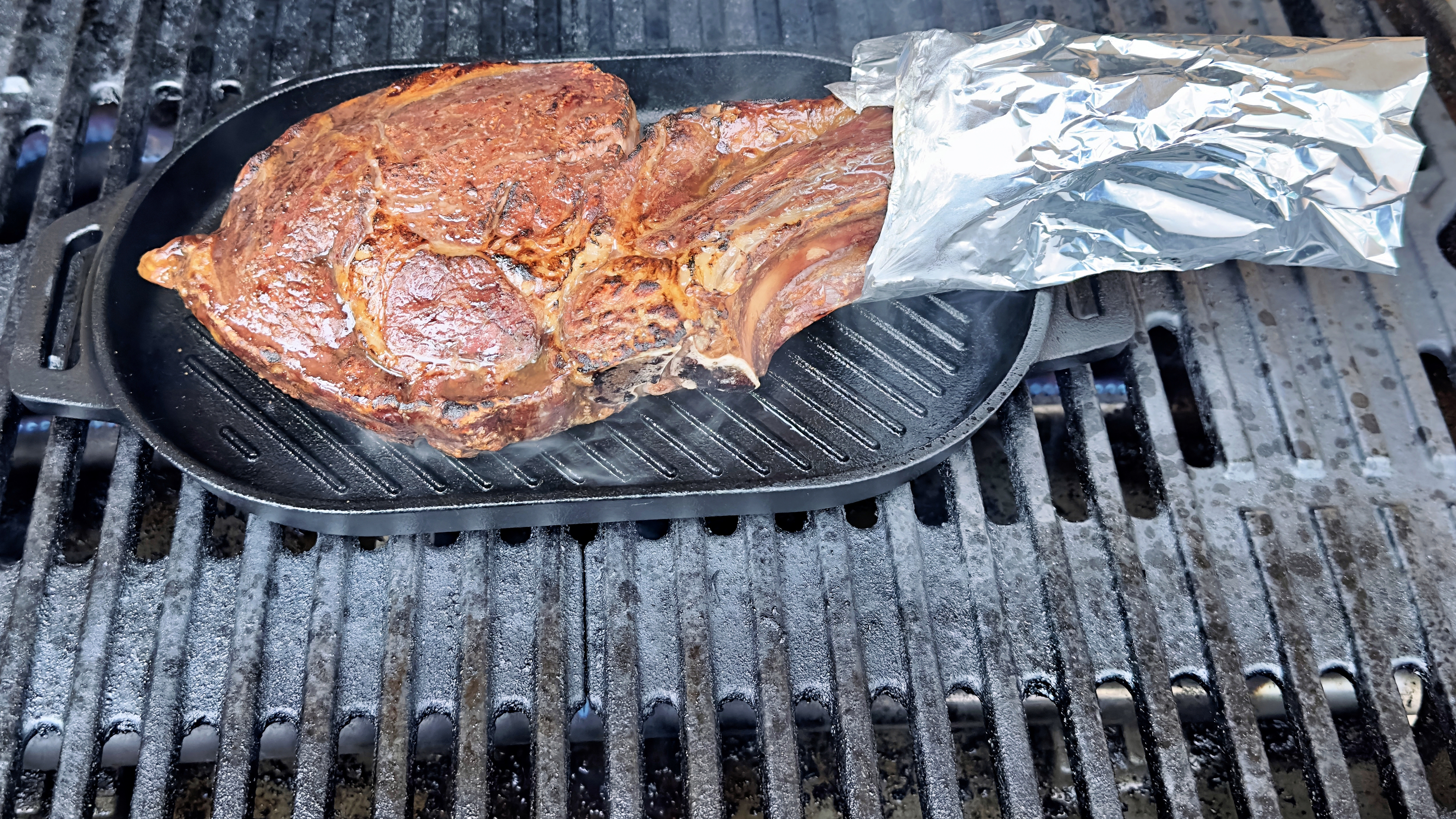
- Sear the meat with a gas torch.
- Rest the meat.
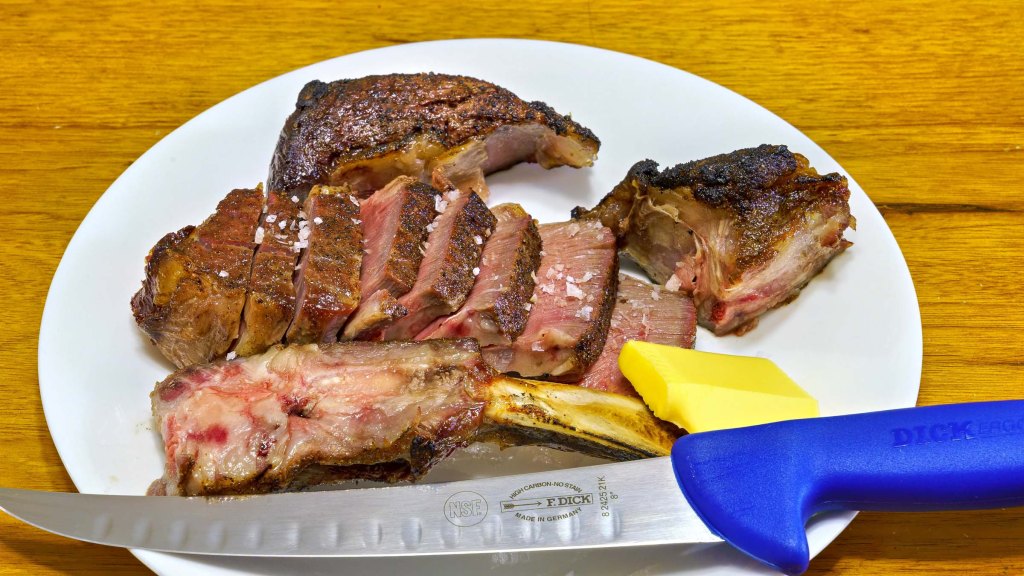
- Serve the meat.
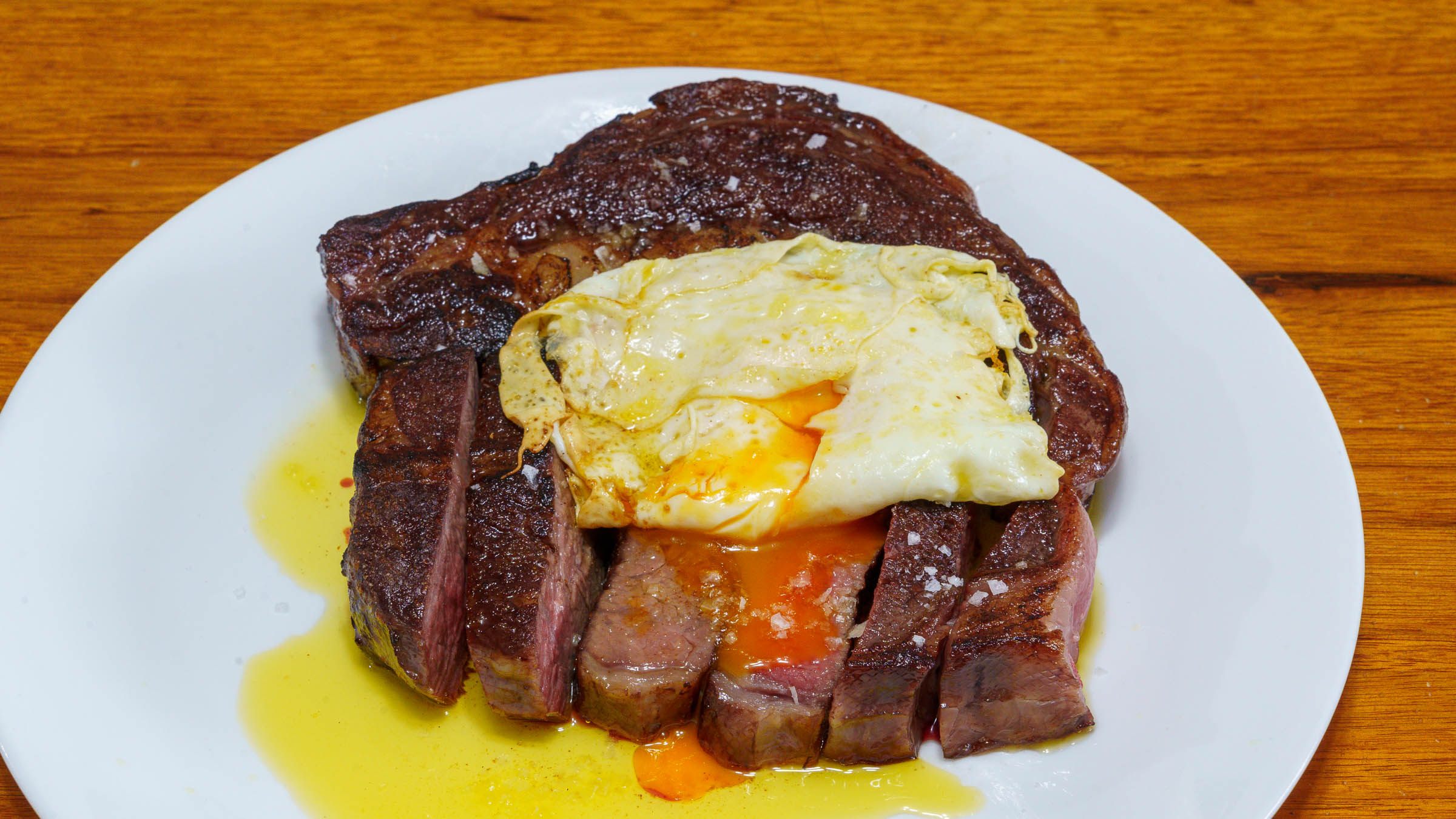
- Eat the meat (681 grams).
- Suck the bone.
- Gnaw the bone.
- Weigh the bone (it was 175 grams).
Thoughts about the meal
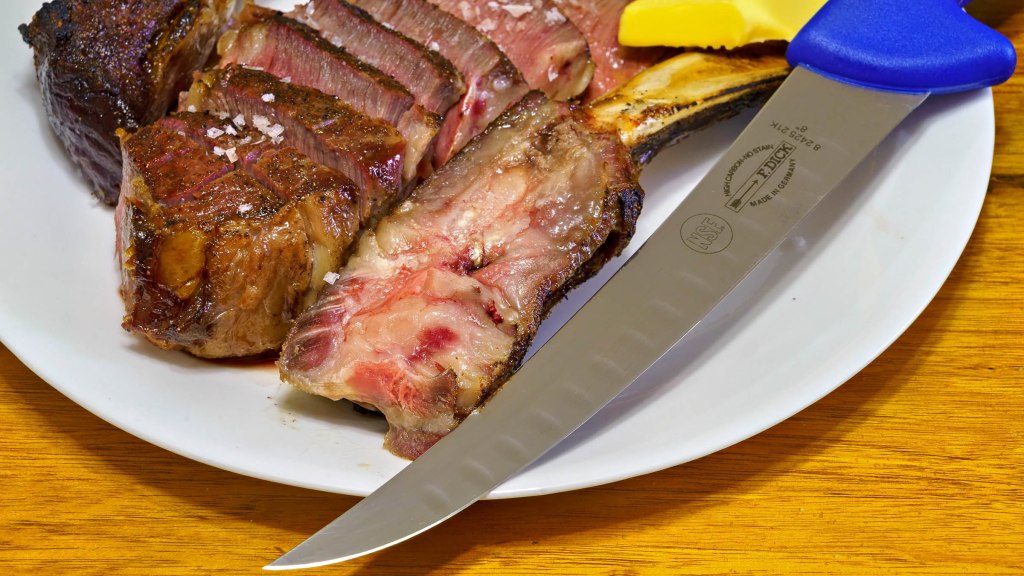
This steak was delicious. The bone was better, it was full of flavour and mouthfeel as I gnawed it and sucked on it. It filled my mouth.
Eating it with my hands and just chomping into the meat and fat was fantastic. My lips and cheeks were smeared with beef fat and my teeth had meat fibres between them. My tongue was coated in the oily fatty meat juices. This sub-primal cut was primal to eat.
A lot of dental floss was necessary.
I still think the tomahawk is a pretentious cut, and you’re paying for bone (175 grams for this steak); it’s not bad now and then.
Photographs
This is a gallery of images. Click on one and scroll through the rest.





Morning walk
Today’s beach photograph.

Works Cited
- 1855beef.com, accessed on April 6, 2025, https://1855beef.com/blog/tomahawk-steak-everything-you-need-to-know/#:~:text=Also%20known%20as%20a%20rib,the%20tomahawk%20its%20showstopper%20appearance.
- What is Tomahawk Steak? – True Bites Family Butchers, accessed on April 6, 2025, https://www.truebites.co.uk/blogs/ask-the-butcher/what-is-tomahawk-steak
- The History And Origin Of The Tomahawk Steak | Windsor Quality Meats | Award Winning Vancouver Butcher, accessed on April 6, 2025, https://windsorqualitymeats.com/the-history-and-origin-of-the-tomahawk-steak/
- Ultimate Guide to Tomahawk Steak | Steak University, accessed on April 6, 2025, https://www.mychicagosteak.com/steak-university/guide-tomahawk-steak
- What Is a Tomahawk Steak? | How To Cook It and More – 1855 Black Angus Beef, accessed on April 6, 2025, https://1855beef.com/blog/tomahawk-steak-everything-you-need-to-know/
- Cow Anatomy | Bovine Muscles & Skeleton | AnatomyStuff, accessed on April 6, 2025, https://free-resources.anatomystuff.co.uk/cow-anatomy-free-download/
- Ribs – vet-Anatomy – IMAIOS, accessed on April 6, 2025, https://www.imaios.com/en/vet-anatomy/anatomical-structures/ribs-11073892696
- Anatomy of a Cow, Different Cuts Explained – Recipes from BritiShop, Thailand, accessed on April 6, 2025, https://britishop.com/recipes/5952/anatomy-of-a-cow-different-cuts-explained
- Major Muscles of the Carcass – Animal Biosciences |, accessed on April 6, 2025, https://animalbiosciences.uoguelph.ca/~swatland/ch4_1.htm
- Rib Primal – Beef Chart – American Foods Group, accessed on April 6, 2025, https://www.americanfoodsgroup.com/recipes/beef_chart/primalCuts/25
- Rib Primal – Beef – It’s What’s For Dinner, accessed on April 6, 2025, https://www.beefitswhatsfordinner.com/cuts/cut/2851/rib-primal
- Guide to Beef Cuts: Primal & Sub Primal Cuts – BBQ Champs Academy, accessed on April 6, 2025, https://bbqchamps.com/beef-cuts/
- Beef Primal Cuts | Cuts of Beef Diagram – Christensen Ranch, accessed on April 6, 2025, https://www.christensenranch.com/cuts-of-beef/
- What Is the Beef Rib Primal Cut? – The Spruce Eats, accessed on April 6, 2025, https://www.thespruceeats.com/beef-rib-primal-cut-995250
- Tomahawk Steak – Beef – It’s What’s For Dinner, accessed on April 6, 2025, https://www.beefitswhatsfordinner.com/cuts/cut/44480/tomahawk-steak
- The Secrets of the Tomahawk Steak | Topaz Restaurant, accessed on April 6, 2025, https://topaz.thalias.com.kh/the-secrets-of-the-tomahawk-steak/
- Tomahawk Steak – what’s all the fuss? – Great British Meat Co, accessed on April 6, 2025, https://greatbritishmeat.com/blogs/butchers-blog/what-is-tomahawk-steak
- Cowboy Ribeye Vs Tomahawk Steaks: Difference Between Two Monster Cuts, accessed on April 6, 2025, https://mrsteak.com/blogs/steak-school/cowboy-ribeye-vs-tomahawk-steaks-difference-between-two-monster-cuts
- What is a Tomahawk Steak? – Crowd Cow, accessed on April 6, 2025, https://www.crowdcow.com/steaks/tomahawk-steak
- Tomahawk & Rib Steaks – Beef, accessed on April 6, 2025, https://grandwesternsteaks.com/beef/bone-in-rib-steak.html
- Unveiling Tomahawk Steak Facts & Myths, accessed on April 6, 2025, https://www.tomahawk.com.sg/blog/tomahawk-steak-facts-and-myths/
- en.wikipedia.org, accessed on April 6, 2025, https://en.wikipedia.org/wiki/Rib_steak#:~:text=4%20References-,Terminology,%22%20or%20%22cowboy%20cut%22.
- en.wikipedia.org, accessed on April 6, 2025, https://en.wikipedia.org/wiki/Rib_steak
- Rib eye steak – Wikipedia, accessed on April 6, 2025, https://en.wikipedia.org/wiki/Rib_eye_steak
- Rib eye / entrecôte – Origin and preparation | Char-Broil, accessed on April 6, 2025, https://www.charbroil.co.uk/how-tos/rib-eye
- Costata di manzo Nutrition – SnapCalorie, accessed on April 6, 2025, https://www.snapcalorie.com/nutrition/costata_di_manzo_nutrition.html
- Costata Di Manzo Al Gorgonzola Dolce – Dinner – Trattoria Sofia, accessed on April 6, 2025, https://www.trattoriasofia.com/items/costata-di-manzo-al-gorgonzola-dolce
- Italian beef cuts, translated – Casa Mia Tours, accessed on April 6, 2025, https://casamiatours.com/italian-beef-cuts-translated/
- Butcher’s Guide to Selecting Premium Tomahawk Steak, accessed on April 6, 2025, https://www.tariqhalalmeats.com/blog/post/butchers-guide-to-selecting-premium-tomahawk-steak
- What is a Tomahawk? Understanding the Majestic Tomahawk Steak – Crate Club, accessed on April 6, 2025, https://crateclub.com/blogs/loadout/what-is-a-tomahawk-understanding-the-majestic-tomahawk-steak
- Best Tomahawks Steaks: Ultimate Guide for Meat Lovers – Rowe Beef Co, accessed on April 6, 2025, https://rowebeef.com/blogs/news/best-tomahawks-steaks-ultimate-guide-for-meat-lovers
- Buy American Wagyu Tomahawk Ribeye Steak for Sale Online | Snake River Farms, accessed on April 6, 2025, https://snakeriverfarms.com/products/tomahawk-steak
- Tomahawk Ribeye Steak | MAX – Marble Ridge Specialty Farms, accessed on April 6, 2025, https://www.marbleridgefarms.com/products/tomahawk-steak-max
- American Waygu Bone-In Tomahawk Ribeye Steaks | BMS 9 to 12 – Prime Time Butcher, accessed on April 6, 2025, https://orderprimetime.com/butcher-shop/american-waygu-beef/american-waygu-bone-in-tomahawk-ribeye-steaks/
- Tomahawk Steak | Marbled – marbledbeef, accessed on April 6, 2025, https://marbled.com/products/tomahawk-steak
- Tomahawk Steaks | Premium Wagyu and Prime Cuts – Hassell Cattle Company, accessed on April 6, 2025, https://hassellcattlecompany.com/products/tomahawk
- Perfect Reverse Seared Tomahawk Steak, accessed on April 6, 2025, https://heygrillhey.com/perfect-reverse-seared-tomahawk-steak/
- http://www.tariqhalalmeats.com, accessed on April 6, 2025, https://www.tariqhalalmeats.com/blog/post/butchers-guide-to-selecting-premium-tomahawk-steak#:~:text=Grade%3A%20Opt%20for%20top%2Dtier,is%20great%20for%20individual%20servings.
- Meat Standards Australia – MLA, accessed on April 6, 2025, https://www.mla.com.au/globalassets/mla-corporate/marketing-beef-and-lamb/msa-beef-brochure_aus_lowres.pdf
- How is Steak Graded in Australia? | A Place 2 Meat – Newmarket Butcher, accessed on April 6, 2025, https://aplace2meat.com.au/how-is-steak-graded-in-australia/
- Australian Wagyu Grading, accessed on April 6, 2025, https://wagyushop.com/pages/australian-wagyu-grading
- Beef Grading Systems Around the World – The MeatStick, accessed on April 6, 2025, https://themeatstick.com/blogs/tips-recipes/beef-grading-systems
- Know Your Meat Cuts – Meat Grading | Articles & eBooks | Aussie Meat, accessed on April 6, 2025, https://www.aussiemeat.hk/blogs/articles-and-ebooks/know-your-meat-cuts-meat-grading
- porterroad.com, accessed on April 6, 2025, https://porterroad.com/products/tomahawk-ribeye#:~:text=The%20dry%20aged%20Tomahawk%20Ribeye,one%20hell%20of%20a%20presentation.
- Tomahawk Ribeye – Porter Road, accessed on April 6, 2025, https://porterroad.com/products/tomahawk-ribeye
- First Tomahawk steak – Reddit, accessed on April 6, 2025, https://www.reddit.com/r/steak/comments/193pfor/first_tomahawk_steak/
- Grilled Tomahawk Steak (Long Bone Ribeye, Reverse Seared) – DadCooksDinner, accessed on April 6, 2025, https://www.dadcooksdinner.com/grilled-tomahawk-steak-long-bone-ribeye-reverse-seared/
- heygrillhey.com, accessed on April 6, 2025, https://heygrillhey.com/perfect-reverse-seared-tomahawk-steak/#:~:text=Once%20you%20have%20a%20place,to%20make%20meat%20look%20better.
- The Ultimate Guide to Tomahawk Steaks: The King of Steaks – High Society Meats, accessed on April 6, 2025, https://highsocietymeats.com/blogs/high-society-blog/the-ultimate-guide-to-tomahawk-steaks-the-king-of-steaks
- This tomahawk turned out very pink? : r/steak – Reddit, accessed on April 6, 2025, https://www.reddit.com/r/steak/comments/17o31iz/this_tomahawk_turned_out_very_pink/
- Unleashing the Flavor: A Guide on Where to Buy Tomahawk Steak – One Stop Halal, accessed on April 6, 2025, https://onestophalal.com/blogs/info/unleashing-the-flavor-a-guide-on-where-to-buy-tomahawk-steak
- Tomahawk steaks – where to buy – Bogleheads.org, accessed on April 6, 2025, https://www.bogleheads.org/forum/viewtopic.php?t=448334
- USDA Choice Tomahawk Ribeye – 44 Steaks, accessed on April 6, 2025, https://www.44steaks.com/products/usda-choice-tomahawk-ribeye
- Buy USDA Choice Tomahawk Steaks Online | Snake River Farms, accessed on April 6, 2025, https://snakeriverfarms.com/products/tomahawk
- How to Grill a Tomahawk Steak – Kiss My Smoke, accessed on April 6, 2025, https://kissmysmoke.com/tomahawk-steak/
- How to Cook Tomahawk Steak | Kansas City Steaks, accessed on April 6, 2025, https://www.kansascitysteaks.com/all-about-steaks/cook-and-grill-steaks-and-roasts/how-to-cook-tomahawk-steak
- How to Cook Tomahawk Steak | Steak University, accessed on April 6, 2025, https://www.mychicagosteak.com/steak-university/cook-tomahawk-steak
- Reverse Sear Tomahawk Steak: Perfectly Cooked Steak Every Time – Cooking With Danie, accessed on April 6, 2025, https://www.cookingwithdanie.com.au/recipes/tomahawk
- Tomahawk Steak Recipe – Chef Billy Parisi, accessed on April 6, 2025, https://www.billyparisi.com/tomahawk-steak/
- How do I cook a Tomahawk steak? – Reddit, accessed on April 6, 2025, https://www.reddit.com/r/Cooking/comments/1fwasp5/how_do_i_cook_a_tomahawk_steak/
- Grilled Tomahawk Steak – Open Fire, accessed on April 6, 2025, https://bbqopenfire.com/grilled-tomahawk-steak/
- Tomahawk Steak on the Grill, accessed on April 6, 2025, https://heygrillhey.com/tomahawk-steak-on-the-grill/
- Reverse Sear Tomahawk Steak – Kelly’s Clean Kitchen, accessed on April 6, 2025, https://kellyscleankitchen.com/2024/08/30/reverse-sear-tomahawk-steak/
- How to Reverse Sear a Tomahawk Steak on the Grill, accessed on April 6, 2025, https://www.smokefiregrill.ca/blog/how-to-reverse-sear-a-tomahawk-steak-on-the-grill
- How To Cook A Tomahawk Steak On The Grill – The Mountain Kitchen, accessed on April 6, 2025, https://www.themountainkitchen.com/how-to-grill-a-perfect-tomahawk-steak/
- How to Cook THE Perfect Tomahawk Steak Recipe – The Spruce Eats, accessed on April 6, 2025, https://www.thespruceeats.com/tomahawk-rib-eye-steak-2313425
- How To Cook Cote De Boeuf | Perfect Steak Guide & Techniques – The Swaledale Journal, accessed on April 6, 2025, https://journal.swaledale.co.uk/how-to-guides/how-to-cook-cote-de-boeuf/
- I just bought a tomahawk steak but only have an oven. How can I do it? : r/Cooking – Reddit, accessed on April 6, 2025, https://www.reddit.com/r/Cooking/comments/11oifh1/i_just_bought_a_tomahawk_steak_but_only_have_an/
- Festive Feast Tomahawk Roast – Grand Western, accessed on April 6, 2025, https://grandwestern.com/recipe/festive-feast-tomahawk-roast/
- How to Cook Tomahawk Ribeye in the Oven | Steak University, accessed on April 6, 2025, https://www.mychicagosteak.com/steak-university/cook-tomahawk-ribeye-oven
- How to Cook the Perfect Tomahawk Steak – The Stay At Home Chef, accessed on April 6, 2025, https://thestayathomechef.com/cook-perfect-tomahawk-steak/
- The Beef Ribs Primal Cut | Thousand Hills Lifetime Grazed, accessed on April 6, 2025, https://thousandhillslifetimegrazed.com/beef-cuts/beef-ribs-cut/
- overthefirecooking.com, accessed on April 6, 2025, https://overthefirecooking.com/best-tomahawk-steak/#:~:text=Slather%20your%20room%20temperature%20steaks,to%20develop%20a%20good%20crust.
- How to Reverse Sear a Tomahawk Steak – Traeger Grills, accessed on April 6, 2025, https://www.traeger.com/learn/how-to-grill-tomahawk-steak
- http://www.kansascitysteaks.com, accessed on April 6, 2025, https://www.kansascitysteaks.com/all-about-steaks/cook-and-grill-steaks-and-roasts/how-to-cook-tomahawk-steak#:~:text=A%20very%20hot%20pan%20delivers,3%20minutes%20on%20each%20side.
- Beef Steak Basics : Cote de Boeuf, Ribeye, and NY Strip – Rain Shadow Meats, accessed on April 6, 2025, https://www.rainshadowmeats.com/recipes/2020/11/11/beef-steak-basics-cote-de-boeuf-rib-eye-and-ny-strips
- Roasted Tomahawk Ribeye Steak With Cremini Mushroom Ragù, Rosemary Butter Sauce & Sautéed Baby Spina Recipe – Certified Piedmontese, accessed on April 6, 2025, https://www.piedmontese.com/RecipeDetail.aspx?recipe=roasted-tomahawk-cremini-mushroom&type=Steaks
- Tomahawk Steak – Coco Brooks Fundraising, accessed on April 6, 2025, https://fundraising.cocobrooks.com/products/106799-tomahawk-steak-1500g
- Tomahawk Beef – Forman & Field, accessed on April 6, 2025, https://www.formanandfield.com/product/tomahawk-beef/
- Calories in Dry Aged Tomahawk Steak by Deluxe and Nutrition Facts – MyNetDiary, accessed on April 6, 2025, https://www.mynetdiary.com/food/calories-in-dry-aged-tomahawk-steak-by-deluxe-serving-43888906-0.html
- Calories in Tesco Beef Tomahawk Steak, Nutrition Information – Nutracheck, accessed on April 6, 2025, https://www.nutracheck.co.uk/CaloriesIn/Product/72/Tesco+Beef+Tomahawk+Steak
- Calories in Tomahawk Ribeye – Nutritionix, accessed on April 6, 2025, https://www.nutritionix.com/food/tomahawk-ribeye
- Tomahawk steak Nutrition – SnapCalorie, accessed on April 6, 2025, https://www.snapcalorie.com/nutrition/tomahawk_steak_nutrition.html
- Tomahawk – Eat This Much, accessed on April 6, 2025, https://www.eatthismuch.com/calories/tomahawk-1222907
- Porterhouse Nutritional Facts: How It Stacks Up In Your Diet | Steak University, accessed on April 6, 2025, https://www.mychicagosteak.com/steak-university/porterhouse-nutritional-facts
- Porterhouse steak nutrition: calories, carbs, GI, protein, fiber, fats, accessed on April 6, 2025, https://foodstruct.com/food/porterhouse-steak
- Calories in Porterhouse Steak by Foodworks Griffith and Nutrition Facts – MyNetDiary, accessed on April 6, 2025, https://www.mynetdiary.com/food/calories-in-porterhouse-steak-by-foodworks-griffith-serving-43309975-0.html
- 100 Grams Of Porterhouse Steak Nutrition Facts – Eat This Much, accessed on April 6, 2025, https://www.eatthismuch.com/calories/porterhouse-steak-5340?a=3.527336860670194%3A0
- Beef Porterhouse Steak Nutritional Value And Analysis – Nutrient Optimiser, accessed on April 6, 2025, https://nutrientoptimiser.com/nutritional-value-beef-short-loin-porterhouse-steak-separable-lean-and-fat-trimmed-to-18-fat-all-grades-raw/
- Grilled porterhouse steak Nutritional values in 3.5 oz. (100 grams), accessed on April 6, 2025, https://www.2000kcal.cz/lang/en/values/grilled-porterhouse-steak-1126
- Calories in Porterhouse Steaks by Woolworths and Nutrition Facts – MyNetDiary, accessed on April 6, 2025, https://www.mynetdiary.com/food/calories-in-porterhouse-steaks-by-woolworths-serving-38761844-0.html
- Beef porterhouse steak Nutrition – SnapCalorie, accessed on April 6, 2025, https://www.snapcalorie.com/nutrition/beef_porterhouse_steak_nutrition.html
- Tomahawk steak – butcher shop BBQ, accessed on April 6, 2025, https://bbq.pl/gb/beef/beef-steaks/tomahawk-steak