Tag: Bowen mango

  • Cured pork shoulder hock and speck

    Cured pork shoulder hock and speck


    Cured pork shoulder hock[i] and speck[ii]

    I answered some swine-related questions at work this week, so tonight I thought I’d have some pork.

    Recipe

    Ingredients

    • Cured pork shoulder hock
    • Cured pork speck
    • Cabbage
    • Beef fat
    • Salt
    • Water
    • Bowen mango

    Equipment

    • Slow cooker
    • Barbecue grill with a cast-iron hot plate.

    Instructions

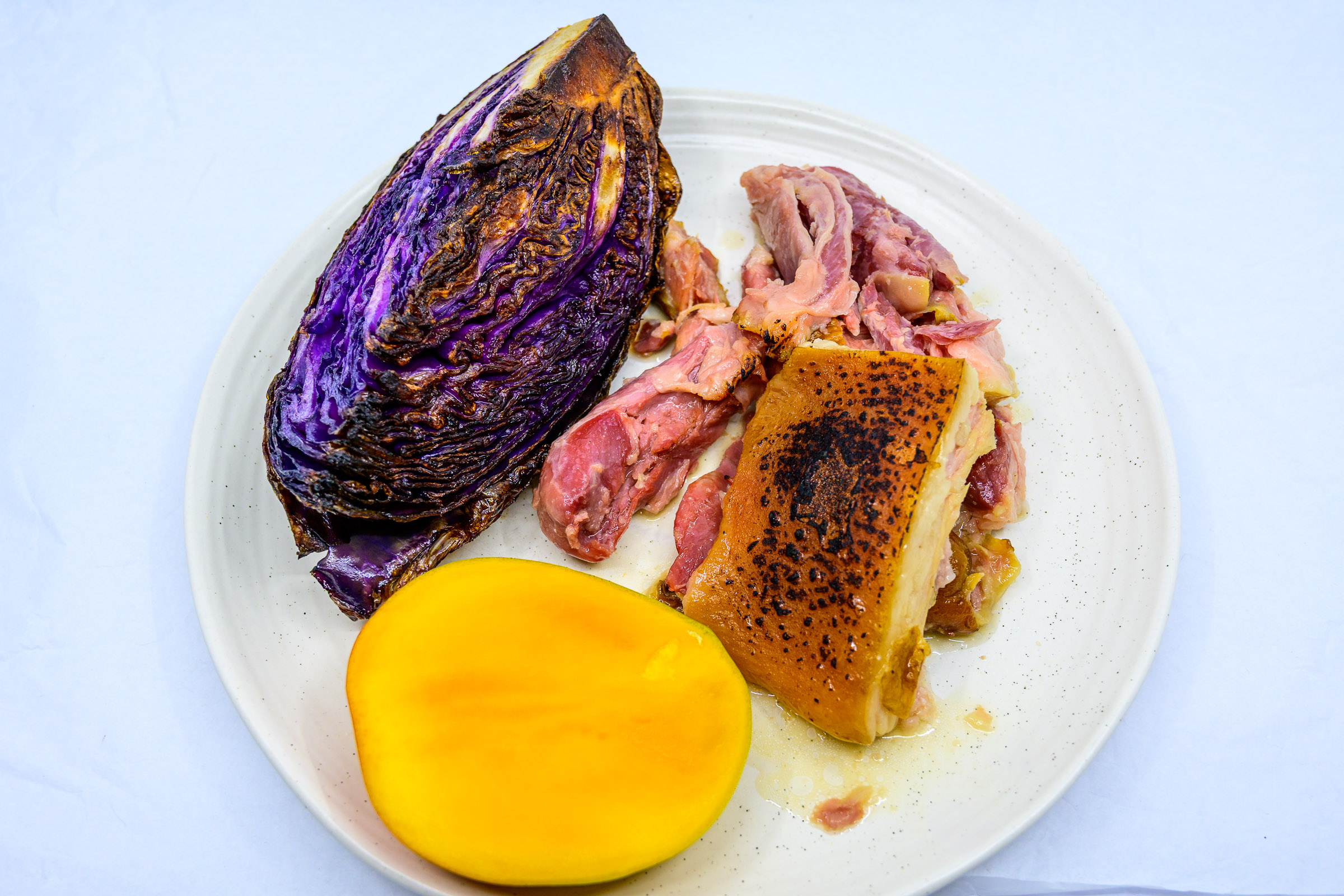
    1. Place the pork products and a cup of water into the slow cooker.
    2. Cook on low heat for 8 hours.
    3. Remove the pork from the slow cooker and dissect out the bones and some of the tougher ligaments.
    4. Pull the meat with a pair of forks.
    5. Place the cabbage into a saucepan and add some boiling water, beef fat, and salt.
    6. “Parboil” the cabbage until it softens a little.
    7. Remove the cabbage from the liquid, drain and remove excess liquid, and freeze.
    8. Heat the barbecue grill and cast-iron hot plate.
    9. Cook the cabbage on the hot plate until the surfaces have caramelised.
    10. Slice some Bowen mango.
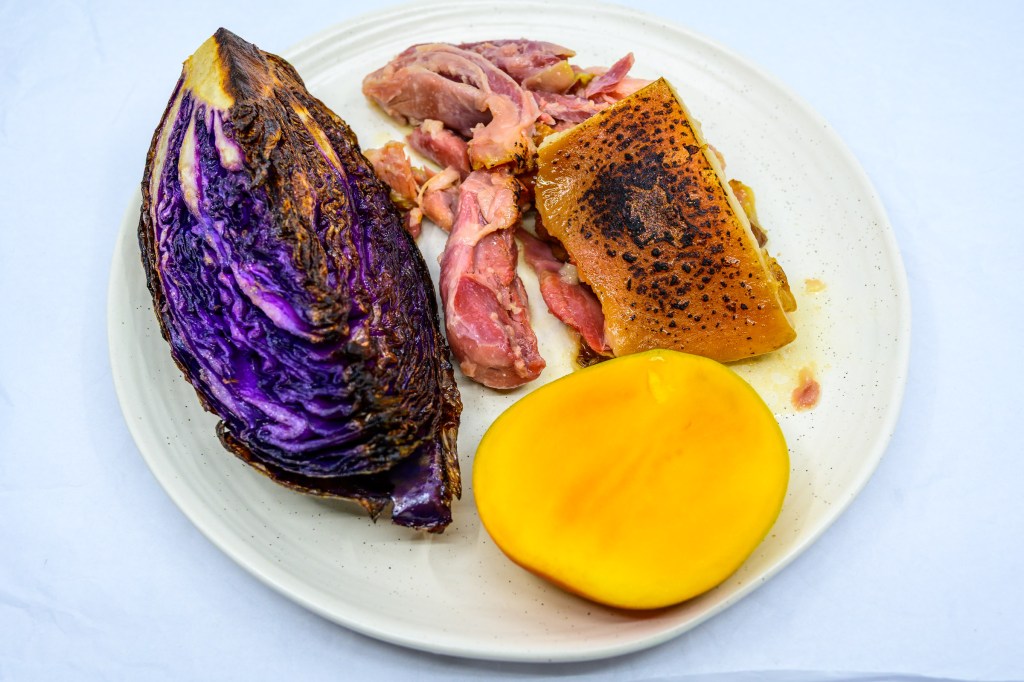
    11. Arrange a dinner plate with the pork, cabbage, and mango.
    12. Season with some flaky salt.

    Thoughts on the meal

    I enjoy slowly cooked pork, especially joints like cured hock. I particularly enjoy fatty products like speck, too.

    Cabbage always goes well with pork, and some fruit “cuts” the flavours nicely.

    Photographs

    This is a gallery of images. Select one and scroll through the gallery.

    Other meals

    I went on a carbohydrate splurge today.

    Morning tea[iii]

    I bought a cream bun and had it with a cup of coffee. It was lovely. The cream was light and not too sweet. The strawberry jam was also nice.

    Cream bun and coffee. The plate for the cream bun is a piece of Dolphins NRL merchandise.

    Lunch

    I made a steak sandwich with some white sourdough bread, which I’d lightly toasted. I also added chunks of butter to some lightly toasted sourdough “croutons.” For contrast, I chomped on a pickled gherkin, too.
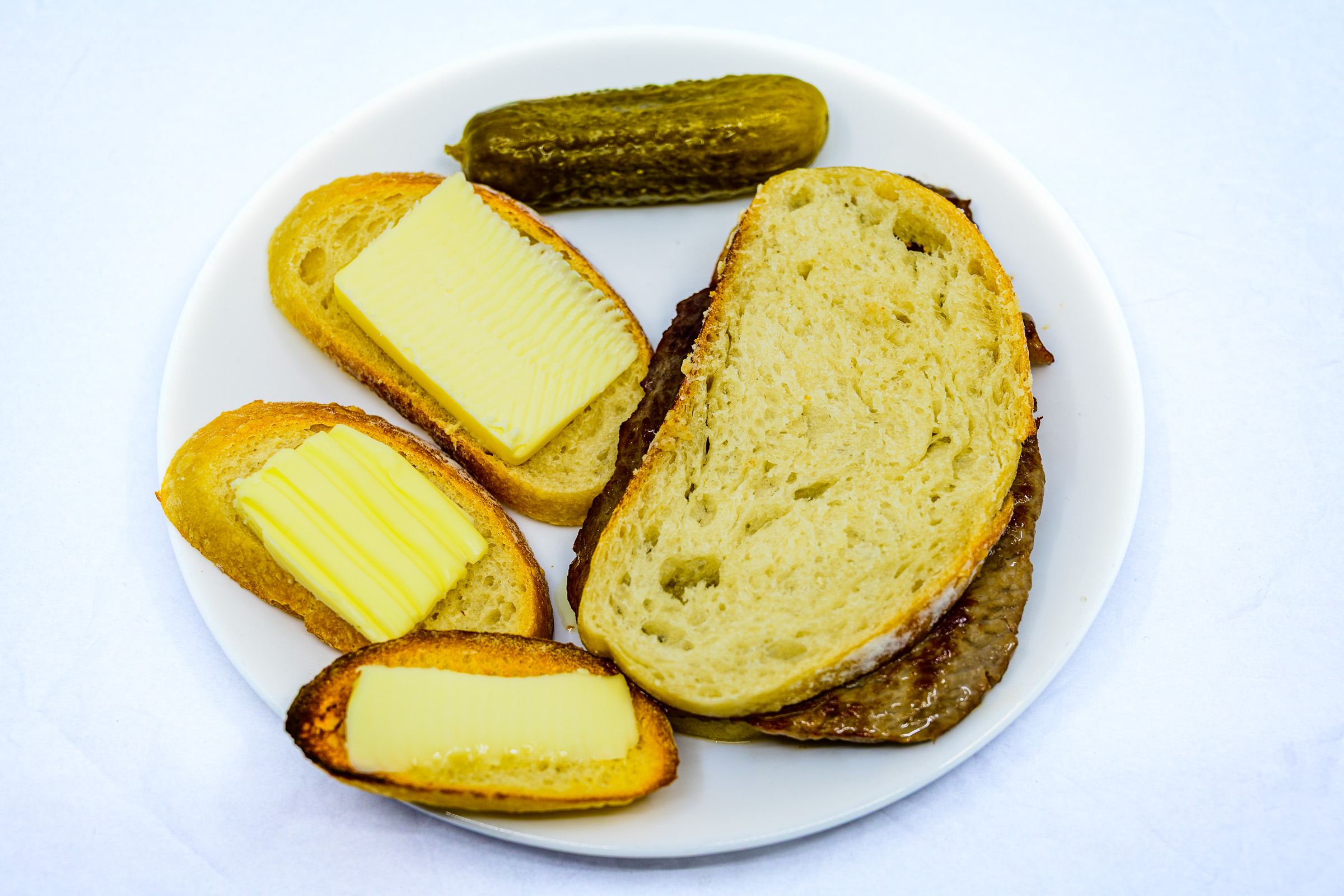
    Scotch fillet steak sandwich with a pickled gherkin plus French butter on toasted sourdough.

    [i] A cured pork shoulder hock is a cut of pork taken from the he pig’s foreleg (the hock), that has been preserved and flavoured through curing—typically with salt, sugar, and sometimes spices. It’s known for its flavour and gelatinous texture, often used to add depth to soups, stews, beans, and braised dishes.

    [ii] Speck is a type of cured, lightly smoked ham from the South Tyrol region of northern Italy. It’s made from pork leg, seasoned with spices like juniper and bay leaves, then smoked and aged in mountain air, giving it a distinctive savory, smoky flavour.

    [iii] In Australian slang, “mornos” means morning tea—a mid-morning break, usually around 10–11 am, where people pause for a snack, a cuppa, or a chat. When working with ADF colleagues, the word “mornos” is commonly used.
  • Porterhouse Steak

    Porterhouse Steak


    🥩 What is a Porterhouse[i] Steak in Australia?

    In Australia, the term porterhouse steak refers to what many other countries call a sirloin steak. It’s cut from the short loin section of the cow, sitting just behind the ribs. The meat is leaner than ribeye (scotch fillet), with a firm texture and a beefy flavour.

    It gets confusing. I may be wrong about this, but this is my understanding:

    • 🇦🇺 Australia: Porterhouse = Sirloin.
    • 🇺🇸 United States: Porterhouse = A large T-bone steak, cut from the rear end of the short loin, which includes both the tenderloin (eye fillet) and the strip steak (sirloin).
    • 🇬🇧 United Kingdom: Porterhouse is sometimes used interchangeably with T-bone, but definitions vary.

    If you ask for a porterhouse in an Australian restaurant or butcher’s shop, don’t expect a massive T-bone with eye fillet attached. You’ll get a steak which is lean, flavoursome, and perfect for sous vide.

    💰 Why is Porterhouse Cheaper than Scotch Fillet?

    Meat is getting more expensive. Compared with this time last year, it feels like what I now pay for porterhouse is what I was paying for scotch fillet last year.

    Scotch fillet[ii] (ribeye) comes from the rib section and is appreciated for its marbling, tenderness, and flavour. Porterhouse, being leaner and less marbled, is generally cheaper. It’s still delicious, but it doesn’t have the same mouthfeel as scotch fillet. For everyday cooking, porterhouse offers more value without compromising on taste. Chuck steak would be cheaper, but chuck is tougher.


    🍽️ Recipe

    Ingredients

    • 1 × porterhouse steak (375 g)
    • Flaky salt and freshly cracked black pepper
    • Brussels sprouts, halved
    • Frozen potato gems
    • Blue vein cheese
    • Pure pouring cream
    • Cream cheese
    • Butter
    • Bowen mango

    Method

    1. Sous Vide Steak
      • Season the porterhouse with salt and pepper.
      • Seal in a vacuum bag and cook in a water bath at 55 °C for 2 hours.
      • Remove, pat dry, and sear quickly on a barbecue grill.
    2. Brussels Sprouts
      • Blanch in salted boiling water for 3 minutes.
      • Toss on a barbecue grill until caramelised.
    3. Potato Gems
      • Fry in beef fat until crisp and golden.
    4. Blue Vein Cheese Sauce
      • Melt butter in a small saucepan.
      • Add cream cheese and cream and bring to a gentle simmer.
      • Crumble in blue vein cheese and stir until smooth.
    5. Plate Up
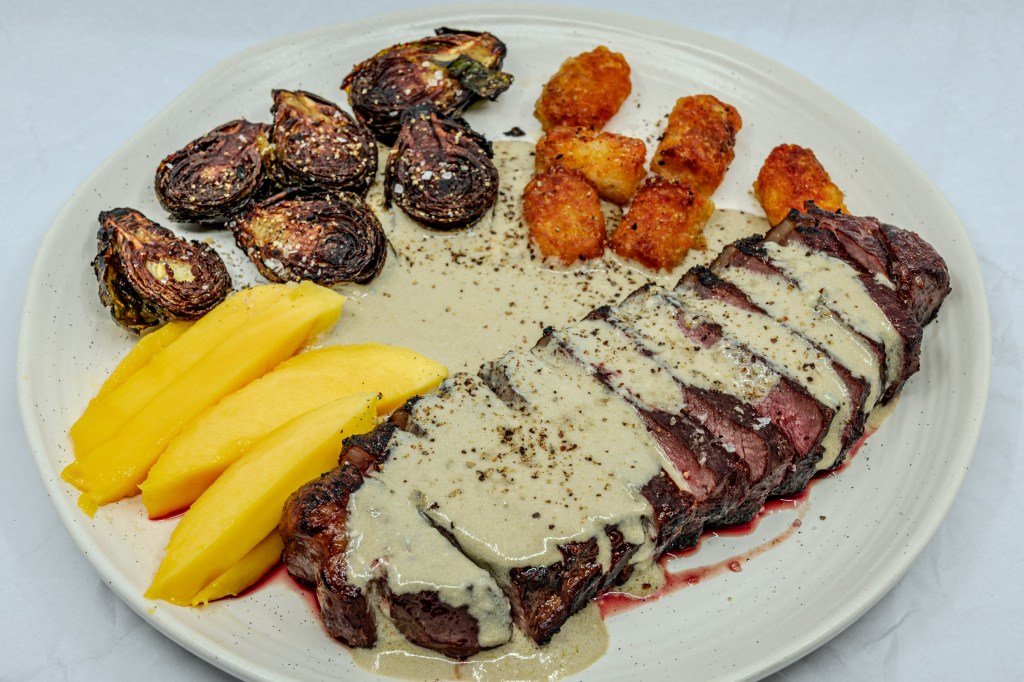
      • Slice the porterhouse and arrange with mango slices, Brussels sprouts and potato gems.
      • Drizzle generously with blue vein cheese sauce.

    This dish balances the beefiness of porterhouse steak with the creamy, salty blue vein cheese. The potato gems add crunch, while Brussels sprouts bring a nutty sweetness. The Bowen mango adds a fresh sweet flavour.


    🥐 Raspberry and Pistachio Cinnamon Scroll

    I visited Cannelle Fine Foods[iii] on Hayward Avenue, Torrensville, and picked up a raspberry and pistachio cinnamon scroll.

    As seen on their Instagram feed, this scroll is as advertised:

    • A nice pastry scroll.
    • Cinnamon icing.
    • Dried raspberry and crunchy pistachios sprinkled on top for texture and a nutty finish.

    It’s a good companion to a strong coffee, balancing richness with sharpness.

    Raspberry and pistachio cinnamon scroll from Cannelle Fine French Pastries with a coffee

    🥭 Mango

    I don’t eat a lot of fruit these days. I still enjoy a mango. My favourite variety is the Bowen, which is also known as a Kensington Pride.

    Photograph of an uncut Bowen mango on a plate

    Bowen Mango: The original name, because the first trees were planted in Bowen, Queensland, in the late 1800s.

    Kensington Pride Mango: Later, the variety spread to Kensington Station near Bowen, and growers began calling it “Kensington Pride.” Over time, this name became more widely used across Australia.

    In Queensland[iv], many locals still call it the Bowen mango. We had a Bowen mango tree in the backyard of the house I grew up in.

    Map of Queensland coloured maroon

    Across most of Australia, it’s marketed and sold as Kensington Pride.


    Final Thoughts

    Porterhouse steak may not have the gravitas of scotch fillet, but when cooked sous vide and paired with flavours like blue vein cheese, it shines. And finishing with a mango makes for an indulgent evening.

    Questions

    1. What do you mean by porterhouse where you live?
    2. Have you noticed a change in meat prices?
    3. Do you like mangoes? What’s your favourite variety for plain eating?

    [i] The word porterhouse originally referred to a type of tavern or chophouse in the mid‑18th century where porter (a dark beer) was served. By the early 19th century, the name became associated with a particular cut of beef steak, supposedly popularised in New York or Boston establishments.

    [ii] Scotch fillet is the Australian and New Zealand term for the boneless ribeye steak. The word fillet comes from Old French filet (“thread, strip”), later applied to cuts of meat. The Scotch part likely reflects a marketing or culinary association with Scotland, where rib cuts were prized, though the exact origin is unclear.

    [iii] https://cannelle.com.au/

    [iv] The greatest state in the federation.