Tag: Corned beef

  • Croissant sandwiches

    Croissant sandwiches


    A buttery reflection on steak, corned beef, and why a fresh croissant may be better than ordinary sandwich bread.

    There are moments in life when an ordinary sandwich loaf simply will not do. This week, fresh croissants found themselves pressed into sandwich service, and I am not sure I want to go back to standard bread any time soon.

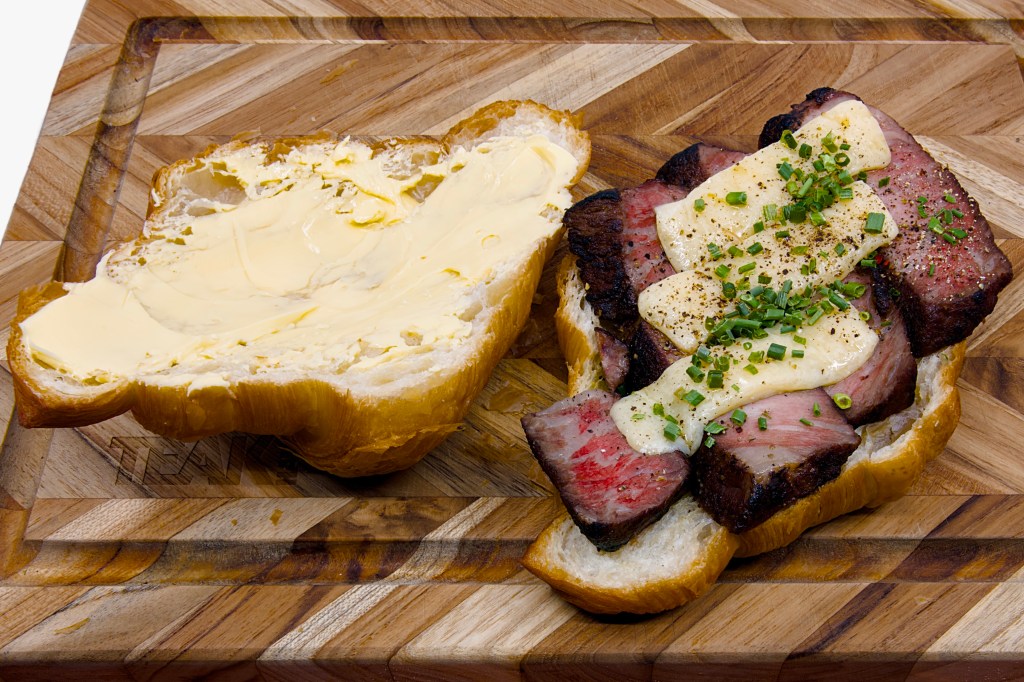
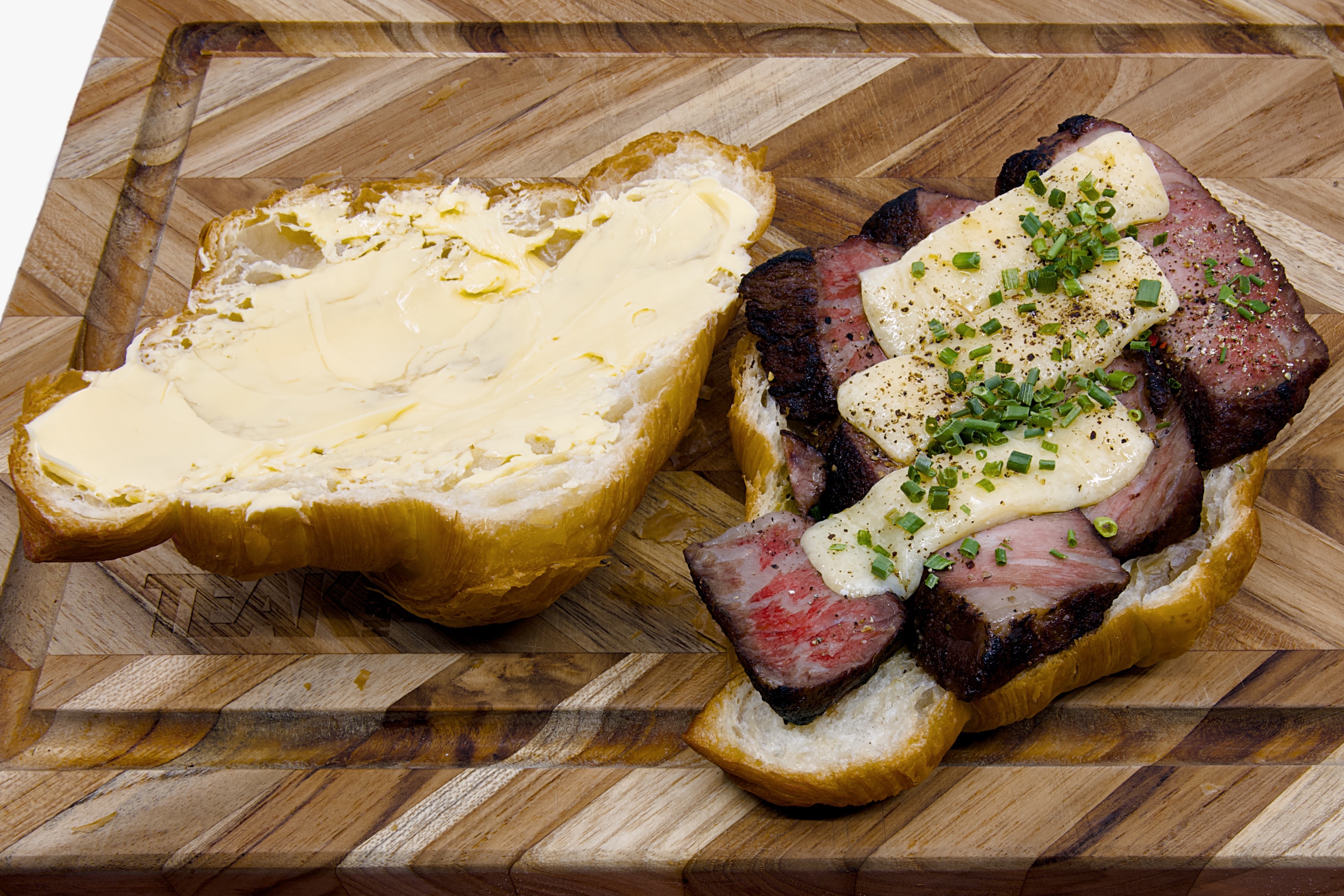
    The first experiment used leftover Scotch fillet strips, vintage cheddar, and cultured butter. The croissant was split, the base was buttered, the beef and cheese were layered over the top, and the whole lot had five minutes in the air fryer. The lid received another smear of cultured butter after it cooled slightly because, apparently, I had decided moderation was a spectator sport.

    The result was probably the best steak sandwich I have eaten in many, many years. There was flaky pastry, savoury beef, melted cheese, and enough cultured butter to make the croissant feel deeply appreciated.
    Not content with one success, I repeated the experiment with hashed corned beef from a tin. The corned beef was gently sautéed in a skillet until the fat rendered and the meat took on a little colour without becoming dry. Because the meat was hashed, it spread beautifully over the croissant base.

    The warm corned beef met the generously buttered croissant, and the cultured butter melted through the pastry layers. This was not high ceremony. This was practical with a French accent and a very happy ending.
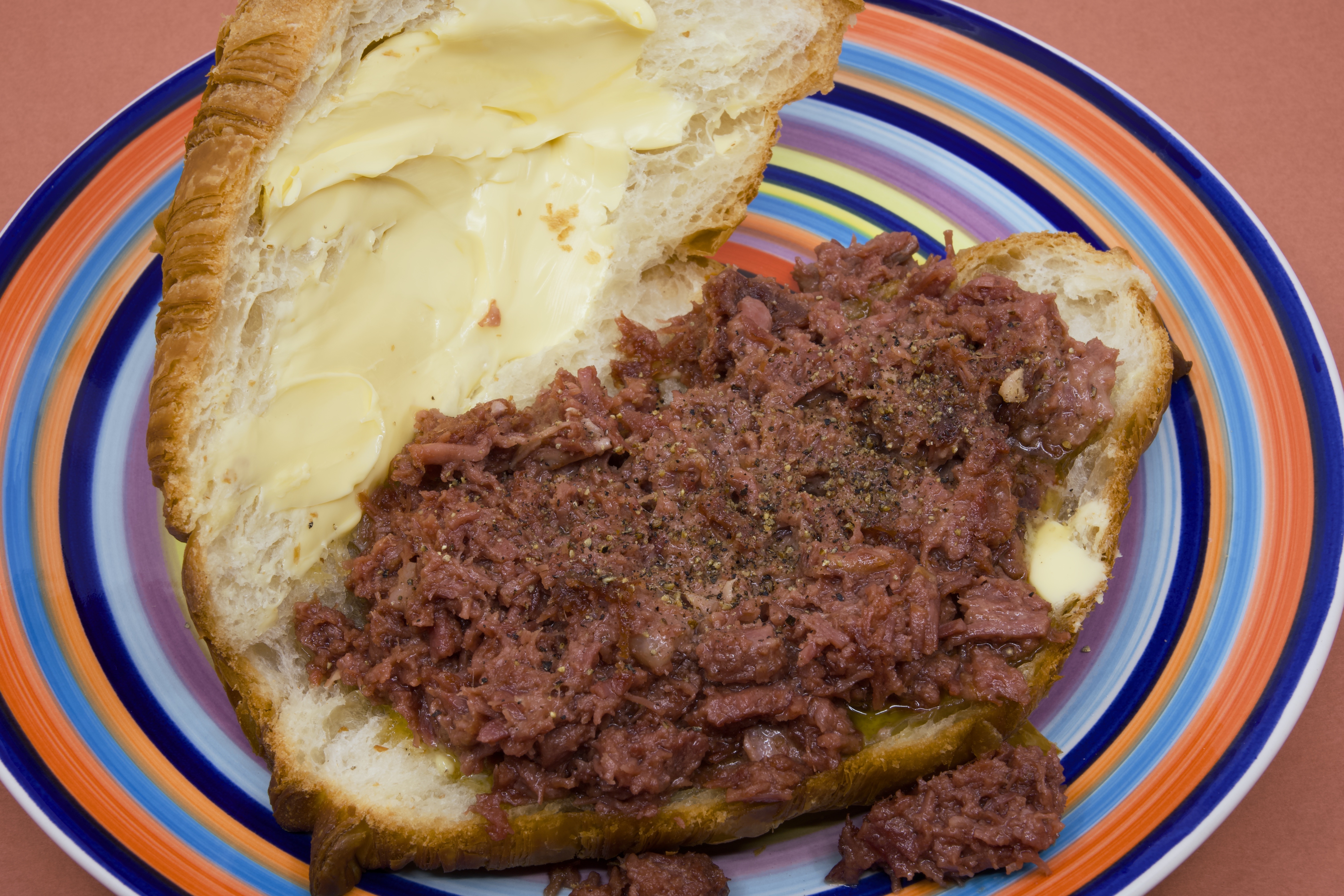
    Open butter croissant sandwich on a colourful striped plate, topped with a generous layer of pan-fried hashed corned beef. Thick cultured butter is spread across the upper half of the flaky croissant and has begun to melt into the pastry. The corned beef filling is lightly browned and seasoned with black pepper, with a small amount spilling onto the plate. The image highlights the contrast between the buttery golden croissant, rich pink corned beef, and brightly coloured plate.

    Why a Croissant Works So Well as Sandwich Bread

    A good sandwich loaf has one job: it holds the filling together. A good croissant does more than hold things. It participates. The laminated layers bring crispness, tenderness, and buttery richness. The exterior flakes, the interior stays soft, and every bite has more texture than a plain slice of bread can usually manage.

    That does not mean a croissant is right for every sandwich. A towering salad sandwich on a croissant may end with lettuce, tomato, and regret on your lap. However, with rich fillings such as steak, cheddar, ham, egg, chicken, or corned beef, a croissant can be just as good as ordinary bread, and possibly better. It is not merely a vehicle. It is the co-driver.

    The Nutritional Question

    Let us address the buttery elephant in the room. Nobody reaches for a croissant because it is dressed as a health food. A traditional butter croissant is more energy-dense than ordinary sandwich bread because it is made with laminated dough, in which butter is folded into the dough repeatedly to create those crisp, flaky layers.

    Approximate Nutrition per Butter Croissant

    Nutrientper large croissant
    Energy1,300–1,600 kJ
    Protein6–8 g
    Fat17–22 g
    Saturated fat10–13 g
    Carbohydrate30–40 g
    Sugars5–8 g
    Dietary fibre1–3 g
    Sodium250–450 mg

    The exact numbers will vary according to the baker, size, butter content, and whether the croissant is plain or filled. Once you add Scotch fillet, vintage cheddar, hashed corned beef, and cultured butter, the numbers change again. The beef lifts the protein and iron, the cheese adds protein and calcium, the corned beef contributes protein, iron, vitamin B12, and sodium, and the butter contributes joy, which nutrition panels still stubbornly refuse to measure.

    From a low-carbohydrate perspective, a croissant is not an everyday staple. From a culinary perspective, however, it is an occasional indulgence that can transform a simple sandwich into something memorable.

    Would the French Approve?

    Possibly. Traditional French breakfasts often feature croissants served simply with coffee, tea, hot chocolate, butter, or jam. The classic version is uncomplicated: buy it fresh, eat it fresh, and preferably enjoy it before the flakes have time to settle into your shirt.

    That said, France is not unfamiliar with savoury croissants. Café counters, bakeries, and takeaway shops commonly sell croissants filled with ham, cheese, chicken, or other savoury ingredients. Some pastry purists may object to using a croissant for corned beef, but food rules are often most interesting when they meet a hungry person holding cultured butter.

    A Brief, Buttery History

    The croissant is closely associated with France, but its ancestry is more complicated. Food historians commonly link it to the Austrian kipferl, a crescent-shaped bread or pastry that predates the modern French croissant. The croissant became distinct when French bakers applied yeasted laminated dough techniques, folding butter through dough to make the thin, airy layers that define the pastry today.

    Those layers do not happen by accident. Croissant dough is rolled, folded around butter, chilled, rolled again, folded again, shaped, proved, and baked. In the oven, water in the butter turns to steam, the layers lift, and the baker hopes the result is golden, crisp, and structured rather than a buttery landslide.

    A proper croissant is at its best on the day it is baked. The outside should shatter slightly, the inside should show an open honeycomb crumb, and the whole thing should make you feel that ordinary toast has taken the morning off.

    Final Thoughts

    Perhaps the lesson here is simple: croissants should not be confined by tradition. If a fresh croissant can elevate leftover Scotch fillet and vintage cheddar into a memorable steak sandwich, and transform humble hashed corned beef into something worth writing about, then it deserves greater recognition as sandwich bread.

    The French may debate pastry etiquette. I will be over here, applying another generous layer of cultured butter.

    Author’s note: No ordinary sandwich loaf was harmed during these experiments. Several croissants, however, made the ultimate sacrifice.

    An artificial intelligence large language model was exploited to generate some of the original text before review and editing. The images have not been edited using artificial intelligence.
    Fediverse Reactions
  • Corned beef and pickle liquor

    Corned beef and pickle liquor


    I had mentioned to someone a few weeks ago that I was enjoying a pickled gherkin with lunch when I made an open sandwich. It was suggested that the liquor[i] from the jar shouldn’t be discarded because it could be used for slow-cooking corned beef.

    I had about a cupful of pickle liquor, so I thought I’d give it a go.

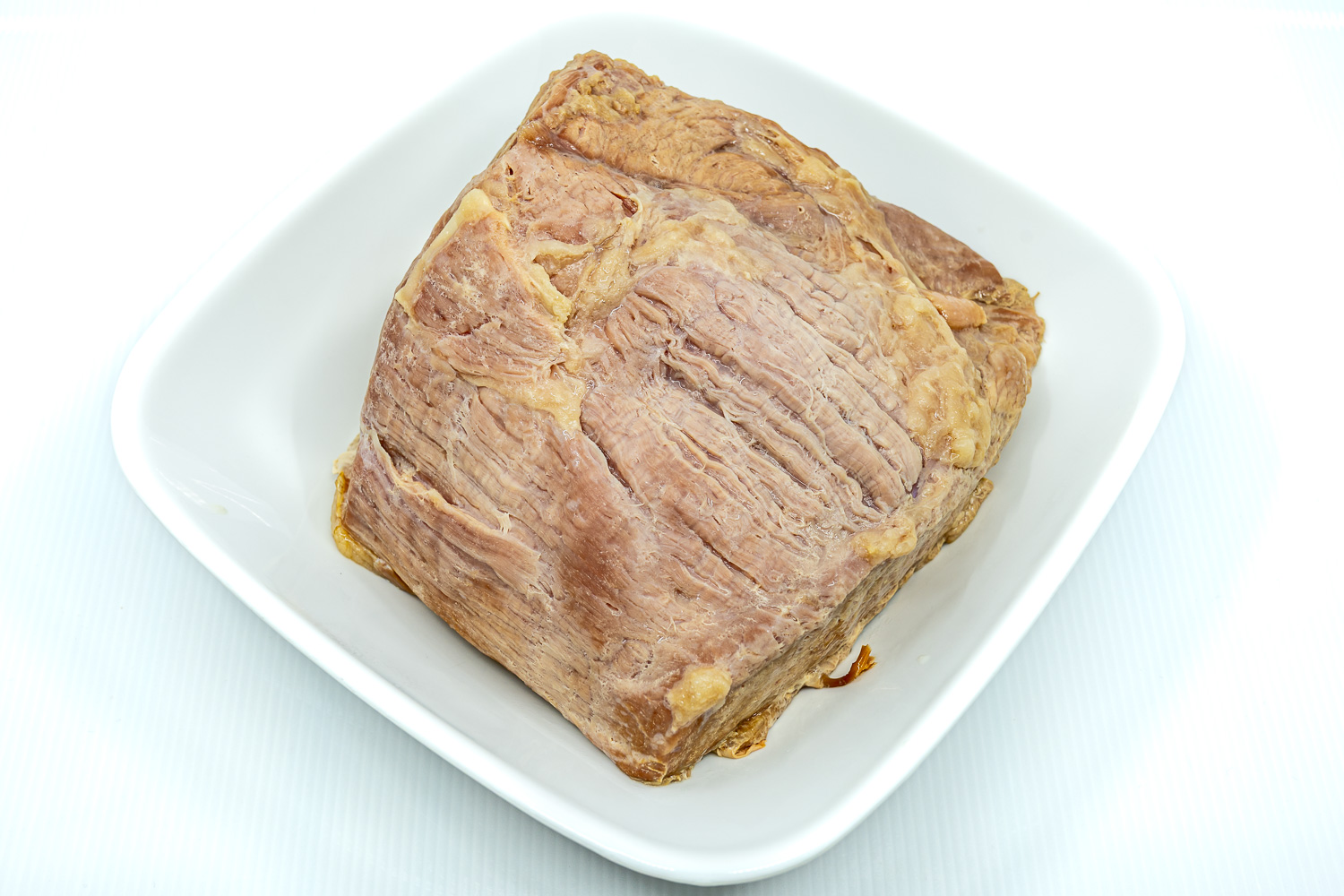
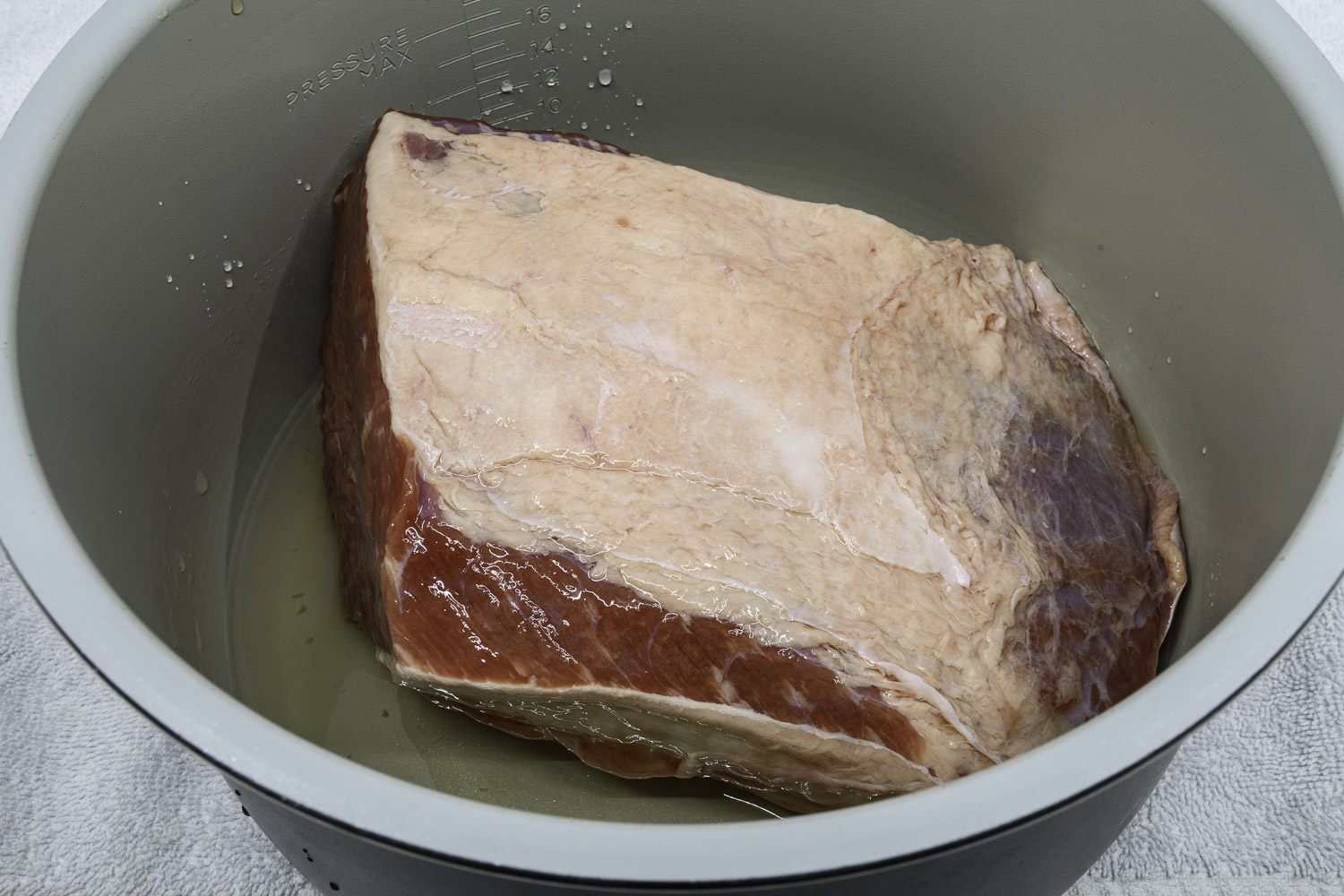
    I bought a piece of corned silverside[ii] (roughly 2 kg at $AUD10/kg) and slowly cooked it with the pickle liquor.

    Recipe

    Ingredients

    • Corned beef silverside
    • Pickle liquor

    Equipment

    • Slow cooker

    Instructions

    1. Place the beef into the cooking vessel.
    2. Add the pickle liquor.
    3. Cook on low heat for 8 hours.
    4. Remove the cooked corned silverside and refrigerate.
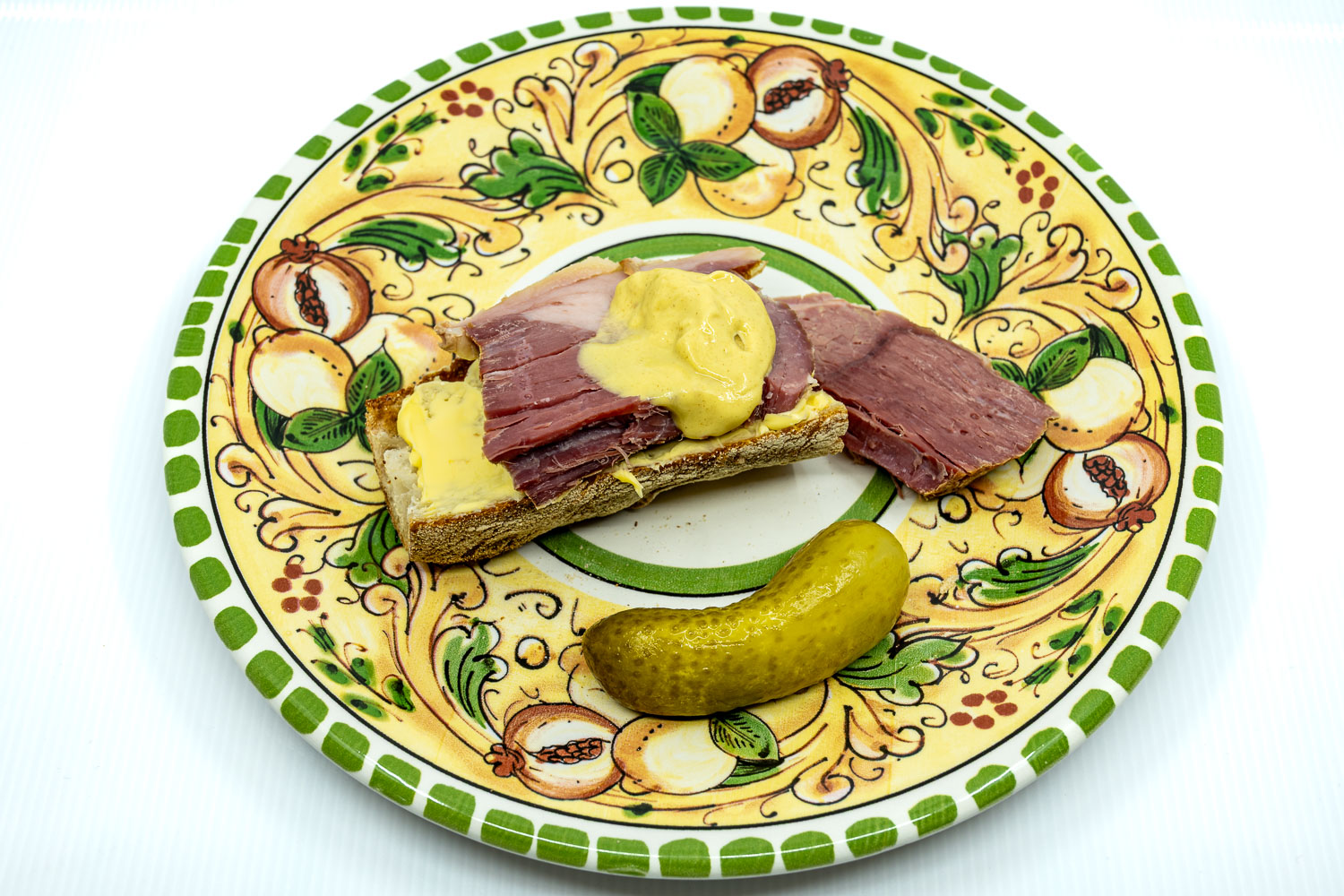
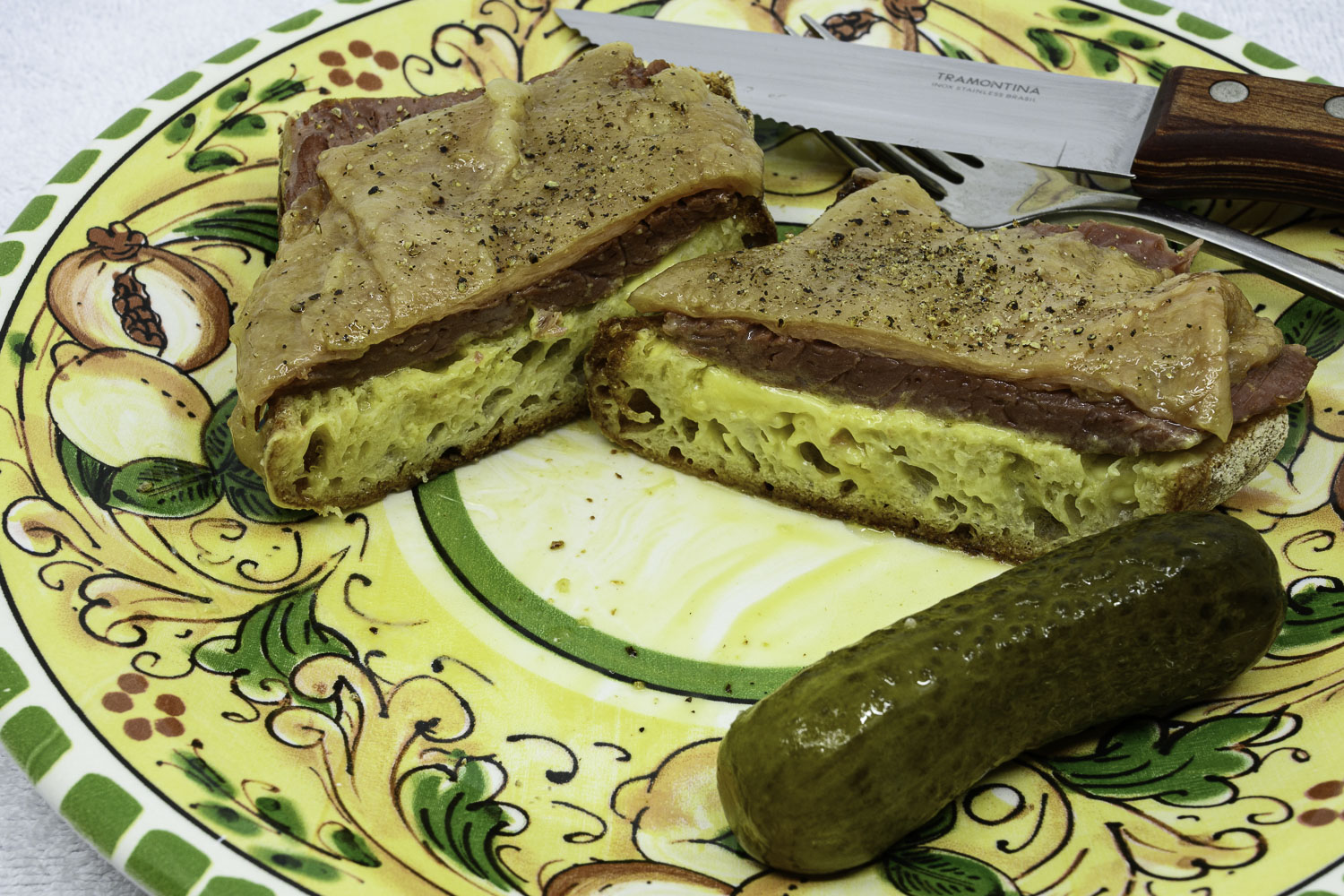
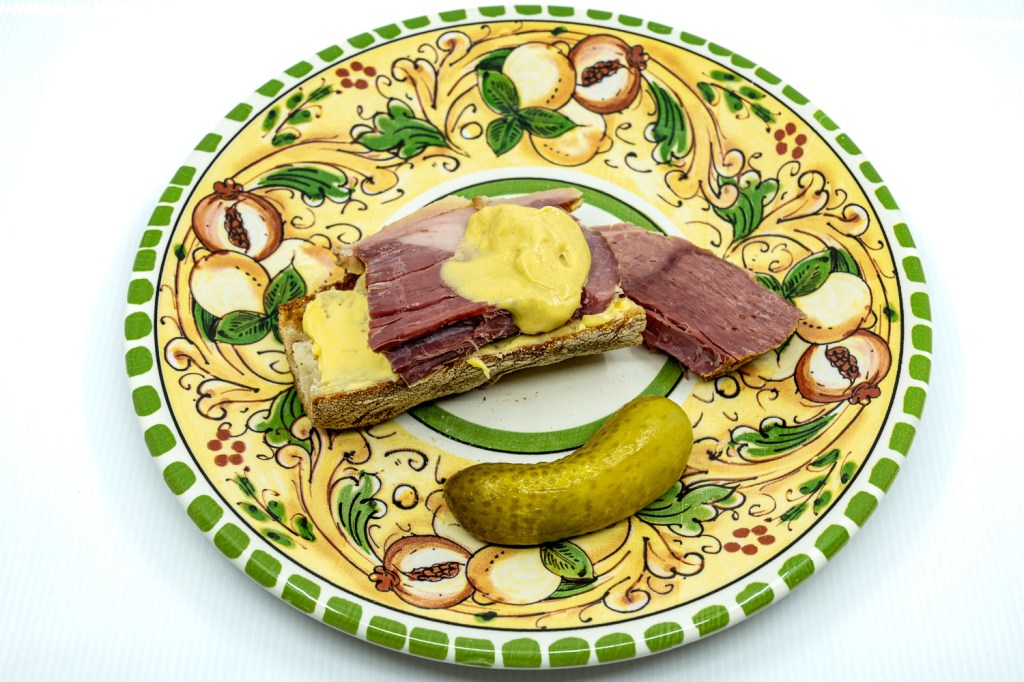
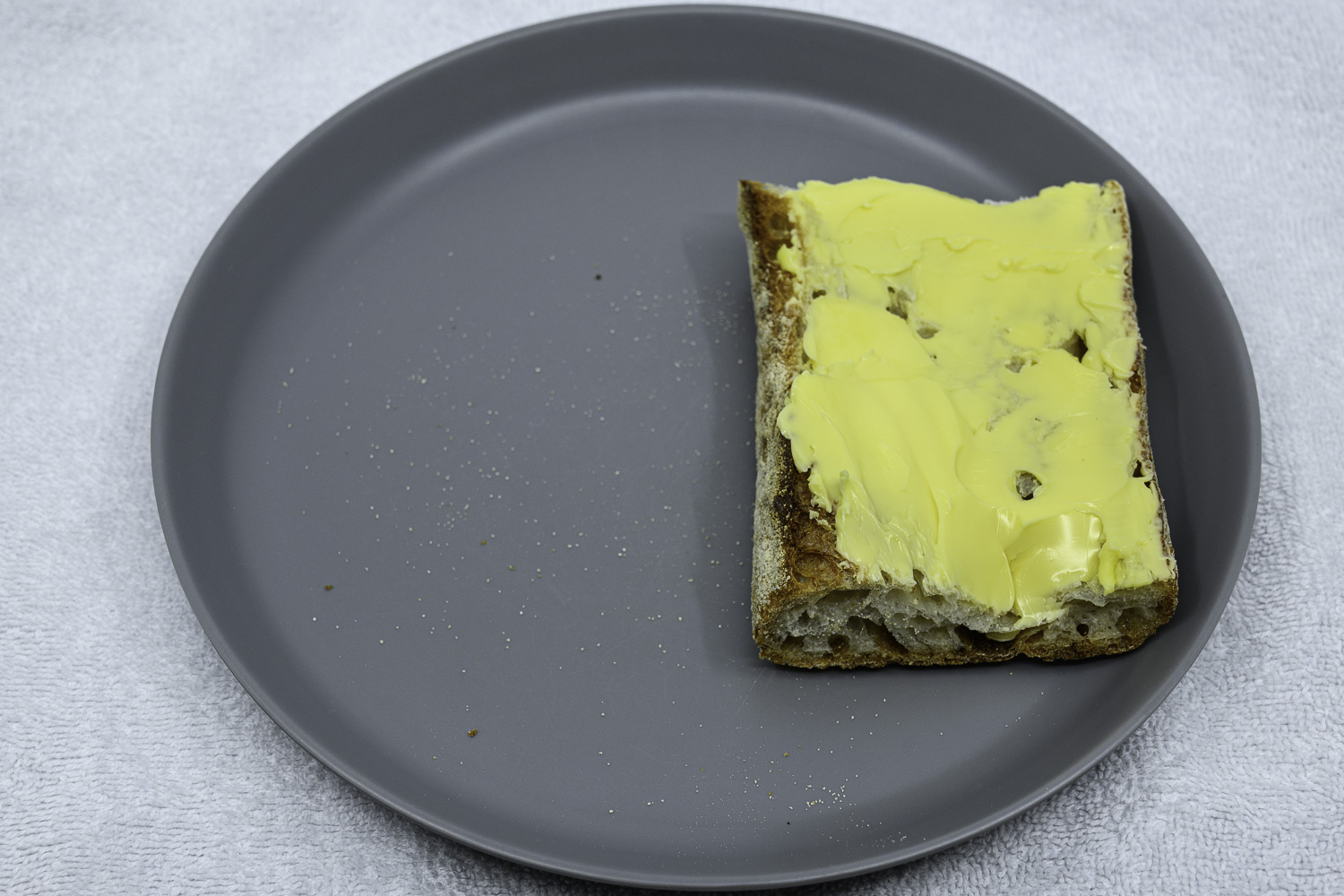
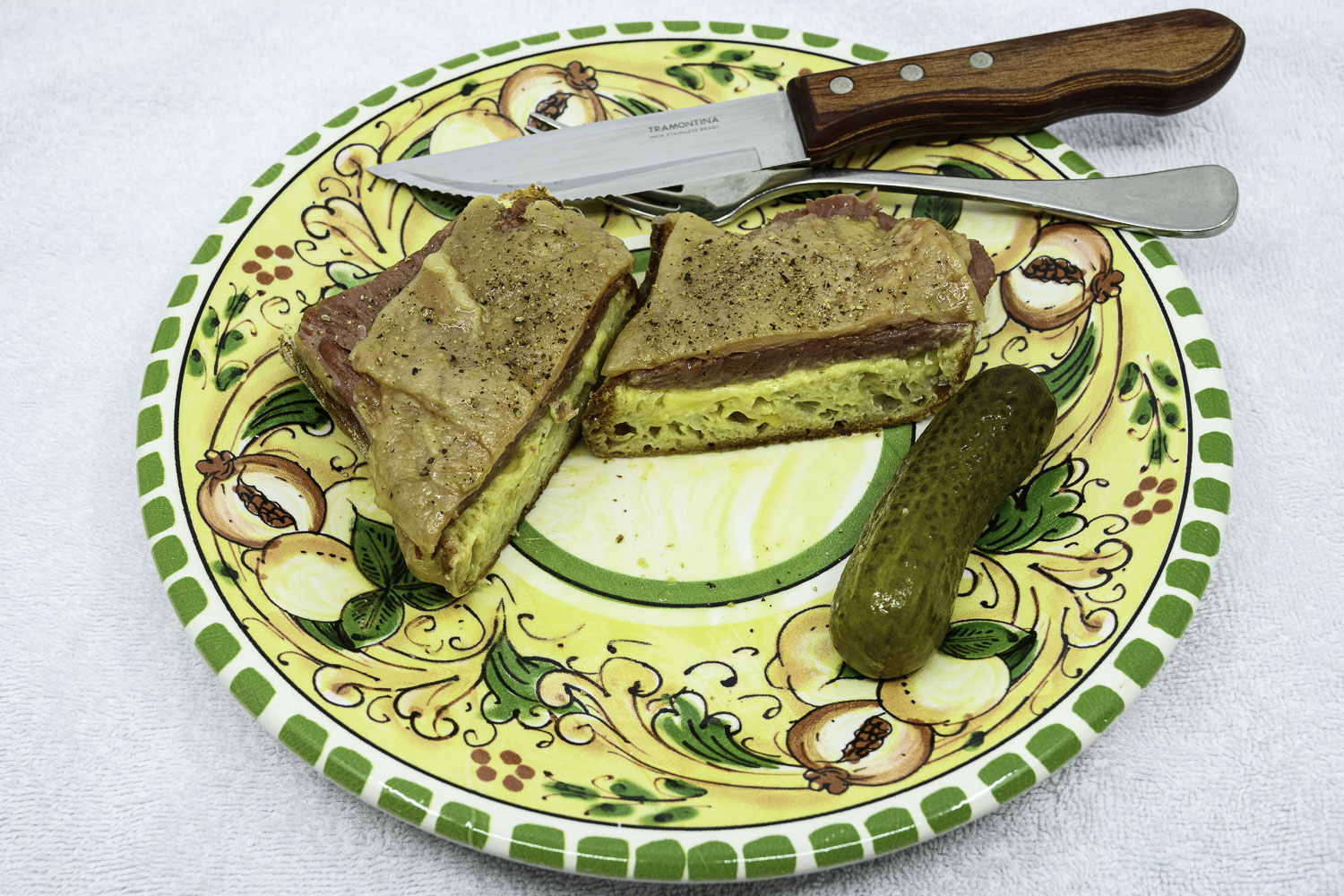
    5. Cut a slice of corned beef and place it on a piece of buttered sourdough bread[iii].
    6. Serve with some mustard and a pickled gherkin[iv].

    Photographs

    For lunch, I had tinned corned beef.

    For tea, I had the slowly cooked corned beef silverside.

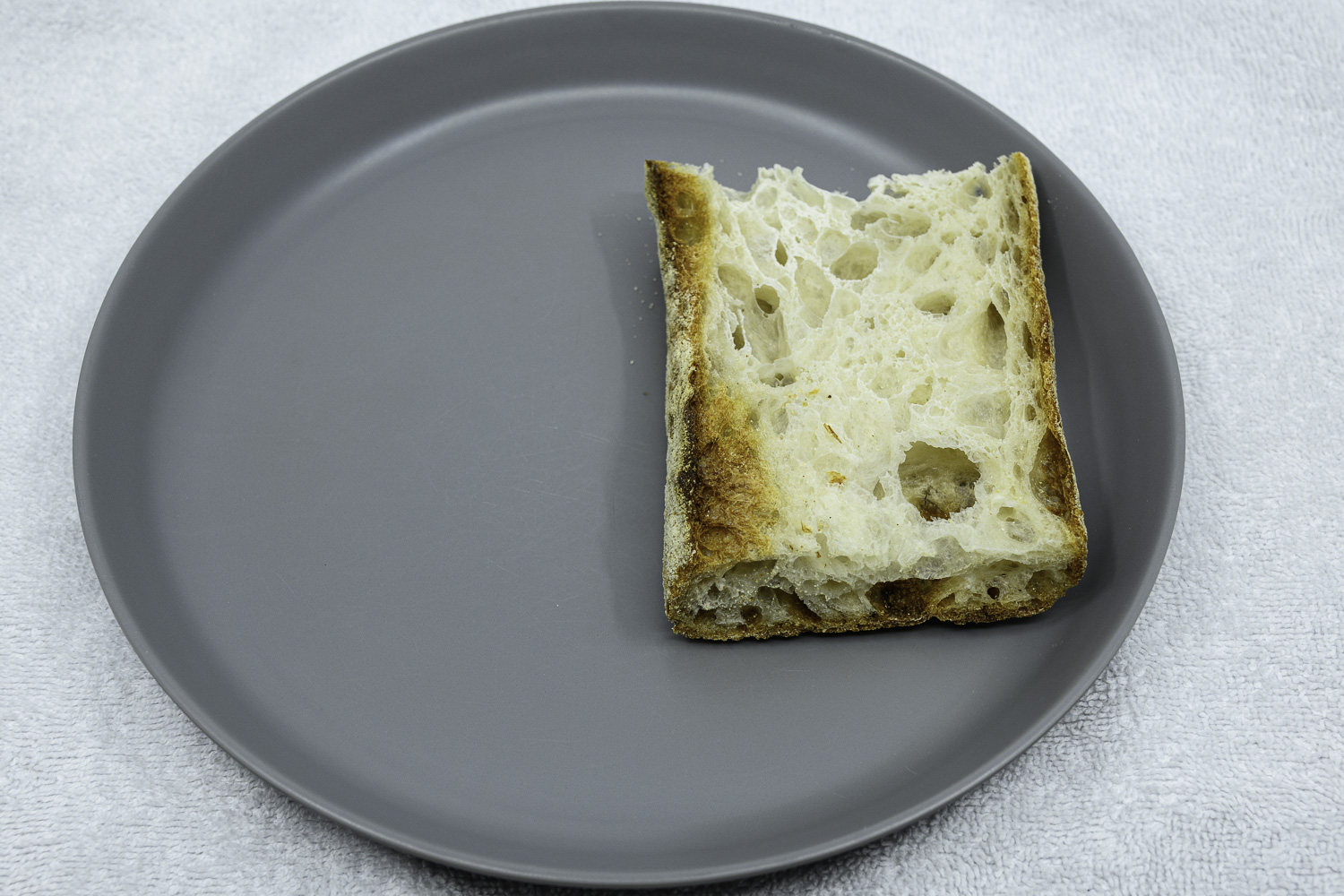
    Here are the photographs for comparison.

    Thoughts on the meal

    I enjoyed the corned silverside. This version tasted better than my recent effort.


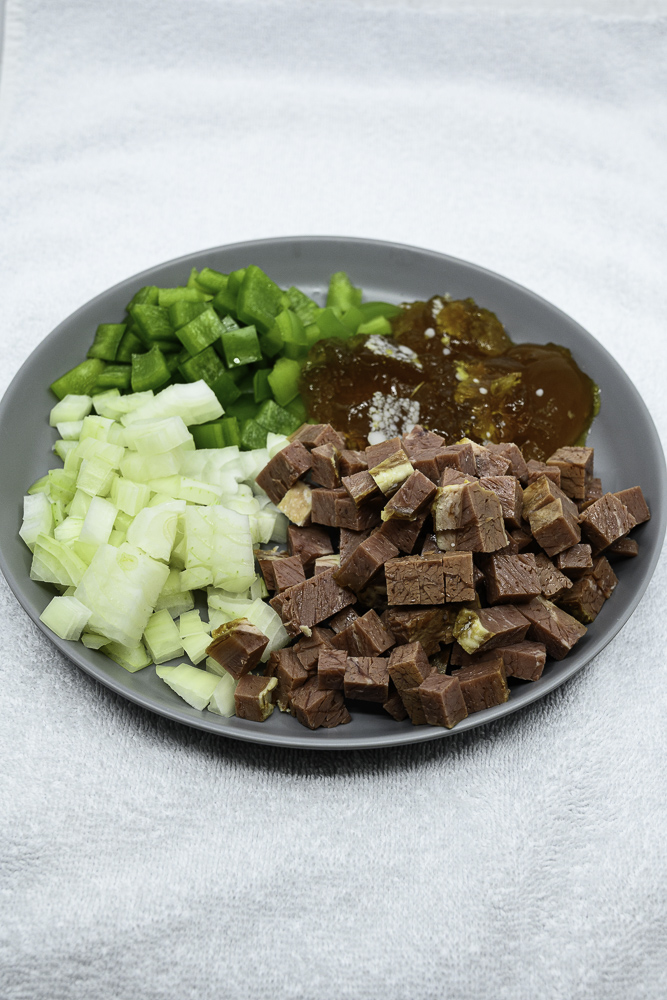
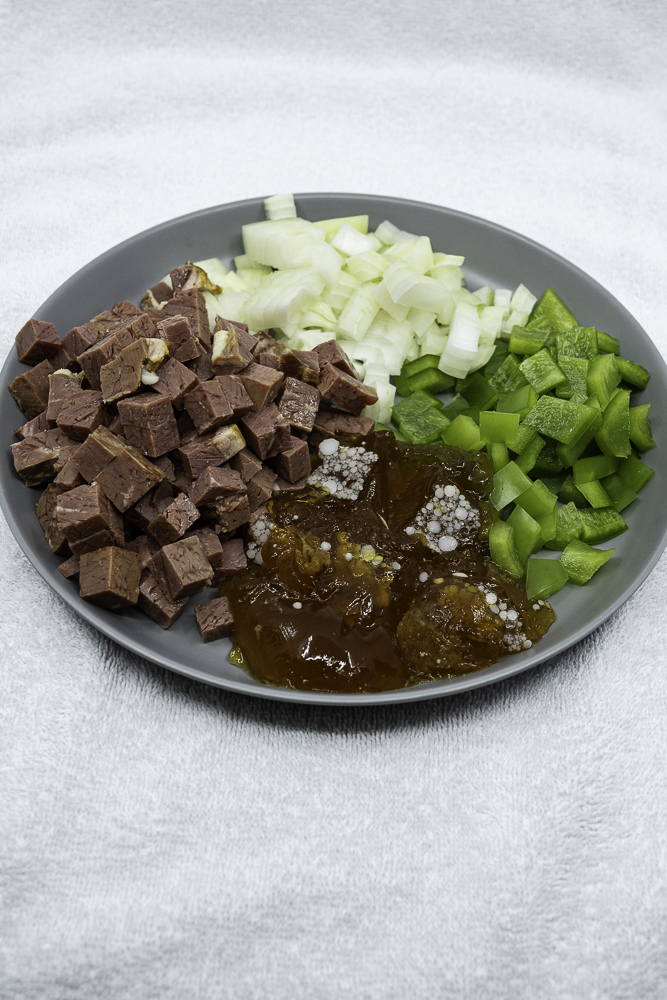
    I used the last of the slowly cooked corned beef silverside, which had been prepared with pickle liquor. I diced the meat along with some gherkins and cooked them in the corned beef cooking liquid. Then, I added mustard, cream, and some cheese.

    I used the last of the slowly cooked corned beef silverside, which had been prepared with pickle liquor. I diced the meat along with some gherkins and cooked them in the corned beef cooking liquid. Then, I added mustard, cream, and some cheese.

    [i] Did you know that pickle liquor is a strong acid solution used in metalworking to clean and descale metal surfaces? Pickle juice is the salty, acidic liquid used to preserve pickles—typically made from water, vinegar, salt, and spices. I like (and prefer) the word liquor because it means liquid in which something has been steeped or cooked.

    [ii] Beef silverside is a large, lean cut from the hindquarter of a cow, known for its coarse texture and low in fat content. It’s popular in Australia, the UK, and New Zealand for roasting, corning, or making biltong.

    [iii] Sourdough bread is a naturally leavened bread made using wild yeast and lactic acid bacteria, giving it a tangy flavour and chewy texture.

    [iv] A gherkin is a small, bumpy cucumber variety that’s typically pickled and enjoyed for its crisp texture and tangy flavour.

  • Corned beef hash

    Corned beef hash


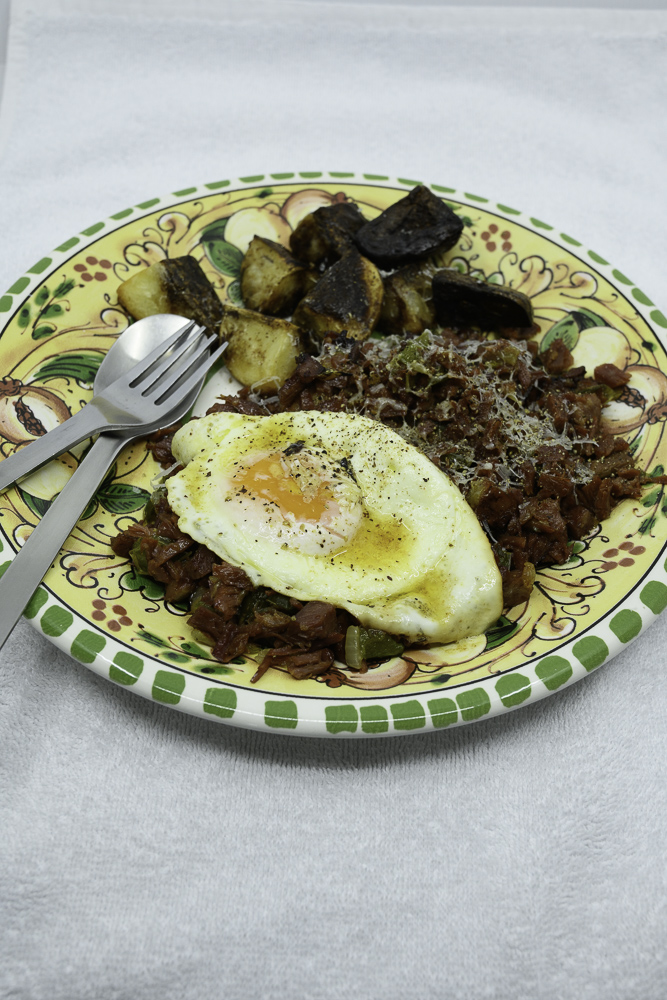
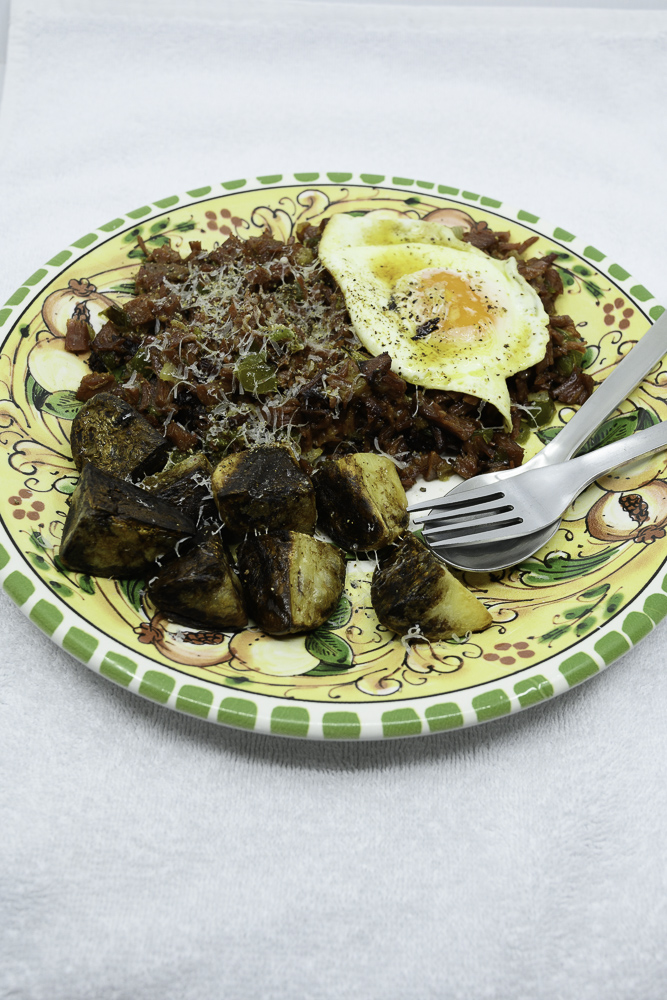
    Last week, I cooked corned beef silverside in the slow cooker. It’s provided me with more meals than I expected. Tonight, I cooked a corned beef hash.[i]

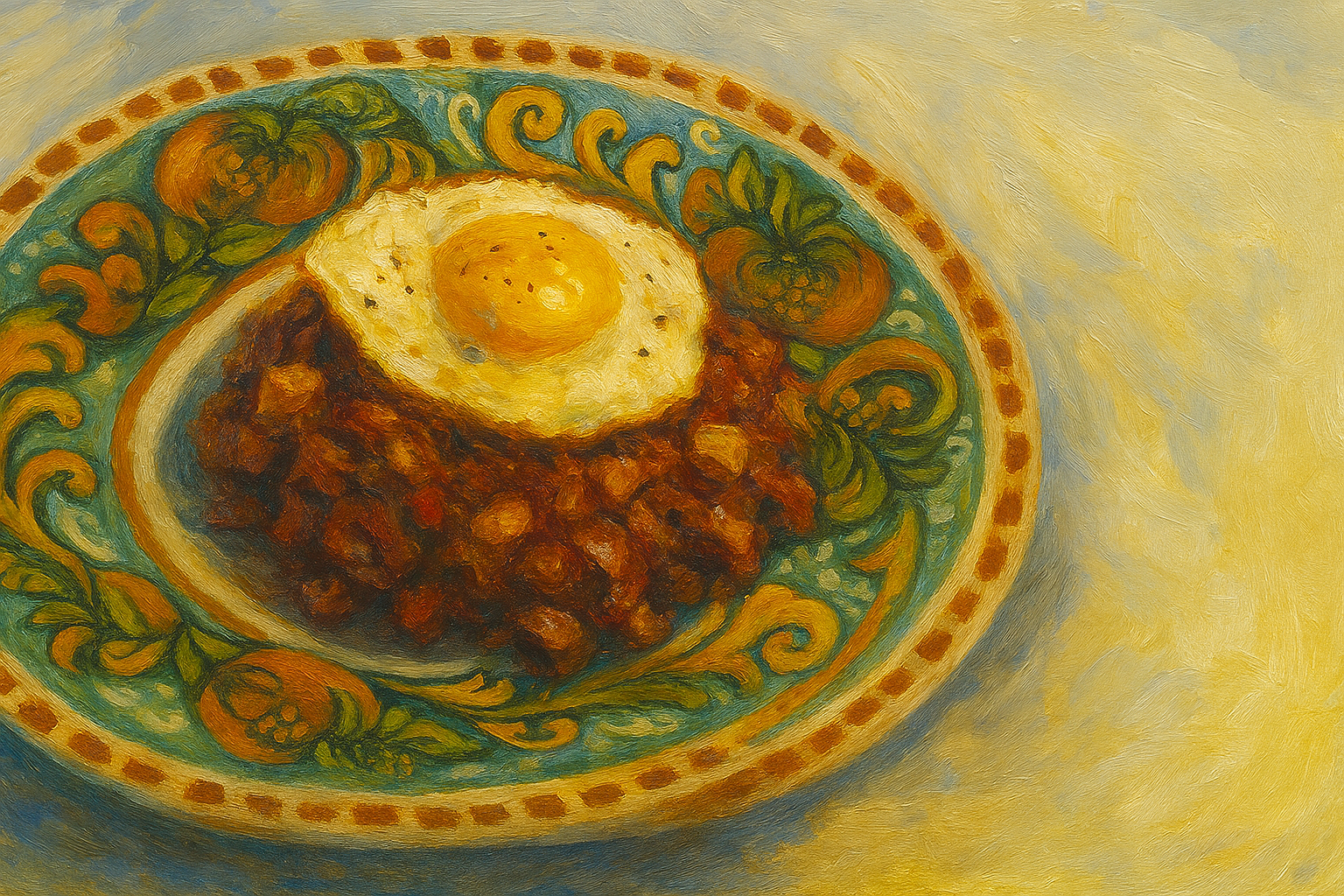
    Microsoft Copilot generated image of a floral plate featuring pomegranates with corned beef hash topped with a fried egg.
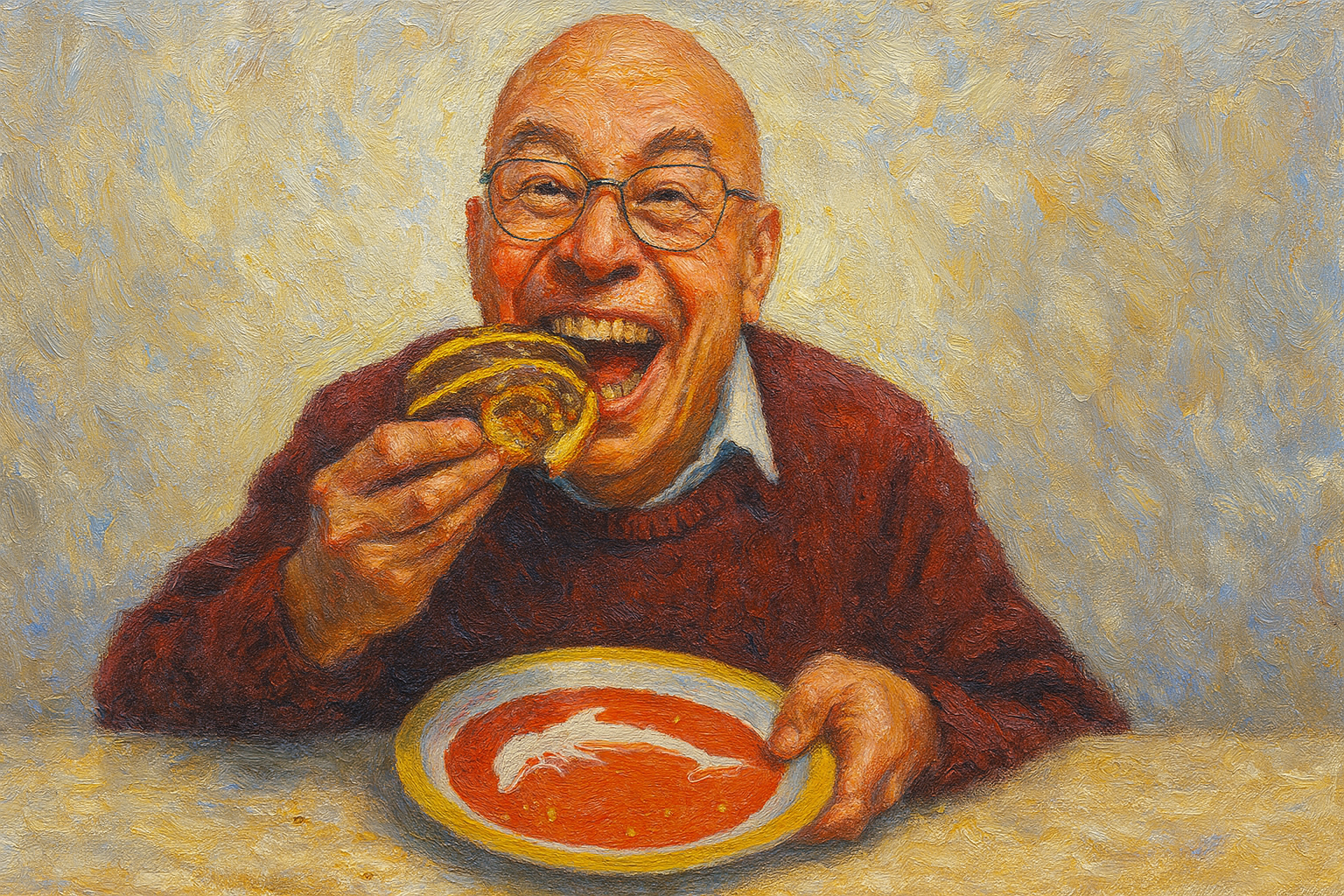
    Microsoft Copilot generated image of me and a plate of corned beef hash with an egg fried in butter plus a parboiled potato deep fried in beef fat. I'm holding a knife and fork. I have a toothy grin and happiness in my eyes.

    Recipe

    🥔🐂 Ingredients

    • Two tablespoons of butter
    • One small potato
    • One small finely chopped onion.
    • One small green capsicum
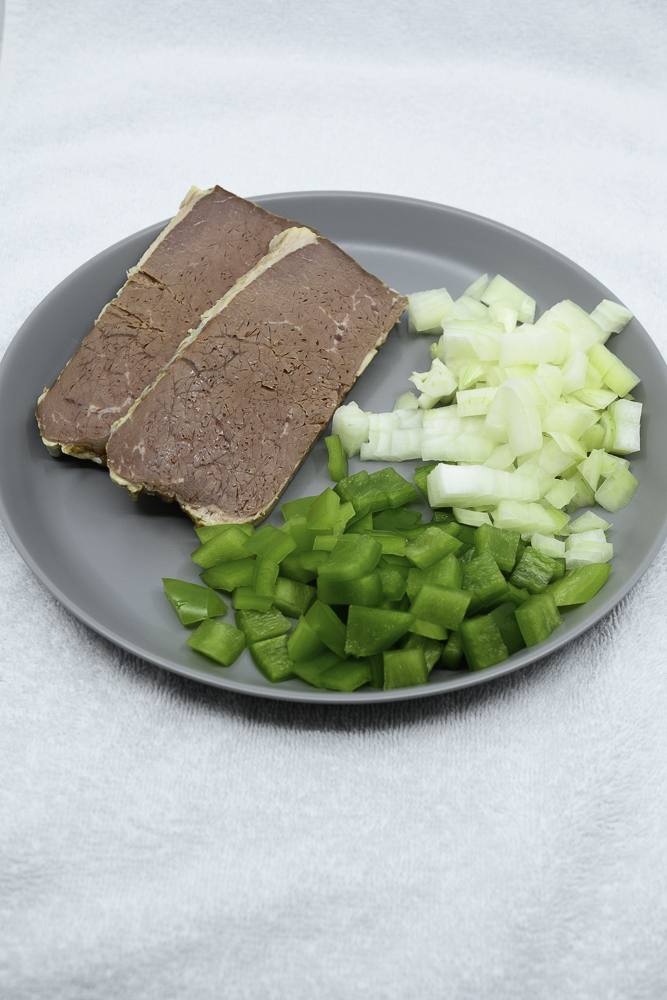
    • Two slices of corned beef
    • Half a teaspoon of freshly cracked black pepper.
    • Optional — one fried egg.

    🔪🥘 Instructions

    1. Prepare the potato.
      • Cut the potato into six pieces and par-boil for five minutes.
      • Dry the potato with absorbent paper.
      • Freeze the potato overnight to develop resistant starch.
      • Deep fry the frozen potato pieces in beef fat.
      • Finish the potato on a hot barbecue grill.
    2. Sauté the onion and capsicum.
      • Heat some butter in a frypan over medium heat.
      • Add the onion and capsicum. Cook until softened.
    3. Mix in the Corned Beef
      • Dice the corned beef into small cubes.
      • Add the corned beef to the frypan and add half a cup of water.
      • Bring the water to a simmer and cook until the water evaporates and the corned beef becomes slightly crispy.
    4. Optional Egg Topping
      • In a separate frypan, fry an egg.
      • Serve hash topped with a fried egg for extra richness. The oozy yolk combined well with the fatty, unctuous meat.

    🍳Tips and Variations

    • Make it cheesy: stir in shredded cheddar or mozzarella at the end.
    • I used a microplane to grate some Parmesan cheese over the corned beef, egg, and potato.

    📷Photographs

    This is a gallery of images. Select one and scroll through the rest.

    A note about some of the images.[i]

    Thoughts on the meal

    Tinned corned beef is convenient. This meal tasted better than tinned corned beef. Tinned corned beef has a lot of salt; making it from scratch allowed me to titrate the salt to my preferred taste.

    The potato wasn’t burnt. I seared it on a hot barbecue grill. The potato was delightfully crispy and pillowy soft inside, like good chips should be.

    Questions

    • Do you like corned beef hash?
    • How would you use leftover corned beef?
    • What variations would you recommend?

    🥮Sweet treats

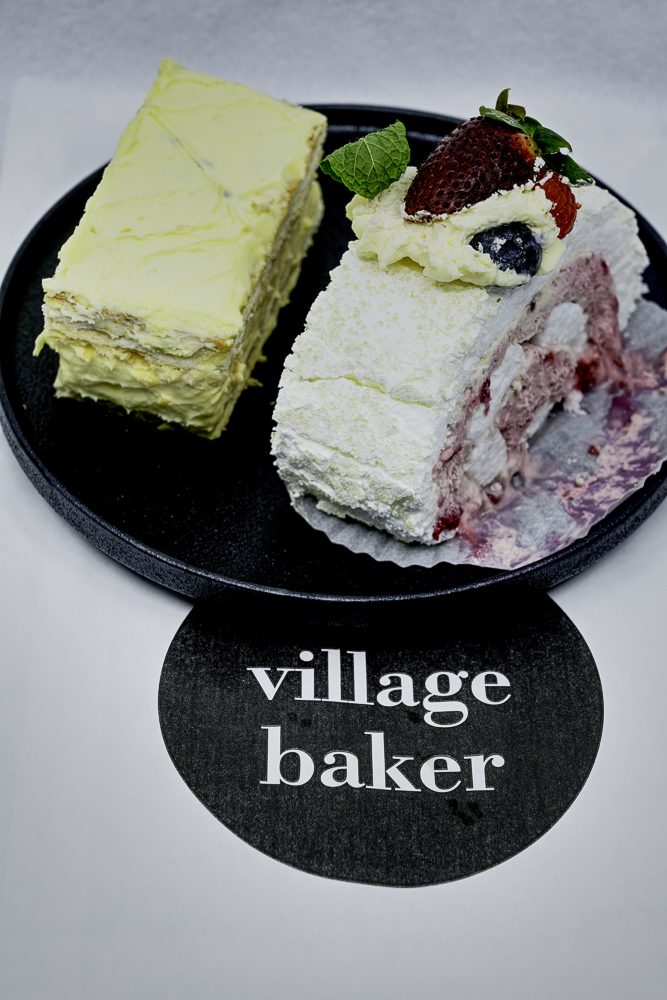
    I had a craving for some pastries. I enjoyed a pavlova roulade, passionfruit fudge vanilla slice, and salted caramel Berliner.


    [i] A note about the images used in this post. The featured image and a couple of other images were generated with Microsoft Copilot and ChatGPT. I’m conscious that there are some bloggers and readers who oppose the use of large language models for generating content. I’m comfortable with using large language models to help with content on YummyLummy.com


    [i] Corned beef hash is a hearty, savoury dish made by combining chopped or shredded corned beef with diced potatoes and onions, then frying the mixture until it’s golden and crispy. It’s a classic comfort food with roots in frugal cooking—originally designed to use up leftovers, especially from a corned beef dinner.

  • Corned beef fat sandwich

    Corned beef fat sandwich


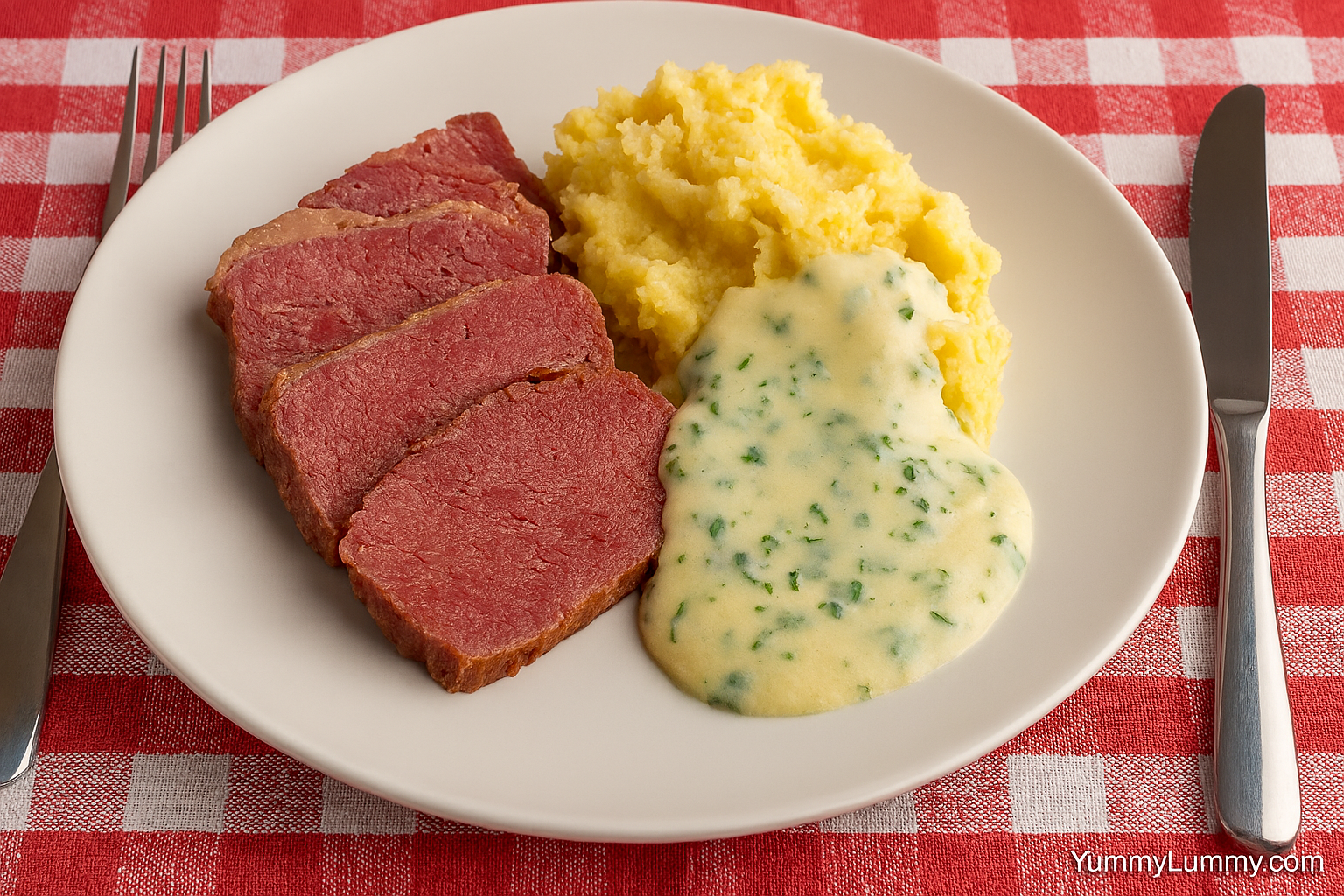
    Create an image of a corned beef meal with a 16:9 aspect ratio for the food blog YummyLummy.com. In the image, include slices of corned beef, a bechamel sauce with parsley, plus buttery potato mash on the side of the plate. Give the image a photographic quality and include cutlery, like a knife and fork, in the image.
    Microsoft Copilot generated corned beef meal.

    In the old days (when I was fat[i]), I would cook corned[ii] beef[iii] with vegetables, mustard, garlic, onions, and additives like Worcestershire sauce. I’d eat it with a white sauce made with refined (read ultra-processed) white flour. I usually have boiled potatoes or potato mash with corned beef and white sauce.
    More recently, if I want corned beef, I buy it in a can[iv] and make a corned beef hash (sans spuds[v] and onions). A lot of people give me a condescending attitude when I mention my consumption of canned corned beef. Their scorn and derision humour me.
    This version is simple and is a low-carbohydrate, minimalist version of corned beef. Apart from the fat sandwich of course. 😉

    Create an image of me sitting and eating a corned beef meal with a 16:9 aspect ratio for the food blog YummyLummy.com. In the image, I am seated at the dinner table with a plate in front of me, featuring slices of corned beef, a bechamel sauce with parsley, and buttery potato mash on the side. Give the image an oil paint quality and include me holding cutlery, like a large, sharp knife and fork, in the picture.
    Microsoft Copilot generated image of me with a plate of corned beef, white sauce, and potato mash.

    Recipe

    Ingredients

    • Corned beef silverside[vi]
    • Water

    Equipment

    • Slow cooker
    • Frypan

    Instructions

    1. Unwrap the meat and wash it under running tap water to remove the brine and sugar.
    2. Place the beef into the cooking vessel.
    3. Add a cup of water.
    4. Slowly cook on low heat for eight hours.
    5. Remove the meat from the slow cooker.
    6. Pass the cooking liquor[vii] through a sieve and refrigerate the broth.
    7. With gloved hands, gently dissect the fat from the flesh using fingers to separate the layer of fat according to the fascial plane.
    8. The fat layer makes for a fantastic sandwich on lavishly buttered white sourdough bread[viii]. There’s nothing like the sensation of the beef fat dripping down your hands and forearms as you slowly take bites from the sandwich and masticate the unctuous beef fat. The only reaction you can have is to smile.
    9. Place the beef into a container and seal it. Refrigerate the meat.
    10. Cut the cold meat into lunch-sized portions.
    11. Dice a portion of cold corned beef and place the diced meat in a frypan.
    12. Add beef broth or water to the frypan and bring it to a simmer until the meat fibres start to separate and soften.
    13. After the water has mostly evaporated, turn off the heat, add a dash of cream and stir.

    Beef silverside fat sandwich.

    Ingredients

    • Cooked corned beef.
    • Frozen sourdough baguette — thawed.
    • Grass-fed butter
    • Freshly cracked pepper corns
    • Dijon mustard

    Instructions

    1. Trowel butter onto a piece of thawed sourdough bread. Freezing sourdough bread develops resistant starch.
    2. Add dollops of Dijon mustard.
    3. Apply a layer of warm fat.
    4. Season with freshly cracked peppercorns.
    5. Cover your lap with a large dish drying cloth and wear a bib.
    6. Roll up your sleeves and get stuck into the sandwich.
    7. Rejoice in the feeling of the fat running down your chin and down your forearms.

    Photographs[ix]

    These are a gallery of photographs. Select one image and scroll through the rest.

    Thoughts on the meal

    I enjoy corned beef hash[x]; it’s a dish I grew up with. Among many other meals, my dad would often make it. He learned to prepare it during his boyhood in the South Pacific during World War II, where fresh meat was hard to come by. The only options available were tinned meat or local game.

    A piece of corned silverside is an affordable option for bulk meat in lunches.

    This piece of beef cost approximately $AUD20, or $AUD10/kilogram. If I can get four meals (possibly six meals), it will work out to about $AUD5/meal.

    The first meal (the fat sandwich) for this piece of beef brought back some great memories when Mum would make corned beef and I’d get the fat and make a sandwich. I savoured every bite of this open sandwich and enjoyed the contrasting flavours of the pickle.

    Questions

    1. Do you like corned beef?
    2. Do you like fat sandwiches?
    3. How would you make a fat sandwich?

    Stay tuned

    I’ll add photographs of how I use the rest of the beef during the week.

    Endnotesꜜ


    [i] The modern clinical term is “clinical adiposity.” I prefer the term fat because it is universally understood.

    [ii] The term corned comes from the old English word corn, which referred to small, hard particles—not just cereal grains. In the case of corned beef, it refers to the large-grained rock salt (sometimes called “corns” of salt) used in the curing process.

    [iii] Corned beef is a type of salt-cured beef, traditionally made from brisket.

    [iv] Canned corned beef is a shelf-stable meat product made primarily from beef, but it includes ingredients to preserve flavour and texture. The ingredients include sodium nitrite, added salt, and a small amount of sugar (which is disappointing). Cooking can convert the nitrites to nitrates.

    [v] “Spud” is a casual or slang term for a potato. For example, “baked spud” or “mashed spuds.” It is used in many English-speaking countries.

    [vi] Beef silverside is a lean, boneless cut of beef taken from the hindquarter of the cow, specifically from the top portion of the round primal, just above the leg muscles. It’s known for its coarse grain and minimal marbling, which makes it a budget-friendly and versatile option in many cuisines.

    [vii] Juice released from cooked meat.

    [viii] Bread is high carbohydrate and not part of a low carbohydrate diet.

    [ix] A note about the images used in this post. The featured image and a couple of other images were generated with Microsoft Copilot and ChatGPT. I’m conscious that there are some bloggers and readers who oppose the use of large language models for generating content. I’m comfortable with using large language models to help with content on YummyLummy.com

    [x] Corned beef hash is a hearty, savoury dish made by combining chopped or shredded corned beef with diced potatoes and onions, then frying the mixture until it’s golden and crispy. It’s a classic comfort food with roots in frugal cooking—originally designed to use up leftovers, especially from a corned beef dinner.