
Tag: Fennel

  • Pork chops

    Pork chops


    This morning, a photograph captures the full moon setting over Henley Beach in the Indian Ocean.

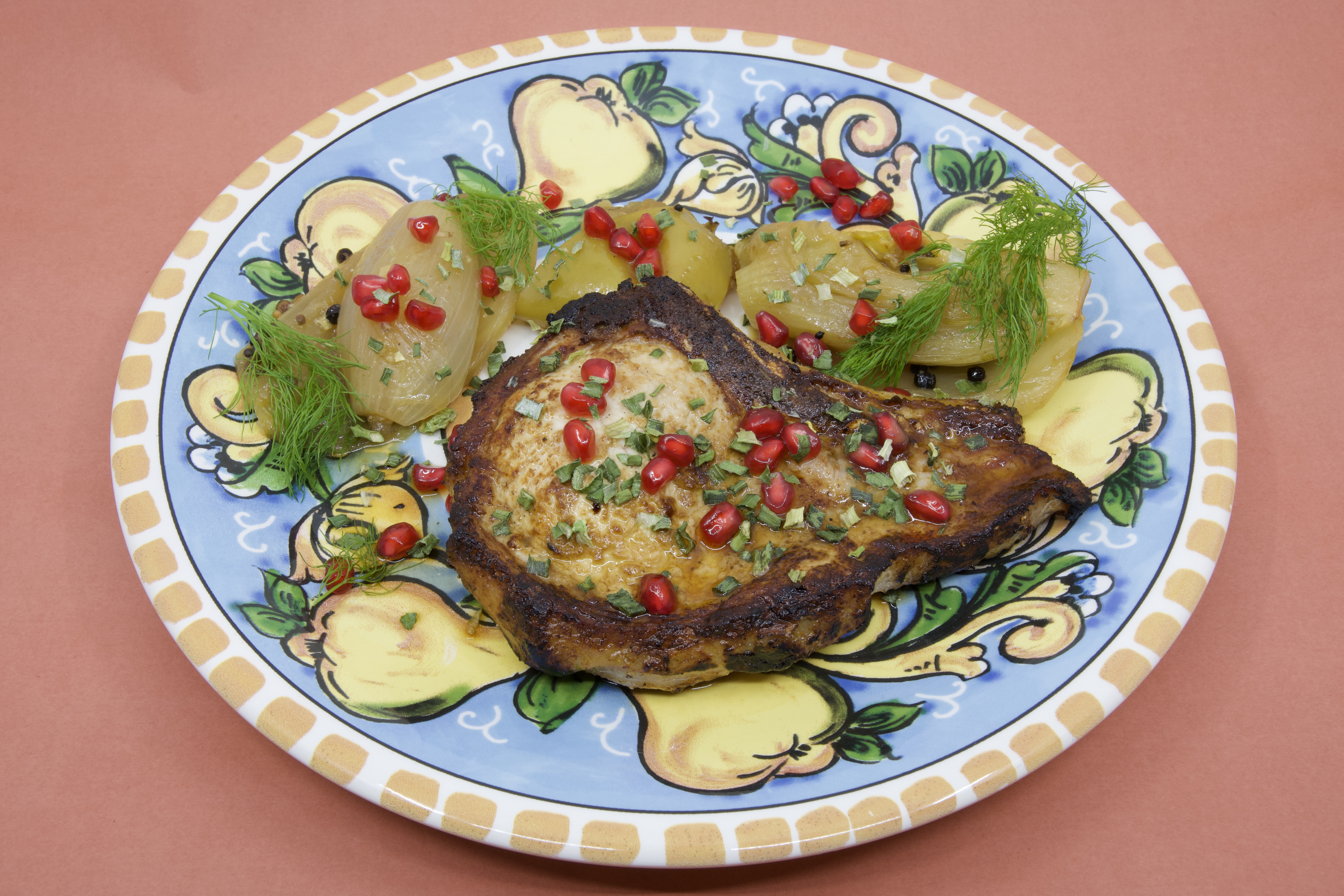
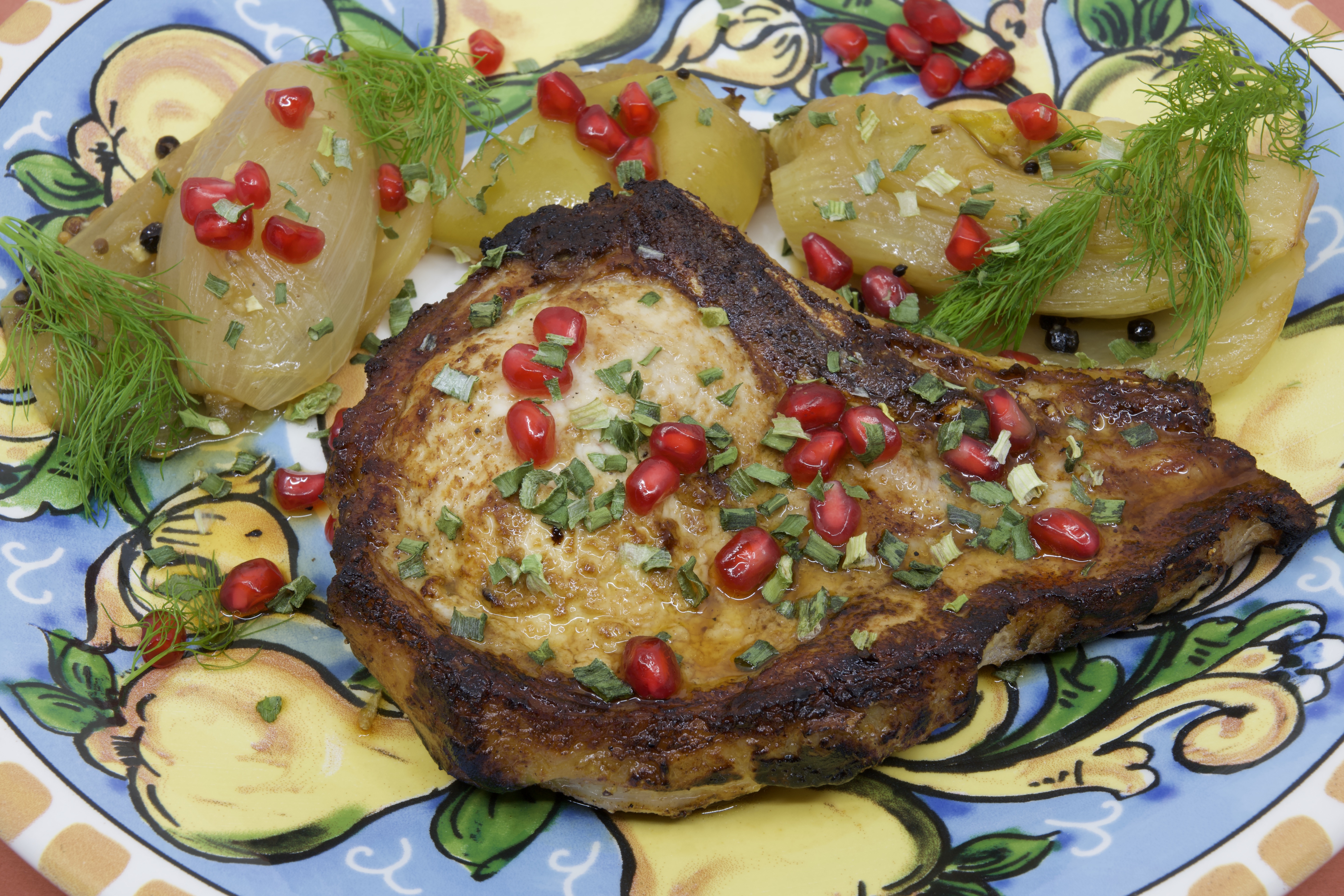
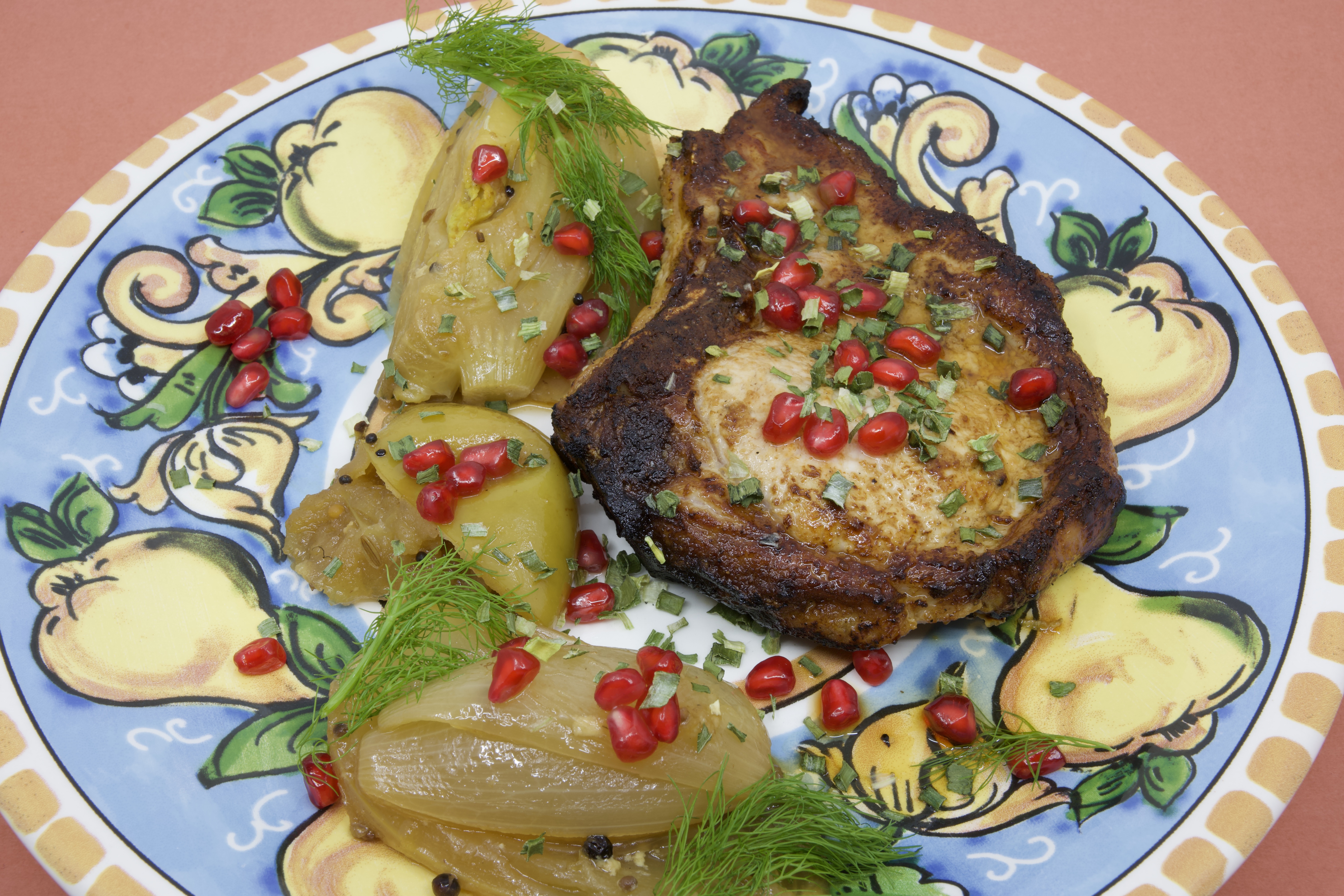
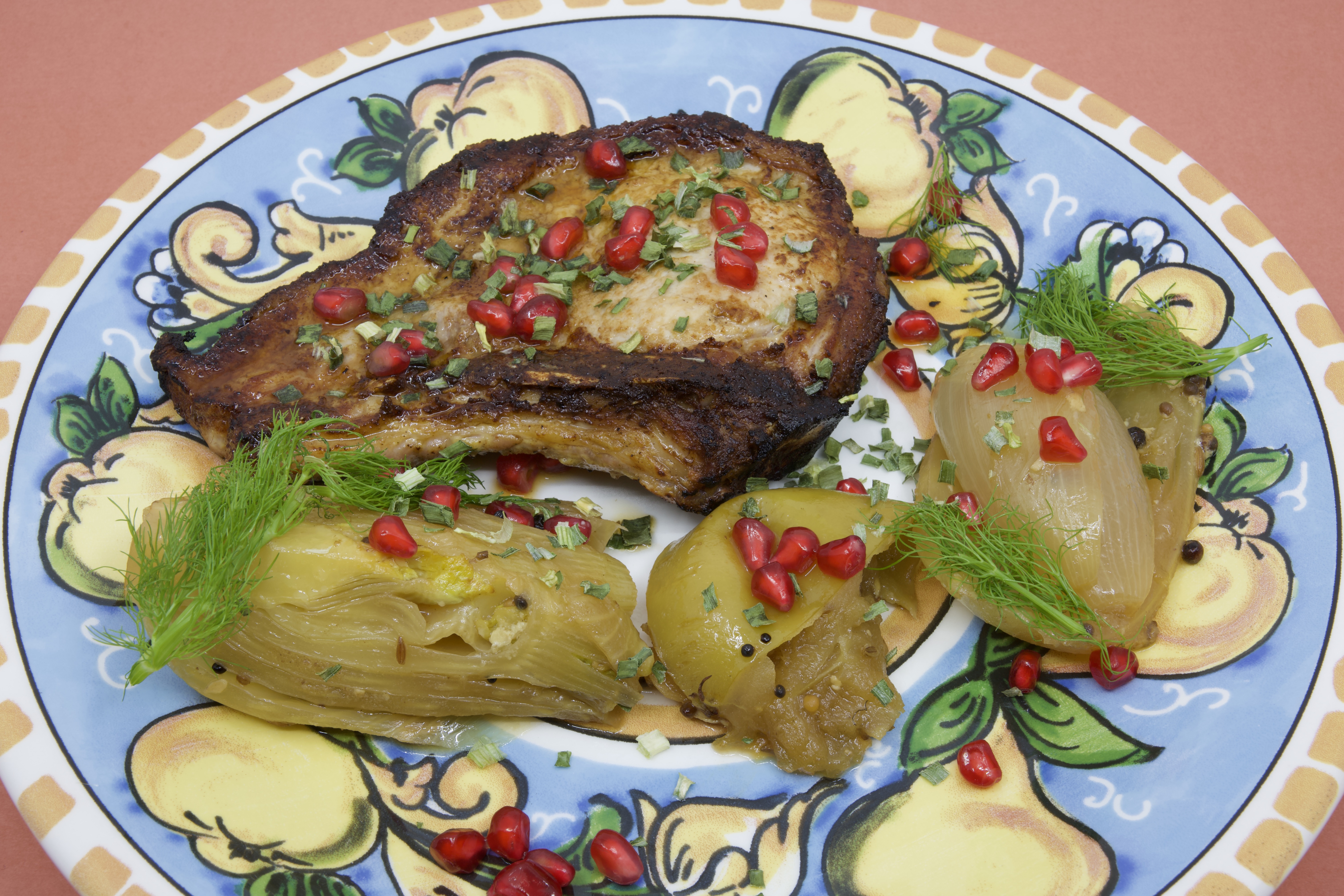
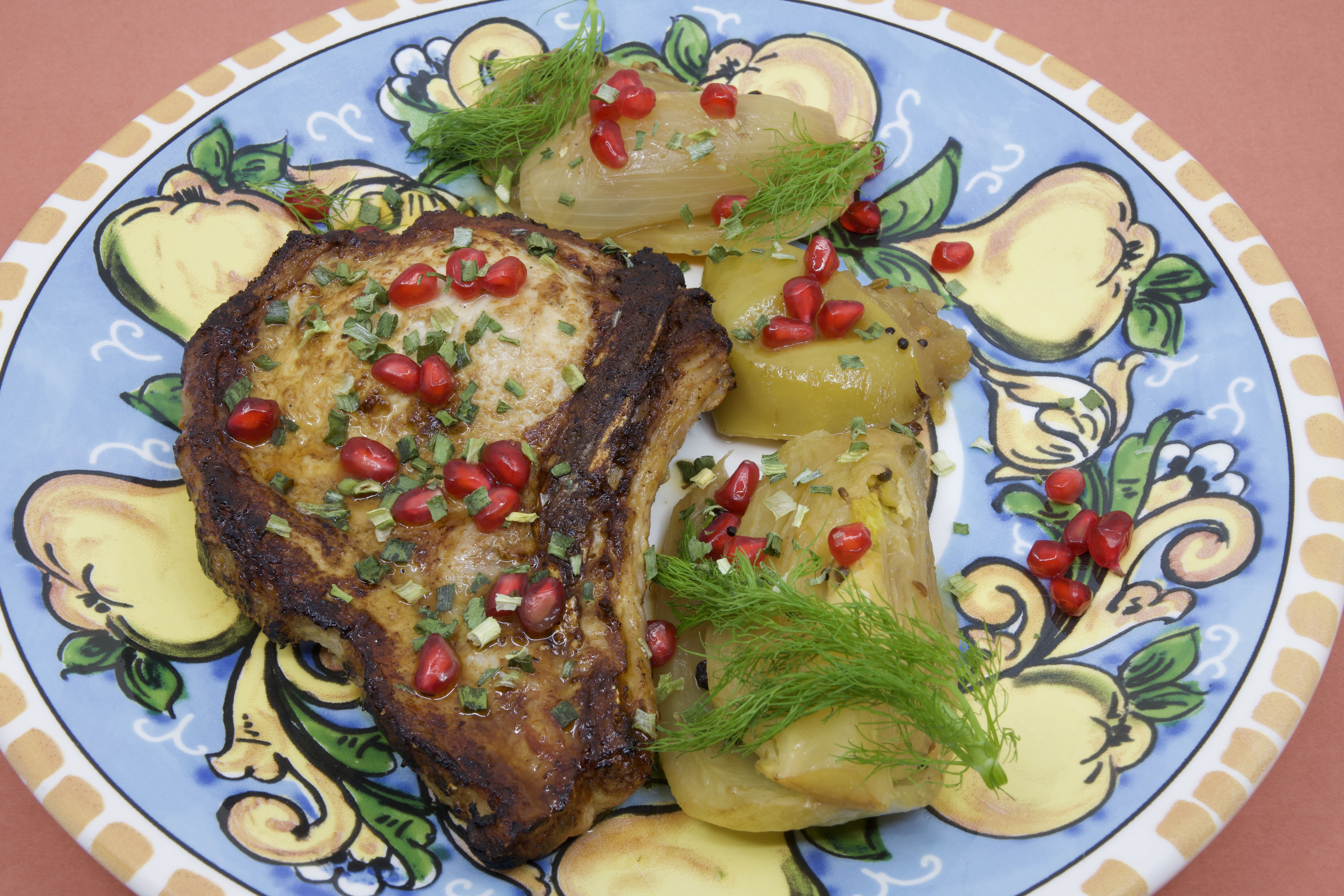
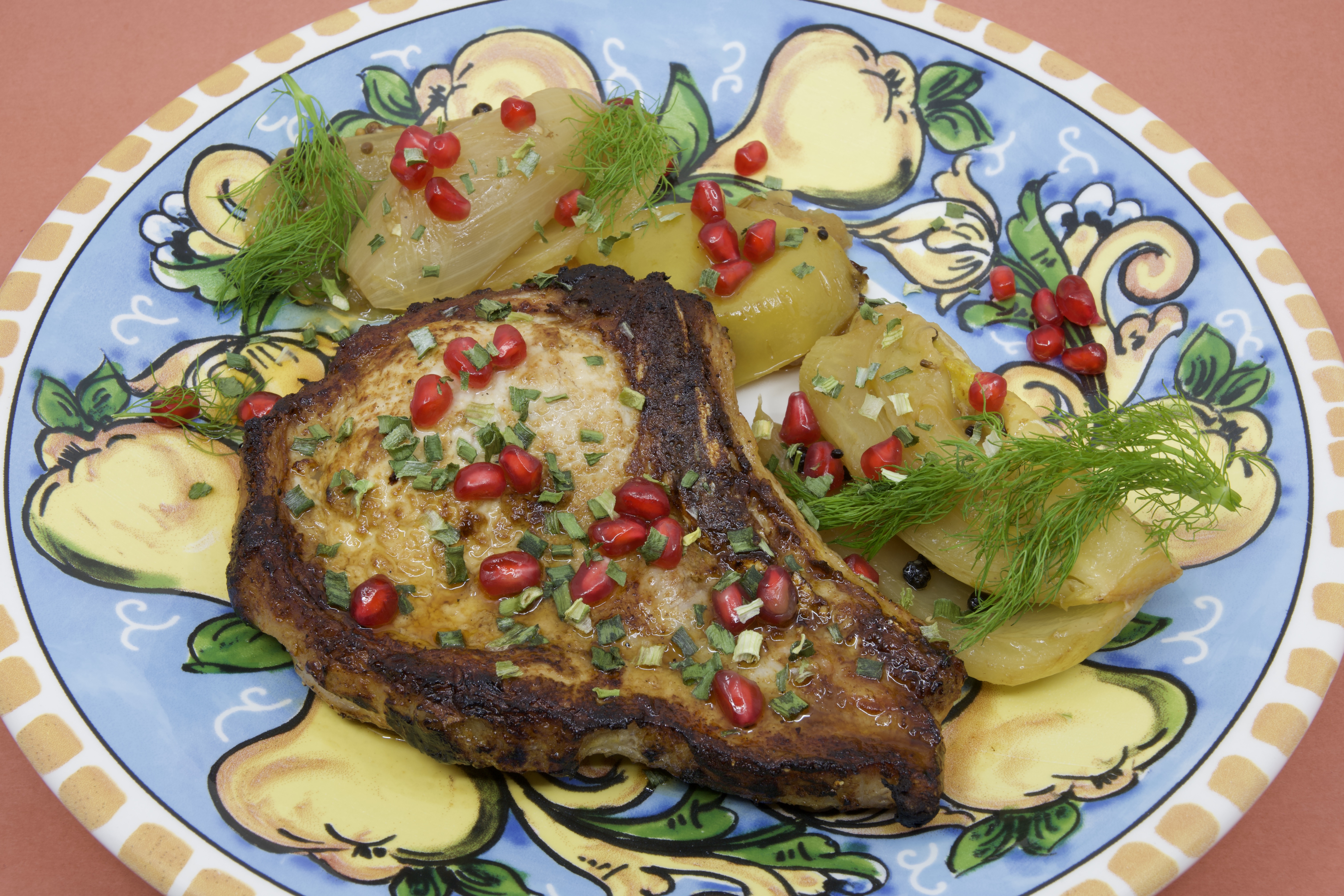
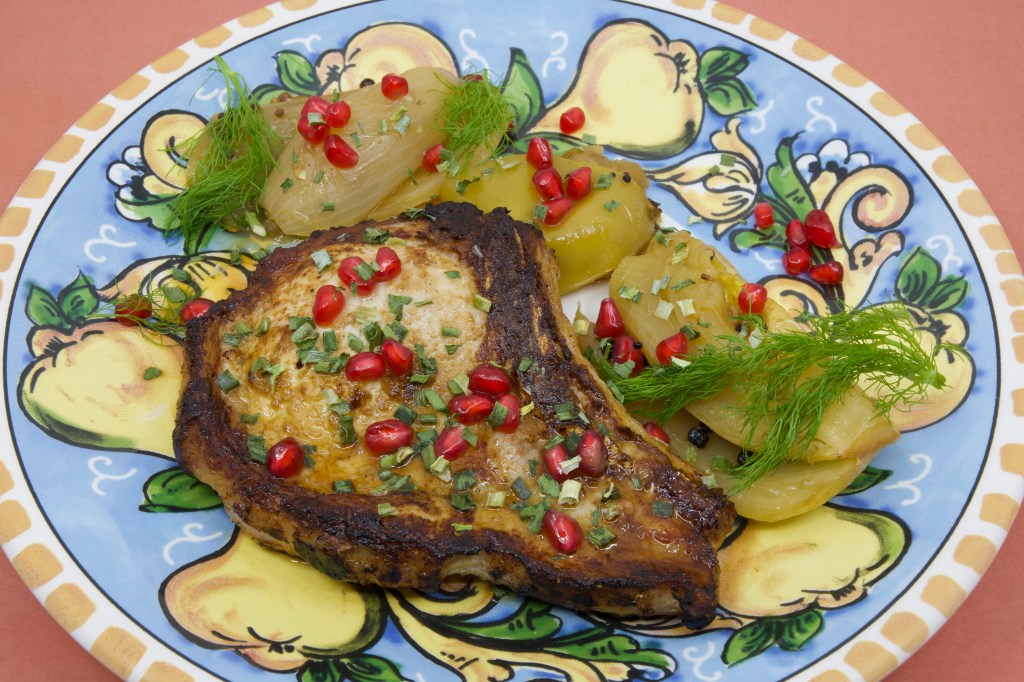
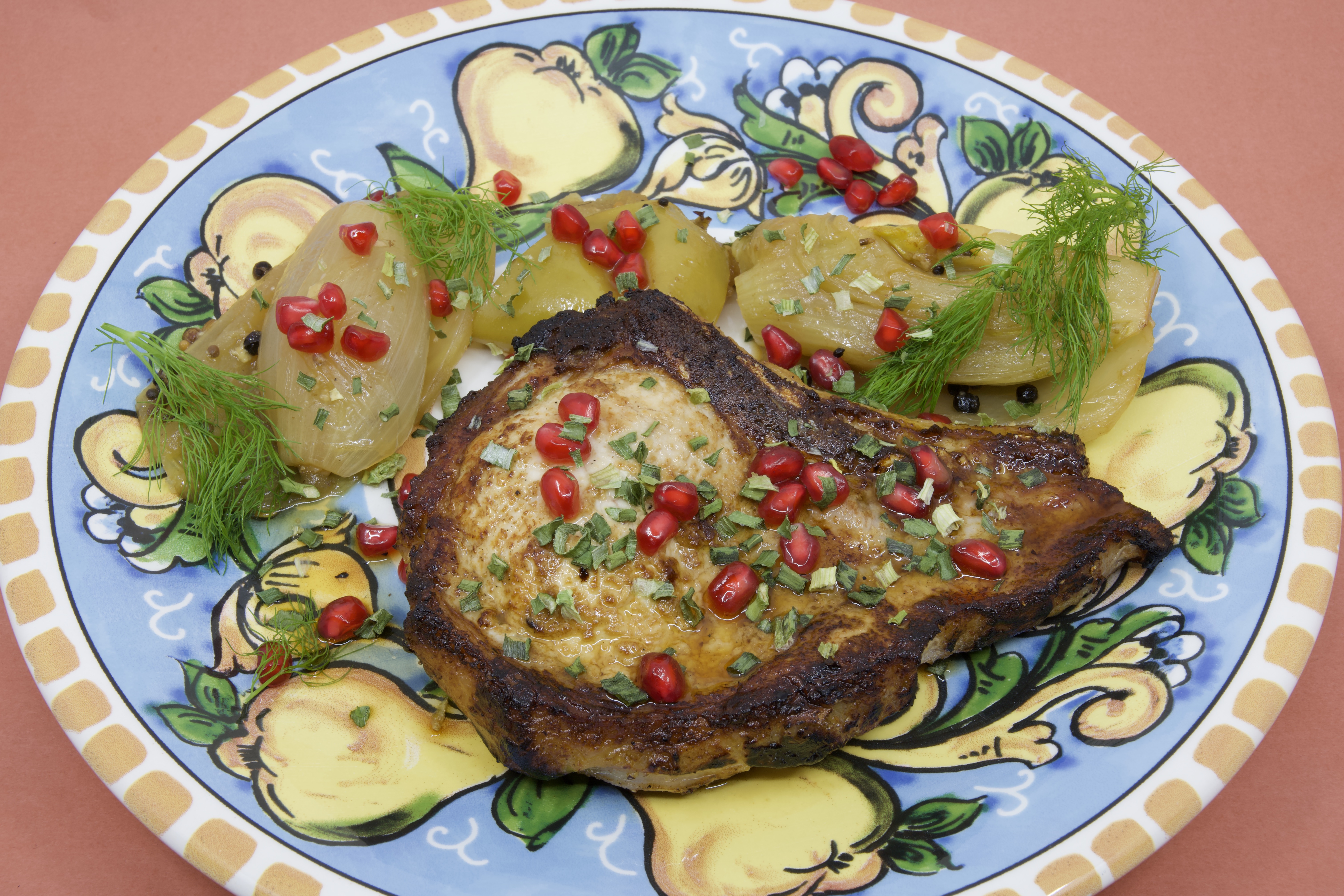
    Grilled pork chops with pressure-cooker-stewed fennel and Granny Smith apple

    A simple Yummy Lummy-inspired meal: pig, anise-sweet fennel, sharp green apple, heat, pressure, and appetite.

    A photograph of me smiling

    Introduction

    This is dinner for when you want something meaty, sharp, sweet, and soft without making a fuss. The pork chops are grilled hot and rested properly. The fennel and Granny Smith apple are cooked under pressure until they collapse into a silky, savoury-sweet stew. Pork and fennel are a classic pairing because pork brings richness and fennel brings a gentle anise sweetness. Apple joins the party with acid and freshness, especially when it is a tart Granny Smith. I do like tartness.

    Serves and timing

    • Serves: 2 Gary-type people or 4 normal people. I’m having the second serve tomorrow night.
    • Preparation time: 15 minutes.
    • Pressure cooking time: 3 minutes at high pressure, plus 5 minutes natural release.
    • Grilling time: 8 to 12 minutes, depending on chop thickness.
    • Resting time: 5 minutes.

    Ingredients

    For the pork chops

    • 2 bone-in pork chops, about 250 to 300 g each and 2.5 cm thick.
    • 1 teaspoon coarse cooking salt.
    • ½ teaspoon freshly ground black pepper.

    For the pressure cooker stewed fennel and Granny Smith apple

    • 1 large fennel bulb, trimmed, fronds reserved, bulb cut into 1 cm wedges.
    • 2 Granny Smith apples, unpeeled; keep the core and seeds, and cut into wedges.
    • 1 small brown onion, peeled and quartered.
    • 1 tablespoon beef fat.
    • ½ teaspoon coarse cooking salt.
    • ¼ teaspoon freshly ground black pepper.
    • 125 mL mixed mammal cooking liquor.
    • 1 tablespoon apple cider vinegar.
    • 1 teaspoon Dijon mustard.

    Method

    1. Season the pork

    1. Pat the pork chops dry with kitchen paper.
    2. Season both sides and the fatty edge of each chop.

    2. Pressure cook the fennel and Granny Smith apple

    1. Set the pressure cooker to sauté mode.
    2. Add the beef fat and let it melt.
    3. Add the onion, fennel, salt, and pepper.
    4. Cook for 3 minutes, stirring often, until the onion softens and the fennel smells sweet.
    5. Add the Granny Smith apple wedges, cooking liquor, apple cider vinegar, and Dijon mustard.
    6. Stir once, scraping the base so nothing is stuck.
    7. Seal the pressure cooker and cook on high pressure for 3 minutes.
    8. Allow a 5 minute natural release, then carefully vent the remaining pressure.
    9. Open the lid, stir gently, and simmer on sauté mode for 2 to 4 minutes if you want a thicker stew.
    10. Taste and adjust with a little more salt, pepper, or vinegar if needed.

    3. Grill the pork chops

    1. Heat a grill plate, barbecue, or heavy pan until hot.
    2. Place the chops on the grill and cook for 4 to 5 minutes on the first side.
    3. Turn and cook for another 4 to 5 minutes on the second side.
    4. Stand the chops on the fatty edge for 30 to 60 seconds to render and crisp the fat.
    5. Check the internal temperature. Aim for 63 °C in the thickest part, then rest the chops. The temperature will rise slightly as they rest.
    6. Rest the chops on a warm plate for 5 minutes before serving.

    4. Serve

    1. Warm dinner plates before serving. A warm dinner plate can have a remarkable effect on the enjoyment of a meal.
    2. Spoon the stewed fennel and apple onto warm plates.
    3. Place a rested pork chop on top, or beside the stewed fennel and apple.
    4. Add a final crack of black pepper.
    5. Garnish with fennel fronds and pickled pomegranate arils.
    6. Eat while hot, preferably with no apology for enjoying the fat.
    Homer Simpson’s pork chop moment

    There is something wonderfully uncomplicated about a pork chop. Homer Simpson would understand this meal. I can imagine him at the table, fork in hand, eyes fixed on the chop, giving the sort of pleased murmur usually reserved for doughnuts. The fennel and apple would probably be described as “the fancy green and white stuff”, but once the pork juices run into it, even Homer would know it belongs on the plate.

    A photograph of me smiling with a cartoon bubble and the words "mmm pork chops."

    Adelaide Central Market wander

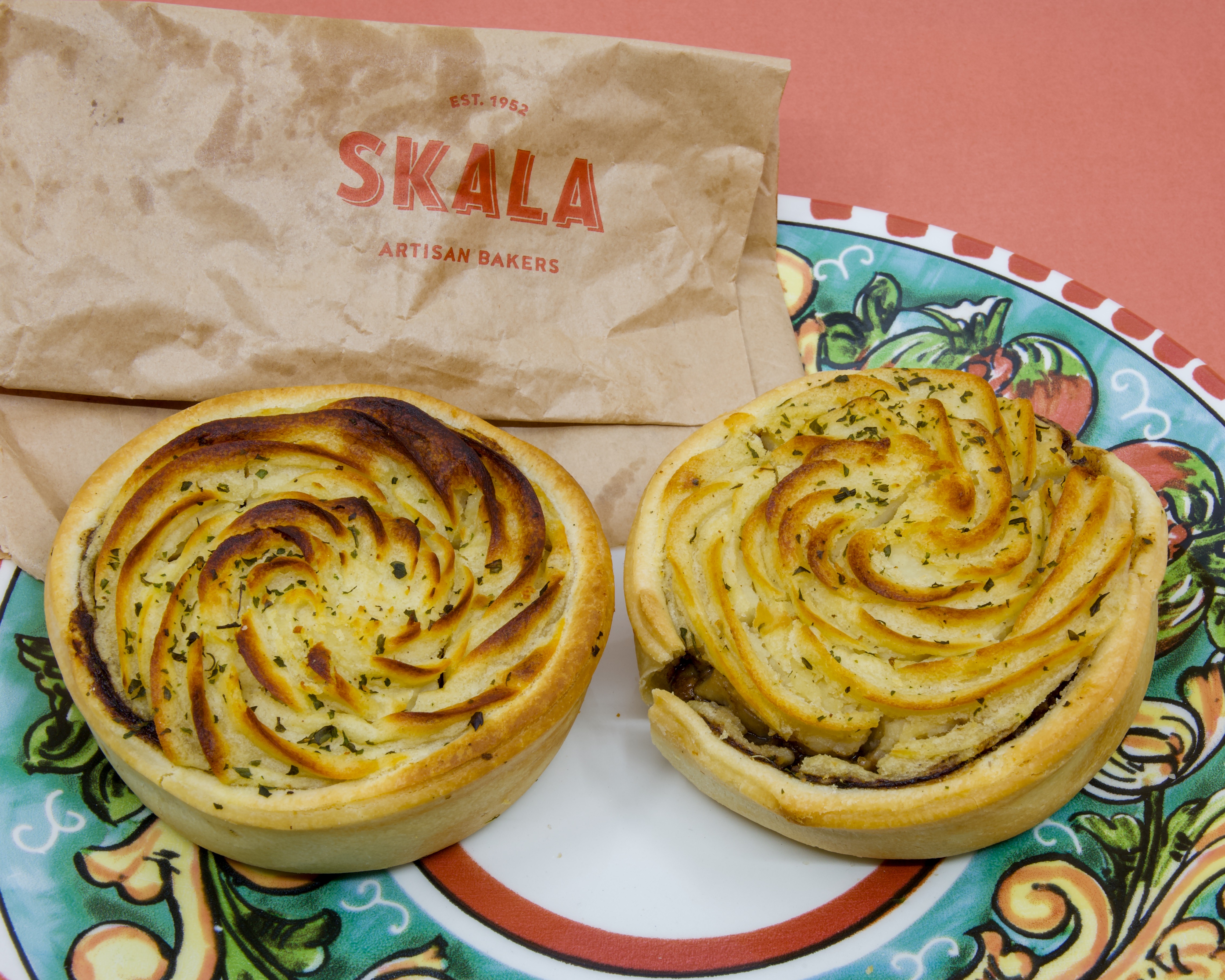
    Before cooking this pork chop dinner, I had one of those Adelaide Central Market visits that makes a person glad to live near good food. I wandered through the Market and stopped at Skala Artisan Bakers, a South Australian bakery known for bread, pastries, and cakes, and bought a couple of potato pies. There is something deeply reassuring about a pie with potato on top. It is practical. It is filling. It is not trying to be delicate.

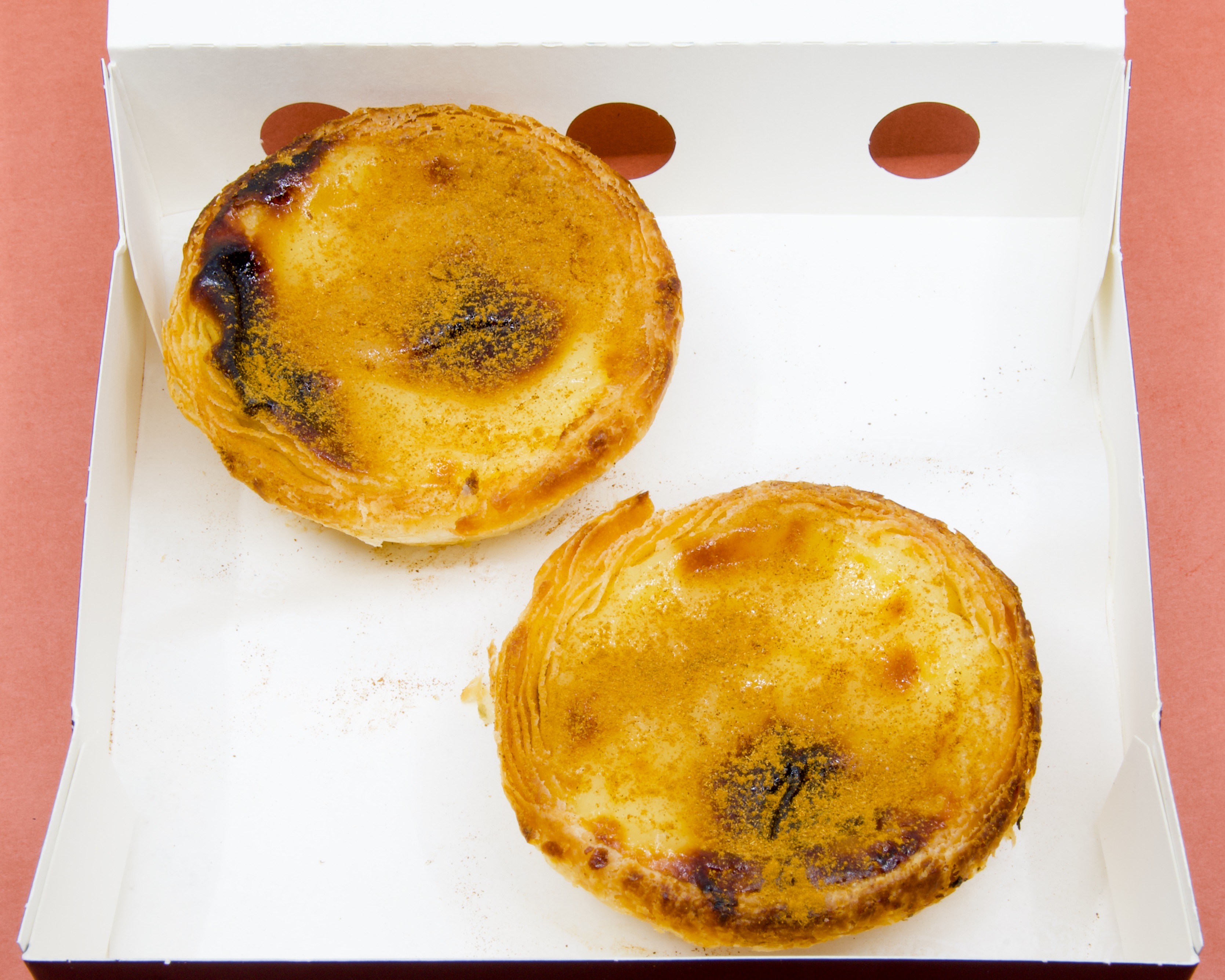
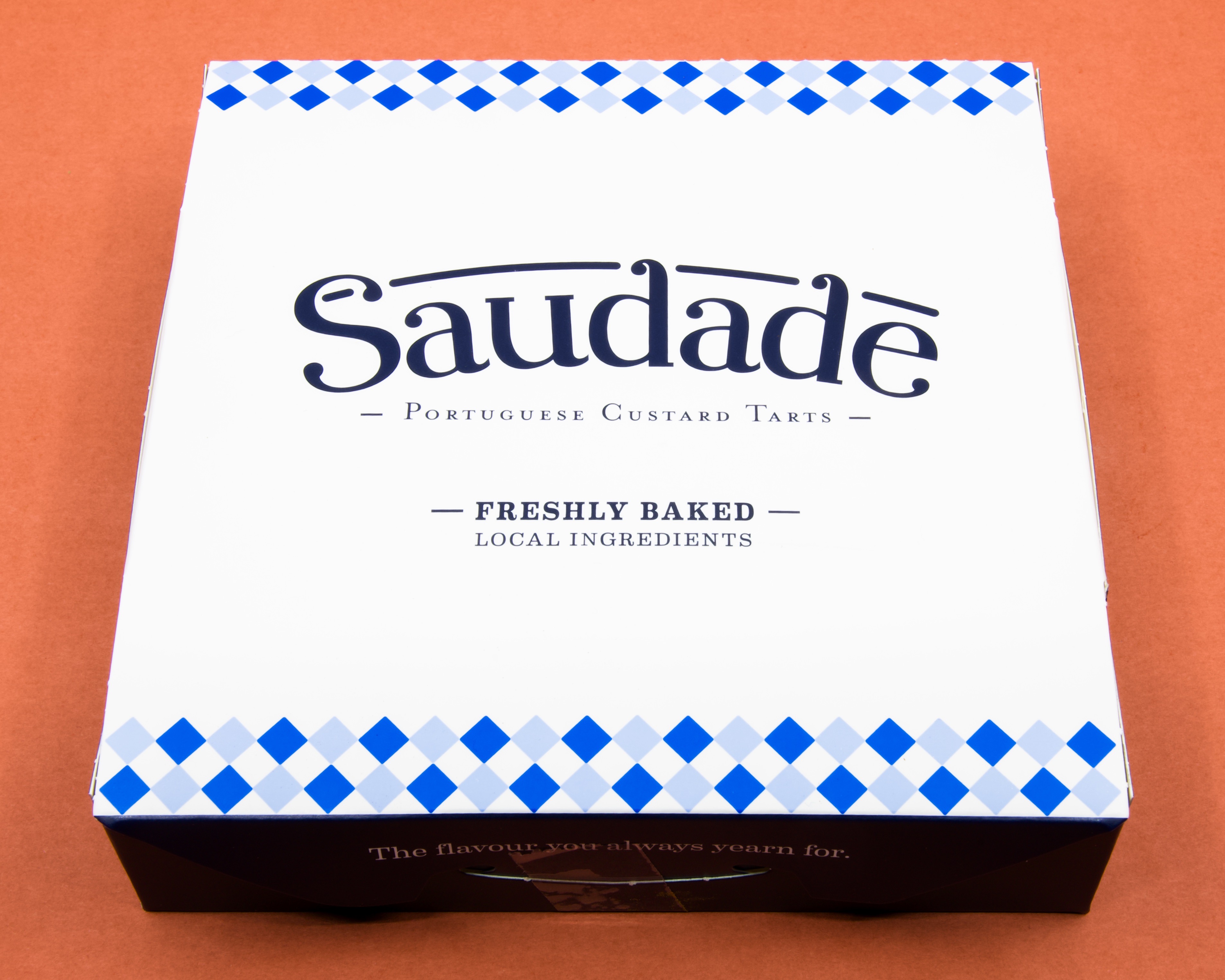
    I also picked up a couple of Portuguese tarts from Saudade, the Adelaide Central Market stall specialising in pastel de nata. These little custard tarts are a joy. The pastry should be crisp and flaky, with enough structure to hold the custard, yet tender enough to shatter slightly when bitten. The custard should be smooth, sweet, and gently eggy, with a burnished top that says heat has done its good work. These also had powdered cinnamon on top, which added a warm, sweet spice note without overpowering the custard. I like them still slightly warm if possible, but I am not proud; room temperature is also fine when the tart is good. Potato pie first, Portuguese tart later, and pork chops for dinner. That is a nice little food day.

    Cooking notes

    • Do not overcook the pork. A meat thermometer is the most reliable way to keep pork juicy.
    • Cut the fennel thicker if you want more texture. Cut it thinner if you want it to melt into the apple.
    • Granny Smith apples are useful here because their sharpness balances the pork fat.
    • If the stew tastes flat, add a splash more apple cider vinegar.
    • If the stew tastes too sharp, stir in a small knob of butter.

    I exploited Microsoft Copilot to refine and format this blog post. Artificial intelligence large language models can make mistakes.

    I exploited ChatGPT to add the cartoon bubble to the photograph of me. I also exploited ChatGPT to whiten my teeth. You do not need to see how yellow they are after all the coffee that I drink.
    Fediverse Reactions
  • Pork and fennel

    Pork and fennel


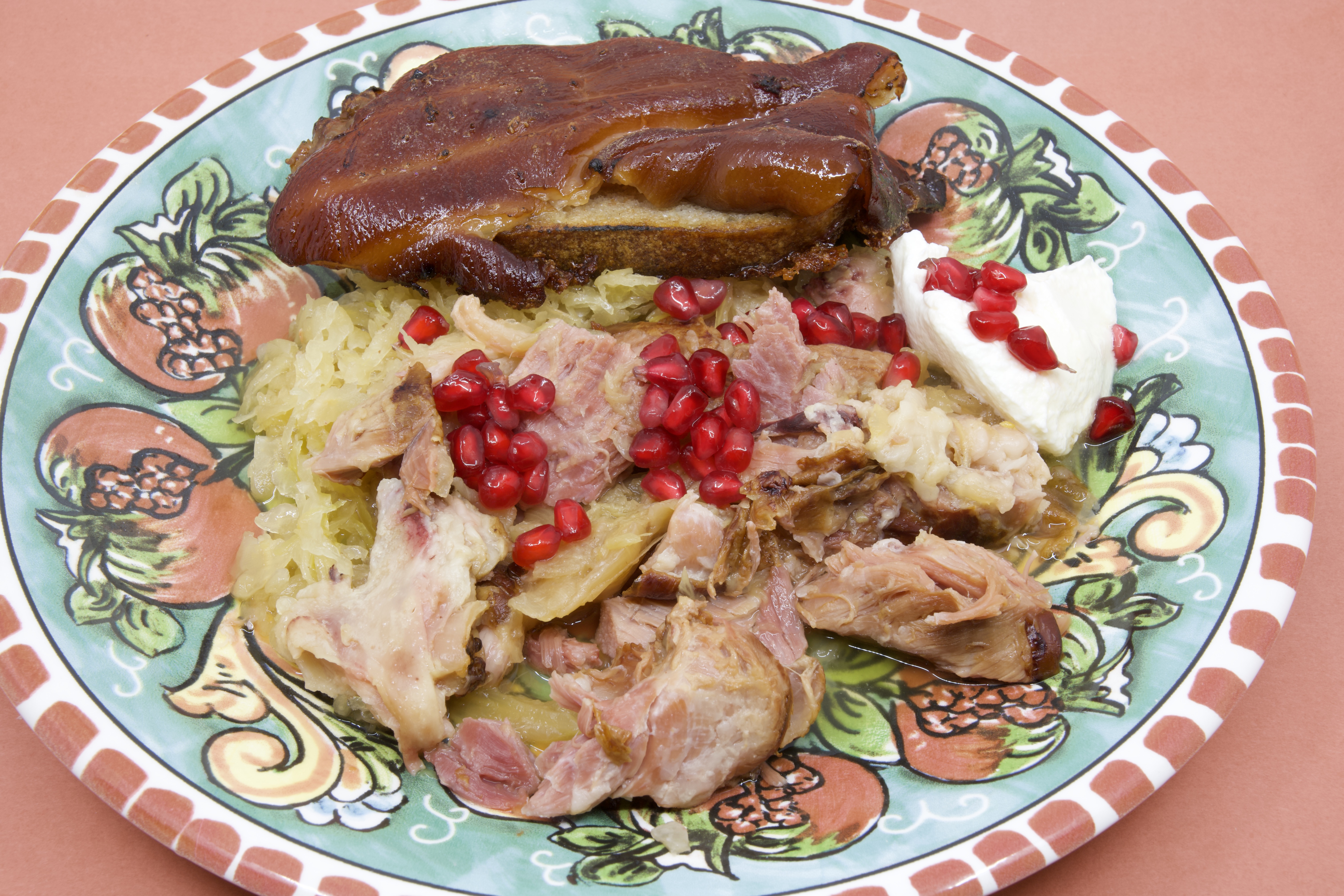
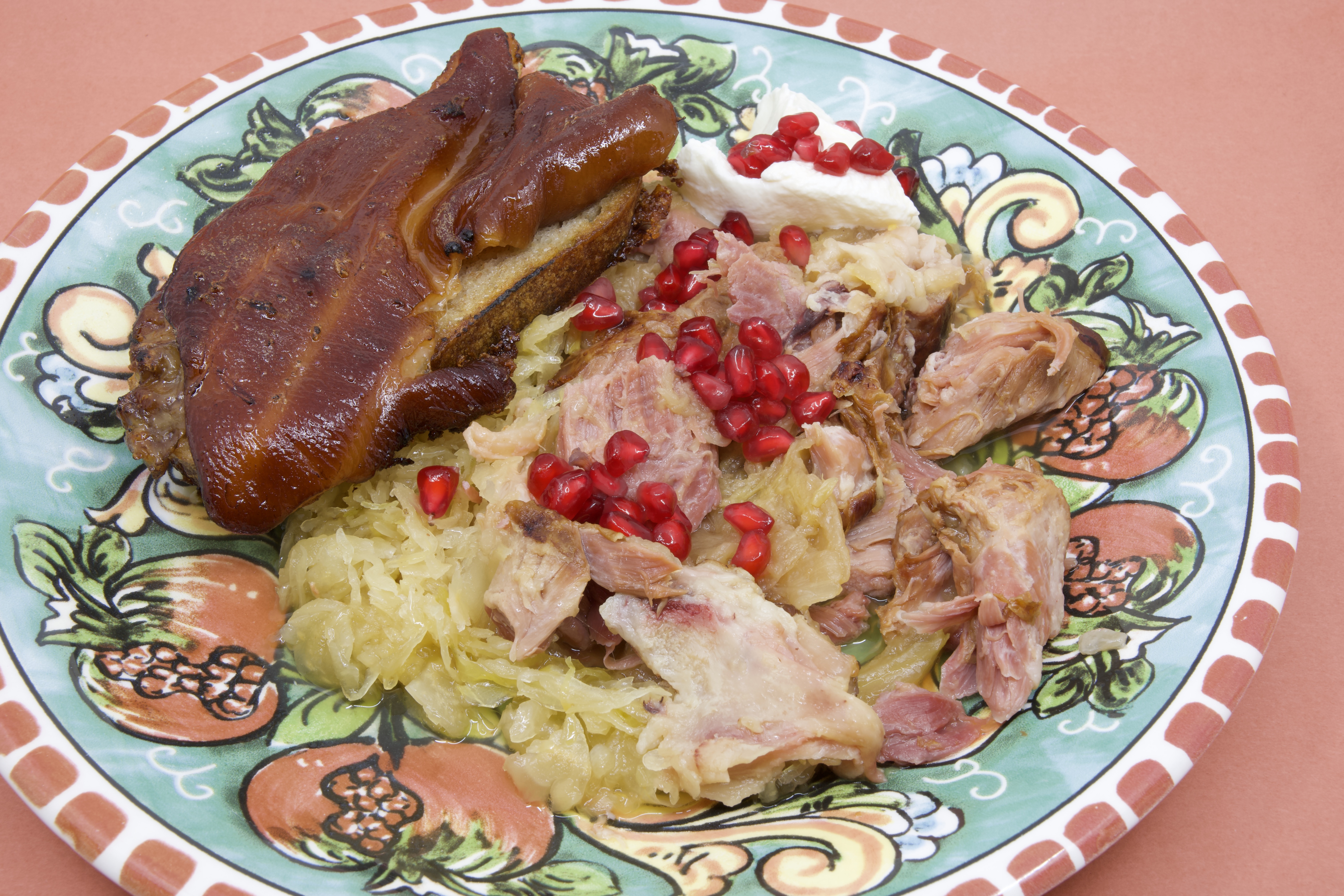
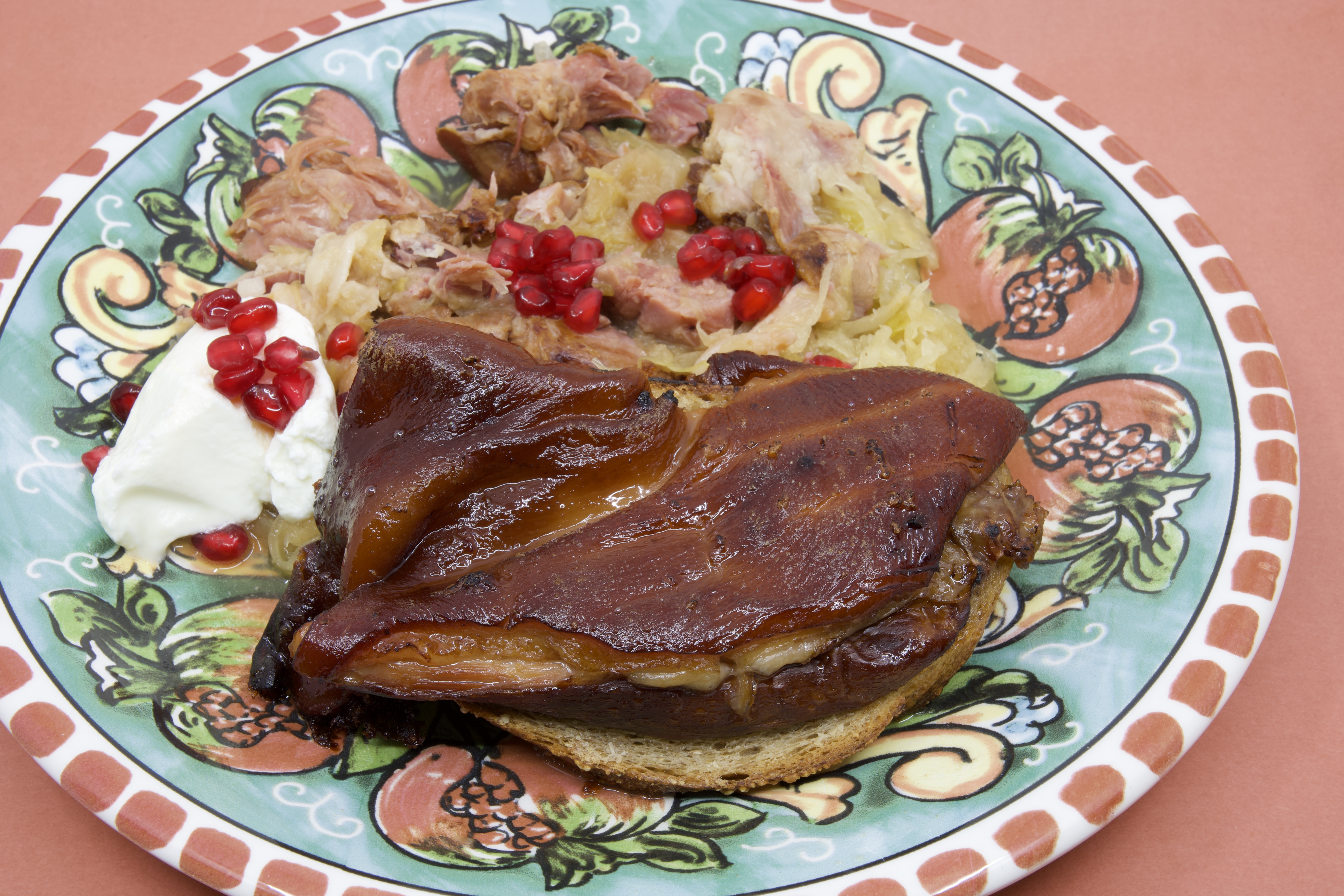
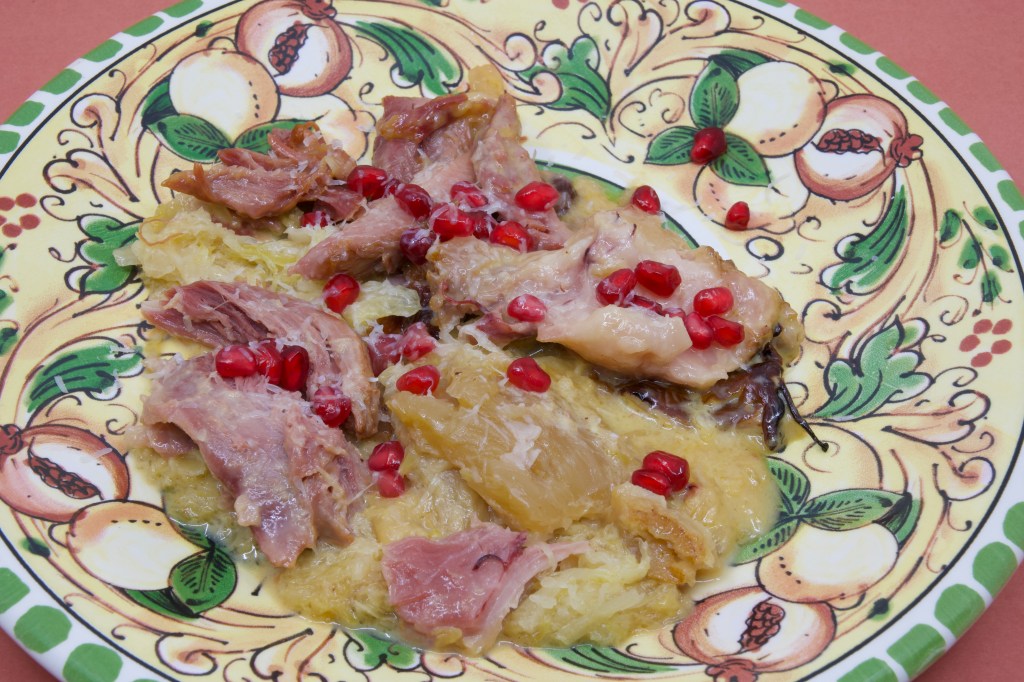
    This meal brings together a smoked pork hock, fennel bulb, brown onion, salt, and mixed mammal liquor in the pressure cooker. It is simple food with an appetite behind it: smoky pork, sweet anise-like fennel, savoury onion, and a rich cooking liquor that becomes more than the sum of its parts.

    Jump to the recipe.

    Why pork and fennel work so well.

    Pork and fennel are a classic pairing because they balance each other. Pork hock is rich, smoky, salty, gelatinous, and deeply savoury. Fennel brings sweetness, freshness, and a gentle anise flavour. When cooked under pressure, the fennel collapses into the liquor, softening the heaviness of the meat while also perfuming the dish.

    This is the same sort of logic behind pork and apple, beef and onion, lamb and rosemary, chicken and leek, or fish and lemon. Meat gives fat, protein, and depth. Vegetables, herbs, and fruit bring water, acid, sweetness, bitterness, or aroma. Good combinations keep the mouth interested.

    About pork hocks

    A pork hock is the lower part of the pig’s leg, close to the ankle joint. It contains bone, skin, connective tissue, fat, and hard-working muscle. That means it can be tough if rushed, but it becomes tender and succulent when cooked long enough for the collagen to soften into gelatine. A smoked pork hock adds another layer: salt, smoke, and cured-pork flavour.

    I have written before about pork hock and pork knuckle on Yummy Lummy. The Hahndorf Inn pork hock was a generous Bavarian-style meal with crunchy crackling, sauerkraut, mashed potato, mustard, and gravy. I also mentioned pork knuckle in a Queensland Day post, where the knuckle was cooked slowly, chilled, and then finished in an air fryer. See Crispy skin pork hock at the Hahndorf Inn and Queensland Day.

    About fennel

    Fennel bulb is crisp when raw, with a fresh anise aroma. Once cooked, it softens and becomes sweet, mild, and silky. In this dish, fennel works as both a vegetable and an aromatic. It does not dominate the pork; it lifts it.

    Fennel also suits pressure cooking. The bulb breaks down enough to flavour the liquor, while some pieces remain recognisable if cut thickly. The result is a sauce-like vegetable base rather than a separate side dish.

    Ingredients

    • 1 smoked pork hock
    • 1 fennel bulb trimmed and quartered.
    • 1 brown onion, peeled and quartered.
    • Salt, used carefully because the pork hock is already smoked and cured.
    • Mixed mammal liquor, enough to cover the base of the pressure cooker.
    • Greek-style yoghurt, to serve.
    • Pickled pomegranate arils, to serve.
    • Polish sauerkraut, to serve.

    Method

    1. Place the quartered fennel and brown onion in the base of the pressure cooker.
    2. Sit the smoked pork hock on top of the vegetables.
    3. Add the mixed mammal liquor. Do not overfill the cooker.
    4. Add only a little salt, if needed.
    5. Seal the pressure cooker and cook on high pressure for 40 minutes.
    6. Allow the cooker to vent naturally. This matters because a natural release helps the meat stay succulent and reduces the risk of drying the hock.
    7. Open the cooker carefully, remove the pork hock, and let it rest briefly.
    8. Pull the meat from the bone or serve the hock whole, depending on appetite and presentation.
    9. Spoon over some of the fennel, onion, and cooking liquor.

    Serving

    Serve the pork and fennel with Greek-style yoghurt, pickled pomegranate arils, and Polish sauerkraut. The yoghurt cools the meat. The pomegranate arils add vivid tartness and colour. The sauerkraut brings crunch, acidity, and a pleasing fermented edge.

    This is a meal for eating with a spoon and fork.

    Cook’s notes

    • Smoked pork hock can be salty, so season cautiously.
    • Natural pressure release is worth the wait because the meat remains moist and relaxed.
    • If the liquor tastes too salty, dilute it with water or unsalted stock before serving.
    • Leftover pork can be folded through sauerkraut, added to soup, or eaten cold with yoghurt and pickles.

    Final thoughts

    Pork and fennel is a combination that makes sense. The hock gives smoke, salt, fat, and gelatin. The fennel provides sweetness and fragrance. The onion rounds everything out. The yoghurt, pomegranate, and sauerkraut make the plate lively rather than heavy.

    References and notes

    • Yummy Lummy. 2026. “Crispy skin pork hock at the Hahndorf Inn.” Notes: describes a Bavarian-style pork hock meal with sauerkraut, mustard, mashed potato, gravy, tender meat, and crisp crackling.
    • Yummy Lummy. 2026. “Queensland Day.” Notes: includes pork knuckle served with sauerkraut and peas, finished in an air fryer after slow cooking and chilling.
    • Pressure cooking note. A high-pressure cook followed by natural release is commonly used for collagen-rich pork hock because it helps produce tender, gelatinous meat.

    Microsoft Copilot was exploited to assist in creating this blog post.

    TyreFix

    I woke up this morning and started going for a drive. Discovered that there was low tyre pressure in one of my tyres. Fortunately, there was a servo nearby, so I was able to re-inflate the tyre. I went online to find a tyre repair service open on a Saturday morning. TyreFix came up as a 24-hour-a-day, seven-day-a-week service at very affordable prices. The best thing about TyreFix is that they come to you. It’s a mobile service. I called the mobile telephone number and provided my address and tyre details. The owner arrived at my place within 30 minutes. He repaired the tyre within 15 minutes. I was able to pay with a credit card on the spot. After the repair, there is a three-month warranty. This is a fantastic service. The person who answered the telephone was very friendly and very helpful. The person who came out, the company owner, was a delightful gentleman. He was very informative and very helpful. I highly recommend TyreFix.

    Can a Humidifier Change the Way a Gas Stove Burns?

    I started using a new humidifier this week. Within a day, I noticed the flames on my gas stove top were yellow rather than blue. I was worried about a supply problem, which could mean a carbon monoxide danger. I was prepared to contact a plumber but thought I would search for answers on the likely causes of yellow gas stove flames. I wanted to know about the temporal relationship between using a humidifier and the change in gas flame colour.

    A portable humidifier seems like a simple household appliance: it adds moisture to dry indoor air. But when a humidifier is operated in a home—particularly in a closed room—it raises an interesting question: can increasing indoor humidity change the combustion of a gas stovetop burner?

    Ultrasonic and cool-mist humidifiers are commonly used to increase indoor humidity. However, unlike evaporative humidifiers, they can do more than add moisture to the air: they can aerosolise minerals dissolved in the water.

    This raises an interesting question for homes with gas cooking: can these mineral aerosols enter a gas-stove flame and alter combustion?

    It’s more than just water vapour

    An ultrasonic humidifier uses high-frequency vibrations to produce microscopic water droplets. As these droplets evaporate, dissolved minerals remain suspended as airborne particles. Depending on the water source, these can include calcium, magnesium, sodium, and potassium.

    This phenomenon is responsible for the familiar “white dust” that can accumulate around ultrasonic humidifiers. Experimental studies have demonstrated that ultrasonic humidifiers can substantially increase airborne concentrations of minerals when operated with mineral-rich tap water.

    Low-mineral or distilled water should be used in ultrasonic humidifiers when possible, and the reservoir should be cleaned regularly.

    What happens when mineral aerosol reaches a gas flame?

    A natural-gas cooktop burns predominantly methane:

    CH₄ + 2O₂ → CO₂ + 2H₂O + heat

    The flame operates at temperatures high enough to transform mineral particles entering the combustion zone.

    Of particular interest are sodium and potassium, both alkali metals. Sodium and potassium originating from particles can enter methane flames and produce characteristic optical emissions. This is the same basic phenomenon responsible for the familiar yellow colour of a sodium flame.

    Alkali-metal compounds can also interact with combustion chemistry. Potassium-containing compounds can influence methane and LPG flames, including inhibiting flame reactions at sufficiently high concentrations.

    But does a household humidifier significantly change gas combustion?

    While a visible yellow or orange gas flame should not automatically be attributed to a humidifier, burner contamination, blocked ports, incorrect gas pressure, inadequate primary-air mixing, or burner-cap misalignment are much more likely explanations and should be investigated.

    However, when I stopped using the humidifier, opened all the doors and windows, and flushed my home with fresh air, the gas stove-top burners burned blue rather than yellow.

    Humidity and mineral aerosol are different issues

    It is important to distinguish two potential effects.

    Water vapour can influence combustion at sufficiently high concentrations by diluting the combustion gases and altering flame temperature and reaction kinetics.

    Mineral aerosol, however, introduces actual chemical elements and compounds into the combustion zone. Sodium, potassium, and other minerals can undergo high-temperature transformations and interact with flame chemistry.

    Therefore, the potential association is not simply:

    humidifier → increased humidity → changed combustion

    It is more accurately:

    ultrasonic humidifier → aerosolised mineral-containing droplets → airborne mineral particles → possible transport into gas flame → potential interaction with combustion chemistry

    The bottom line

    There is a genuine scientific association between ultrasonic humidifiers, aerosolised minerals and gas-flame chemistry. Mineral-containing particles can be generated by ultrasonic humidifiers, and sodium- and potassium-containing material can interact with methane flames.

    The prudent approach is therefore simple: control humidity, minimise mineral aerosolisation, maintain the humidifier properly, and ensure that gas cooking is adequately ventilated.

    Fediverse Reactions
  • Beef short rib with fennel

    Beef short rib with fennel


    I wanted to try something different with fennel, so I chose a large piece of beef short rib meat.

    A little over 2.5 kg of beef short rib meat

    Originally, I thought I would do this by slow cooking, but then I ran out of time. So instead, I have used the pressure cooker.

    For most of these sorts of dishes, you could use a slow cooker, a pressure cooker, or do it on a stovetop.

    I’ve provided a method for each.

    If you want to know what mixed mammal meat cooking liquor is, it’s the result of many slow-cooked beef, lamb, or pork dishes. I always keep the cooking liquor because it makes a decent meat broth.

    Ingredients

    Beef and aromatics

    • 1.2 kg boneless beef short rib meat
      cut into cubes ~8 cm³ (about 2 × 2 × 2 cm)
    • 2 tablespoons of beef fat
    • 1 fennel bulb (about 150 g), quartered
    • 2 teaspoons of fennel seeds
    • 2 cups (480 mL) mixed mammal meat cooking liquor
    • 1 tablespoon apple cider vinegar
    • 2 sprigs of rosemary
    • 1 bay leaf
    • Salt and pepper to taste

    To finish

    • 2 tablespoons of cultured butter
    • Serve with Greek-style yoghurt, garnished with pickled pomegranate arils and fennel fronds.

    Methods

    Stovetop and oven

    1. Preheat oven to 165 °C.
    2. Pat beef cubes dry.
    3. Heat the beef fat in a heavy pot. Brown the beef cubes in batches until well caramelised.
    4. Add sliced fennel and fennel seeds; sauté until the fennel softens slightly.
    5. Add the cooling liquor, rosemary, bay leaf, and vinegar if using.
    6. Return beef to the pot and bring to a gentle simmer.
    7. Cover and cook in the oven for 1.75–2 hours, until tender.
    8. Remove beef. Reduce the sauce on the stovetop until glossy.
    9. Whisk in butter.

    Slow Cooker Method

    1. Brown beef cubes and sauté fennel as above.
    2. Transfer everything to the slow cooker.
    3. Cook Low 5–6 hours or High 3–4 hours.
    4. Remove beef. Reduce cooking liquid in a saucepan until thickened.
    5. Finish with butter and serve.

    Pressure Cooker Method

    1. Brown the beef and fennel separately.
    2. Add fennel, fennel seeds, broth, rosemary, bay leaf, and vinegar.
    3. Seal and cook for 35–40 minutes at high pressure.
    4. Natural release for 10 minutes.
    5. Reduce the sauce and finish with butter.

    With no onion, garlic, tomato paste, thyme, or wine, the carbohydrate load is relatively low. The only meaningful carbohydrate source is fennel, which is widely used in low-carbohydrate recipes due to its low net carbohydrate content. Mixed mammal cooking liquor, beef, rosemary, olive oil, and butter are all compatible with a low-carbohydrate meal.

    Serve with Greek-style yoghurt, garnished with pickled pomegranate arils and fennel fronds.

    This version sits comfortably at 2–3 g net carbs per serving, depending on the amount of fennel.

    Nutrient Information (metric; per ingredient)

    Boneless beef short rib (300 g cooked yield per serving)

    • Energy: ~1400–1600 kJ
    • Protein: ~40–45 g
    • Fat: ~35–45 g
    • Carbohydrate: 0 g

    Fennel bulb (150 g total; ~37 g per serve)

    • Energy: 100 kJ
    • Carbohydrate: 7 g (net ~4 g)
    • Fibre: 3 g

    Mixed mammal cooking liquor (480 ml; ~120 ml per serve)

    • Protein: 5–7 g
    • Fat: 1–2 g
    • Carbohydrate: 0–1 g

    Beef fat (2 tbsp; ~7 g per serve)

    • Fat: 28 g

    Butter (2 tbsp; ~7 g per serve)

    • Fat: 14 g

    Estimated total per serving

    • Energy:
      ~2300–2700 kJ
    • Protein:
      ~45–50 g
    • Fat:
      ~55–65 g
    • Net carbs:
      2–3 g
    • Fibre:
      ~2–3 g

    Final Thoughts

    This is a clean, savoury meal that suits low‑carbohydrate preferences. The fennel and rosemary carry the aromatics, and the beef provides richness without needing onion, garlic, tomato paste, thyme, or wine.

    Fediverse Reactions
  • Long weekend Grand final steak

    Long weekend Grand final steak


    Skip the palaver and jump to the recipe.

    Daylight saving

    My least favourite day of the year is the first Sunday of October.

    Daylight saving time (DST) is the practice of moving the clock forward by one hour during the warmer months to extend evening daylight and reduce morning daylight.

    ⏰ How It Works

    • Start of DST: Clocks are set forward by one hour (e.g., from 2:00 am to 3:00 am), usually in spring.
    • End of DST: Clocks are set back by one hour (e.g., from 3:00 am to 2:00 am), usually in autumn.

    🌞 Purpose

    • To make better use of natural daylight during the evenings.
    • Originally intended to conserve energy by reducing the need for artificial lighting.

    📍 In Australia

    • Observed in: New South Wales, Victoria, South Australia, Tasmania, and the ACT.
    • Not observed in: Queensland, Western Australia, and the Northern Territory.
    • Typical schedule: Begins on the first Sunday in October and ends on the first Sunday in April.

    🧠 Fun Fact

    The idea was popularised by George Hudson, a New Zealand entomologist, in the late 19th century. It gained traction during World War I and World War II as a way to conserve fuel.

    If I led Australia, I’d abolish daylight saving and change the central time zone to be 60 minutes behind the Eastern time zone rather than 30 minutes. I like light at the start of the day, and I like it dark when I climb into bed and want to sleep. When I’m cooking tea, I want the heat of a summer day to be waning rather than peaking.

    I expect few Australians would want me as their leader! 😆

    Labour day

    Monday is Labour Day here. Labour Day is a public holiday that celebrates the achievements of workers and the labour movement, particularly the push for fair working conditions and the eight-hour workday. Its origins trace back to the 19th century, when workers around the world began campaigning for better rights and protections. In other countries, it’s often held on 1 May and known as May Day.

    Grand final

    Tonight, the National Rugby League Grand Final game is being played between the Brisbane Broncos and the Melbourne Storm. I had hoped the Dolphins NRL 🐬 team would have reached the final series, but alas, despite scoring more points than any team this season, they failed to make the “top eight.”

    The Brisbane Broncos are my number 2 team, and the Melbourne Storm are my number 5 team. I rate my rugby league teams on their location and composition. Teams located in the greatest state in the federation sit at the top, followed by teams with a strong Maroons composition or history. That’s why, despite my usual antipathy to much that is in Victoria, the Melbourne Storm ranks higher than teams in New Zealand, New South Wales and the Australian Capital Territory.

    Next year, a new team will enter the competition, namely the Bears, which will be based in Perth. I think it’s a mistake. I would have put the team in Northern New South Wales.

    AI generated.

    🏉 2025 NRL Grand Final Preview

    The 2025 NRL Grand Final promises a thrilling showdown between two powerhouse clubs: the Brisbane Broncos and the Melbourne Storm, kicking off at 7:30 pm AEDT at Accor Stadium, Sydney.

    🔥 Key Storylines

    • Melbourne Storm is chasing their 5th Premiership, having last won in 2020.
    • Brisbane Broncos aim for their 7th title, and their first since 2006.
    • This marks their first Grand Final clash since 2006, reigniting a classic rivalry.

    📊 Form Guide

    • Storm finished 2nd in the regular season (17–7), defeating the Bulldogs and Sharks in the finals.
    • The Broncos surged late to finish 4th, edging the Canberra Raiders and stunning the reigning champions, the Penrith Panthers 16–14 in a comeback victory.

    🧠 Team News

    Melbourne Storm (unchanged lineup):

    • Key players: Ryan Papenhuyzen, Cameron Munster, Harry Grant, Jahrome Hughes
    • Milestone: Trent Loiero plays his 100th first-grade game.

    Brisbane Broncos (one change):

    • Pat Carrigan returns from suspension, replacing Tyson Smoothy.
    • Ben Hunt starts at five-eighth, with Ezra Mam on the bench.

    🧮 Head-to-Head in 2025

    • The teams are 1–1 in their previous meetings this season, setting up a decisive clash.

    📺 How to Watch

    • Australia: Nine Network (free-to-air), Kayo Sports, Foxtel
    • UK: Sky Sports
    • US: Fox Sports (select coverage)

    This Grand Final is expected to be a tactical battle between the Storm’s structured discipline and the Broncos’ explosive flair. With history, redemption, and legacy on the line, fans can expect a gripping contest.

    The other good news for the Brisbane Broncos club is that their women’s team played in the NRLW Grand Final against the Sydney Roosters earlier today. The Broncos defeated the Roosters 22:18.

    It’s been a big week for Brisbane with its Aussie rules team (Brisbane Lions) winning the Aussie rules premiership last week.

    Recipe

    Ingredients

    • Bone in ribeye steak (700 grams at $AUD48/kg)[i]
    • Salt[ii]
    • Pepper[iii]
    • Grass-fed butter[iv]
    • Cream[v]
    • Cream cheese[vi]
    • Blue vein cheese[vii]

    Equipment

    • Water bath
    • Precision cooker
    • Barbecue grill
    • Gas torch
    • Steak knife[viii]

    Instructions

    Meat

    1. Dry brine the steak.
    2. Place the dry-brined steak in a food-safe bag and remove as much air as possible from the bag.
    3. Cook the steak for 3 hours at 57 °C.
    4. Dry the steak’s surfaces with absorbent paper.
    5. Sear the surfaces with the barbecue grill and gas torch.
    6. Carve the meat from the bone, then slice it to the desired thickness.

    Sauce

    1. In a small saucepan, add the butter, cream, cream cheese, and blue vein cheese.
    2. Turn on the heat and use wooden chopsticks to stir and make the sauce slowly.

    Vegetables

    1. Parboil some fennel and Brussels sprouts.
    2. Cook the vegetables on the barbecue grill while searing the steak.

    Serving the meal

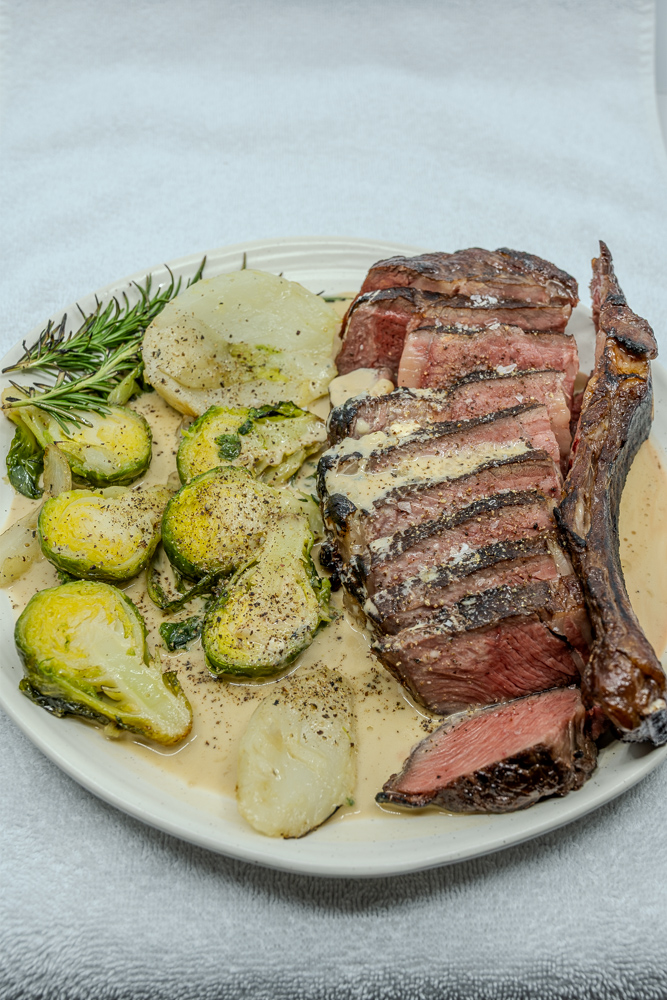
    1. Transfer the sliced meat to a dinner plate.
    2. Place the fennel and Brussels sprouts next to the meat.
    3. Spoon the sauce over and next to the meat.
    4. Season with salt and pepper.
    5. Don’t forget to gnaw on the bone.

    Thoughts on the meal

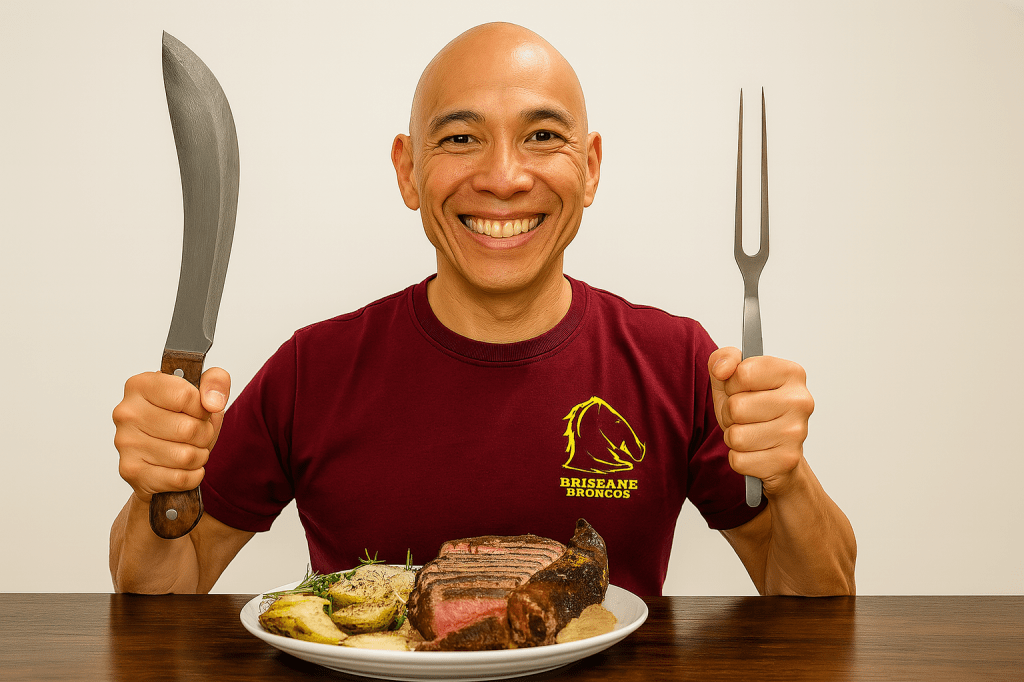
    I enjoyed eating the steak. It was tender and flavoursome. The sauce complemented the beef. The fennel and Brussels sprouts also complemented the funkiness of the sauce.

    Gnawing on the bone at the end was delicious.

    Photographs

    This is a gallery of images. Select one and scroll through the rest.

    Some of the images were created using the Microsoft Copilot.

    Questions

    • What is your opinion of daylight saving time?
    • Do you follow rugby league? Who do you want to win this year’s premiership games?
    • How do you feel about Labour Day?

    [i] This is not an economical cut of beef. I’ve been eating economy-grade steak through the week ($AUD18/kg). Tonight’s steak is a treat.

    [ii] I like to use a flaky finishing salt when serving the steak and a coarse salt when dry brining the steak.

    [iii] I like to freshly grind the peppercorns. I use a pepper mill but if you want a better experience grind the peppercorns with a pestle in a mortar.

    [iv] I buy New Zealand grass-fed butter from Costco because it’s cheaper than grass-fed butter found in regular supermarkets.

    [v] I buy pure pouring cream from Fleurieu Milk on the Fleurieu Peninsula. This cream has no thickeners or additives.

    [vi] I try to buy cream cheese with the least number of additives on the label.

    [vii] I like English Stilton. It has great flavour (the combination of taste, smell, and texture).

    [viii] I recommend a good quality steak knife. A steak knife should be sharp, and it should cut the steak with minimal effort. “Sawing” a steak means the knife isn’t sharp enough.