I had mentioned to someone a few weeks ago that I was enjoying a pickled gherkin with lunch when I made an open sandwich. It was suggested that the liquor[i] from the jar shouldn’t be discarded because it could be used for slow-cooking corned beef.
I had about a cupful of pickle liquor, so I thought I’d give it a go.
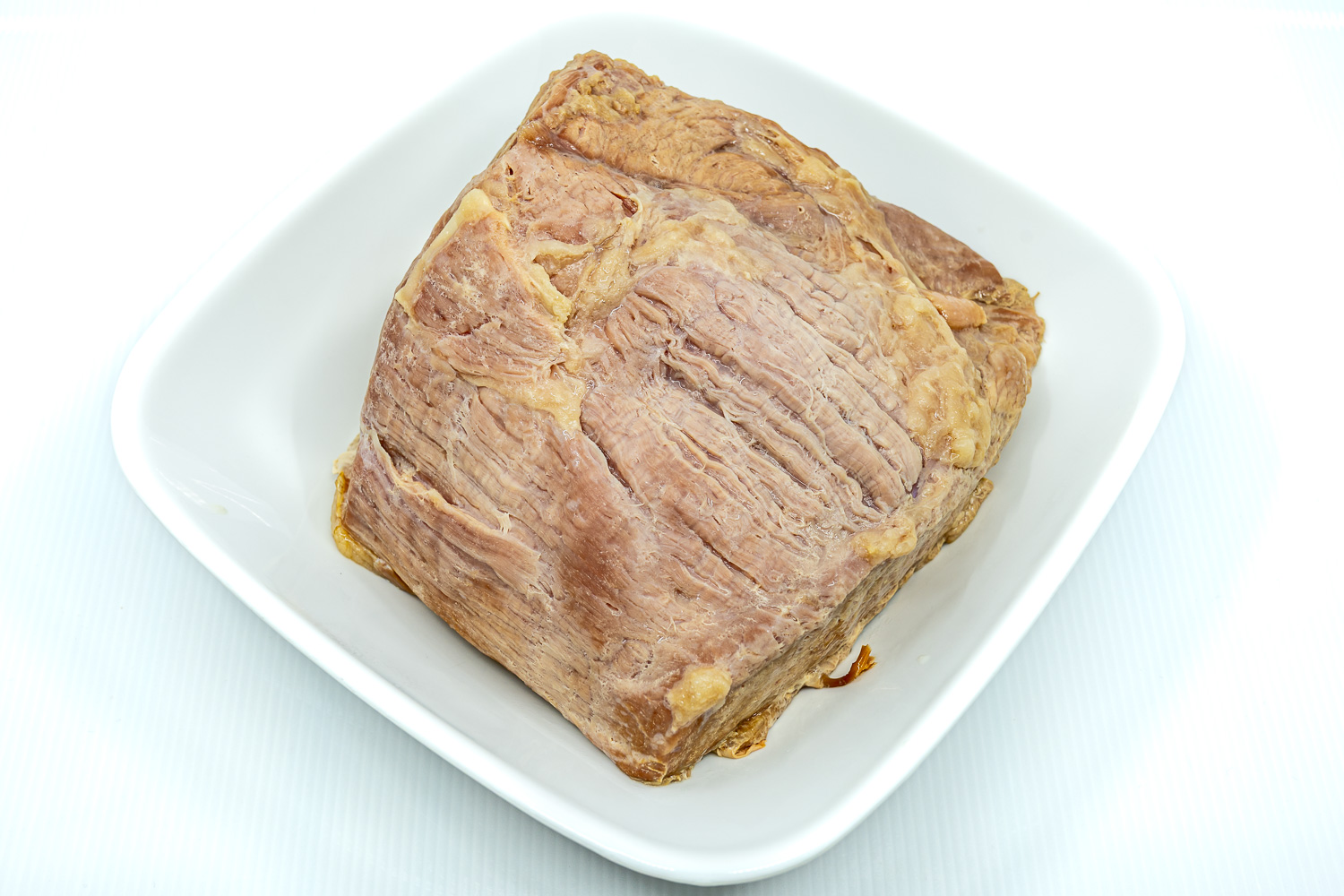
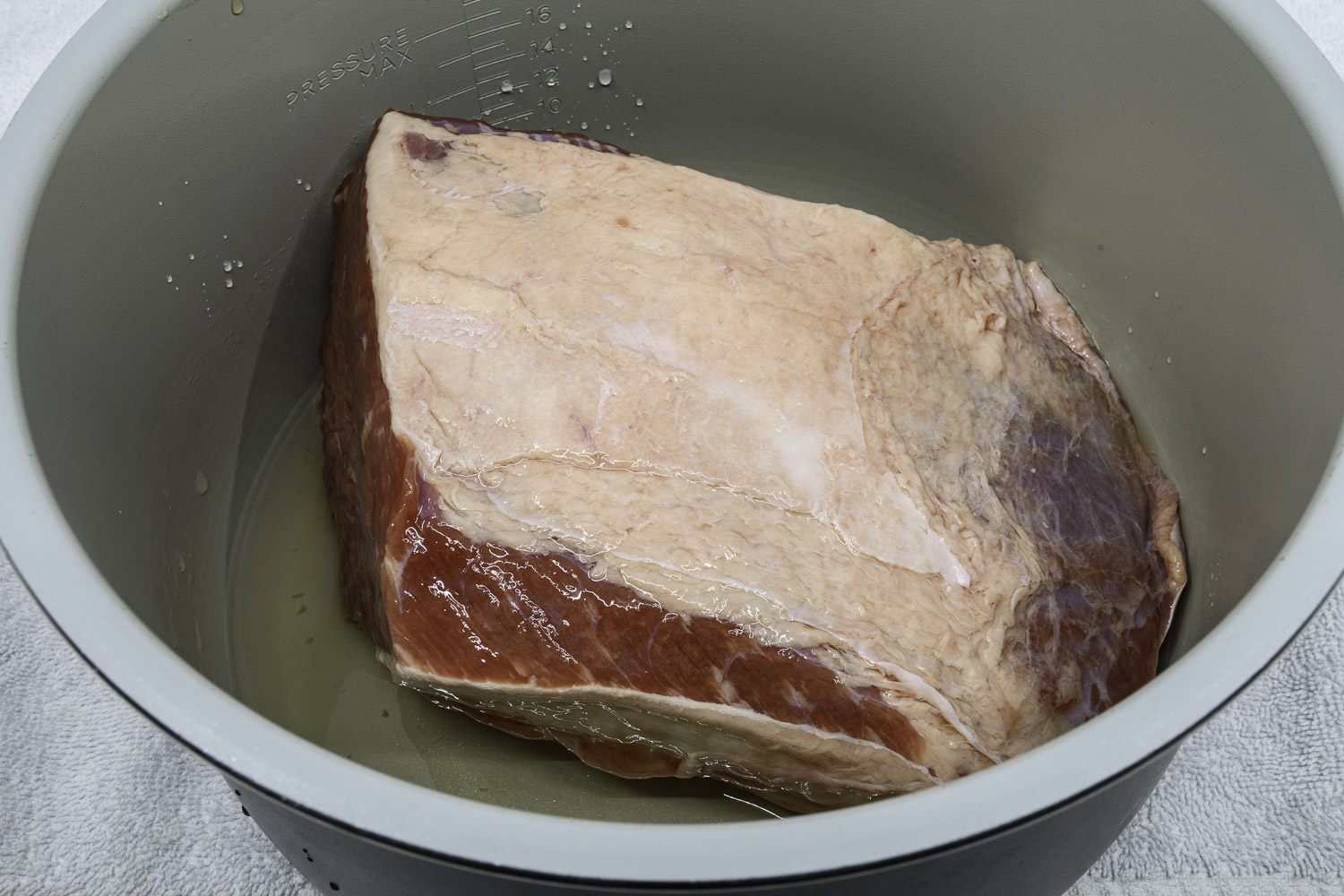
I bought a piece of corned silverside[ii] (roughly 2 kg at $AUD10/kg) and slowly cooked it with the pickle liquor.
Recipe
Ingredients
Corned beef silverside
Pickle liquor
Equipment
Slow cooker
Instructions
Place the beef into the cooking vessel.
Add the pickle liquor.
Cook on low heat for 8 hours.
Remove the cooked corned silverside and refrigerate.
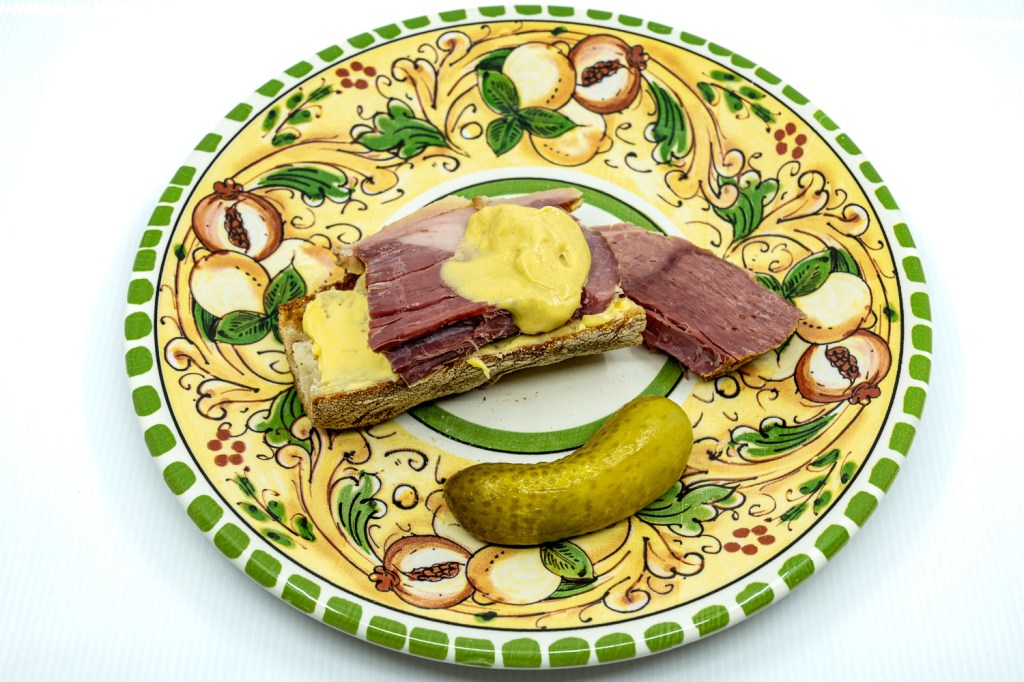
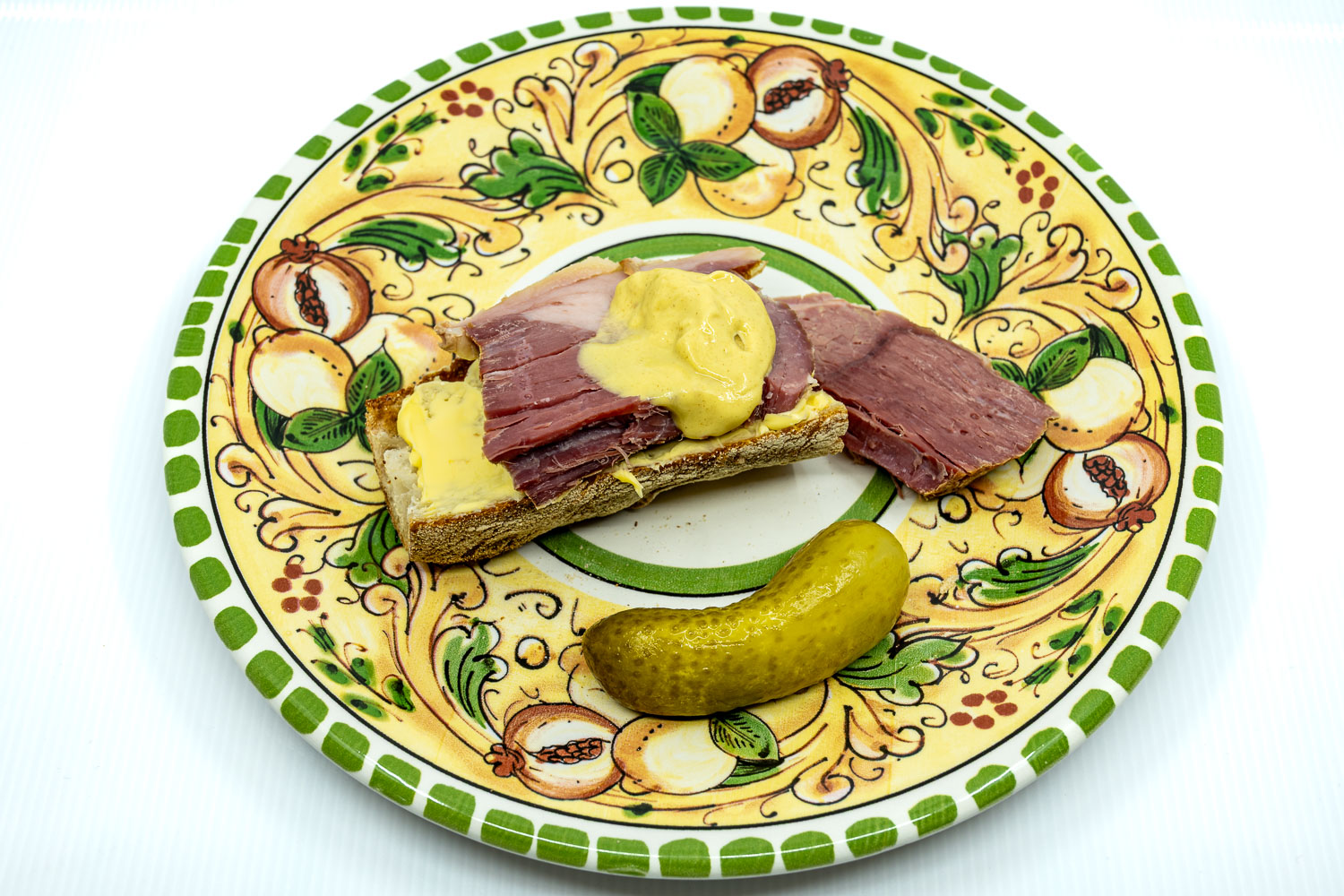
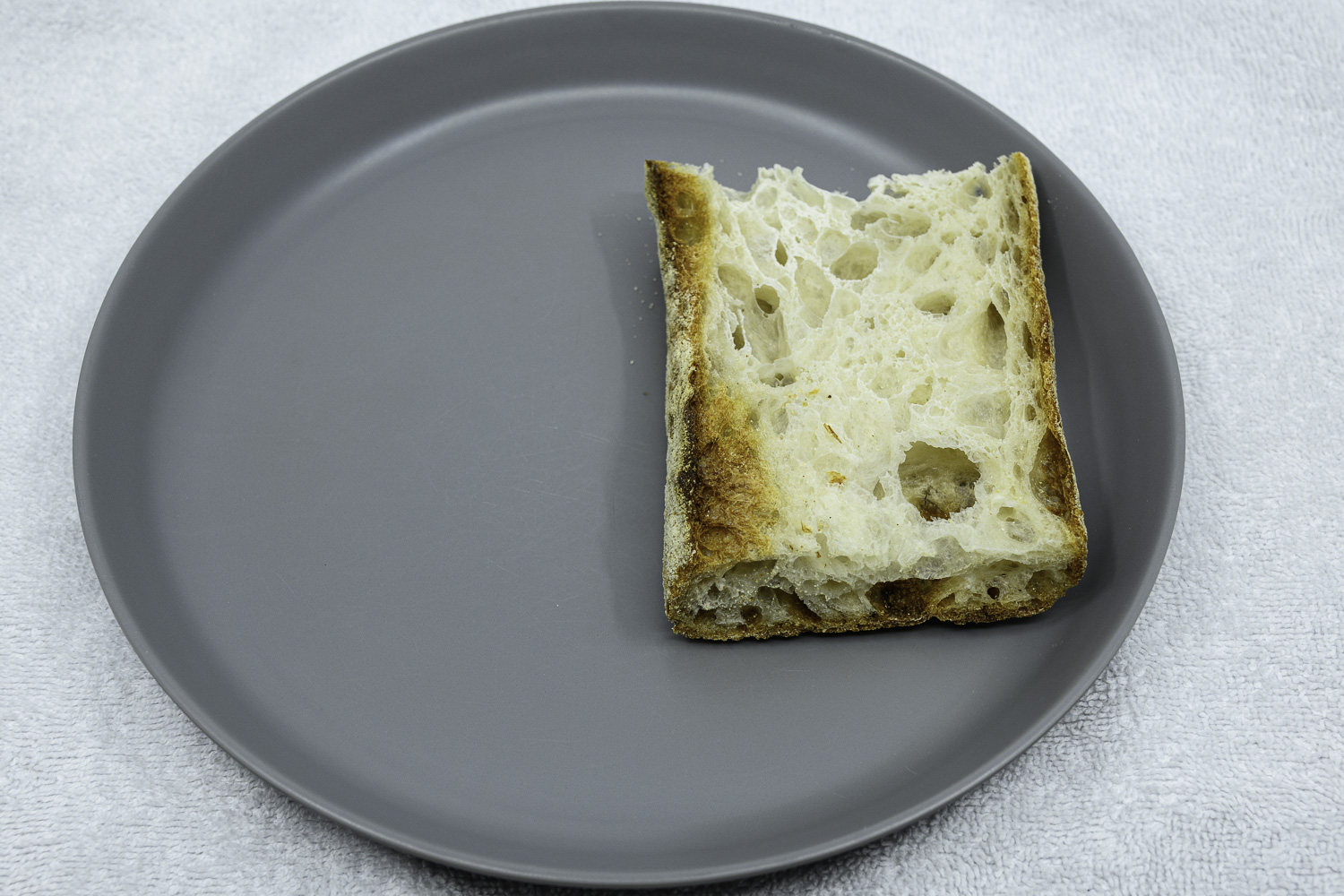
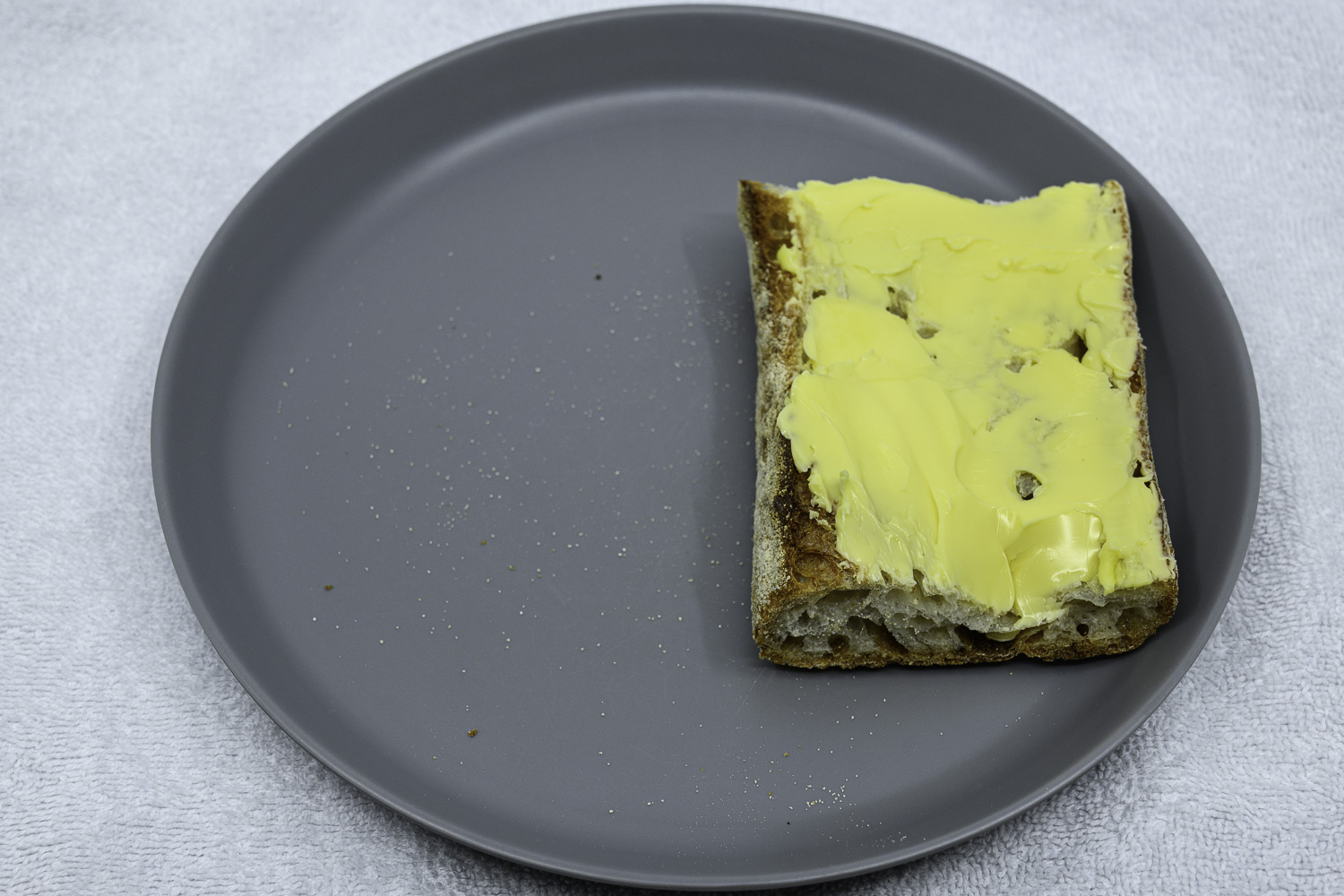
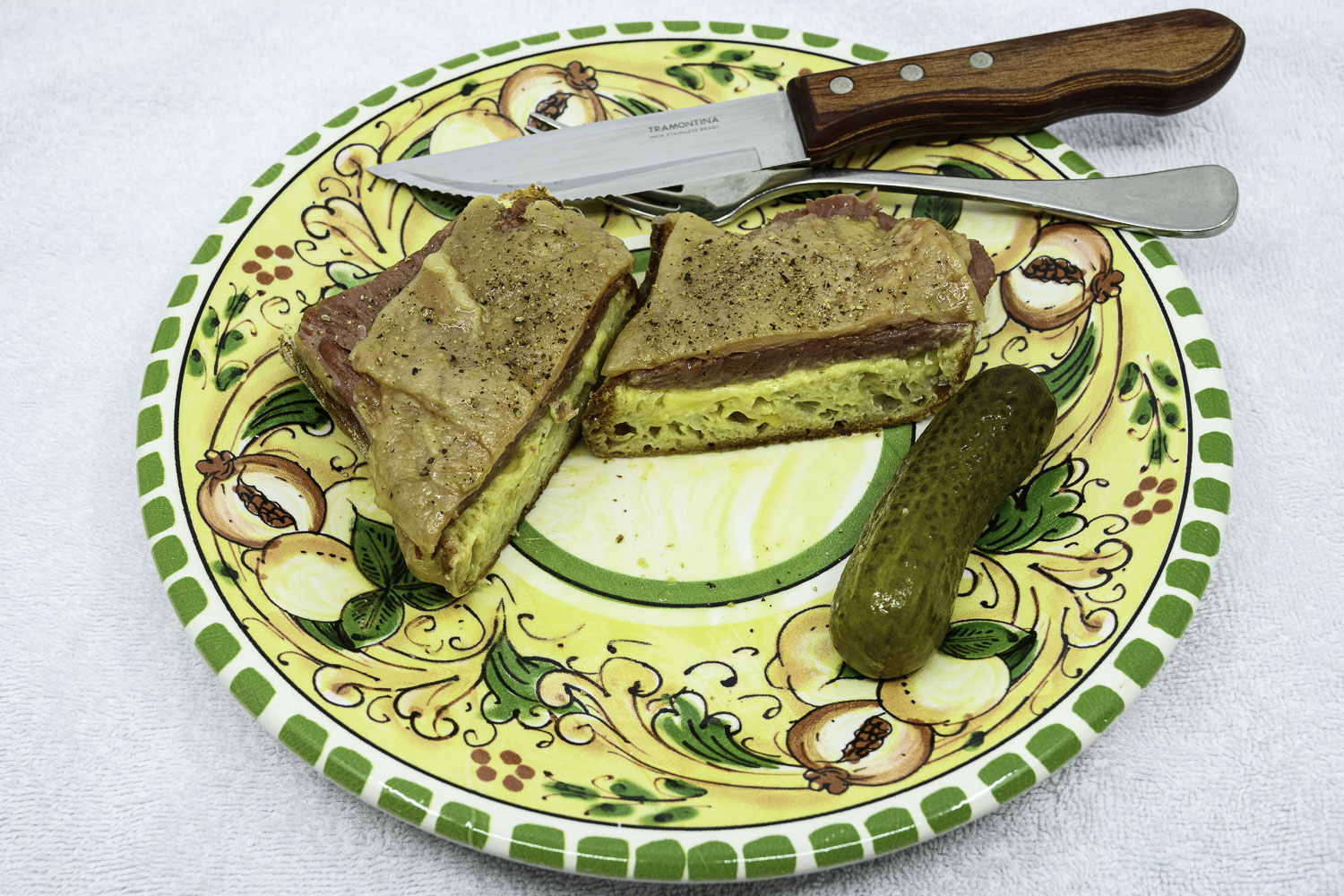
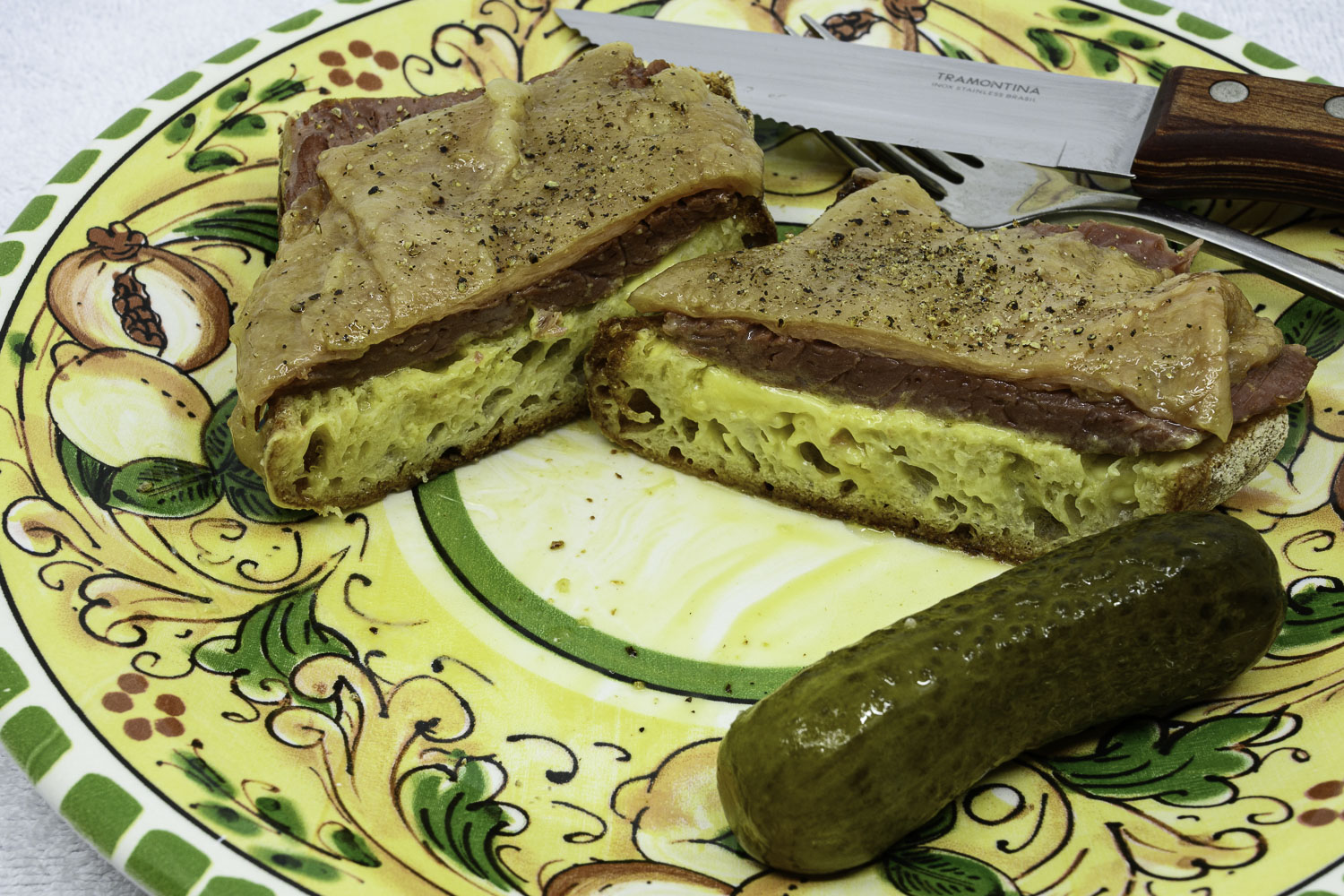
Cut a slice of corned beef and place it on a piece of buttered sourdough bread[iii].
Serve with some mustard and a pickled gherkin[iv].
Photographs
For lunch, I had tinned corned beef.
For tea, I had the slowly cooked corned beef silverside.
Here are the photographs for comparison.
Thoughts on the meal
I enjoyed the corned silverside. This version tasted better than my recent effort.
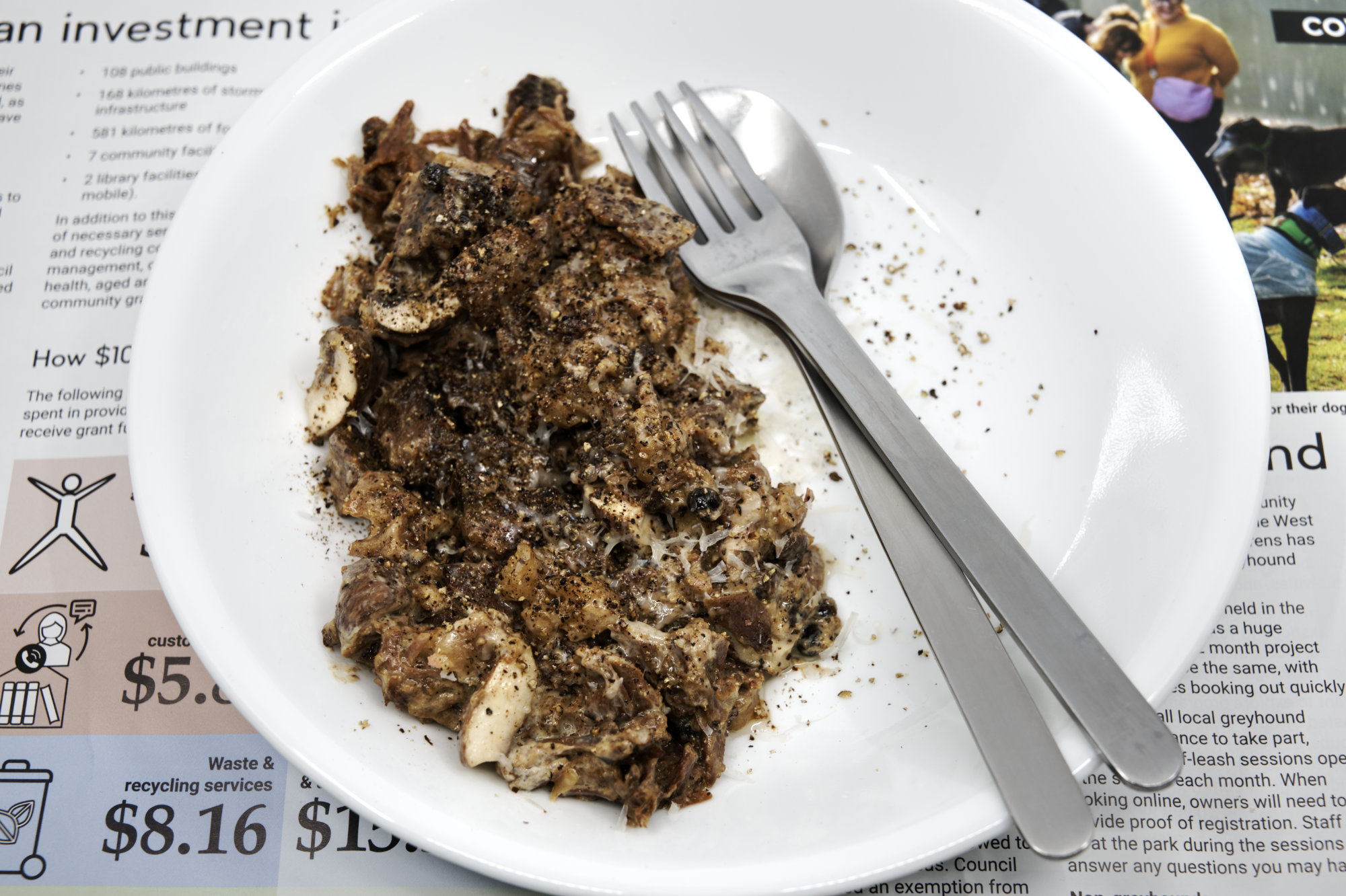
I used the last of the slowly cooked corned beef silverside, which had been prepared with pickle liquor. I diced the meat along with some gherkins and cooked them in the corned beef cooking liquid. Then, I added mustard, cream, and some cheese.
I used the last of the slowly cooked corned beef silverside, which had been prepared with pickle liquor. I diced the meat along with some gherkins and cooked them in the corned beef cooking liquid. Then, I added mustard, cream, and some cheese.
[i] Did you know that pickle liquor is a strong acid solution used in metalworking to clean and descale metal surfaces? Pickle juice is the salty, acidic liquid used to preserve pickles—typically made from water, vinegar, salt, and spices. I like (and prefer) the word liquor because it means liquid in which something has been steeped or cooked.
[ii] Beef silverside is a large, lean cut from the hindquarter of a cow, known for its coarse texture and low in fat content. It’s popular in Australia, the UK, and New Zealand for roasting, corning, or making biltong.
[iii] Sourdough bread is a naturally leavened bread made using wild yeast and lactic acid bacteria, giving it a tangy flavour and chewy texture.
[iv] A gherkin is a small, bumpy cucumber variety that’s typically pickled and enjoyed for its crisp texture and tangy flavour.
In the old days (when I was fat[i]), I would cook corned[ii] beef[iii] with vegetables, mustard, garlic, onions, and additives like Worcestershire sauce. I’d eat it with a white sauce made with refined (read ultra-processed) white flour. I usually have boiled potatoes or potato mash with corned beef and white sauce.
More recently, if I want corned beef, I buy it in a can[iv] and make a corned beef hash (sans spuds[v] and onions). A lot of people give me a condescending attitude when I mention my consumption of canned corned beef. Their scorn and derision humour me.
This version is simple and is a low-carbohydrate, minimalist version of corned beef. Apart from the fat sandwich of course. 😉
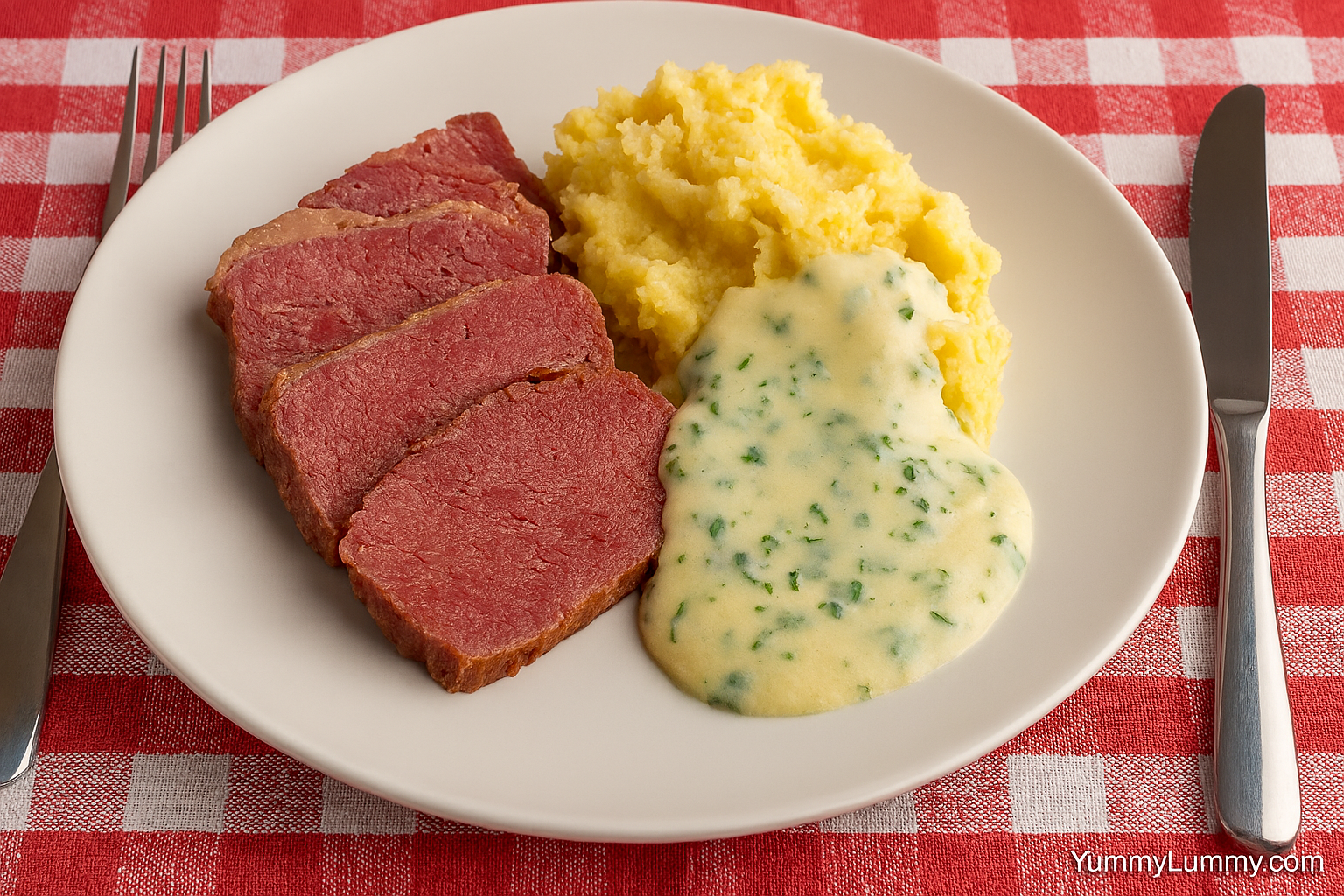
Microsoft Copilot generated image of me with a plate of corned beef, white sauce, and potato mash.
Unwrap the meat and wash it under running tap water to remove the brine and sugar.
Place the beef into the cooking vessel.
Add a cup of water.
Slowly cook on low heat for eight hours.
Remove the meat from the slow cooker.
Pass the cooking liquor[vii] through a sieve and refrigerate the broth.
With gloved hands, gently dissect the fat from the flesh using fingers to separate the layer of fat according to the fascial plane.
The fat layer makes for a fantastic sandwich on lavishly buttered white sourdough bread[viii]. There’s nothing like the sensation of the beef fat dripping down your hands and forearms as you slowly take bites from the sandwich and masticate the unctuous beef fat. The only reaction you can have is to smile.
Place the beef into a container and seal it. Refrigerate the meat.
Cut the cold meat into lunch-sized portions.
Dice a portion of cold corned beef and place the diced meat in a frypan.
Add beef broth or water to the frypan and bring it to a simmer until the meat fibres start to separate and soften.
After the water has mostly evaporated, turn off the heat, add a dash of cream and stir.
Beef silverside fat sandwich.
Ingredients
Cooked corned beef.
Frozen sourdough baguette — thawed.
Grass-fed butter
Freshly cracked pepper corns
Dijon mustard
Instructions
Trowel butter onto a piece of thawed sourdough bread. Freezing sourdough bread develops resistant starch.
Add dollops of Dijon mustard.
Apply a layer of warm fat.
Season with freshly cracked peppercorns.
Cover your lap with a large dish drying cloth and wear a bib.
Roll up your sleeves and get stuck into the sandwich.
Rejoice in the feeling of the fat running down your chin and down your forearms.
These are a gallery of photographs. Select one image and scroll through the rest.
Thoughts on the meal
I enjoy corned beef hash[x]; it’s a dish I grew up with. Among many other meals, my dad would often make it. He learned to prepare it during his boyhood in the South Pacific during World War II, where fresh meat was hard to come by. The only options available were tinned meat or local game.
A piece of corned silverside is an affordable option for bulk meat in lunches.
This piece of beef cost approximately $AUD20, or $AUD10/kilogram. If I can get four meals (possibly six meals), it will work out to about $AUD5/meal.
The first meal (the fat sandwich) for this piece of beef brought back some great memories when Mum would make corned beef and I’d get the fat and make a sandwich. I savoured every bite of this open sandwich and enjoyed the contrasting flavours of the pickle.
Questions
Do you like corned beef?
Do you like fat sandwiches?
How would you make a fat sandwich?
Stay tuned
I’ll add photographs of how I use the rest of the beef during the week.
Endnotesꜜ
[i] The modern clinical term is “clinical adiposity.” I prefer the term fat because it is universally understood.
[ii] The term corned comes from the old English word corn, which referred to small, hard particles—not just cereal grains. In the case of corned beef, it refers to the large-grained rock salt (sometimes called “corns” of salt) used in the curing process.
[iii] Corned beef is a type of salt-cured beef, traditionally made from brisket.
[iv] Canned corned beef is a shelf-stable meat product made primarily from beef, but it includes ingredients to preserve flavour and texture. The ingredients include sodium nitrite, added salt, and a small amount of sugar (which is disappointing). Cooking can convert the nitrites to nitrates.
[v] “Spud” is a casual or slang term for a potato. For example, “baked spud” or “mashed spuds.” It is used in many English-speaking countries.
[vi]Beef silverside is a lean, boneless cut of beef taken from the hindquarter of the cow, specifically from the top portion of the round primal, just above the leg muscles. It’s known for its coarse grain and minimal marbling, which makes it a budget-friendly and versatile option in many cuisines.
[viii] Bread is high carbohydrate and not part of a low carbohydrate diet.
[ix] A note about the images used in this post. The featured image and a couple of other images were generated with Microsoft Copilot and ChatGPT. I’m conscious that there are some bloggers and readers who oppose the use of large language models for generating content. I’m comfortable with using large language models to help with content on YummyLummy.com
[x] Corned beef hash is a hearty, savoury dish made by combining chopped or shredded corned beef with diced potatoes and onions, then frying the mixture until it’s golden and crispy. It’s a classic comfort food with roots in frugal cooking—originally designed to use up leftovers, especially from a corned beef dinner.
The cost of living is getting higher. How many times a day do we hear or read that in the news and on social media?
The majority of posts on this blog feature expensive cuts of meat.
With the cost of food rising, I need to increase my consumption of more economical cuts. I will limit buying the more expensive cuts of meat.
Most days, lunch is supermarket bought beef mince (ground beef for North American readers).
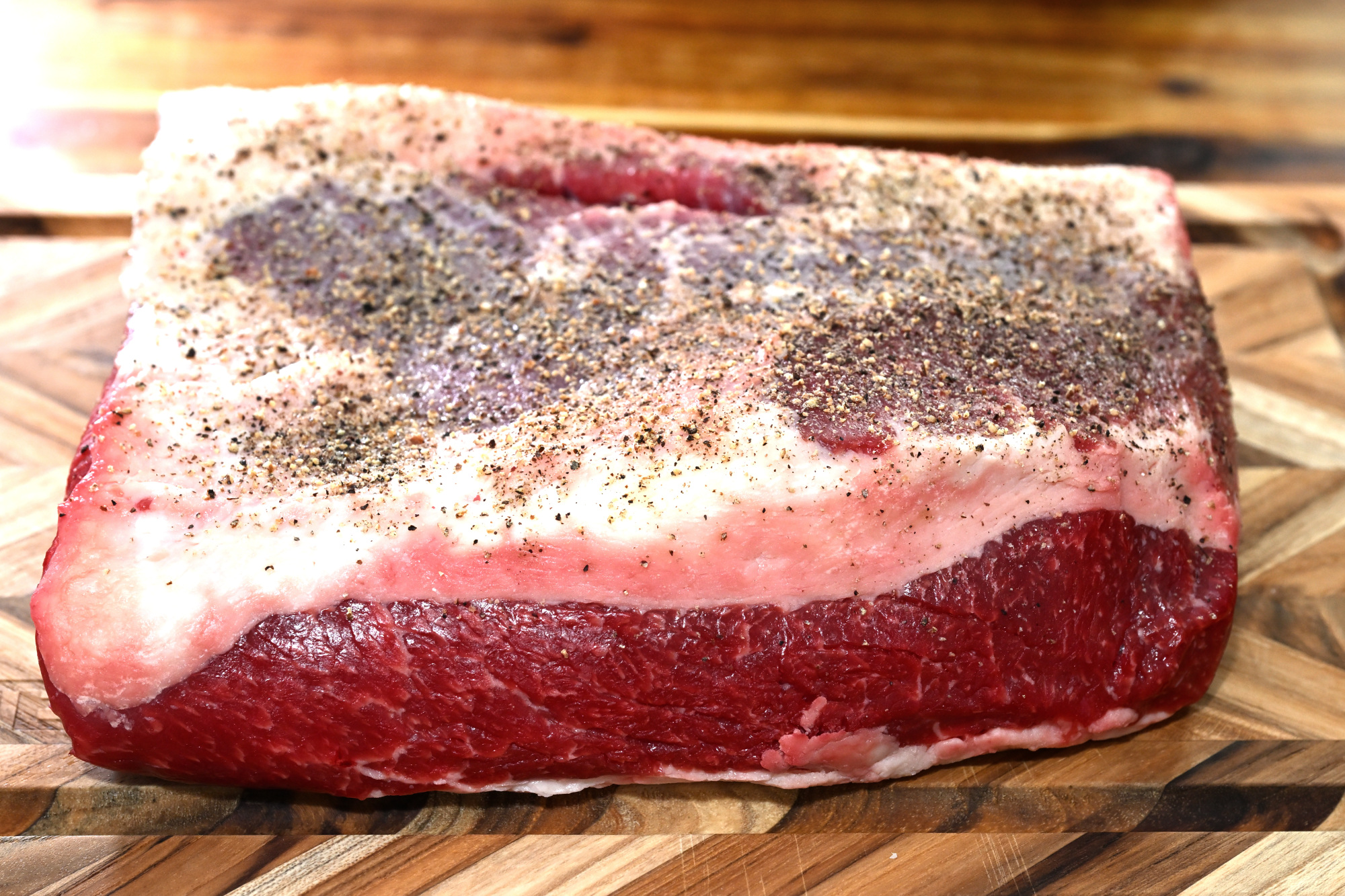
To break up the monotony, other “economical” cuts include chuck and brisket.
This beef brisket cost about $AUD30 for about 1.8 kg. That’s roughly $AUD17/kg.
Most of the scotch fillet steak or rump steak I buy is more expensive than that. This is particularly true if the meat is Coorong Black Angus beef.
This piece of brisket will give me with eight serves ($AUD3.75).
Recipe
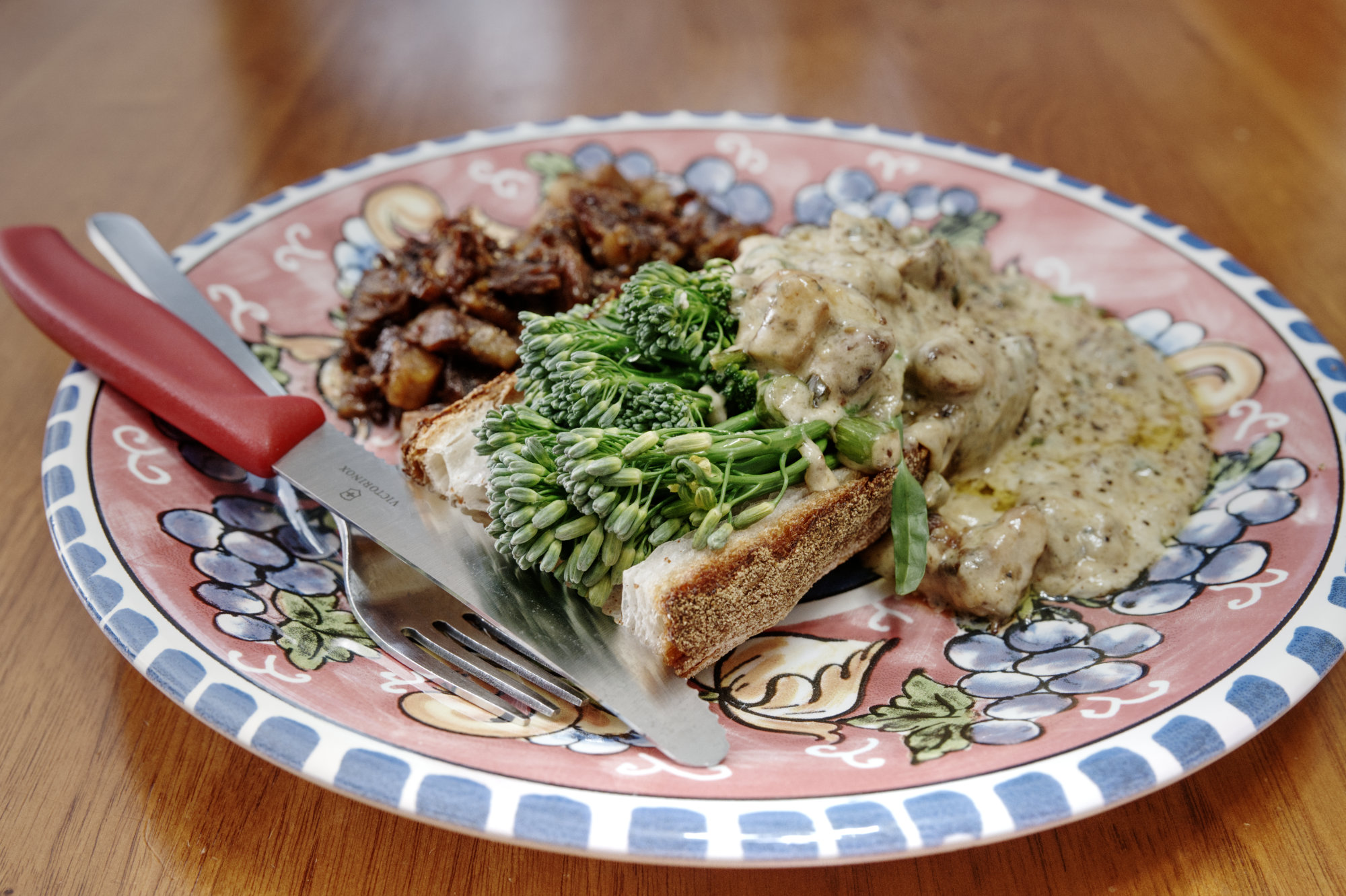
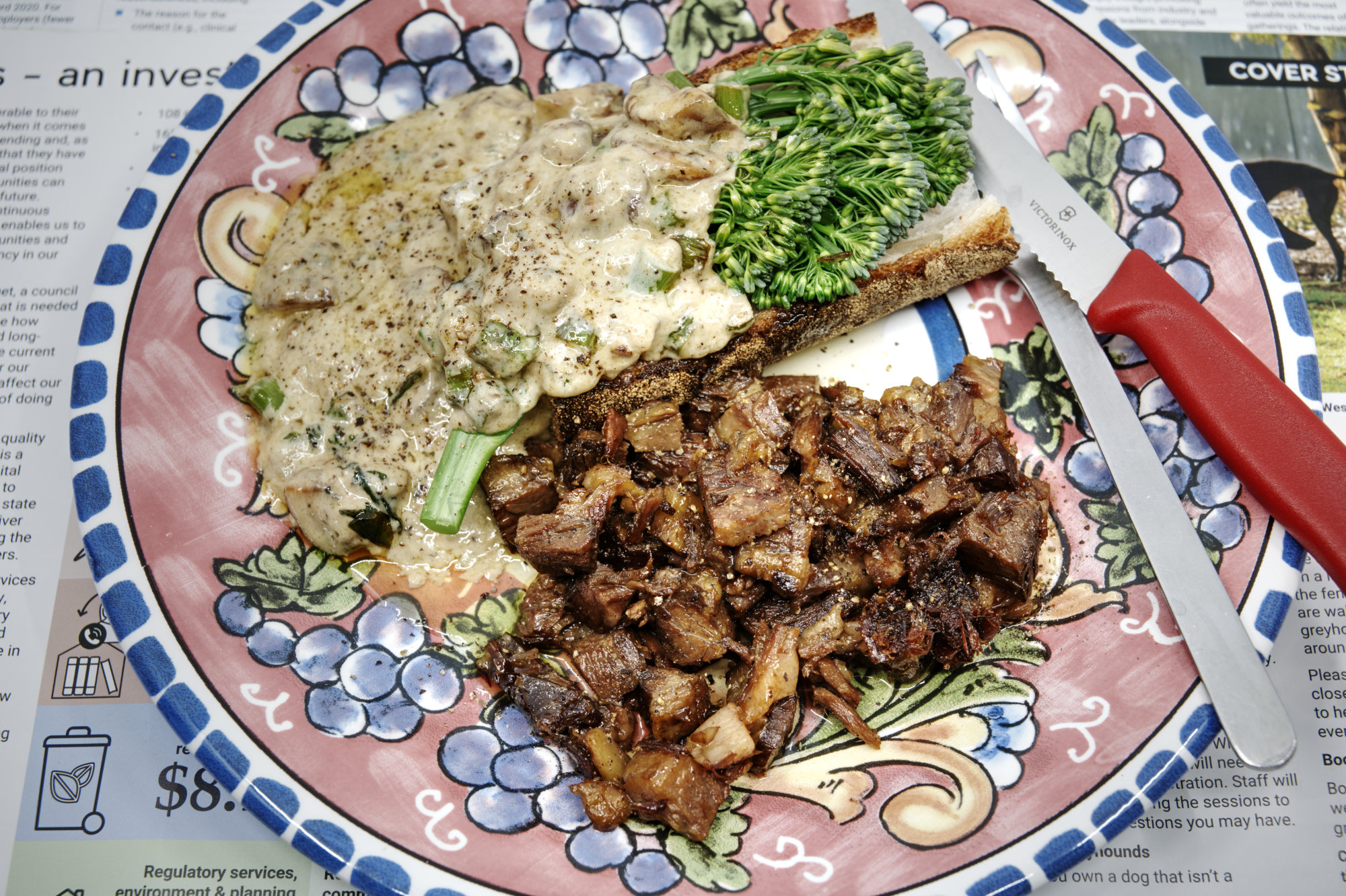
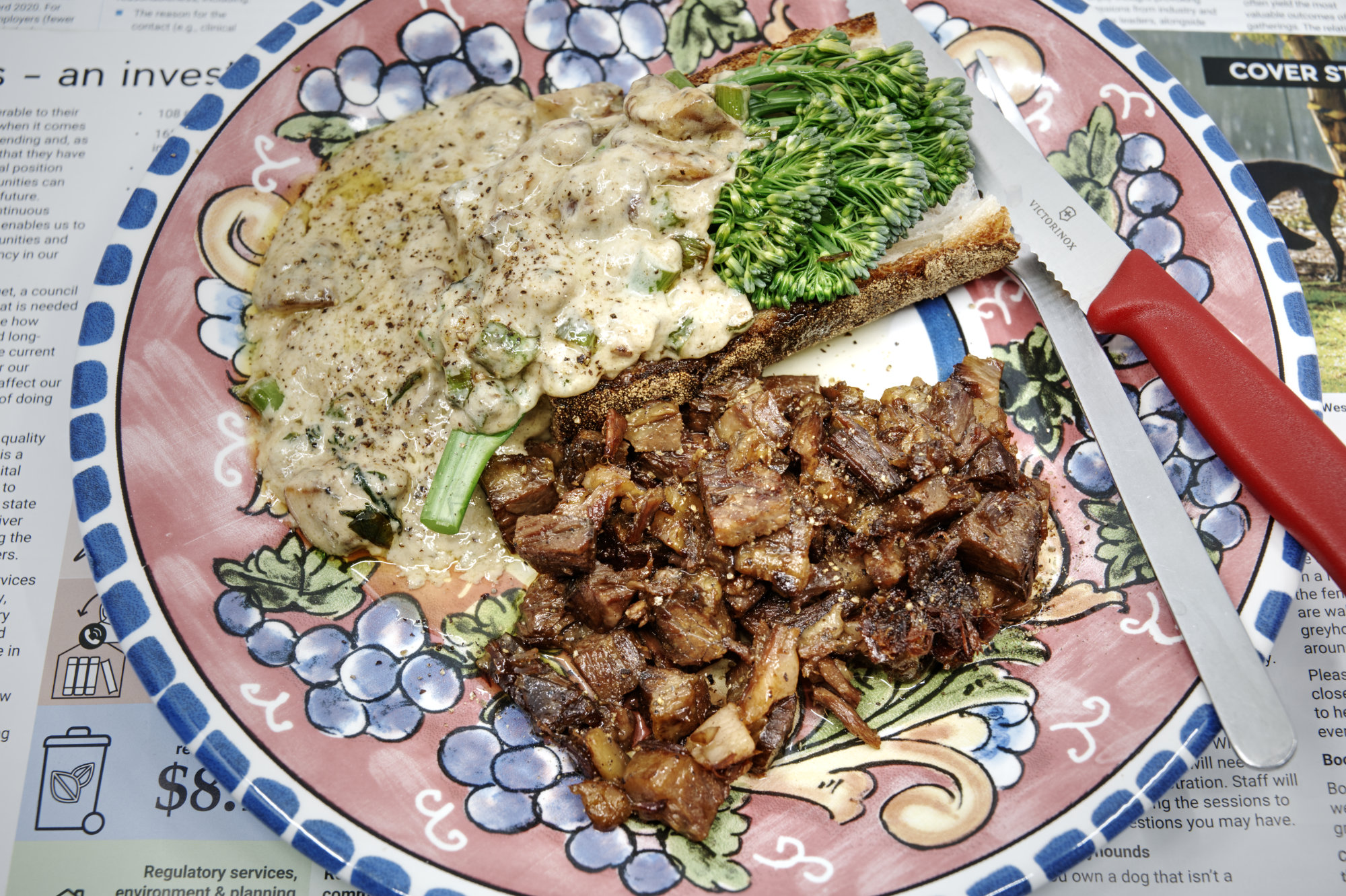
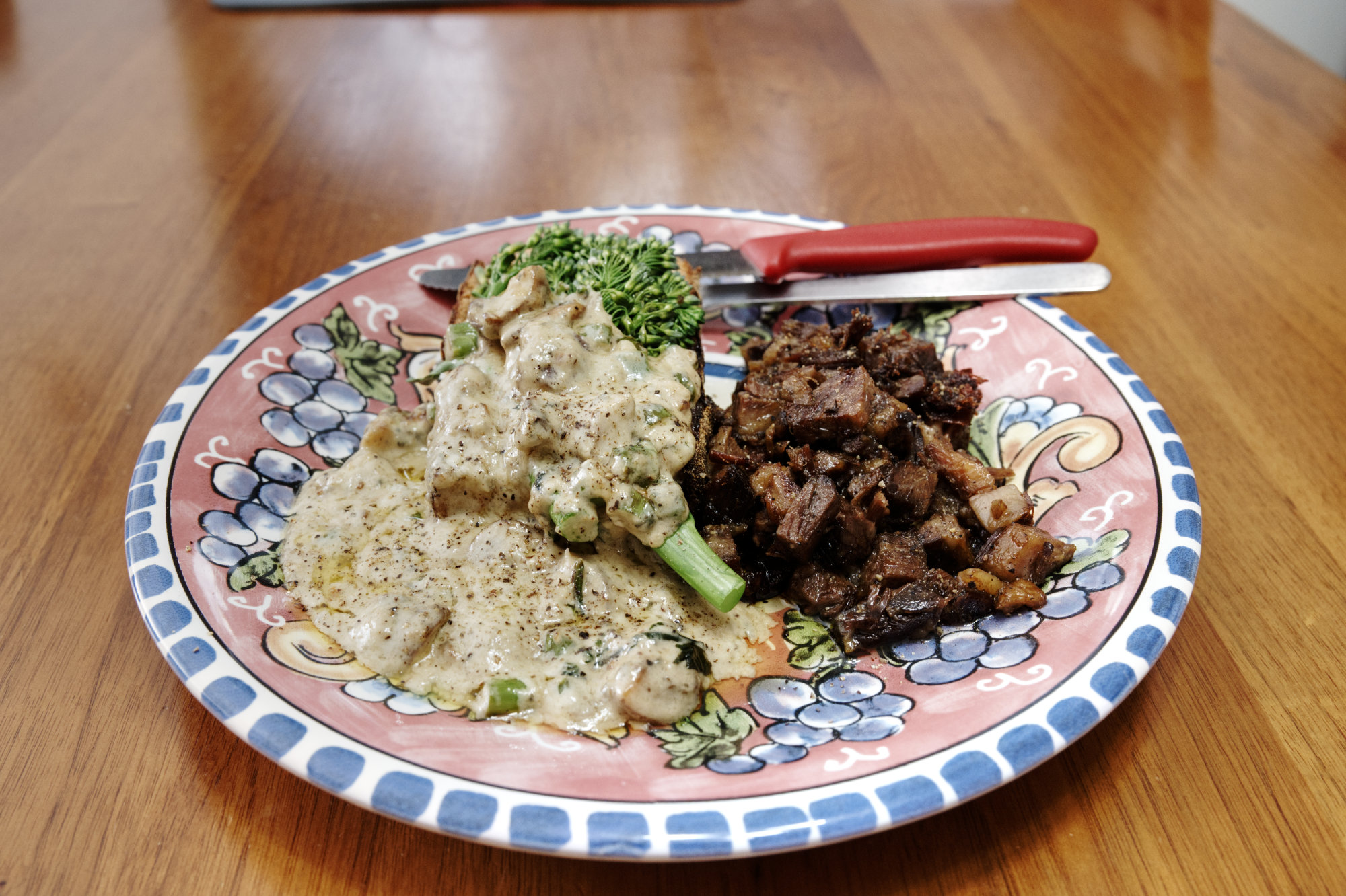
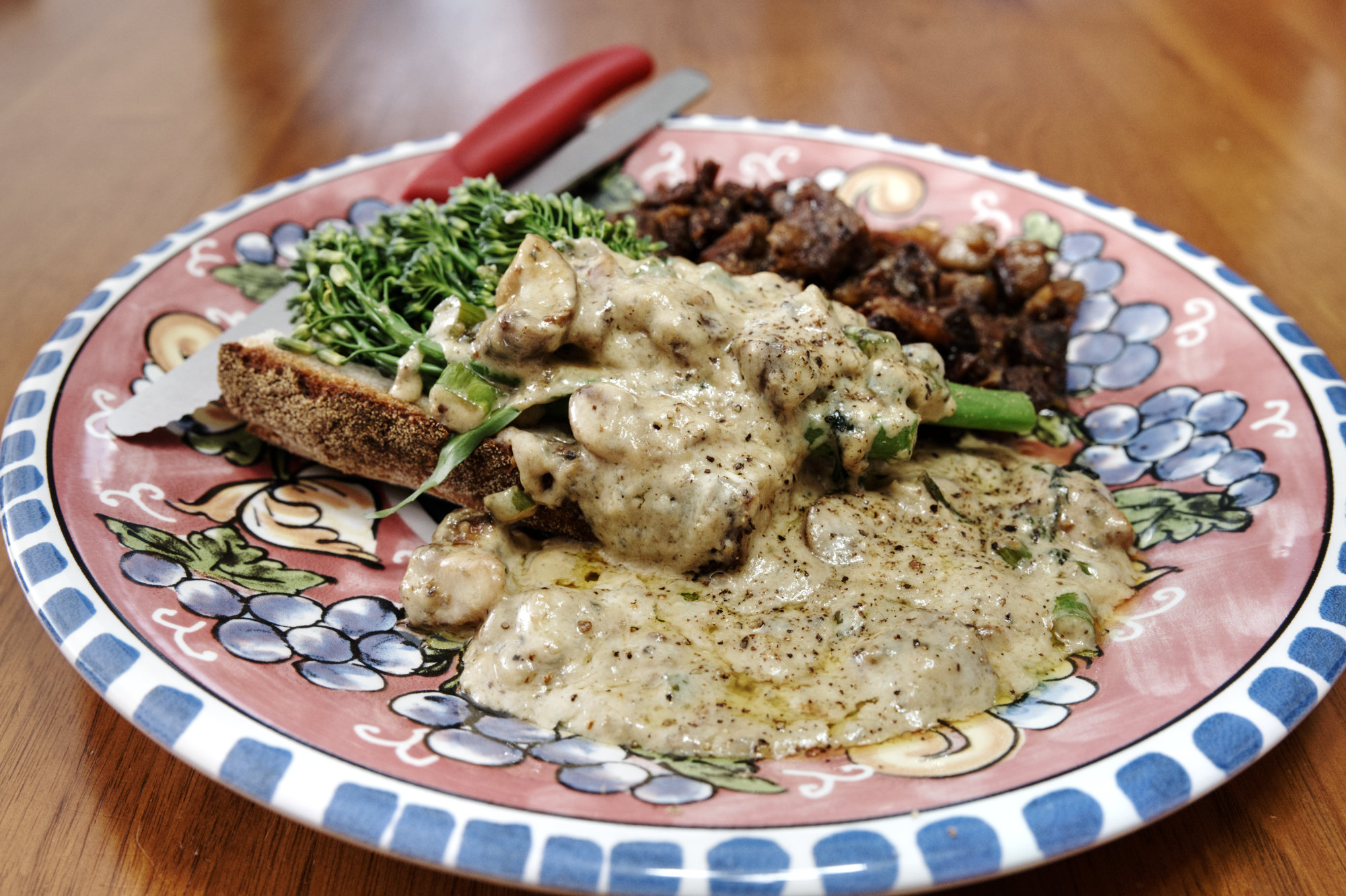
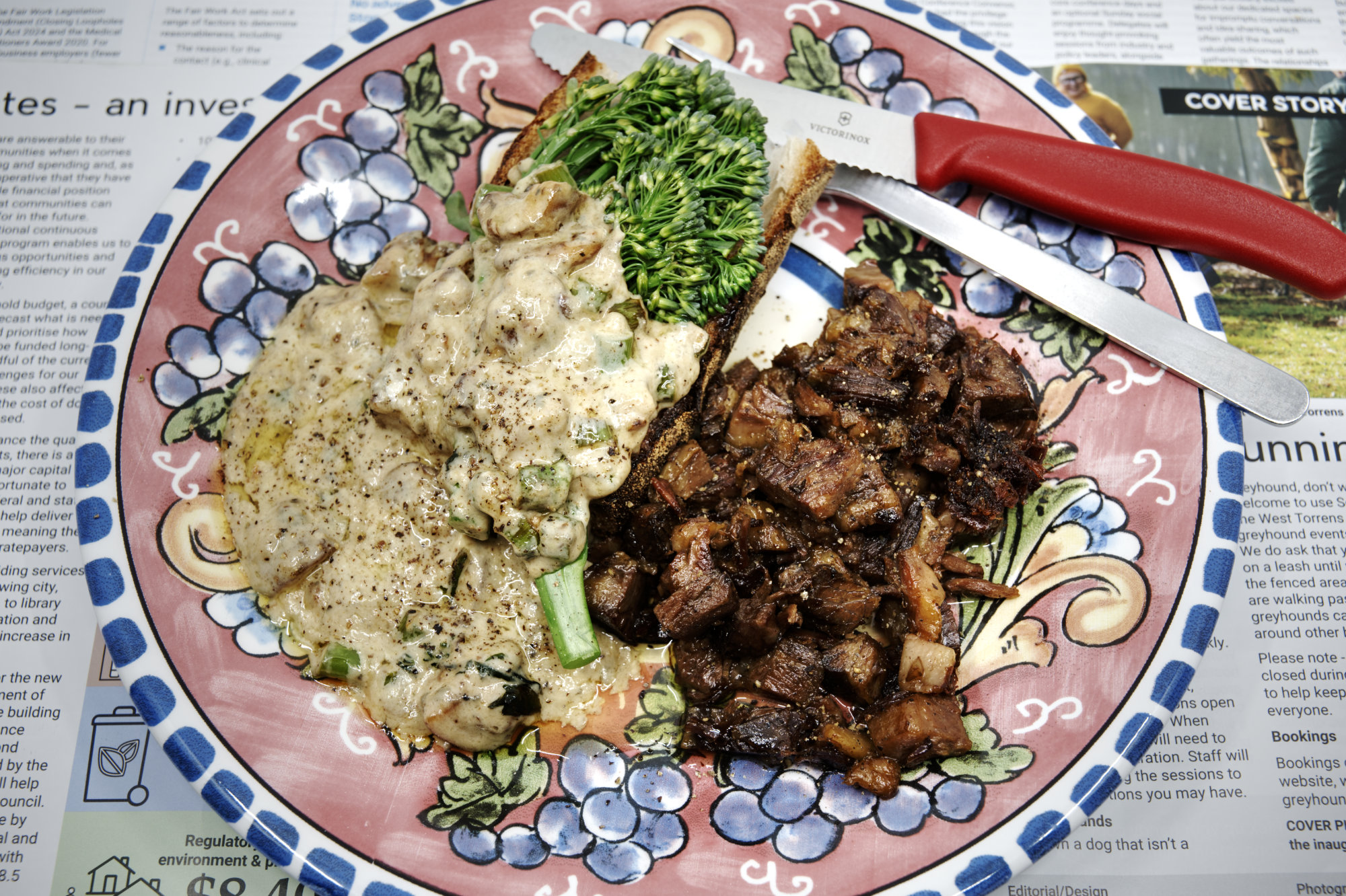
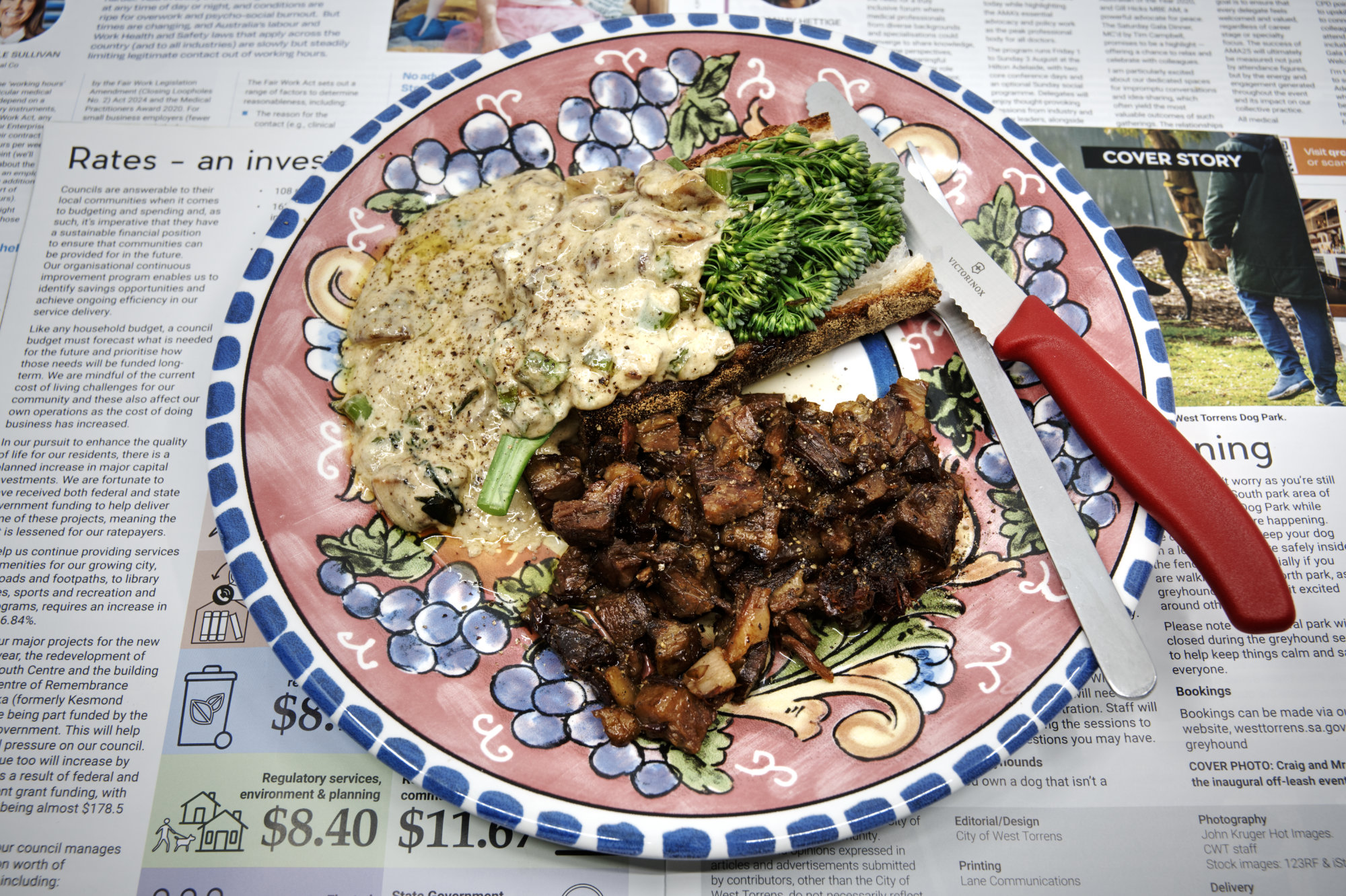
Tonight I prepared some beef brisket meat with a creamy sauce, some broccolini, and sourdough bread.
Ingredients
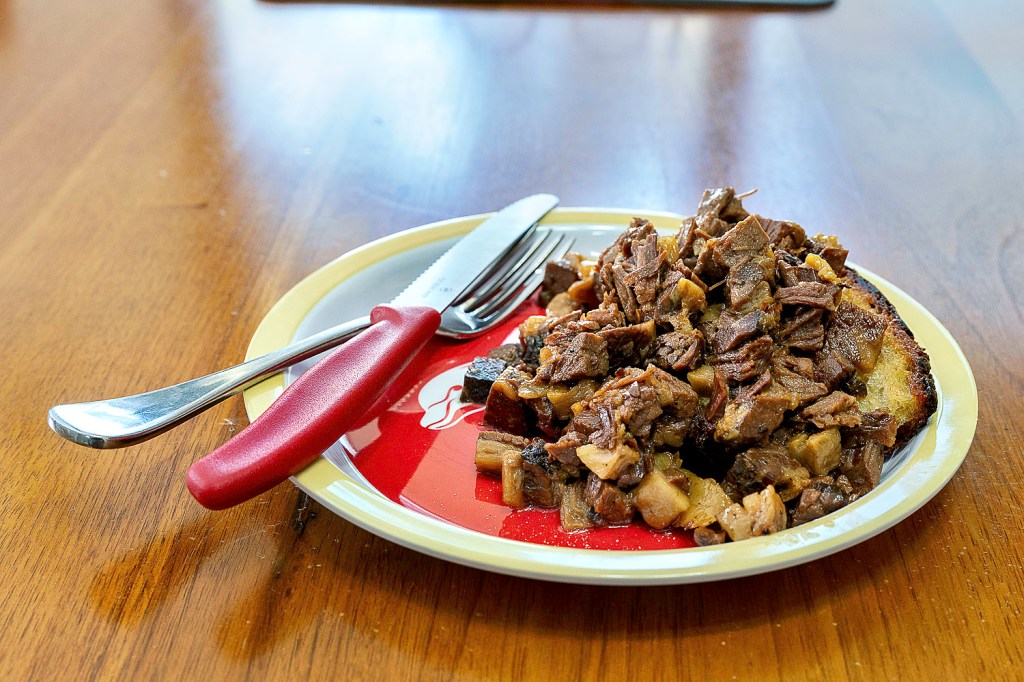
Brisket — Initially cooked in a slow cooker for 8 hours. It was then refrigerated. For this meal, the brisket is finely diced.
Sourdough bread — organic sourdough bread frozen to develop resistant starch, and then thawed and toasted.
Broccolini
Swiss brown mushrooms
Cream cheese
Blue vein cheese
Pure pouring cream
Beef fat — the fat separated from the cooking liquor from the slow cooker.
Beef broth — the cooking liquor from the slow cooker.
Butter
Equipment
Frypan
Kettle
Instructions
Add the diced beef, beef broth, and beef fat to the frypan. Gently heat the contents until the liquid has evaporated. Continue heating until the meat has softened. Set the reheated brisket aside.
Sauté the mushrooms in butter. The mushrooms will soften when they have absorbed the water from the butter. Then, add crumbled blue vein cheese and the cream cheese. Stir slowly and thoroughly. Finish with a dash of pure pouring cream and season with freshly cracked black peppercorns.
Parboil the broccolini with boiling water from the kettle.
Place the toasted sourdough bread on a dinner plate. Place the broccolini on the toast. Spoon the brisket next to the bread. Spoon the sauce over the broccolini and bread and let the rest settle next to the meat.
Thoughts on the meal
While beef short rib meat is more unctuous, as a cheaper cut, brisket is pretty good.
Beef and blue vein cheese go well together and combine well on the toast which adds a crunchy mouthfeel.
The broccolini adds some colour to the dish.
Photographs
These are photographs of the meal. Select one and then scroll through the rest.
Questions
What is your favourite “cheap” cut of beef?
Do you like brisket? How do you cook it?
Do you eat leftovers for lunch?
Some of the other meals from this brisket
Other photographs
Some other photographs from this week.
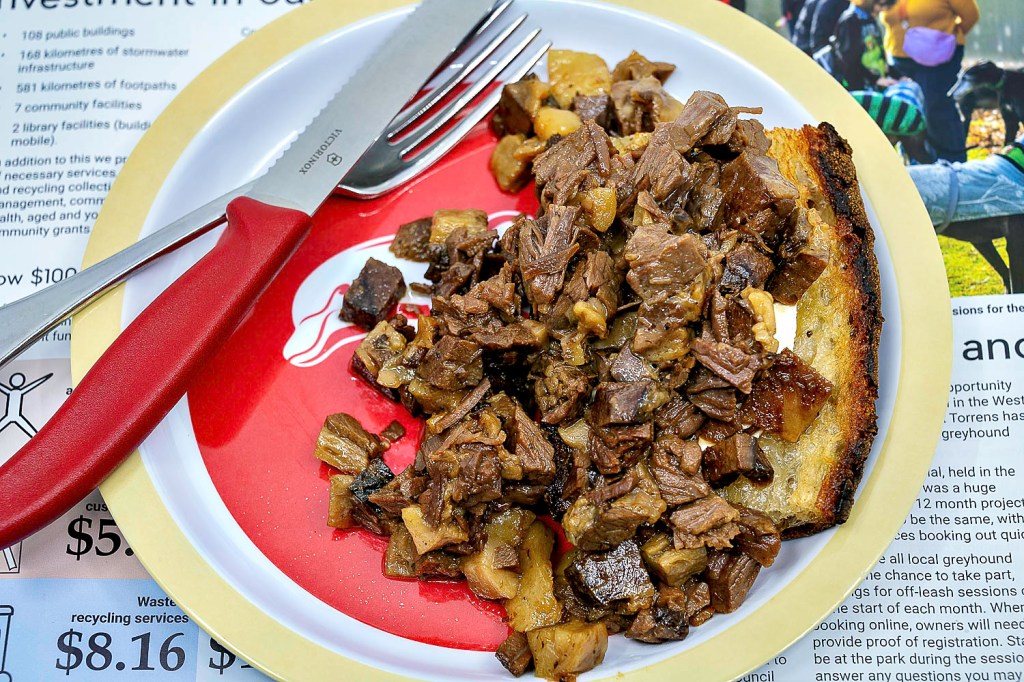
Beef brisket. Slowly cooked beef brisket reheated in a frypan with beef fat and beef broth. Served on sourdough bread, which had been frozen to develop resistant starch. The photograph features a Dolphins NRL plate.
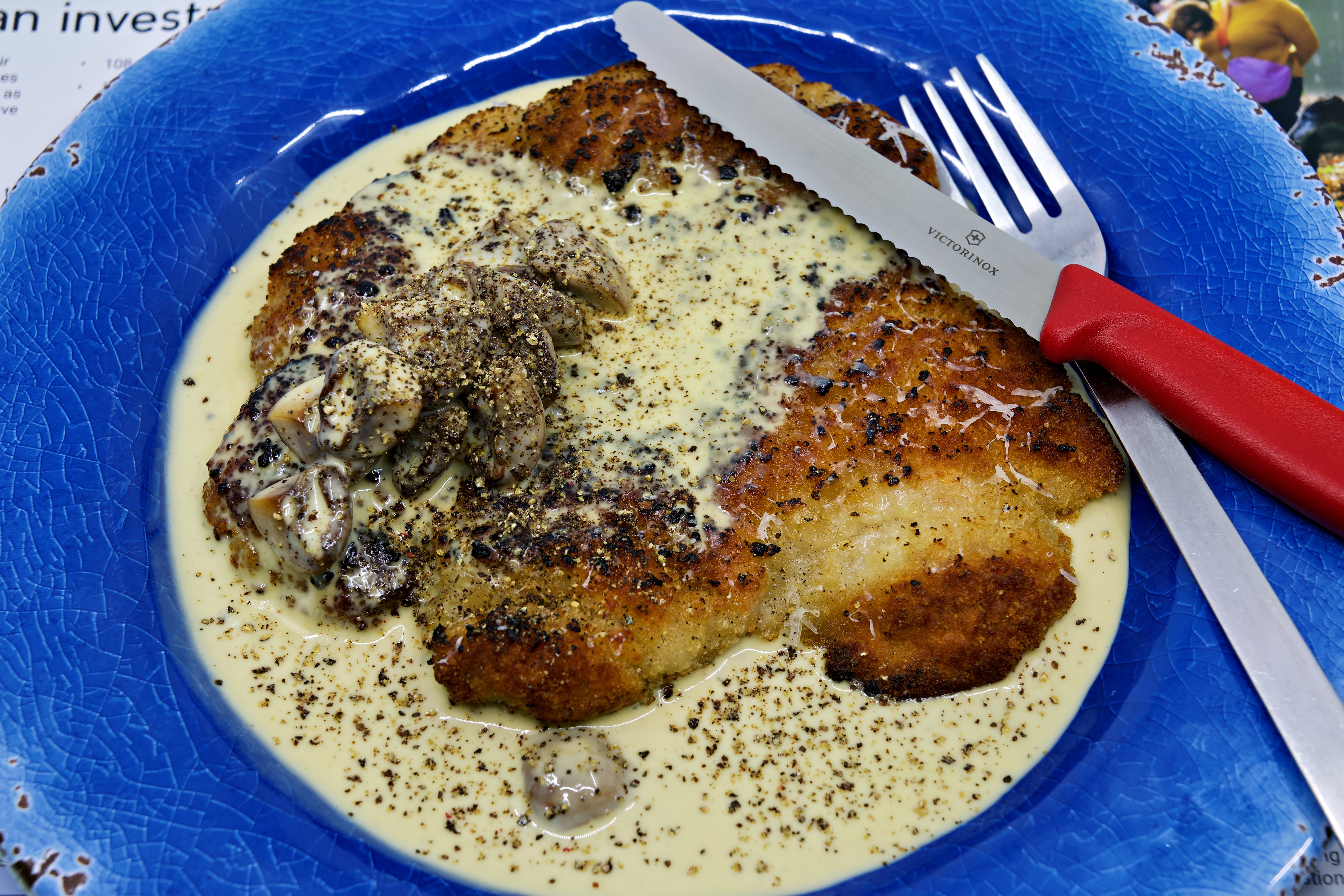
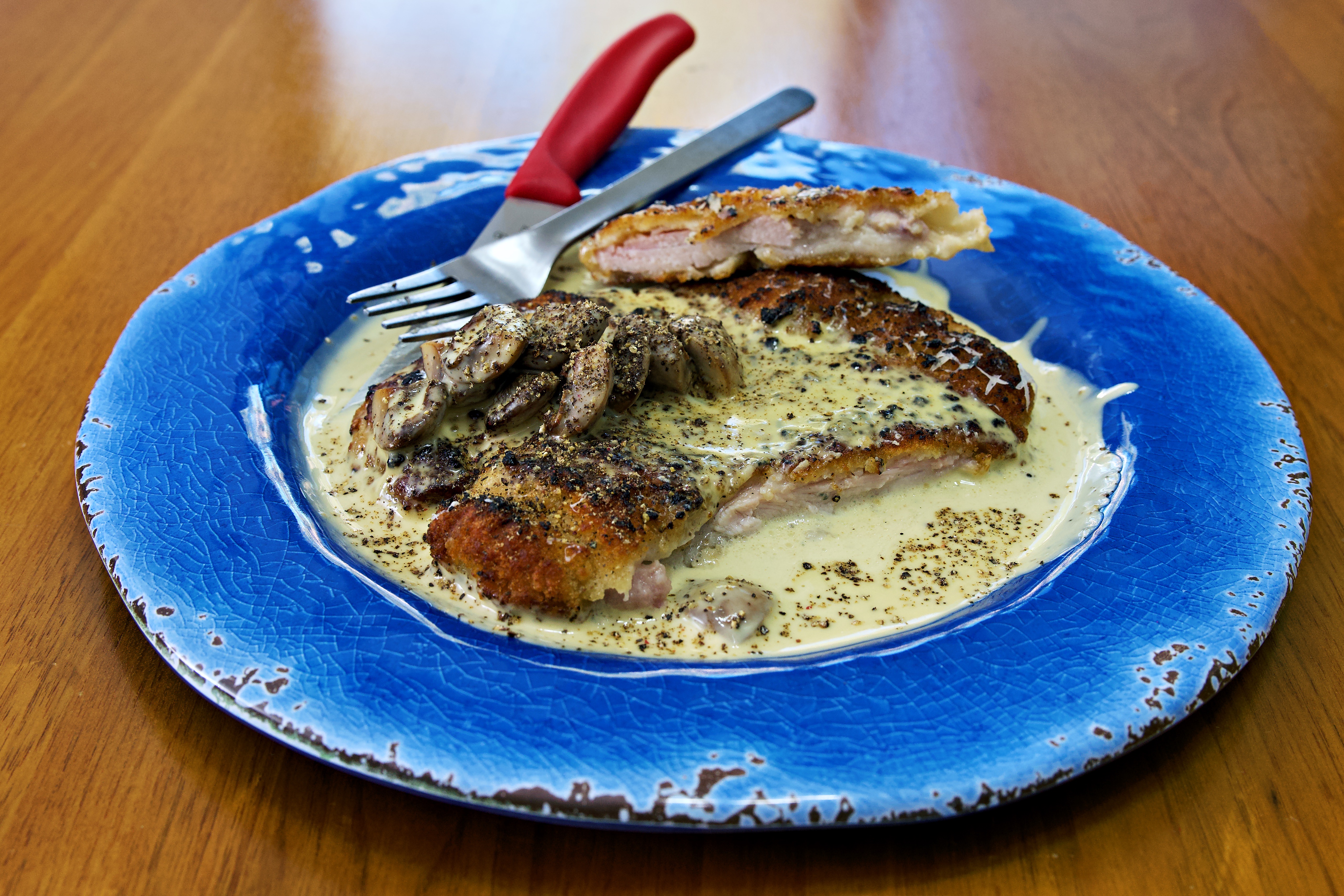
Tonight’s meal is not elaborate. I bought the chicken from my butcher, so I didn’t create the crumbed chicken from scratch. I did make the sauce from basic ingredients.
Normally, I wouldn’t eat crumbed chicken (or any crumbed meat for that matter). I felt like celebrating.
I had a pretty good week. I spent a couple of days in Melbourne for work, and last night my footy team, viz., the Dolphins, defeated the Warriors in a tight game. While we led early, we were behind for much of the game and almost the entire second half. A last-minute try sealed the win. The win, however, came at a significant cost. Herbie and Jamayne are injured. Herbie’shamstring injury may see him out for six weeks. Jamayne strained his groin early in the match and struggled with goal kicking. If he’s out for a few weeks, we’ll feel it. While not injured, Felise was sent to the sin bin for ten minutes at the end of the game. He’s just returned from a two-week suspension, and he may be suspended again. He’s a tough player and, in my opinion, the victim of circumstance.
Recipe
Ingredients
Crumbed chicken (thigh)
Beef fat
Pure pouring cream
Blue vein cheese
Swiss brown mushrooms
Butter
Black peppercorns
Equipment
Frypan
Saucepan
Barbecue grill
Instructions
Chicken
Heat the barbecue grill.
Melt some beef fat on the grill plate.
Cook the chicken for 5 minutes on each side.
Mushroom sauce
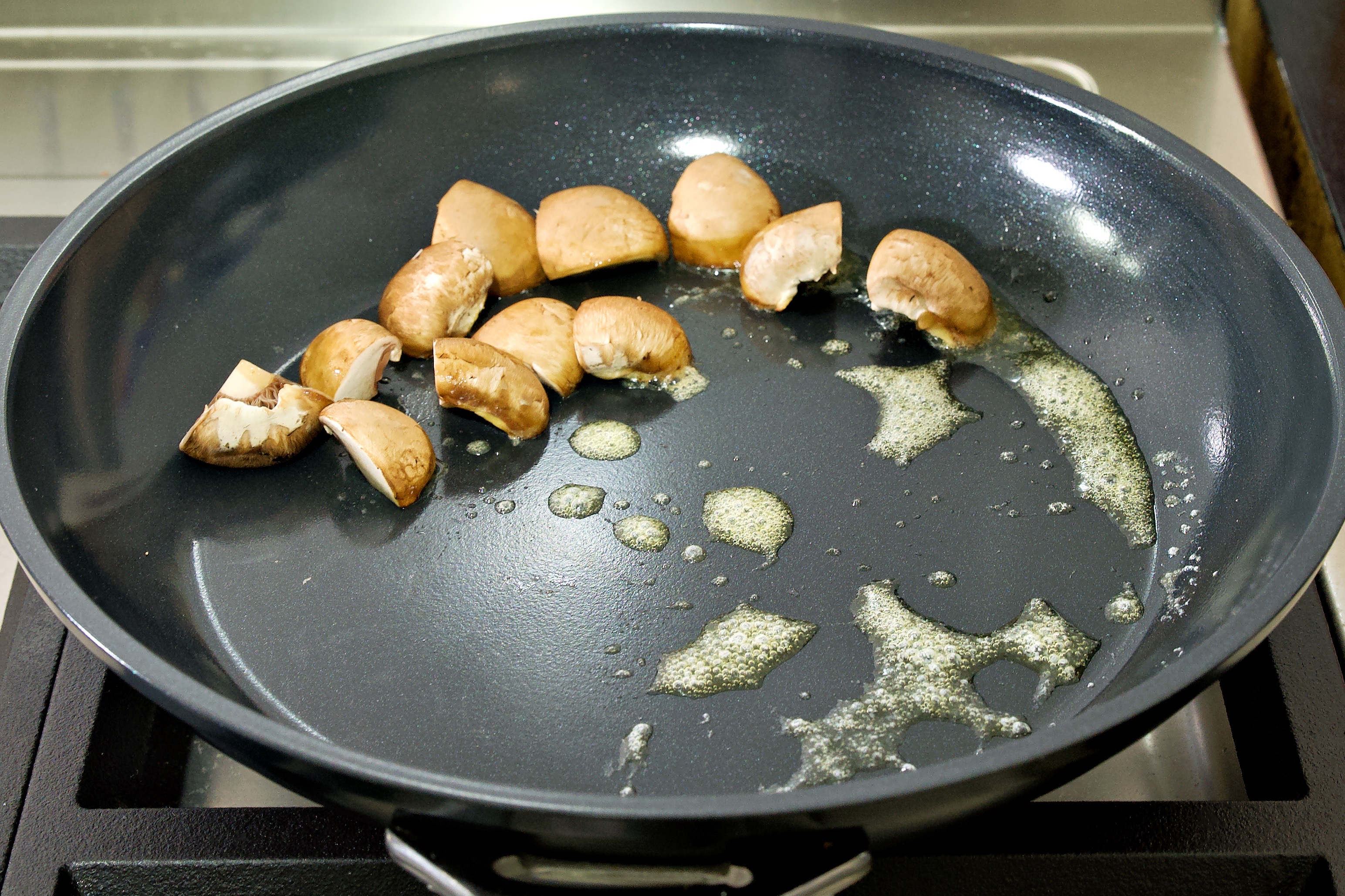
Sauté the mushrooms in a bit of butter.
Crumble the blue vein cheese into a dash of cream and gently heat in a saucepan while stirring continuously.
When the cheese and cream have “become one,” add in the mushrooms and keep stirring.
Keep stirring until the sauce thickens.
Serving
Place the crumbed chicken on a plate.
Gently pour the mushroom and cheese sauce over the chicken.
Season with freshly cracked black peppercorns.
Photographs
This is a gallery of photographs. Select one and scroll through the gallery.
Thoughts on the meal
The crumbed chicken was perfect. The meat was tender and tasty. The crumb had the perfect mouthfeel and absorbed the creamy cheesy sauce beautifully.
Questions
Do you like crumbed chicken?
Do you like crumbed meat in general?
What’s your favourite dish using crumbed chicken?
Other photographs
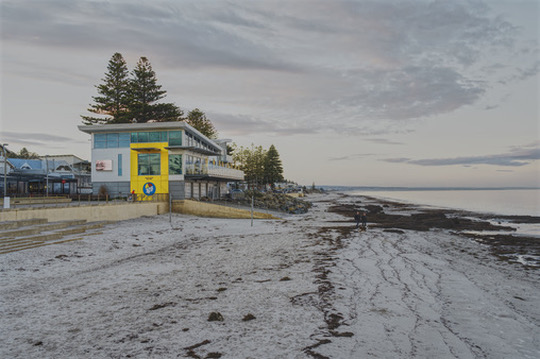
This is a one-second exposure (handheld) of the shoreline from Henley Beach Jetty this morning, just after sunrise.
I was participating in a Microsoft Teams chat with some colleagues, and the subject of “butter making everything better” came up (again). Friends at work know I’m fond of butter.
One friend (BC) said she feels the same way about cheese. I agreed and mentioned how I like a soft cheese with steak.
Another friend (ER) queried the combination, to which BC specified blue cheese (also BC) with steak.
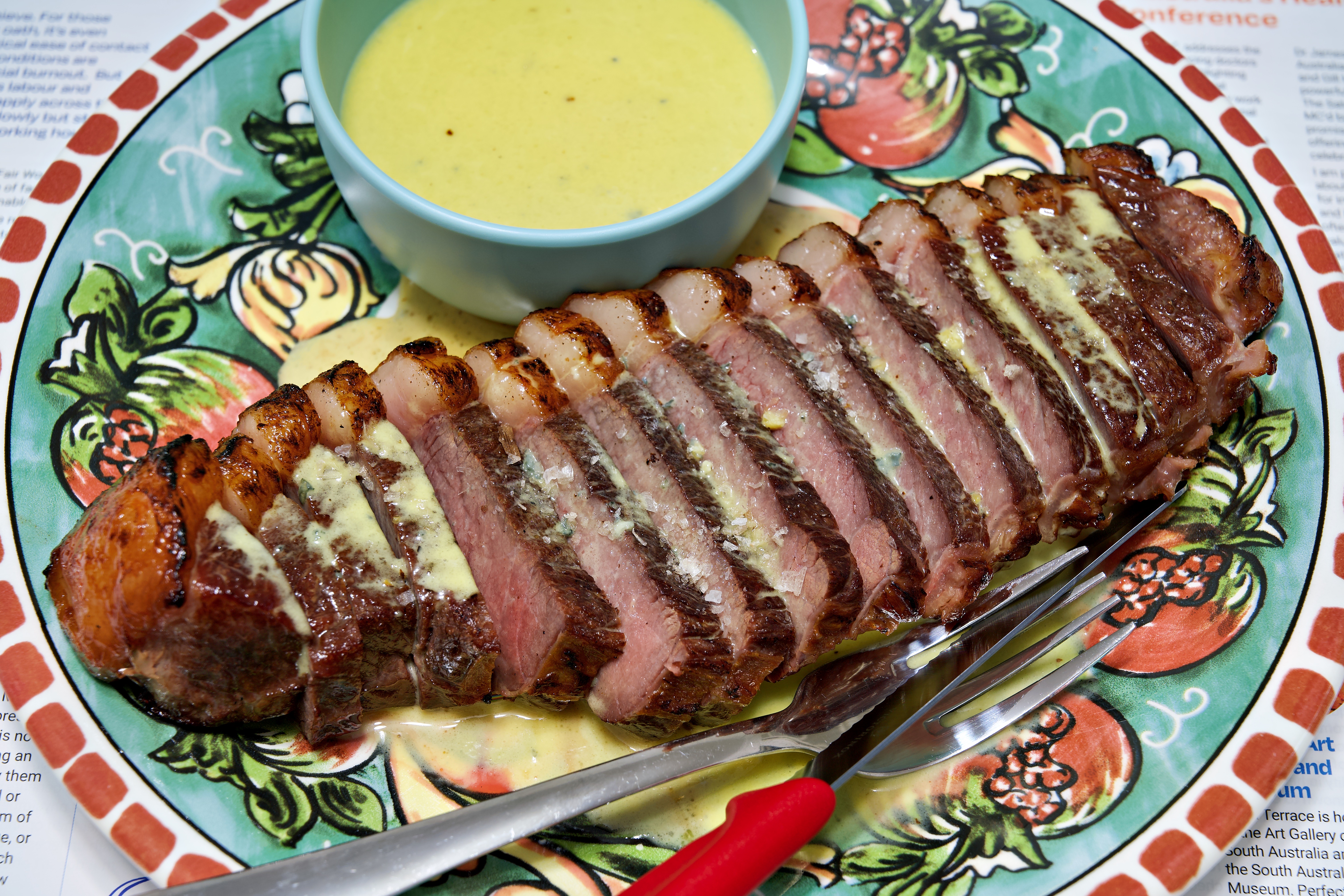
As much as I’m happy to place a hunk of blue cheese next to a steak, tonight I thought I’d go a step further and make a blue cheese sauce with cream (also known as pre-butter) plus actual butter.
Tonight I served myself the blue cheese sauce with a piece of Coorong black angus rump cap, which I cooked sous vide for approximately 3 hours at 57 °C. The steak weighed approximately 320 grams.
Recipe
Ingredients
60 mL (¼ cup) cream
30 g (2 tablespoons) blue cheese crumbles
Pinch of freshly ground black pepper (optional)
15 g (1 tablespoon) of butter (optional — but not)
Instructions
Place the butter, cream and blue cheese crumbles in a small saucepan.
Warm over low to medium heat, stirring constantly until the cheese begins to melt.
Continue to cook for 3–5 minutes, until the mixture bubbles gently and thickens to a saucy consistency.
Remove from heat, season with a crack of black pepper, and spoon directly over your cooked steak.
Nutritional Information (per serving)
Net Carbs
Total Carbs
Fat
Protein
Calories
2 g
2 g
26 g
4 g
254 kcal
This recipe yields approximately 2 g of net carbs per serving, making it suitable for a ketogenic way of eating (assuming the daily intake of carbohydrates remains <20 g).
Tips and Variations
To serve two people, double the amount of all ingredients.
For extra richness, whisk in 1 tablespoon (15 g) of unsalted butter along with the cream.
Stir in chopped chives or a dash of white wine vinegar at the end for freshness.
Best served immediately—if reheated, the fats may separate.
Pairing Suggestions
A juicy scotch fillet steak, cooked to medium-rare, amplifies the creaminess of the sauce. Cooking meat too rare can result in an unattractive mix of red meat juices and pale sauce. While choosing well-done is an option, I do not like well-done steak. I find for a fat-rich steak, 57 to 58 °C a good temperature. You’ll find a lot of sous vide experts who recommend 55 °C. The fat doesn’t render as well at that temperature in my experience.
Pair with a low-carb side, such as garlic and butter sautéed spinach or roasted asparagus.
Photographs
Thoughts on the meal
I enjoyed tonight’s meal. Cutting the steak into slices so I could dip each piece into a small pot of blue cheese sauce felt luxurious. The umami-rich, beefy, thick, and juicy steak pairs perfectly with the salty-umami and funky flavours of the blue cheese, creating a harmonious blend of flavours and textures. It was almost Holy Matrimony. Being a lover of fat, the fat and the blue cheese also combined well.
Questions
Have you tried blue cheese and steak? What did you think?
Do you have any tips on making a blue cheese sauce?
How would you serve blue cheese and steak if you were cooking?