
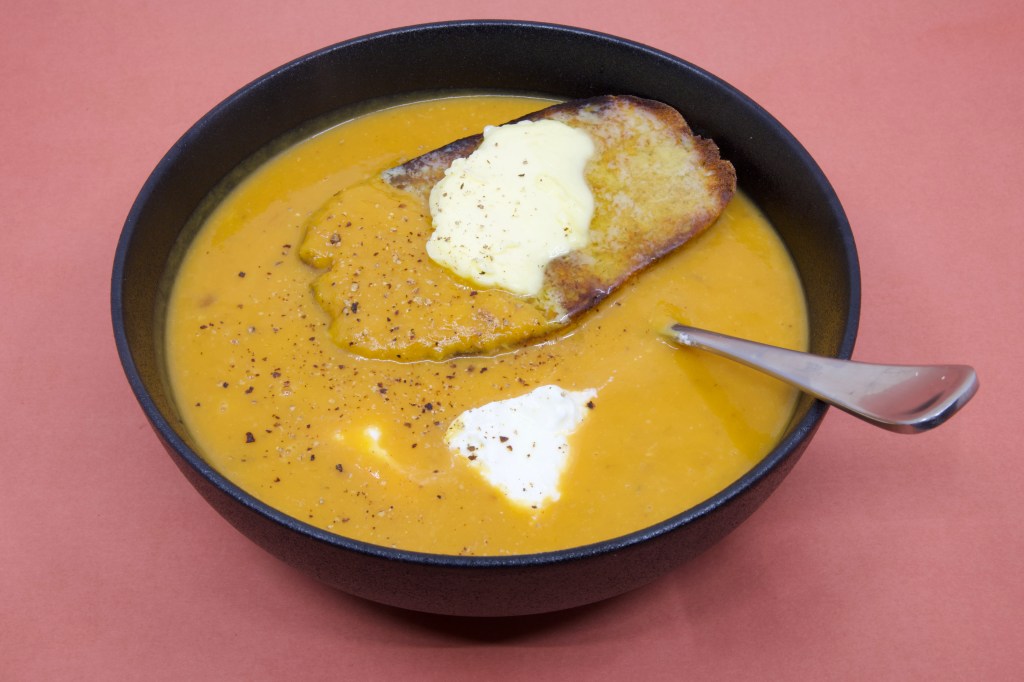
Porky 🐖 Pumpkin 🎃 Soup 🥣
After my pressure-cooker pork ribs, I had something valuable leftover, viz., the cooking liquor, enriched with passata, onion, fennel, celery, pork juices, collagen, and rendered fat, which is suitable for a rich, deeply flavoured pumpkin soup.
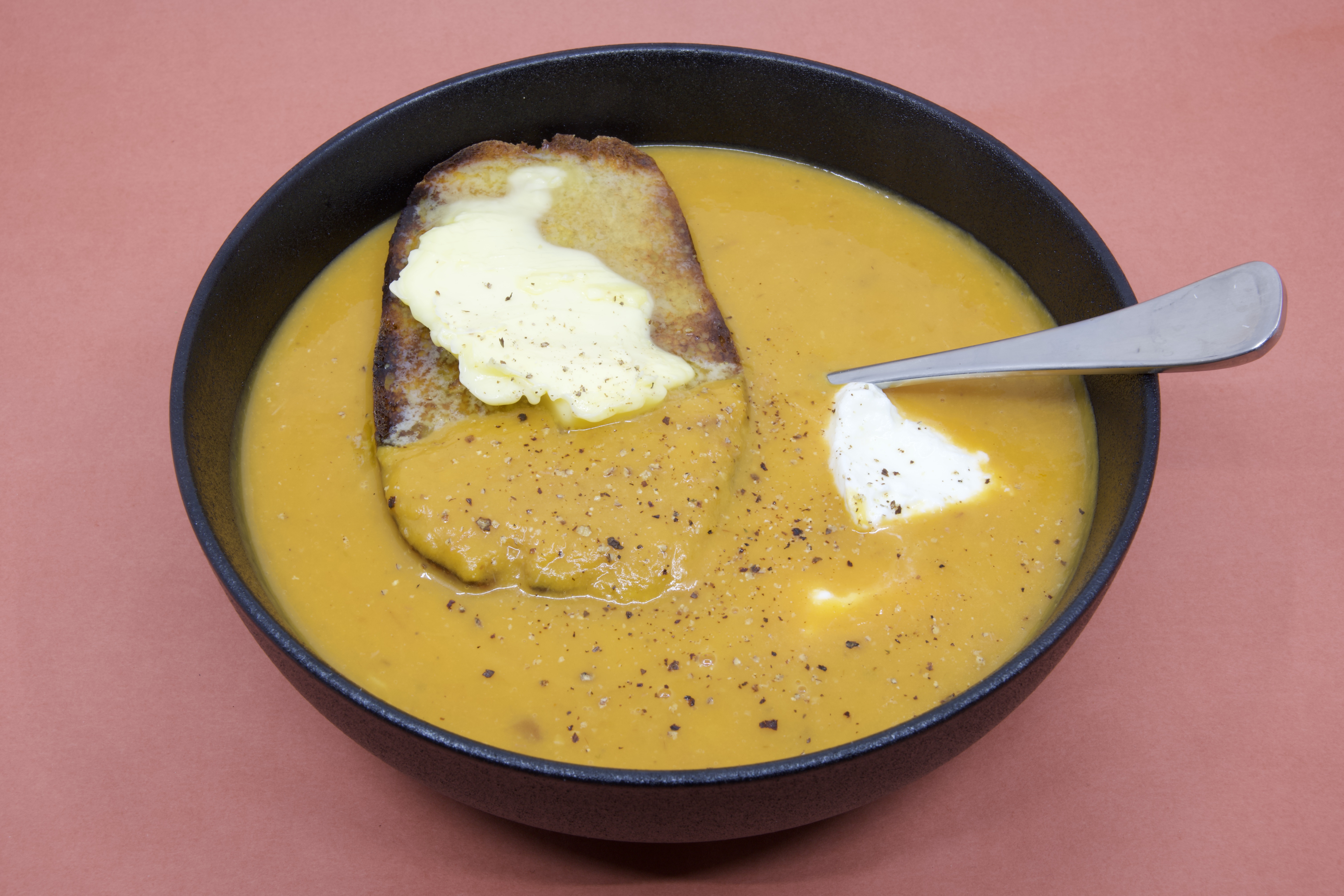
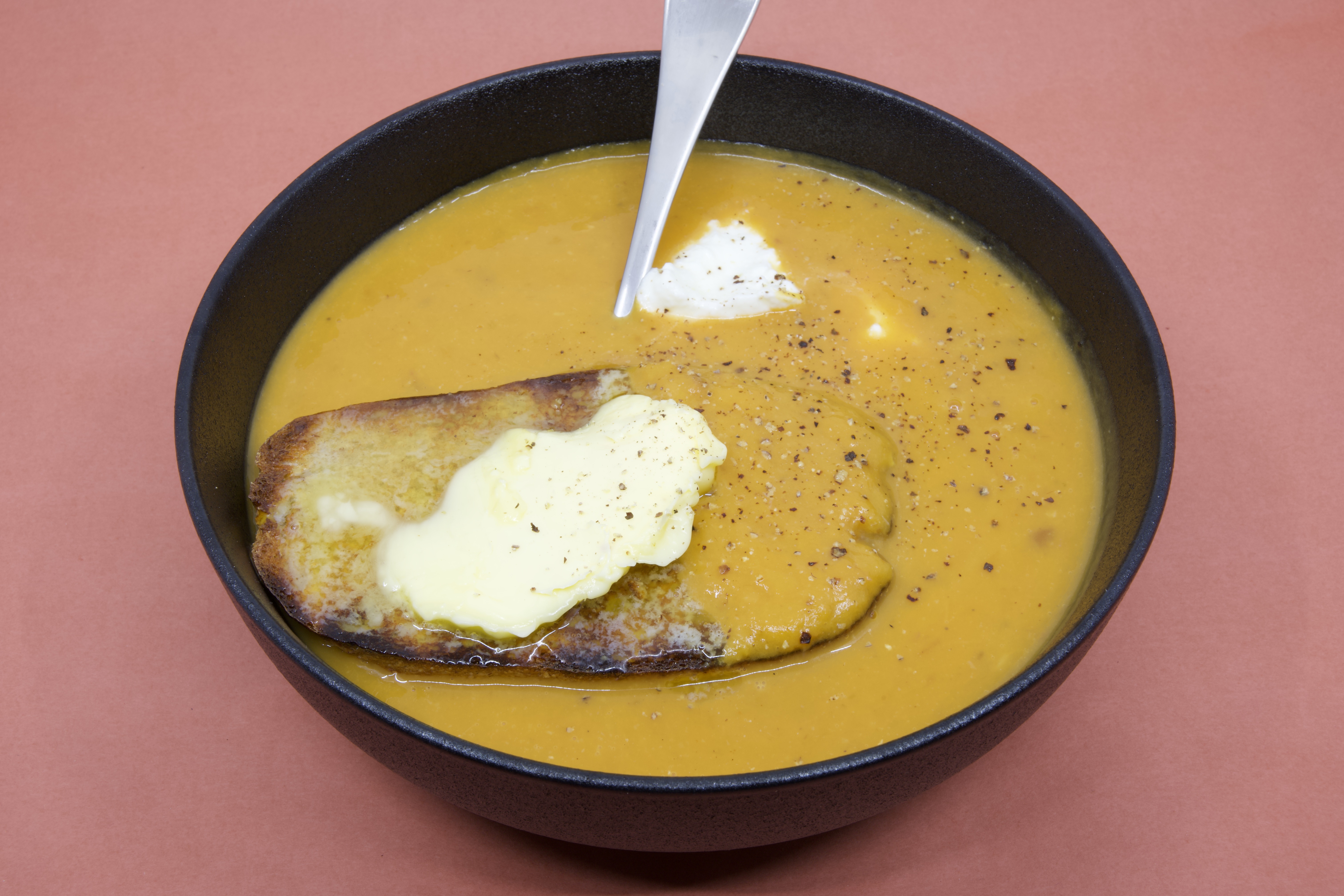
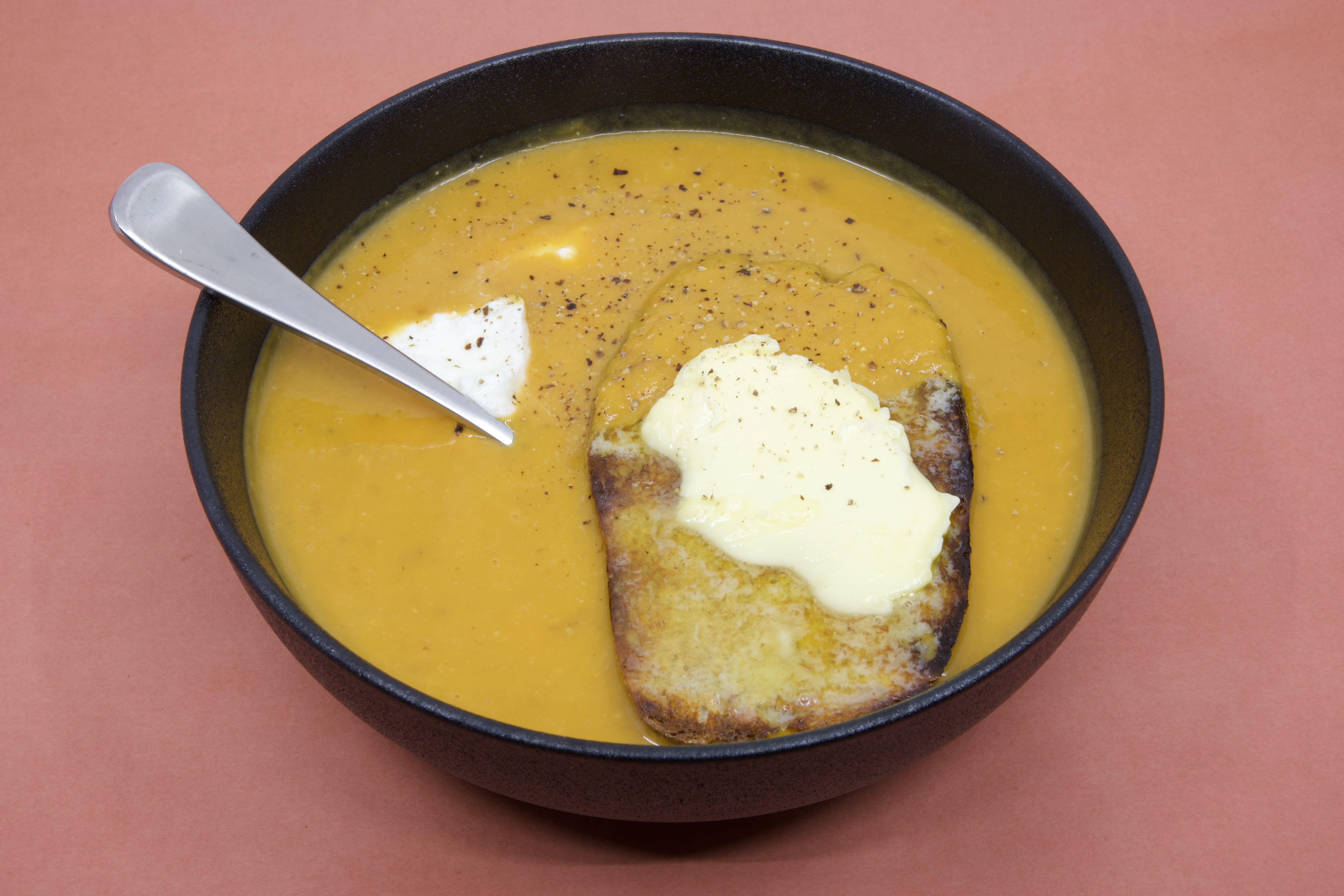
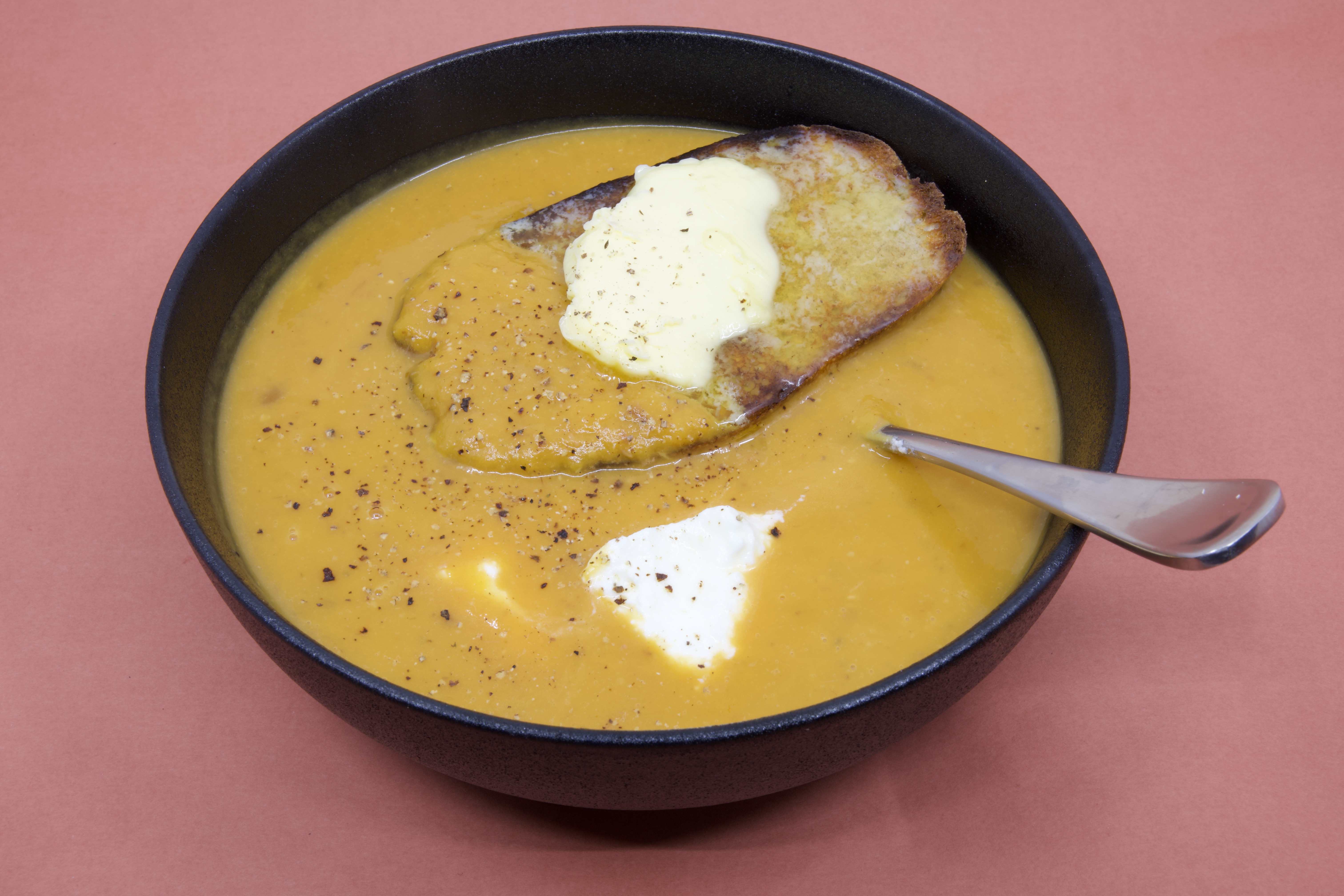
This soup pairs with a slice of rye sourdough, generously trowelled with cultured butter.
Ingredients
For the soup
- 1.5 kg jap pumpkin, peeled and cut into chunks
- 750 mL reserved pork rib cooking liquor
- 500 mL water (or more as needed)
- 125 g bacon pieces
- Freshly cracked black pepper, to taste
- Sea salt, if required
- Greek-style yoghurt
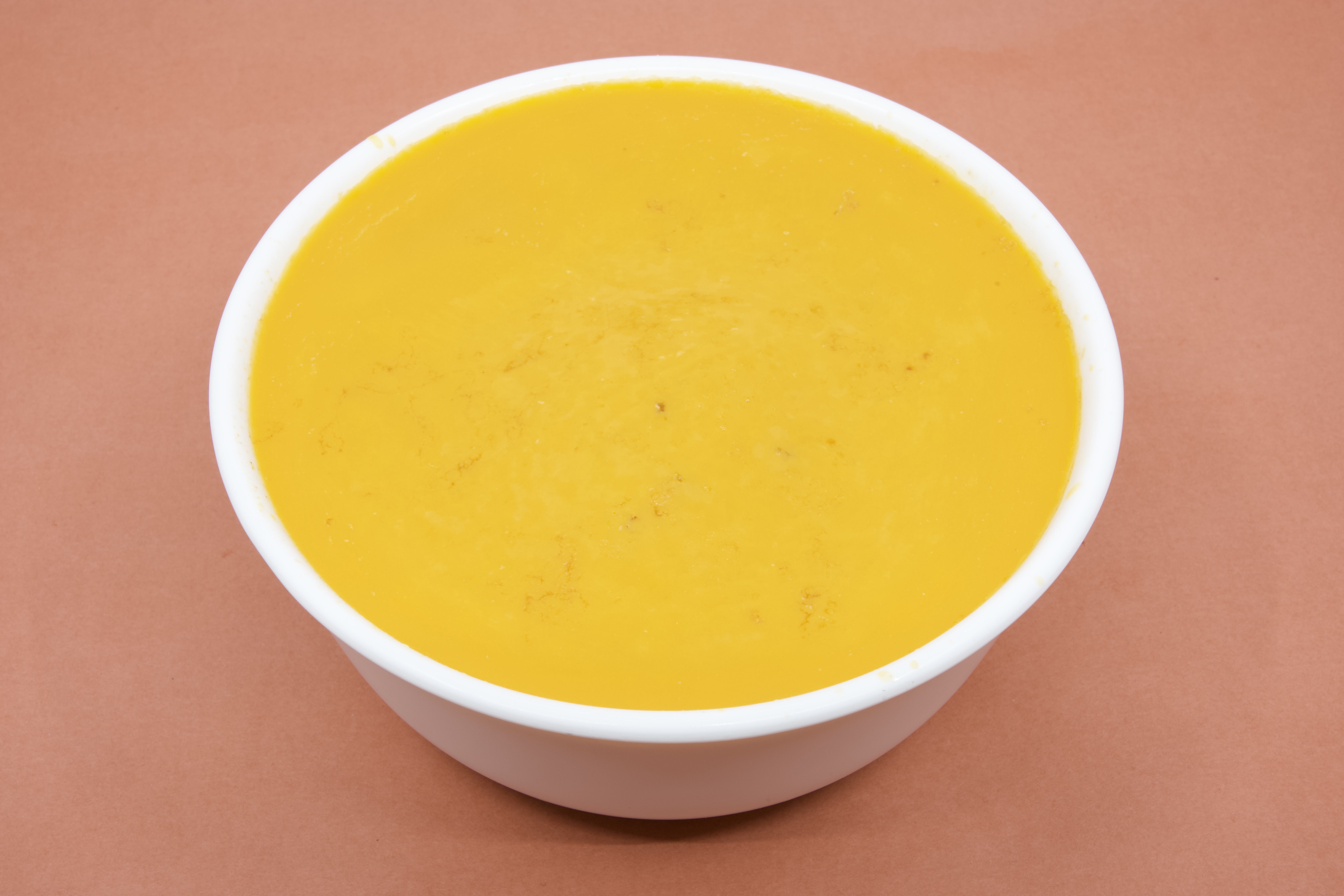
To serve
- Toasted rye sourdough bread (frozen to develop resistant starch)
- Cultured butter
- Extra cracked black pepper
- Chives for garnish
Equipment
- Cast-iron skillet
- Pressure cooker
- Chopping board
- Sharp cook’s knife
- Vegetable peeler
- Measuring jug
- Wooden spoon or heat-safe stirring spoon
- Stick blender
- Ladle
- Soup bowls
- Bread knife and butter knife for serving the rye sourdough with cultured butter
Method
1. Pressure-cook the pumpkin
- Place the bacon pieces and some water in a skillet, then bring the water to a simmer. Keep cooking while the water evaporates and the bacon fat renders. Keep going until the bacon pieces are crispy.
- Place the pumpkin chunks in the pressure cooker.
- Pour in the reserved pork rib cooking liquor and the water, ensuring the total volume remains below the pressure cooker’s maximum fill line.
- Lock the lid, bring the cooker to high pressure, and cook for 8 minutes. Allow the pressure to release naturally for 10 minutes, then carefully release any remaining pressure before opening the lid.
2. Blend
- Transfer the crispy bacon pieces to the pressure cooker vessel.
- Using a stick blender, blend the soup until smooth and velvety.
- If the soup is too thick, add a little more water until it reaches your preferred consistency.
3. Finish
- Taste before adding salt. The braising liquid from the ribs may already contain enough seasoning.
- Add plenty of cracked black pepper.
- For a richer, tangier finish, stir through a spoonful or two of Greek-style yoghurt after blending, keeping the soup off the boil so the yoghurt stays smooth.
4. Serve
- Ladle the soup into warmed bowls.
- Serve with a thick slice of toasted rye sourdough generously spread with cultured butter.
- A final grind of black pepper over the top is a nice touch.
- Give thanks.
Notes from Yummy Lummy
The fennel from the original rib cook does a lot here. Pork and fennel are best mates, and the aniseed notes complement pumpkin well. The passata adds acidity, preventing the soup from becoming overly sweet, while the collagen extracted from the ribs contributes body and a luxurious mouthfeel.
The result is a soup that tastes much more complex than a standard pumpkin soup, with layers of savoury flavour underneath the pumpkin’s natural sweetness.
Why This Soup Is Not Vegetarian or Vegan
This recipe is neither vegetarian nor vegan.
Not vegetarian
The cooking liquor comes from pressure-cooking pork ribs. During cooking, pork juices, rendered fat, gelatine from collagen, and other animal-derived compounds enter the liquid. There’s also bacon 🥓 in it.
Not vegan
In addition to the pork-derived cooking liquor, the serving suggestion includes cultured butter, which is a dairy product made from milk.
For these reasons, the recipe contains both meat-derived and dairy-derived ingredients.
About Jap Pumpkin
The pumpkin most Australians simply call “pumpkin” is often jap pumpkin.
Despite the name, jap pumpkin is not actually from Japan. The term is believed to have arisen from historical references to Japanese pumpkin varieties introduced into Australia.
Jap pumpkin typically has:
- Dark green, mottled skin
- Dense orange flesh
- A naturally sweet flavour
- A dry texture that becomes creamy when cooked
It is one of the best pumpkins for soup because the flesh breaks down easily and produces a thick, silky result without requiring large amounts of cream.
Information About Queensland Pumpkins

Queensland is one of Australia’s major pumpkin-growing regions, thanks to its warm climate and long growing season.
I also associate Queensland pumpkin with pumpkin scones. I remember meeting Lady Flo Bjelke-Petersen in the diagnostic laboratory where I was working while putting myself through medical school. Lady Flo Bjelke-Petersen was the wife of Sir Joh Bjelke-Petersen, a former Premier of Queensland, and she was well known for making pumpkin scones and sharing them with others. Lady Flo was also an Australian Senator. She used to serve her pumpkin scones in the Senate, apparently. The memory fits neatly here: warm, orange-gold scones, a little butter, and the unmistakable comfort of pumpkin treated as something homely rather than ordinary.
Some interesting facts include:
- Pumpkins are grown commercially across several parts of Queensland, particularly in the Darling Downs, Lockyer Valley, Central Queensland, and the Bundaberg region.
- Queensland’s warm weather allows growers to produce pumpkins over a longer period than cooler southern states.
- Jap pumpkin is one of the most commonly cultivated pumpkin types in Queensland.
- Pumpkins are botanically classified as fruit because they develop from the flower and contain seeds.
- A mature jap pumpkin stores exceptionally well and can often keep for several months in a cool, dry place.
- The deep orange colour of jap pumpkin flesh comes from β-carotene, which the body converts to vitamin A.
Final Thoughts
This soup is an example of kitchen thrift. The pork rib cooking liquor already contains tomato, fennel, onion, celery, pork flavour, and gelatine. Rather than discarding it, use it as the backbone of a hearty pumpkin soup. Served with rye sourdough and cultured butter, it makes a satisfying lunch or a light evening meal that feels both comforting and just a little indulgent.
Today’s meals
Morning tea
A pork and fennel sausage roll from Market Bread Bar.


This was the best pork-and-fennel sausage roll I’ve eaten in South Australia.
Lunch
Sardines on toast
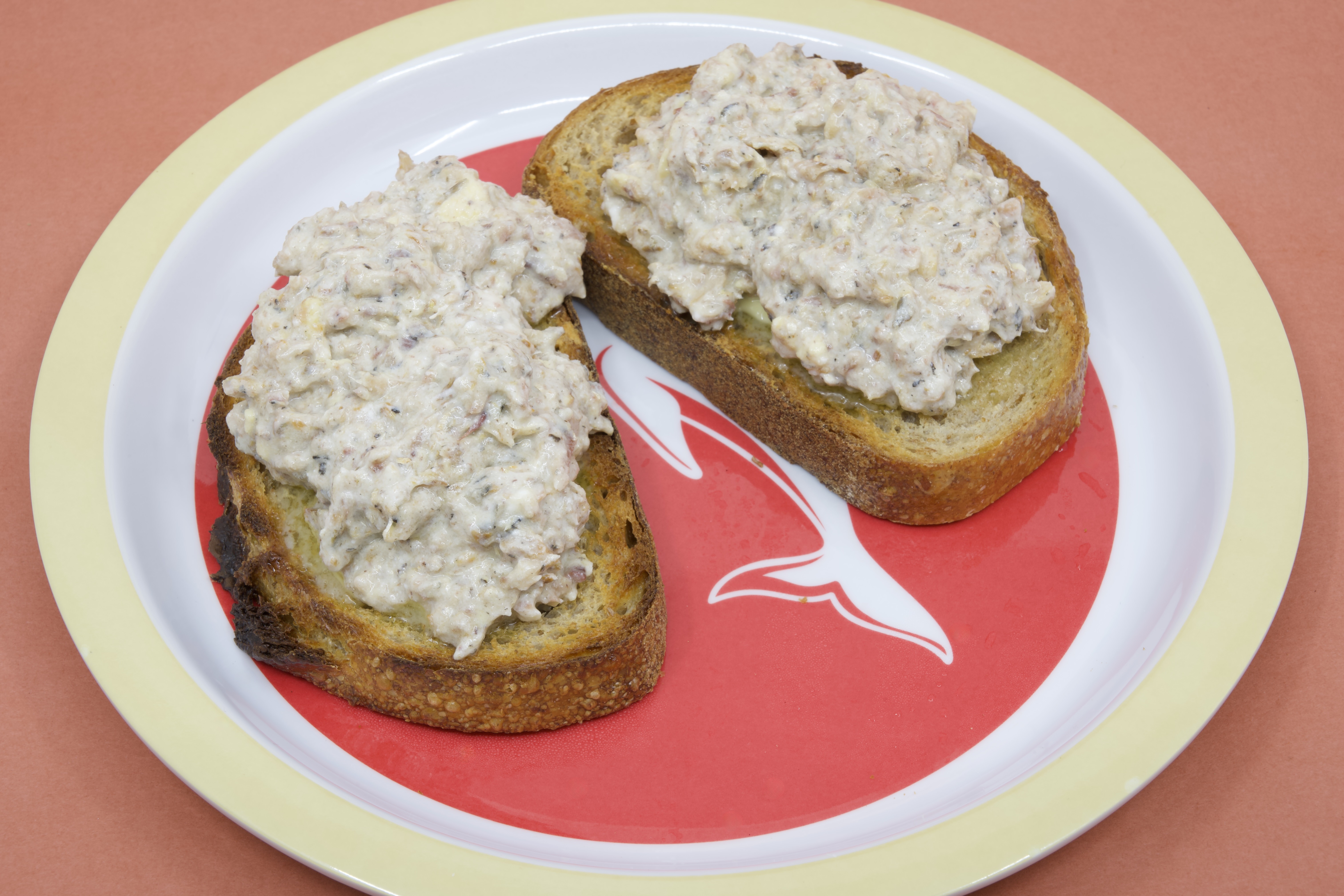
I mashed some sardines with yoghurt and spread it on a couple of pieces of toasted rye sourdough bread (from Market Bread Bar [Adelaide Central Market]), which had been buttered with cultured butter.
The yoghurt reduces the “fishiness” and adds some creaminess. It’s perfect on nicely toasted rye sourdough.
