Today began with strange dreams. I know I tossed and turned a lot. My dreams involved family members in unusual predicaments. Friends’ faces appeared randomly. There were no clear actions in the dreams.
This morning, I went for a walk along the beach and enjoyed the early sunrise. I expect to continue relishing this until October, when daylight saving time begins, which may affect my mood. Many people prefer walking later in the day. Daylight saving times makes this choice easier. I treasure walking in early morning light and sunshine.
Recipe
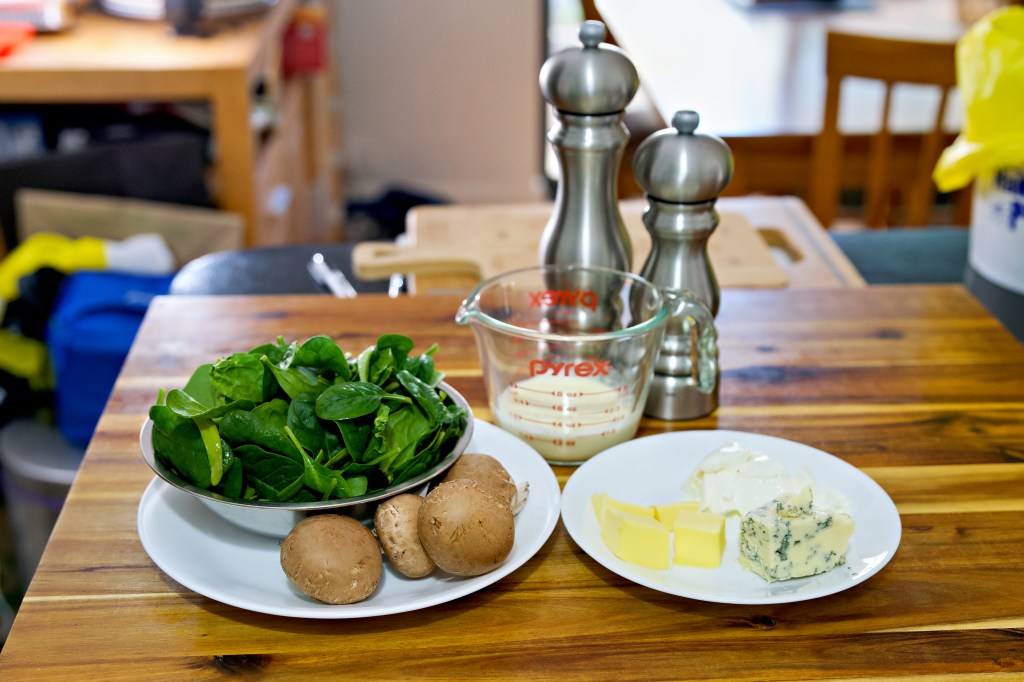
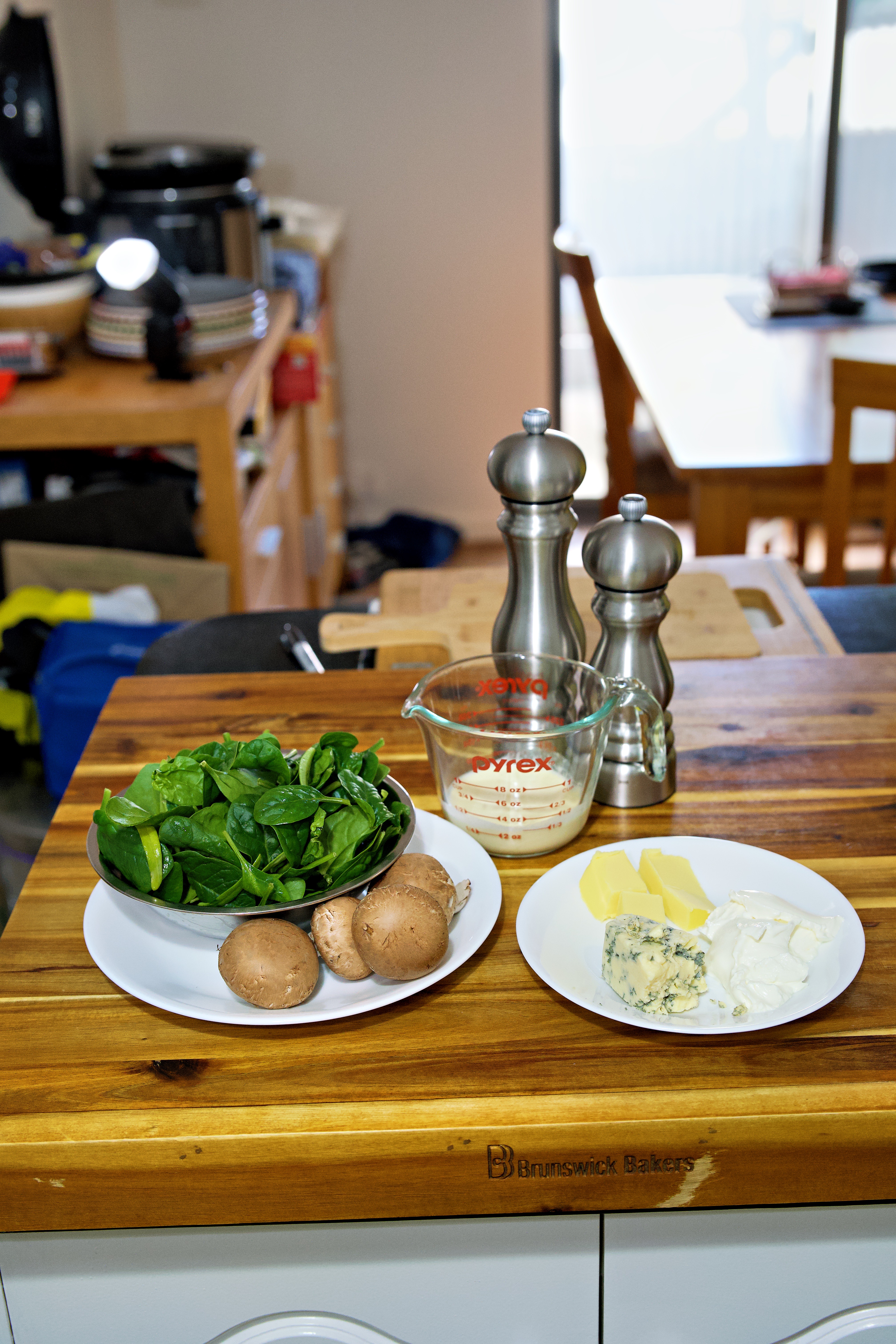
Ingredients
Butter
Spinach leaves
Swiss brown mushrooms
Cream cheese (softened)
Cream
Blue vein cheese
Salt
Freshly ground black pepper
Method
Roughly cut some Swiss brown mushrooms.
Place a frypan over medium heat. Add the butter and allow it to melt (but not brown).
Sauté the mushrooms.
Increase the heat to medium–high and add the spinach in batches, stirring each handful until just wilted before adding more.
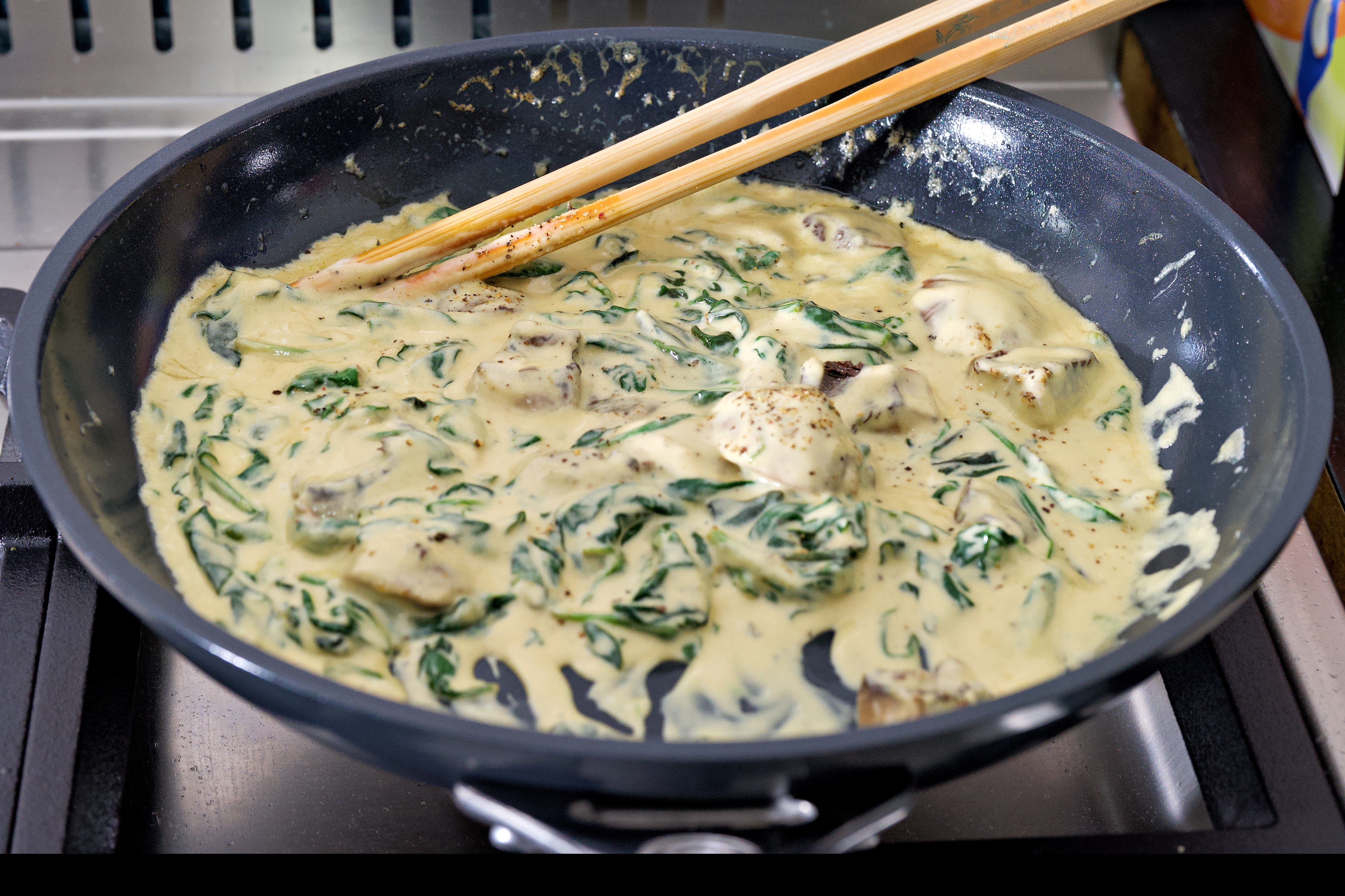
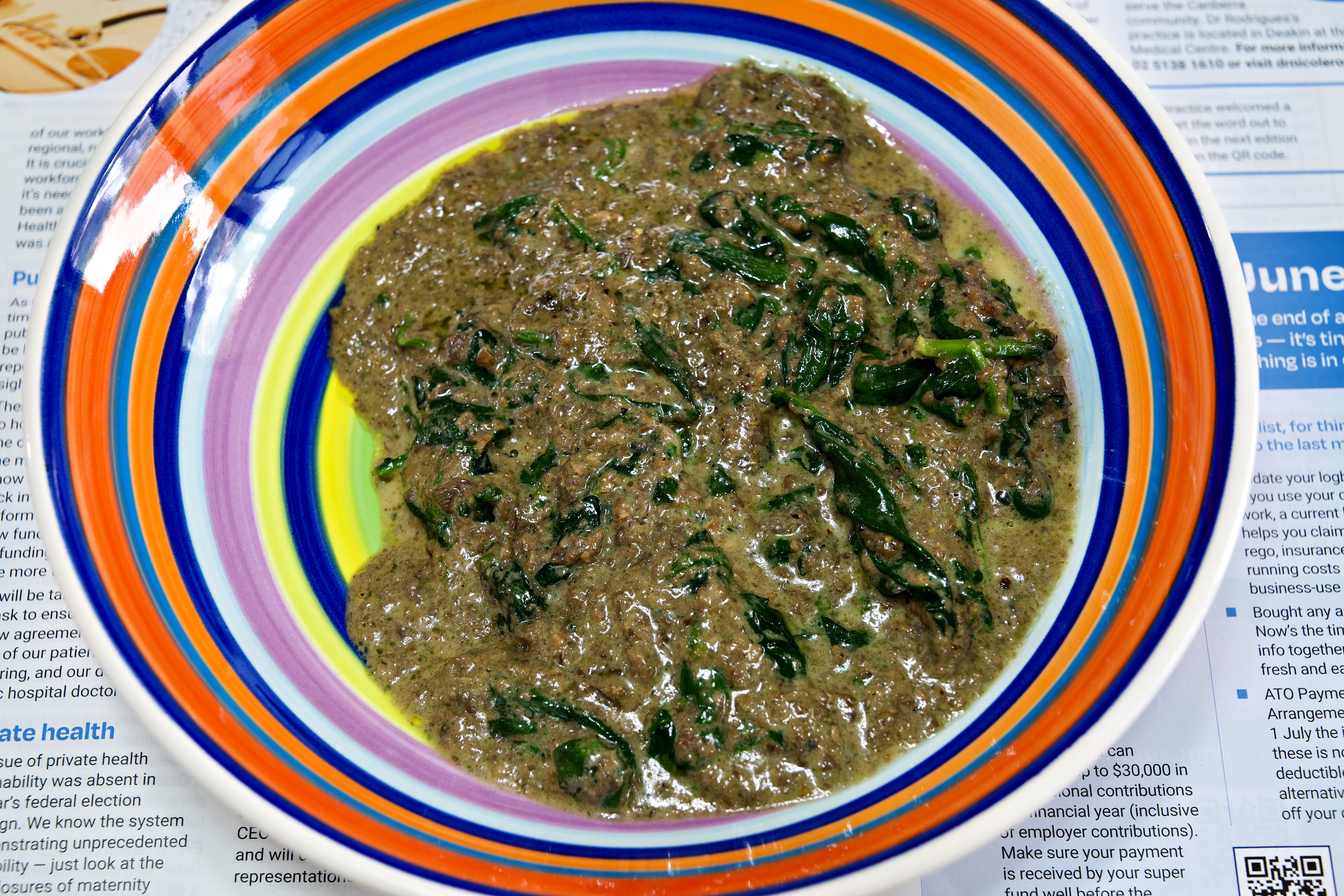
Once all the spinach is wilted, reduce the heat to medium. Stir through the cream cheese and heavy cream until the mixture is smooth and glossy.
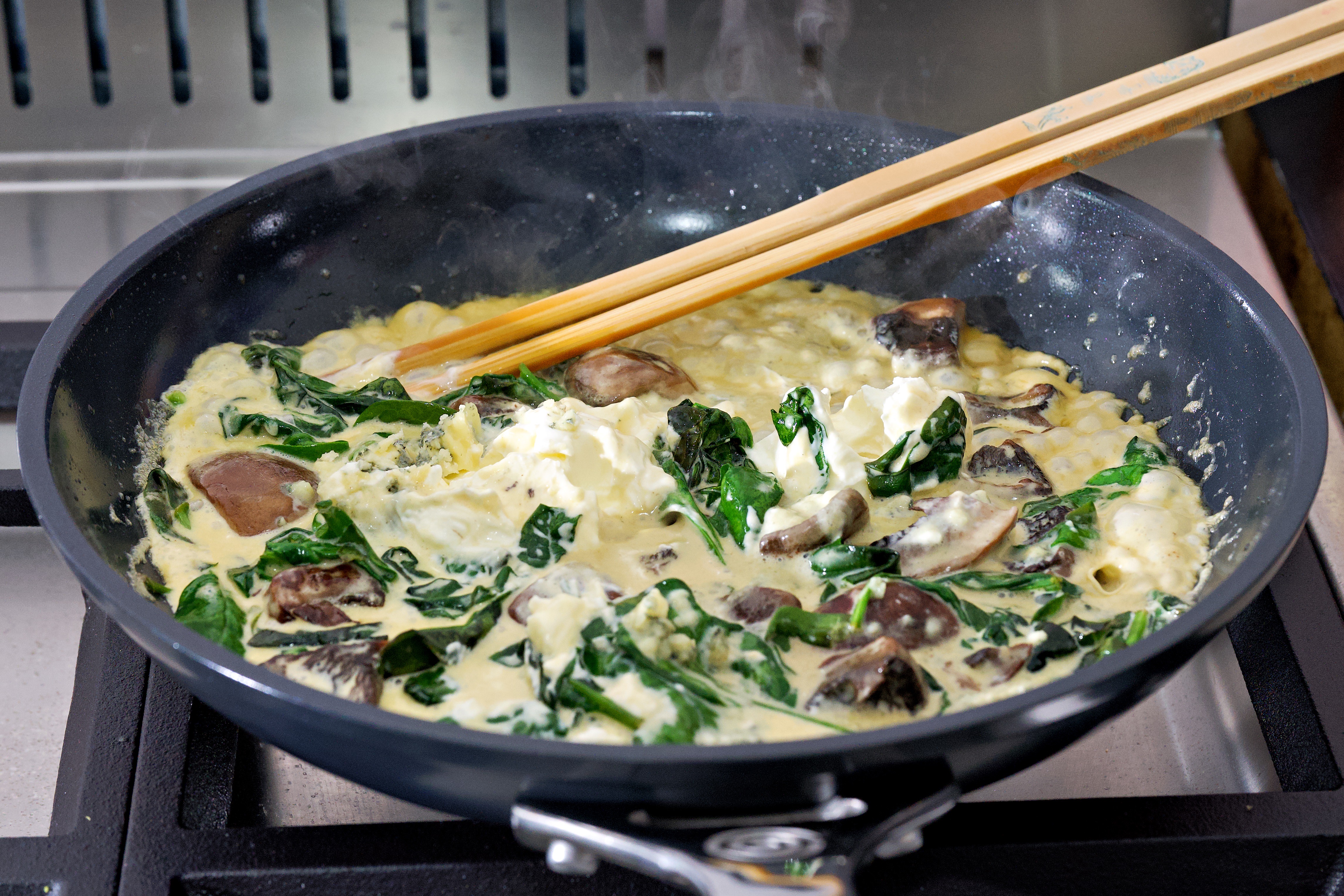
Crumble in the blue vein cheese. Remember to stir constantly. Continue to cook for 2–3 minutes. Cook until the sauce thickens enough to coat the back of a spoon.
Season with salt and pepper.
Make ahead and “safe” storage.
This dish can be prepared up to a day in advance.
Cool completely, cover and refrigerate.
To reheat, gently warm in a saucepan over low heat. Add a splash of cream if the sauce has thickened too much.
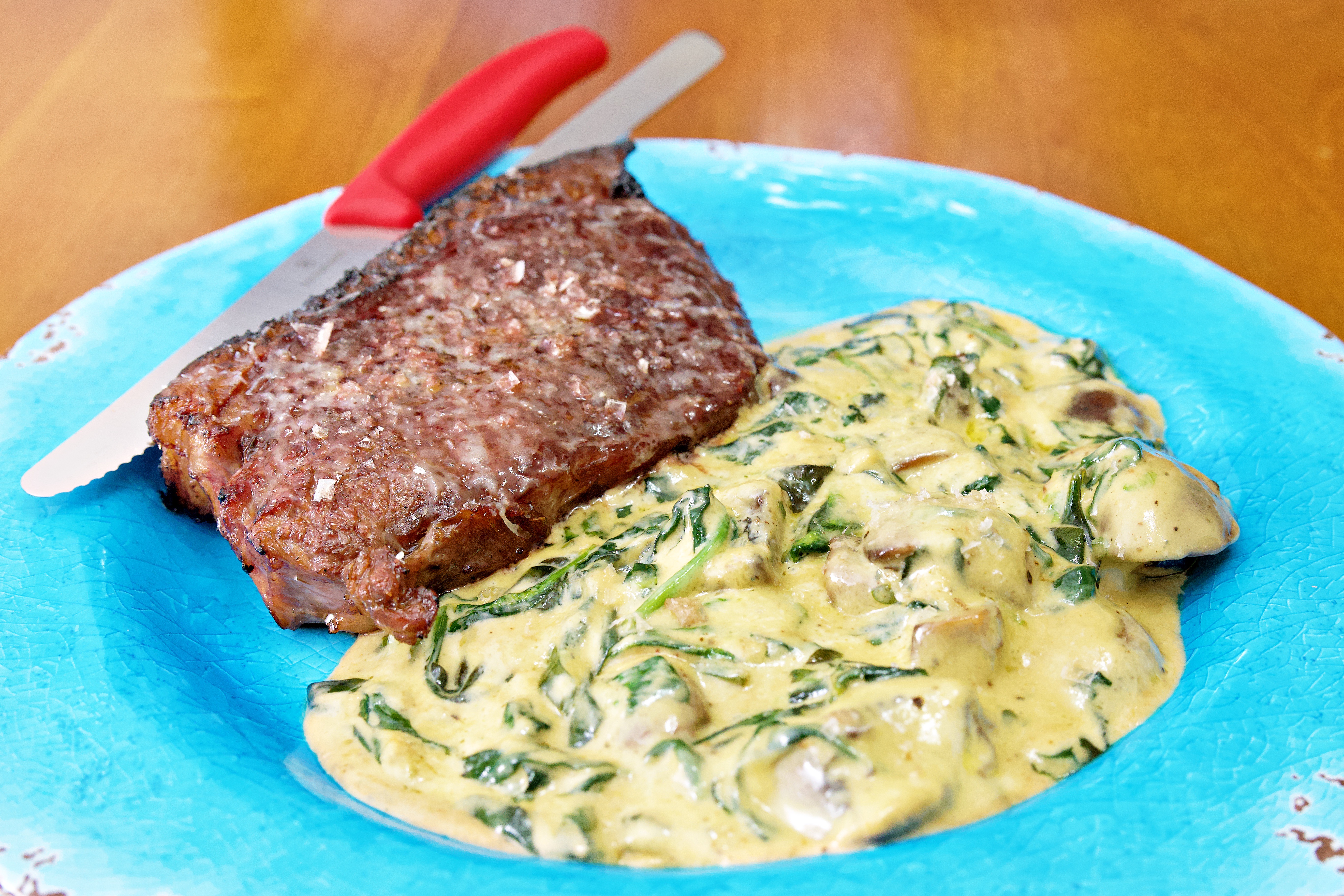
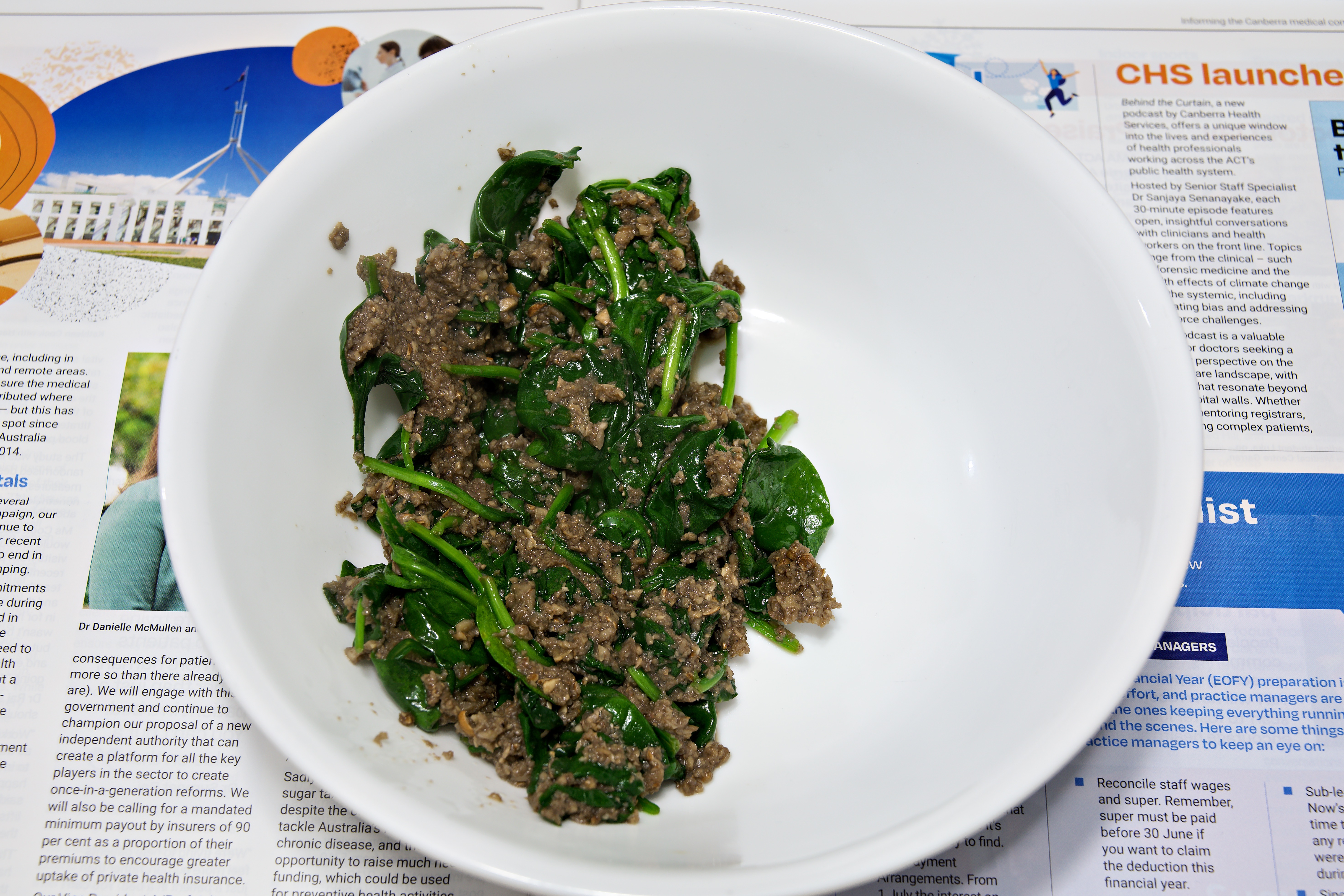
Enjoy with steak, roast chicken or simply on its own for a luscious side.
Photographs
This is a gallery of photographs. Select one and scroll through the rest of the images.
Thoughts on the meal
Sometimes, I enjoy eating spinach leaves. I used to have steamed spinach leaves every morning with some cheese and a steamed egg. Later, I read about some issues related to eating too much spinach.
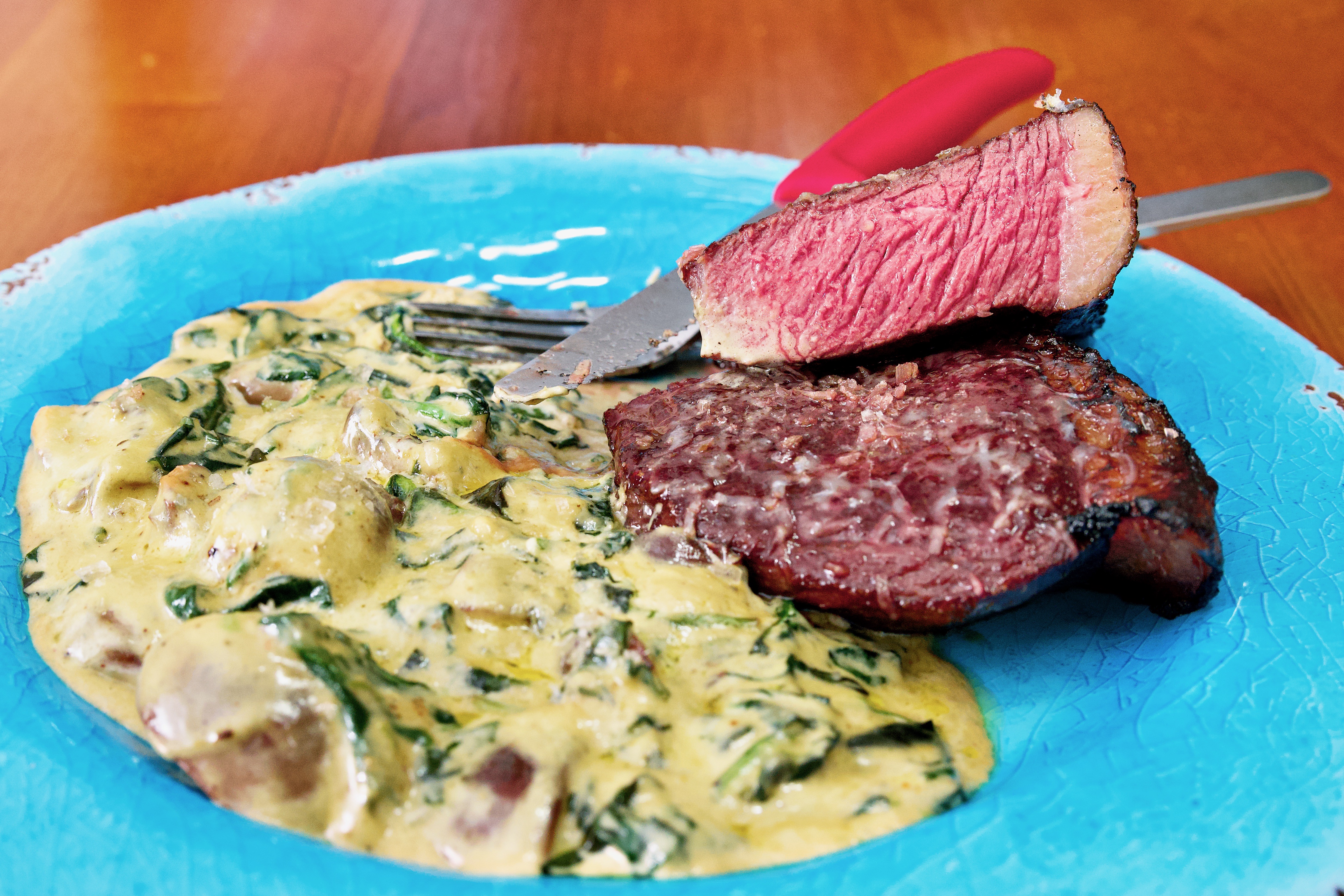
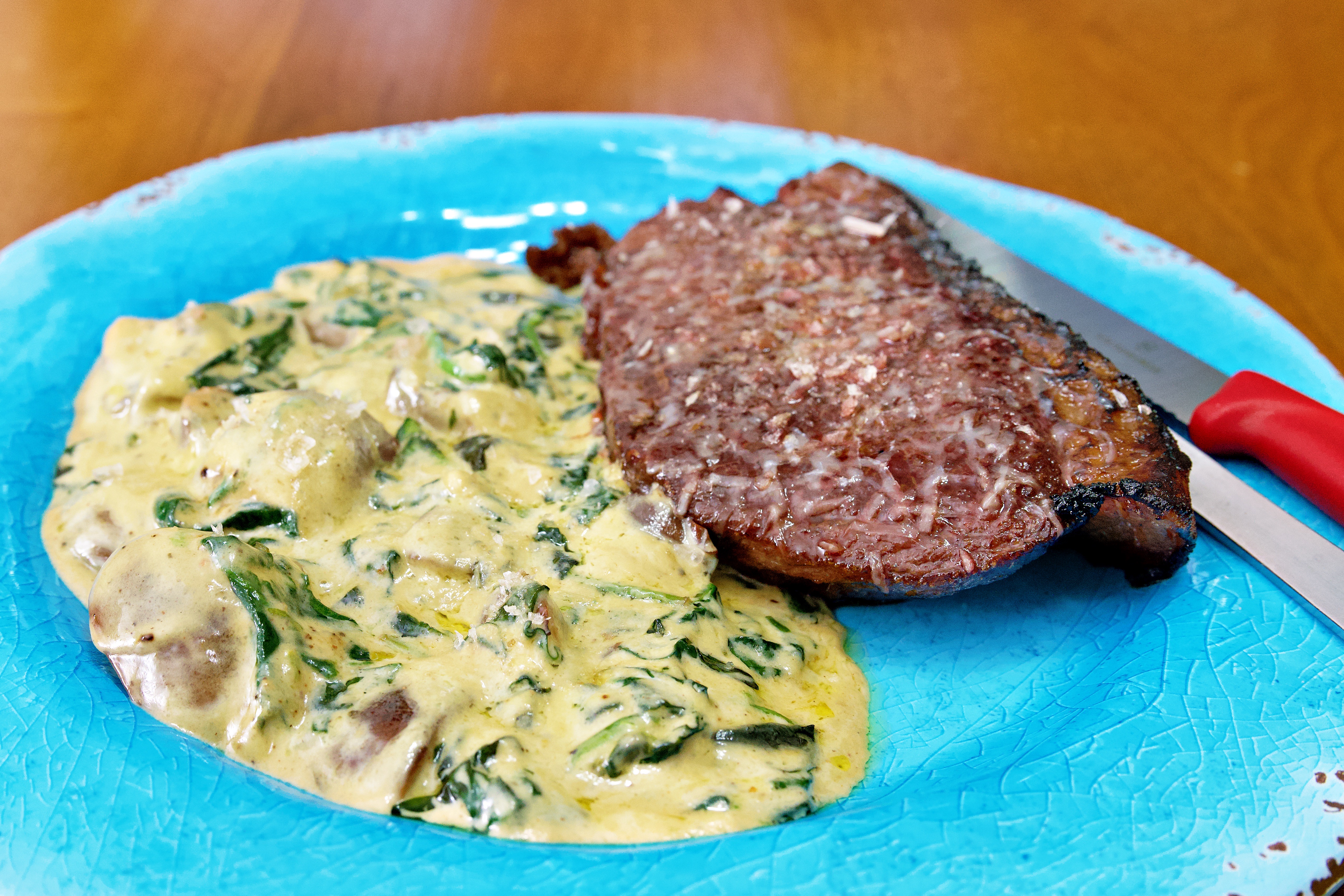
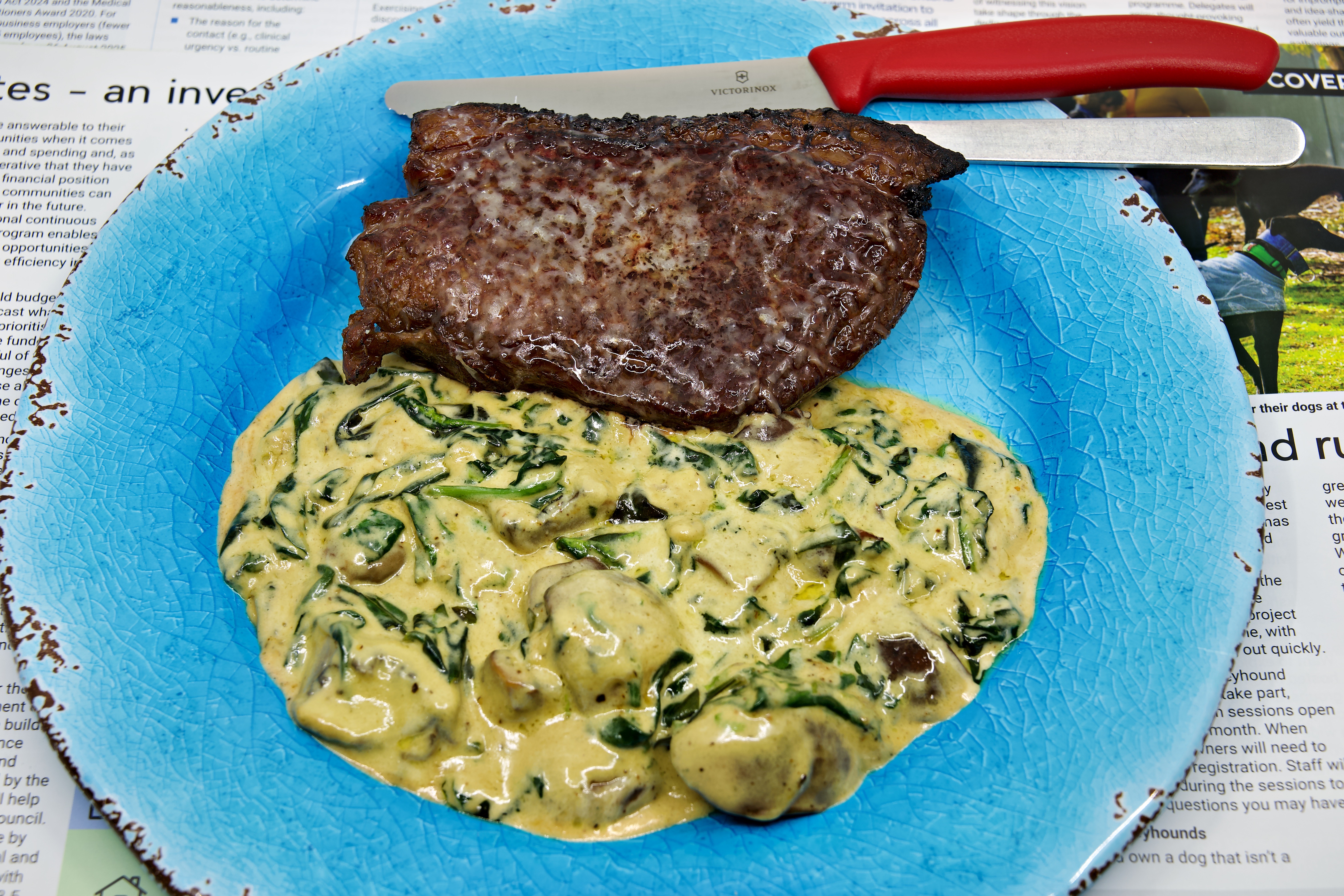
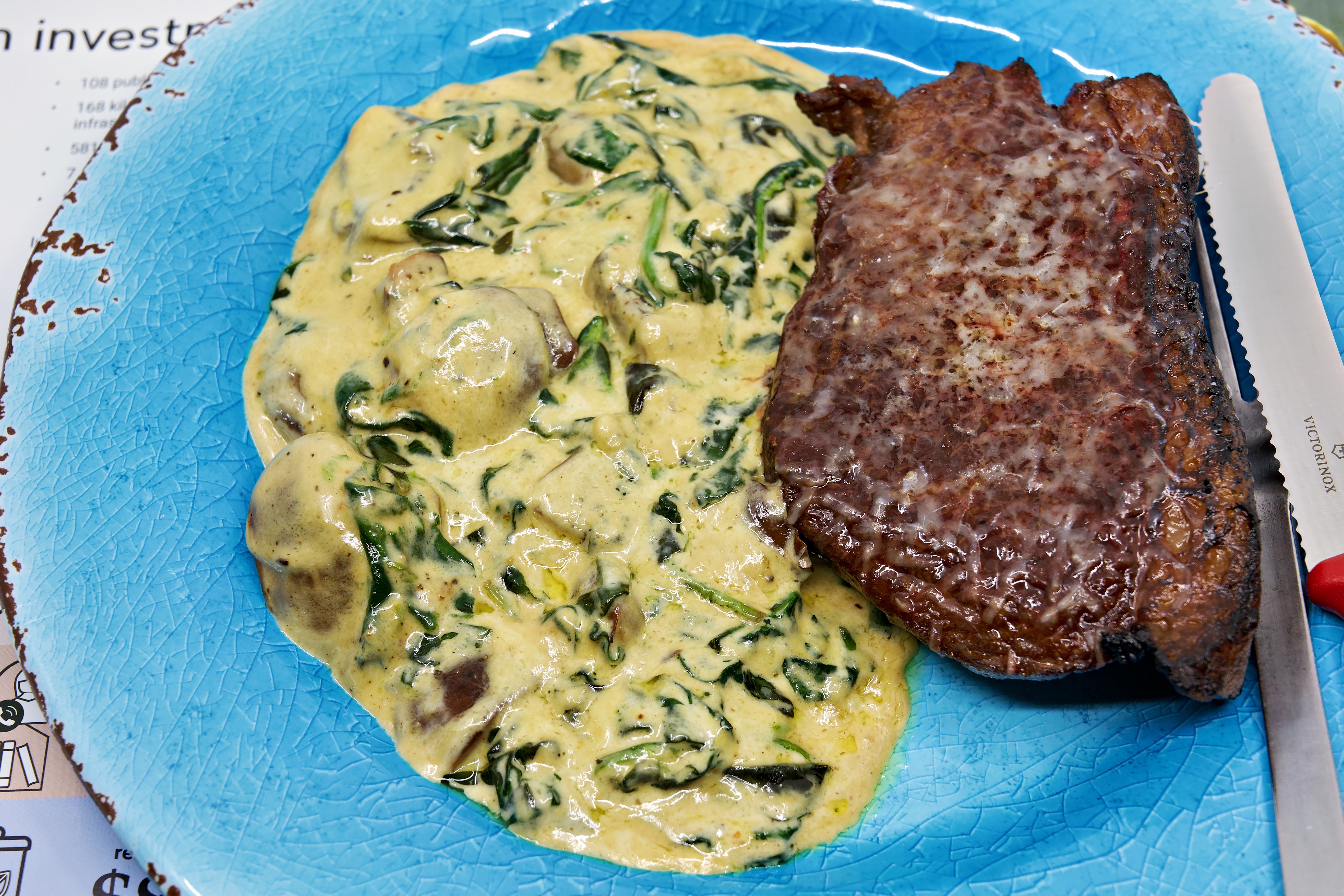
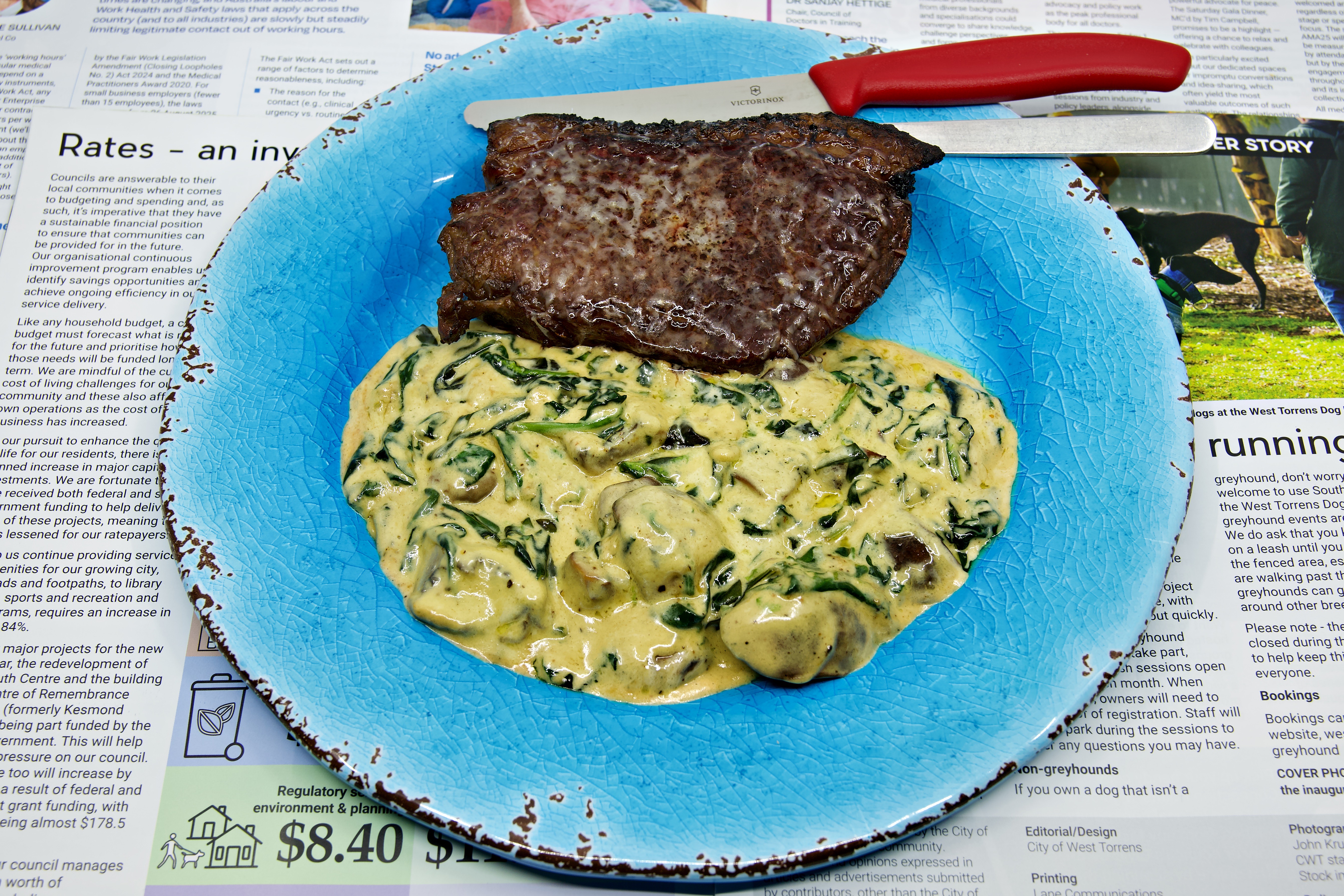
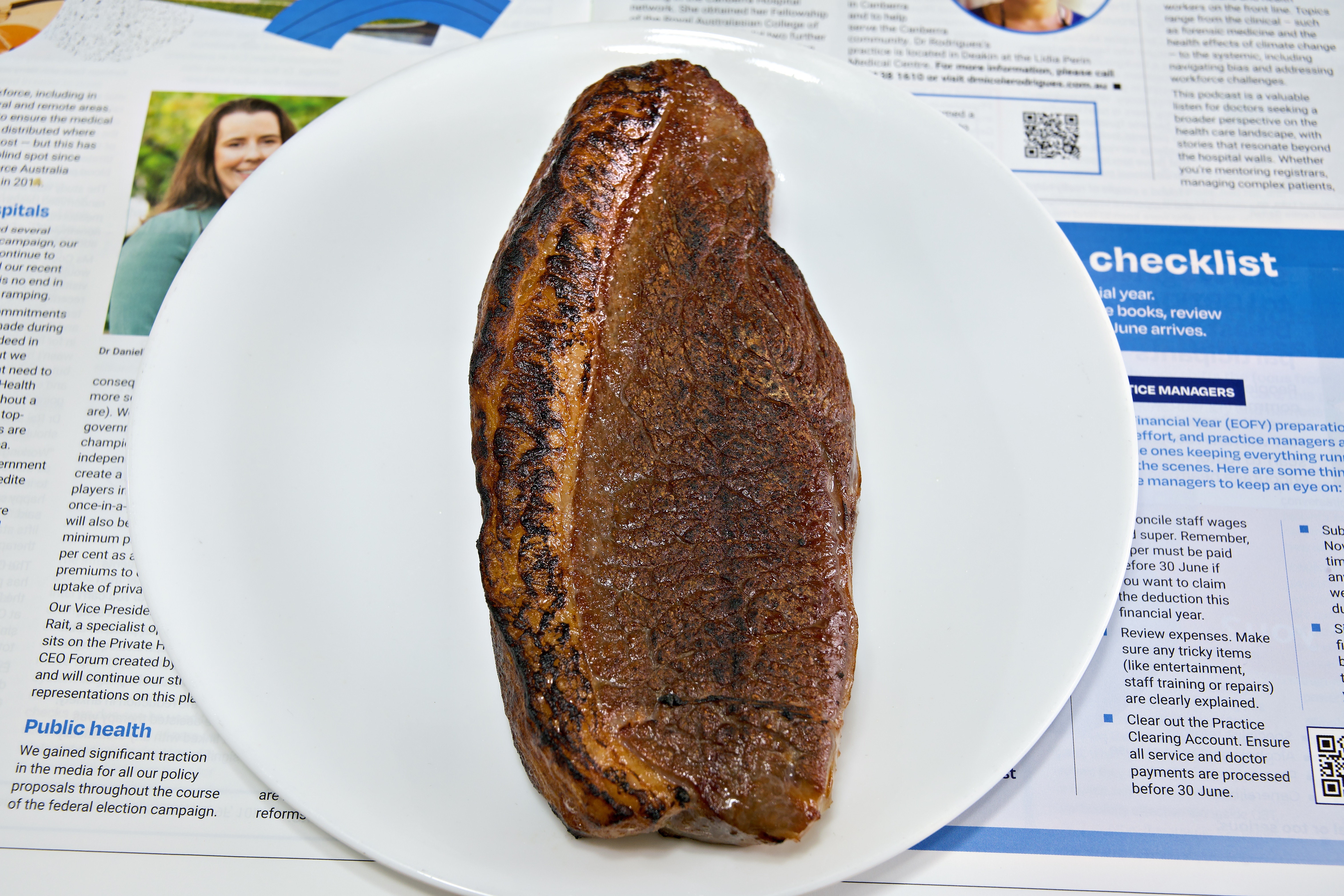
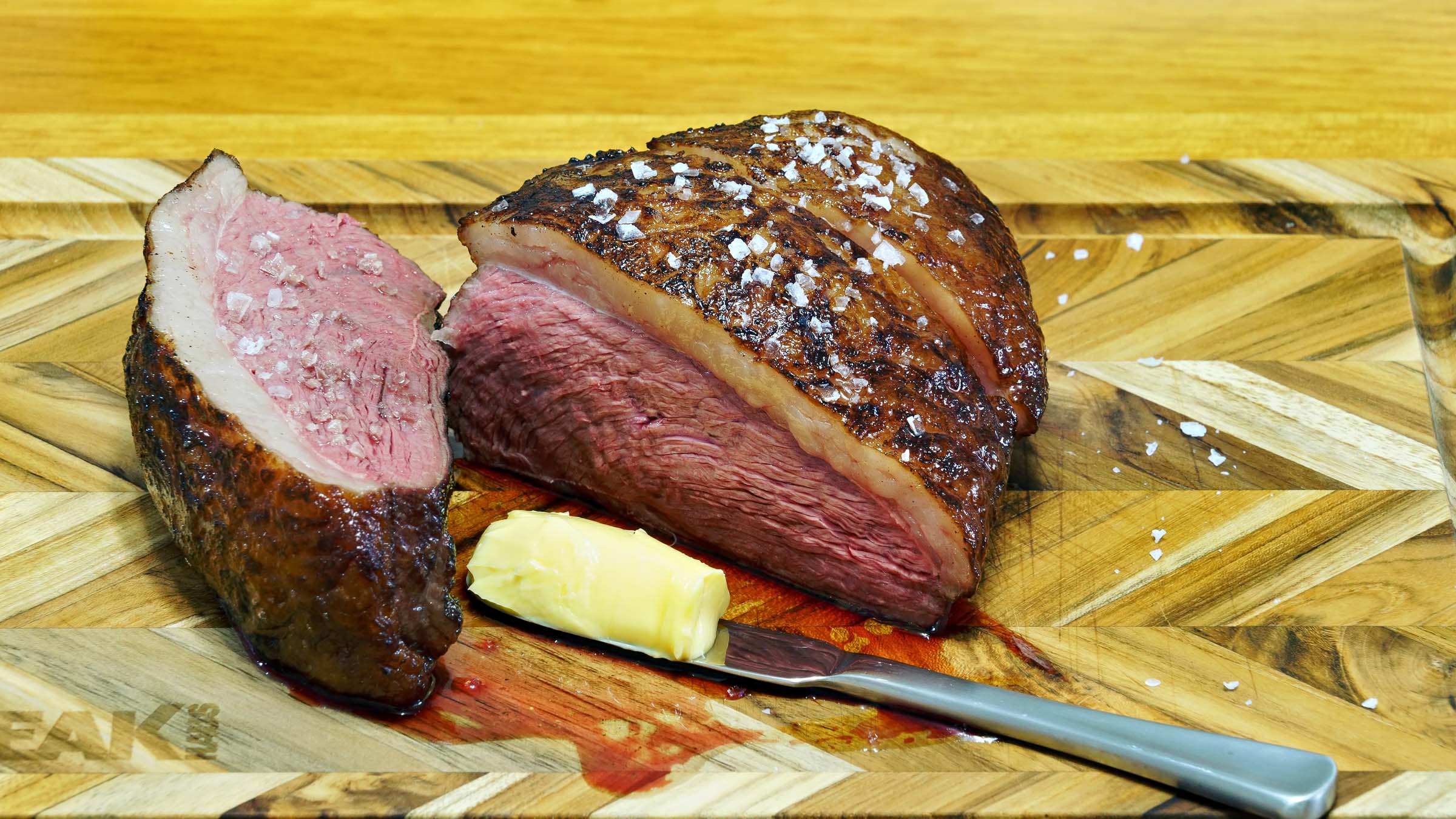
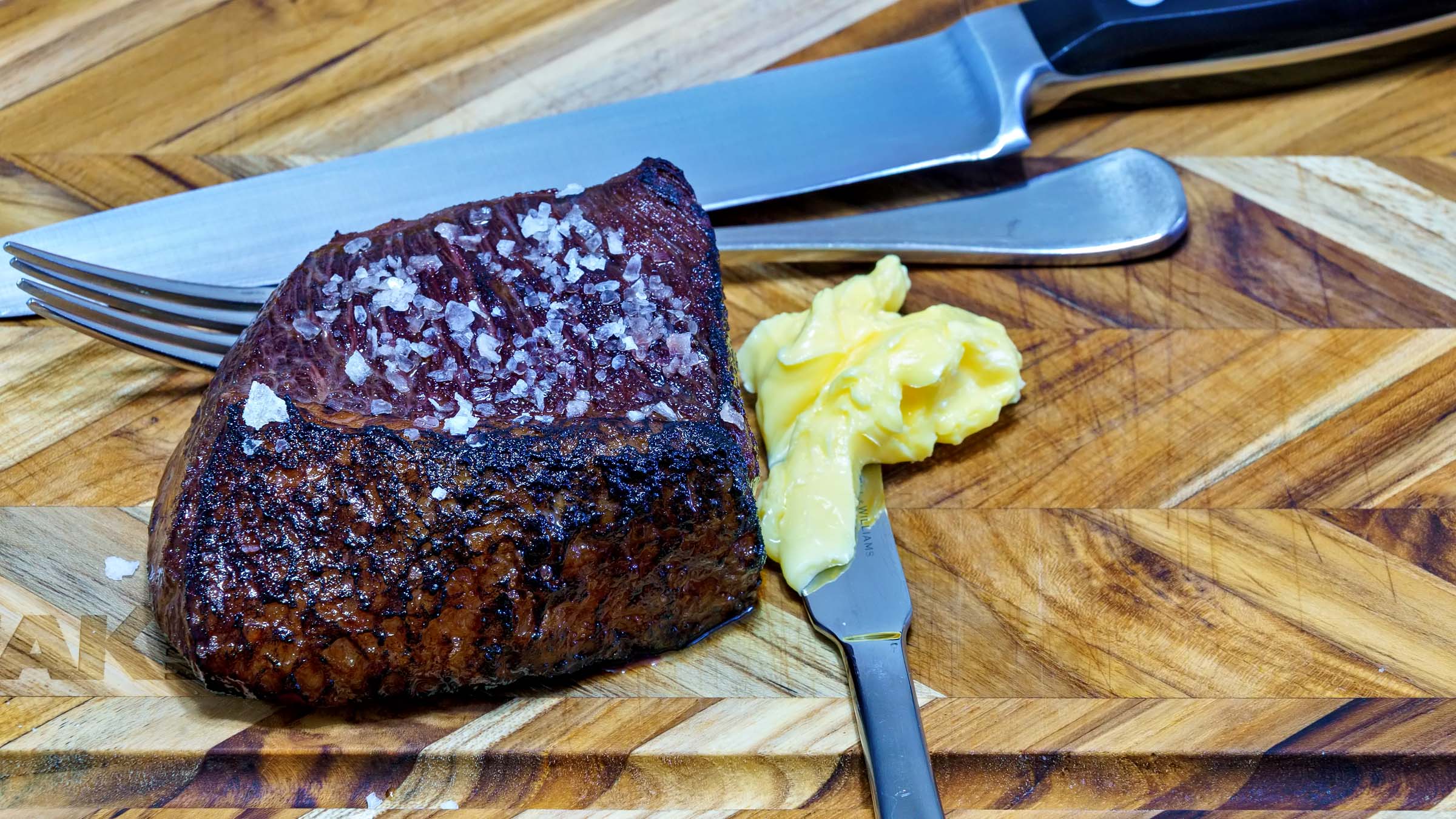
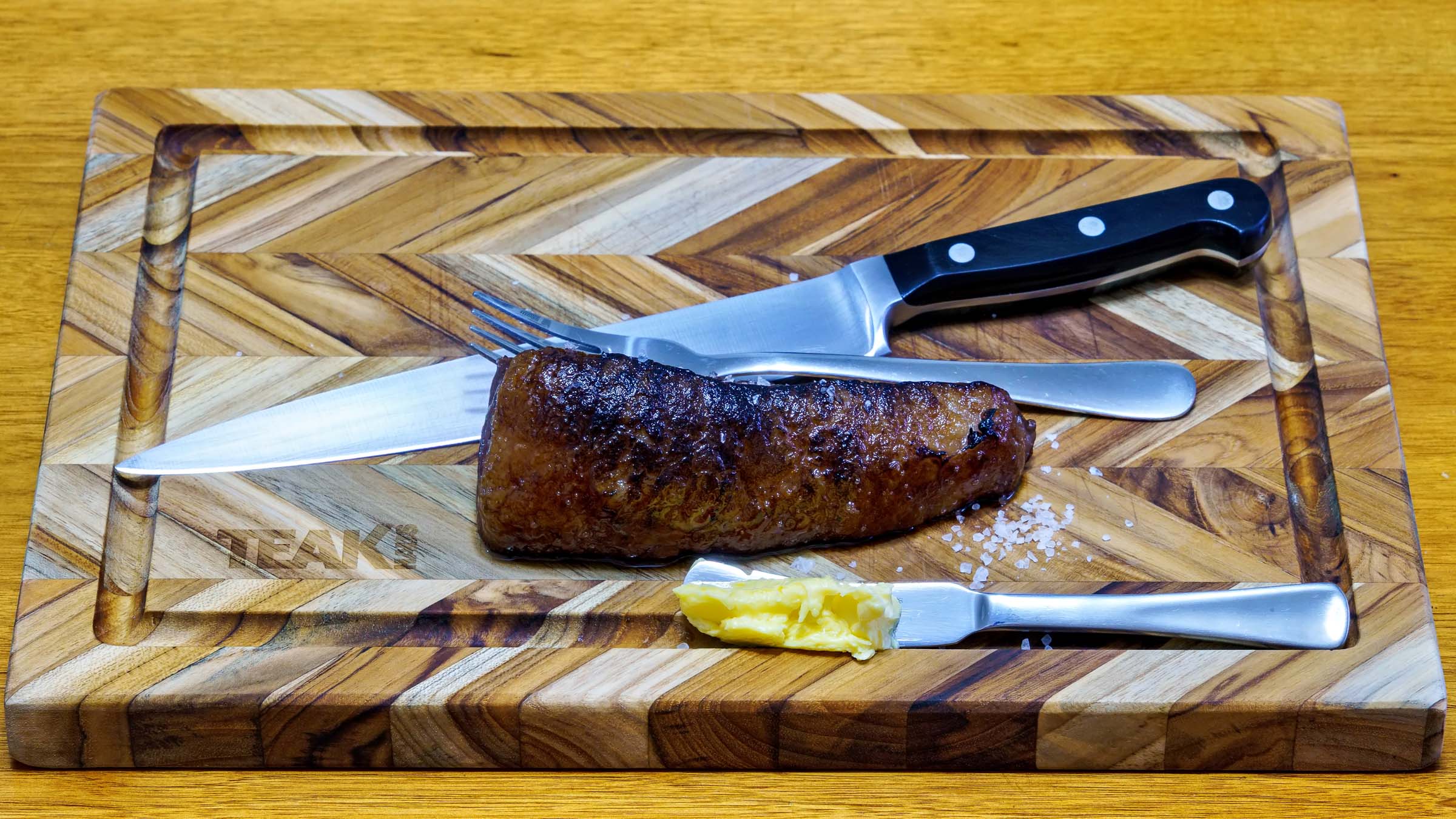
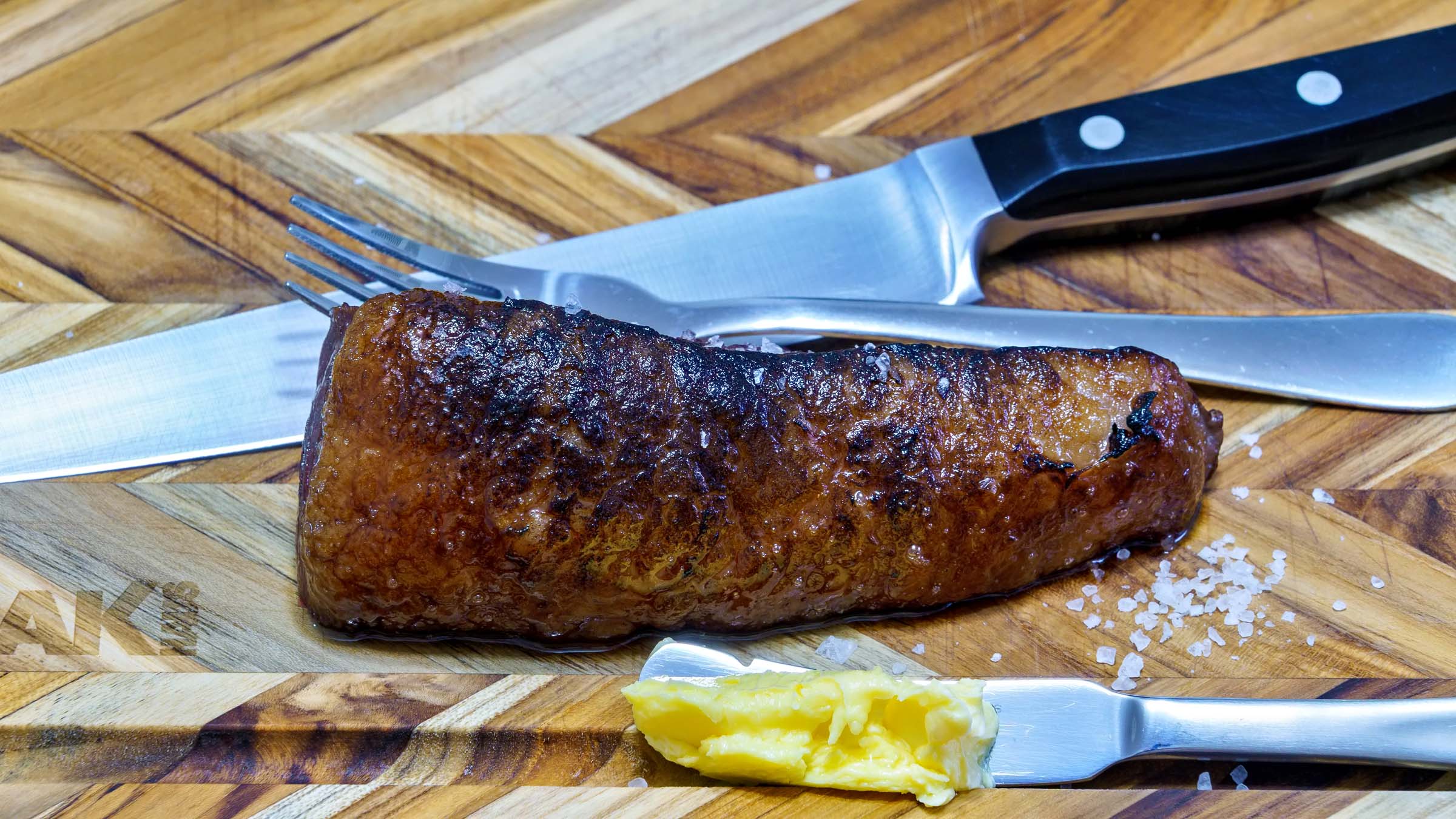
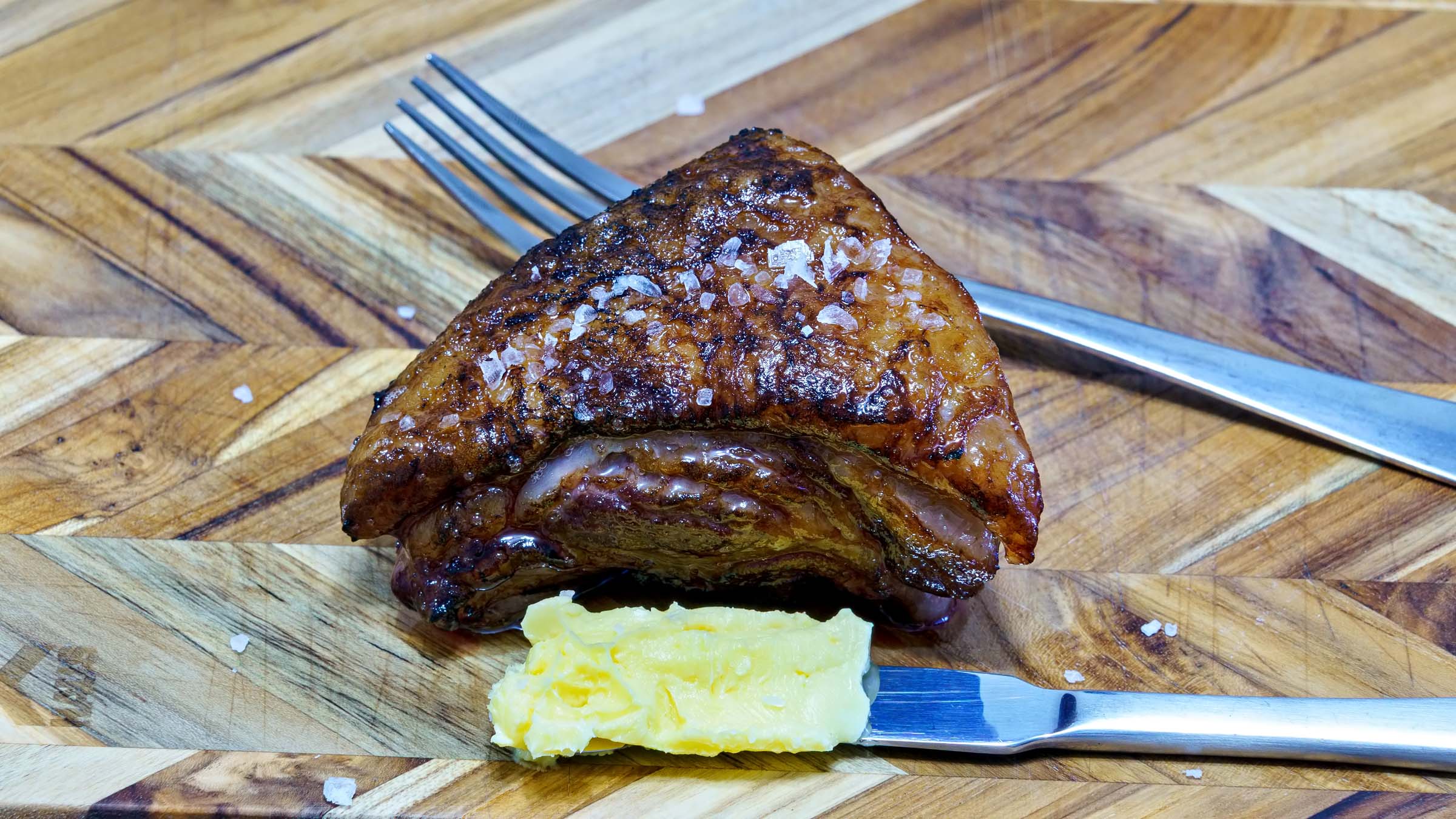
I had the creamed spinach as a side dish with a rump cap steak. The steak and creamed spinach go well together.
I enjoyed the meal. It was delicious.
Questions
Do you dream a lot?
Do you remember your dreams?
How do you feel about daylight saving time?
Do you enjoy eating spinach leaves?
Morning photographs
ISO 280, focal length 24 mm, shutter speed 1/250th second, and aperture f8.
There’s been a lot reported recently on Beef Wellington and mushrooms. This post has nothing to do with that. That said, the reporting about the Beef Wellington got me thinking about cooking something a little more “fancy” than I usually cook.
If this intrigues you, go to a search engine and type something like, “Australia, Beef Wellington, death cap mushrooms.”
Recipe
Ingredients
Puff pastry
Rump cap
Mushrooms
Spinach
Butter
Cream
Pâté
Blue cheese
Egg
Equipment
Water bath
Precision cooker
Oven
Barbecue grill
Gas torch
Frypan
Small saucepan
Instructions
The meat
Dry brine the rump cap for about 24 hours.
Cook the rump cap for approximately 3 hours at 57 °C.
Sear the steak on a barbecue grill along with a gas torch.
Allow the meat to cool before wrapping it in the puff pastry.
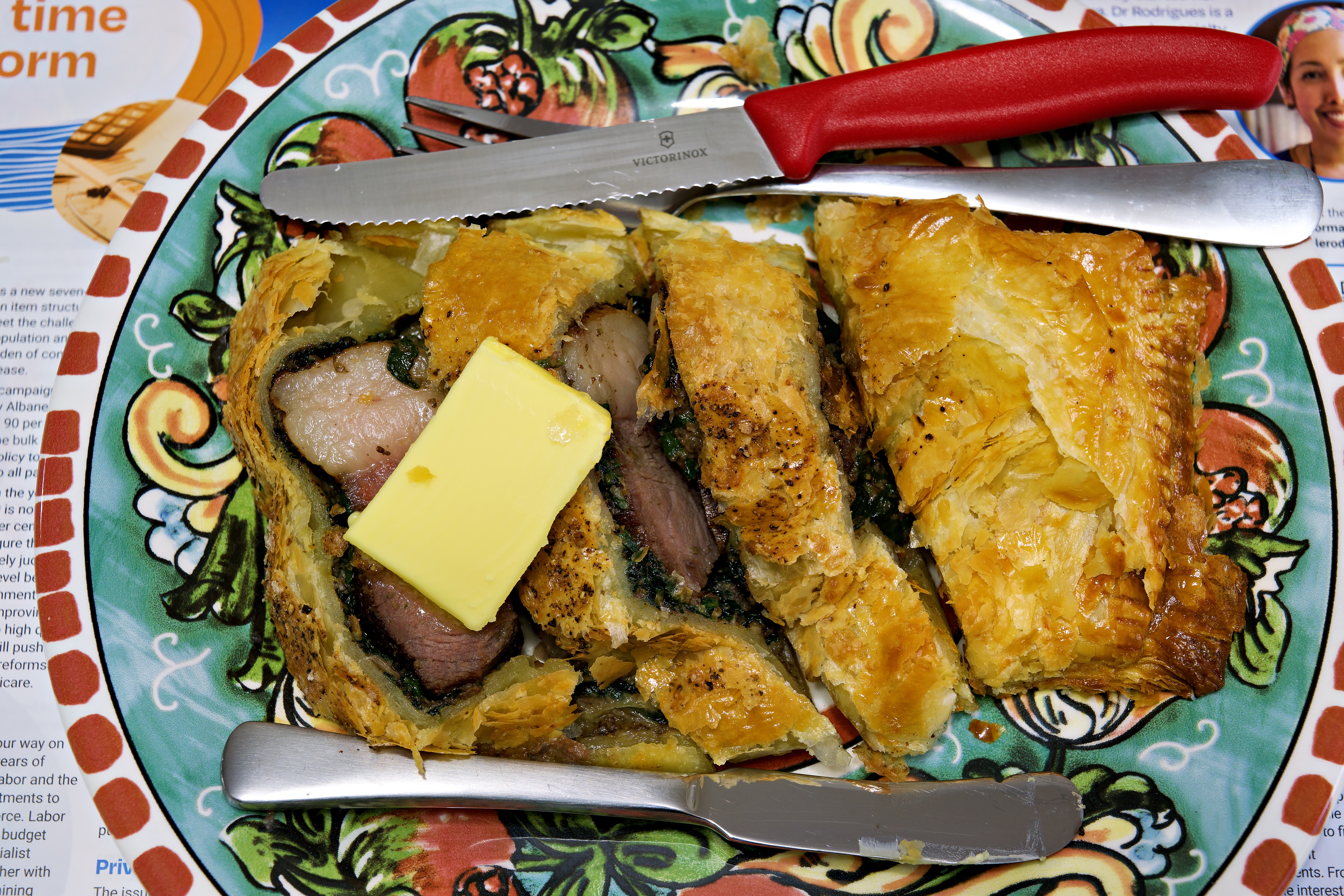
While I use this term, this meal is not a Beef Wellington.
Finely dice or process the mushrooms.
Sauté the mushrooms in beef fat and set them aside.
Wilt the spinach in beef fat and set aside.
In a small saucepan, gently heat a dash of cream and a small nob of butter.
Crumble in some blue cheese and then gently stir in the wilted spinach leaves.
Allow the mixture to cool.
Combine the cooled mushrooms and creamy spinach.
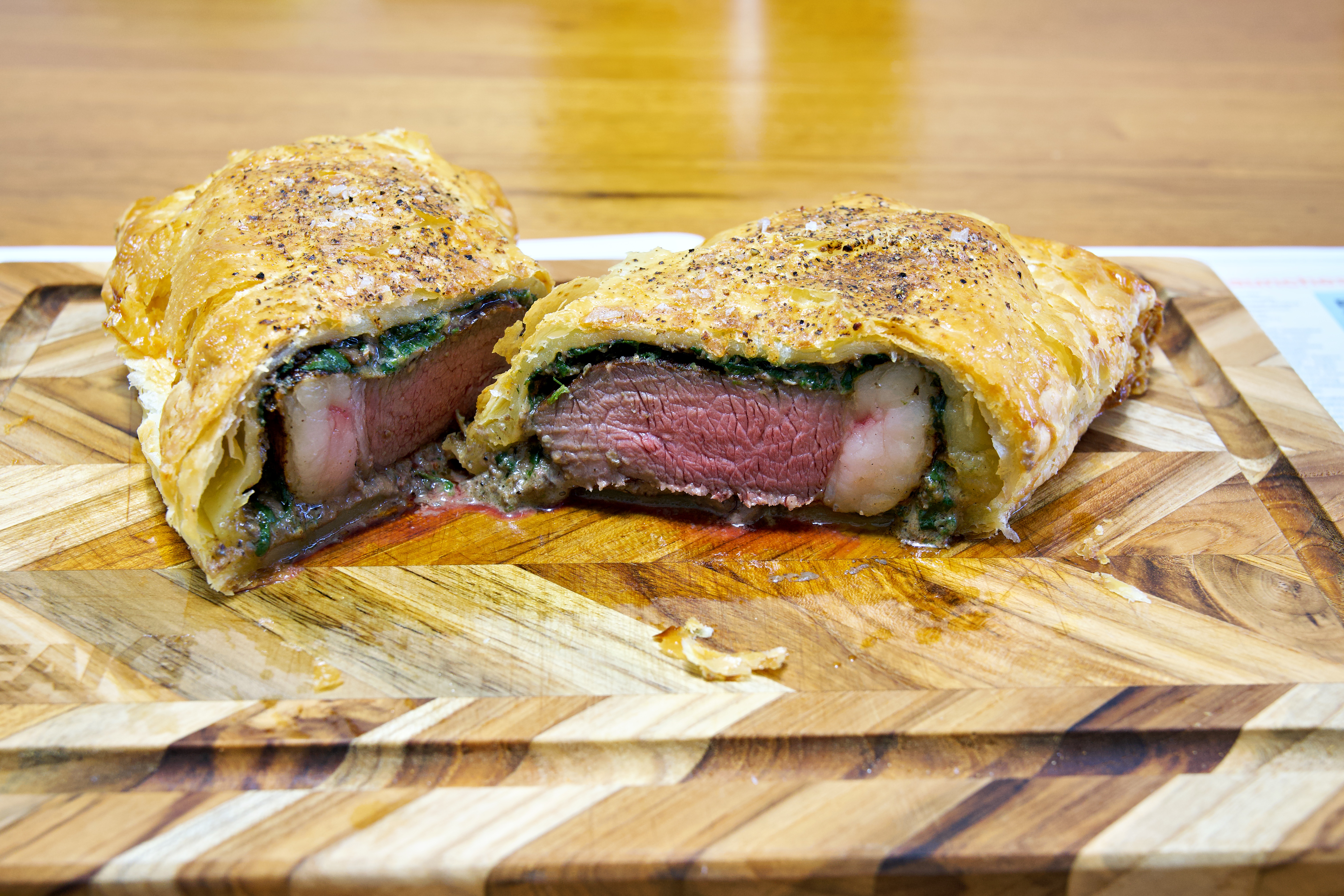
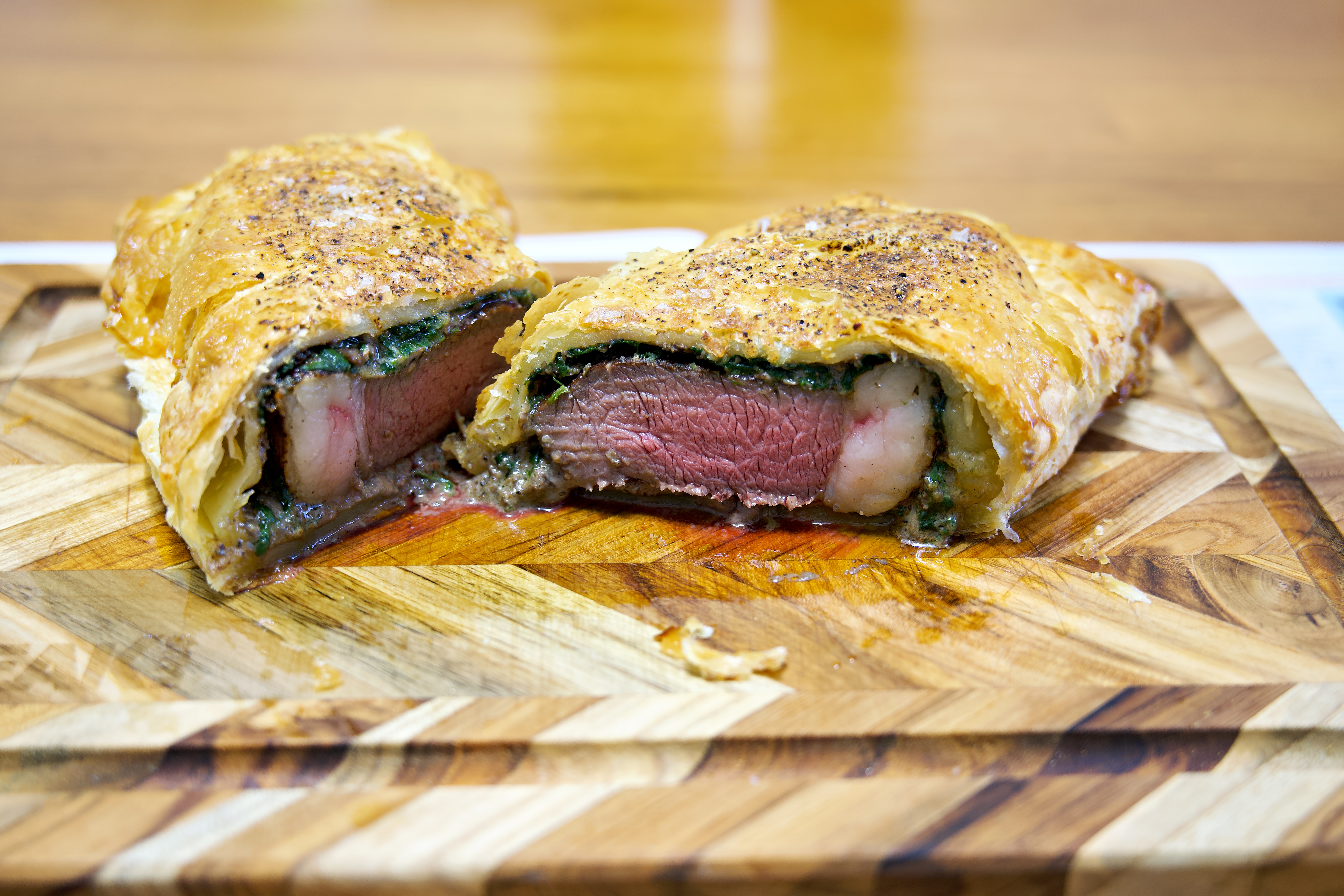
Assembly of the pastry creation (aka “Beef Adelaide”)
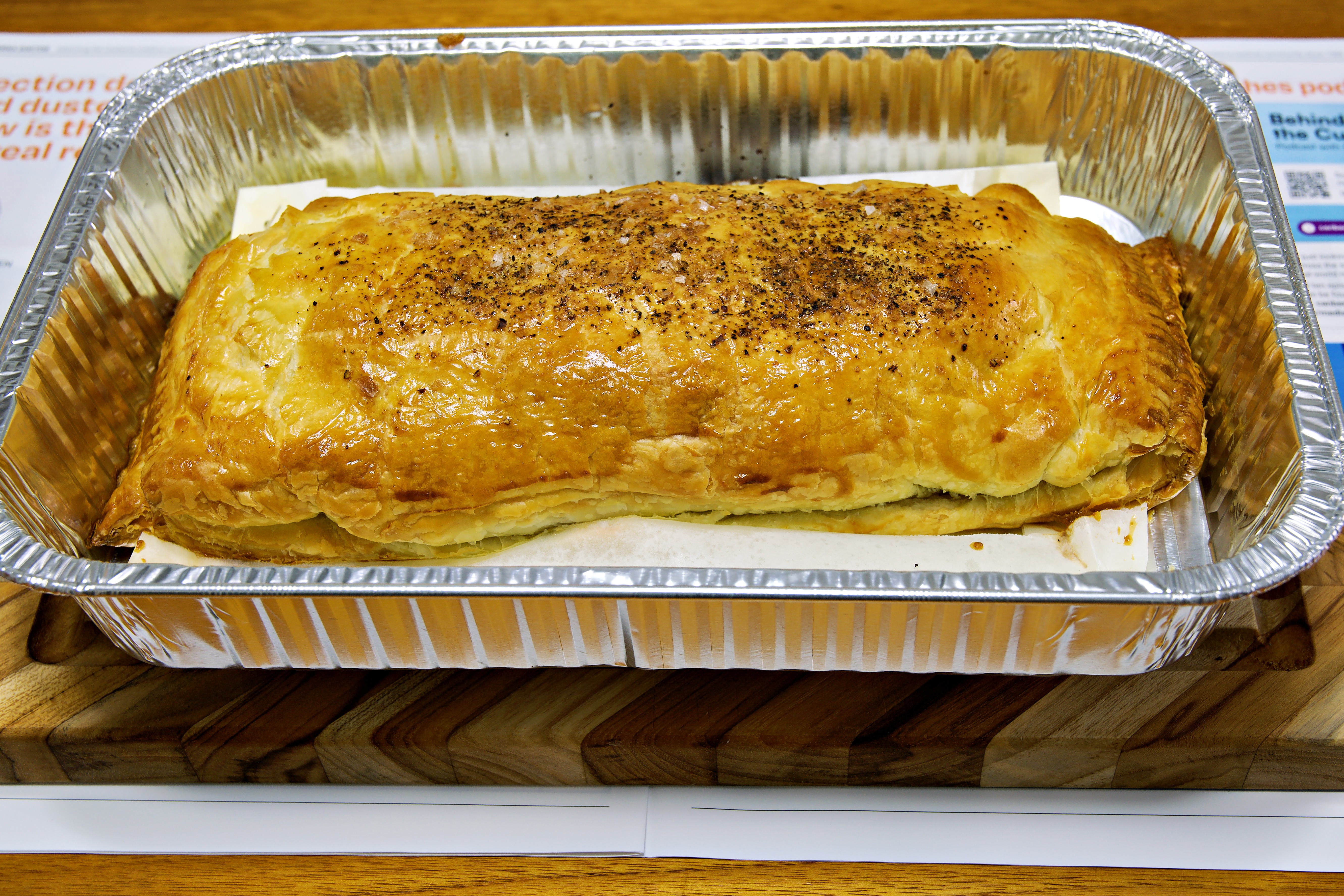
I’m going to call this dish “Beef Adelaide” because I live in Adelaide, and the meat is Coorong Black Angus.
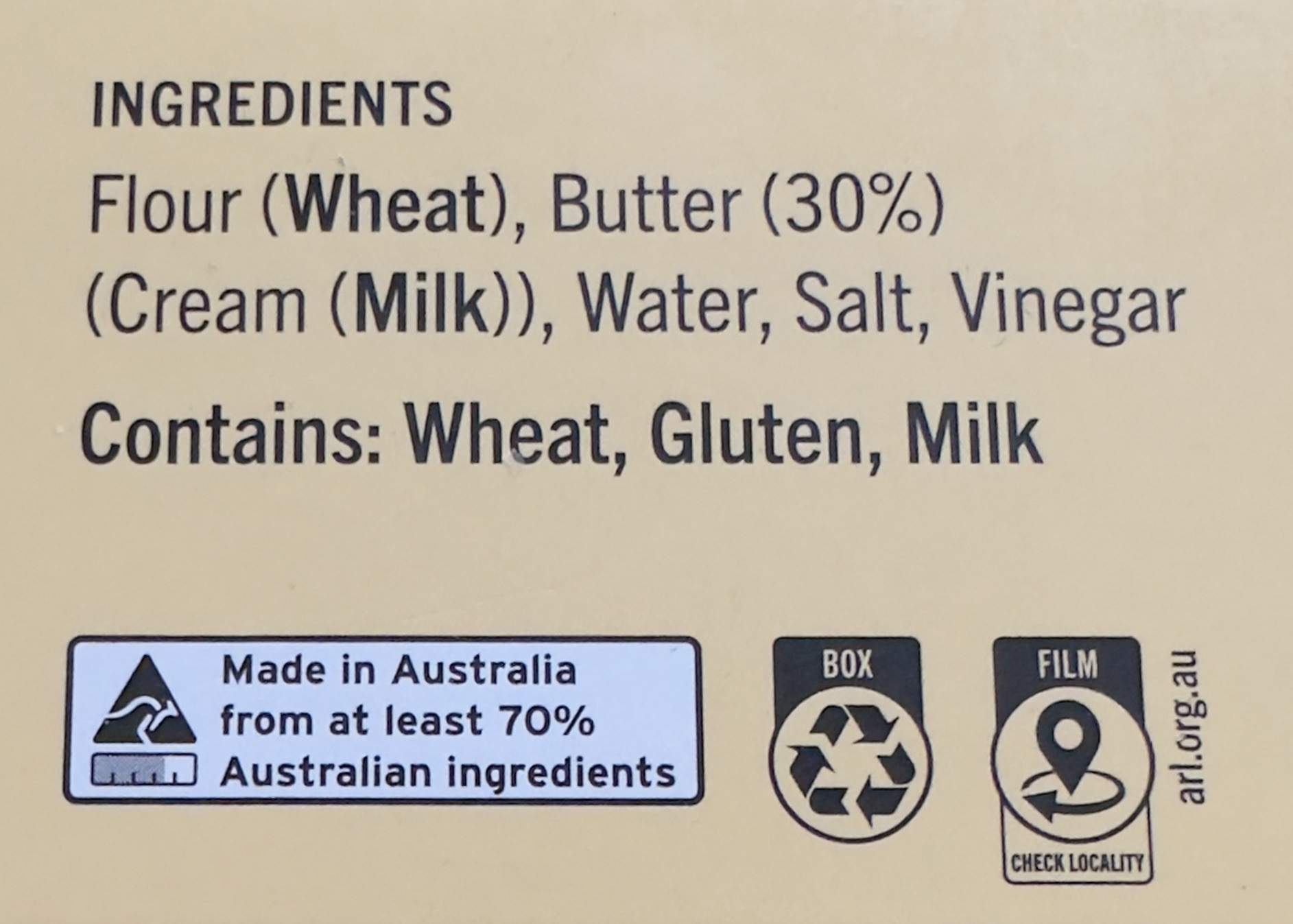
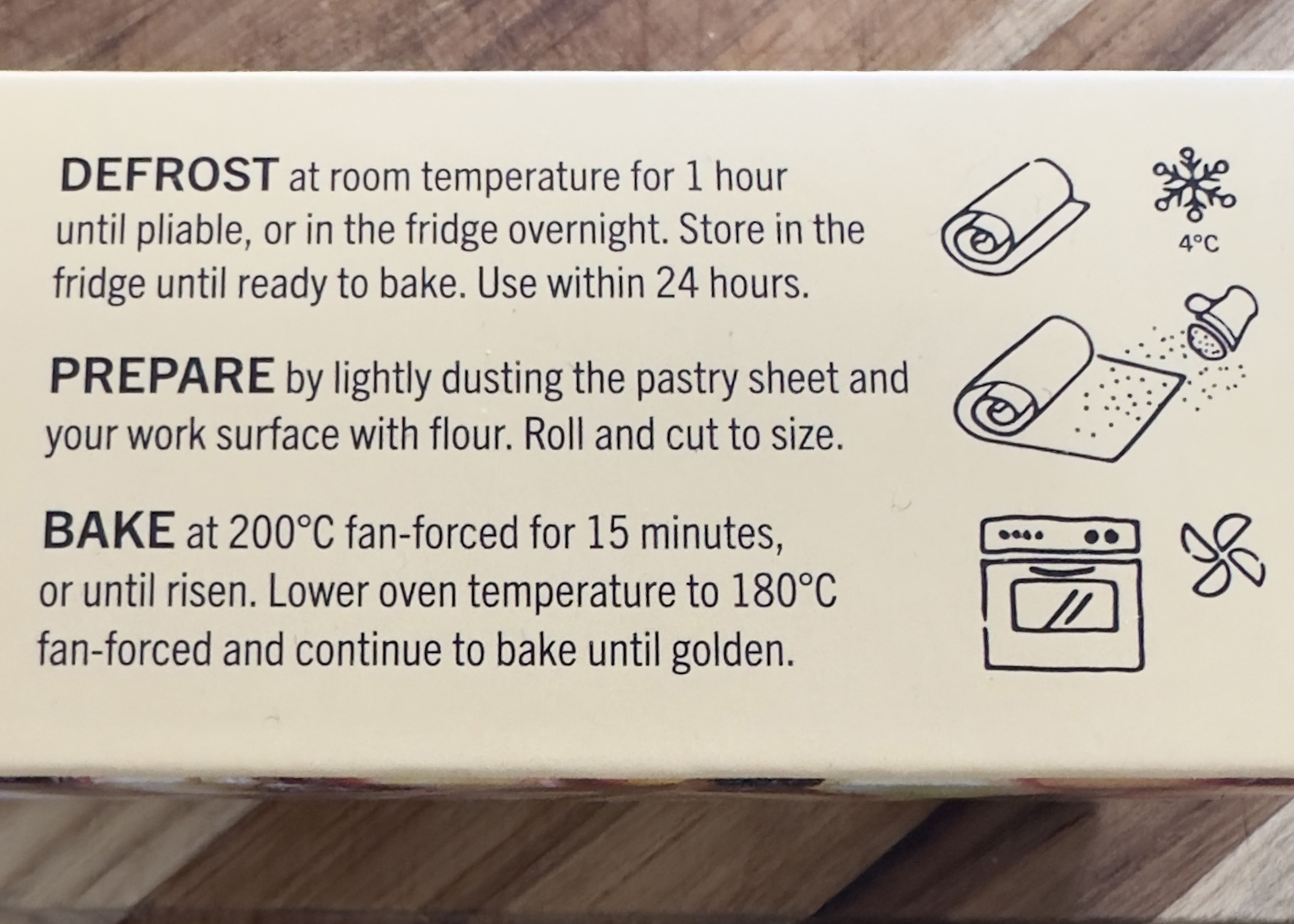
Open the packet of puff pastry according to the instructions for use (IFU).
Spread some pâté over the pastry.
Scoop and spread the “duxelles” on the pastry.
Place the meat on the pastry.
Wrap the pastry around the meat and “duxelles.”
Apply an egg wash.
Cook the pastry “Beef Adelaide” in an oven set at about 180 °C until the pastry is golden brown.
Serving suggestions
You can serve this dish on its own.
You could serve it with some vegetables.
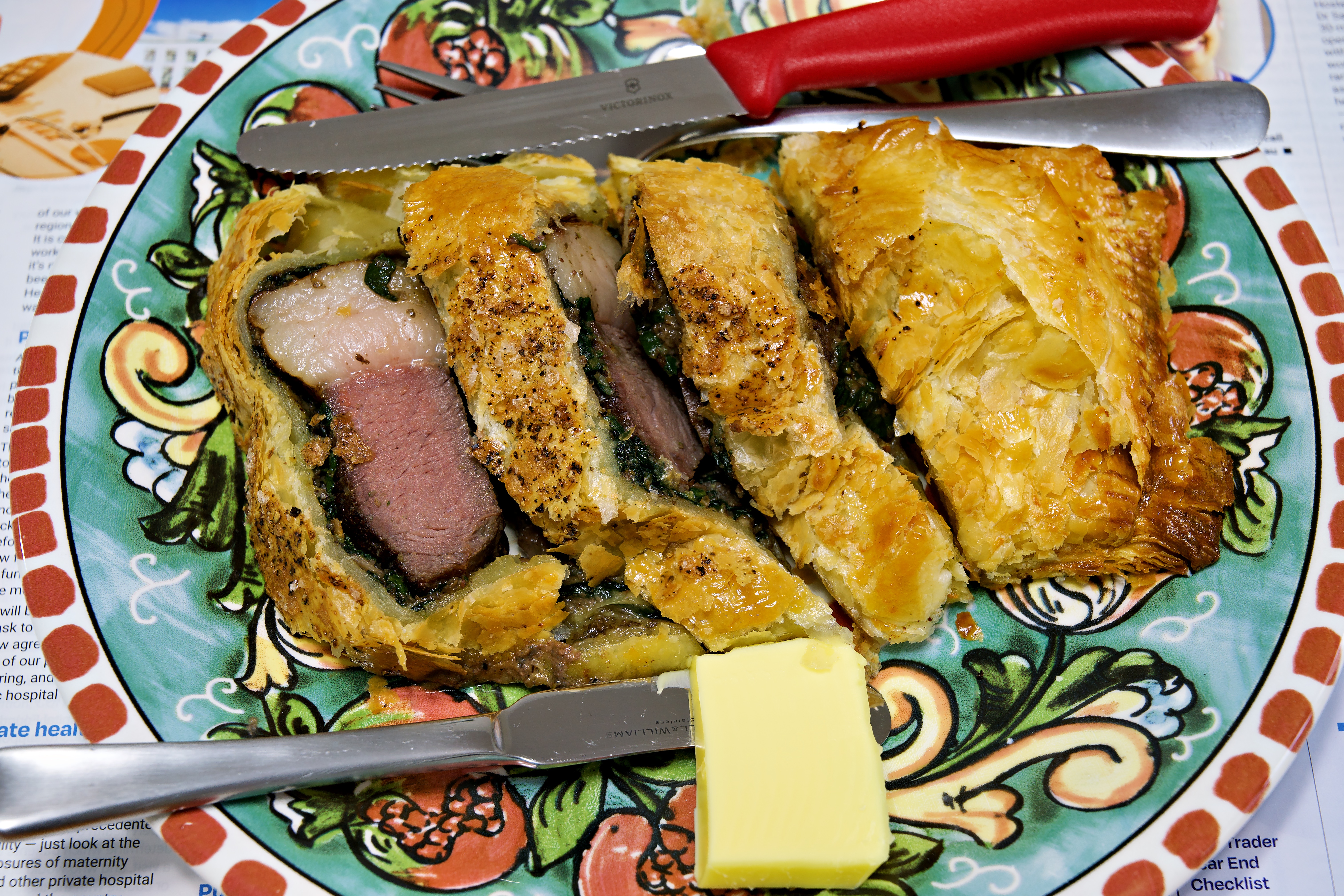
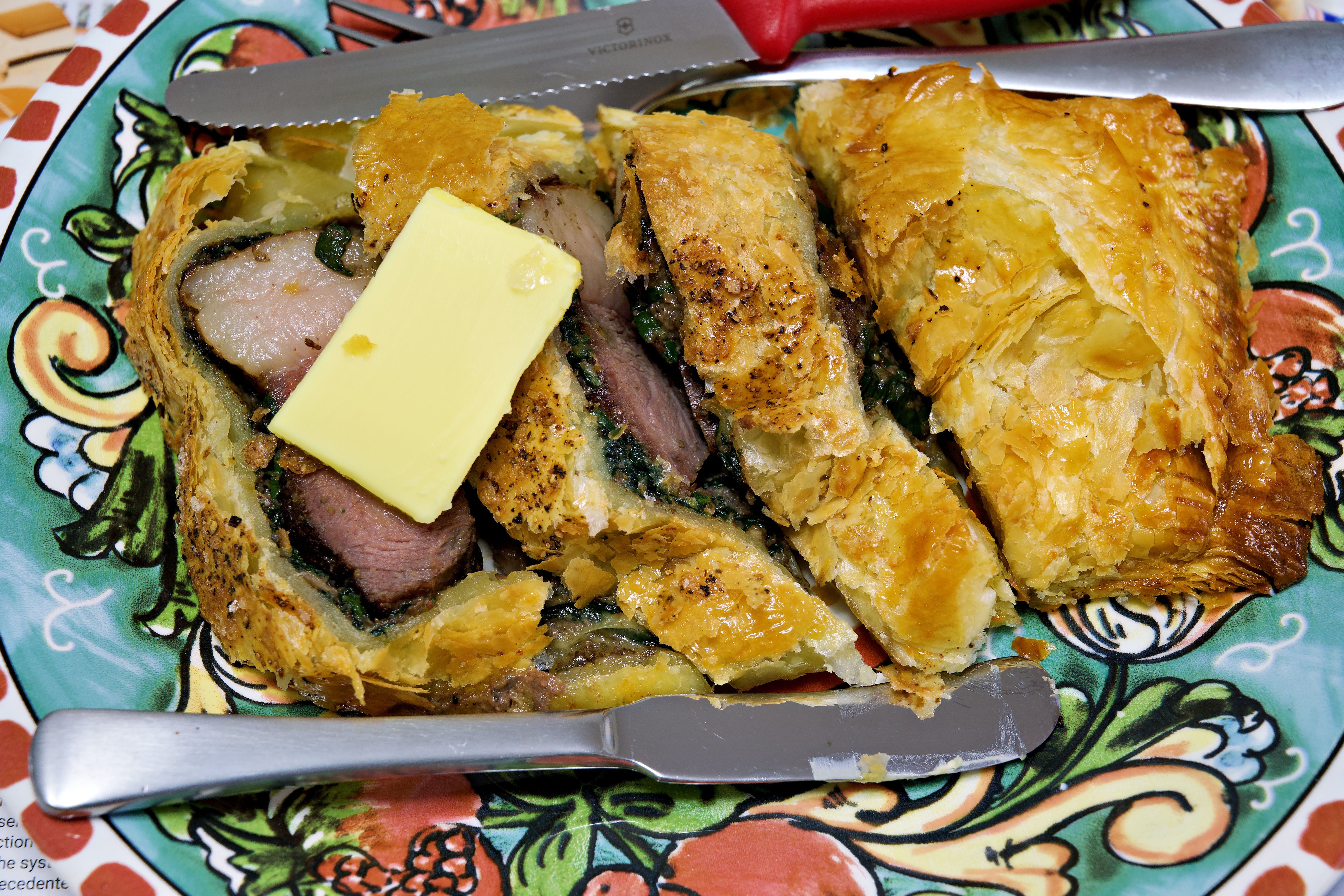
You could slice it and present it neatly on a plate and then pour burnt butter over it.
I chose to eat it on a plate by itself and used a serrated steak knife, so that bits of puff pastry would fly all over the dining table and onto the floor, as well as my lap, leaving grease marks on my strides.
Photographs
This is a gallery of photographs. Click on one and scroll through them to see a larger version with more detail.
Today had weather suited to this meal.
Thoughts on the meal
I was pleased with how the meal turned out.
I’ve made Beef Wellington many times, and in my opinion, it’s Not worth the effort to do it traditionally.
My “Beef Adelaide” is a good cheat.
Questions
Have you made Beef Wellington?
Do you like wrapping meat in pastry?
What do you like about meat in pastry?
[1] Noun [mass noun] a preparation of mushrooms sautéed with onions, shallots, garlic, and parsley and used to make stuffing or sauce.
I was participating in a Microsoft Teams chat with some colleagues, and the subject of “butter making everything better” came up (again). Friends at work know I’m fond of butter.
One friend (BC) said she feels the same way about cheese. I agreed and mentioned how I like a soft cheese with steak.
Another friend (ER) queried the combination, to which BC specified blue cheese (also BC) with steak.
As much as I’m happy to place a hunk of blue cheese next to a steak, tonight I thought I’d go a step further and make a blue cheese sauce with cream (also known as pre-butter) plus actual butter.
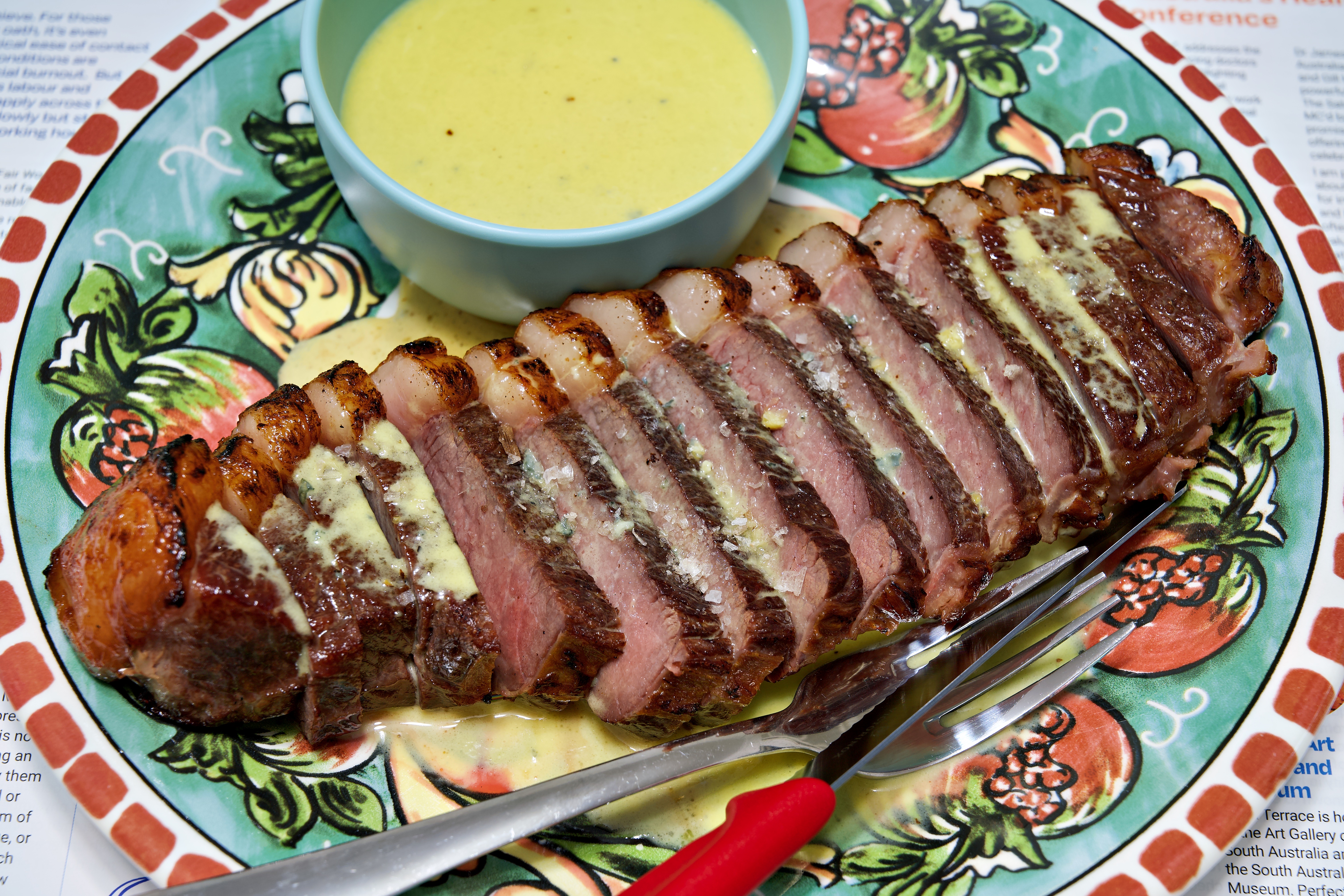
Tonight I served myself the blue cheese sauce with a piece of Coorong black angus rump cap, which I cooked sous vide for approximately 3 hours at 57 °C. The steak weighed approximately 320 grams.
Recipe
Ingredients
60 mL (¼ cup) cream
30 g (2 tablespoons) blue cheese crumbles
Pinch of freshly ground black pepper (optional)
15 g (1 tablespoon) of butter (optional — but not)
Instructions
Place the butter, cream and blue cheese crumbles in a small saucepan.
Warm over low to medium heat, stirring constantly until the cheese begins to melt.
Continue to cook for 3–5 minutes, until the mixture bubbles gently and thickens to a saucy consistency.
Remove from heat, season with a crack of black pepper, and spoon directly over your cooked steak.
Nutritional Information (per serving)
Net Carbs
Total Carbs
Fat
Protein
Calories
2 g
2 g
26 g
4 g
254 kcal
This recipe yields approximately 2 g of net carbs per serving, making it suitable for a ketogenic way of eating (assuming the daily intake of carbohydrates remains <20 g).
Tips and Variations
To serve two people, double the amount of all ingredients.
For extra richness, whisk in 1 tablespoon (15 g) of unsalted butter along with the cream.
Stir in chopped chives or a dash of white wine vinegar at the end for freshness.
Best served immediately—if reheated, the fats may separate.
Pairing Suggestions
A juicy scotch fillet steak, cooked to medium-rare, amplifies the creaminess of the sauce. Cooking meat too rare can result in an unattractive mix of red meat juices and pale sauce. While choosing well-done is an option, I do not like well-done steak. I find for a fat-rich steak, 57 to 58 °C a good temperature. You’ll find a lot of sous vide experts who recommend 55 °C. The fat doesn’t render as well at that temperature in my experience.
Pair with a low-carb side, such as garlic and butter sautéed spinach or roasted asparagus.
Photographs
Thoughts on the meal
I enjoyed tonight’s meal. Cutting the steak into slices so I could dip each piece into a small pot of blue cheese sauce felt luxurious. The umami-rich, beefy, thick, and juicy steak pairs perfectly with the salty-umami and funky flavours of the blue cheese, creating a harmonious blend of flavours and textures. It was almost Holy Matrimony. Being a lover of fat, the fat and the blue cheese also combined well.
Questions
Have you tried blue cheese and steak? What did you think?
Do you have any tips on making a blue cheese sauce?
How would you serve blue cheese and steak if you were cooking?
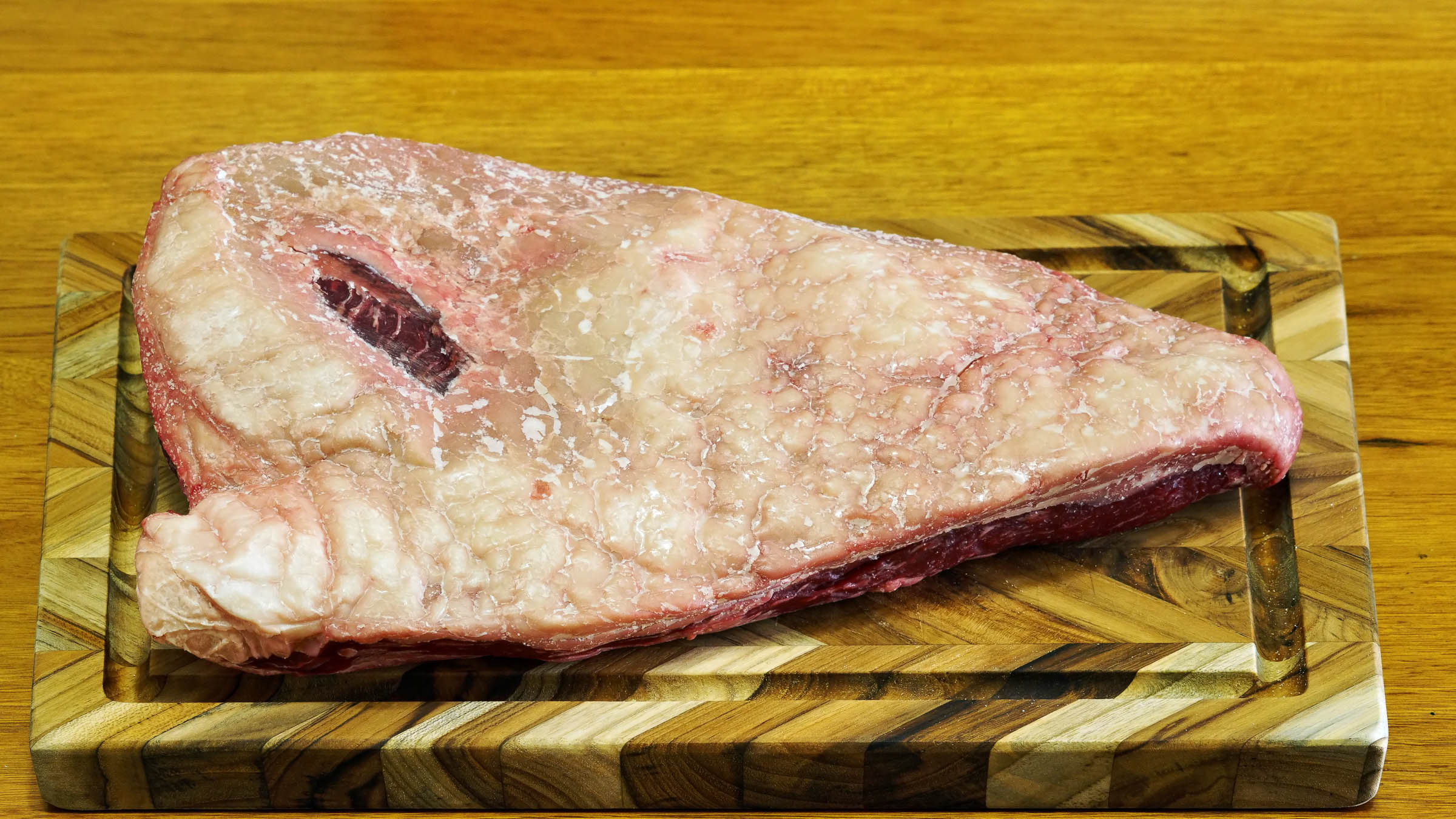
The rump cap is a distinctive cut of beef taken from the top of the hindquarter of cattle (Species: Bos taurus). It consists of the final section of the biceps femoris muscle (one of the main rump muscles) along with a thick covering of firm fat. In Australian butchery, the rump cap is part of the boneless rump primal (which contains several muscles) that sits between the sirloin and the topside on the carcass. This cut is roughly triangular in shape and relatively small, usually about 1 to 1.5 kg, because butchers only use the underused, tender portion of the muscle for the rump cap. The muscle itself is not heavily worked during the animal’s life, which is why rump cap meat is known for being tender and finely textured.
This cut is commonly called rump cap in Australia, but it goes by many names internationally. In Brazil and much of South America, it is picanha. North American butchers know it as the top sirloin cap or coulotte (culotte) steak. In the UK and other regions, it may be referred to as a rump cover or sirloin cap. Spanish-speaking countries have their own terms as well, for example, it’s called “colita de cuadril” or “punta trasera” in Latin America. Despite the varied nomenclature, all these names describe the same cut: the cap of the rump with its signature fat layer intact. The rump cap is one of the four to five sub-primal muscles that make up the whole rump, and it is usually separated out by skilled butchers upon request. Anatomically, it is essentially the cap of the top sirloin area, with the M. biceps femoris being the primary muscle component. The attached fat cap (usually about 1–2 cm thick) is a defining feature – this fat layer insulates the meat during cooking and contributes greatly to its flavour and juiciness.
Cooking and eating characteristics.
The rump cap is known for its beefy flavour and juicy tenderness. Because it comes from a little-exercised muscle, the meat has a fine grain and tender bite when cooked properly. A thick, creamy fat cap covers one side of the cut, which bastes the meat as it cooks and infuses it with rich flavour. Much of the rump cap’s appeal comes from this fat layer, which, when rendered and lightly crisped, adds succulence. The lean meat beneath has a flavour reminiscent of a top sirloin steak – beefy and satisfying – but it carries less internal marbling, so careful cooking is necessary to avoid toughness. Texturally, diners get the best of both worlds: a tender, lean interior and a delightful outer edge of golden, flavourful fat. Those who prefer a leaner experience can trim off the fat after cooking; by then, the meat will have absorbed its moisture and flavour benefits. Regular readers know I’d never trim away the fat.
Preferred cooking techniques for rump cap focus on high-heat roasting or grilling, often followed by slicing. In Australian households, one popular method is to cook the rump cap whole on a hot barbecue grill or rotisserie spit. The meat is typically seasoned simply with coarse salt (and maybe pepper), allowing its natural flavour to shine. The fat-cap side is placed towards the heat source first to start rendering the fat. For example, when grilling individual rump cap steaks, cooks often begin by searing the fat side down over a high flame to crisp it and melt some fat, then sear the lean sides. After a good brown crust forms, the steak is finished over moderate heat until reaching the desired doneness. Medium-rare is the most common target doneness for rump cap – typically about 54–57 °C internal temperature – as cooking beyond medium can dry out the lean muscle and make it less tender. Overcooking is avoided because this cut can become firm if the centre is robbed of moisture.
In terms of serving, rump cap is quite versatile. It can be roasted whole in an oven or covered barbecue and then sliced thinly, making for a quick roast dinner that’s “meltingly tender” inside. Alternatively, it can be sliced into steaks prior to cooking for individual portions – when doing so, butchers note a slicing technique: cut the raw rump cap with the grain into steaks, then, after cooking, each steak is sliced against the grain on the plate. This method, contrary to how many steaks are cut, results in maximum tenderness in each bite. Thanks to its rich flavour, rump cap is delicious with minimal adornment. It’s often served simply with a sprinkle of sea salt. The combination of juicy, pink-centred beef and crispy seasoned fat has made rump cap a star.
Nutrition information
Like other lean red meats, rump cap is nutrient-dense, providing protein, fats, vitamins and minerals. For 100 grams of rump cap:
Protein: 21–23 g. Beef rump cap is a source of protein, containing the essential amino acids needed for human nutrition. It is high in branched-chain amino acids (BCAAs) like leucine (2.6 g per 100 g), isoleucine (1.4 g) and valine (1.5 g). A typical serving (150 g) provides around 34 g of protein.
Fat: The fat content varies depending on how much of the external fat cap is trimmed. Lean trimmed rump cap (with visible fat removed) is low in fat – about 2.7–5 g of fat per 100 g. Trimmed lean beef has a similar fat level to skinless chicken breast. Moreover, about half to two-thirds of the fat in grass-fed beef is unsaturated fat, including some omega-3 fatty acids. If the fat cap is consumed, the total fat per 100 g will be higher (it can rise to ~10–15 g or more, depending on how much fat is left on). Notably, beef fat from grass-fed cattle tends to contain compounds like conjugated linoleic acid (CLA) in small quantities.
Carbohydrates: 0 g. Like all unprocessed meats, rump cap contains no carbohydrates or sugars. Any glycogen or glucose present in fresh meat is negligible, so it is essentially carbohydrate-free. This also means it has no dietary fibre.
Energy: Lean rump cap is relatively low in calories for its protein content. 100 g of lean grass-fed beef provides roughly 500–600 kJ (120–140 Cal). A portion that includes the fat cap will have higher energy (fat being calorie-dense), roughly on the order of 800–900 kJ (190–210 Cal) per 100 g for a well-marbled piece. Thus, a typical 150 g steak (lean) might be around 180–210 Cal, while the same with fat could be around 300 Cal.
Iron: ~2.0–3.0 mg per 100 g. Rump cap is a source of iron, predominantly in the haem iron form. A 150 g serving provides roughly 3 mg of iron.
Zinc: ~4–6 mg per 100 g. A 150 g portion has about 6.7 mg zinc.
Vitamin B12: A serving of rump cap (150 g) has around 1–2 µg of B₁₂. B₁₂ is only found in animal-derived foods.
Other B-Vitamins: Rump cap contributes other B complex vitamins, including niacin (B₃) and vitamin B₆. It also contains riboflavin (B₂) and pantothenic acid (B₅).
Selenium and Zinc: Australian grass-fed beef is a source of selenium and zinc. 100 g of beef can provide ~20–30 µg of selenium and a fraction of zinc.
Phosphorus and Magnesium: Beef rump cap supplies phosphorus and some magnesium. A typical 100 g might contain ~180 mg phosphorus and around ~20 mg magnesium.
Omega-3 Fatty Acids: Australian grass-fed beef contains small amounts of long-chain omega-3 fats. Lean beef usually has about 30–50 mg of omega-3 per 100 g.
Australian beef is predominantly grass-fed and free-range, which means it’s usually free of additives and hormones by law and is naturally lean. Lean beef, like rump cap (with visible fat trimmed), is also low in sodium and contains only about 1% saturated fat by weight. Beef rump cap is a nutrient-dense food.
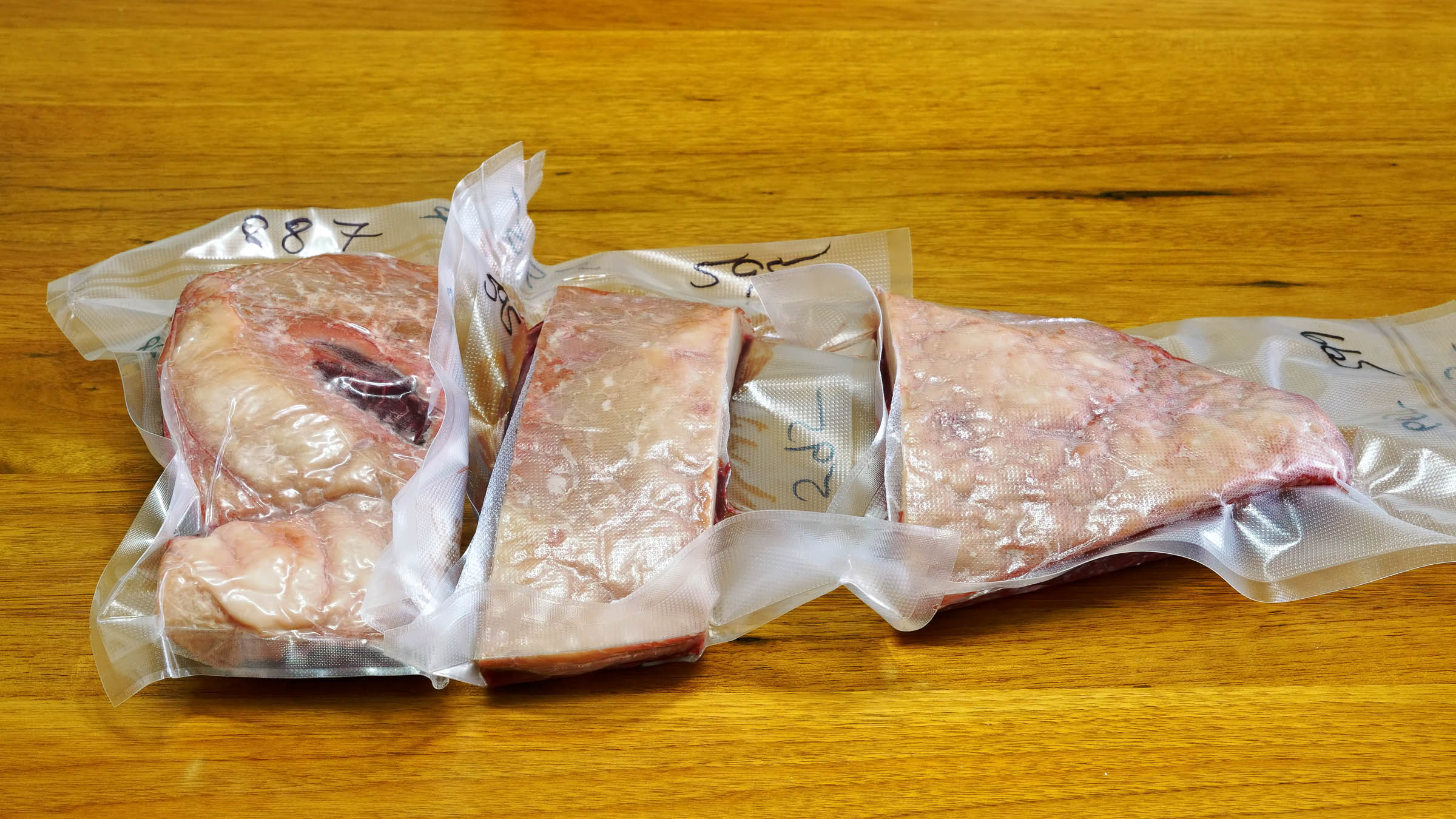
Vacuum seal the meat and refrigerate or freeze the portions.
Leave one portion for today’s meal.
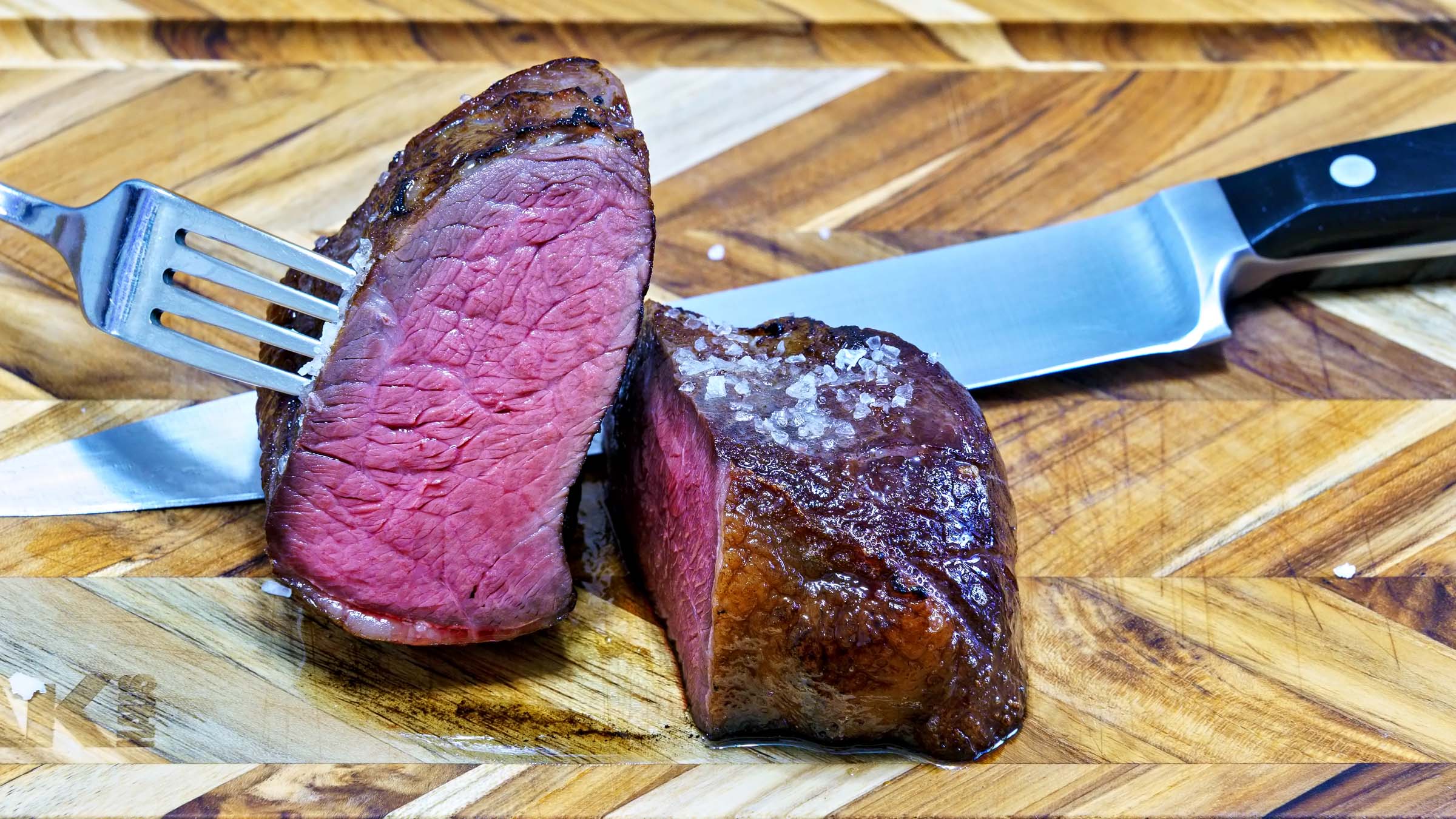
Cook the meat for a few hours at 57 °C.
Remove the meat from the bag.
Dry the meat with kitchen paper.
Place the meat onto a hot barbecue grill.
Sear the meat with a gas torch.
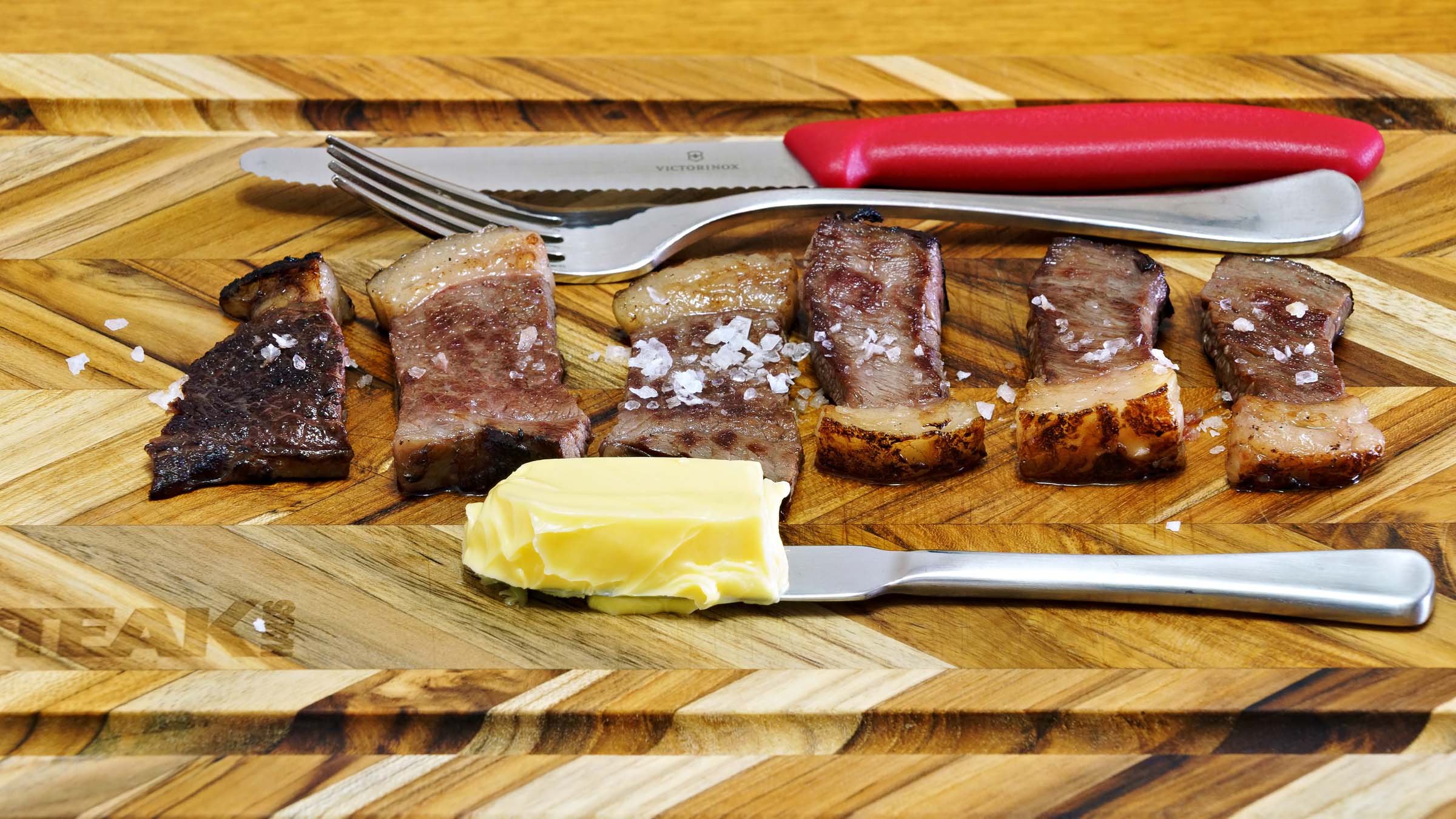
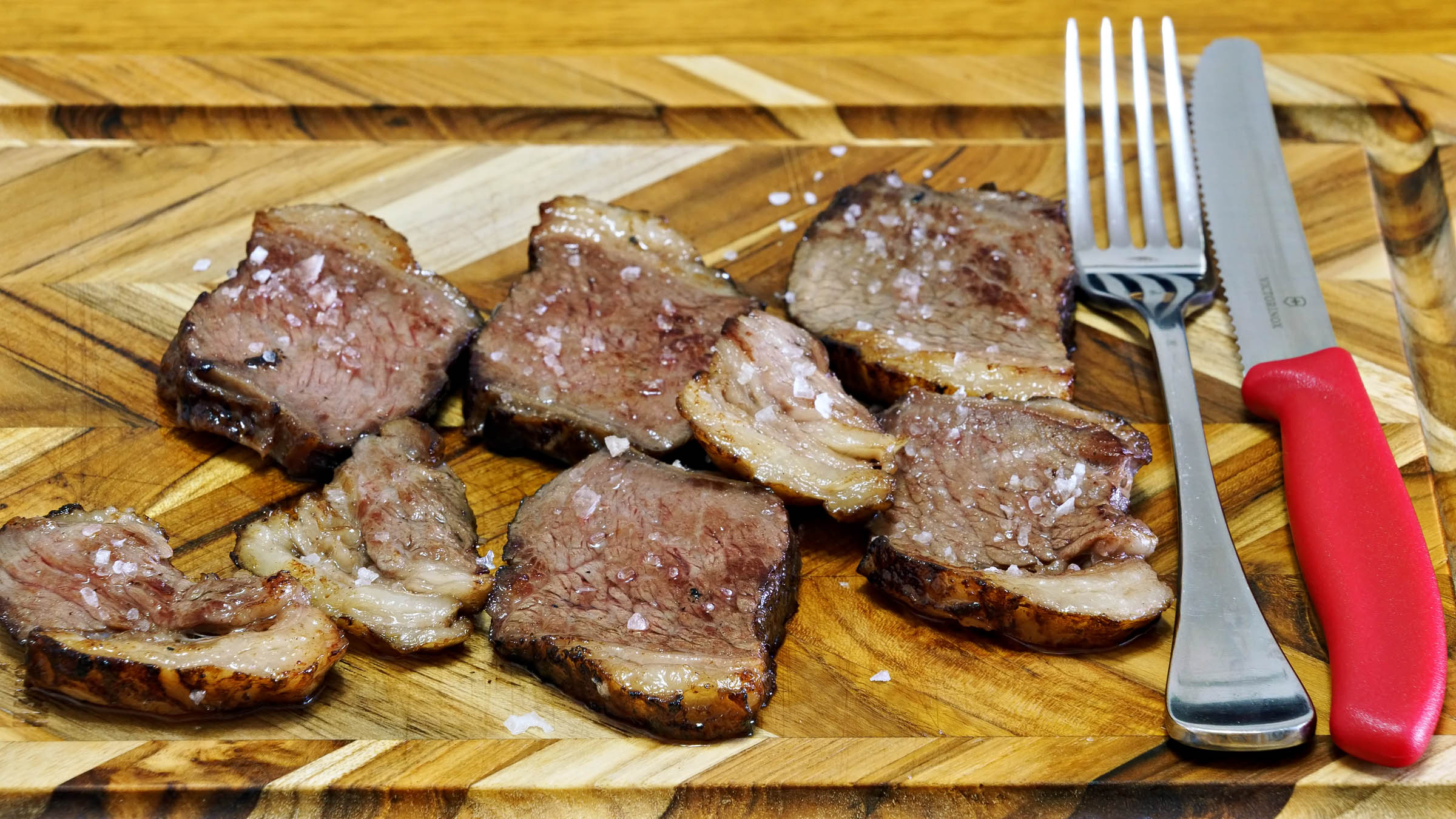
Slice the meat.
Salt the meat.
Eat the meat.
Photographs
This is a gallery of images. Click (or touch) on one and then scroll through the gallery.
Thoughts on rump cap
I am a fan of rump cap. It’s mostly because of the fat that bathes the meat as it cooks. The meat is tender and has a great beef flavour.
I prefer scotch fillet steak (ribeye in North America) because of the different textures associated with the fillet and deckle muscle bundles. That said, rump cap (at least in Australia) is cheaper than scotch fillet steak and more economical when bought in bulk.
I’m confident I’ll always have some rump cap in my freezer.