

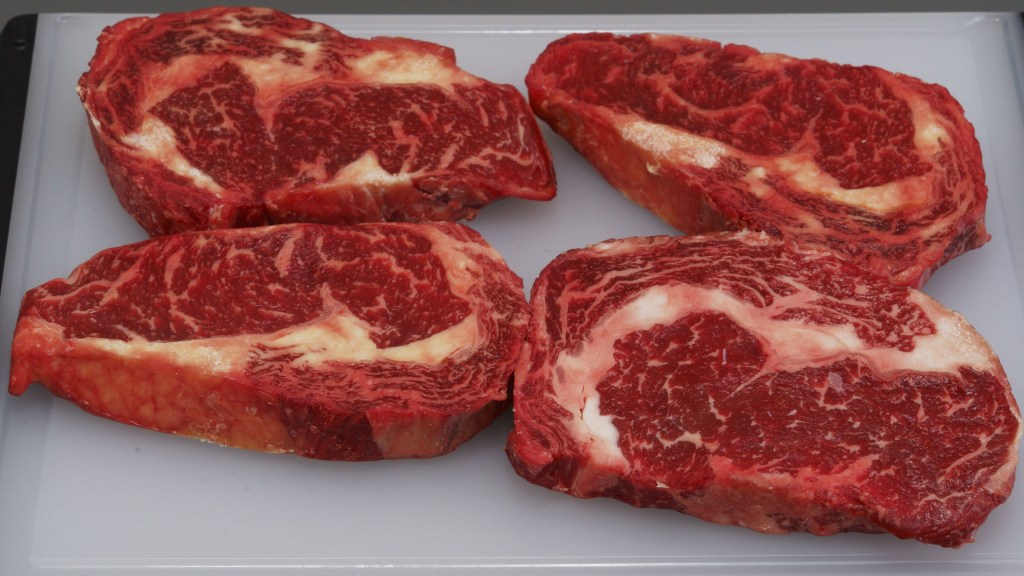
I recently bought scotch fillet steaks from two different supermarkets. One supermarket is a large national chain with international backing. The other is a local chain that thrives in my area.
I picked four steaks from each to sidestep the issue of getting a one-off good or bad steak.
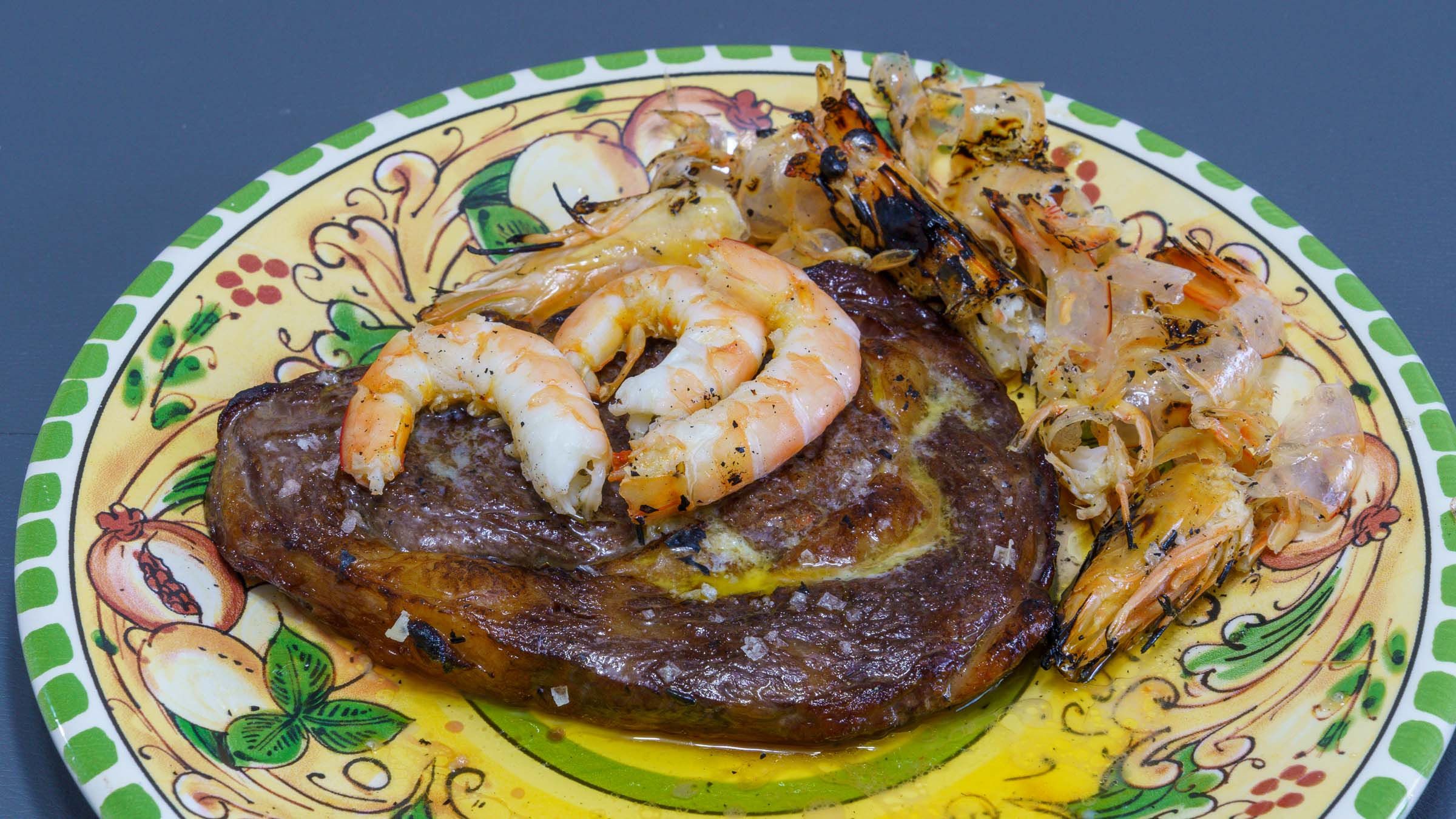
Description
The scotch fillet steak, also known as ribeye, is a tender and flavourful cut from beef cattle. It’s known for its marbling, which contributes to its juicy and succulent texture.
Anatomical Position
This cut is derived from the rib section, specifically from the rib primal between the 6th and 12th ribs.
Other Names Worldwide
United States: Ribeye
United Kingdom: Ribeye or Entrecôte
France: Entrecôte
Argentina: Bife de Ancho
Popularity
Its popularity stems from its tenderness and full-bodied flavour. The marbling of fat ensures that the meat remains moist and juicy during cooking, making it a favourite choice among meat enthusiasts.
Nutritional Measurements (per 100 grams [3.5 ounces])
Calories: Approximately 1,046 kilojoules
Protein: Around 20–25 grams
Fat: Approximately 18–22 grams
Saturated Fat: About 8–10 grams
Carbohydrates: 0 grams

Nature and Type of Fat
The scotch fillet steak contains a mix of monounsaturated, polyunsaturated, and saturated fats. The high amount of intramuscular fat (marbling) not only enhances the flavour but also helps in maintaining moisture during cooking, leading to a tender bite.
Cooking Methods
Grilling: Often the go-to method, allowing for a nice char while keeping the inside juicy.
Pan-Seared: Provides a crust; often finished in the oven for even cooking.
Sous Vide: Ensures precise doneness followed by a quick sear for a perfect finish.
Broiling: Quick and efficient, using high heat to create a caramelised exterior.
Smoking: Adds a rich, smoky flavour to the already robust taste of the steak.
Buying Tips
Marbling: Look for even marbling throughout the steak as an indicator of flavour and tenderness.
Colour: Fresh beef should have a bright red colour. Avoid steaks with brown or discoloured spots.
Thickness: The ideal thickness is around 20–25 millimetres (about one inch) for a perfect balance of sear and tenderness. It will also remain moist longer.
Smell: Fresh beef should have a neutral smell. Any sour or off odour is a red flag.
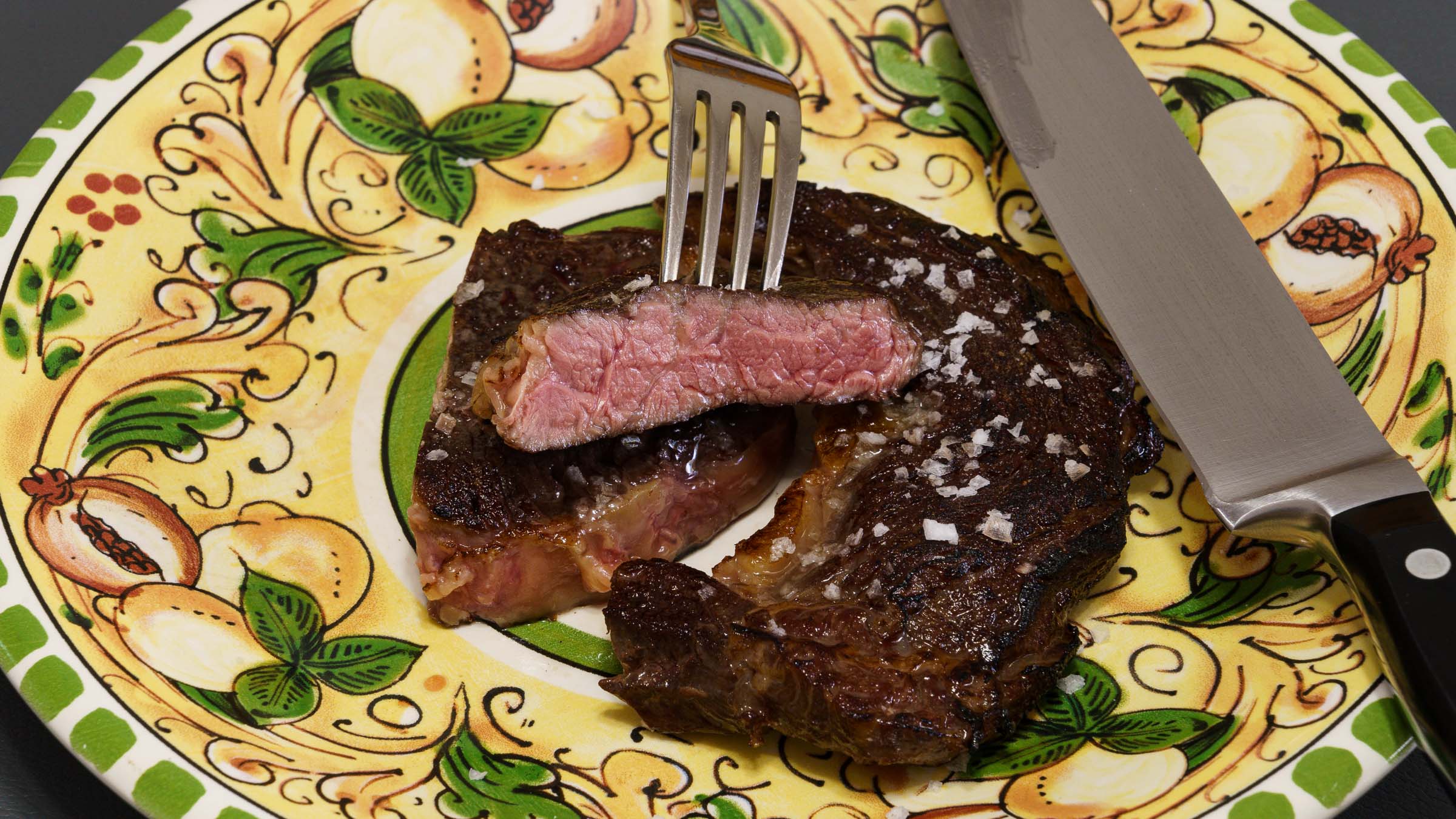
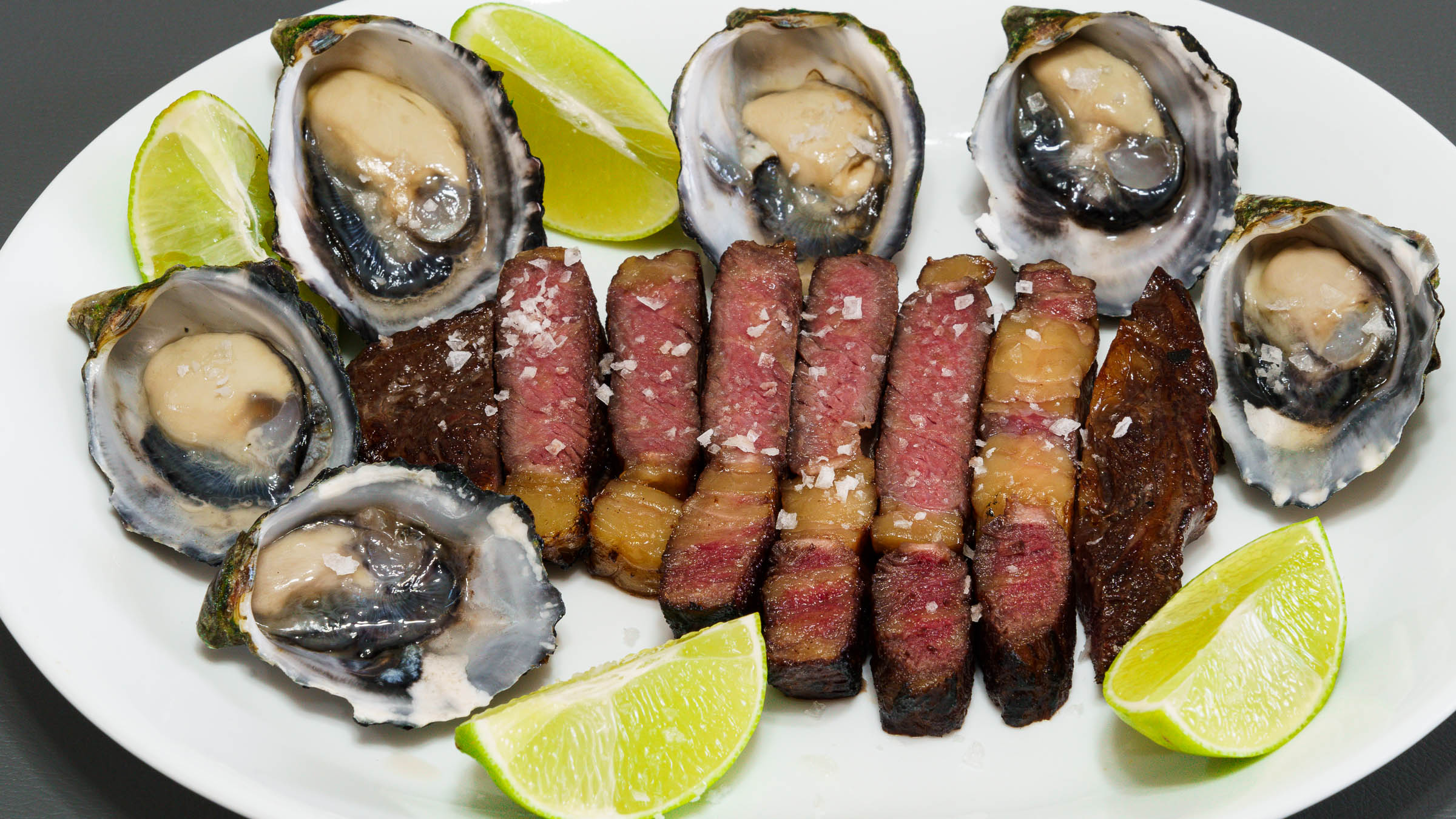
Comparison photographs





How did I cook the steaks?
Dry brining: I almost always dry brine steaks. Dry brining ensures a better crust on the steak.
Sous vide: For steak thicker than a few centimetres (an inch and a bit), I’ll cook them in a water bath to ensure edge-to-edge doneness the way I like. This usually means cooking at 57 °C (135 °F) for two to three hours.
Gas torch sear: My preferred way to sear steak, especially in the warmer months is to use a propane gas torch.

How did the steaks compare?
There were no bad steaks. All of the steaks were tender and flavourful. If I was doing a blind test, I think I’d probably point to the local state-based supermarket rather than the big national supermarket.
The local state-based supermarket was selling the steak at $AUD30/kilogram.
The big national supermarket was selling the steak at $AUD40/kilogram.
The local steaks were also cheaper.
What about steak from a butcher?
There are many who will point out the deficits of supermarket meat processing and how we should be supporting butchers.
I’m empathetic and sometimes I do buy meat from a butcher. That said, cost of living is relevant and there is nothing wrong with supermarket steak.
I acknowledge I have a well paid job and I have the privilege of employment as well as others forms of privilege so I dare not discuss cost of living.
Final thoughts
- I love eating steak.
- Do you love eating steak?


Comments will be moderated.