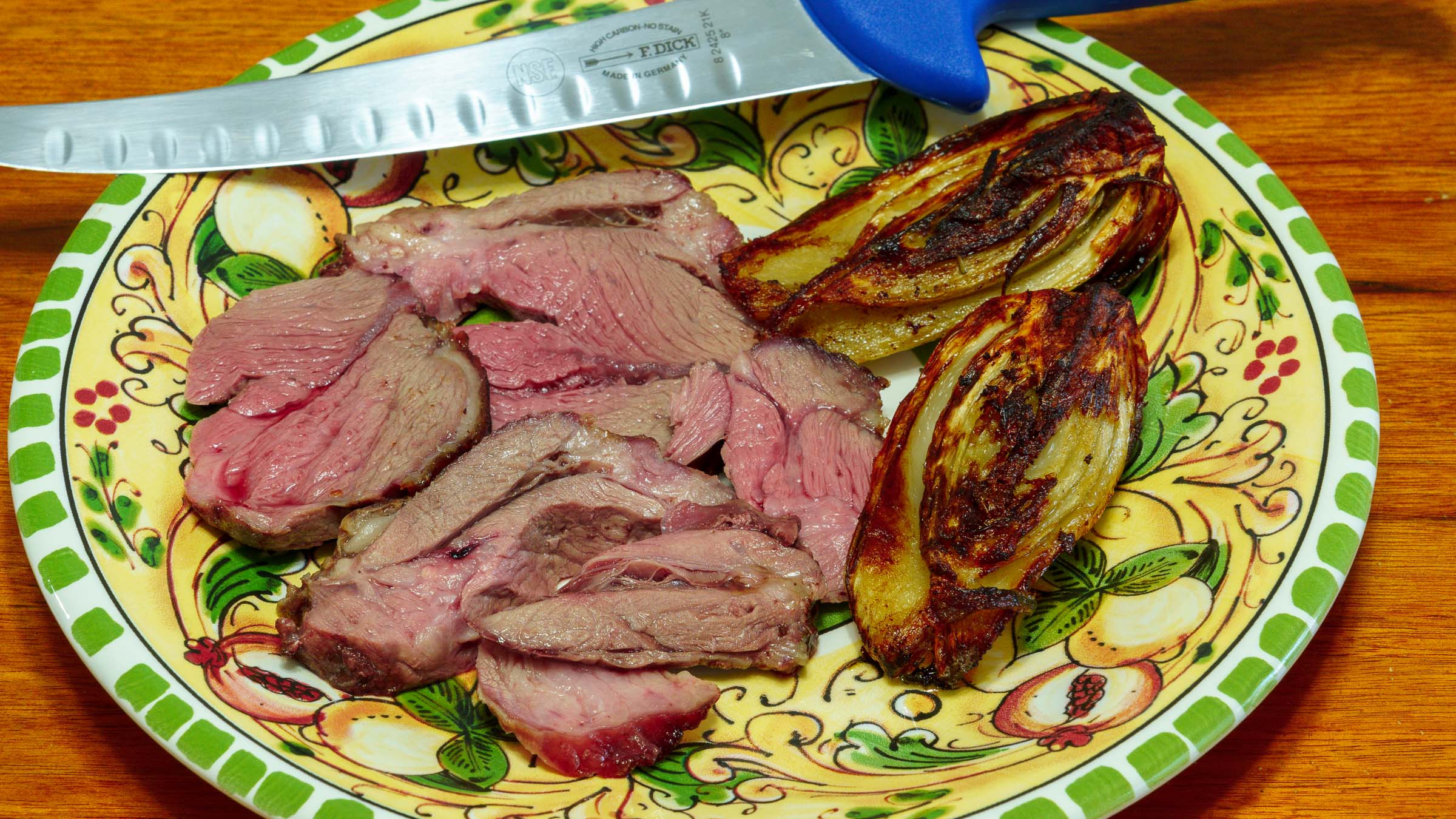
Roast rolled lamb shoulder

·

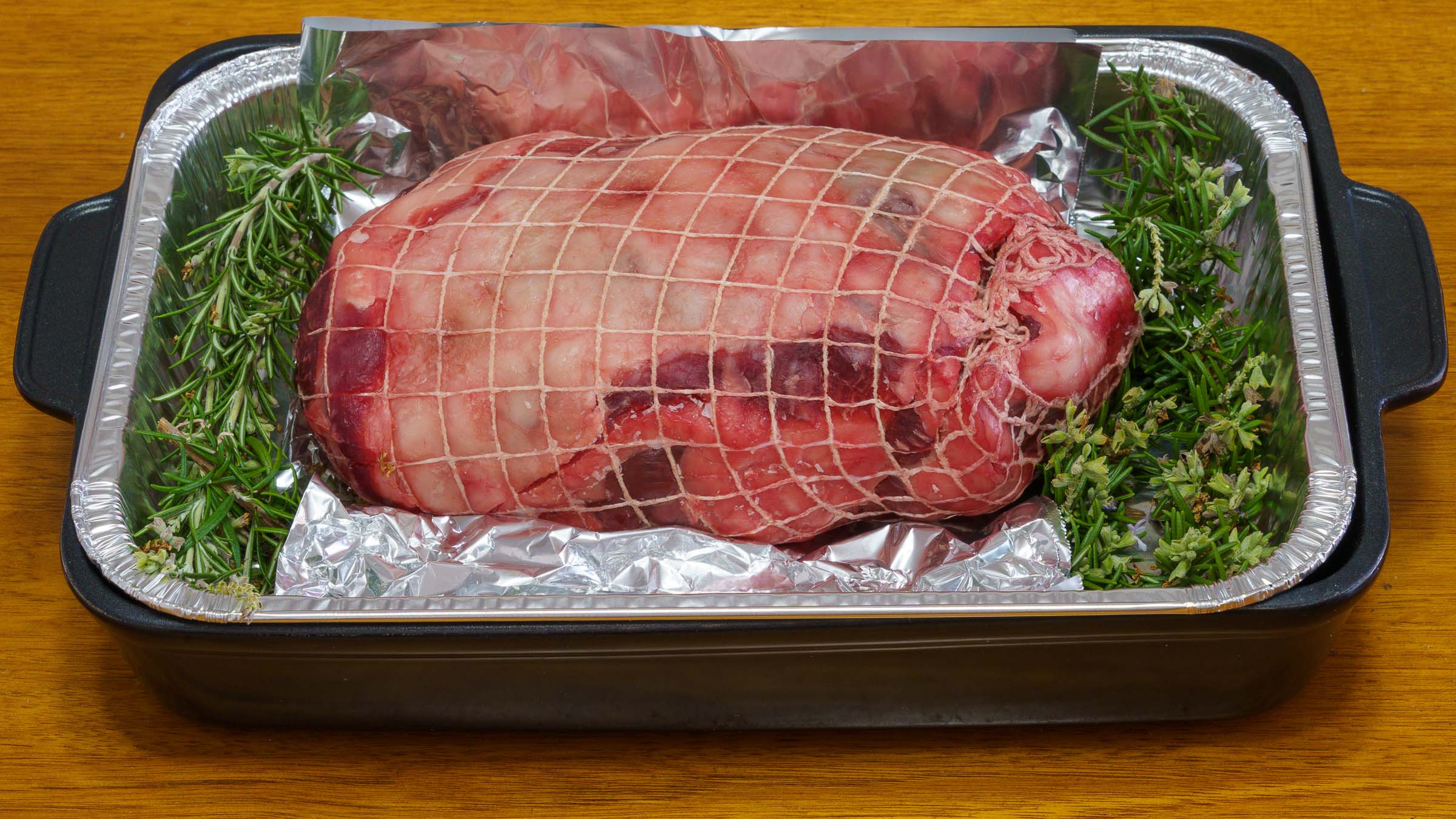
I thought tonight, I’d have some lamb. Occasionally, I like to buy a whole lamb shoulder because it is fun using a boning knife and dissecting the muscle bundles from the bones. Most of the time, however, because I’m lazy, I like the rolled shoulder meat for convenience.

Given a choice, I prefer lamb shoulder to lamb leg. It’s more tender and often has more fat.

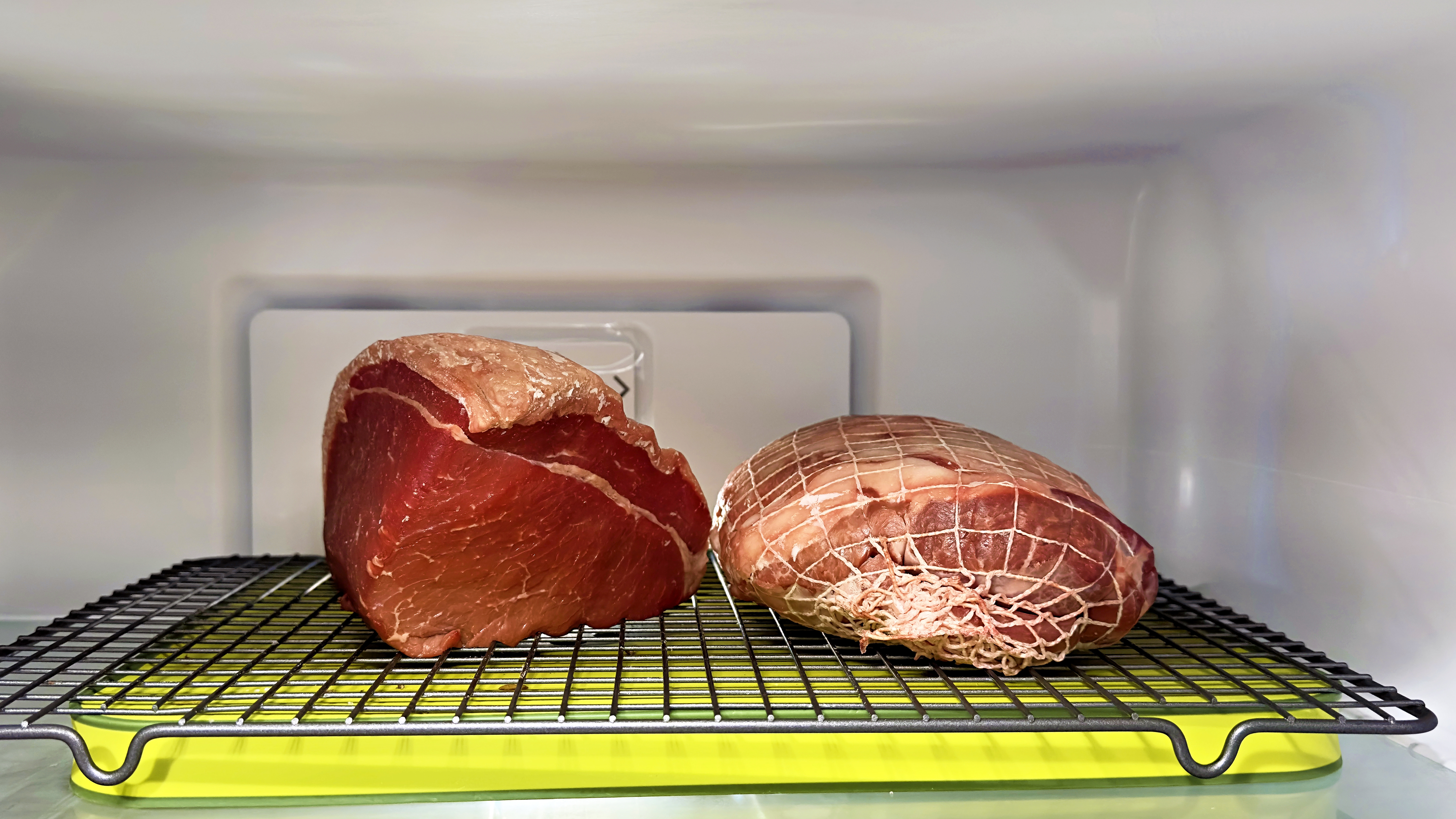
A photograph of a lamb shoulder rolled boneless roast in it's plastic packaging on a cutting board. The piece of meat weighed 1.35 kg and cost $21/kg. The total price was $28.41.

The local supermarket prepares the meat trussed and ready to cook. This piece weighed 1.35 kg (3 lb) and cost me $AUD28.41. I’ll get at least six meals from this portion of meat.

Rather than cooking it in my benchtop oven as I did with the roast beef yesterday, I decided to cook it in my Weber Q+.

The weather at the moment is perfect for outdoor cooking. The days hover below 30 °C and there’s no wind in the afternoons.

Recipe

Ingredients

  • Lamb
  • Salt

Equipment

Instructions

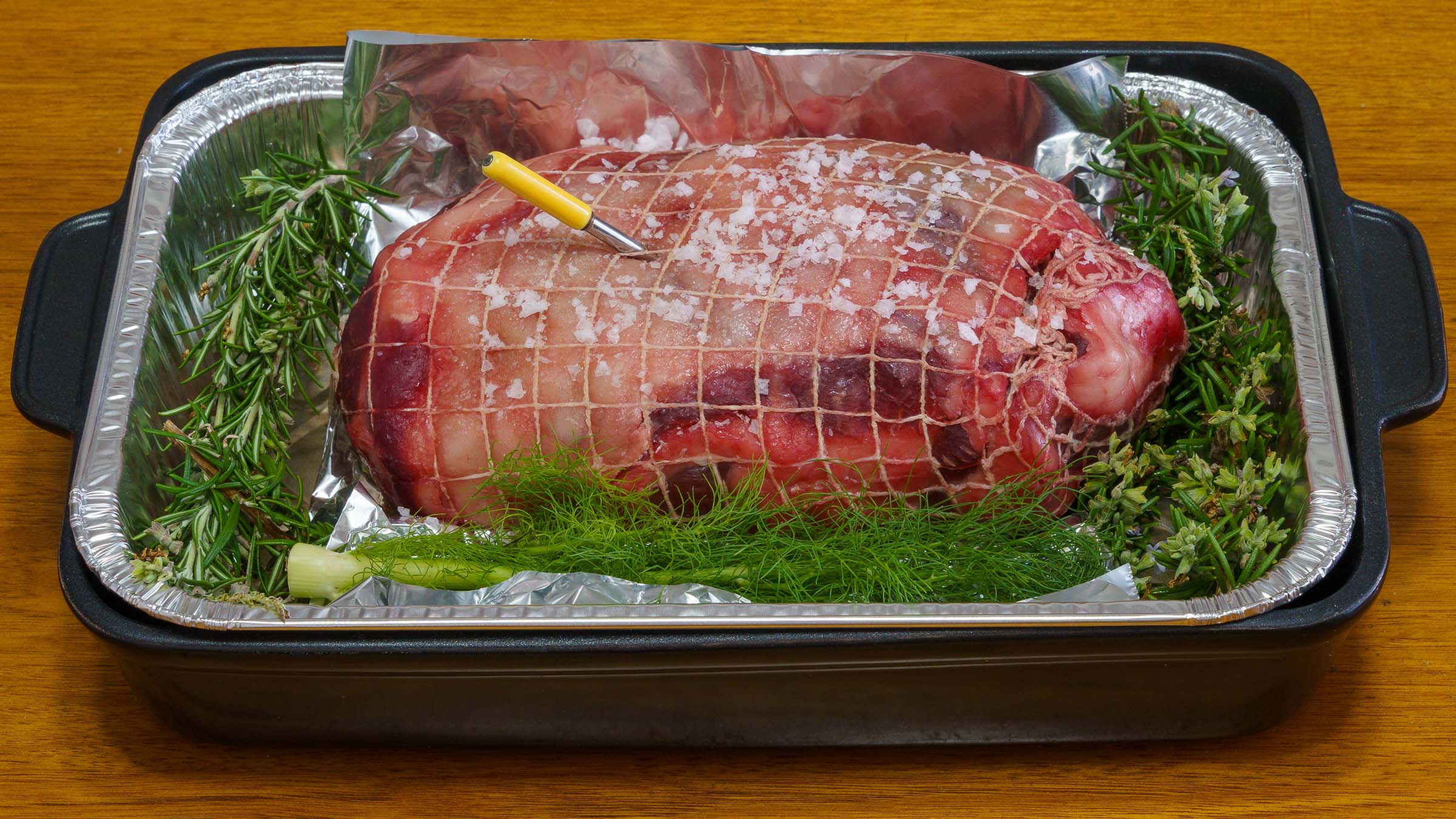
  1. Dry brine the lamb.
  2. Heat the Weber Q+ to a low temperature.
  3. Insert the meat thermometer.
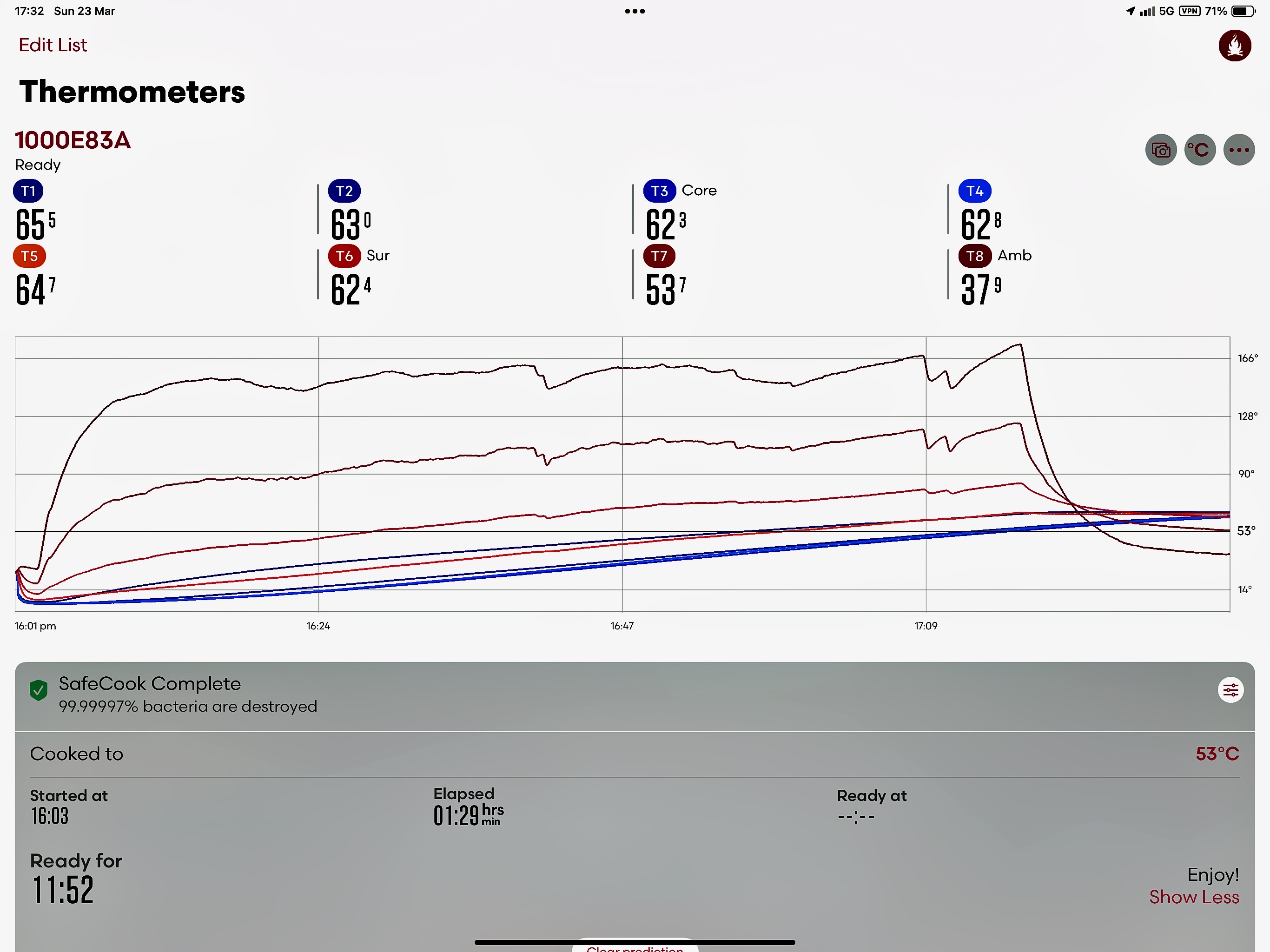
  4. The aim is to cook the meat to about 54 °C.
  5. After the internal core temperature has reached 54 °C, allow the meat to rest.
  6. Sear the meat.
  7. Carve the meat.
  8. Serve the meat.
  9. Salt the meat.
  10. Eat the meat.

Thoughts and notes

The meat was delicious—tender, moist, and flavourful. I enjoy lamb, particularly fatty lamb, and the unique taste and texture it provides in my mouth and on my lips.

You may have noticed I use disposable aluminium foil trays. I don’t have an electric dishwasher where I live, and my kitchen sink is shallow. I’ve found it a challenge to get my equipment clean of grease and fat. These days, I prefer to use animal fat rather than seed or fruit oils. Cleaning can be challenging. The water here is also hard, so getting metal shiny after washing and wiping requires more effort than when I was living in Canberra.

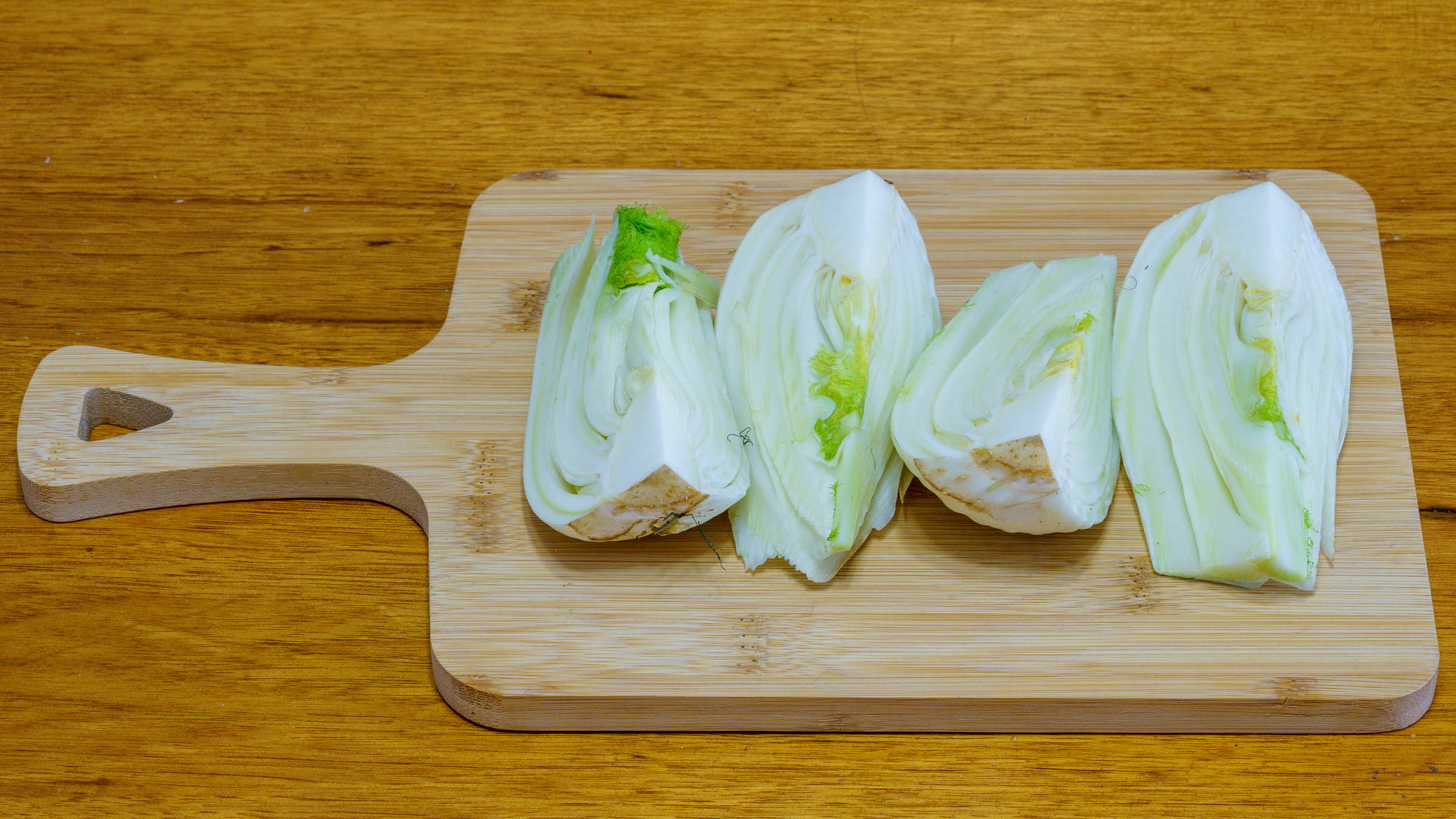
You will have noticed that I also cooked some fennel for this meal. I watched a terrific YouTube video featuring one of my favourite culinary teachers, viz., Lan Lam. I followed her instructions with my own twist. Rather than soaking the cut fennel bulb in cold water, salt, and oil, I used hot water, salt, and beef fat. It worked in my opinion.

Photographs

This is a gallery of photographs. Click on one and scroll through the gallery.
Today’s lunch

Like yesterday, I enjoyed a couple of cheese kransky snags. The packet had four sausages, so I decided to finish them off rather than eat them later in the week. I cooked these in beef fat on the Weber Q+.

I found these sausages to be flavourful and spicy.

Every now and then I like a treat of processed meat. With a federal election due for announcement, I think I may use a kransky sausage as my democracy sausage (see the comments for a description of the democracy sausage).

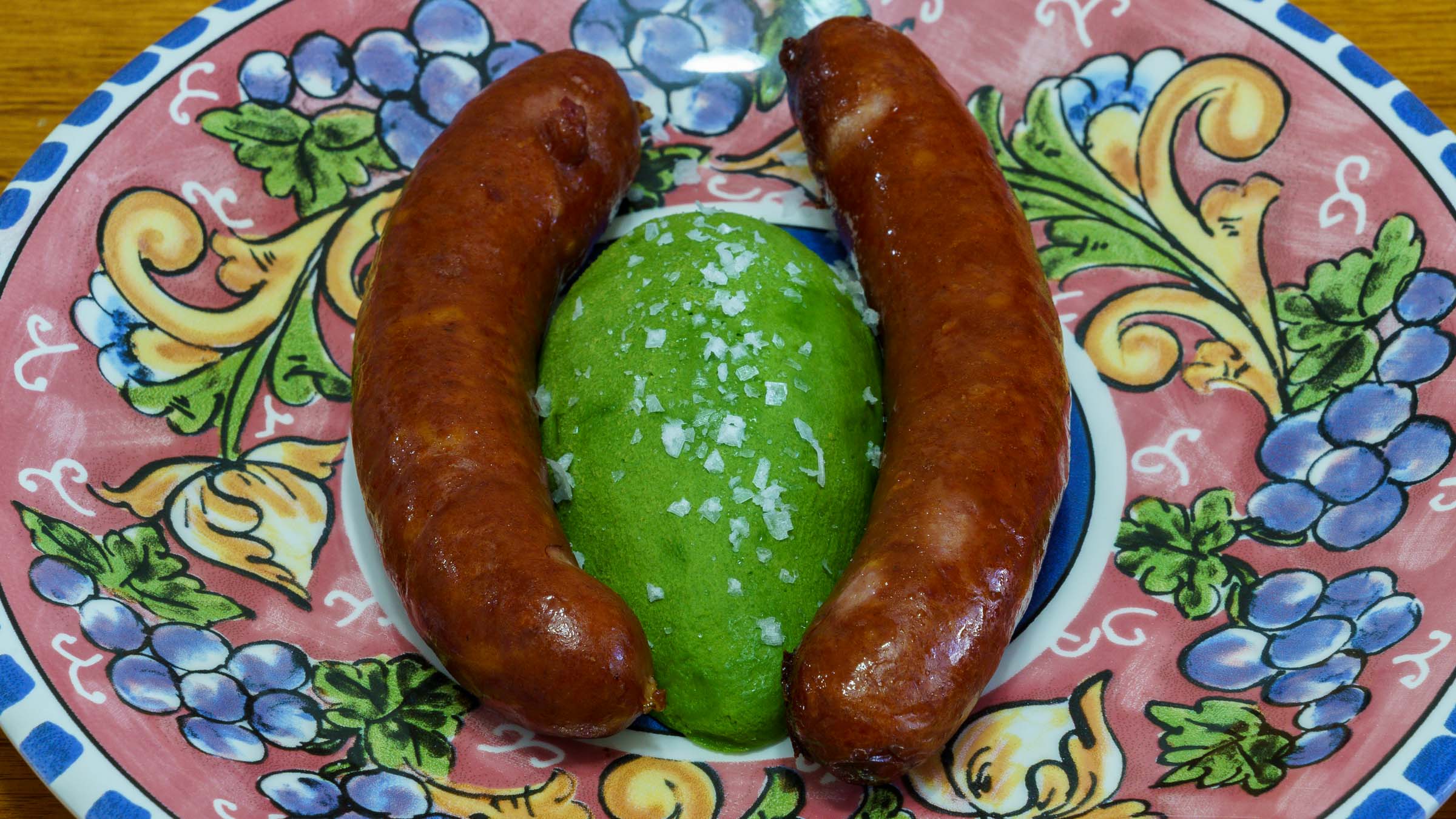
A photograph of two cheese kransky sausages arranged either side of a cheek of Shepard avocado. The avocado is seasoned with flaky salt.

Comments

8 responses to “Roast rolled lamb shoulder”

  1. Ben | Havocinthekitchen Avatar

    Gary, your blog is amazing! I love meat, but I don’t cook it myself often – except for stews and poultry. Something that is harder to screw up haha. But now, if I need the instructions for some perfectly cooked meat, I will know where to find it. Needless to say, this lamb shoulder looks terrific and so inviting.

    Liked by 1 person

    1. Gary Avatar

      Thanks, Ben. Much appreciated.

      Like

  2. Lorraine @ Not Quite Nigella Avatar

    I totally agree re lamb shoulder! It is a much more forgiving cut re cooking too.

    Liked by 1 person

    1. Gary Avatar

      …and leftover shoulder meat seems to taste better than leg meat.

      Like

  3. Eha Carr Avatar

    *smile* I hope a balanced comment-

    1 I very much like your explanation of ‘democracy sausage’, especially for those from across the Ponds!

    2 I do enjoy lamb shoulder cooked pink as yours.

    3 I am hugely glad to see the fennel on the plate.

    4 These days I do not eat Kransky or similar sausages for health reasons.

    5 If I can help it I do not use aluminium trays – we are killing our planet with throw-away ease such as this.

    6 I know what you are going to say ahead of you doing so :) !

    Like

    1. Gary Avatar

      Thanks, Eha.

      Liked by 1 person

      1. Eha Carr Avatar

        *huge grin* . . . and I got no 6 correct!

        Like

  4. Gary Avatar

    The Democracy Sausage: An Icon of Australian Civic Culture

    Australian democracy isn’t just defined by ballots and debates—it’s celebrated with a uniquely local twist known as the “democracy sausage.” This term, playful yet symbolic, captures the spirit of community, participation, and the friendly irreverence that marks our approach to civic engagement.

    The Origin of the Term

    The phrase “democracy sausage” emerged from the very practical and good-natured idea of combining voter participation with a community sausage sizzle. Traditionally, on election day, community groups and volunteers set up barbecues or food stalls outside polling stations. These sausage sizzles often featured sausages served in bread—a convenient meal for voters stopping by before or after casting their ballots. This informal practice not only provided a little extra incentive for people to vote but also fostered a sense of camaraderie. Over time, what began as a fundraising or community-support activity evolved into a symbol so distinctive that the sausages themselves became synonymous with the act of engaging in democracy.

    What Does It Mean?

    At its heart, the democracy sausage is more than just a food item; it is a metaphor for inclusivity and celebration in the democratic process. It underscores the notion that voting and civic participation need not be solemn or exclusively bureaucratic affairs. Instead, these occasions can be vibrant, community-driven events that bring people together. The act of enjoying a sausage on election day has come to represent the idea that democracy is accessible, that every citizen has a role to play, and that participating in government can be as informal and enjoyable as sharing a meal with friends and neighbours.

    When Are Democracy Sausages Eaten?

    The tradition of the democracy sausage is intrinsically linked to election day in Australia. Whether it’s a federal, state, or local election, polling stations across the country traditionally become hubs of both civic activity and culinary delight. As voters make their way to the ballot box, many encounter the inviting aroma of sizzling sausages, with food stalls or pop-up barbecues offering a cherished treat. This ritual, observed on every election day, has become an unofficial part of our electoral process, reinforcing community bonds and celebrating democratic participation.

    Media and Social Media Portrayal

    The democracy sausage has transcended its humble origins to become a cultural icon widely embraced and celebrated by various media channels. Traditional media outlets often report on the best local sausage sizzles during election coverage, characterising them as a highlight of the day—a light-hearted counterbalance to political debates and polling statistics. In parallel, social media platforms play a significant role in popularising the tradition. On election day, hashtags trend on X (nee Twitter), while Instagram posts and Facebook updates showcase voters enjoying their sausage snacks, sharing the festive spirit with humorous captions and artistic photos. The phenomenon has inspired everything from memes and digital art to dedicated online maps that help locate the best sausage sizzle events near polling stations. This digital celebration invites a youth-oriented perspective to the traditionally serious process of voting.

    Conclusion The democracy sausage stands as an enduring symbol—a reminder that democracy is not solely about institutional processes but also about community, cheer, and the small moments that enliven the political landscape. From its origins at neighbourhood barbecues to its representation in media and social media, the democracy sausage focuses our attention on food rather than politics.

    Liked by 2 people

Comments will be moderated.

This site uses Akismet to reduce spam. Learn how your comment data is processed.