Tag: Chuck

  • Breakfast beef roll

    Breakfast beef roll


    Leftover sous vide chuck steak sandwich with blue cheese and green peppercorn sauce

    This is a two-part post. Part 1 is the dinner: a 500 g piece of chuck steak that cost $9.50, cooked sous vide for 24 hours at 57 °C, seared, and served with fresh blue cheese and green peppercorn sauce and frozen potato gems cooked in a hooded barbecue. Part 2 is the breakfast sandwich I made the next morning from the leftovers.

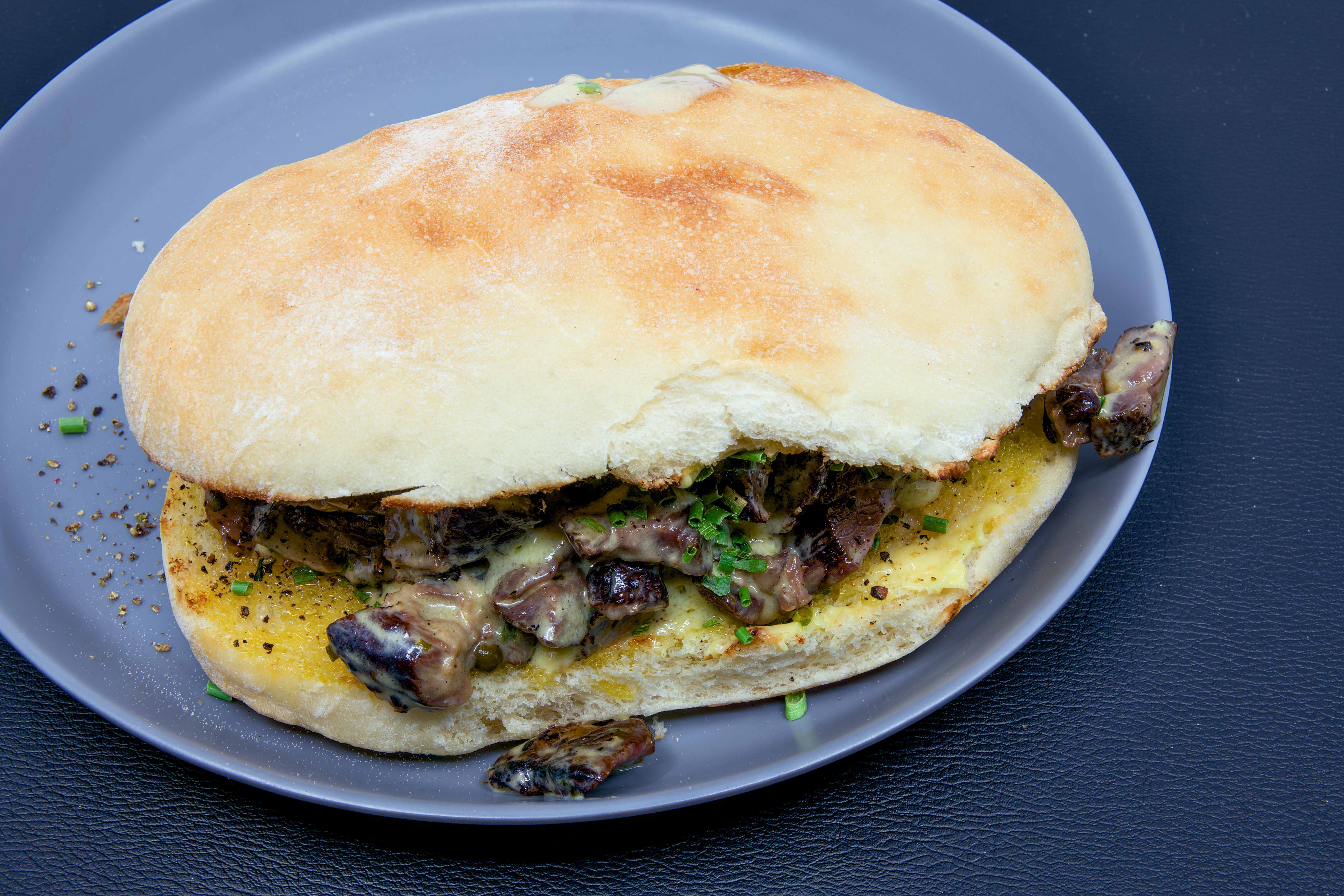
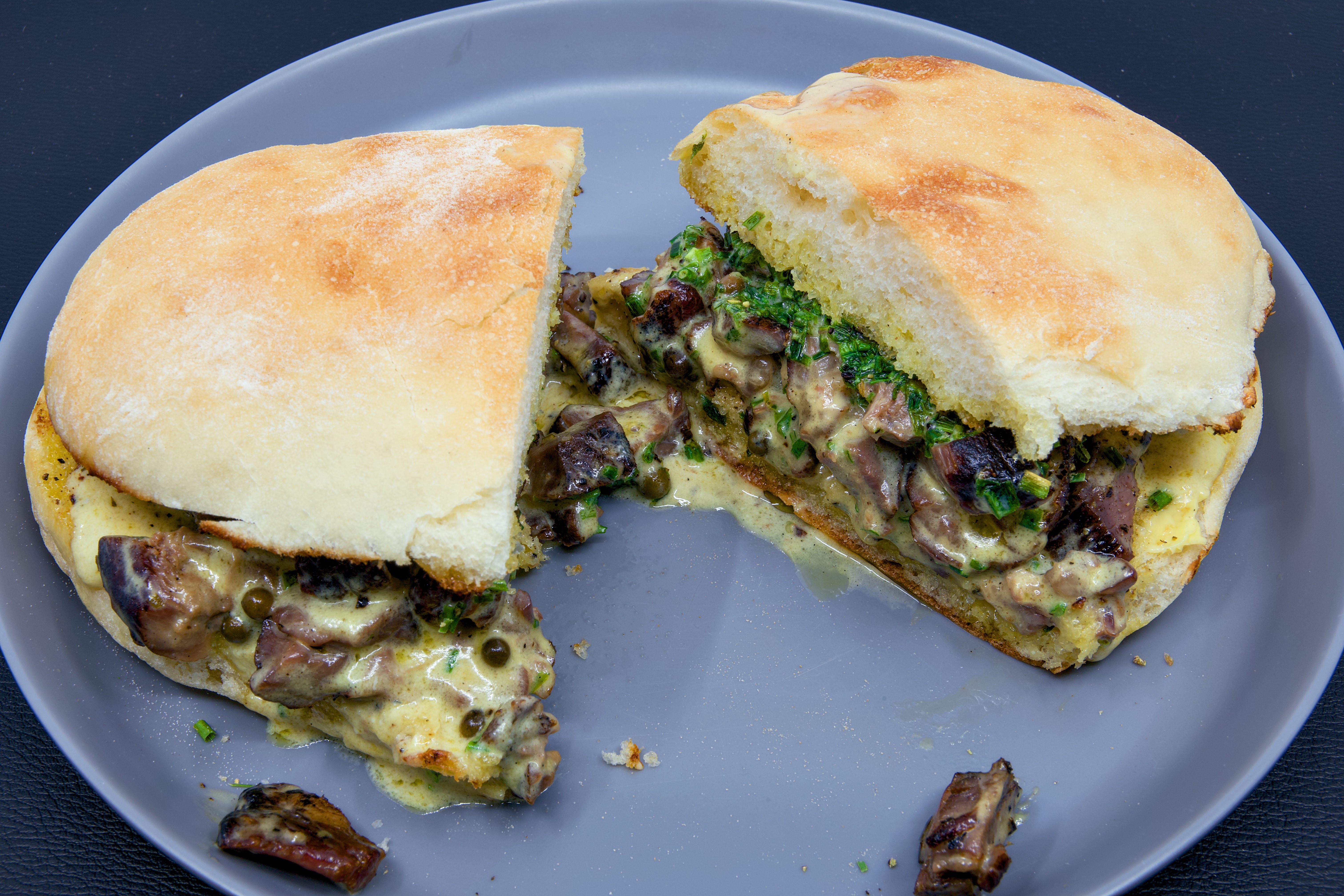
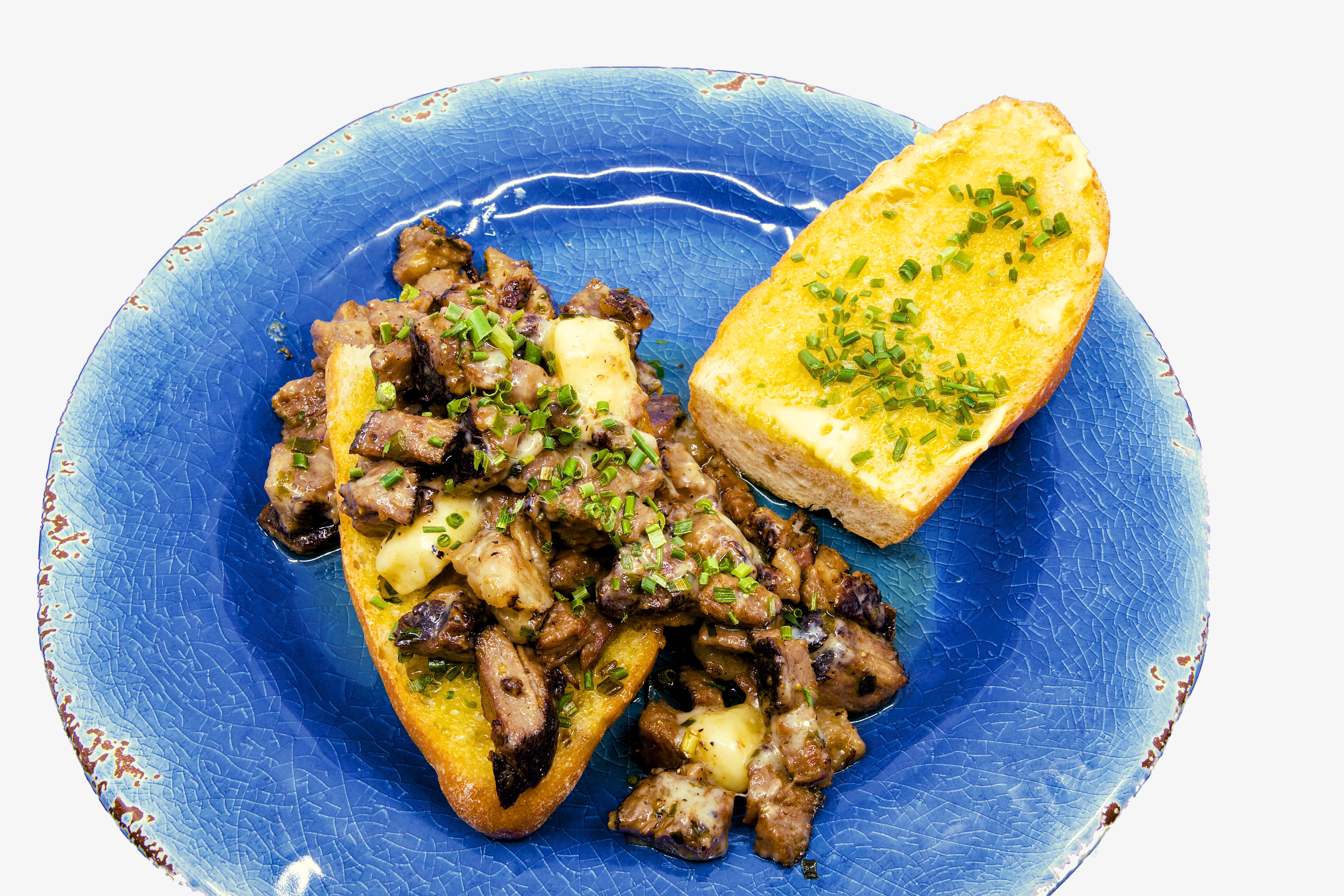
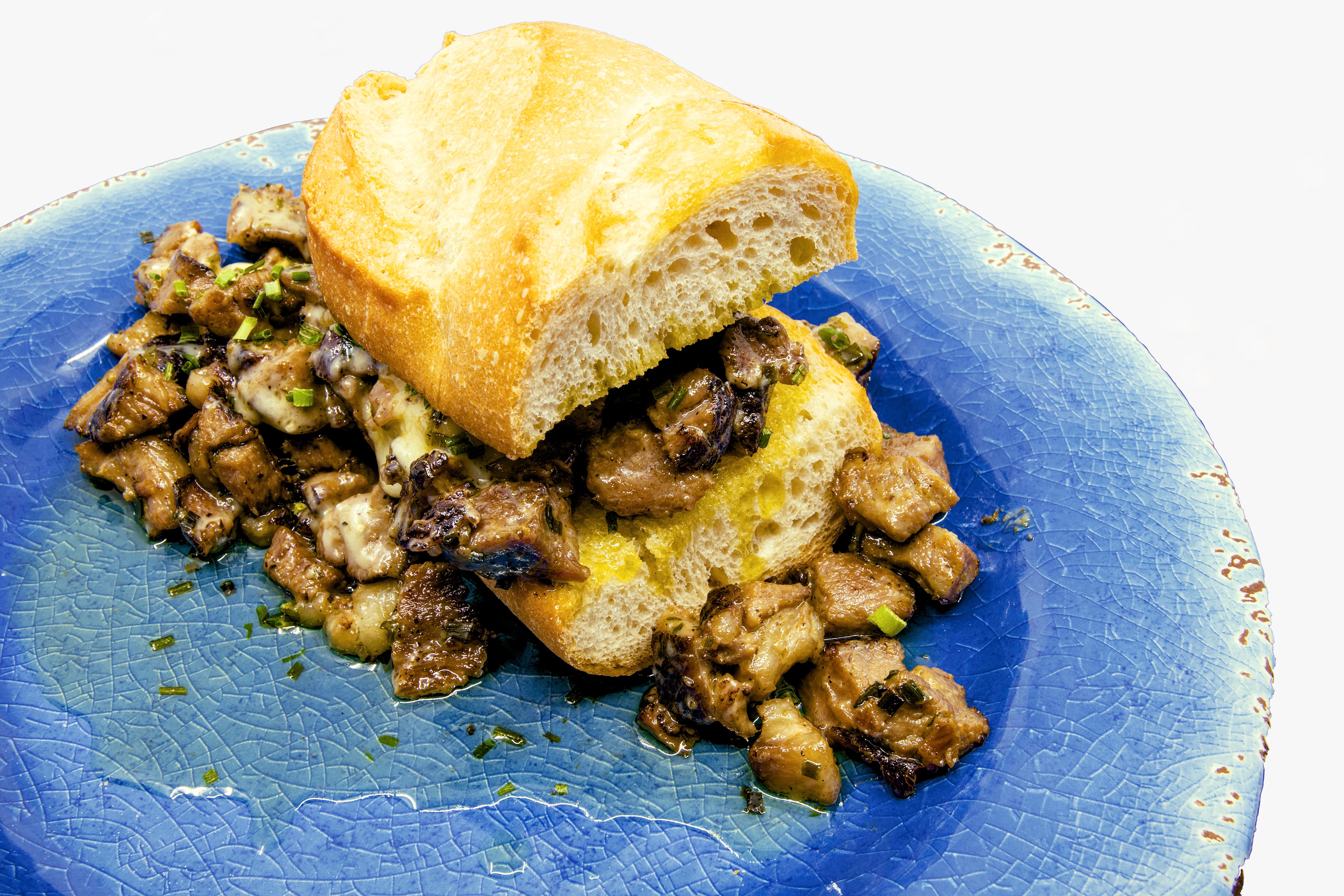
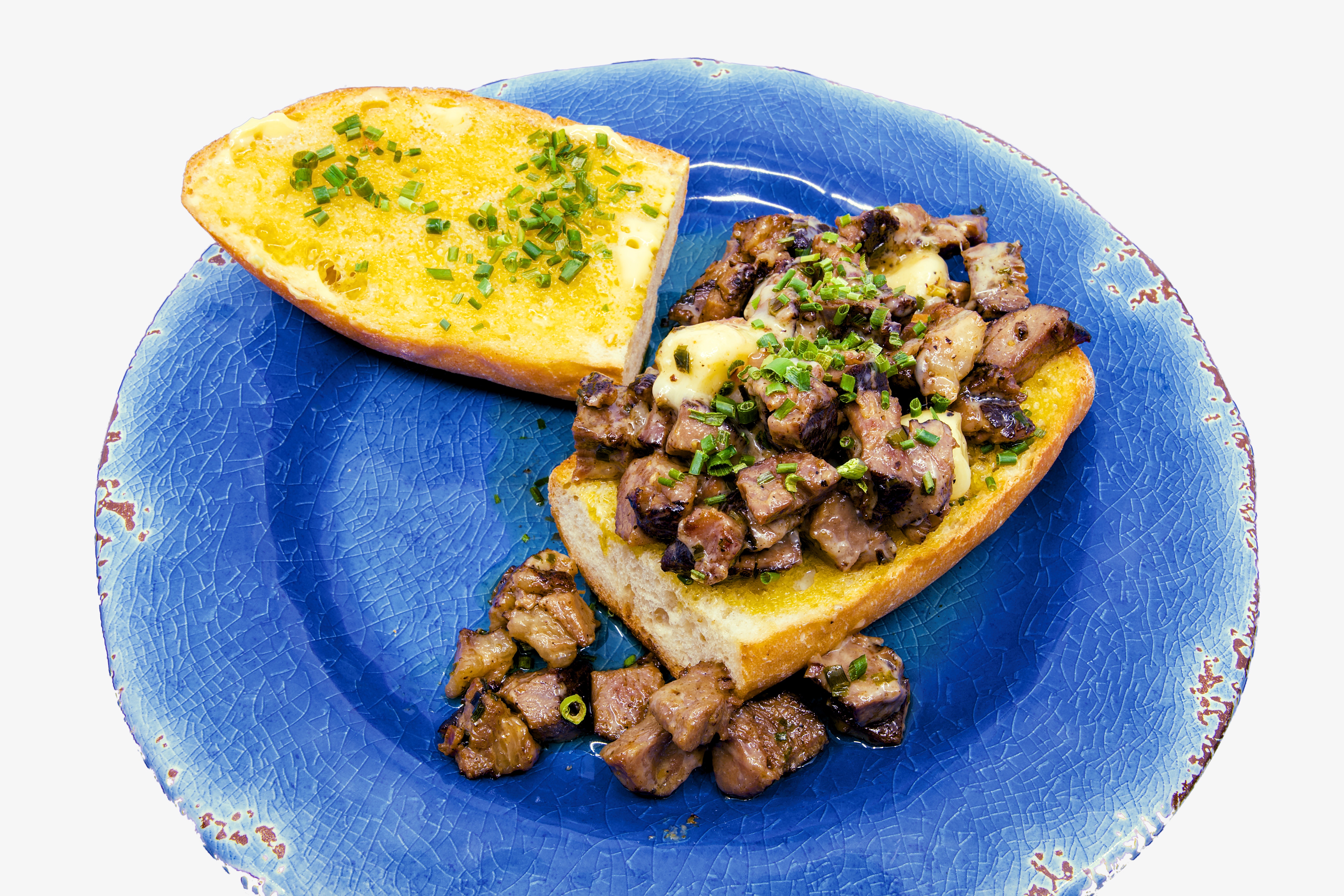
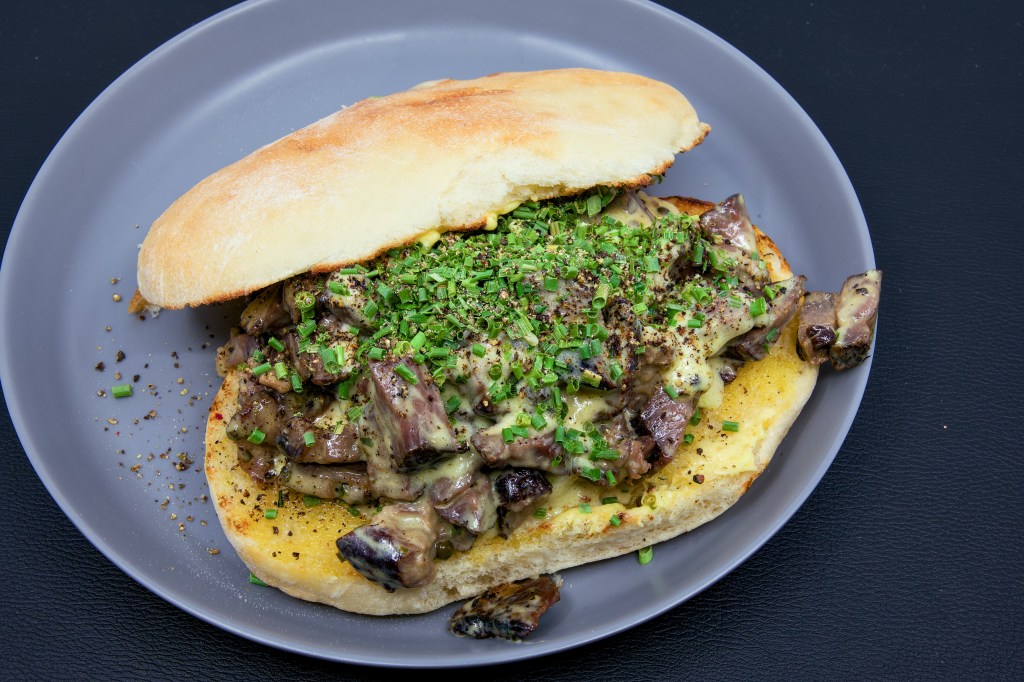
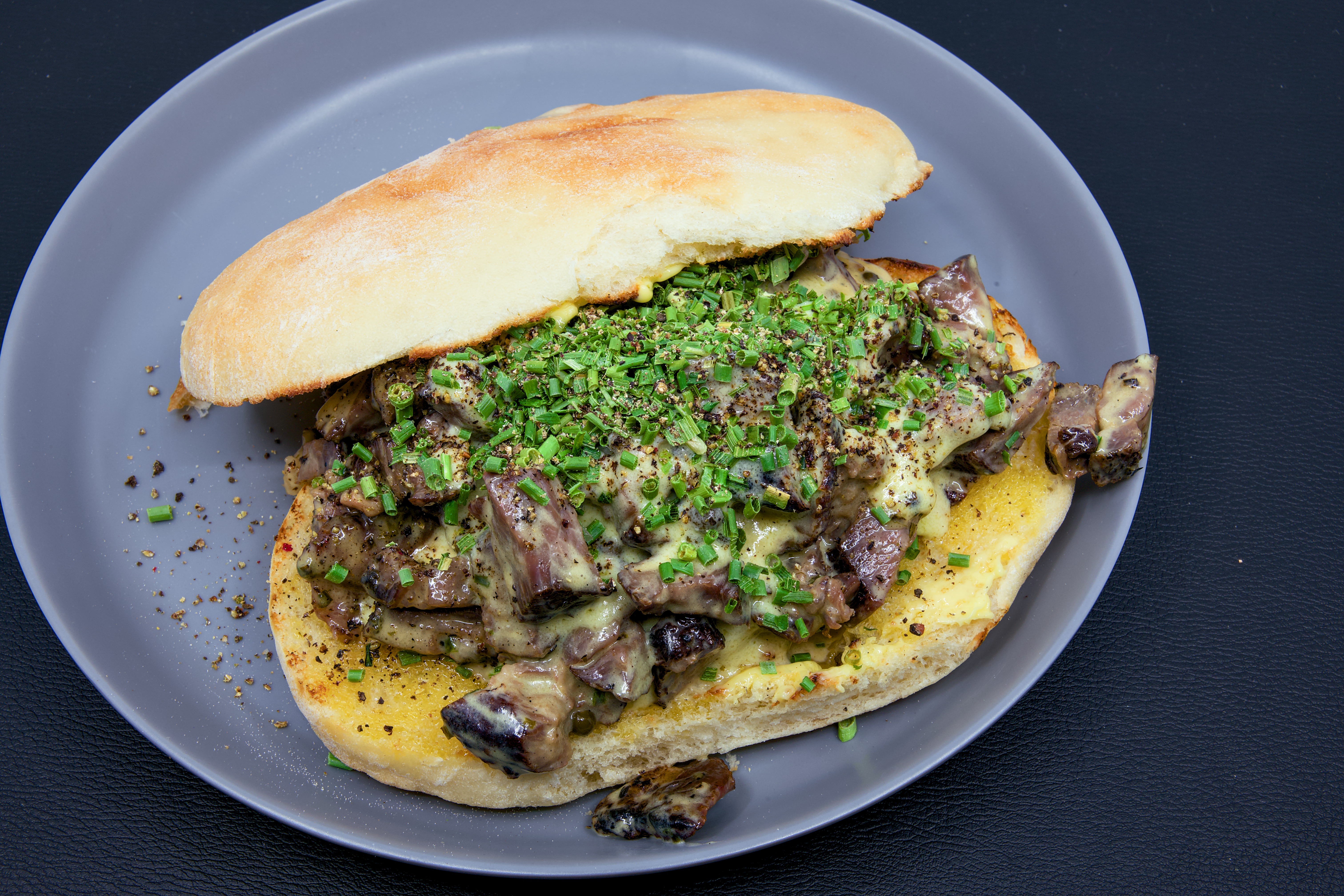
    The result was a generously filled steak sandwich: pieces of the 24-hour sous vide chuck steak warmed in a blue cheese and green peppercorn sauce, piled onto a buttered Lepinja roll, and finished with chopped chives and freshly ground peppercorns.

    Part 1: Sous vide chuck steak dinner with blue cheese and green peppercorn sauce

    The first meal started with a 500 g piece of chuck steak that cost $AUD9.50 ($19 per kilogram). I cooked it sous vide for 24 hours at 57 °C, seared and sliced it, and served it with a freshly made blue cheese and green peppercorn sauce and frozen potato gems cooked in a hooded barbecue for 25 minutes. I refrigerated half the sliced steak and half the sauce for the next morning.

    Ingredients

    • 500 g chuck steak
    • Udders Delight blue cheese, crumbled
    • Cream cheese
    • Pure pouring cream (no thickeners)
    • Cultured butter
    • Dijon mustard
    • Green peppercorns
    • Frozen potato gems, to serve

    Equipment

    • Precision circulator
    • Water bath
    • Vacuum-seal bag
    • Cast-iron flat-top for the hooded barbecue
    • Small saucepan for gently heating the sauce
    • Pair of chopsticks for stirring the sauce
    • Hooded barbecue, for the potato gems

    Method

    1. Cook the beef sous vide.
      Seal the chuck steak in a bag and cook it in the water bath for 24 hours at 57 °C.
    2. Sear and slice the steak.
      Remove the beef from the bag, sear the exterior on the hot barbecue cast-iron flat-top (using a gas blow torch), then slice it.
    3. Make the sauce base.
      Gently heat a saucepan, then gently melt the cultured butter in the pure pouring cream.
    4. Build the blue cheese sauce.
      Gradually add the Dijon mustard, cream cheese, and crumbled Udders Delight blue cheese, stirring slowly with chopsticks as it heats. Fold in the green peppercorns at the end.
    5. Cook the potato gems.
      Cook the frozen potato gems in a hooded barbecue for 25 minutes.
    6. Serve and hold over half.
      Serve the sliced steak with the fresh sauce and potato gems. After the dinner photograph, refrigerate half of the sliced steak and half of the sauce for the sandwich in Part 2.

    I didn’t record exact sauce quantities, so I added the blue cheese gradually and tasted rather than following a fixed measure.
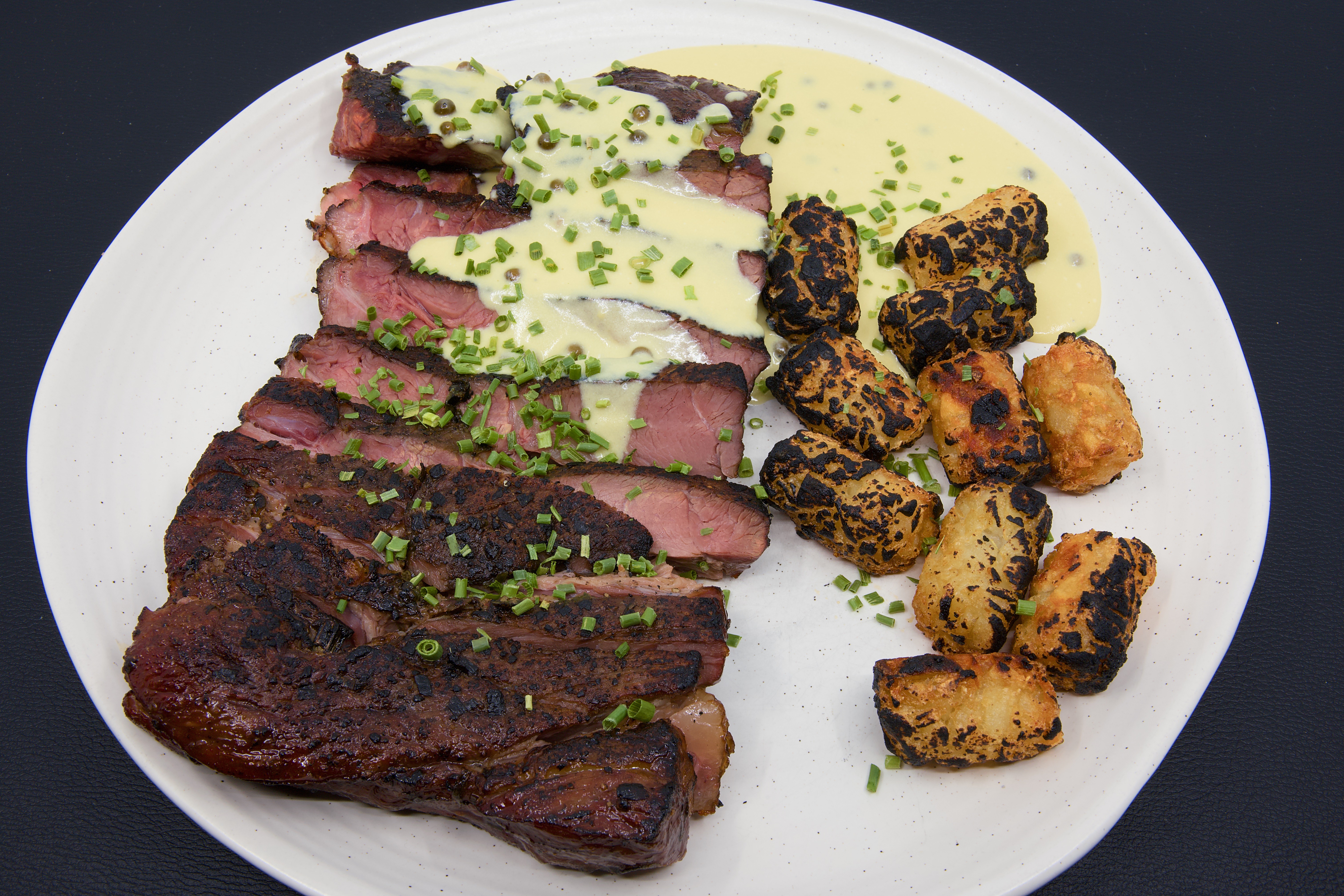
    Sliced 24-hour sous vide chuck steak with a dark seared crust, served on a cream-coloured plate with barbecue-cooked potato gems and Udders Delight blue cheese sauce (with green peppercorns). The steak, sauce, and potato gems are garnished with dried chives.

    Part 2: Leftover chuck steak breakfast sandwich

    The next morning I bought a fresh Lepinja roll and made a breakfast sandwich with the reheated, chopped chuck steak folded into the gently reheated blue cheese and green peppercorn sauce.

    From chuck steak dinner to steak sandwich

    Chuck comes from the neck and shoulder area of the beef carcass. These are hard-working muscles with substantial connective tissue, which is why chuck is traditionally used for braising and slow cooking.

    That characteristic was part of why I ran my original 24-hour sous vide experiment. Rather than taking the meat to the relatively high temperatures associated with braising, I cooked it for a long time at 57 °C before searing the exterior.

    A steak sandwich seemed like a straightforward way to use it.

    Why use the leftover chuck?

    Chuck is relatively economical compared with the premium steak cuts. My 500 g piece cost just $AUD9.50.

    The variety of muscles and cuts associated with the chuck also explains why chuck terminology can become confusing. Different portions can be sold under names including chuck steak, chuck eye steak, blade steak, chuck tender, mock tender, shoulder steak, and many others. Australian and overseas butchery systems also divide and name beef cuts differently.

    For this second meal, however, the precise terminology matters less than the practical question: what can I do with the cooked beef remaining in the refrigerator?

    Put it in some bread with cheese sauce.

    That seemed reasonable.

    The blue cheese and green peppercorn sauce

    The dinner sauce was made fresh with pure pouring cream, cultured butter, cream cheese, Dijon mustard, and Udders Delight blue cheese, with green peppercorns folded in at the end.

    The green peppercorns were already in the sauce, so the held-over half needed nothing added.

    Blue cheese already provides plenty of flavour and saltiness, so I prefer to add it gradually and taste the sauce rather than work from a rigid quantity. The green peppercorns add another savoury element without changing the basic character of the sauce.

    The next morning I chopped the sliced chuck steak, reheated it, and folded it into the gently reheated sauce.

    Because the beef has already undergone its long sous vide cook, there is no reason to cook it aggressively for a second time. I only want to heat it through and combine it with the sauce.

    Why a Lepinja roll?

    I wanted a substantial bread roll for the amount of beef and sauce going into the sandwich.

    Lepinja is a traditional yeast-raised, spongy flatbread that is popular across the Balkans, particularly in Serbia, Bosnia, and Croatia. It is made from a simple dough of flour, water or milk, salt, and yeast, and is baked at high temperatures. The bread is known for its soft, fluffy texture and is often compared to pita, naan, or focaccia.

    In Bosnian and Serbian street food, lepinja is traditionally used as a vessel for grilled minced meat sausages called ćevapi or pljeskavica. It is also the base for a famous Serbian dish called komplet lepinja, which is a hollowed-out bun filled with clotted cream, an egg, and roasted meat drippings.

    Lepinja works well here because it can be opened to provide a broad surface for the filling. I buttered the cut surfaces generously before assembling the sandwich.

    The bread also has the useful job of containing a fairly loose filling. This is not a restrained sandwich. There is plenty of beef and sauce, and eating it neatly is not really the point.

    Ingredients

    Steak and sauce

    • Half of the sliced sous vide chuck steak from Part 1, refrigerated overnight
    • Half of the blue cheese and green peppercorn sauce from Part 1, refrigerated overnight
    • Freshly ground peppercorns, to finish
    • Chives, chopped

    Bread

    • 1 Lepinja roll
    • Butter

    Quantities depend on how much leftover beef is available and how much sauce is needed to coat it.

    Equipment

    • Frying pan
    • Microwave oven and microwave-safe bowl, for reheating the leftover sauce
    • Knife
    • Cutting board
    • Spoon
    • Serving plate

    Instructions

    1. Prepare the chuck steak.
      Remove the held-over sliced steak from the refrigerator and chop it into bite-sized pieces.
    2. Prepare the Lepinja.
      Split the fresh Lepinja roll.
      Lightly toast using a cast-iron pan over a high heat source.
      Butter the cut surfaces generously.
    3. Reheat the sauce.
      Gently reheat the leftover blue cheese and green peppercorn sauce in the microwave in two one-minute bursts at 50% power.
    4. Reheat the beef and fold it in.
      Reheat the chopped chuck steak in a frying pan with some water until the water evaporates.
      Then fold it into the gently reheated sauce until it is hot and coated.
    5. Assemble the sandwich.
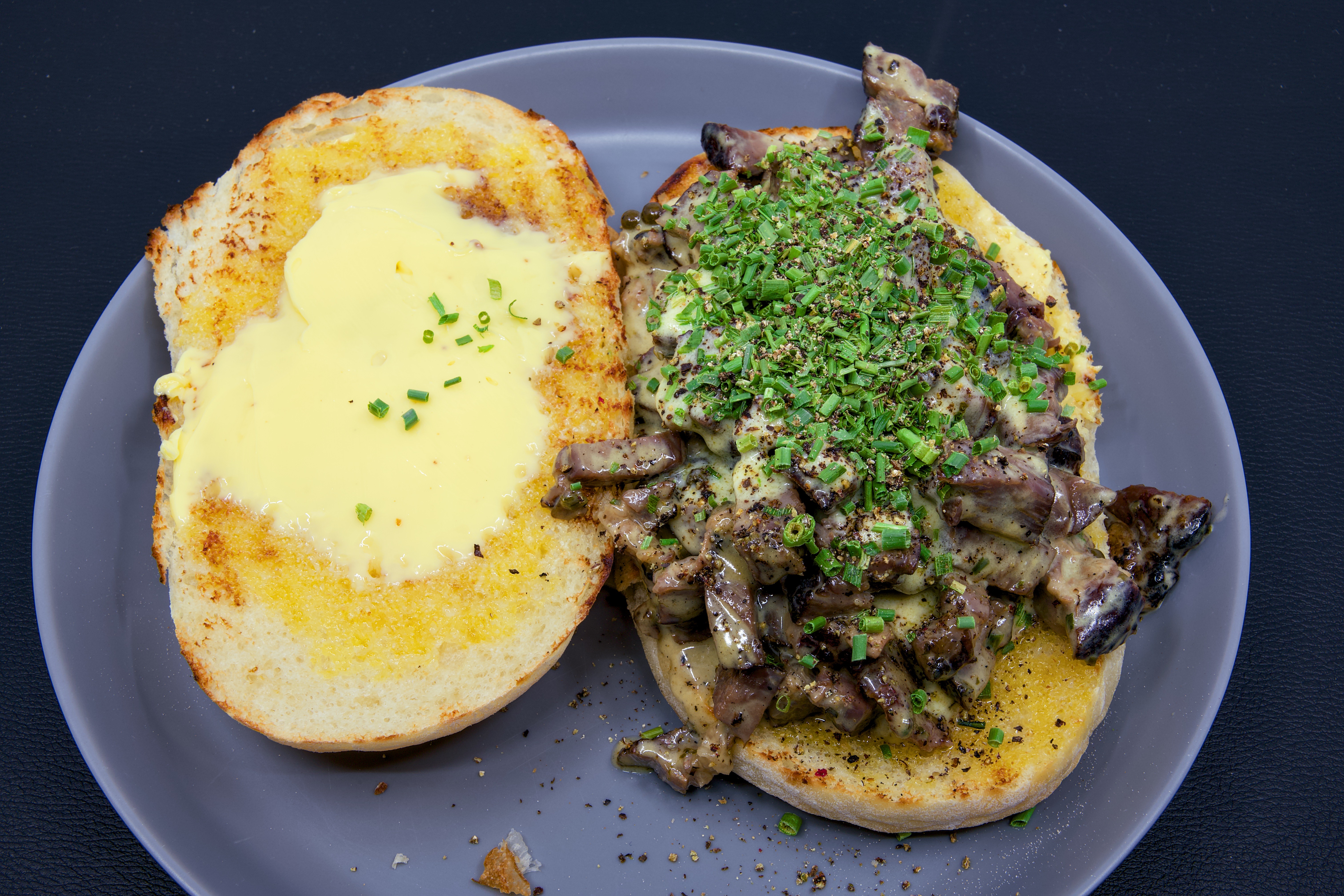
      Spoon the chuck steak and sauce generously over the bottom of the buttered Lepinja.
    6. Season and garnish.
      Add freshly ground peppercorns and a generous scattering of chopped chives.
    7. Serve.
      Put the top of the Lepinja in place and serve the sandwich on a plate. It can be left whole or cut into portions.

    What I liked about this sandwich

    The main point of this meal was using leftovers rather than starting again with another piece of meat.

    The chuck had already received most of the attention during its original preparation: 24 hours in the water bath at 57 °C, followed by searing. Turning the remaining beef into a sandwich therefore required comparatively little additional preparation.

    The blue cheese and green peppercorn sauce made sense as a continuation of the first meal, while the freshly ground peppercorns and chopped chives changed it enough that the sandwich did not feel like simply reheating yesterday’s dinner.

    The generously buttered Lepinja provided the carbohydrate component and, more importantly, somewhere to put all that beef and sauce.

    A second meal from an economical cut

    One reason I like experimenting with chuck is its price. Its connective tissue makes it well suited to prolonged cooking.

    Sous vide offers an alternative to braising for this kind of cut.

    In the first meal, 24 hours at 57 °C let me cook an economical slow-cooking cut at a steak-like temperature. The leftover meat then became the basis for this sandwich.

    For me, getting two different meals from that original $9.50 piece of beef makes the experiment more worthwhile.
    Final thoughts

    This was a straightforward leftovers meal.

    I started with pieces of 24-hour sous vide chuck steak, warmed them in blue cheese sauce with green peppercorns, and piled the mixture onto a generously buttered Lepinja roll. Freshly ground peppercorns and chopped chives finished the sandwich.

    There is nothing particularly complicated about the second meal, and that is part of its appeal. Most of the work had already happened the day before.

    The result also demonstrates something I enjoy about sous vide cooking. A long cook may require planning, but if I cook enough meat in the first place, the effort can carry over into another meal.

    In this case, yesterday’s chuck steak became today’s steak sandwich.


    Artificial intelligence disclaimer

    Artificial intelligence tools were used to help research, draft and edit parts of this post. The recipe, cooking experience and opinions are my own, but AI-generated text can contain errors or omissions, and background information about beef cuts and Lepinja should be checked.

    This post is general information, not professional advice. Please use your own judgement on food safety, particularly when cooking meat sous vide for long periods, cooling and storing leftovers, and reheating them before eating.
    Fediverse Reactions
  • Vegemite chuck steak, sous vide for 24 hours

    Vegemite chuck steak, sous vide for 24 hours


    Chuck steak is often thought of as only suitable for a pressure cooker or slow cooker, but a longer cook at a lower temperature can turn it into something different.

    For example, the usual temperature for a slow cooker is closer to 100 °C, and the meat will appear “well done.” At much lower pasteurising temperatures, the meat can appear “medium-rare.”

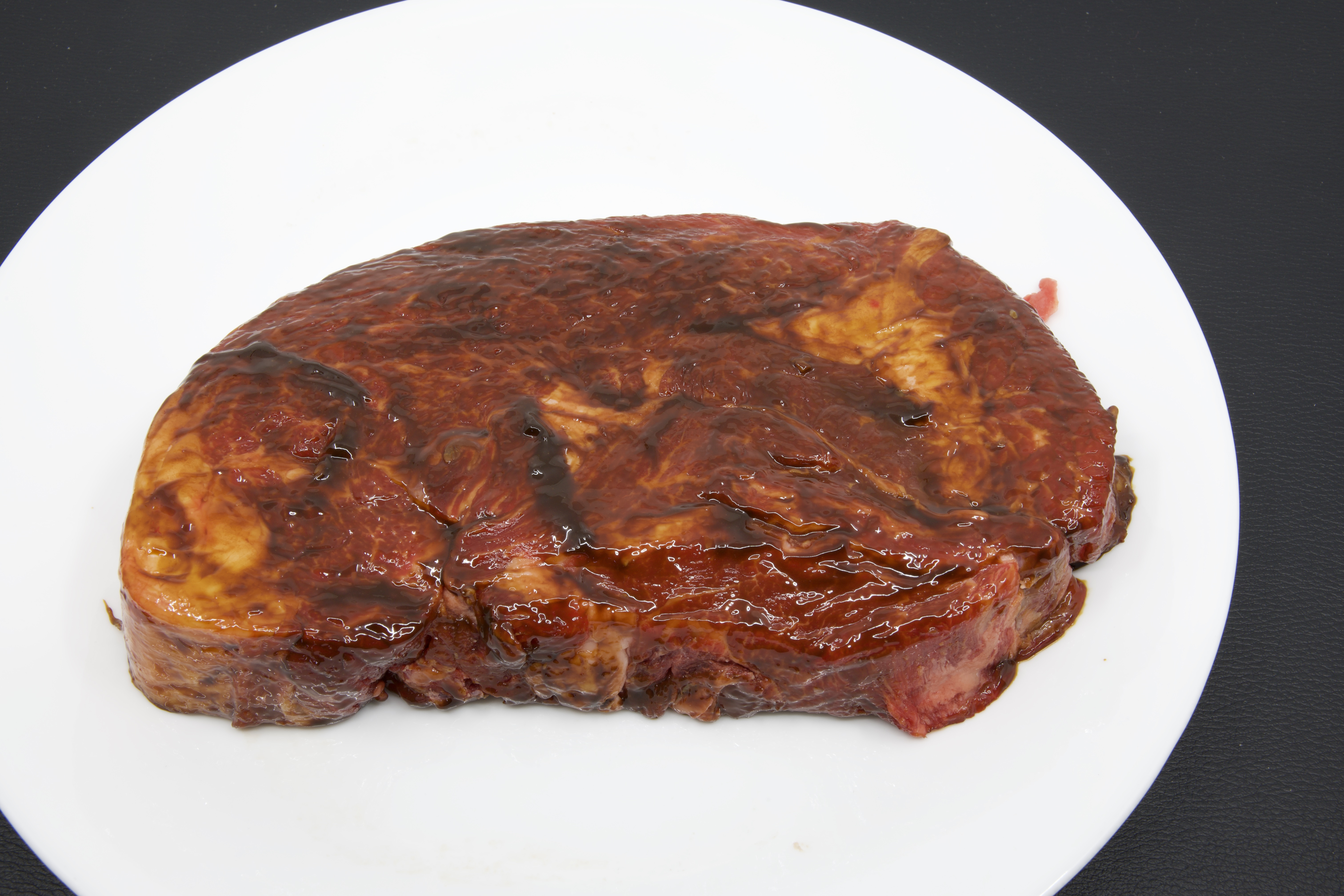
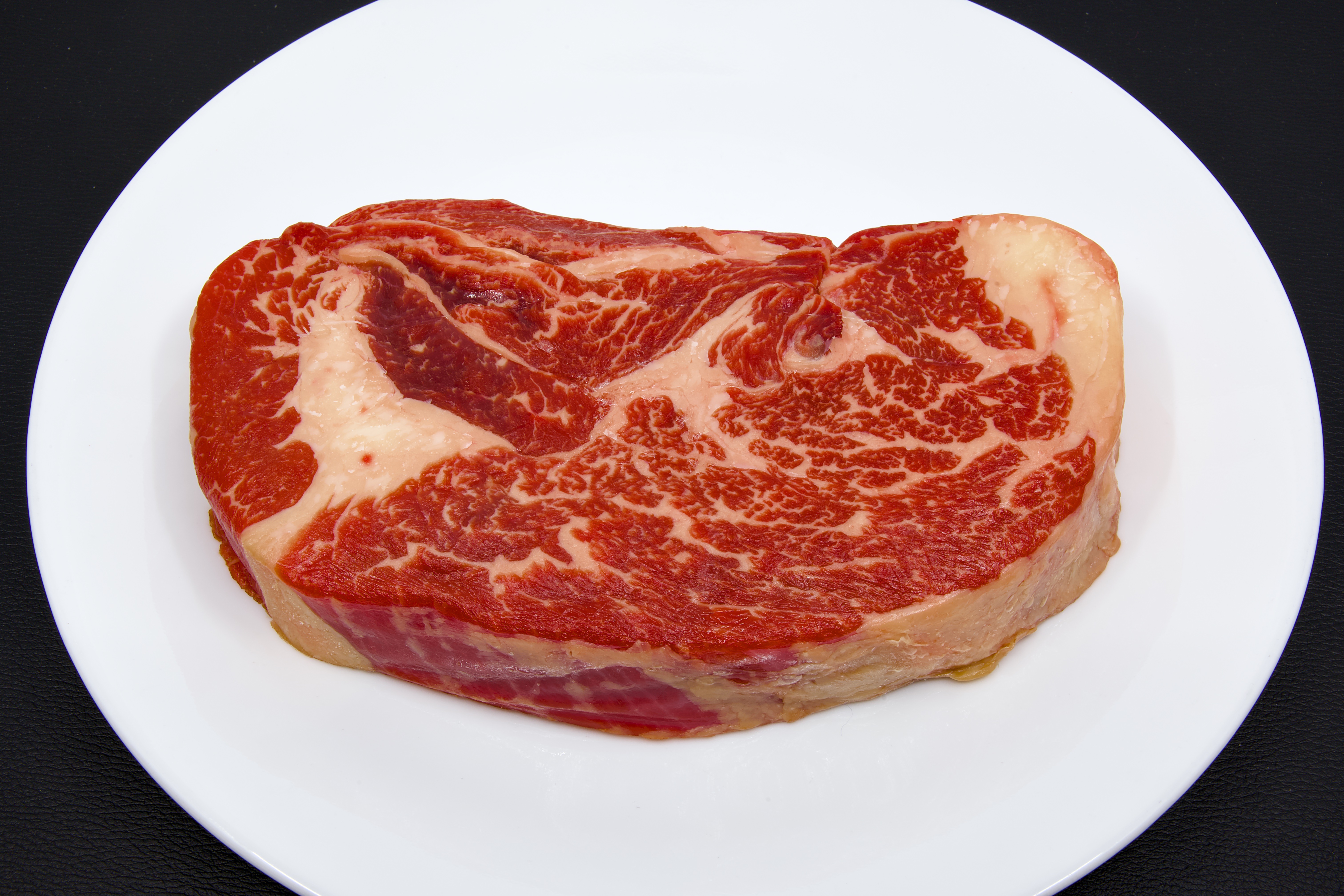
    This piece cost $20 per kilogram and, before cooking, looked like a Scotch fillet. In the United States, Scotch fillet is generally called ribeye when sold without the bone.

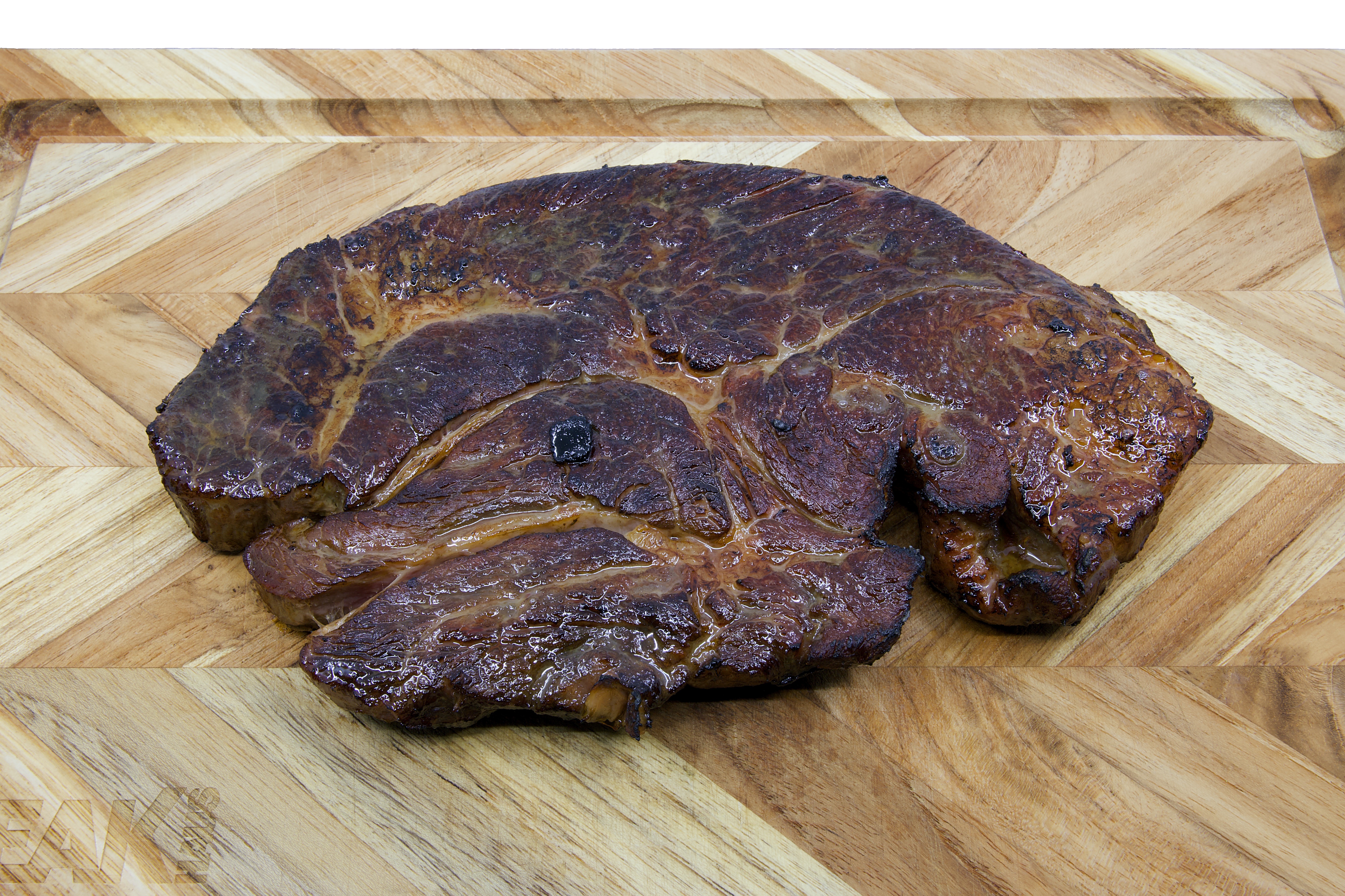
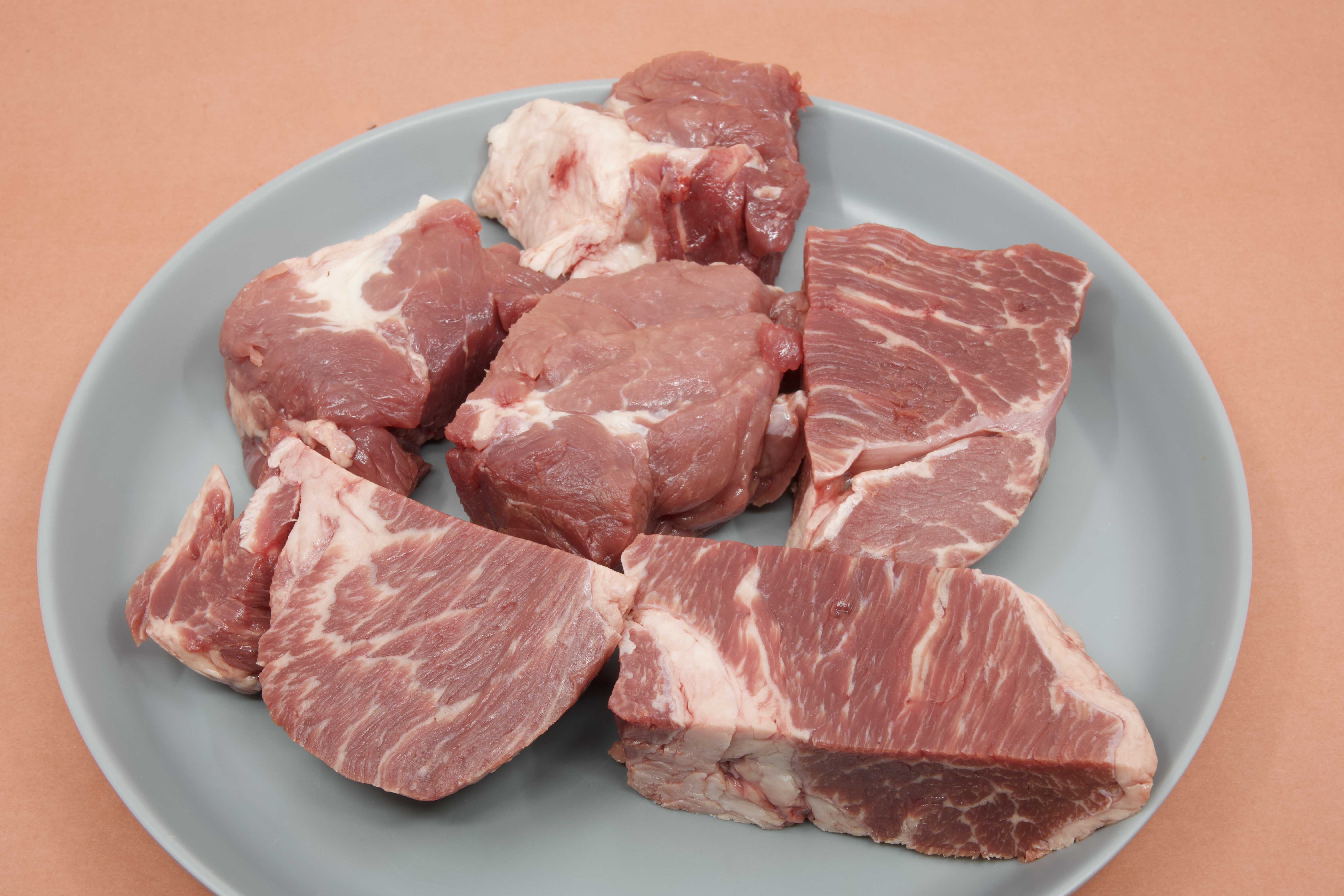
    Raw chuck steak that looks a lot like a scotch fillet (ribeye) steak with generous marbling.

    I haven’t calculated the cost of the electricity required to run the precision circulator for 24 hours.

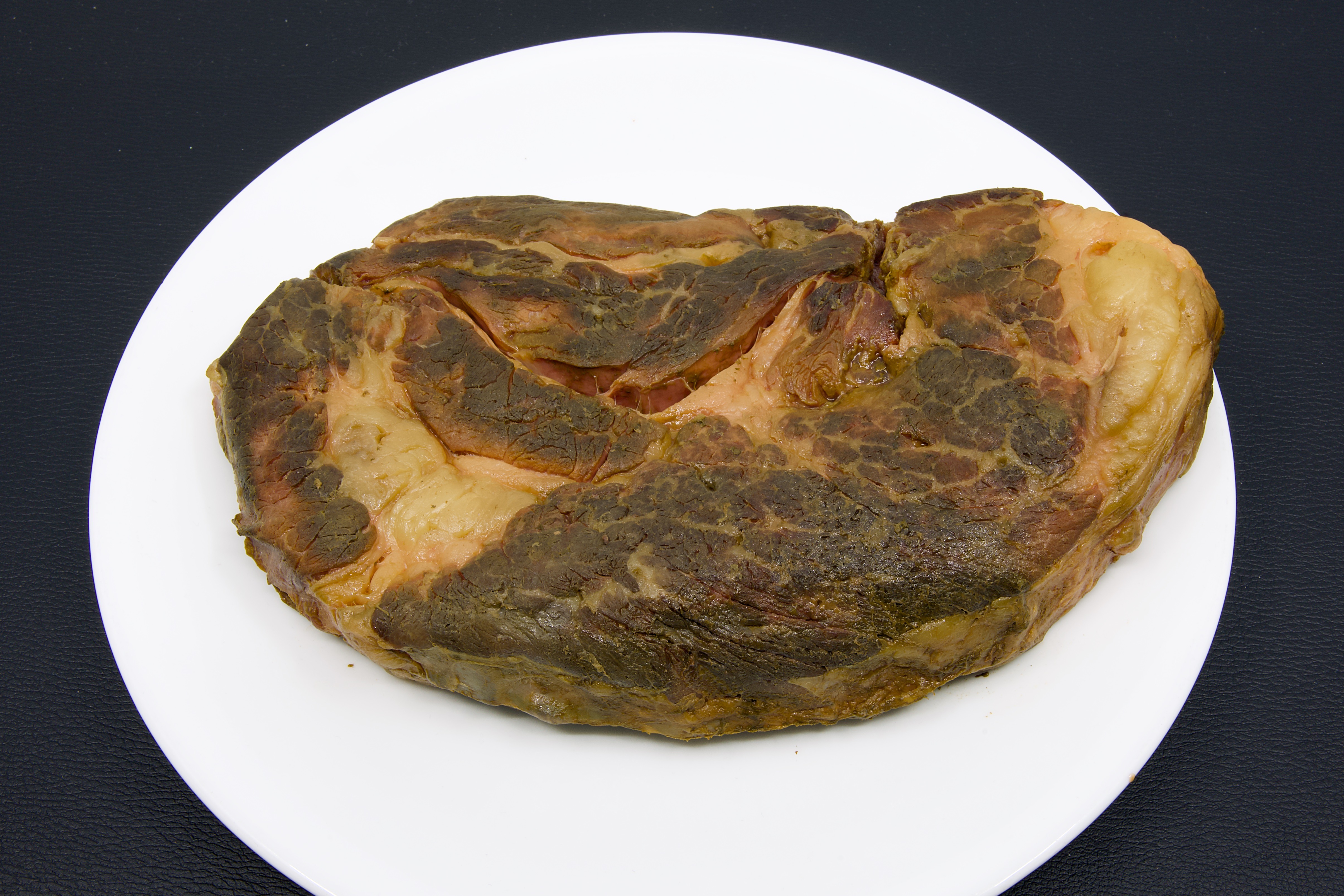
    Rather than cooking the chuck in a slow cooker, I rubbed it with Vegemite, vacuum-sealed it in a plastic bag, and cooked it in a 57 °C water bath for 24 hours. Chuck comes from the shoulder region of the animal, where muscles do considerably more work than those in traditionally tender steak cuts. Consequently, chuck contains more connective tissue and benefits from longer cooking.

    The combination of low temperature and long cooking time works well here. Long cooking gives connective tissue time to soften, while the controlled water temperature lets the beef retain a pink, steak-like character.

    I recently enjoyed a delicious Angus chuck steak in Melbourne.

    Why chuck?

    Chuck is from the shoulder region, adjacent to the rib section from which ribeye or Scotch fillet is derived. Unlike the less heavily worked muscles that supply many premium steaks, the shoulder does plenty of work and therefore contains substantial connective tissue.

    That difference helps explain why chuck has traditionally been used for casseroles, pot roasts, and other forms of slow cooking.

    It also makes chuck interesting when looking for economical alternatives to premium steak. At $20/kg, the piece I bought offered an opportunity to use sous vide cooking to get a steak-like result from a cut normally reserved for slower, wetter cooking methods. Chuck has also been described as a cheaper alternative to cuts such as brisket, while still having plenty of beef flavour.

    With grocery prices putting pressure on household budgets, exploring less expensive cuts makes sense. The trade-off is time. Instead of paying more for inherent tenderness, I used a 24-hour cook to make the most of a less expensive cut.

    Why cook chuck sous vide?

    Sous vide, or water-bath cooking, is well suited to chuck because time and temperature can do different jobs.

    The 57 °C temperature determines the basic doneness of the beef, while the extended cooking time helps tenderise a cut containing more connective tissue. Chuck and shoulder steaks particularly benefit from extended cooking, with 24-hour cooks commonly used when seeking a tender, steak-like texture.

    It is quite different from traditional braising. Rather than raising the temperature sufficiently to produce conventional well-done braised beef, the idea is to keep the temperature relatively low and give the meat plenty of time.

    A final hard sear provides the browned exterior that the water bath cannot.

    Ingredients

    • Chuck steak
    • Vegemite
    • Freshly ground black peppercorns
    • Dried chives

    Equipment

    • Precision immersion circulator
    • Suitable water-bath container
    • Vacuum sealer
    • Food-safe vacuum bag suitable for sous vide cooking
    • Cast-iron flat top or cast-iron cooking surface
    • Barbecue
    • Gas blowtorch
    • Kitchen towel
    • Wooden cutting board
    • Sharp knife

    Instructions

    1. Set the water bath to 57 °C.
    2. Remove the chuck steak from its packaging and pat the surface dry.
    3. Rub a thin coating of Vegemite over the surface of the beef.
    4. Place the steak into a suitable vacuum bag and vacuum seal it.
    5. Submerge the sealed bag in the 57 °C water bath and cook for 24 hours. Extended cooking gives the relatively tough shoulder meat time to become progressively more tender.
    6. After 24 hours, remove the bag from the water bath and take out the steak.
    7. Pat the surface of the meat thoroughly dry with a kitchen towel. A dry surface is important for achieving a good sear.
    8. Heat a cast-iron flat top in the barbecue until very hot.
    9. Sear the chuck steak rapidly on the hot cast iron to develop a browned crust.
    10. Use a gas blowtorch to finish browning the exterior where necessary.
    11. Allow the meat to rest briefly, and then slice it across the grain.
    12. Season with freshly ground black peppercorns and dried chives.

    Serving

    I kept the serving arrangement simple.

    After slicing the chuck on a wooden board, I then finished everything with freshly ground black peppercorns and dried chives.

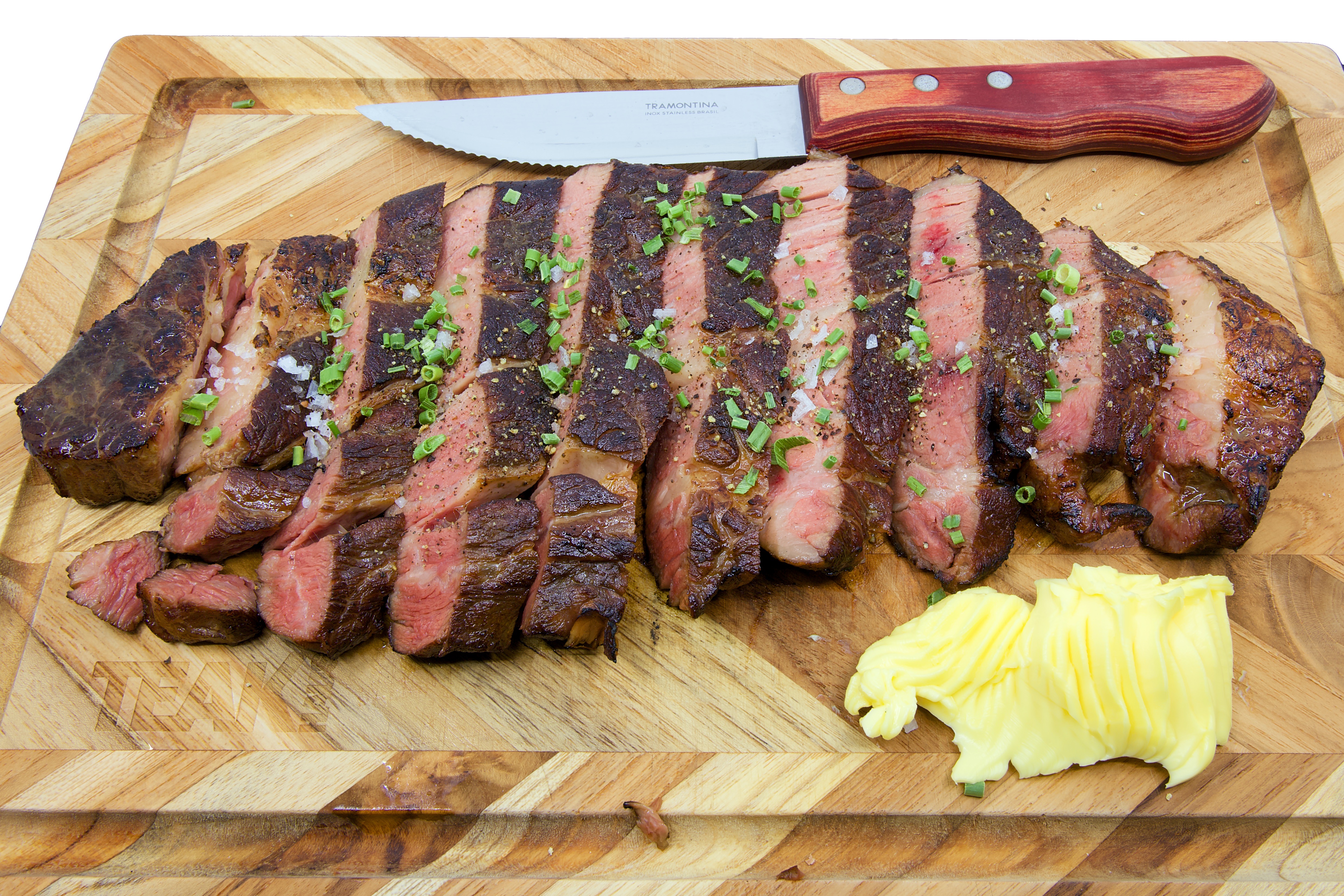
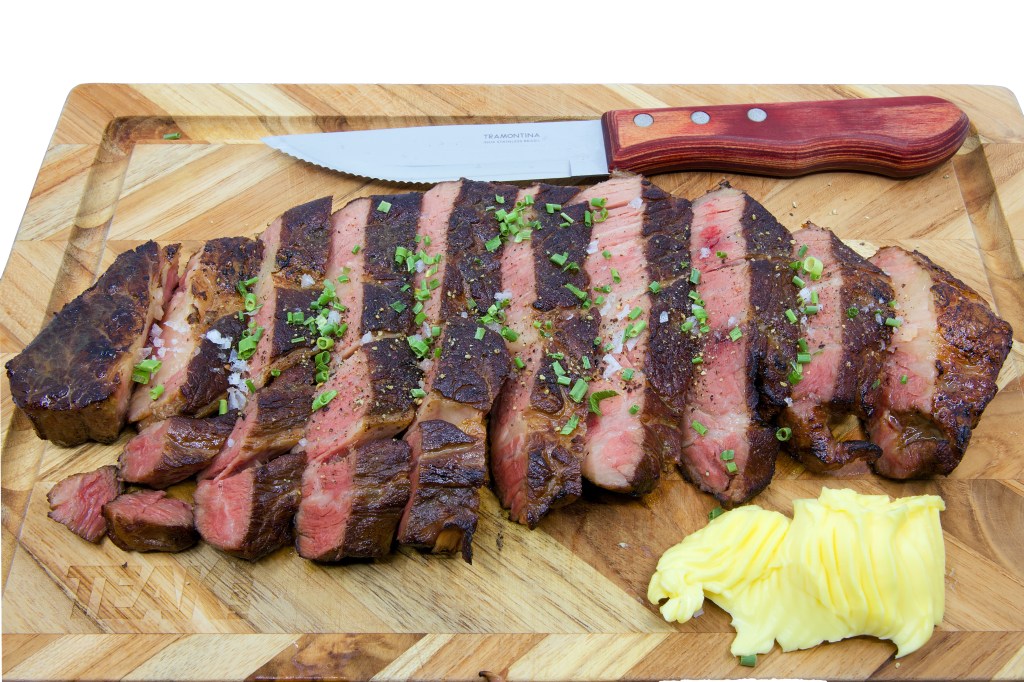
    Sliced chuck steak coated in Vegemite after 24 hours at 57 °C and seared with a gas torch. The steak is medium-rare. Served with some cultured butter. Seasoned and garnished with salt flakes, freshly cracked peppercorns. Served on a wooden board with steak knife.

    Final thoughts

    This was an interesting way to treat an economical piece of beef.

    At $20/kg, chuck has an obvious attraction when premium steak cuts are more expensive. The compromise is that chuck needs time to cook.

    The Vegemite worked as a simple savoury coating.

    For me, that’s where the value of this method lies. Buy a less expensive cut, give it more time, and make the most of what the meat has to offer.

    AI Disclaimer

    Microsoft Copilot modified this blog post. Microsoft Copilot corrected grammar, spelling, and tone.

    Leftovers update

    For lunch, I took some leftover chuck steak, roughly chopped it and heated it in a frying pan with some water until it was hot and soft. I then added some vintage cheddar and let it melt.

    I bought a fresh baguette this morning, halved it, and cut it open to toast. I applied a generous amount of butter, then covered the bottom with the reheated chuck steak and melted cheese.

    Fediverse Reactions
  • Pressure-cooked chuck steak

    Pressure-cooked chuck steak


    I usually associate chuck steak with slow cooking. It has plenty of beef flavour, but the connective tissue means it benefits from time and moisture.

    When I recently visited Melbourne to see her, I enjoyed a chuck steak cooked slowly. I think it may have been cooked “under a vacuum” in a water bath for anywhere between 24 and 72 hours. That’s why it remained medium-rare pink yet tender like a scotch fillet steak.

    I wanted to try something different. Instead of pressure-cooking a chuck steak until it was soft enough to pull apart, I wanted to cook it relatively quickly so it stayed intact. Then I could dry the surface, sear it, and eat it more like a conventional steak.

    The aim isn’t to transform chuck into a tenderloin or scotch fillet. It’s to soften the meat while retaining some structure and then add a browned crust with a final sear.

    Ingredients

    • 1 chuck steak, about 350–500 g and preferably 3–4 cm thick
    • Salt
    • Freshly ground black pepper
    • 250 mL salted water

    Equipment

    • Pressure cooker
    • Trivet or rack for the pressure cooker
    • Paper towel
    • Cast iron flat top and a barbecue grill
    • Gas torch
    • Tongs
    • Sharp knife

    Instructions

    Season the chuck steak

    Pat the steak dry with some paper towel.

    Season both sides with salt and black pepper.

    If you have the time, salt the steak in advance and leave it uncovered in the refrigerator. Otherwise, season immediately before cooking.

    Pressure-cook the steak

    Add 250 mL of salted water to the pressure cooker.

    Put a trivet into the cooker and place the chuck steak on the trivet so the meat sits above the cooking liquid.

    Cook at high pressure for 15 minutes.

    After pressure cooking, let the pressure release naturally for 5 minutes, then release the remaining pressure.

    I’m deliberately keeping the pressure-cooking time short. I’m not trying to make pulled beef. I want the chuck to soften while retaining enough structure to handle a final high-temperature sear.

    Dry the steak

    Remove the chuck steak from the pressure cooker.

    Pat it thoroughly dry with some paper towels and leave it uncovered for about 5–10 minutes.

    Just before searing, pat the surface dry again.

    Removing surface moisture is important so the steak browns rather than steams.

    Sear

    Heat a cast-iron flat plate on the barbecue.

    Put the steak into the hot pan and sear it for about 45–60 seconds.

    Blast it with a gas torch.

    At this stage, I’m not trying to cook the steak significantly more. I want to sear the surface to form a crust.

    Rest and slice

    Remove the steak from the pan and rest it for about 5 minutes.

    Look carefully at the direction of the muscle fibres, and slice the chuck thinly across the grain.

    Chuck isn’t naturally as tender as premium steak cuts, so cutting across the grain makes each mouthful easier to chew.

    What I’m looking for

    I’m not expecting the texture of an eye fillet.

    I’m hoping for something between a traditionally cooked steak and slowly braised chuck: a piece of beef that retains its shape and texture, benefits from pressure cooking, and has a good, browned exterior from the final sear.

    Serving suggestion

    I’d keep the meal relatively simple.

    Some possibilities include:

    • Sauerkraut and Greek-style yoghurt.
    • Potato gems

    The chuck should have plenty of beef flavour, so it doesn’t need a complicated sauce.

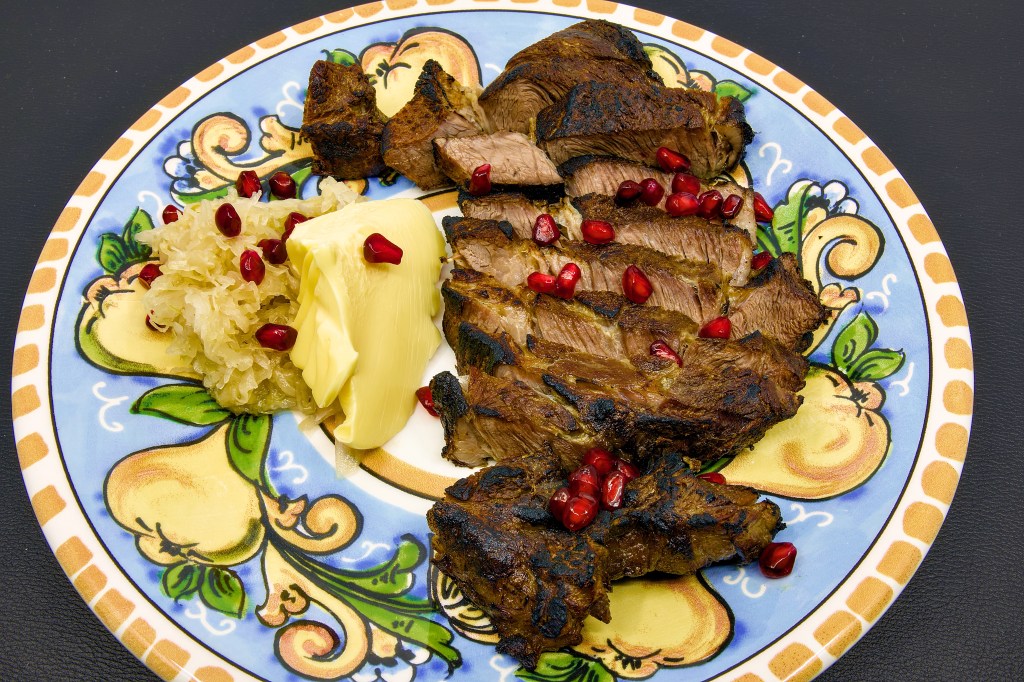
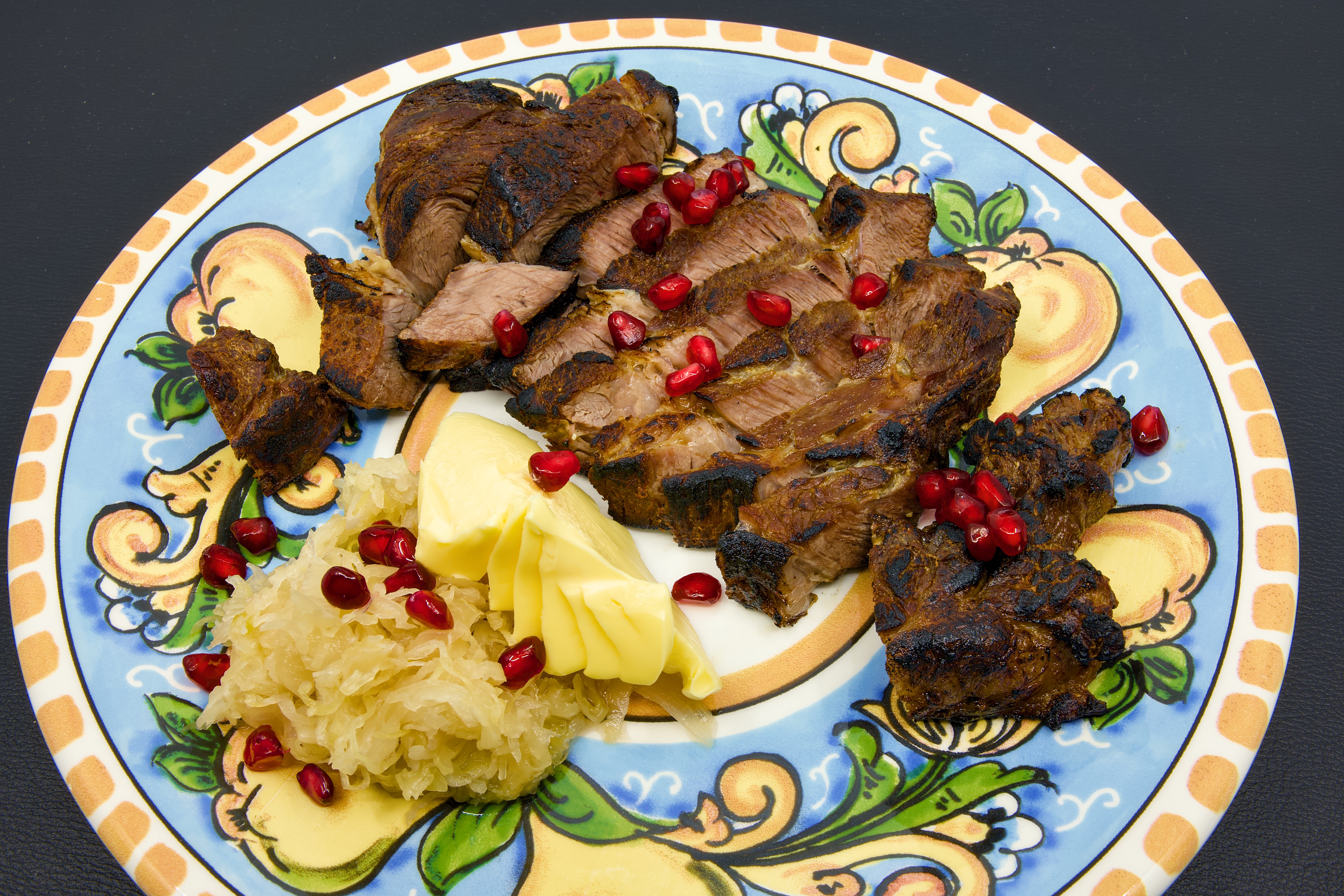
    Pressure cooker chuck steak with sauerkraut, cultured butter, and pomegranate arils

    Final thoughts

    This method appeals because it combines two quite different cooking techniques.

    Pressure cooking gives the chuck a short period of cooking under heat, moisture, and pressure. The cast-iron flat plate then does something the pressure cooker cannot do particularly well: create a dry, deeply browned surface.

    The key is finding the pressure-cooking sweet spot. Too little time and the chuck may remain tough. Too much time and I’ll end up with braised beef that happens to have been seared afterwards.

    AI Disclaimer

    This blog post has been modified with Microsoft Copilot. Microsoft Copilot corrected grammar, spelling, and tone.

    Fediverse Reactions
  • Pressure-cooked Vegemite beef with Hokkien noodles

    Pressure-cooked Vegemite beef with Hokkien noodles


    Introduction

    This pressure-cooker meal uses chuck steak, passata, water, Vegemite, and Hokkien noodles.

    I diced the chuck steak, coated it with Vegemite, and pressure-cooked it in passata and water for 40 minutes. The cooking liquid blended with the beef juices and Vegemite to form a savoury tomato sauce.

    I served the beef and noodles in a large, heated bowl and ate the meal with chopsticks and a spoon.

    Ingredients

    • 500 g chuck steak
    • Vegemite, enough to lightly coat the beef
    • 250 mL passata
    • 250 mL water
    • Hokkien noodles, enough for one generous serving

    Equipment

    • Cutting board
    • Sharp knife
    • Large bowl or plate for preparing the beef
    • Pressure cooker
    • Measuring jug
    • Kitchen tongs or spoon
    • Saucepan or heatproof bowl for preparing the Hokkien noodles, depending on the packet instructions
    • Colander or strainer
    • Large serving bowl
    • Chopsticks
    • Spoon

    Instructions

    Prepare the beef

    1. Cut the chuck steak into bite-sized cubes.
    2. Put the diced beef into a bowl.
    3. Add enough Vegemite (about a tablespoon) to coat the surface of the beef lightly.
    4. Use clean hands to rub the Vegemite over the beef pieces.
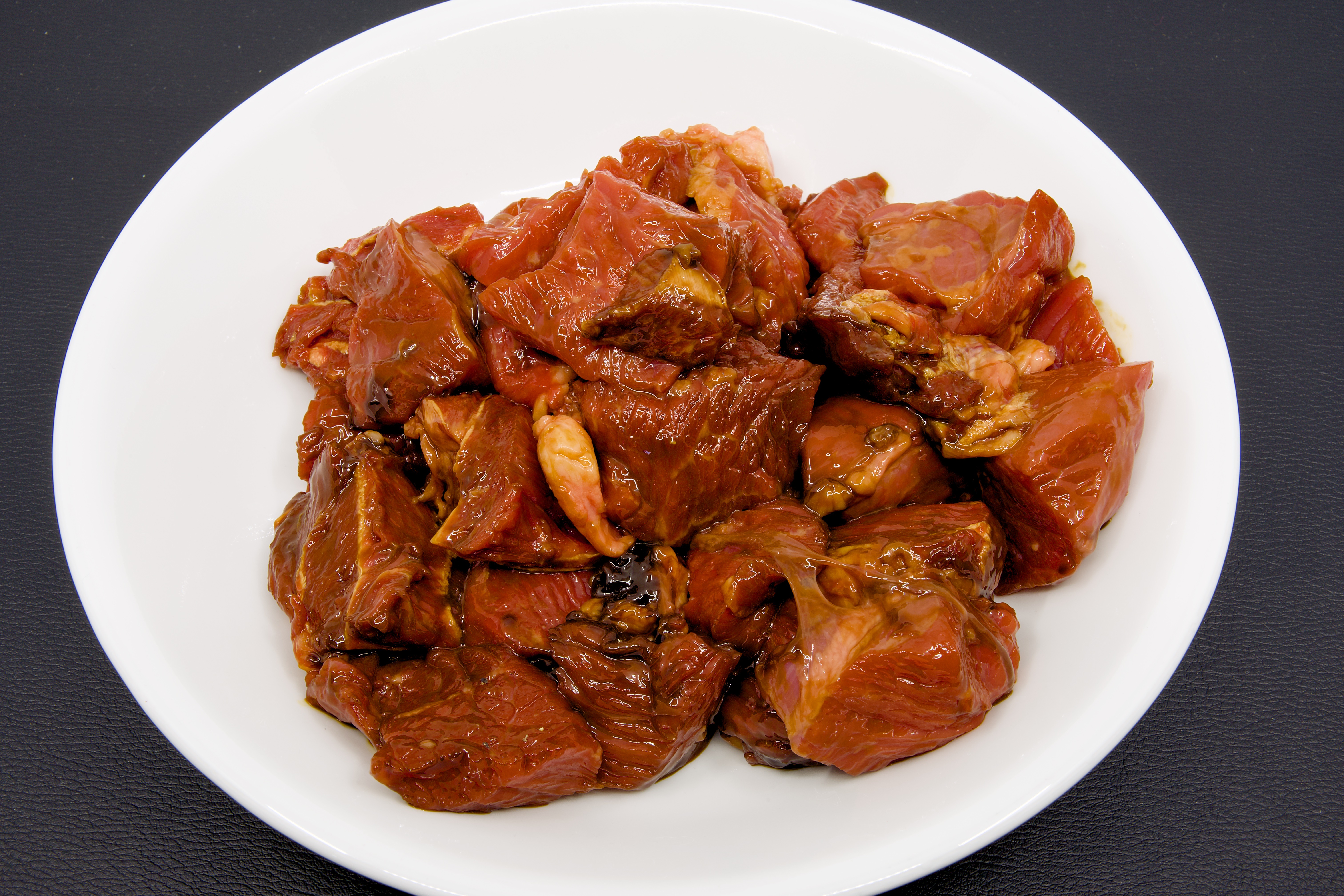
    Chunks of raw diced chuck steak coated with a glossy layer of Vegemite in a white bowl.

    Pressure cook the beef

    1. Put the Vegemite-coated beef into the pressure cooker.
    2. Add 250 mL of passata.
    3. Add 250 mL of water.
    4. Stir gently to combine the passata and water and distribute the beef through the cooking liquid.
    5. Fit and lock the pressure cooker lid according to the manufacturer’s instructions.
    6. Cook the beef under pressure for 40 minutes.
    7. At the end of the cooking time, release the pressure using a method appropriate for your pressure cooker.
    8. Remove the lid carefully.
    9. Stir the beef through the tomato cooking liquid.

    The chuck steak should be tender after pressure cooking, while the passata, water, beef juices, and Vegemite form the sauce for the noodles.

    Prepare the Hokkien noodles

    1. Prepare the Hokkien noodles according to the packet instructions.
    2. Drain them well.
    3. Loosen the noodles gently so they are easy to pick up with chopsticks.
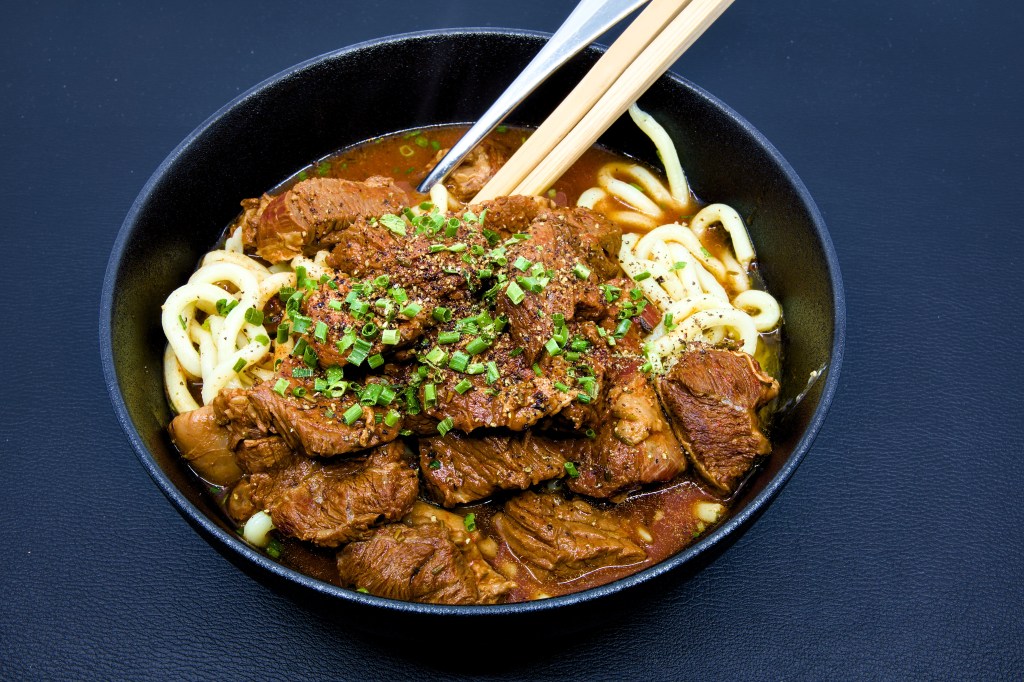
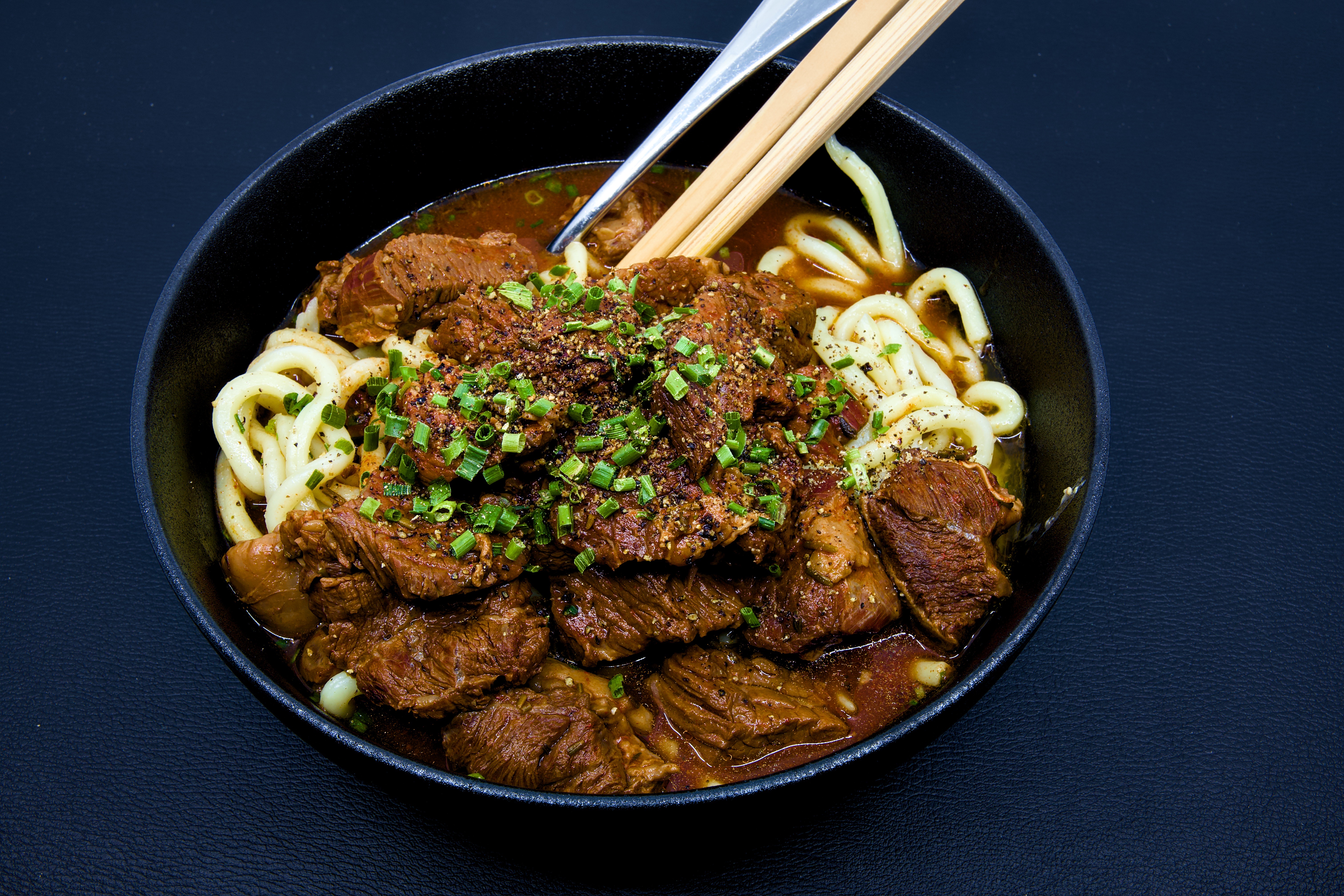
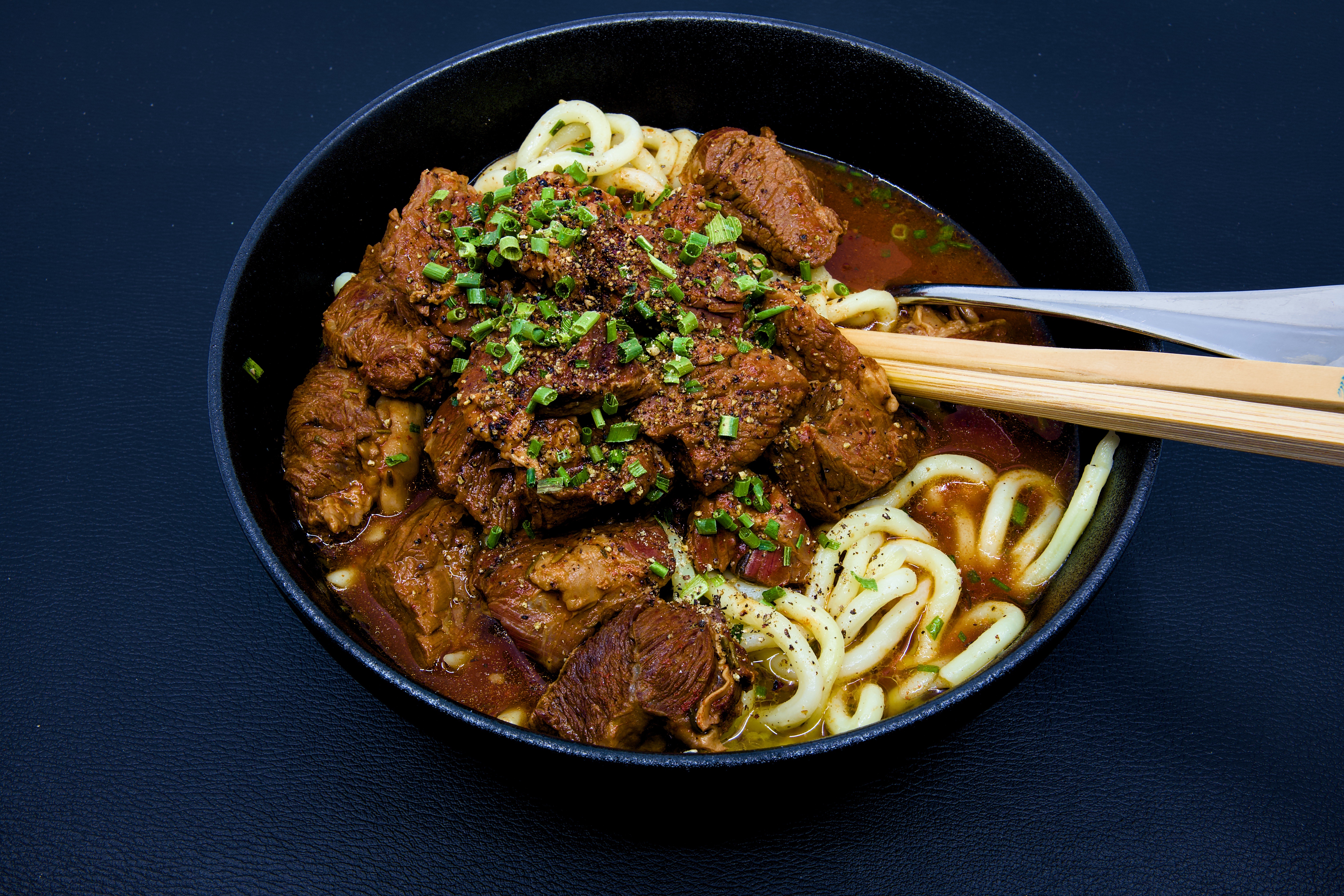
    Bowl of Hokkien noodles and tender Vegemite-rubbed chuck steak in a brown broth, finished with chopped chives and black pepper, with chopsticks and a spoon resting on the bowl.

    Serve

    1. Heat a large serving bowl with hot water.
    2. Discard the water and dry the bowl.
    3. Add the Hokkien noodles to the heated bowl.
    4. Spoon the pressure-cooked beef over the noodles.
    5. Add the tomato cooking liquid according to how much sauce you want.
    6. Serve immediately.

    I ate the noodles and pieces of beef with chopsticks and used a spoon for the sauce.

    Bowl of Hokkien noodles and tender Vegemite-rubbed chuck steak in a brown broth, finished with chopped chives and black pepper, with chopsticks and a spoon resting on the bowl.

    Final thoughts

    Chuck steak works well for pressure cooking because it becomes tender while staying in the sauce.

    The Vegemite provides seasoning and savoury flavour, while the passata forms the tomato base. Hokkien noodles provide a simple way to serve the beef and sauce together in a bowl.

    It is a straightforward beef-and-noodle meal with minimal preparation and one main cooking vessel.

    AI Disclaimer

    I exploited Microsoft Copilot to correct grammar and spelling. I did not exploit Microsoft Copilot for any other purpose.

    Fediverse Reactions
  • Chuck

    Chuck


    Chuck under pressure

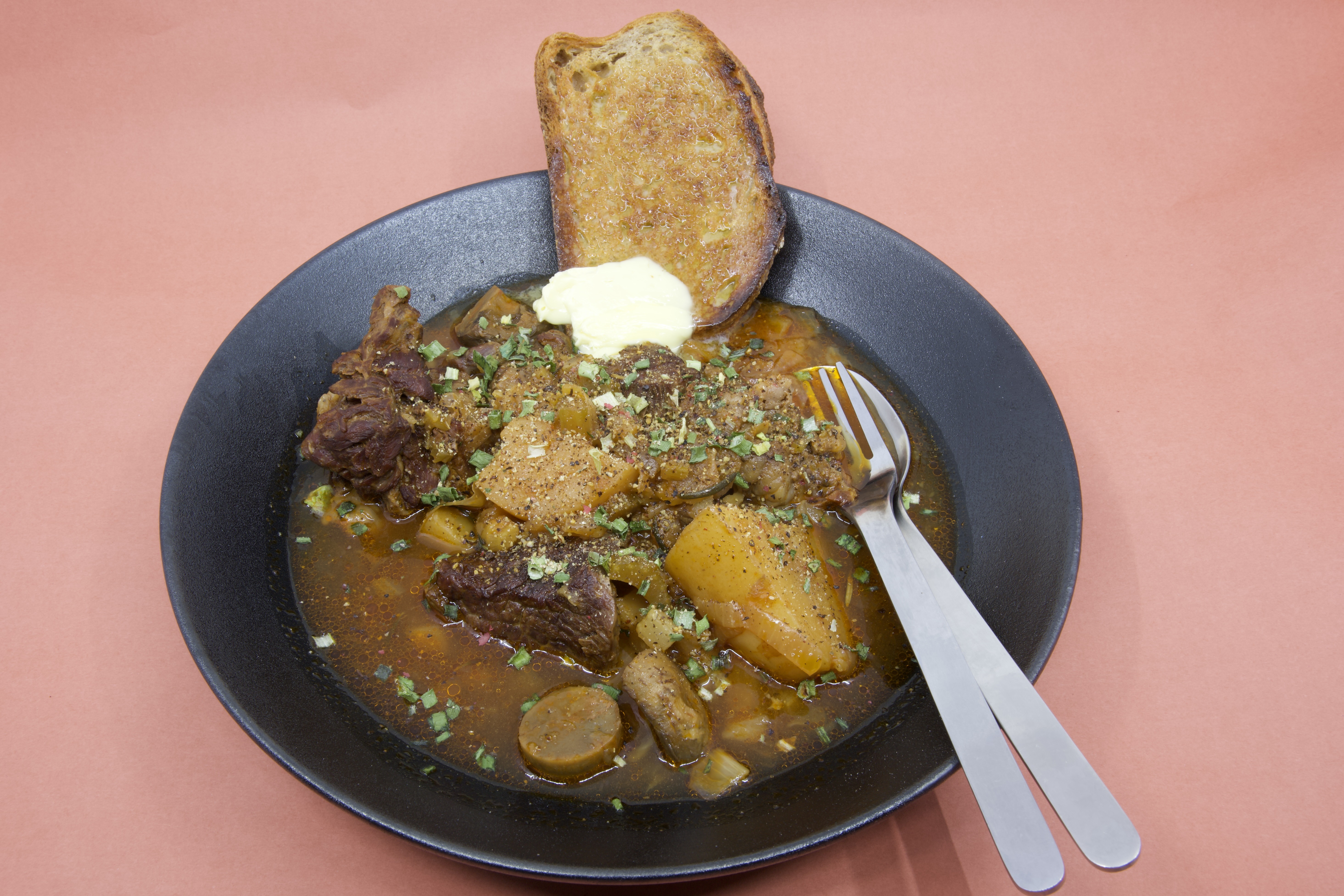
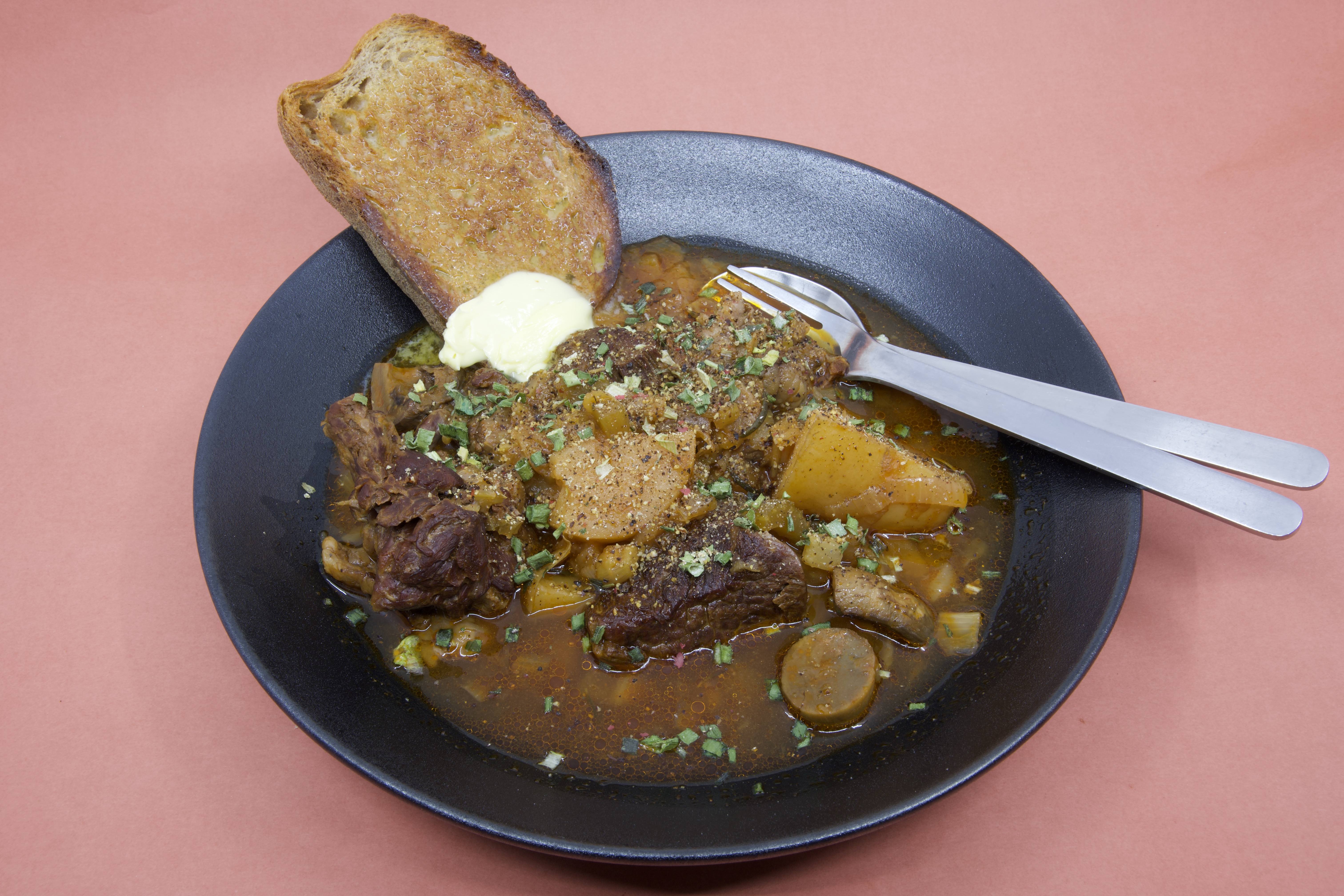
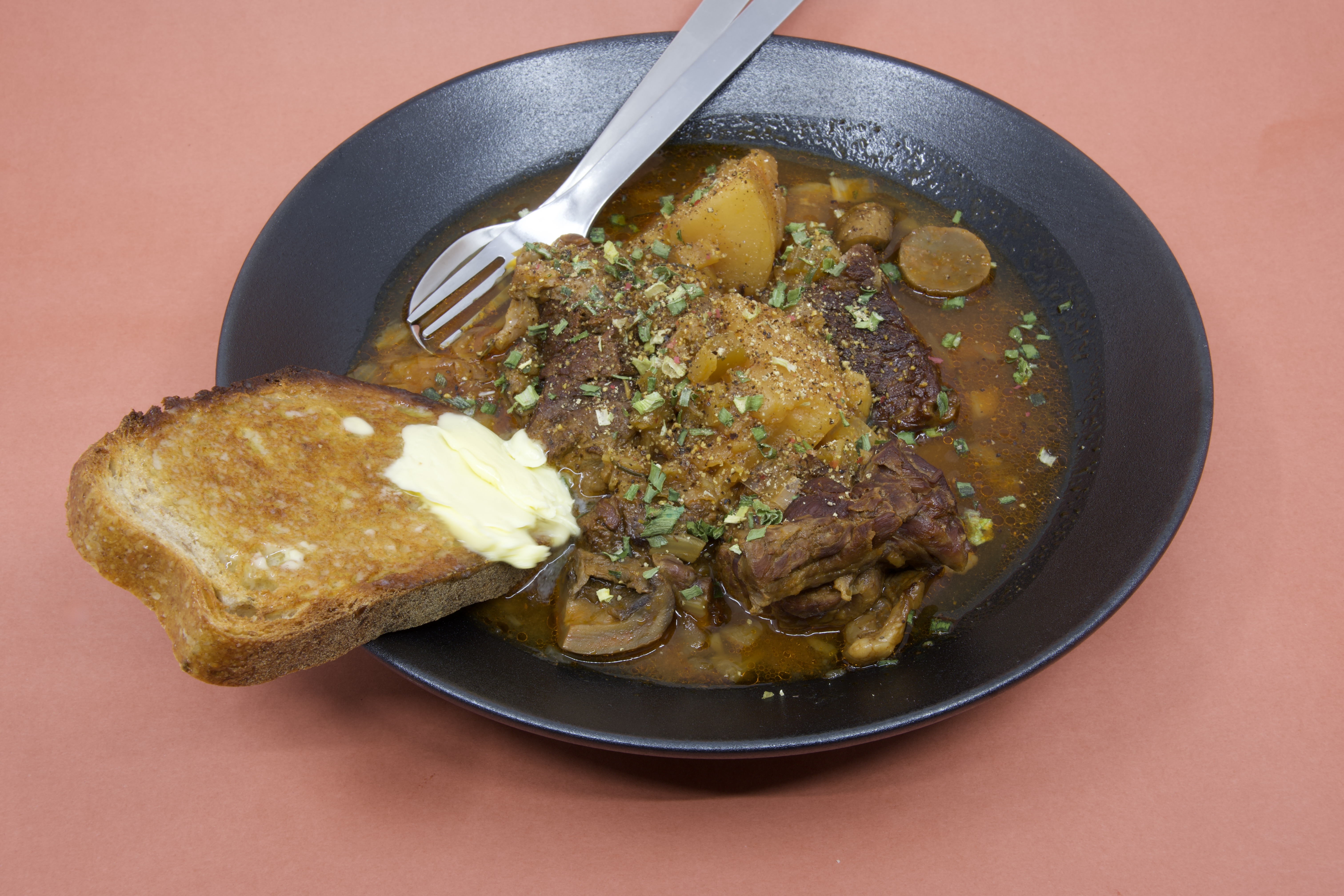
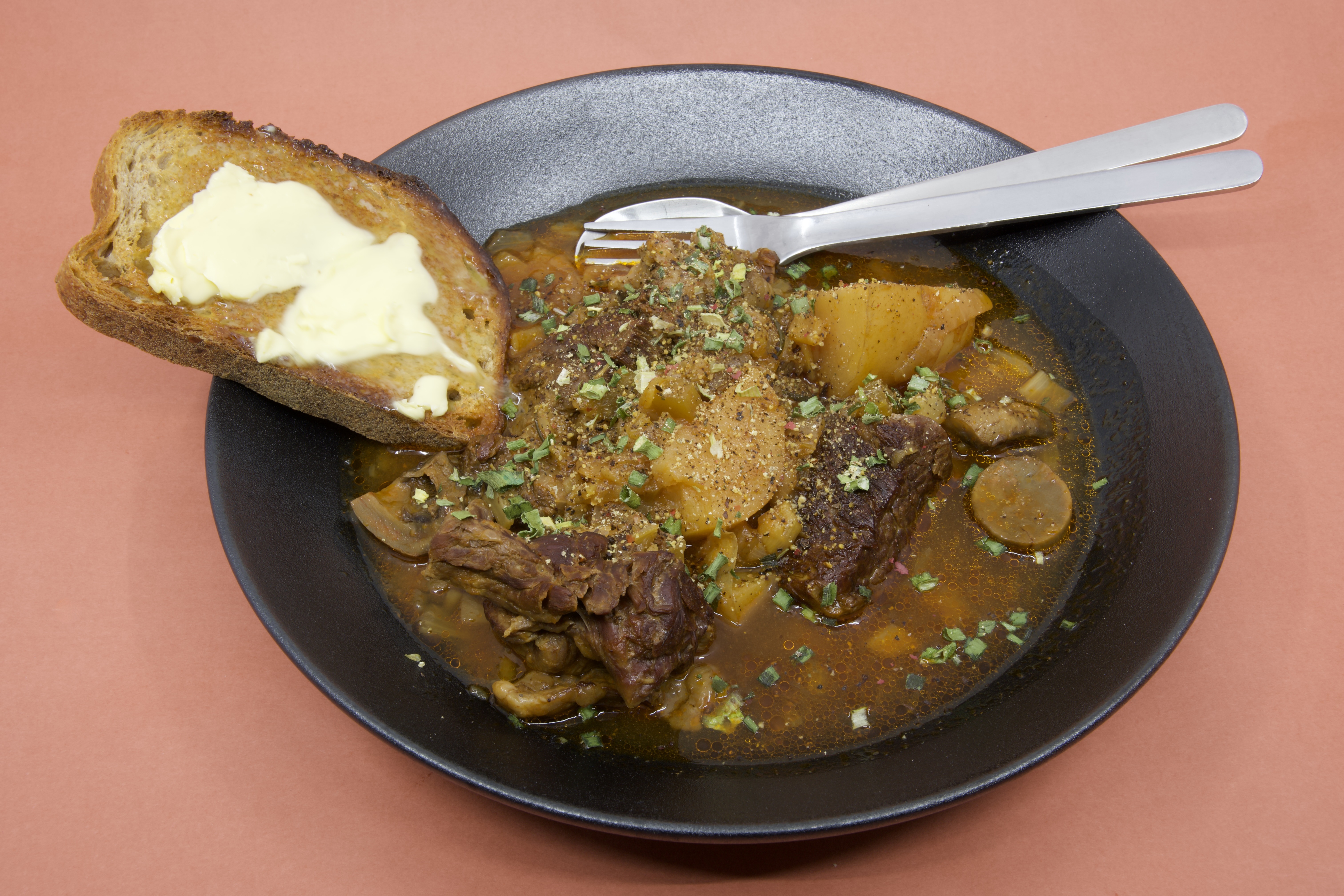
    In today’s food diary, we have some beef chuck.

    Overview

    • Style: pressure-cooker beef chuck with tomato, fennel, rosemary, and bay.
    • Serves: 4 generous portions or 2 “Gary-sized” portions.
    • Cook time: about 75 minutes, including pressure build-up and natural release.
    • Best served with: toasted rye sourdough spread with cultured butter, plus a spoon of Greek-style yoghurt to soften the tomato and fennel.
    • Diet note: the braise itself is relatively low in carbohydrate; the rye sourdough adds most of the carbohydrate in the full meal.

    Ingredients

    • 1 kg beef chuck, cut into 4 cm chunks.
    • 1 fennel bulb, trimmed, cored, and sliced.
    • 1 brown onion, diced.
    • 2 celery sticks, sliced.
    • 700 mL passata.
    • 1–2 tablespoons beef fat.
    • 1 teaspoon salt, plus more to finish.
    • 1 teaspoon whole peppercorns, freshly ground.
    • 1 teaspoon fennel seeds, lightly crushed.
    • 2 dried bay leaves.
    • 1 sprig fresh rosemary.
    • Greek-style yoghurt, to serve.
    • Frozen rye sourdough, thawed and toasted, to serve.
    • Cultured butter, to serve.

    Equipment

    • Pressure cooker
    • Cast-iron skillet for sautéing and browning the meat.
    • Sharp cook’s knife and chopping board.
    • Large bowl for holding the browned beef.
    • Wooden spoon for stirring and scraping the pot base.
    • Tongs for turning and transferring the beef.
    • Measuring spoons and a measuring jug.
    • Mortar and pestle for crushing fennel seeds and peppercorns.
    • Toaster, grill, or frypan for the rye sourdough.
    • Warm serving bowls.

    Method

    1. Thaw the rye sourdough and keep it aside until serving.
    2. Pat the beef chuck dry. Season it with salt and crushed peppercorns.
    3. Heat the skillet to brown. Melt the beef fat, then brown the beef in batches. Avoid crowding the skillet. Transfer browned beef to a bowl.
    4. Add the onion, celery, and fennel to the skillet. Cook for 5–7 minutes, stirring often, until softened and lightly coloured.
    5. Stir in the crushed fennel seeds, bay leaves, and rosemary. Cook for 30 seconds, just until fragrant.
    6. Pour in the passata. Scrape the bottom to lift any fond.
    7. Transfer everything to the pressure cooker, including the beef and any resting juices. Stir to coat the meat in the tomato and fennel mixture.
    8. Seal the lid. Cook on high pressure for 45 minutes.
    9. Allow a natural pressure release for 15 minutes, then carefully release any remaining pressure.
    10. Remove the bay leaves and rosemary stem. Stir gently. If the sauce is thin, transfer it to a saucepan for reduction.
    11. Adjust seasoning with salt and freshly cracked pepper.
    12. Serve in warm bowls with a spoon of Greek-style yoghurt. Add toasted rye sourdough spread with cultured butter on the side.

    Cook’s notes

    • Because there is no stock, the flavour base comes from browning the beef, sweating the vegetables, blooming the fennel seeds, and using passata.
    • Do not add extra water unless the pressure cooker requires a minimum amount of liquid. The passata and vegetable moisture should usually be enough.
    • Greek-style yoghurt works best as a finishing garnish rather than a cooking ingredient because pressure cooking can split dairy.
    • The sauce should taste beefy, sweet from fennel and onion, gently acidic from tomato, and aromatic from rosemary and bay.
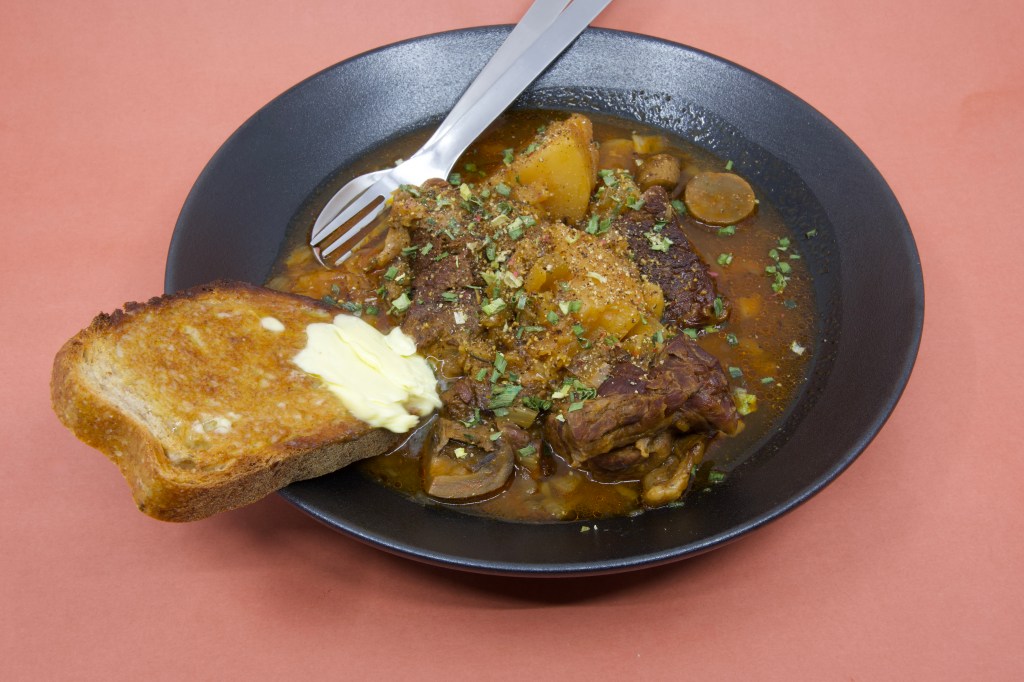
    • I forgot to add the Greek-style yoghurt. The meal didn’t really need it. The beef was tender, soft, and easily fell apart. The vegetables were lovely and soft as well. It all went nicely with some rustic toasted rye sourdough bread.

    Beef chuck anatomy

    The chuck comes from the forequarter, around the shoulder, neck, and upper forelimb. It is a hard-working area with well-used muscles, connective tissue, intramuscular fat, and strong beef flavour. Chuck is one of the major primal regions, with related sub-primals including chuck roll and blade; these can be broken into smaller cuts for slow cooking, roasting, thin slicing, or grilling, when the grade and muscle suit the method.

    For a pressure cooker, diced chuck is ideal because moist heat and pressure help convert collagen into gelatine. This gives the sauce body and turns a firm, working muscle into tender, pull-apart beef. It is usually more forgiving than lean hindquarter cuts, because the connective tissue and fat protect it during long cooking.

    Braise versus stew?

    A braise and a stew both use gentle, moist heat to soften tougher cuts of meat, but they differ in scale, liquid level, and how the finished dish eats. In a braise, the cook usually browns larger pieces of meat first, then cooks them covered with a smaller amount of liquid. The meat is partly submerged, while the exposed surface cooks in steam. The liquid reduces into a concentrated sauce.

    In a stew, the meat and vegetables are cut into smaller, spoon-sized pieces and are usually fully covered with liquid. The liquid is part of the meal rather than just a sauce, so the result is looser, more uniform, and more broth-like. A stew is eaten as an all-in-one bowl; a braise often presents the meat as the focus, with the sauce spooned over or around it.

    This recipe sits closer to a braise than a stew. The beef chuck is browned in larger chunks, the passata and vegetable moisture form a thick cooking medium rather than a thin broth, and the goal is tender beef coated in a tomato, fennel, rosemary, and bay sauce.

    Estimated macronutrients

    Serving optionEnergyProteinFatCarbohydrate
    Per 1 of 4 servesAbout 430 kcalAbout 52 gAbout 18 gAbout 14 g
    With 40 g Greek-style yoghurtAbout 465 kcalAbout 56 gAbout 19 gAbout 16 g
    With yoghurt, 1 slice rye sourdough, and 10 g cultured butterAbout 625 kcalAbout 61 gAbout 28 gAbout 40 g

    Nutrition estimates are indicative only. They assume 1 kg raw beef chuck, 700 mL passata, one fennel bulb, one onion, two celery sticks, one tablespoon beef fat, and four serves. Beef chuck nutrition varies with trimming, marbling, and whether the purchased piece is lean diced chuck, chuck steak, or fattier chuck roll.

    Fediverse Reactions