

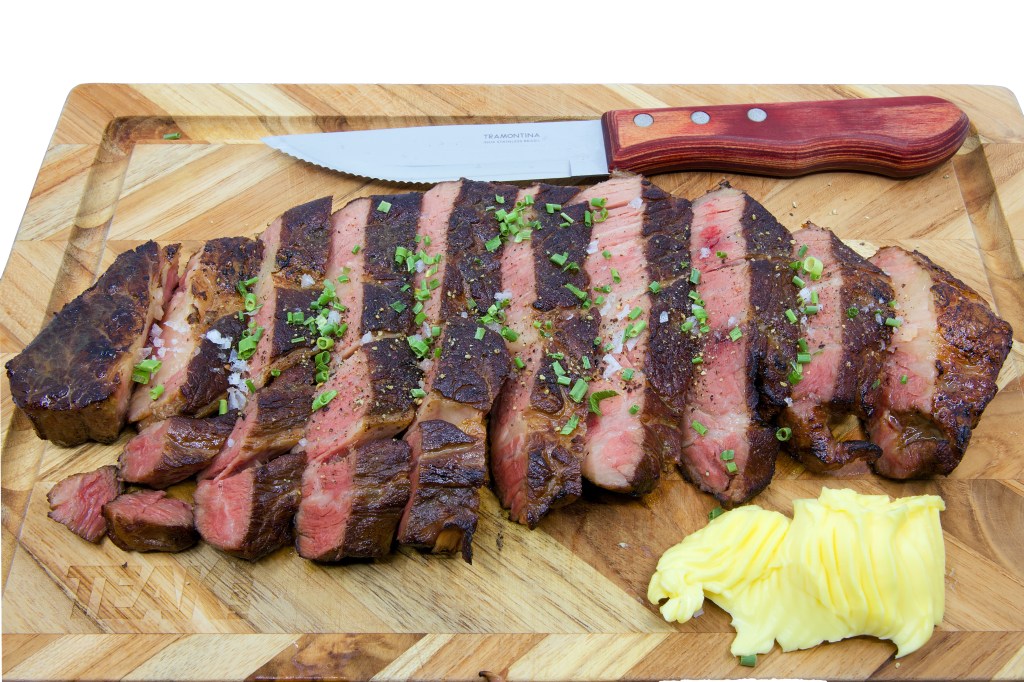
Chuck steak is often thought of as only suitable for a pressure cooker or slow cooker, but a longer cook at a lower temperature can turn it into something different.
For example, the usual temperature for a slow cooker is closer to 100 °C, and the meat will appear “well done.” At much lower pasteurising temperatures, the meat can appear “medium-rare.”
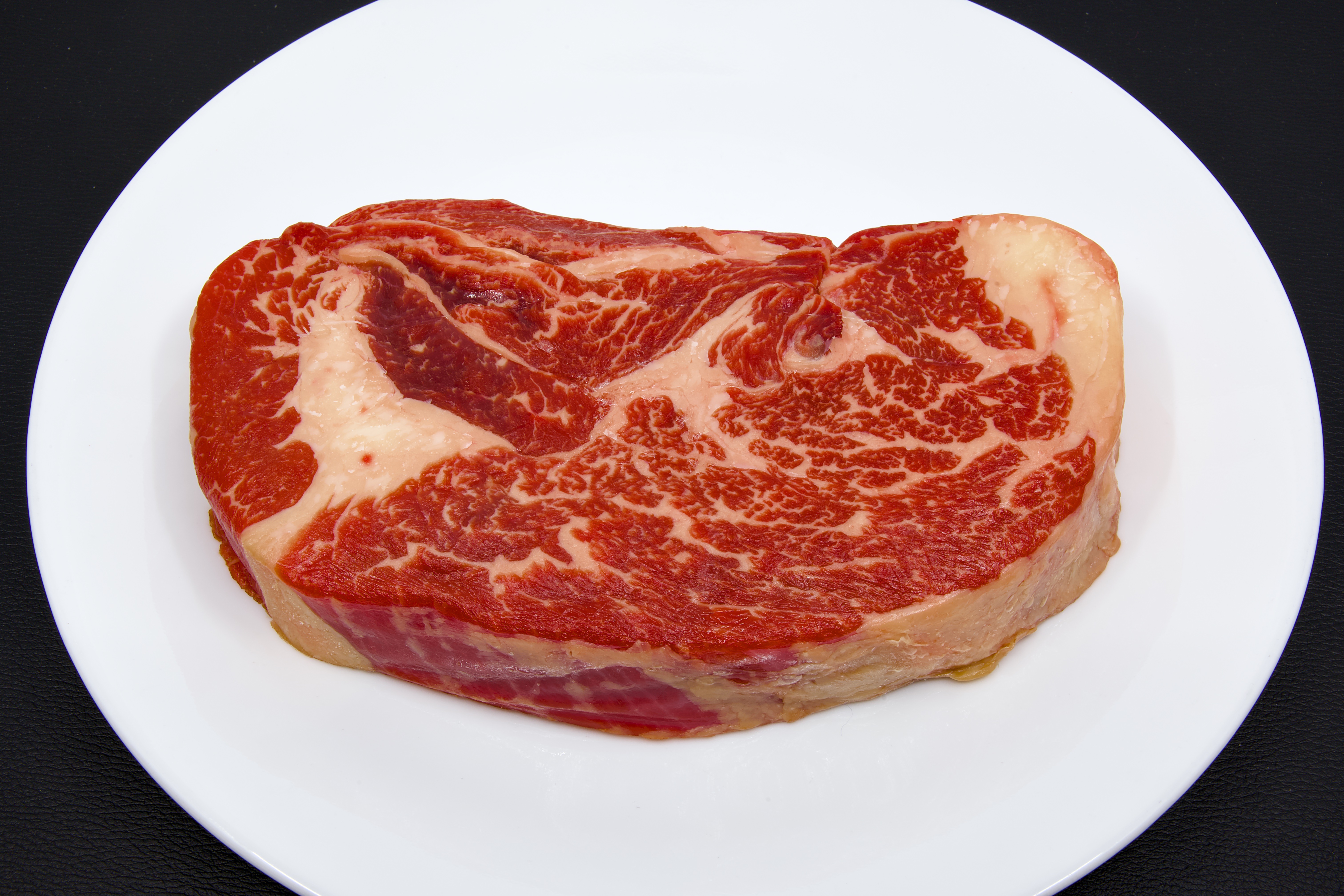
This piece cost $20 per kilogram and, before cooking, looked like a Scotch fillet. In the United States, Scotch fillet is generally called ribeye when sold without the bone.
I haven’t calculated the cost of the electricity required to run the precision circulator for 24 hours.
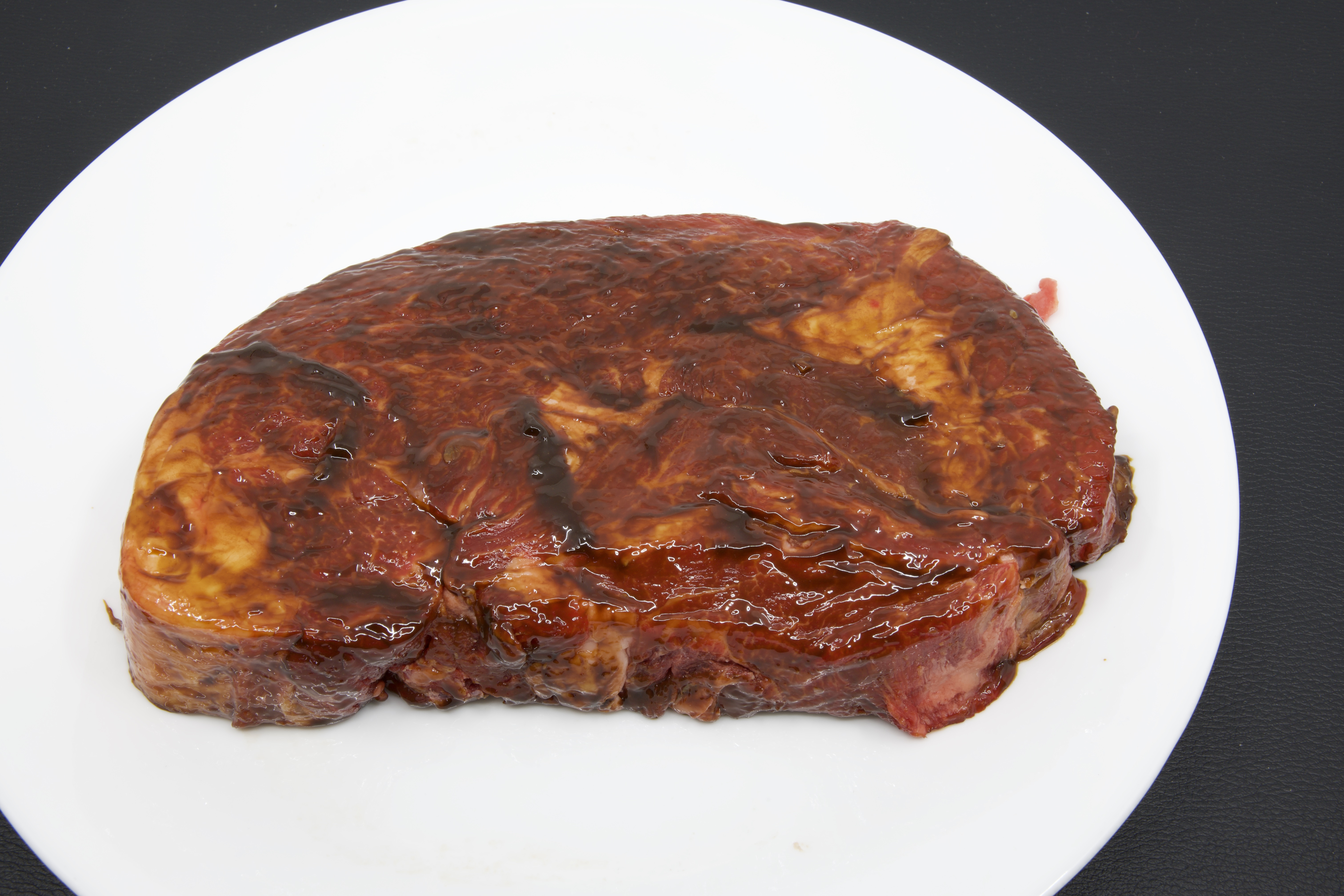
Rather than cooking the chuck in a slow cooker, I rubbed it with Vegemite, vacuum-sealed it in a plastic bag, and cooked it in a 57 °C water bath for 24 hours. Chuck comes from the shoulder region of the animal, where muscles do considerably more work than those in traditionally tender steak cuts. Consequently, chuck contains more connective tissue and benefits from longer cooking.
The combination of low temperature and long cooking time works well here. Long cooking gives connective tissue time to soften, while the controlled water temperature lets the beef retain a pink, steak-like character.
I recently enjoyed a delicious Angus chuck steak in Melbourne.
Why chuck?
Chuck is from the shoulder region, adjacent to the rib section from which ribeye or Scotch fillet is derived. Unlike the less heavily worked muscles that supply many premium steaks, the shoulder does plenty of work and therefore contains substantial connective tissue.
That difference helps explain why chuck has traditionally been used for casseroles, pot roasts, and other forms of slow cooking.
It also makes chuck interesting when looking for economical alternatives to premium steak. At $20/kg, the piece I bought offered an opportunity to use sous vide cooking to get a steak-like result from a cut normally reserved for slower, wetter cooking methods. Chuck has also been described as a cheaper alternative to cuts such as brisket, while still having plenty of beef flavour.
With grocery prices putting pressure on household budgets, exploring less expensive cuts makes sense. The trade-off is time. Instead of paying more for inherent tenderness, I used a 24-hour cook to make the most of a less expensive cut.
Why cook chuck sous vide?
Sous vide, or water-bath cooking, is well suited to chuck because time and temperature can do different jobs.
The 57 °C temperature determines the basic doneness of the beef, while the extended cooking time helps tenderise a cut containing more connective tissue. Chuck and shoulder steaks particularly benefit from extended cooking, with 24-hour cooks commonly used when seeking a tender, steak-like texture.
It is quite different from traditional braising. Rather than raising the temperature sufficiently to produce conventional well-done braised beef, the idea is to keep the temperature relatively low and give the meat plenty of time.
A final hard sear provides the browned exterior that the water bath cannot.
Ingredients
- Chuck steak
- Vegemite
- Freshly ground black peppercorns
- Dried chives
Equipment
- Precision immersion circulator
- Suitable water-bath container
- Vacuum sealer
- Food-safe vacuum bag suitable for sous vide cooking
- Cast-iron flat top or cast-iron cooking surface
- Barbecue
- Gas blowtorch
- Kitchen towel
- Wooden cutting board
- Sharp knife
Instructions
- Set the water bath to 57 °C.
- Remove the chuck steak from its packaging and pat the surface dry.
- Rub a thin coating of Vegemite over the surface of the beef.
- Place the steak into a suitable vacuum bag and vacuum seal it.
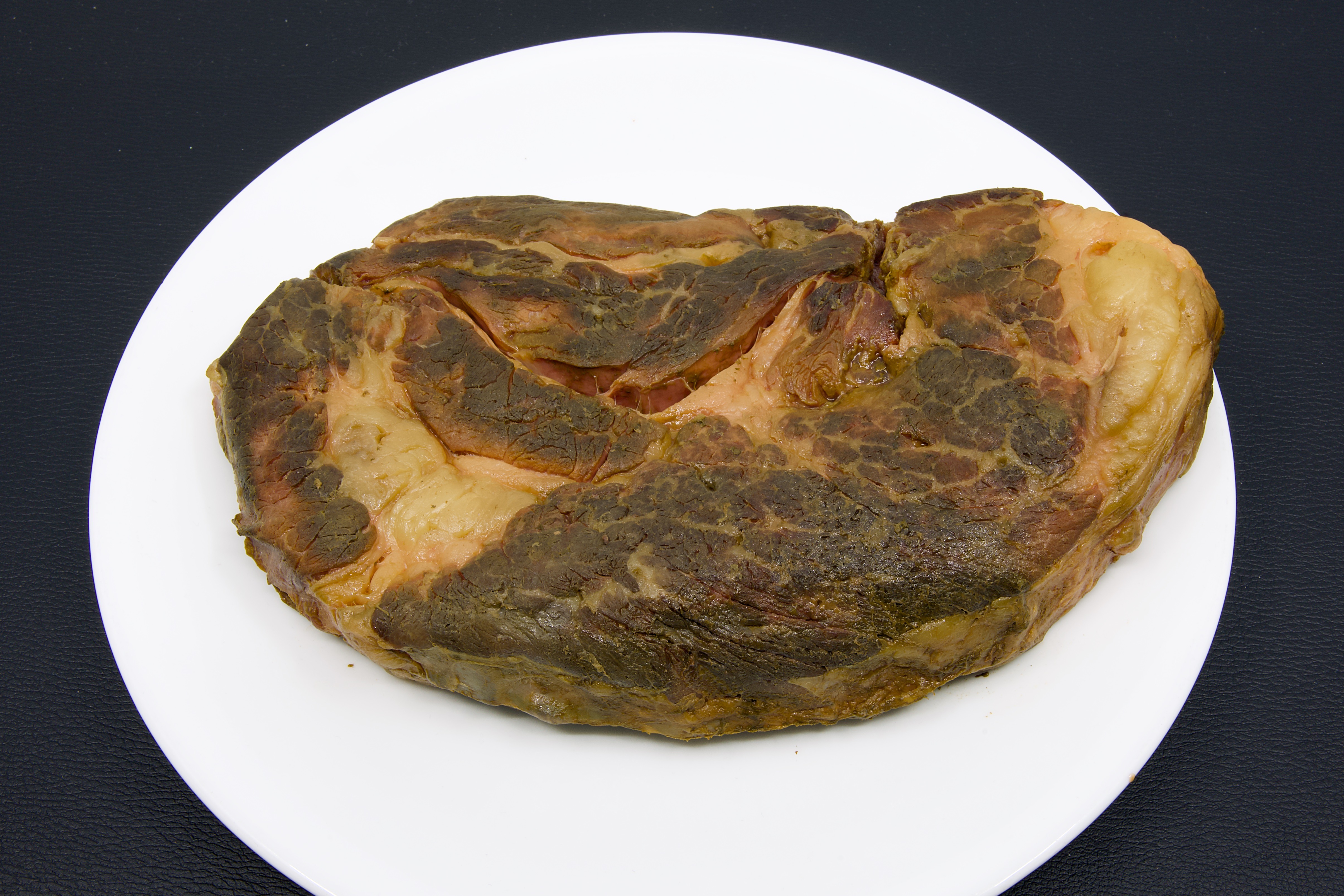
- Submerge the sealed bag in the 57 °C water bath and cook for 24 hours. Extended cooking gives the relatively tough shoulder meat time to become progressively more tender.
- After 24 hours, remove the bag from the water bath and take out the steak.
- Pat the surface of the meat thoroughly dry with a kitchen towel. A dry surface is important for achieving a good sear.
- Heat a cast-iron flat top in the barbecue until very hot.
- Sear the chuck steak rapidly on the hot cast iron to develop a browned crust.
- Use a gas blowtorch to finish browning the exterior where necessary.
- Allow the meat to rest briefly, and then slice it across the grain.
- Season with freshly ground black peppercorns and dried chives.
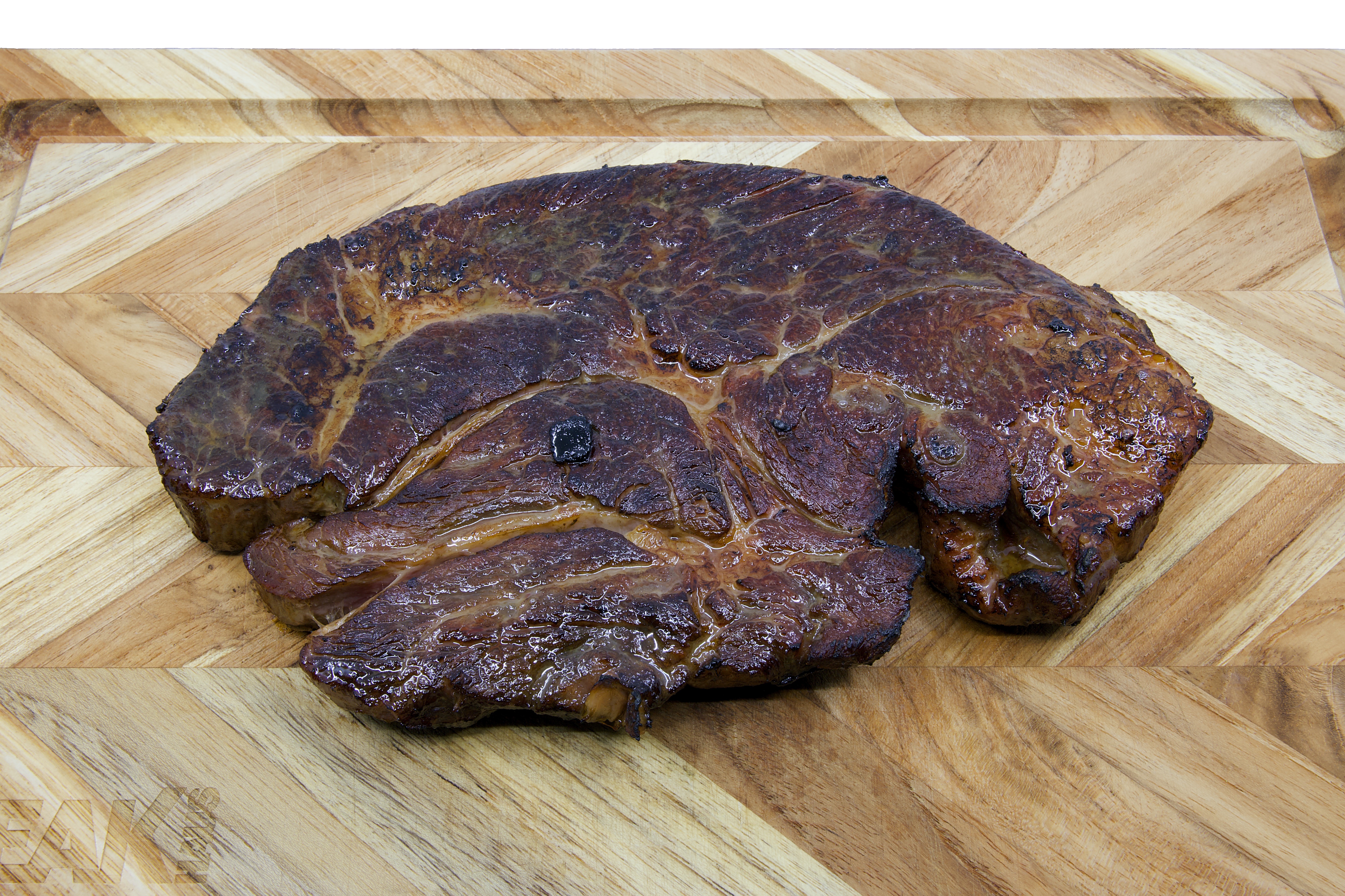
Serving
I kept the serving arrangement simple.
After slicing the chuck on a wooden board, I then finished everything with freshly ground black peppercorns and dried chives.
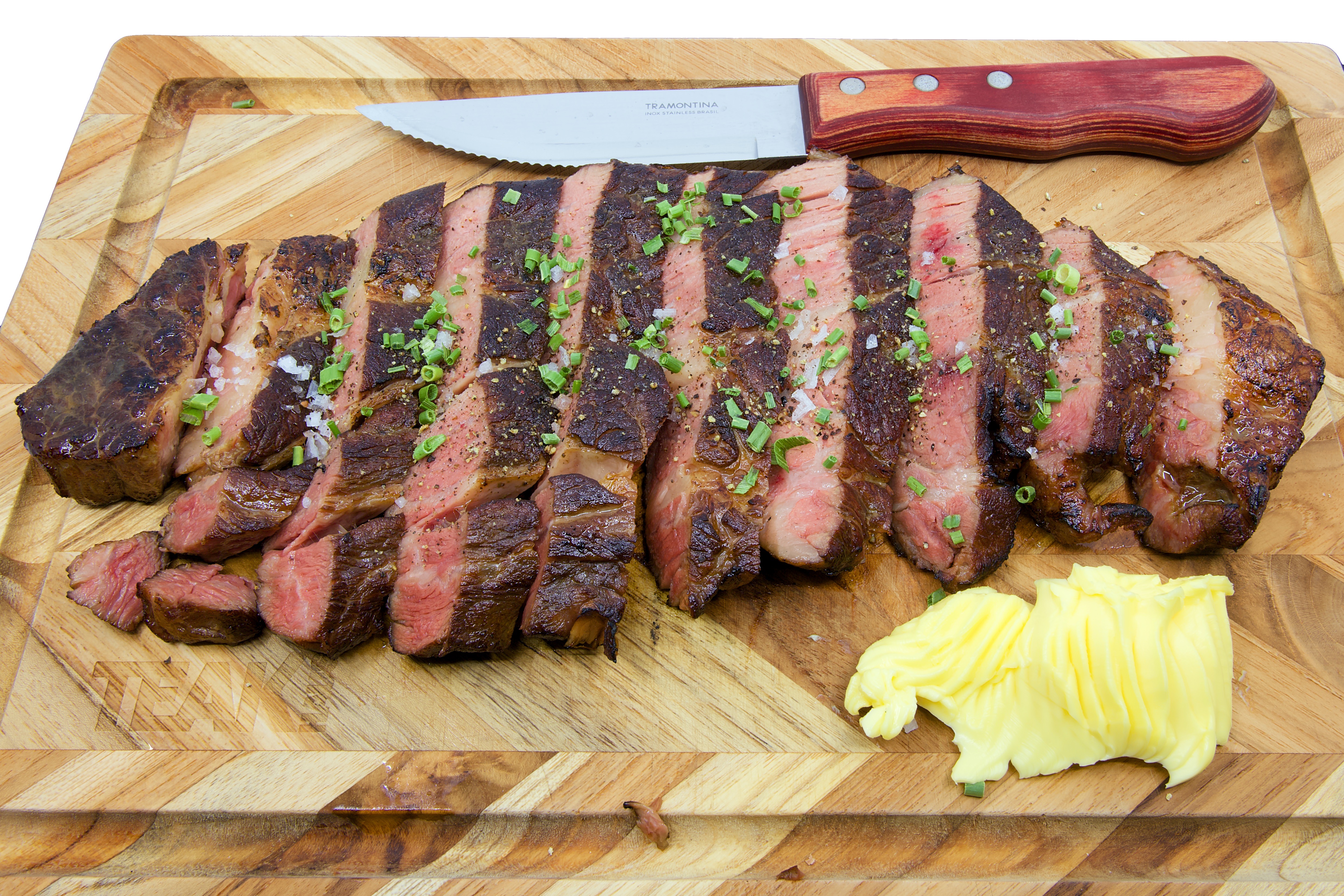
Final thoughts
This was an interesting way to treat an economical piece of beef.
At $20/kg, chuck has an obvious attraction when premium steak cuts are more expensive. The compromise is that chuck needs time to cook.
The Vegemite worked as a simple savoury coating.
For me, that’s where the value of this method lies. Buy a less expensive cut, give it more time, and make the most of what the meat has to offer.
AI Disclaimer
This blog post has been modified with Microsoft Copilot. Microsoft Copilot corrected grammar, spelling, and tone.

Comments will be moderated.