

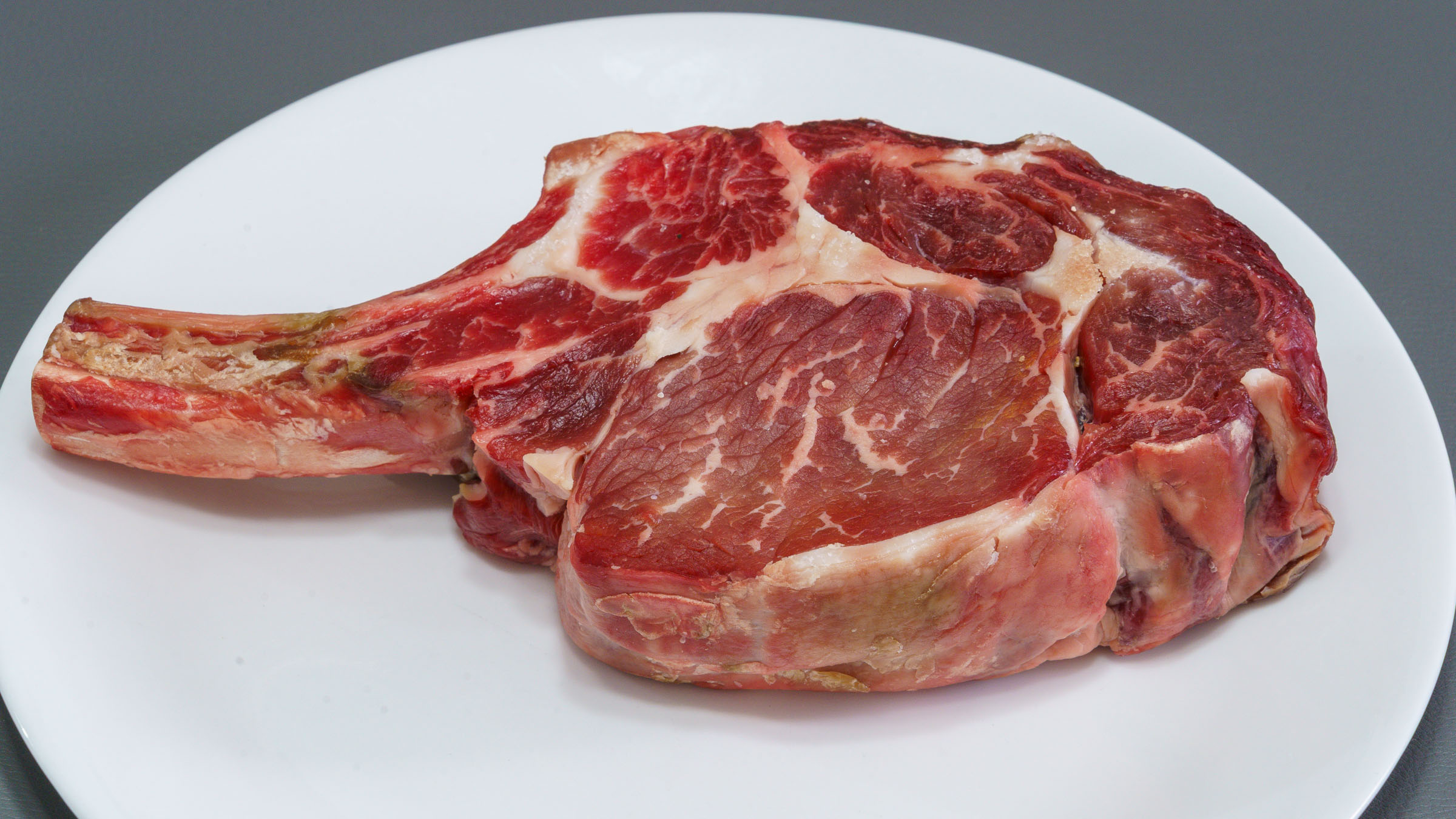
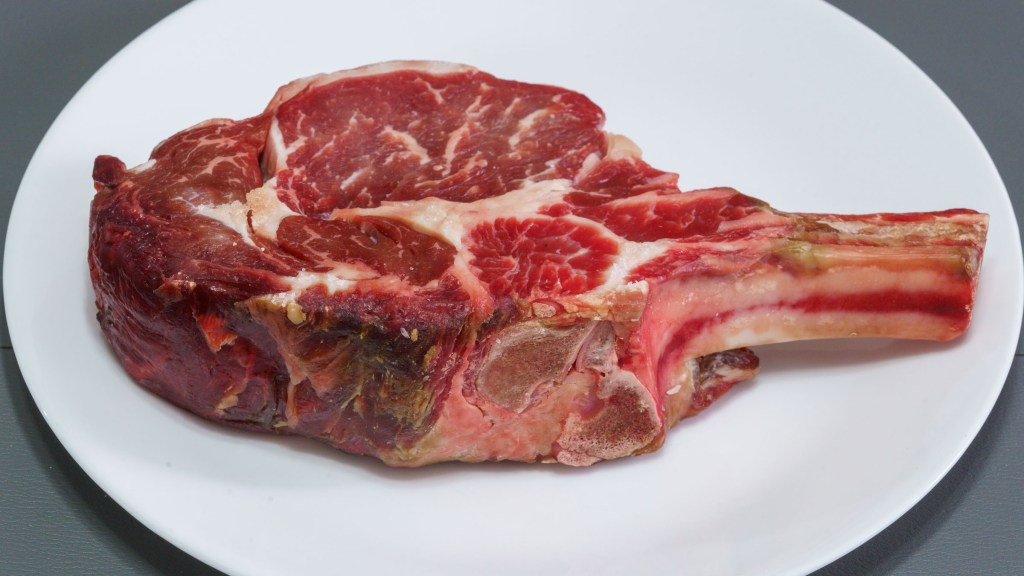
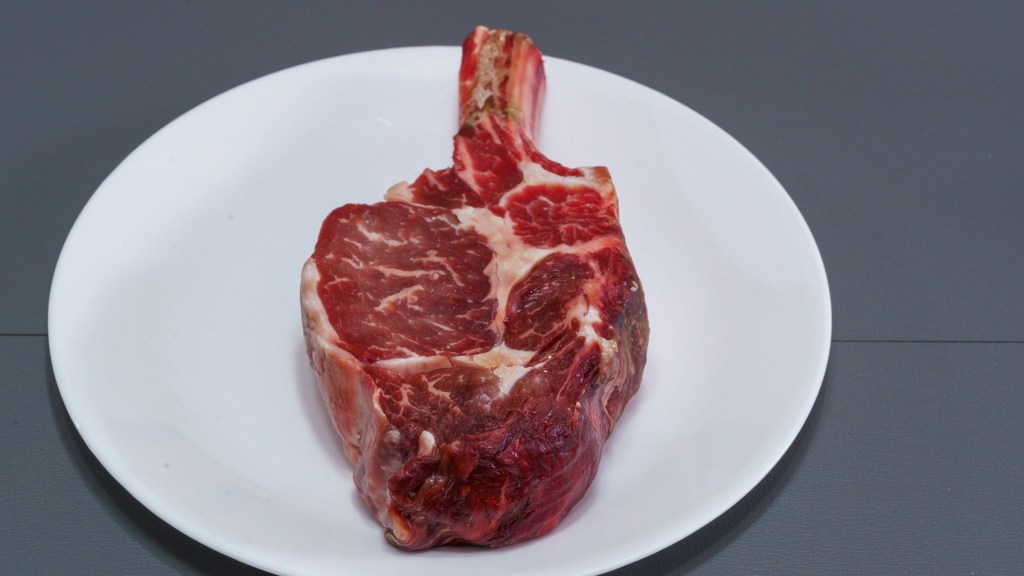
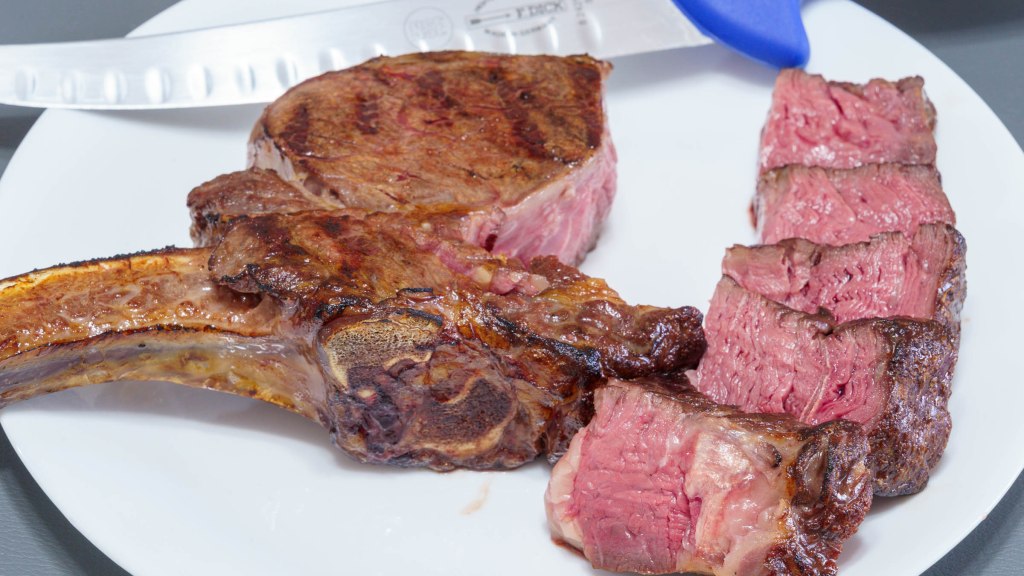
I bought this big juicy bone-in ribeye steak from a local butcher. It was the smallest steak in the display.
Weighing 708 grams (1.56 pounds), including the bone, I thought I could enjoy the deckle meat for tea and keep the fillet portion for cold cuts at lunch.
Recipe
Ingredients
- Bone-in ribeye steak
- Salt
Equipment
- Vacuum chamber
- Water bath
- Precision cooker
- Gas torch
Instructions
- Season the steak generously with salt.
- Put the steak on a rack, uncovered, and refrigerate overnight.
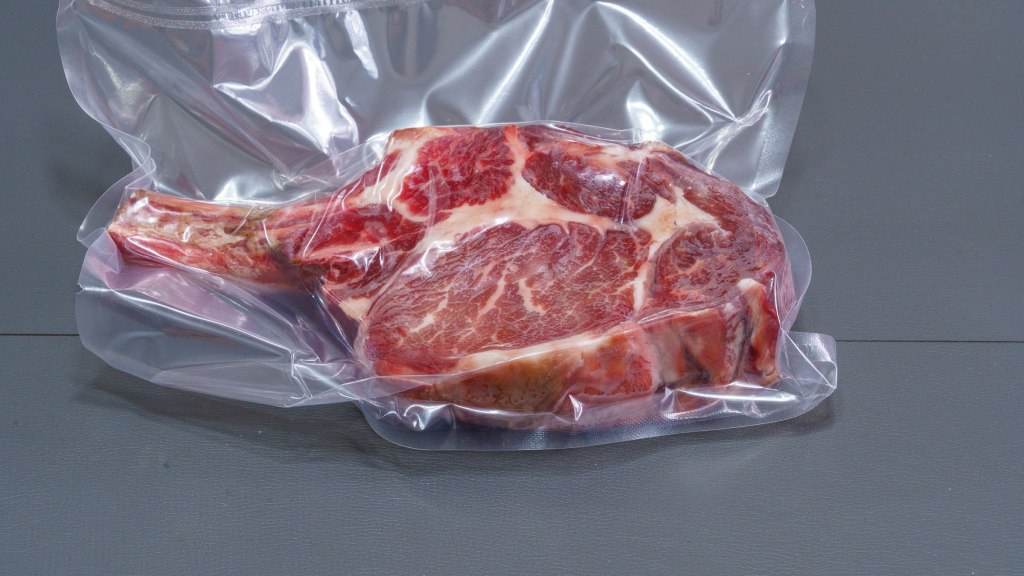
- Place the steak into a vacuum bag and seal it.
- Cook the steak for four hours at 57 °C (135 °F) in the water bath.
- Remove the meat from the bag and dry the surfaces of the meat with kitchen paper.
- Sear the steak with a gas torch.
- Cut the meat away from the bone.
- Dissect the deckle meat from the eye fillet.
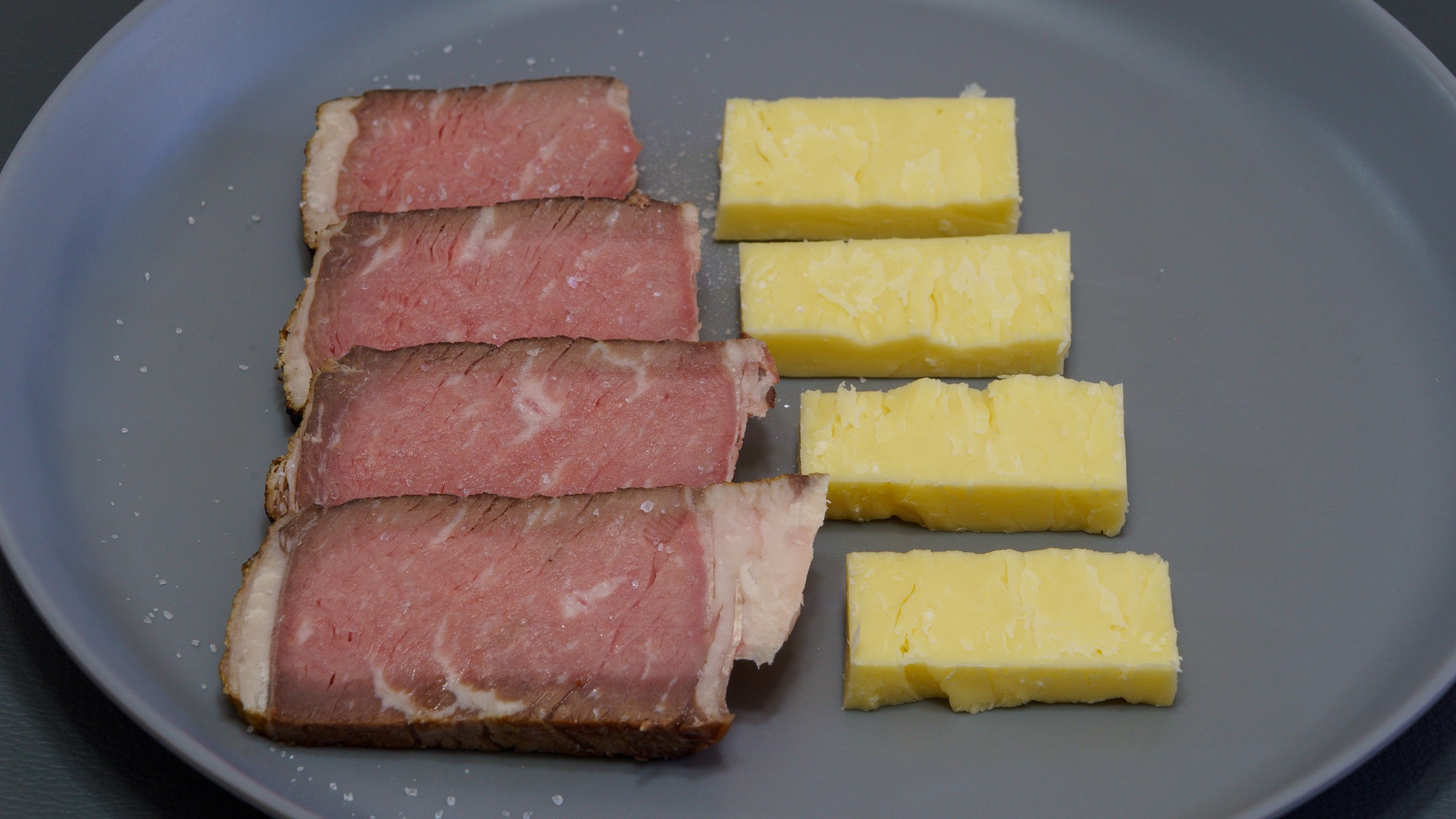
- Put the fillet meat into a container and put it into the refrigerator. When it’s cold, this meat slices beautifully. Eaten cold, with a little extra salt, it is delicious.
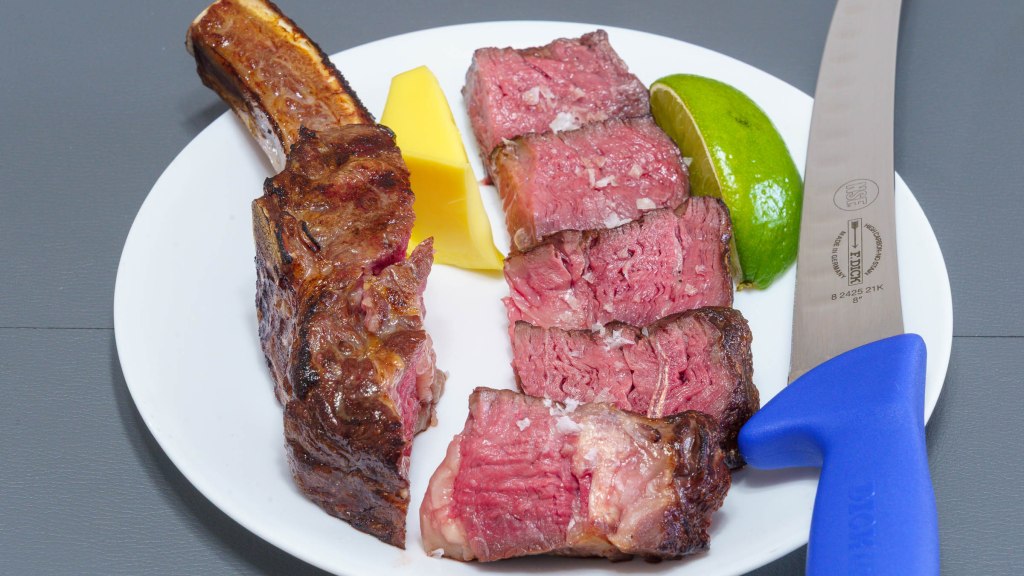
- Slice the deckle meat with a fair dinkum “steak” knife.
- Serve with freshly ground black peppercorns, flaky salt and butter.
- A squeeze from a wedge of lime also adds a lovely tart tang to the tongue while enjoying the meat.
Thoughts on the meal
There’s something satisfying about a thick, juicy steak. I appreciate that dry brining the meat helps it maintain a firm texture instead of becoming floppy while still keeping it juicy on the inside. When you squeeze the cooked meat, you can see the delicious juices oozing out.
I like the juicy, tasty, and fatty deckle meat (which is the spinalis muscle).
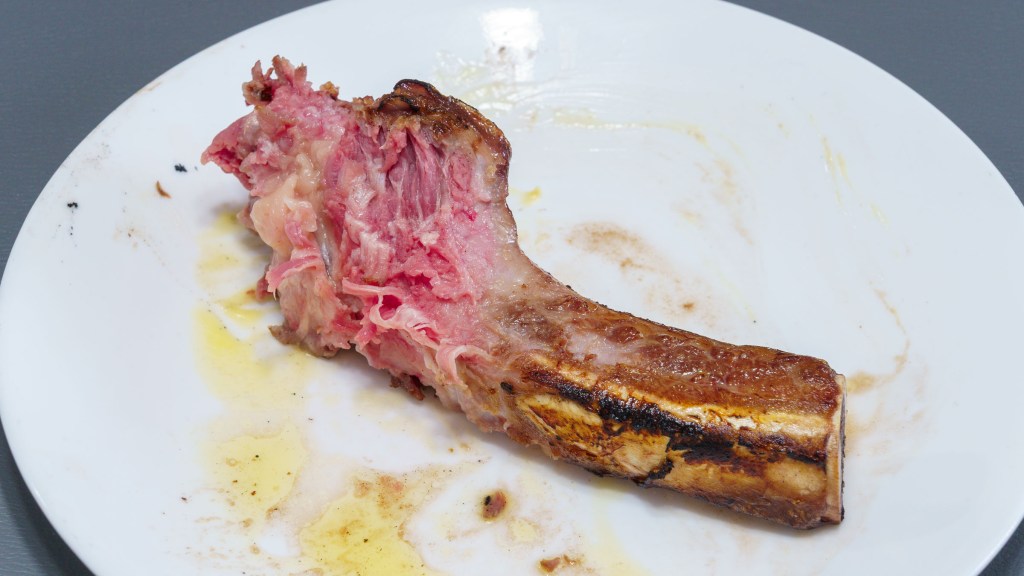
I enjoy gnawing and sucking on the bone of a bone-in ribeye steak. I prefer the shorter bones; to me, having a long tomahawk steak with an entire rib just feels like showing off and doesn’t serve a practical purpose.
The spinalis muscle is a component of the erector spinæ group, which plays a role in maintaining posture and enables the extension and lateral flexion of the spine. This muscle is the most medial of the erector spinæ muscles and extends along the spine, from the thoracic vertebrae to the cervical vertebrae.
Anatomy
Origin: The spinalis muscle originates from the spinous processes of the thoracic vertebrae and sometimes the last cervical vertebra.
Insertion: It inserts into the spinous processes of the cervical vertebrae.
Parts: The spinalis muscle can be divided into two parts:
Spinalis thoracis: Attaches to the thoracic vertebral spinous processes.
Spinalis cervicis: Continues from the thoracic part and attaches to the cervical vertebral spinous processes.
Function
Extension: The spinalis muscle helps extend the thoracic vertebral column and the neck.
Stabilisation: It plays a role in stabilising the vertebral column during movement.
Meat-to-Fat Ratio
The meat-to-fat ratio of the spinalis muscle in bovines can vary, but it is generally considered to be a well-marbled muscle with a higher fat content compared to other muscles. This marbling contributes to its tenderness and flavour. However, specific ratios can depend on factors such as the breed, diet, and overall health of the animal.
Questions for readers
- What is your favourite part of a scotch fillet steak (also known as a ribeye steak in North America)? For a bone-in ribeye steak, do you like to gnaw and suck on the bone with a little added salt?
- Do you usually eat a steak in one meal or spread it over several?
- Do you like to think about the structure and function of the meat you eat?
Photographs
This is a gallery of images. Click on one and then scroll through them.






Final thought
I hope you have a great day.

Lunch cold cuts


Comments will be moderated.