

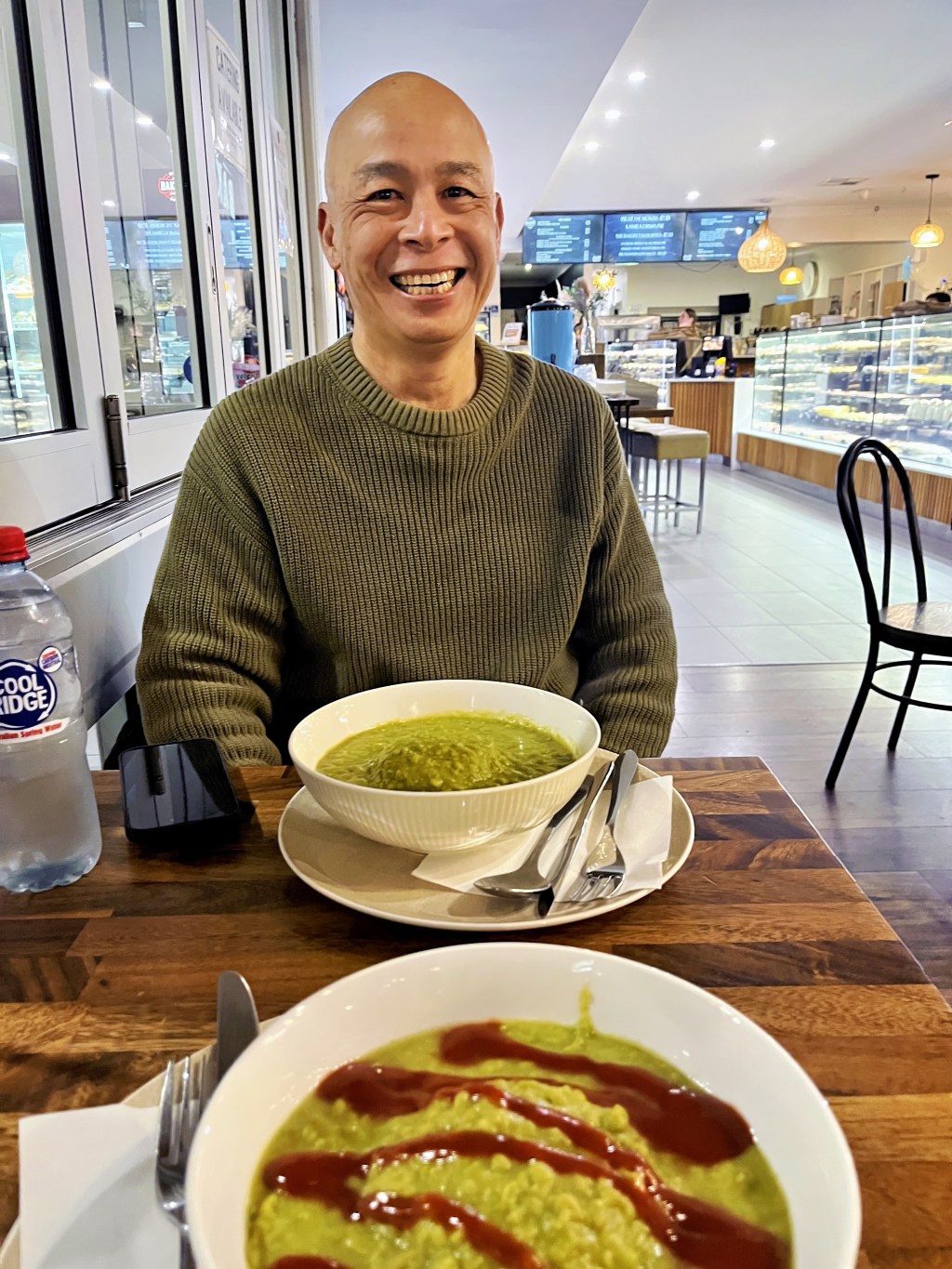
This week, Adelaide hosted a public health (communicable diseases) conference. A mate from Darwin called me last week, saying he was attending and asked if I’d go to “Bakery on O’Connell” with him to eat a pie floater.

Drapes (as he’s known) is a bloke I’ve known for decades. He began as a medical laboratory scientist and has since become a top-flight epidemiologist and public health expert in the Northern Territory of Australia and the Democratic Republic of Timor-Leste.
I’m very fond of Drapes, so despite not wanting to indulge in a fibre and carbohydrate-laden meal, I picked him up the other night and ventured into North Adelaide.
Remarkably, in the early evening, Bakery on O’Connell is fairly quiet, so much so that my usual anxiety about my partial deafness and tinnitus was relieved. I could hear Drapes speaking, and I could carry on a conversation with him.
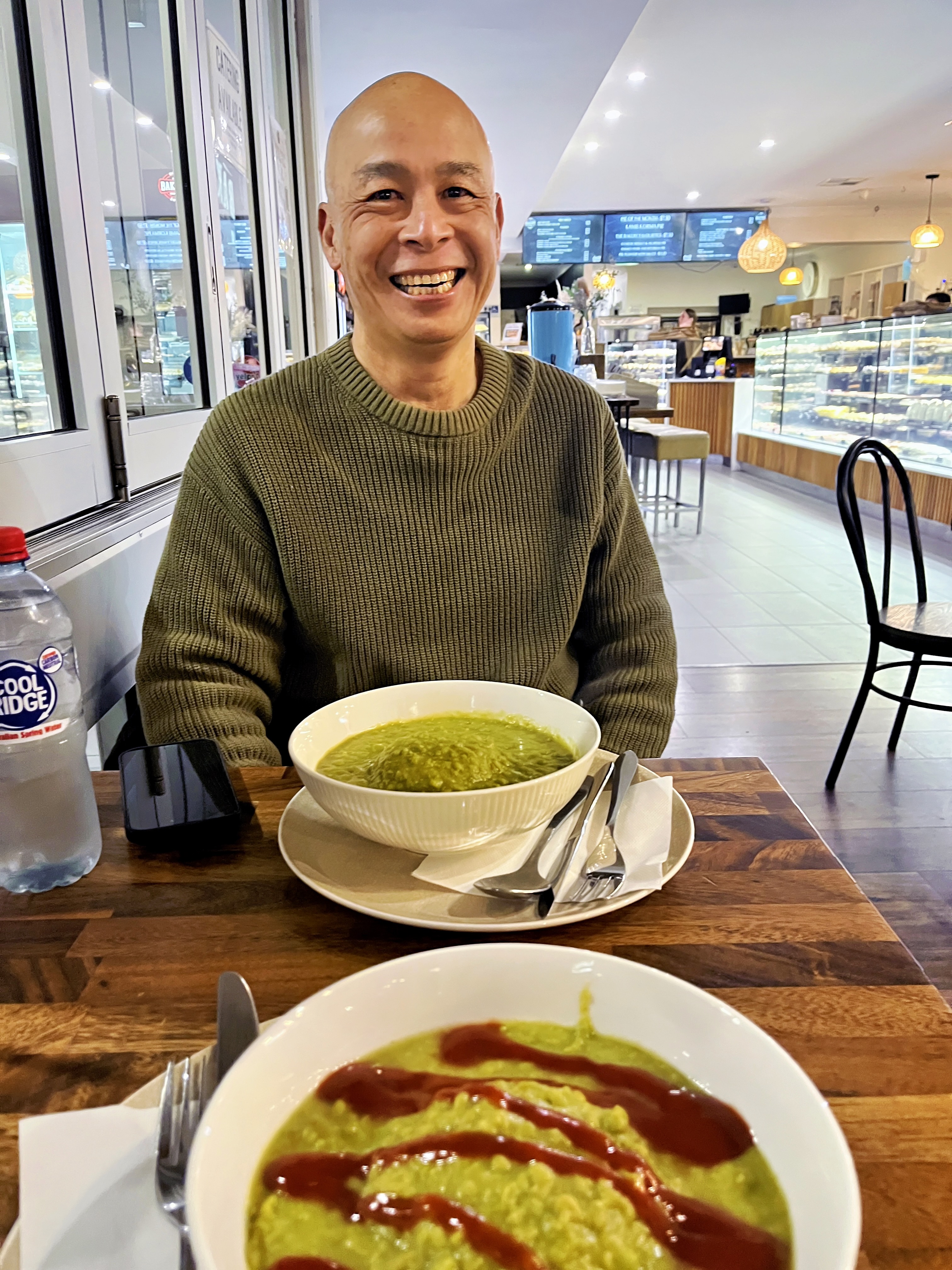
A pie floater is priced at AUD$ 13. For that, you get a bowl, a knife, a fork, a spoon, a pie (upside down) of your choice, and pea soup. You can also ask for condiments. Drapes went for dead horse (tomato sauce). We both asked for pepper steak pies.
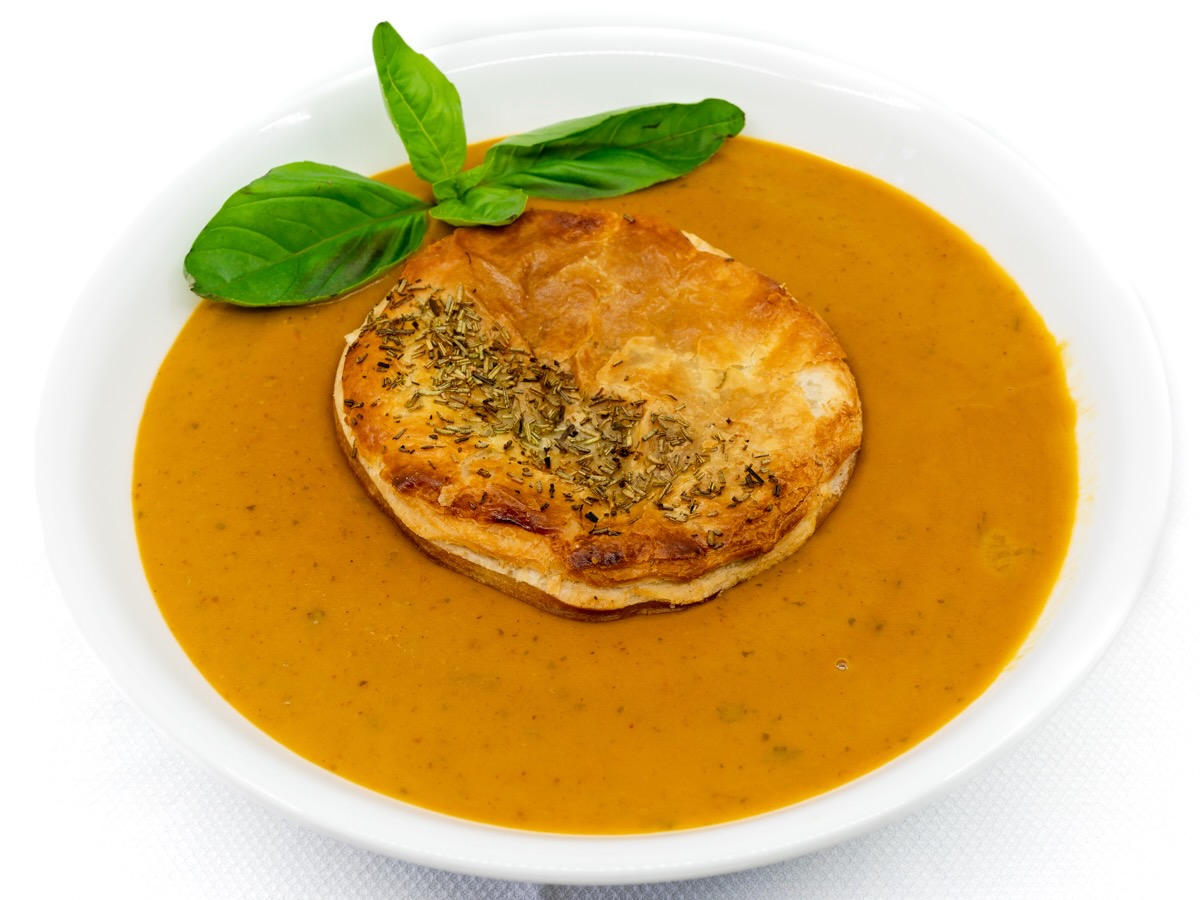
Drapes said he was keen on the pie floater because it’s an iconic thing in Adelaide. I knew a little about pie floaters and, in 2022, had made my own version. It was a lamb shank meat pie in pumpkin soup, which had been made with coconut cream and laksa paste. It was my attempt at fusion cuisine.
Being upside down made the pie easier to penetrate with a spoon. The pie crust was softer on the bottom, allowing me to scoop a spoonful of chunky steak. The meat was delicious. I like a pepper steak meat pie. The pea soup was saltier than I expected. It was thick and substantial.
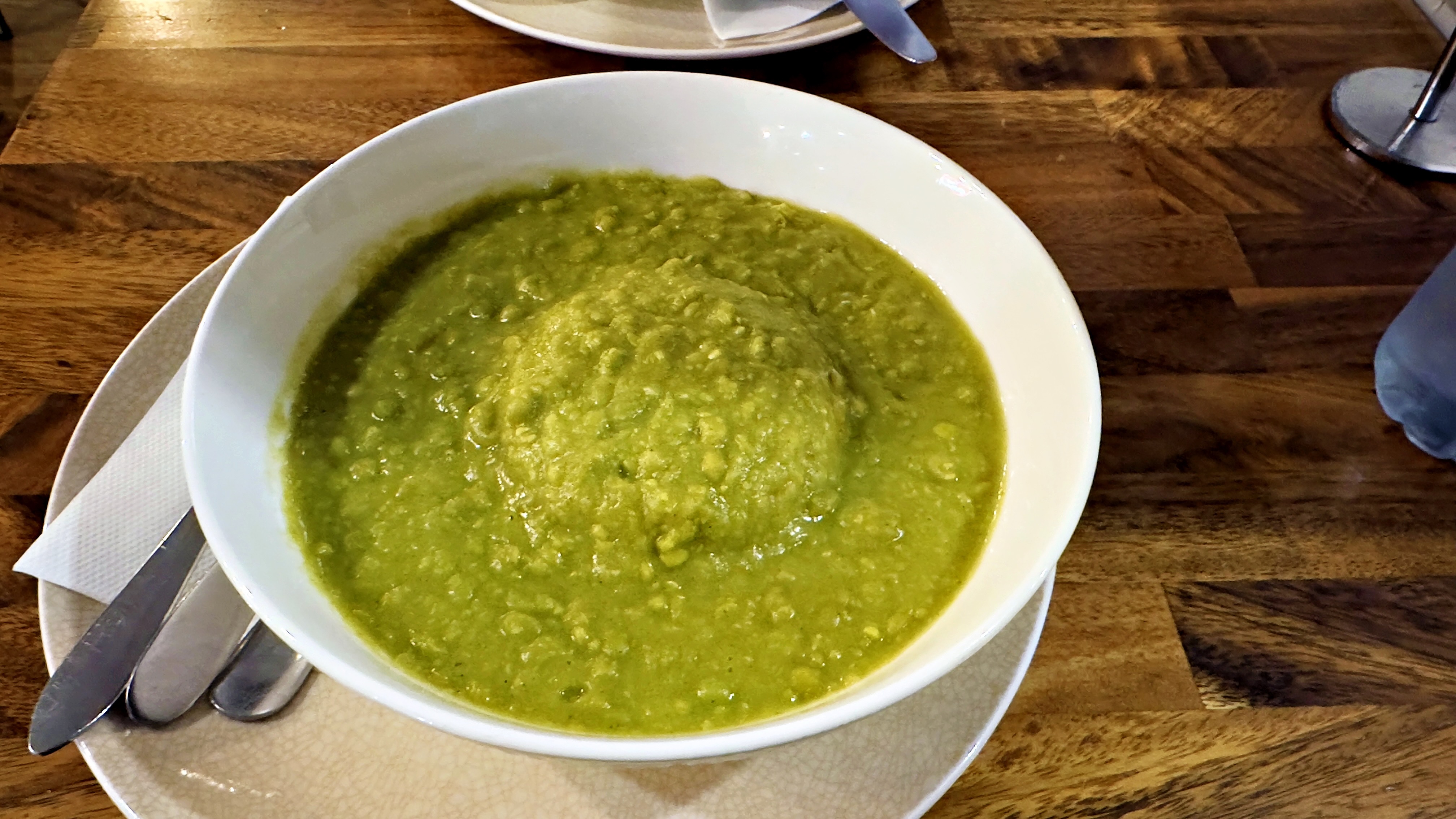
If I’m ever in the mood to make a pie floater again, I think I’ll use a slowly cooked lamb meat pie from my butcher. I’d use frozen peas and cook them in beef fat and butter, and then purée them with some pure pouring cream.
Later that evening, my alimentary canal, specifically the colon, became active with audible activity.
All in all, I’m happy that Drapes persuaded me to join him for an Adelaide pie floater. Thanks, Drapes for shouting me dinner.
I’m thinking about visiting Drapes in Darwin next year for a Dolphins game. I’ll be suggesting grilled local barramundi.
Questions
- Have you had a pie floater?
- Did you enjoy it?
- What did you think?
- If you’ve not had one, would you try one?
I asked Google Gemini to provide me with words about pie floaters to share on Yummy Lummy. Here is what I’ve crafted with the material collected by Google Gemini.
The Australian Pie Floater: from Pie Cart to Plate
Introduction: A Taste of South Australian Heritage
The pie floater is a distinctive dish, particularly in South Australia. The pie floater marries the comforting familiarity of a savoury meat pie with a thick pea soup. Some argue that it is ingrained in the region’s identity and history. Its composition, often described as a meat pie floating in a bowl of pea soup, immediately sets it apart in Australian cuisine.
The cultural standing of the pie floater is formally recognised, having been declared a “South Australian Heritage Icon” by the National Trust of Australia in 2003. This acknowledgement underscores it as a part of the state’s heritage, cementing its place beyond a food item. Historically, the pie floater gained widespread popularity as a street food, often purchased from mobile pie carts as a late-night comfort meal, a tradition that speaks about its role in South Australian society. I wonder if it has the same legend as a kebab has for late-night shenanigans. 🤔

What is a Pie Floater? Defining it.
At its core, a pie floater is an Australian dish most commonly associated with Adelaide, consisting of a traditional Australian-style meat pie submerged, or sometimes simply sitting, in a bowl of thick pea soup. This simple combination offers a blend of textures and flavours, making it a comfort food for many.
The main components of a traditional pie floater are specific in their nature. The foundation is an Australian meat pie, typically filled with savoury minced beef, often accompanied by a rich gravy, and all encased in a golden-brown pastry. The accompanying pea soup is thick and made from specific varieties of dried peas, such as “blue boiler peas” or “marrowfat peas”. This distinguishes it from the “mushy peas” often found in English cuisine. The soup may be blended to achieve a smooth, creamy, yet substantial consistency.
A hallmark of the pie floater’s presentation is the orientation of the meat pie, which is often placed upside down in the hot pea soup. This particular method of serving is a characteristic of the traditional Adelaide pie floater. The dish is also traditionally served with tomato sauce. “Australian tomato sauce” is distinct from American ketchup; unlike ketchup, the Australian version is typically made without vinegar.

Origins: Etymology and Culinary Roots
The term “floater” itself has historical roots in English culinary traditions. In the 19th century, “dumplings in soup” were commonly referred to as “floaters”. This etymological connection provides a direct explanation for the “floater” element of the dish’s name, linking it to a broader history of hearty, soup-based meals. When I hear floater, I think about tiny specks “floating” in my field of vision.
The culinary concept of combining meat with pea soup also has British origins. Dishes such as the “pea and pie supper,” prevalent in Yorkshire, and “pea soup with eel” or “saveloys” (a type of sausage) were common in 19th-century England. These dishes served a practical purpose, providing budget-friendly and substantial meals for feeding groups of people.
The specific origin of the “Pie Floater” is largely credited to South Australia, with its emergence believed to be in the 1890s. While its birthplace is South Australia, the exact originator is unknown. Ern “Shorty” Bradley of Port Pirie is credited with early advertisements from the 1890s inviting patrons to his coffee stall for “Hot Saveloys, Rolls and Floaters”. However, James Gibbs, a Scottish emigrant who established one of Adelaide’s first pie carts in the 1880s on the corner of King William and Rundle streets, is also a contender. The sudden popularity of his “floaters” enabled him to rapidly expand his business with new carts. The existence of these two figures and locations in the late 19th century suggests that the dish may have evolved through parallel or closely timed innovations, driven by similar culinary needs and influences, rather than a single, definitively recorded invention.
The corner of King William and Rundle streets is now a Haigh’s Chocolate outlet.
The pie floater gained popularity through its association with mobile “pie carts,” which were part of South Australian streetscapes from the 1870s. These carts, originally horse-drawn or food vending trolleys, featured elongated windows where customers could stand and eat. They were moved into position for lunchtime and, as late-evening meal stops became a part of Adelaide’s urban landscape and nightlife.
As traffic increased and the demand for on-street car parking grew, the pie carts became less viable. Adelaide City Council’s refusal to reissue licences further contributed to their decline, leading to the gradual disappearance of permanent late-night pie carts from Adelaide streets by 2011.

What Constitutes a Traditional Pie Floater?
Specific components and a distinctive presentation define the traditional pie floater.
The meat pie serves as the foundational element. It is typically a traditional Australian-style pie, featuring a savoury minced beef filling, often enriched with gravy and sometimes incorporating vegetables (if you like that sort of stuff), all encased in a golden-brown pastry. While cooking pies from scratch offers authenticity, I’d opt for the convenience of store-bought meat pies.
Traditionally, the pea soup is thick, mushy, and creamy, often made from dried “blue boiler peas” or “marrowfat peas.” These specific pea varieties contribute to the desired texture, which is distinct from the thinner, smoother pea soups. The soup is blended, ensuring a consistent and comforting base for the pie.
A hot meat pie is placed, often upside down, into a bowl of the hot, thick pea soup. I’m told this is a traditional Adelaide pie floater. The pie is upside down for a practical reason. The bottom crust of the pie is softer than the top, and becomes submerged in the hot soup when inverted. This further softens the crust, making it easier to break into and eat with a spoon, which in turn makes eating while standing more convenient. Placing the pie upside down stabilises it within the bowl of soup, preventing it from slipping around and making it safer to consume when standing.
The dish is typically garnished with Australian tomato sauce. Other additions include mint sauce, salt, pepper, and malt vinegar. I’d go for Worcestershire sauce.
Table: Pie Floater Components and Accompaniments
| Component/Accompaniment | Description |
| Meat Pie | Traditional Australian-style, typically minced beef with gravy, encased in pastry. Can be homemade or store-bought. |
| Pea Soup | Thick, creamy soup made from dried blue boiler peas or marrowfat peas. Often blended smooth. |
| Presentation | Heated meat pie placed, often upside down, in a bowl of hot pea soup. |
| Tomato Sauce | Australian style (without vinegar, distinct from ketchup). |
| Mint Sauce | Common optional condiment, offering a fresh, tangy counterpoint. |
| Malt Vinegar | Optional condiment, adding a sharp, acidic tang. |
| Worcestershire Sauce | Optional condiment, providing a savoury, peppery kick. |
| Salt and Pepper | To taste, for seasoning. |

Beyond the Classic: Exploring Pie Floater Variations
The dish has inspired various adaptations, particularly across different regions of Australia. These variations demonstrate the changing nature of culinary traditions, allowing a core concept to evolve and cater to diverse preferences.
The most prominent regional variation is the New South Wales “Tiger Pie,” originating from Harry’s Cafe de Wheels in Woolloomooloo, Sydney. This version deviates from the thick, smooth pea soup of Adelaide, instead featuring thicker “mushy peas.” The “Tiger Pie” is frequently smothered in gravy or topped with a generous dollop of potato mash.
Variations in ingredients and accompaniments exist. While traditional beef is the standard for the meat pie, other fillings such as lamb, pork, and chicken exist. Vegetarians could use mushrooms. For the pea soup base, while dried blue boiler or marrowfat peas are preferred for authenticity, practical shortcuts like using canned soup, regular peas (fresh, canned, or frozen), or green split peas are sometimes used. Methods for thickening soup, such as adding pureed cooked potato or carrot, or a cornflour slurry, can also be used for the desired consistency. The addition of mashed potato and gravy as a topping, particularly in the New South Wales style, is another variation that extends the dish beyond its classic form.
Heritage Claims and Geographical Reach
South Australia, and specifically Adelaide, lays claim to the heritage of the pie floater. This claim was formally recognised in 2003 when the National Trust of Australia recognised the pie floater as a “South Australian Heritage Icon.” This recognition underscores its cultural roots and significance within the region.
While its origins are rooted in South Australia, the dish has also made appearances in other Australian locations. Notably, it has been sold in Sydney from Harry’s Cafe de Wheels since the 1930s, and it even appeared in Brisbane in the 1950s. However, the consistent enduring impact, its “biggest mark,” has remained firmly in South Australia.
Despite the disappearance of mobile pie carts, the pie floater remains available in South Australia at various fixed establishments. For example, Bakery on O’Connell in North Adelaide, along with general pubs, restaurants, and bakeries across the state.
The Pie Floater’s Place in the Day: Mealtimes and Cultural Context
Historically, the pie floater was predominantly purchased from street pie carts as a “late evening meal.” These mobile carts served as essential late-night food stops, providing a quick, satisfying, and often inexpensive meal for hungry Adelaide residents, especially after pubs closed or after Aussie Rules games.
While its traditional role as a late-night street food has diminished with the decline of mobile pie carts, the pie floater has adapted. It is now served in pubs, restaurants, and bakeries, including lunchtime and evening meals. Some bakeries, such as the Bakery on O’Connell, operate 24 hours a day, seven days a week, making the pie floater accessible all the time.
The pie floater holds a place as a “warming winter meal” and a “comfort food.”
Conclusion: An Enduring Australian Comfort food
The pie floater, with its distinctive combination of a hearty meat pie nestled in a bowl of thick pea soup, stands as an enduring dish in Australia.


Comments will be moderated.