

Pressure cooker buffalo shin
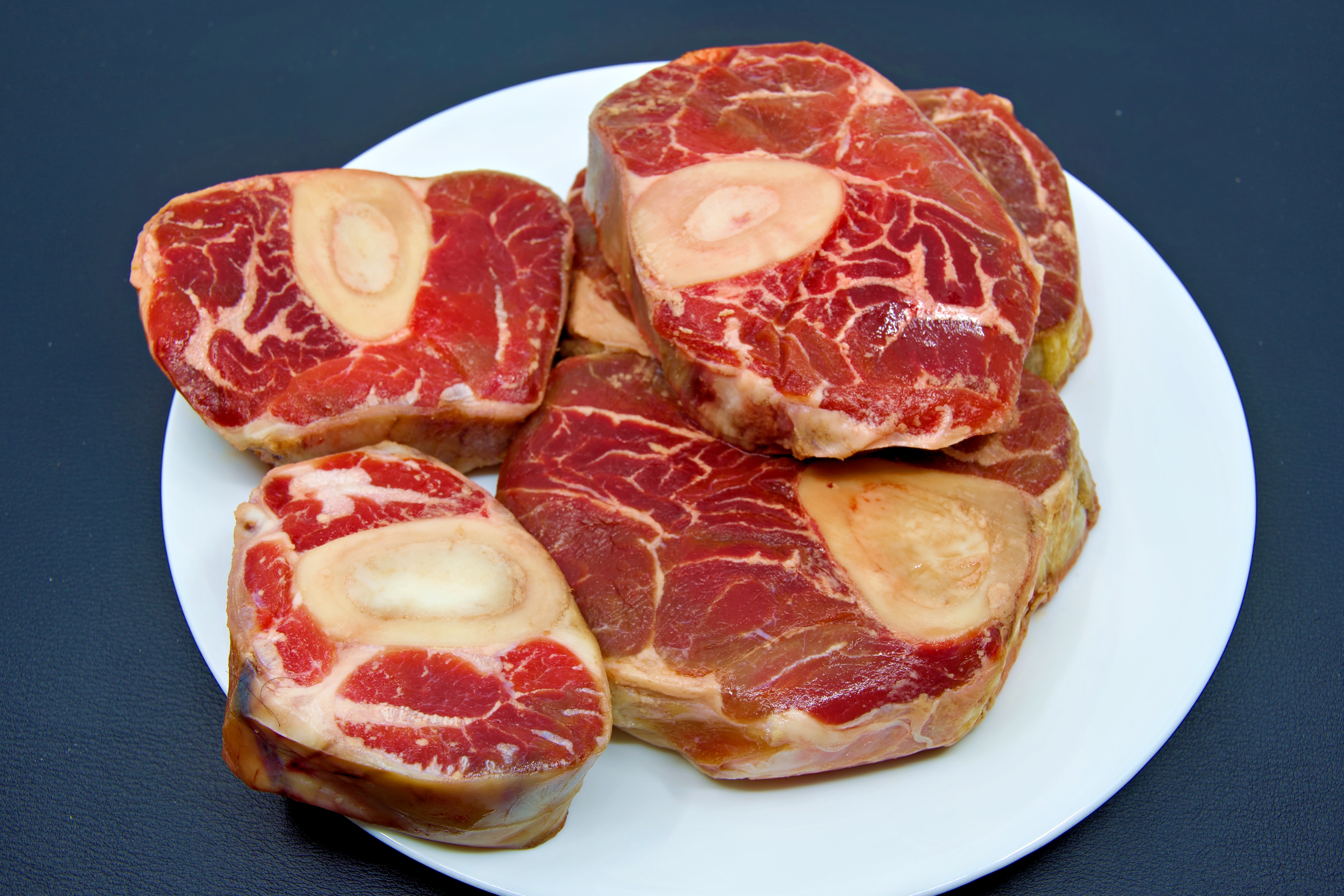
A work colleague gave me about 1 kg of buffalo shin raised on their property. I don’t often have buffalo in my kitchen, so I wanted to cook it in a way that suited the cut without overcomplicating it with too many flavours.
The shin included the bone and its marrow. That immediately suggested a long, moist cooking method. I could have slow-cooked the shin in the oven, but I chose a pressure cooker.
The aim was straightforward: tender buffalo, softened connective tissue, marrow, and a savoury cooking liquor that could become part of the meal.
What is buffalo shin?
Shin comes from the lower part of the animal’s leg. It is a hard-working group of muscles and contains connective tissue that benefits from prolonged cooking with moisture. This is why shin is usually slow-cooked rather than treated like a steak. The same principle applies to beef shank, which is conventionally cooked slowly with moist heat.
Terminology varies between countries. In Australia and the United Kingdom, shin is a familiar name. In North America, you’re more likely to encounter shank. When the shin or shank is cut across the bone into thick rounds, it may also be sold as osso buco or an osso buco cut.
Strictly speaking, ossobuco is an Italian dish, not simply another name for buffalo shin. The traditional Milanese preparation uses cross-cut veal shank. The Italian name refers to the characteristic bone with its central cavity containing marrow.
The pieces I received are buffalo rather than veal or beef, but the cooking principles are similar.
How buffalo differs from beef cattle
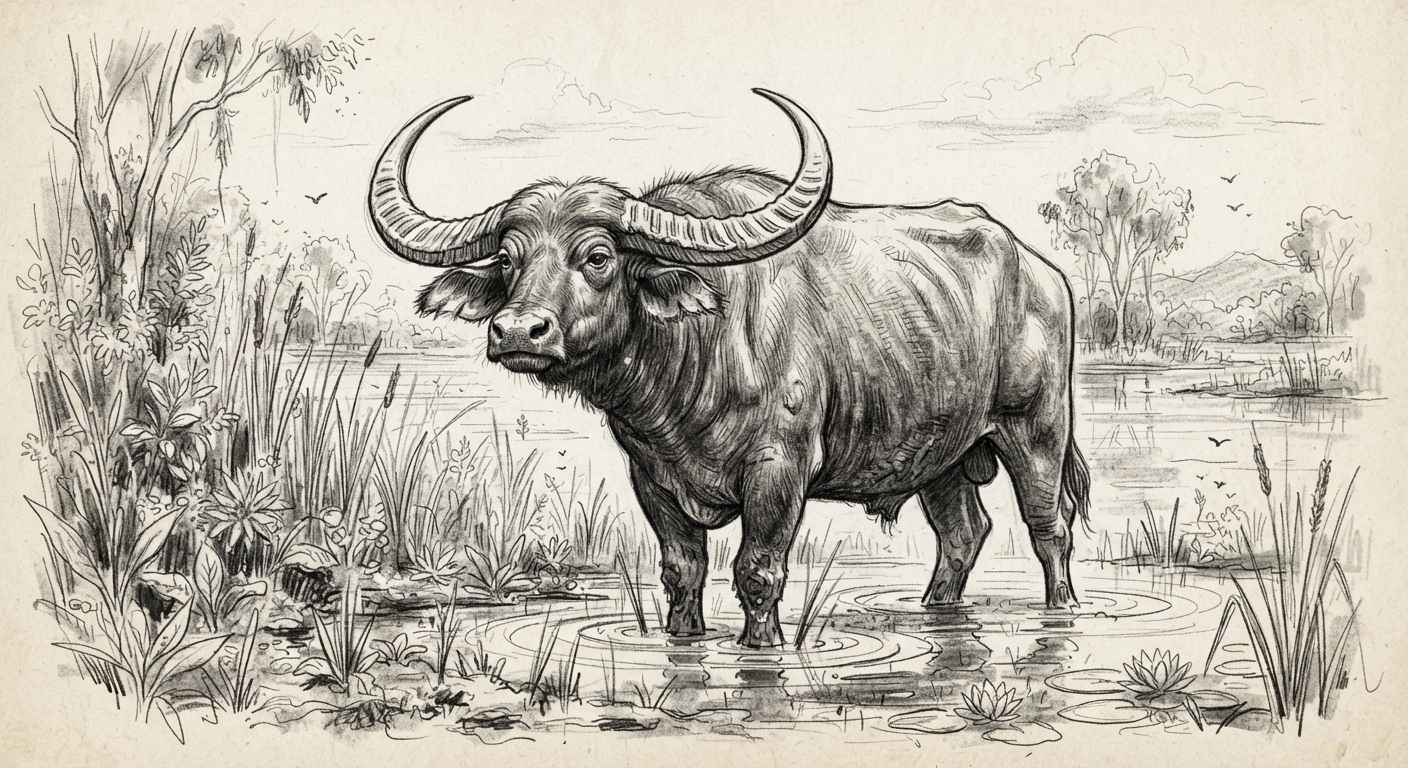
The animals are different species. Beef comes from domestic cattle, Bos taurus (and its relatives such as Bos indicus). The buffalo most likely to be raised for meat in Australia is the water buffalo, Bubalus bubalis, which belongs to the same family (Bovidae) but a different genus. I have assumed my colleague’s animals are water buffalo; North American bison (Bison bison), often also called buffalo, are a different animal again.
Buffalo are generally heavier-boned and more heavily muscled through the shoulders, with a hardy constitution that suits tropical and wetland country and rough forage. Cattle breeds have been selected over a long period for rapid growth, marbling, and uniform carcasses, which is why most beef is finished on pasture or grain to a consistent standard.
How buffalo meat differs from beef
- Colour and texture: buffalo meat is typically darker, reddish-brown rather than cherry-red, because of its higher myoglobin content, and its muscle fibres are denser and coarser.
- Fat: buffalo is generally leaner, with less intramuscular fat (marbling) and often less saturated fat than beef. The exact difference depends on the comparison; figures quoted range widely.
- Nutrition: it is usually described as having a little more protein, somewhat less cholesterol and calories, and slightly more iron than beef.
- Flavour: it is often described as similar to beef, but slightly sweeter, richer, or more robust.
- Tenderness: lean meat with little marbling is often perceived as less tender, but many earlier comparisons were flawed, for example by comparing older buffalo with young, specially raised cattle. Where animals were raised under the same conditions and slaughtered at the same age, young buffalo meat is comparable to beef, and in some cases better.
The practical consequence is that lean buffalo can dry out if it is cooked quickly and for too long. Shin is already a cut that needs moisture, so a pressure cooker or slow cooking suits it well. The age of the animal, its diet and how it was raised will probably affect the result more than the species alone.
Why shin benefits from slow cooking
Shin isn’t a cut I’d cook quickly and serve rare. A conventional approach is slow cooking: brown the meat, add aromatic vegetables and cooking liquid, and cook it gently for several hours.
During prolonged moist cooking, the connective tissue softens, while the bone and marrow contribute to the character of the cooking liquor. A bison shank recipe, for example, describes the connective tissue as becoming gelatine during slow cooking and notes that the marrow contributes flavour and body to the sauce.
This combination makes shin useful for slow-cooked dishes, stews, soups, and dishes inspired by osso buco.
Why use a pressure cooker?
A pressure cooker provides another way to achieve the same basic objective.
Pressure cooking doesn’t change the fact that shin needs time, moisture, and heat. Rather, cooking under pressure accelerates the process. Published pressure-cooker recipes for comparable shank cuts range from about 40 minutes for beef shanks to 50–60 minutes at high pressure for larger beef or bison shanks, followed in some recipes by a natural pressure release.
For a 1 kg piece of buffalo shin, I suggest 60 minutes at high pressure followed by a 20-minute natural release.
If the meat remains firm after opening the cooker, I’d return it to high pressure for another 10–15 minutes. With shin, tenderness is a more useful endpoint than adhering rigidly to a cooking time.
Ingredients
- Buffalo shin, bone-in with marrow
- Salt
- Freshly cracked peppercorns
- 250 mL passata
- 250 mL mixed mammal cooking liquor
To finish
- Chopped dried chives
The stock, tomatoes, buffalo, bone, and marrow provide the foundation for the cooking liquor.
Equipment
- Pressure cooker large enough to accommodate the buffalo shin safely
- Cutting board
- Chef’s knife
- Tongs
- Measuring jug
- Measuring spoons
- Wooden spoon
- Ladle
Instructions
1. Prepare the buffalo
Remove the buffalo shin from its packaging and pat the surface dry with kitchen paper.
Season the meat.
2. Load up the pressure cooker
Pour in some of the mixed mammal cooking liquor.
Add the passata and the remaining cooking liquor.
Stir everything together.
3. Add the buffalo
Add the buffalo shin.
The shin does not need to be completely covered with liquid. Avoid exceeding the manufacturer’s maximum fill level.
Lock the lid and bring the cooker to high pressure according to its instructions.
4. Pressure cook
Cook at high pressure for 60 minutes.
At the end of the cooking period, allow the pressure to fall naturally.
5. Check the buffalo
Carefully open the pressure cooker.
Insert a fork into the meat and check its tenderness. The meat should yield readily, and the connective tissue should have softened.
If it remains firmer than you want, replace the lid and pressure cook for another 10–15 minutes.
The exact time will depend on the age of the animal, the dimensions of the shin, and whether it is one large piece or several cross-cut pieces.
6. Rest the meat and reduce the cooking liquor
Carefully lift the buffalo shin from the cooker. At this stage, it may be soft enough to separate from the bone, so support it well.
Cover loosely and allow it to rest.
You can leave the marrow in the bone for serving or carefully remove it and stir it through a portion of the sauce.
7. Finish and serve
Garnish with the chopped chives.
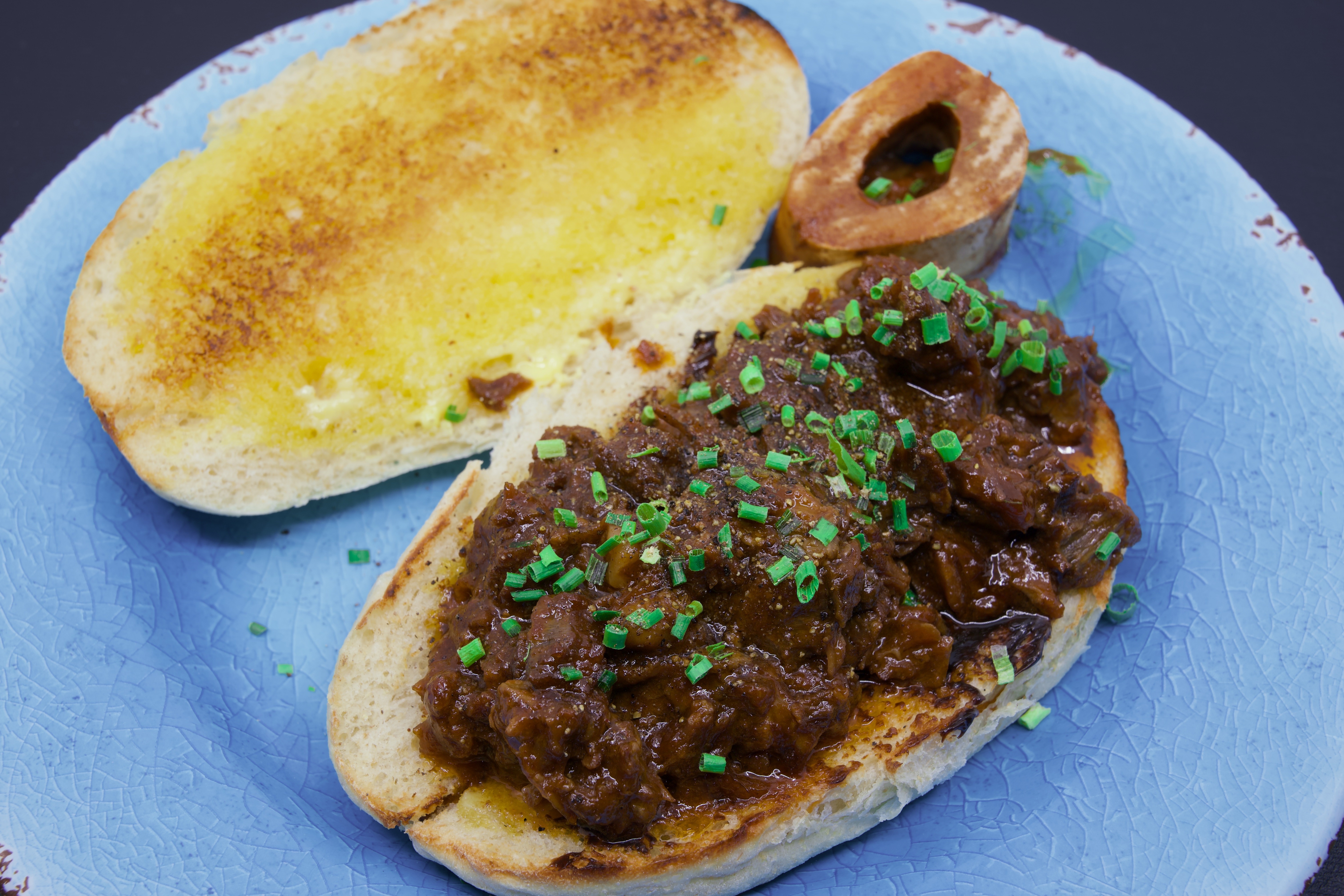
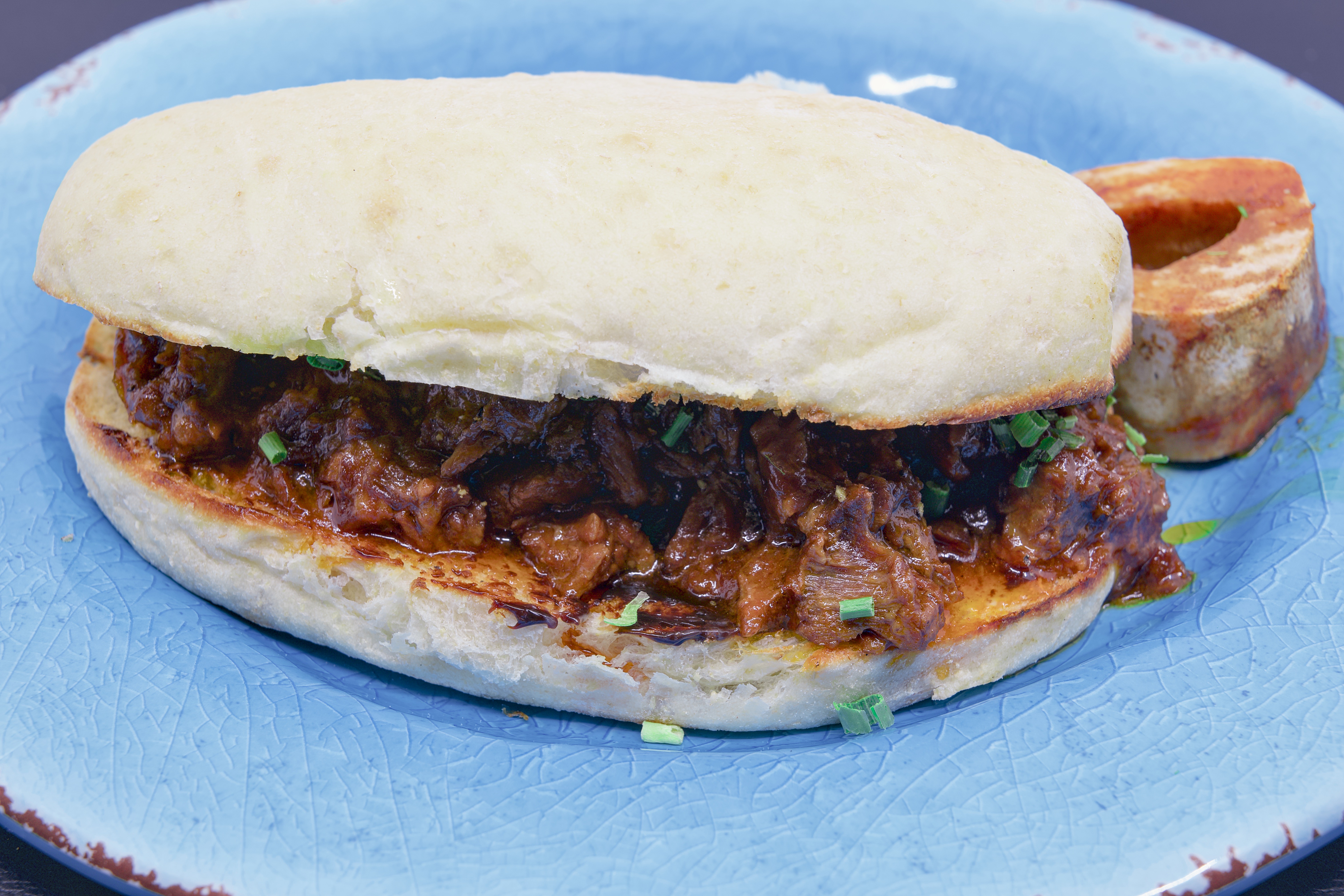
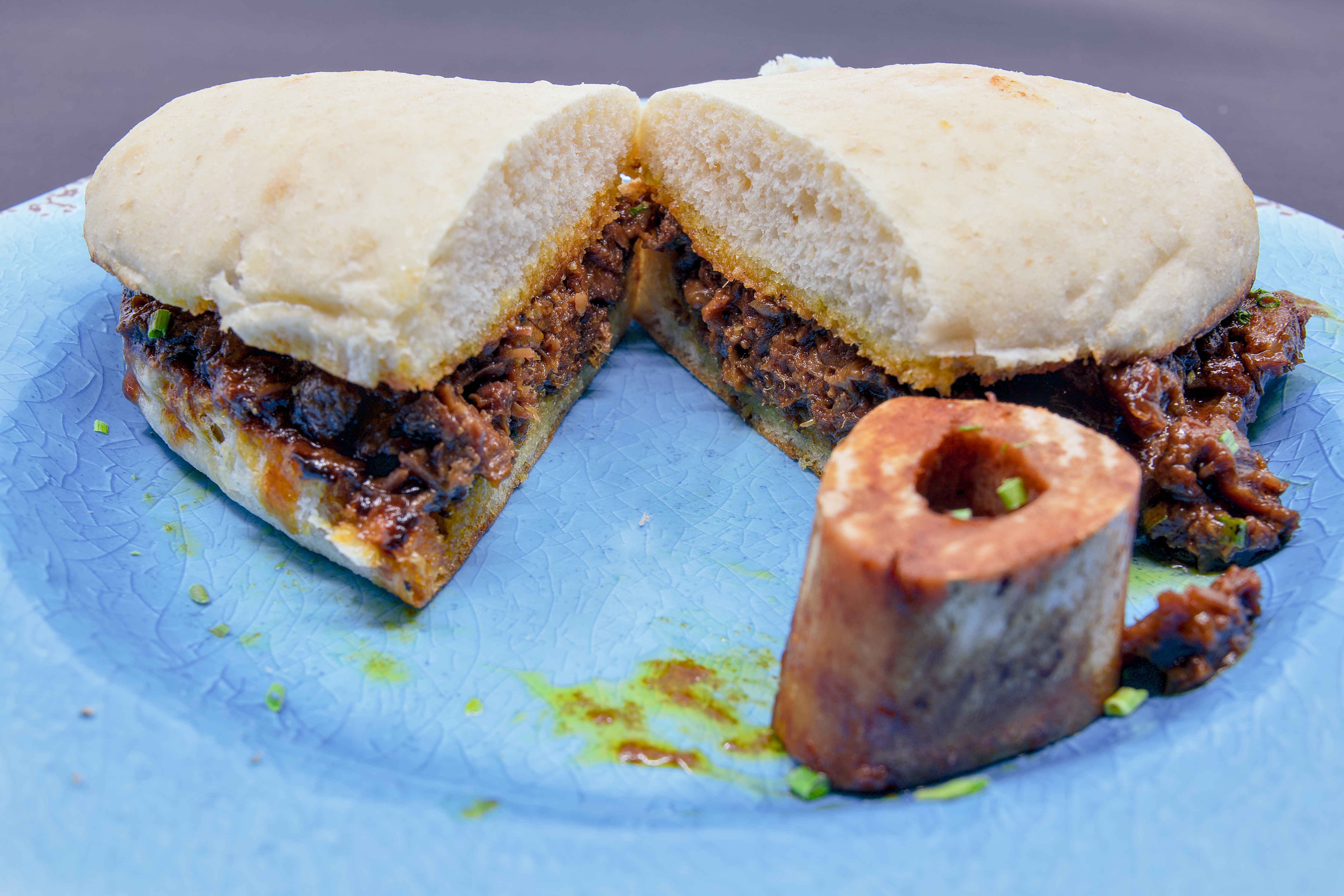
Serve with something that can soak up the sauce, such as noodles or make a sanga.
What about the marrow?
For me, marrow is one reason not to treat the bone as something to discard.
After pressure cooking, I’d first see how much marrow remains intact. You can eat it directly from the bone, mix it with a little of the reduced cooking liquor, or incorporate it into the sauce. Better yet, spread it on some toasted bread.
It is rich, so I wouldn’t add additional fat to the finished sauce without tasting it first.
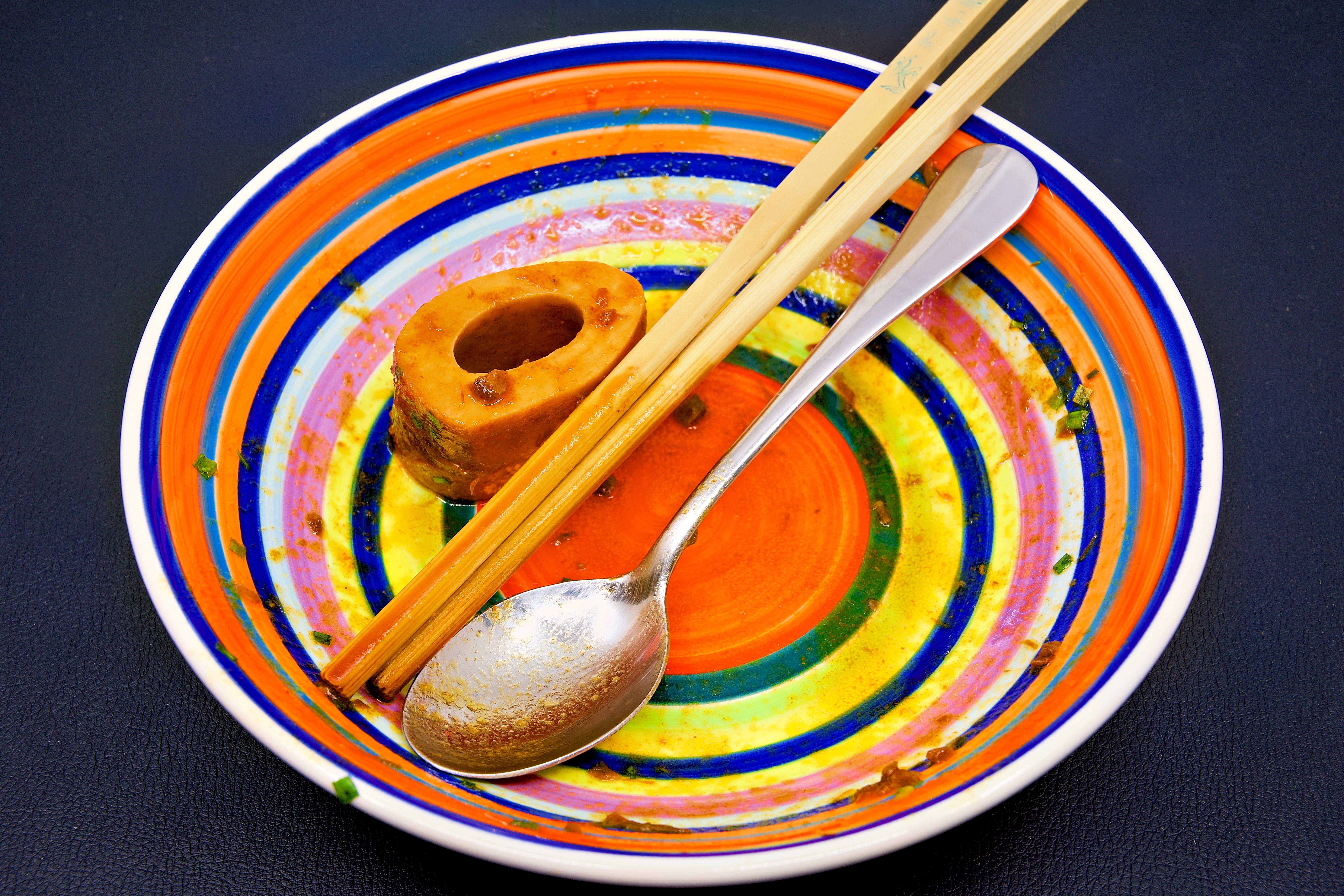
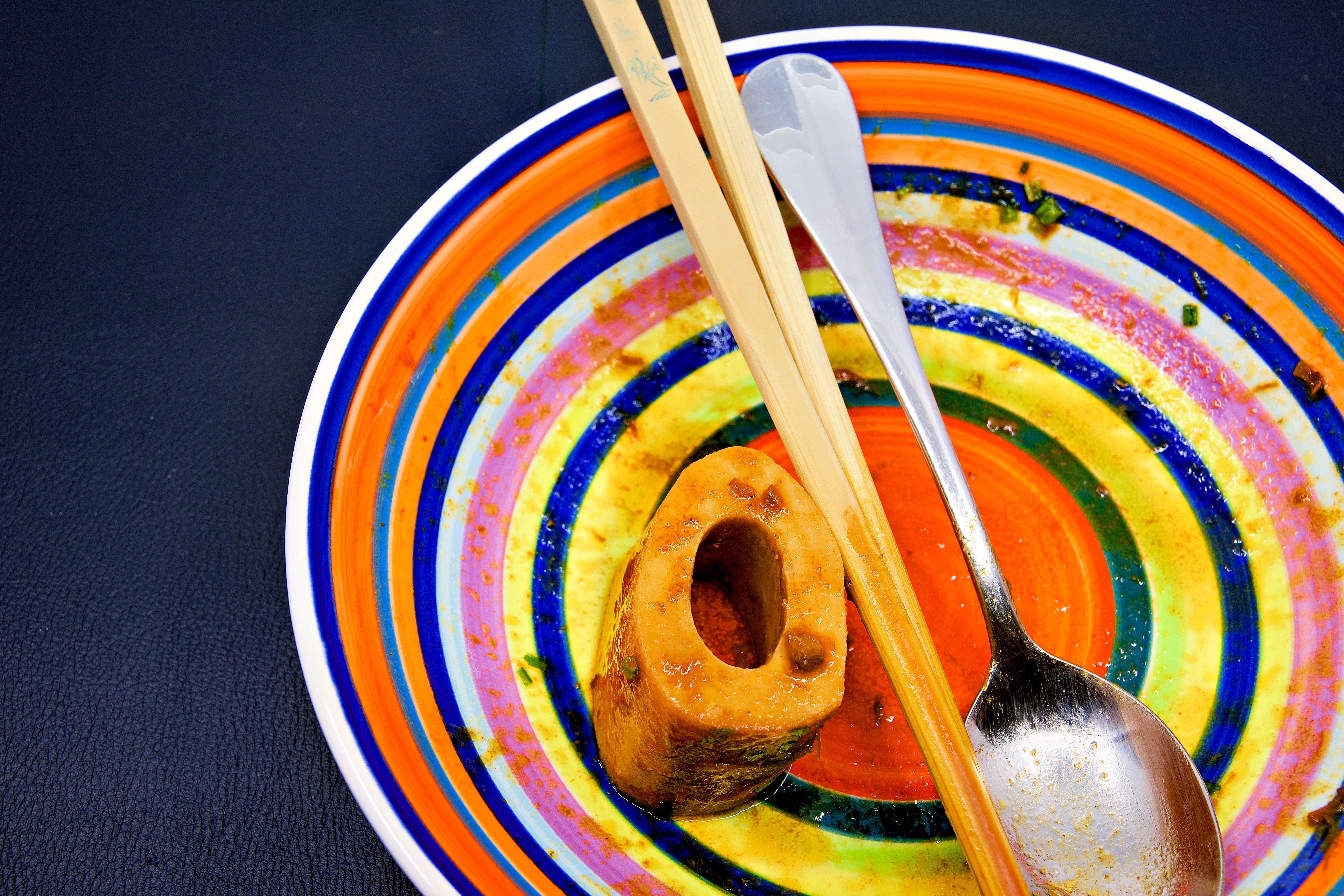
Suck and lick
I like putting my lips around the bone and sucking out the marrow and then exploring the hole with the tip of my tongue to lick out all of the juicy, delicious marrow,
Final thoughts
Receiving the buffalo shin directly from a work friend makes this meal a little different from buying a familiar cut from a supermarket or butcher.
The cooking method, however, is uncomplicated. Shin contains connective tissue and conventionally benefits from long, moist cooking. Pressure cooking provides another route to the same objective and is particularly convenient for a substantial bone-in piece.
The meat was delicious. For any reader who may be reticent about trying Buffalo, I would highly recommend giving it a go.
Different presentations
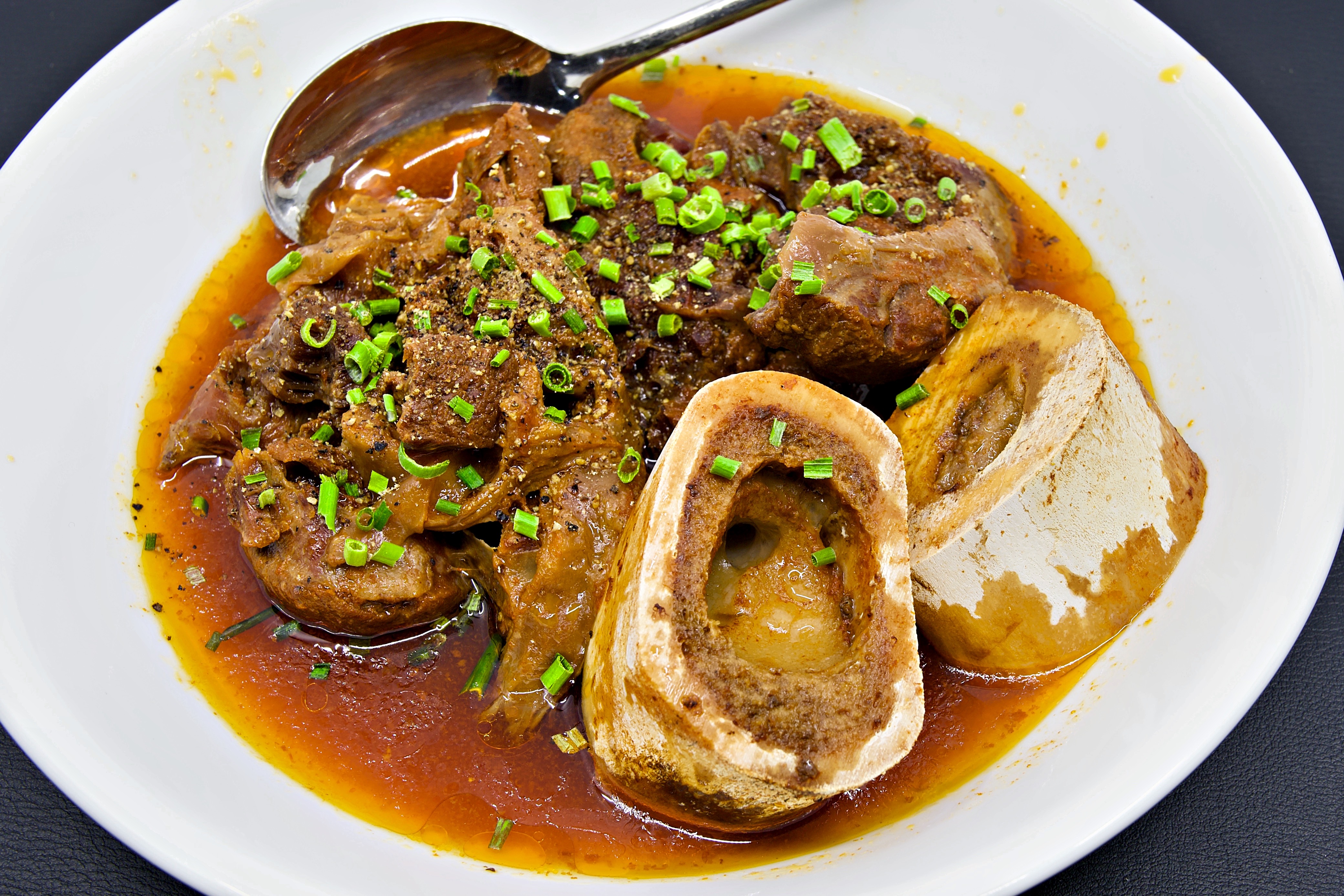
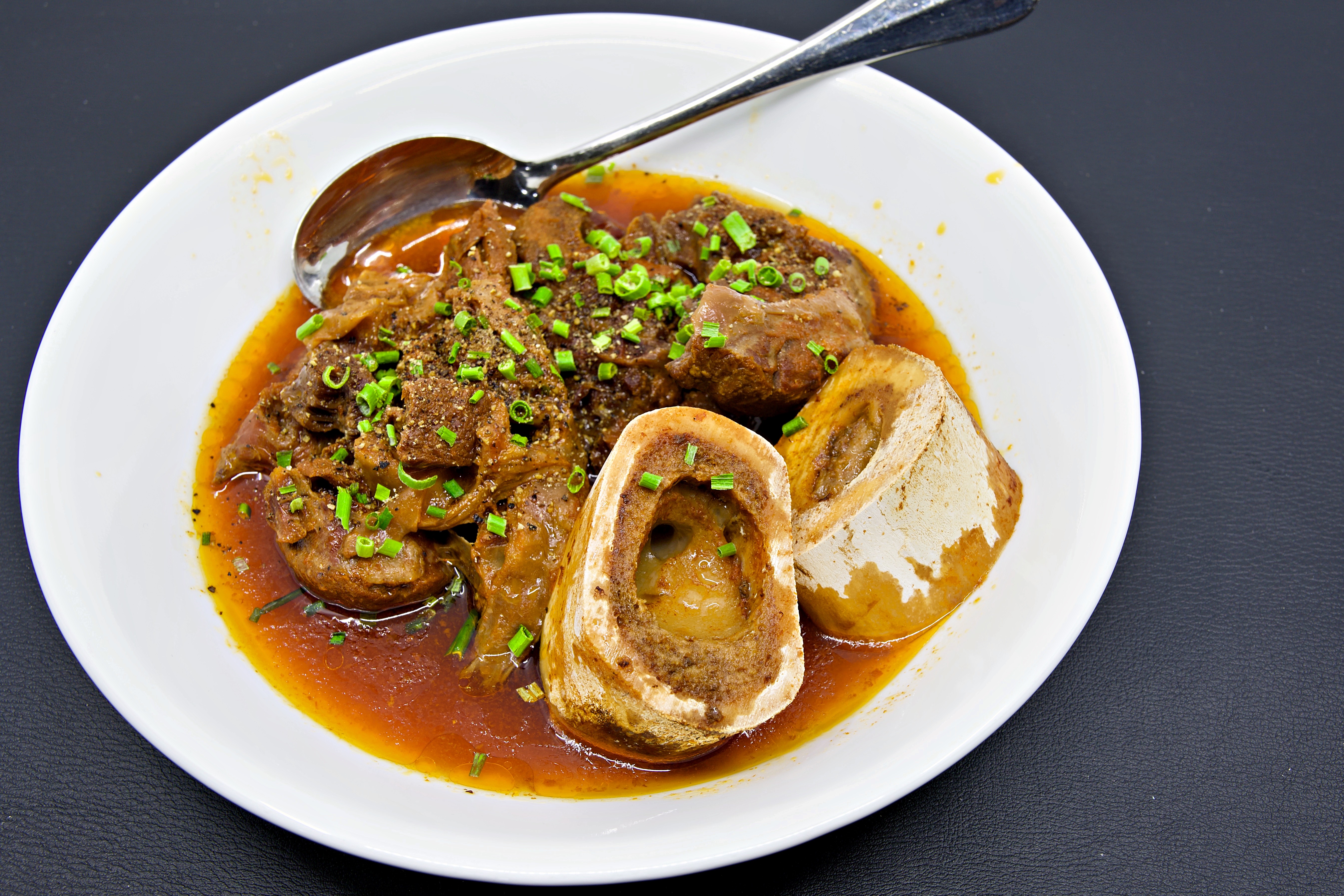
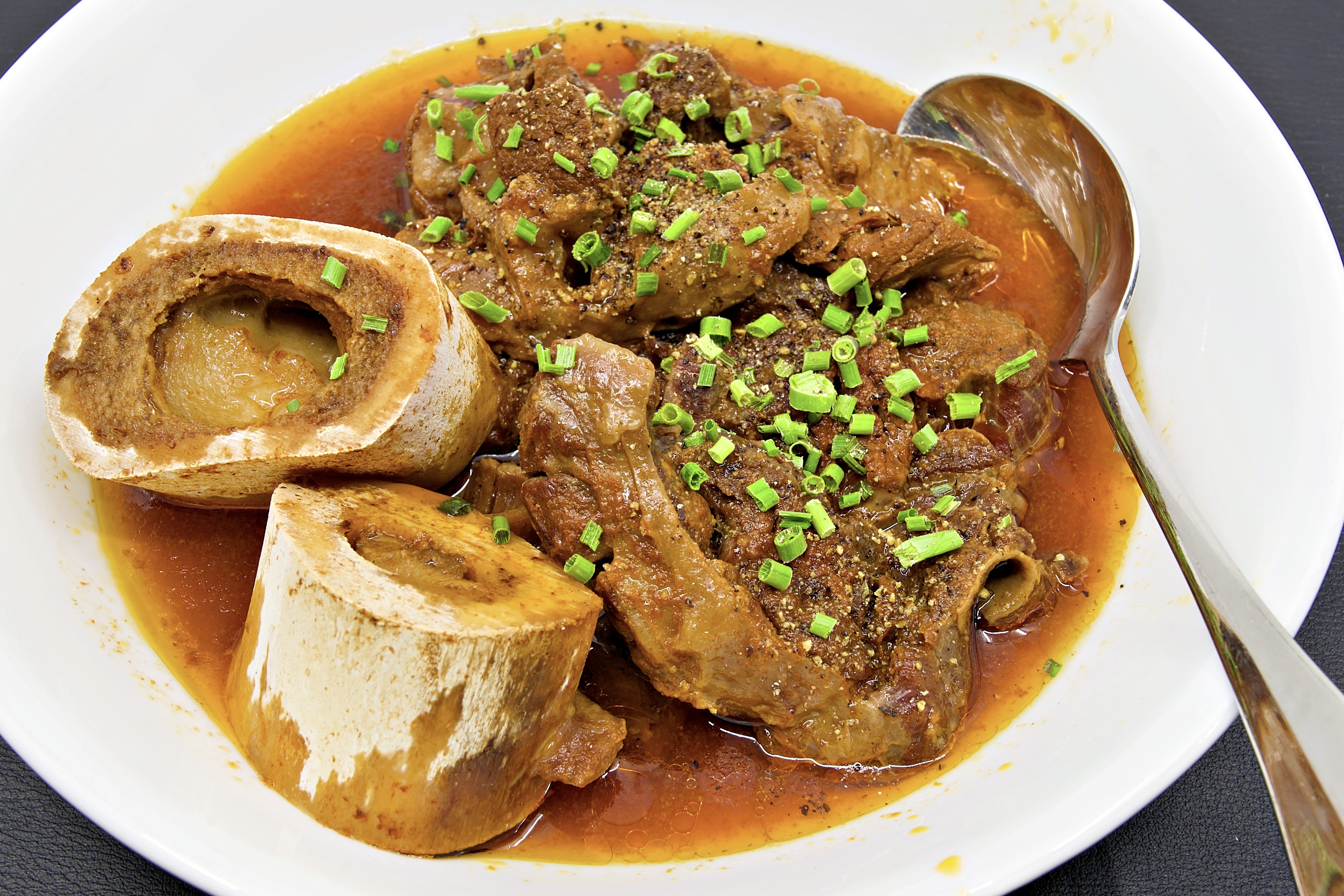
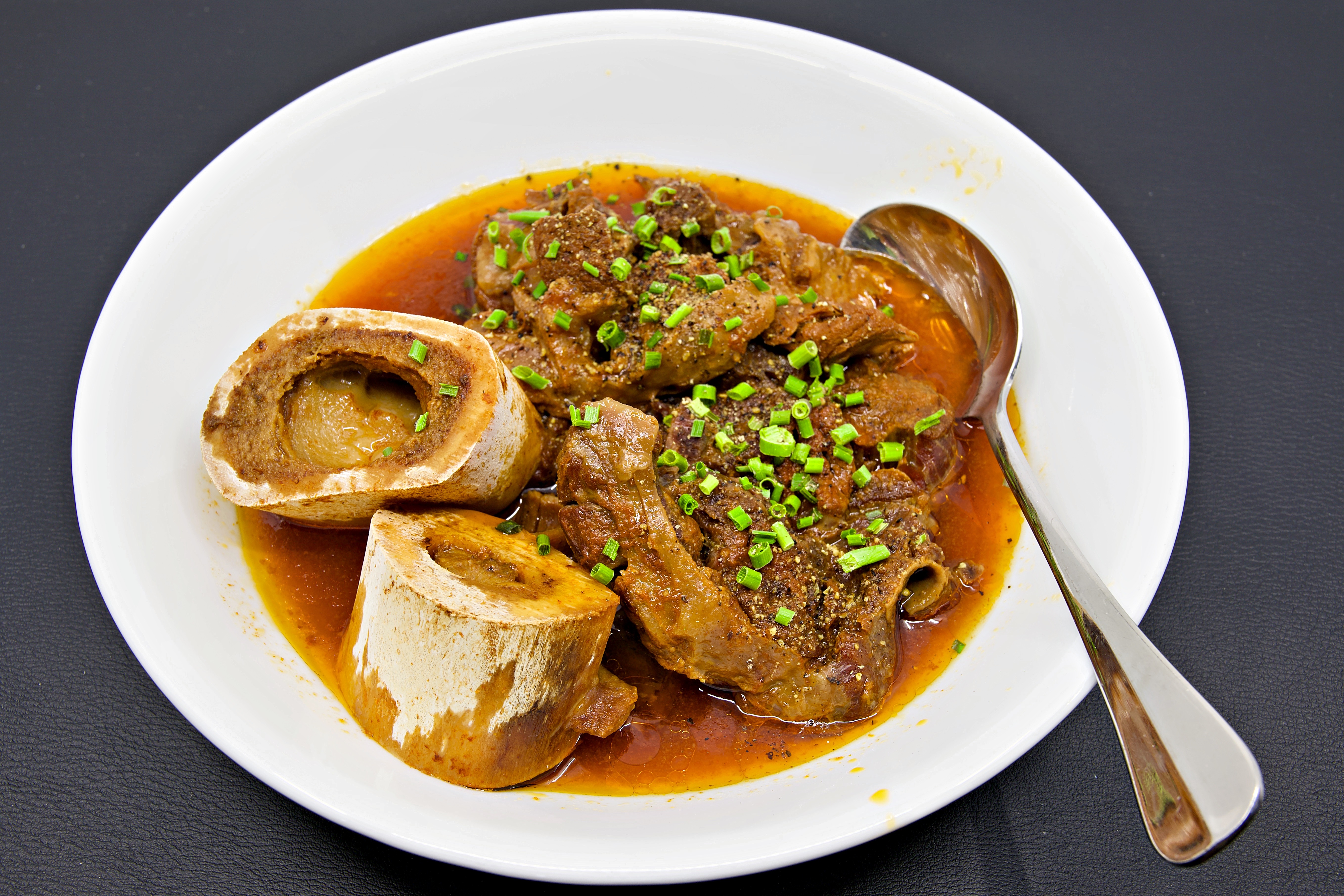
Straight from the pressure cooker because I am a simple man
Buffalo shin, bone marrow, and plenty of patience. Cooked until the meat is tender and richly flavoured, then finished with black pepper and chopped chives. The marrow might be my favourite part.
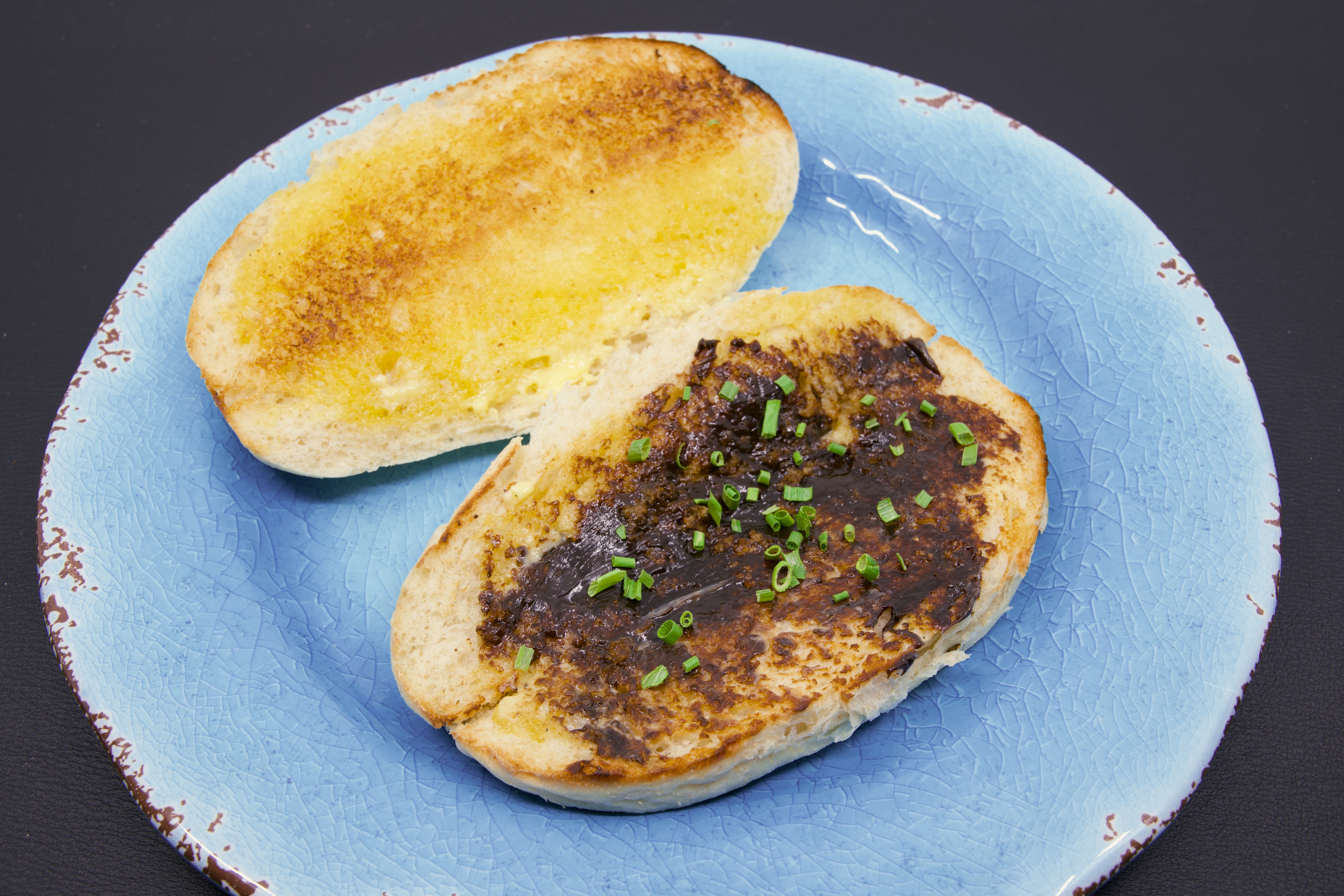
A sanga like no other (with some Vegemite to make it Australian)
Leftover buffalo shin meets Vegemite. Toasted, buttered lepinja, tender buffalo, chopped chives, and a little bone marrow on the side. Vegemite is my special ingredient. A little bit adds so much to a sanga.
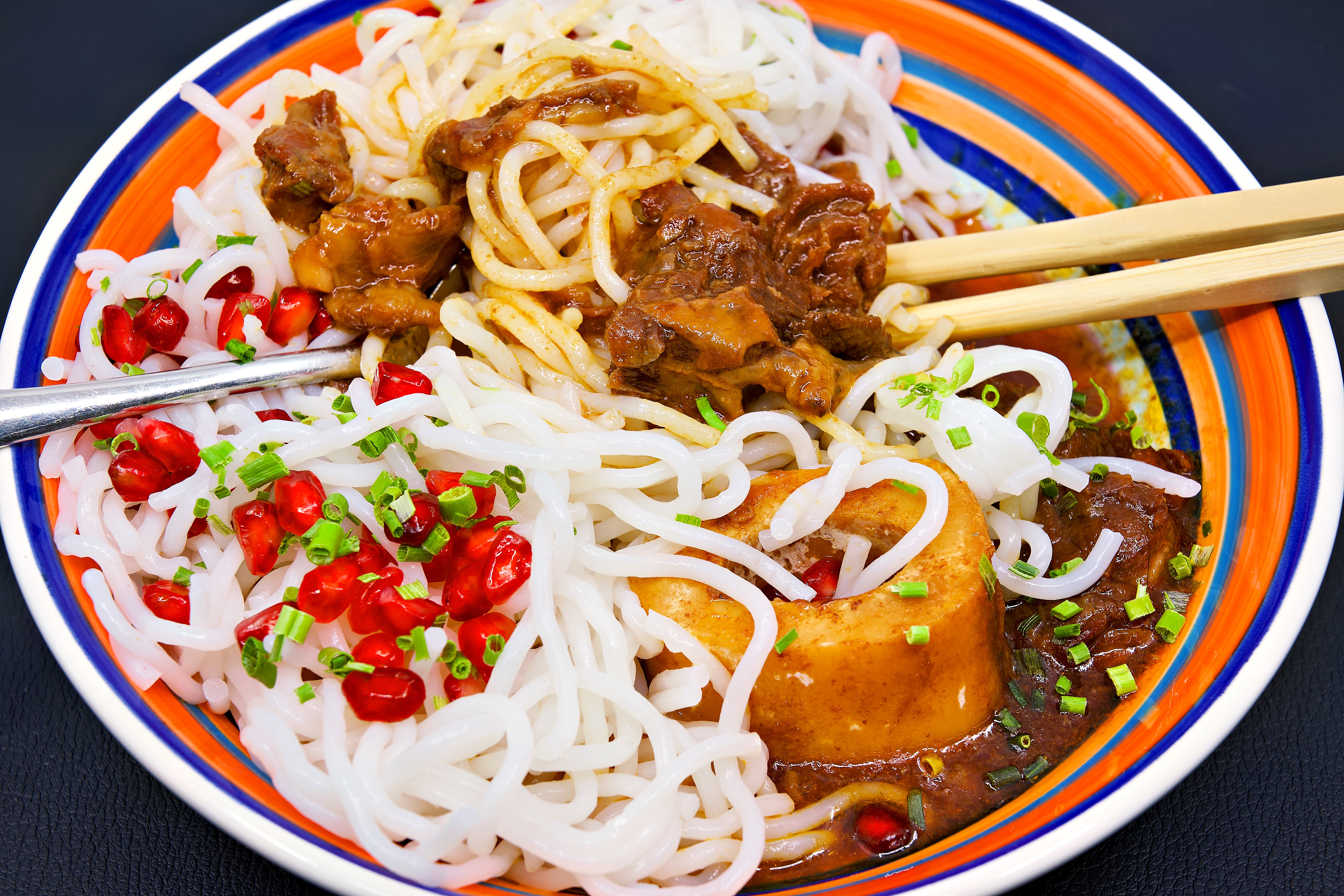
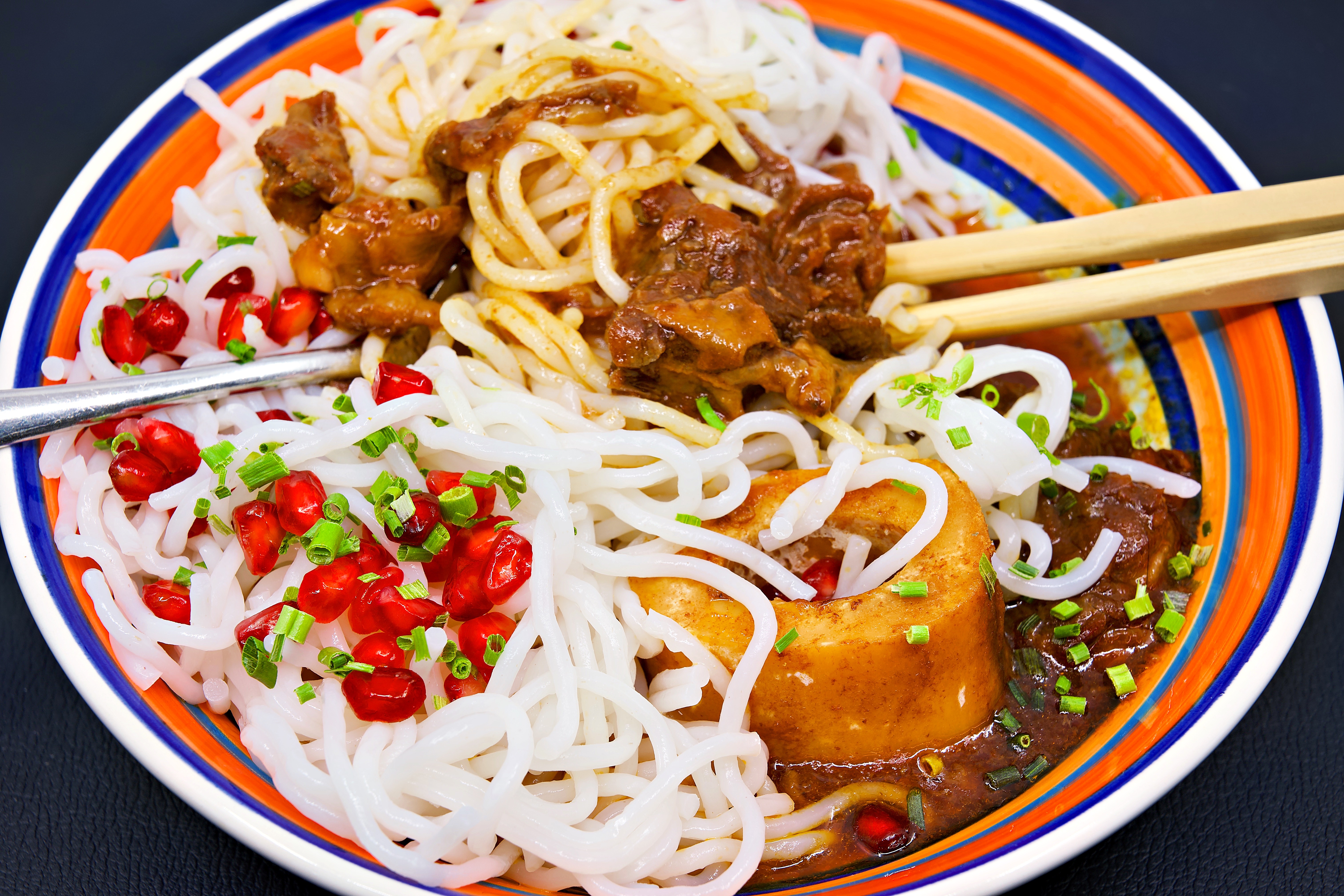
With rice noodles because deep down I’m also Asian
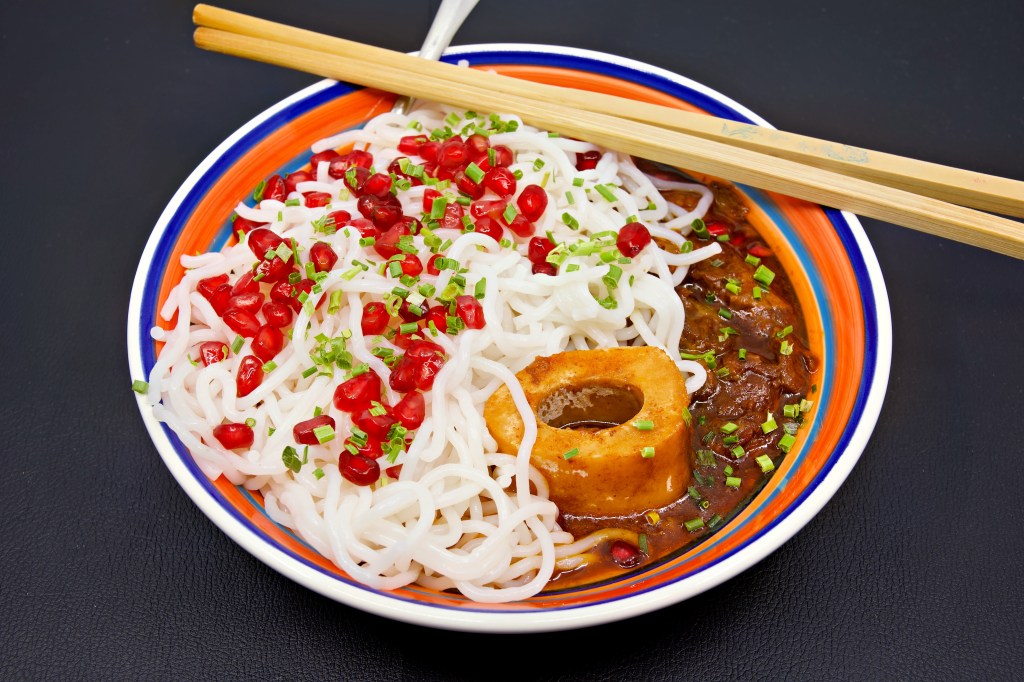
A colourful bowl of white rice noodles and pressure-cooked Buffalo shin in a thick, glossy sauce, with a large section of marrow-filled shin bone. Red pomegranate arils and chopped green chives are scattered over the noodles, meat, and sauce. Well-used wooden chopsticks and a dessert spoon rest across the bowl, which sits on a dark grey background.
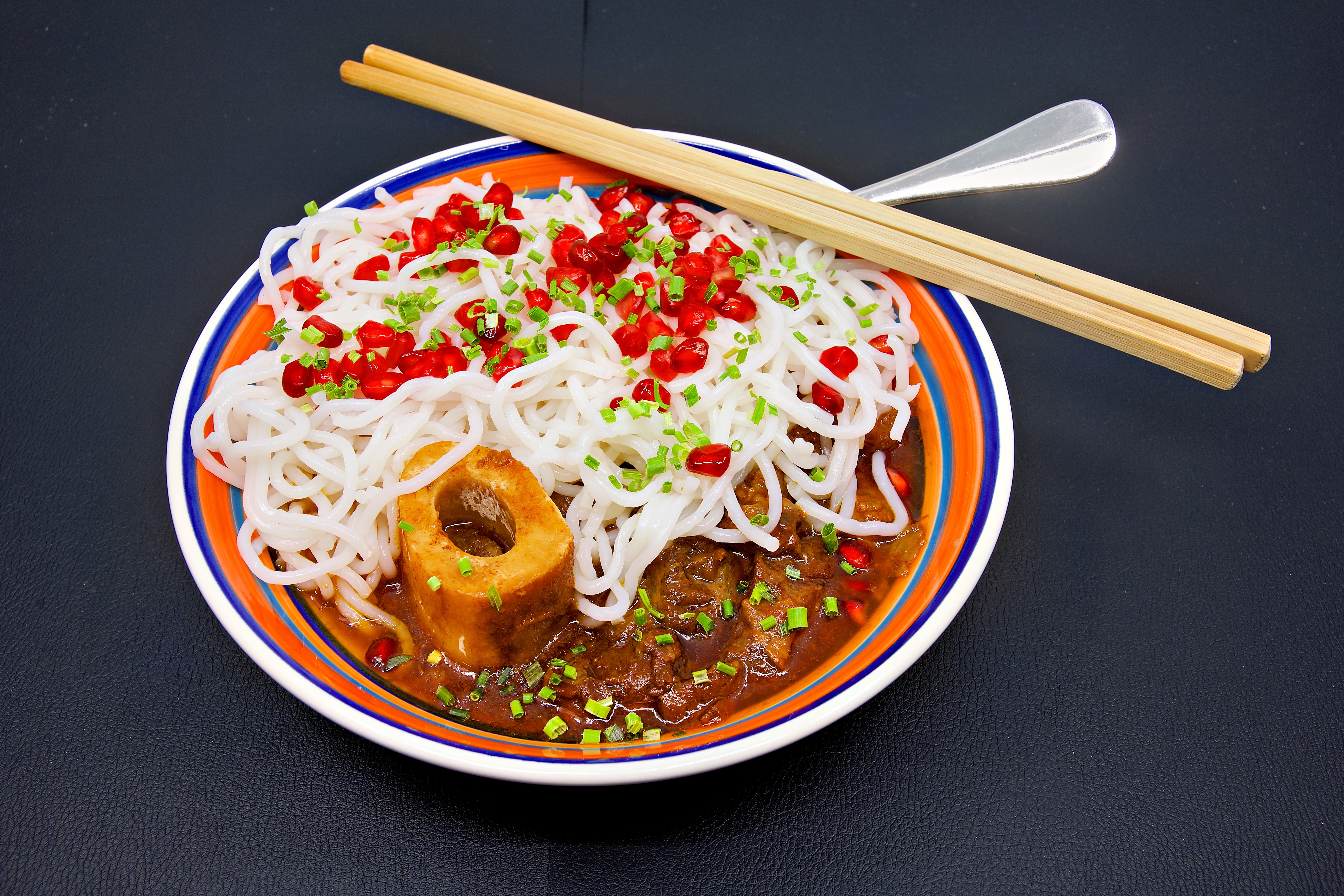
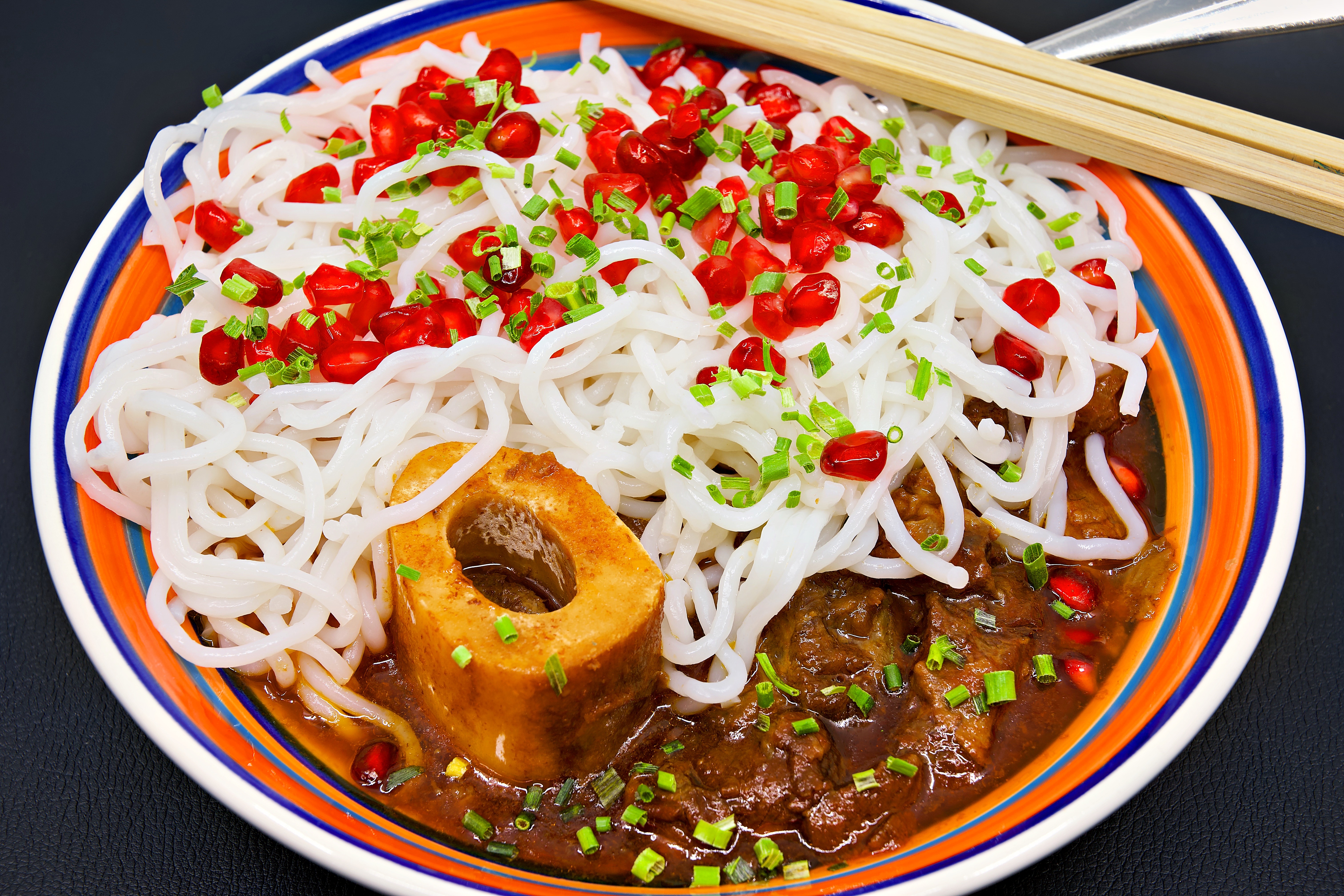
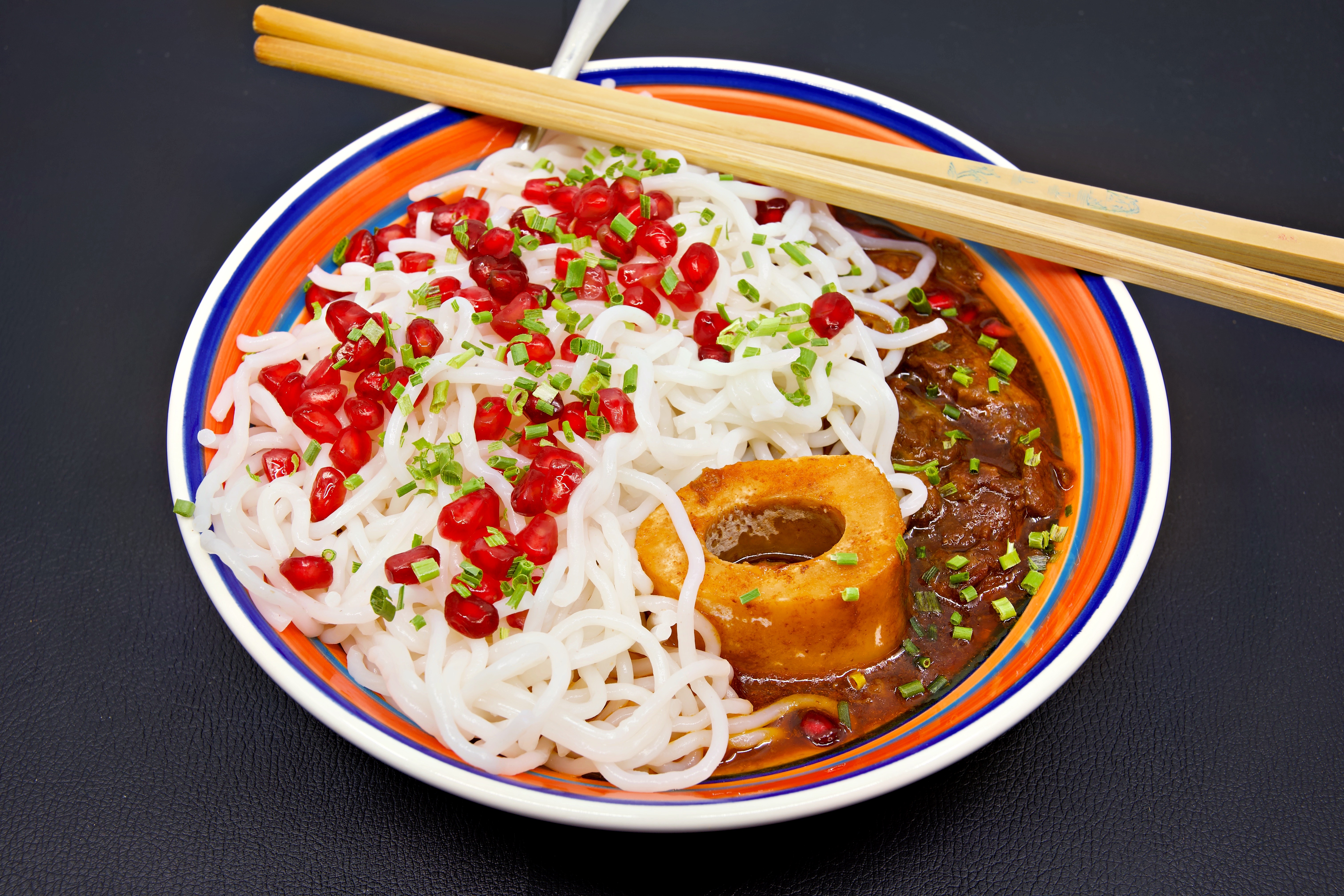
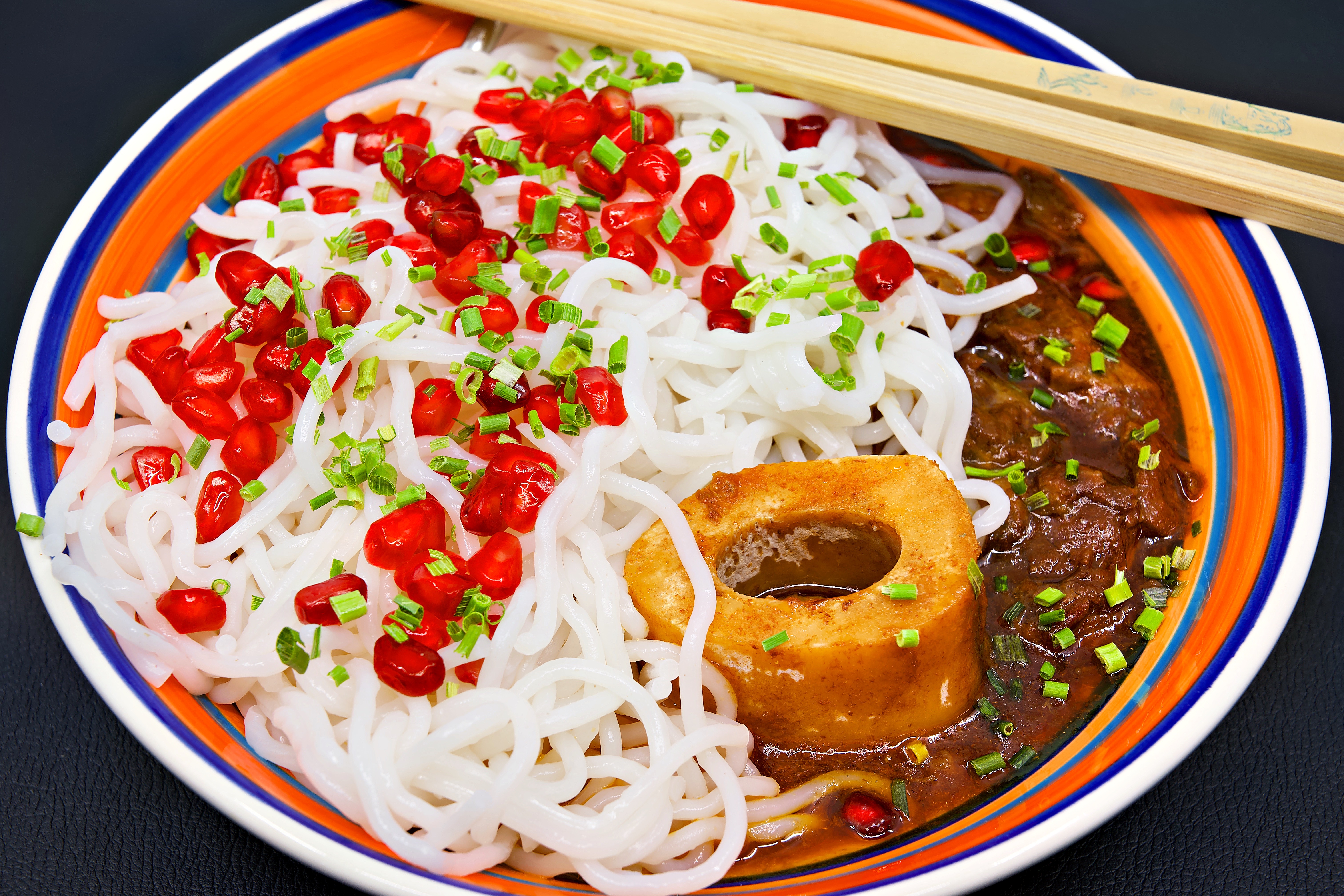
Colourful bowl with concentric orange, blue, and white circles, filled with white rice noodles, reheated pressure-cooked Buffalo shin meat, and a large section of shin bone containing marrow. The Buffalo sits in a thick, glossy brown sauce, with red pomegranate arils and chopped green chives scattered across the noodles and meat. The noodles and Buffalo have been partially mixed together using an old, well-used pair of wooden chopsticks and a dessert spoon, coating some of the white noodles with the sauce. The bowl sits on a dark grey background.
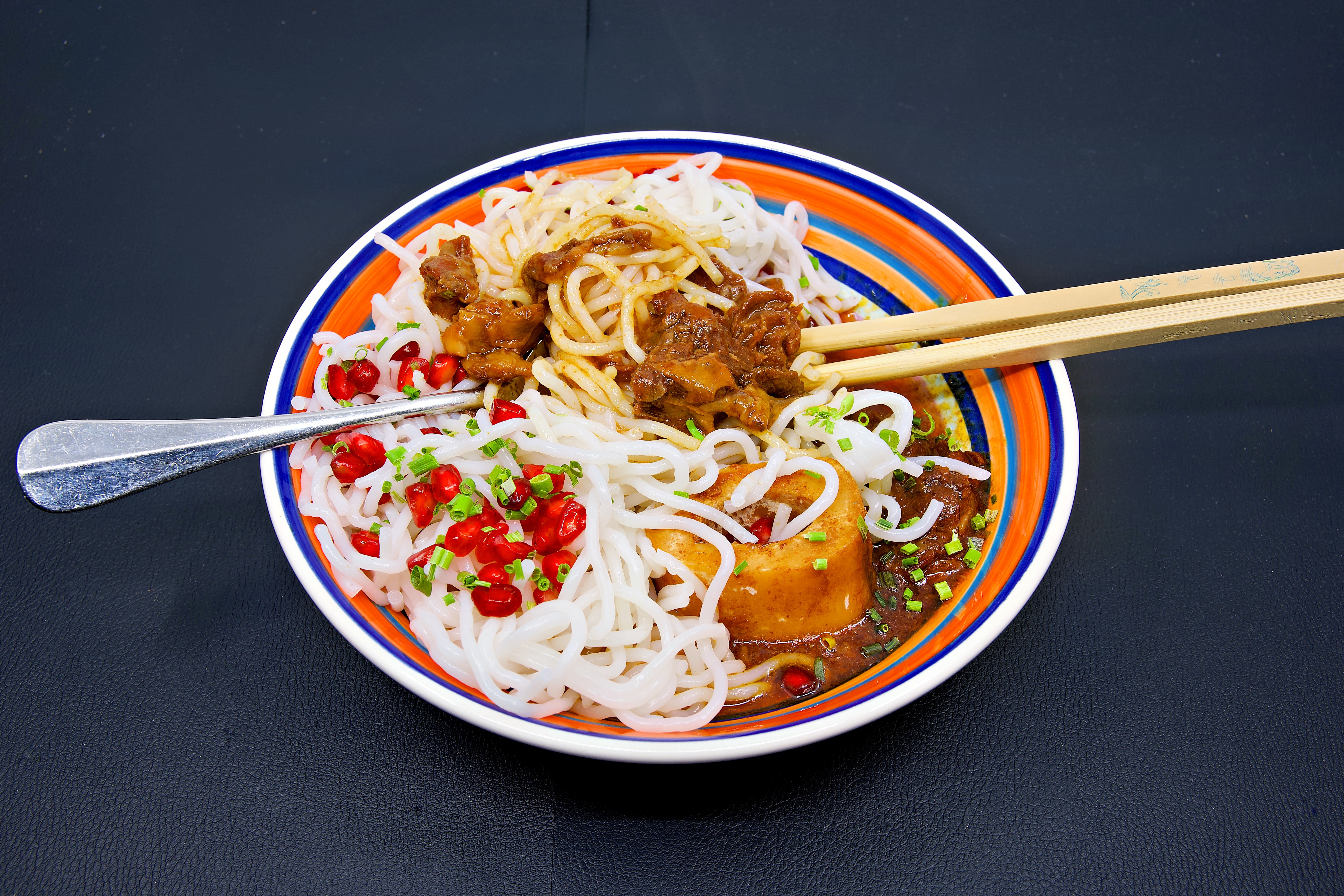
An almost empty colourful bowl patterned with concentric orange, blue, yellow, green, and pink circles, containing remnants of the meal and a Buffalo shin bone with the marrow removed. An old, well-used pair of wooden chopsticks and dessert spoon rest across the bowl, with traces of sauce and chopped chives remaining on the bowl and utensils. The marrow has been sucked and licked from the bone, leaving the central cavity empty. The bowl sits on a dark grey background.
AI disclaimer
Microsoft Copilot was exploited to check spelling and grammar. Google Gemini was exploited to create the buffalo illustration. AI was not used to edit any of the food photographs. All ideas and concepts are the author’s own.


Comments will be moderated.