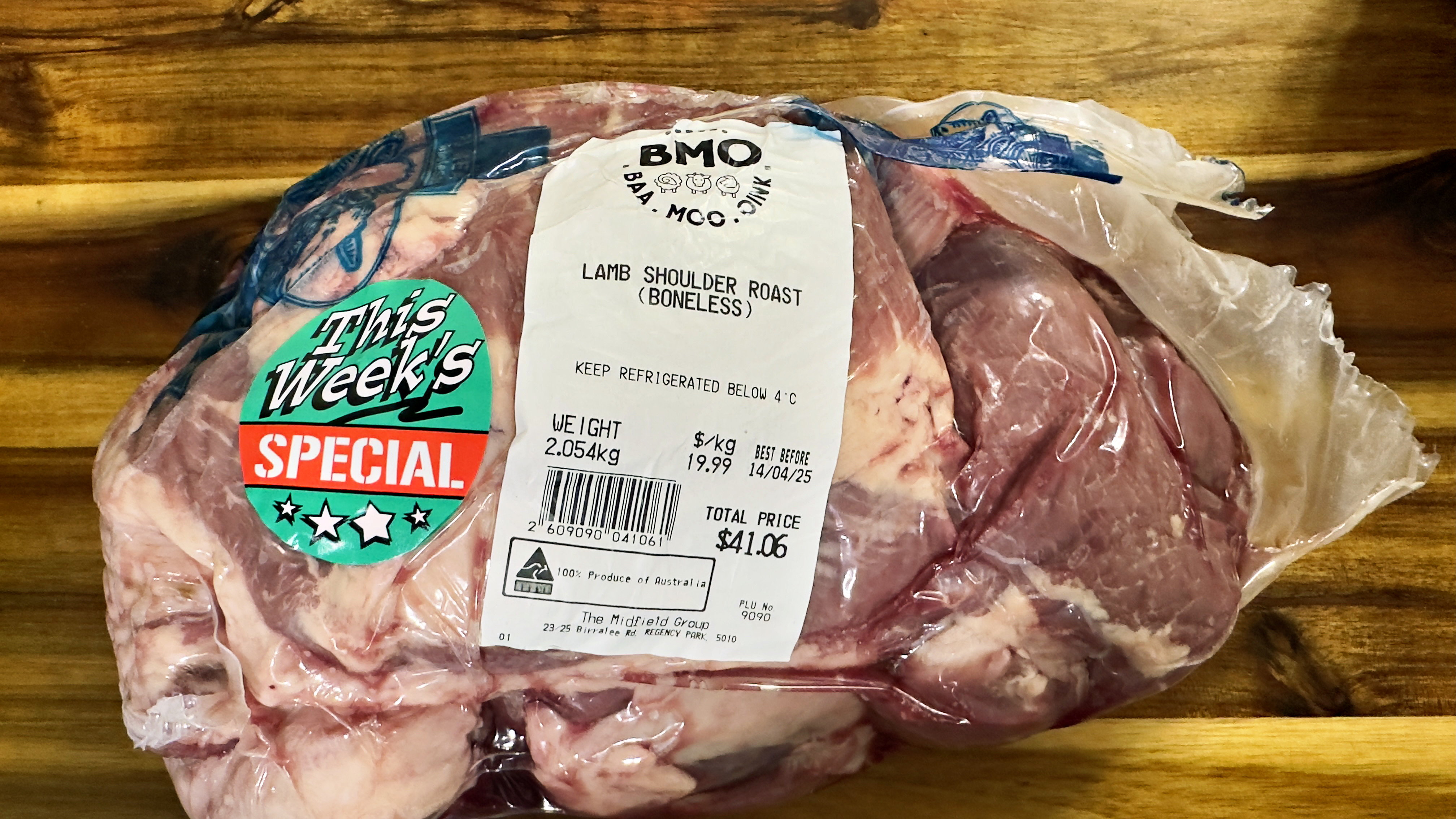
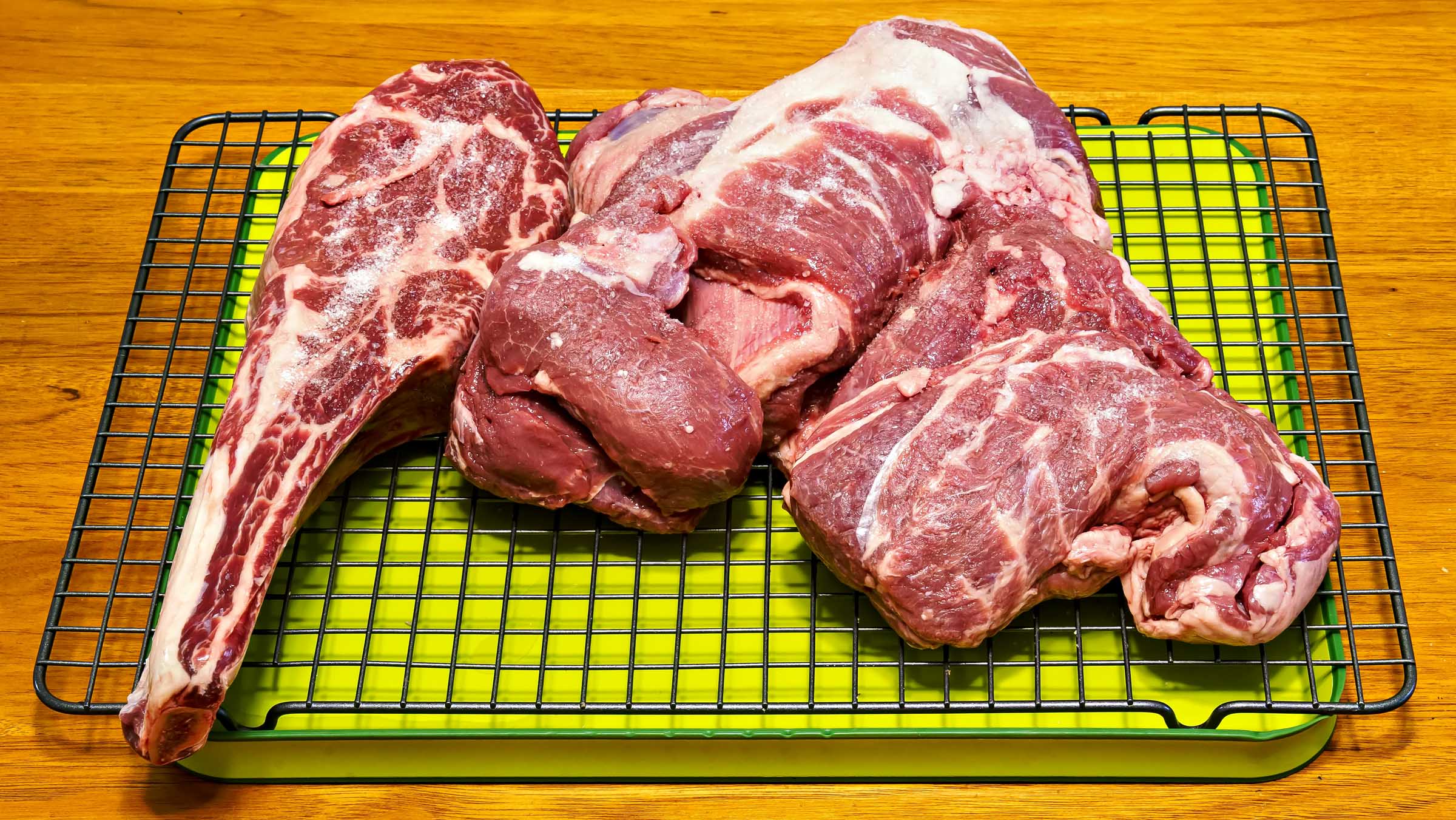
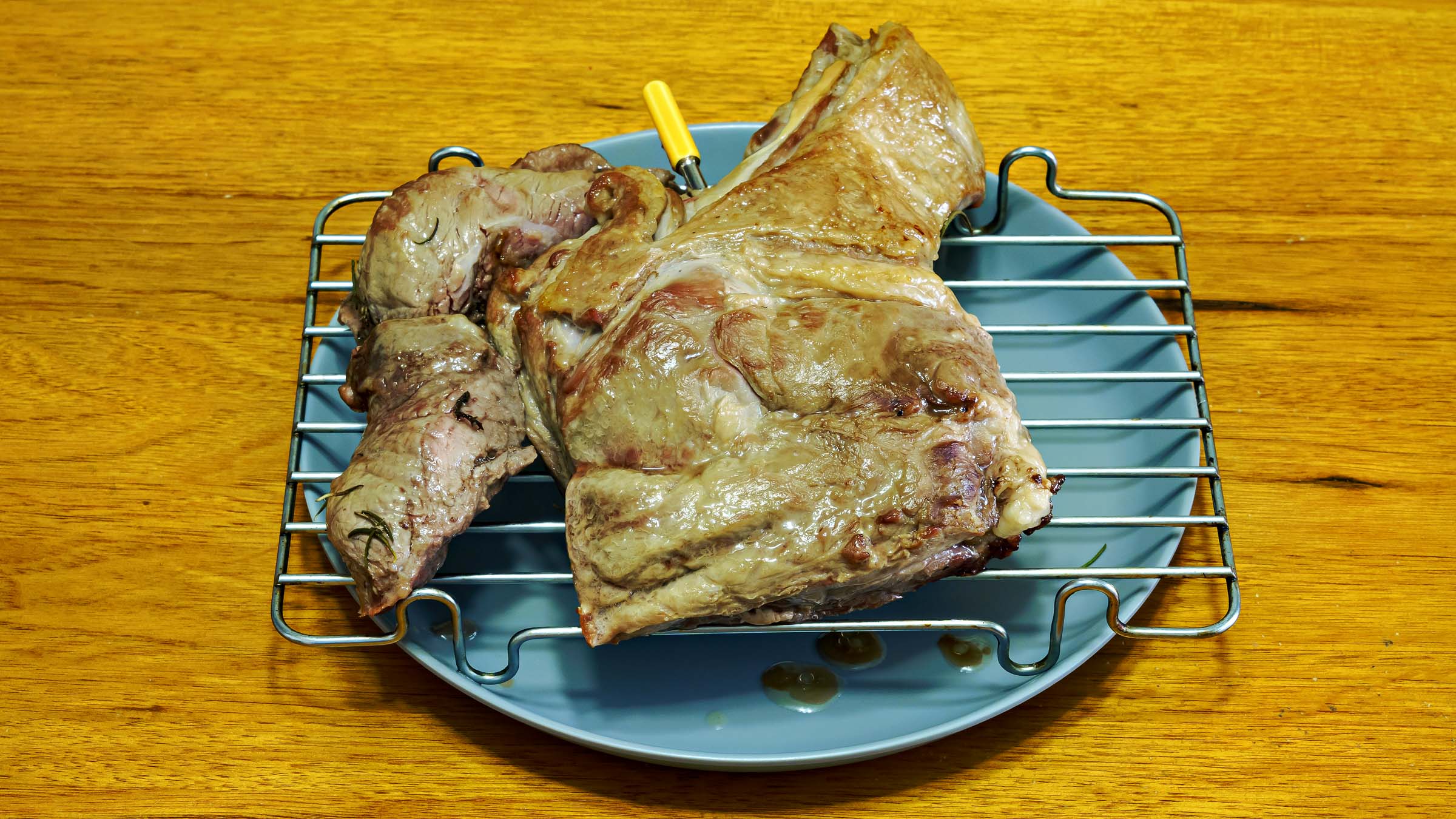
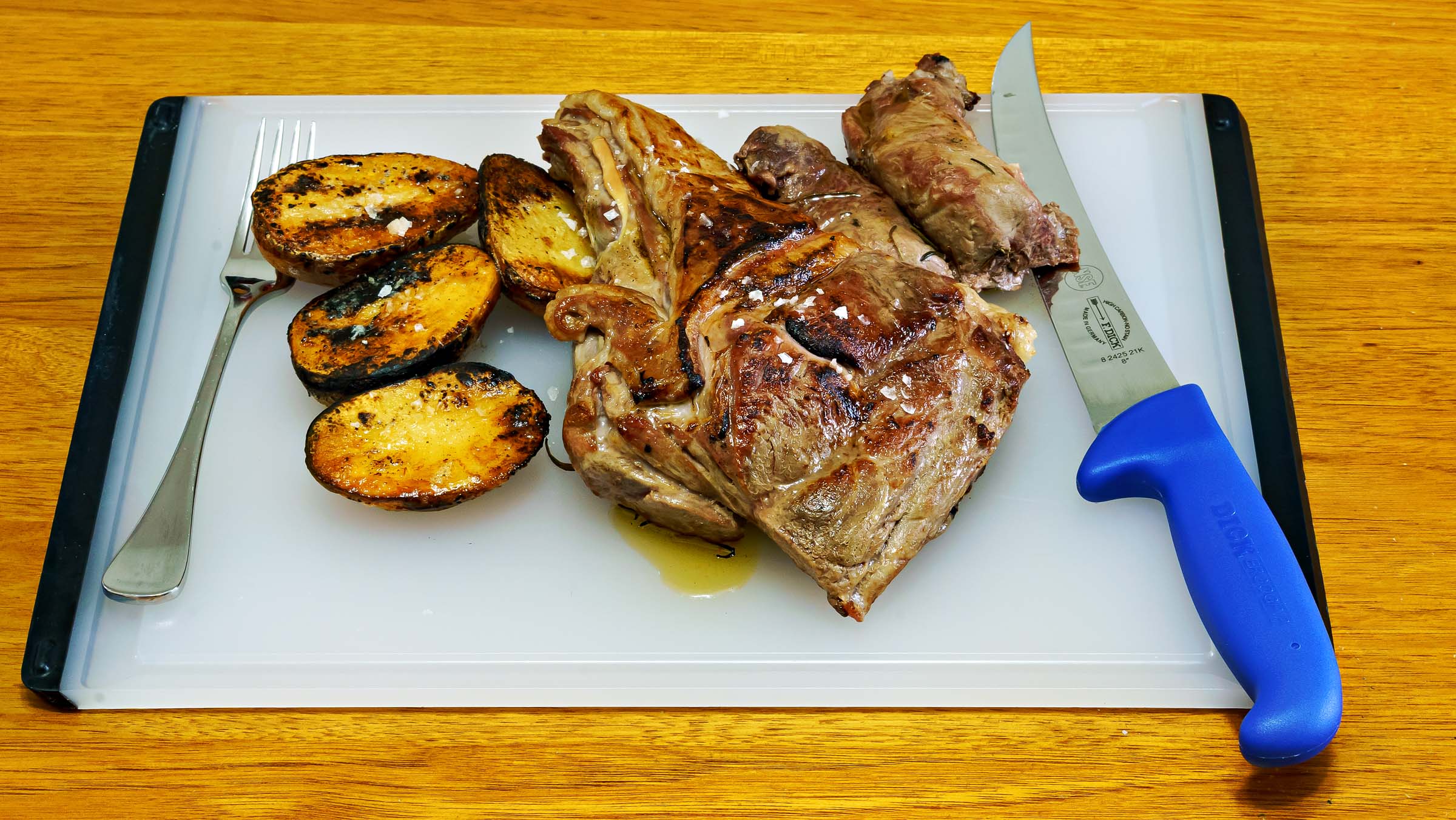
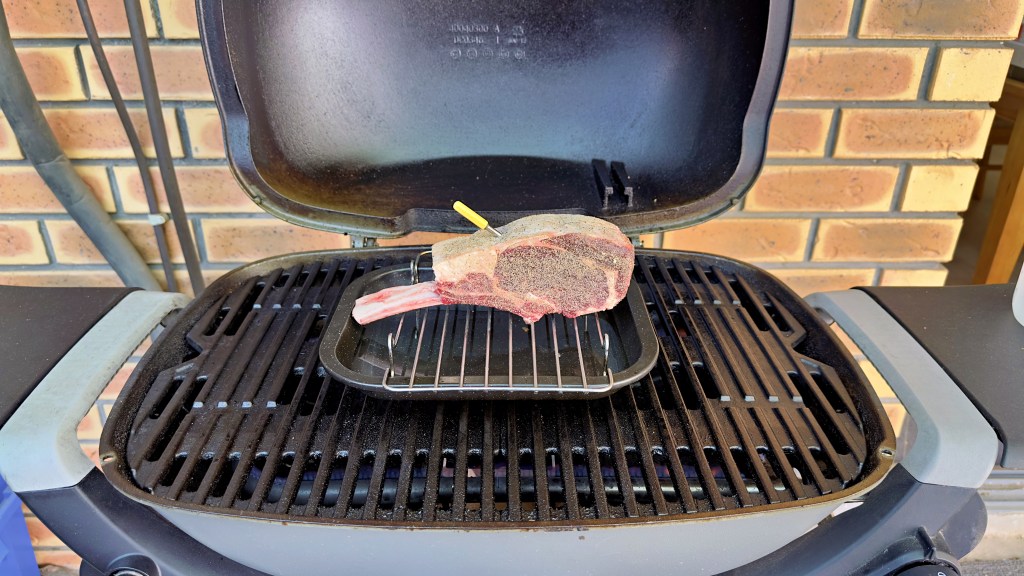
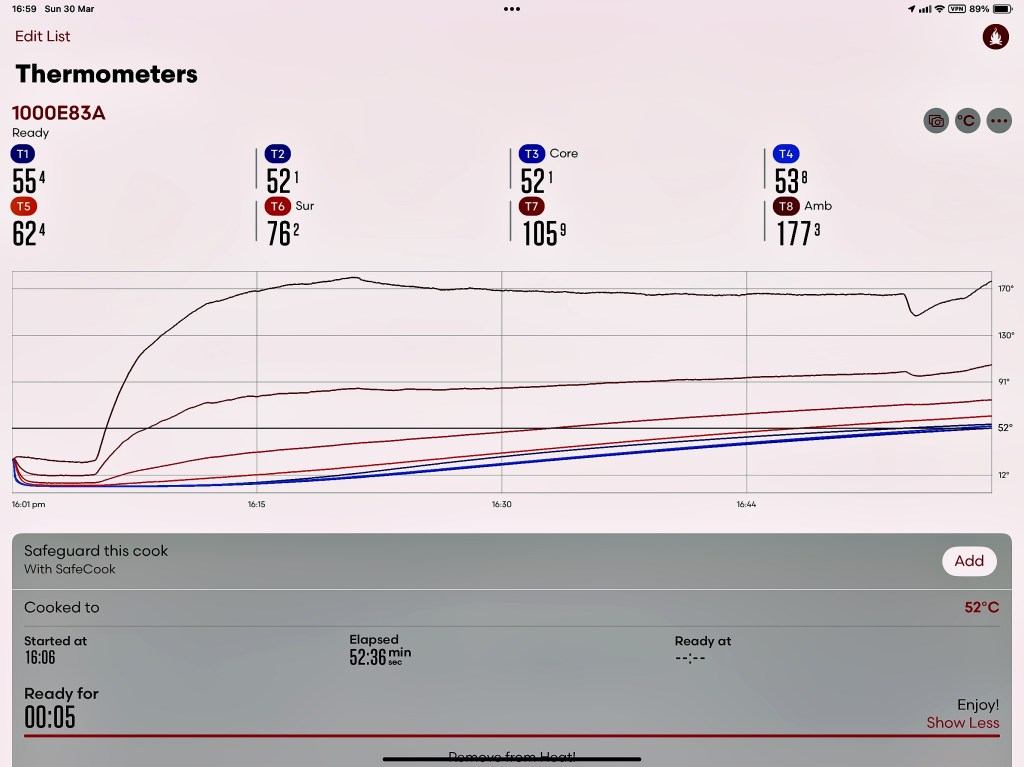
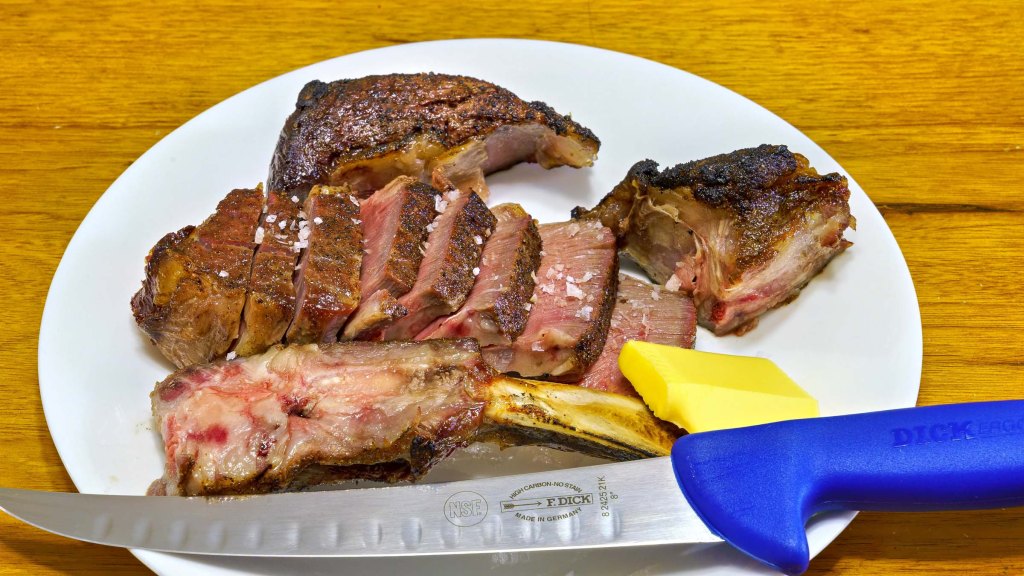
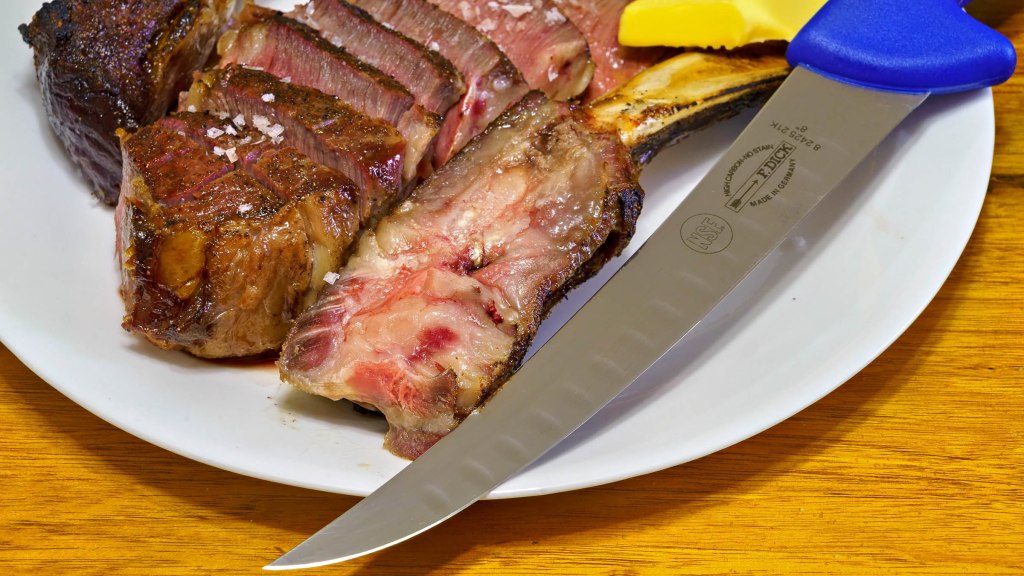
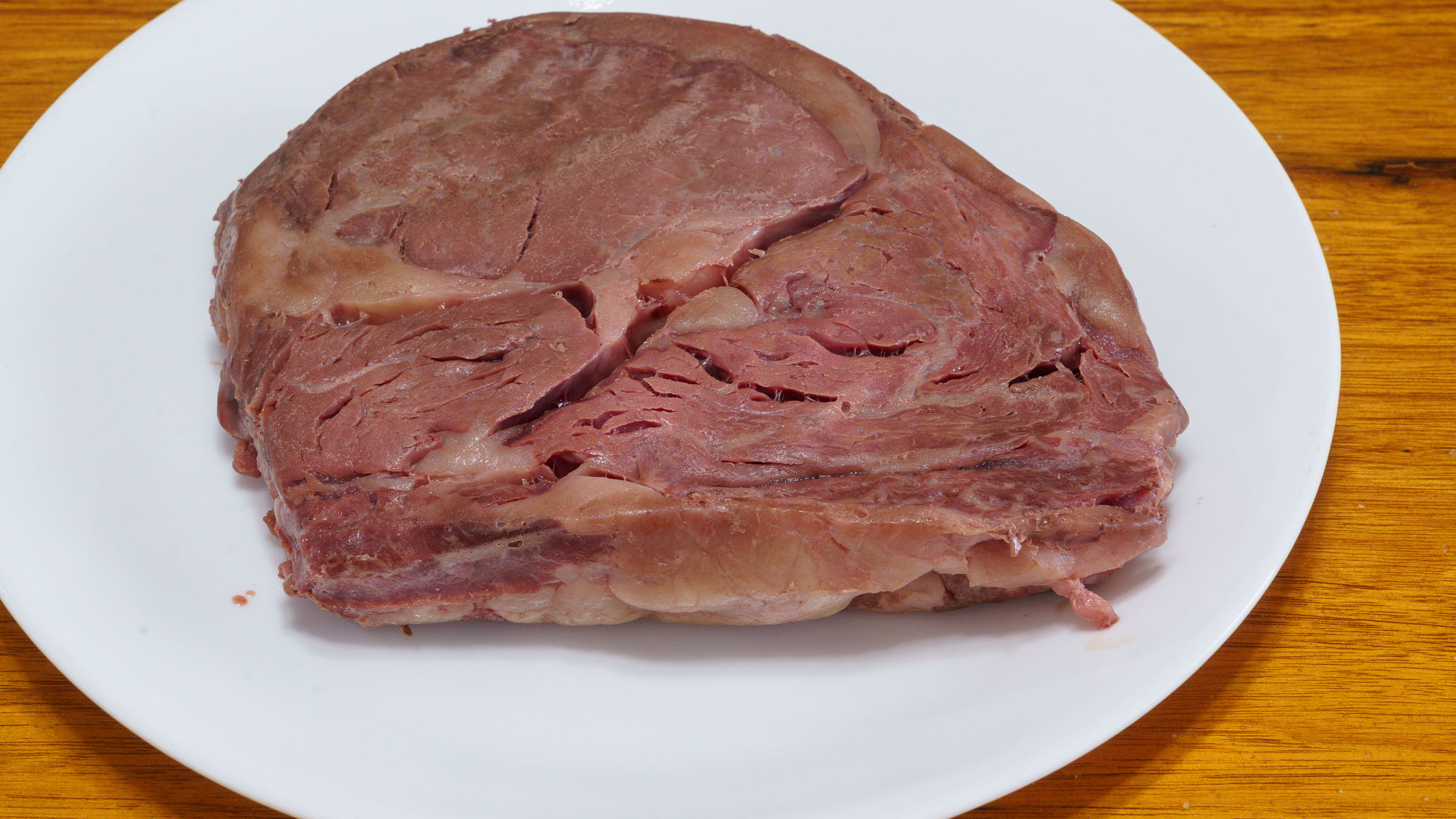
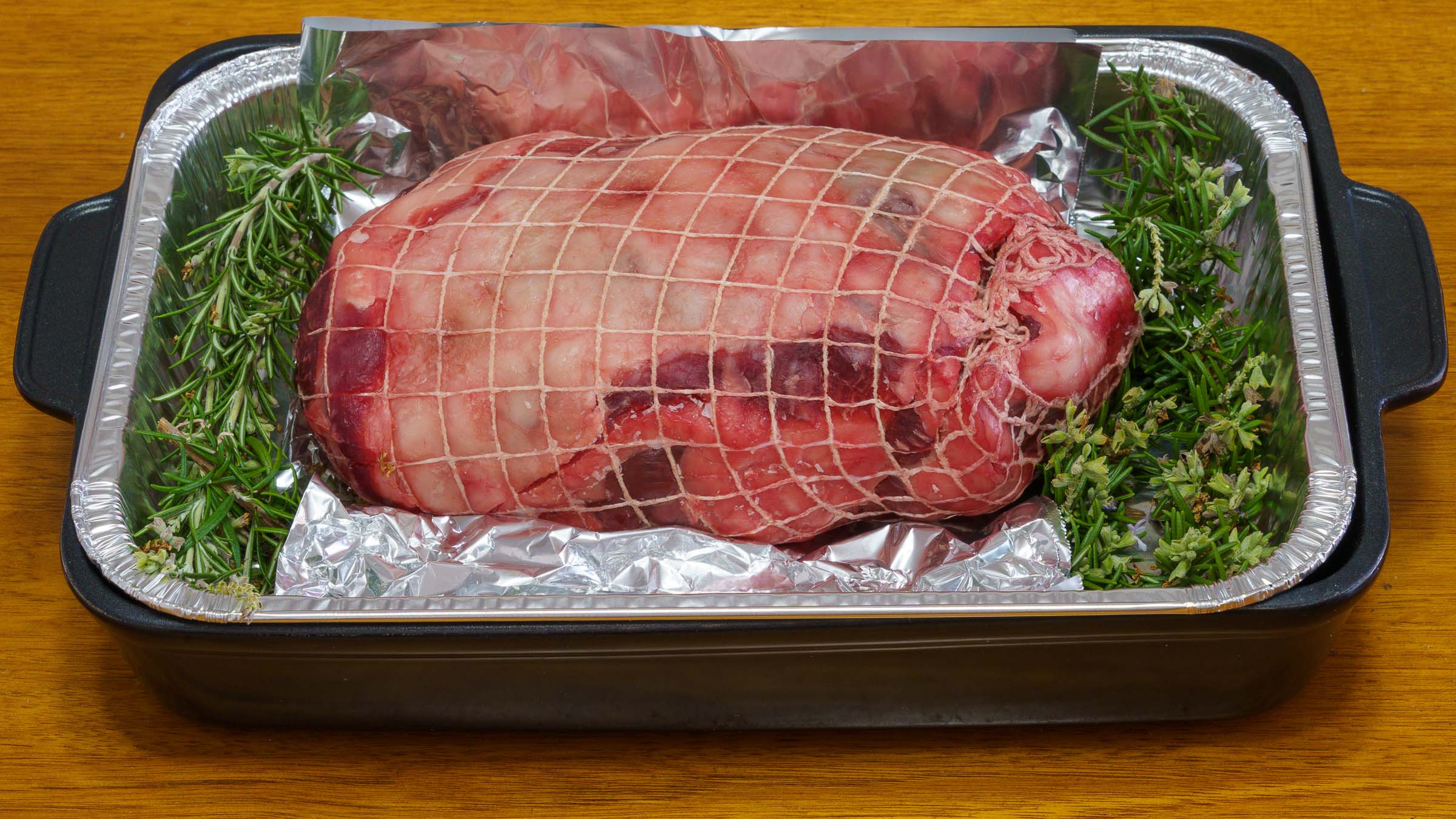
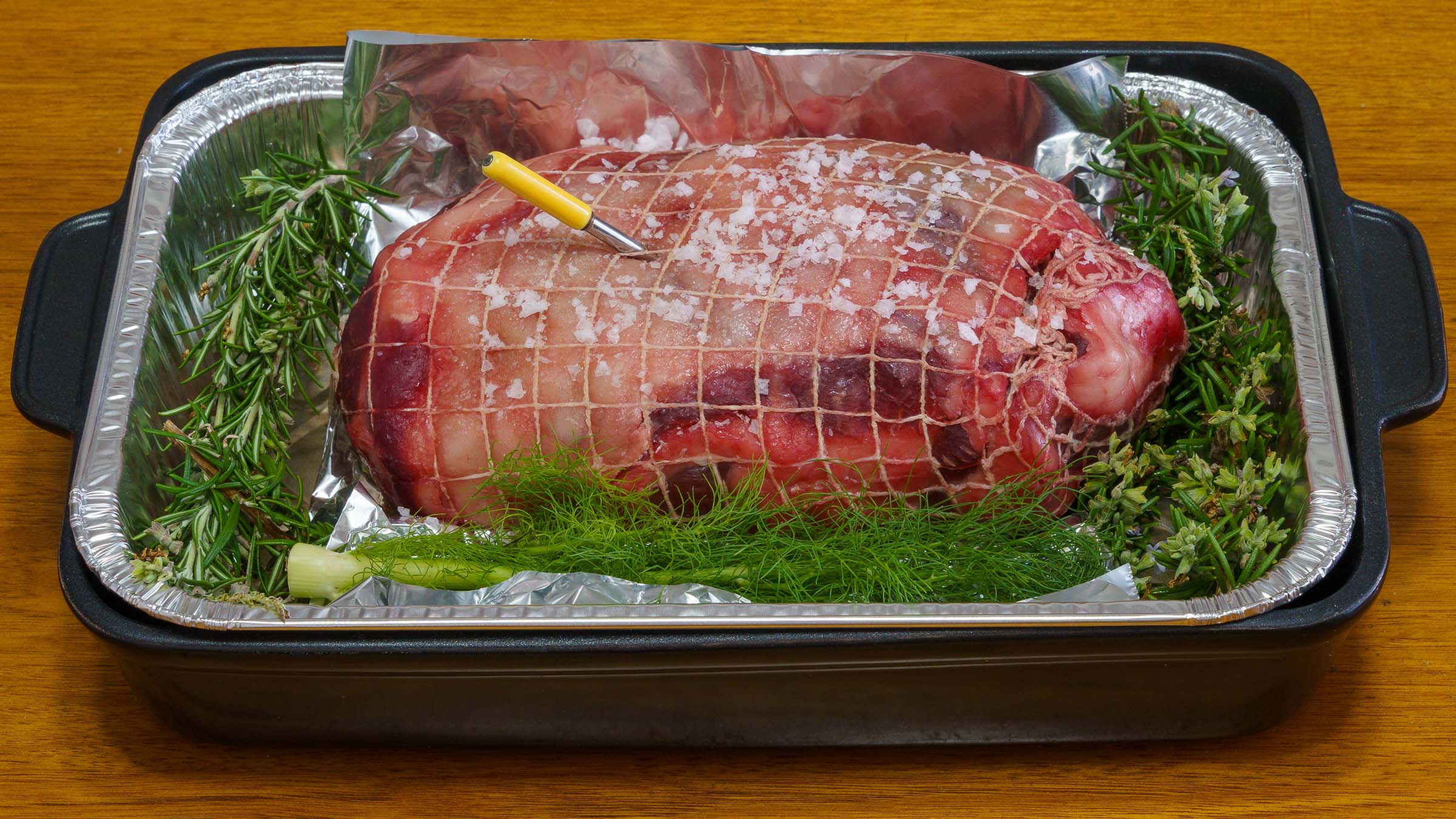
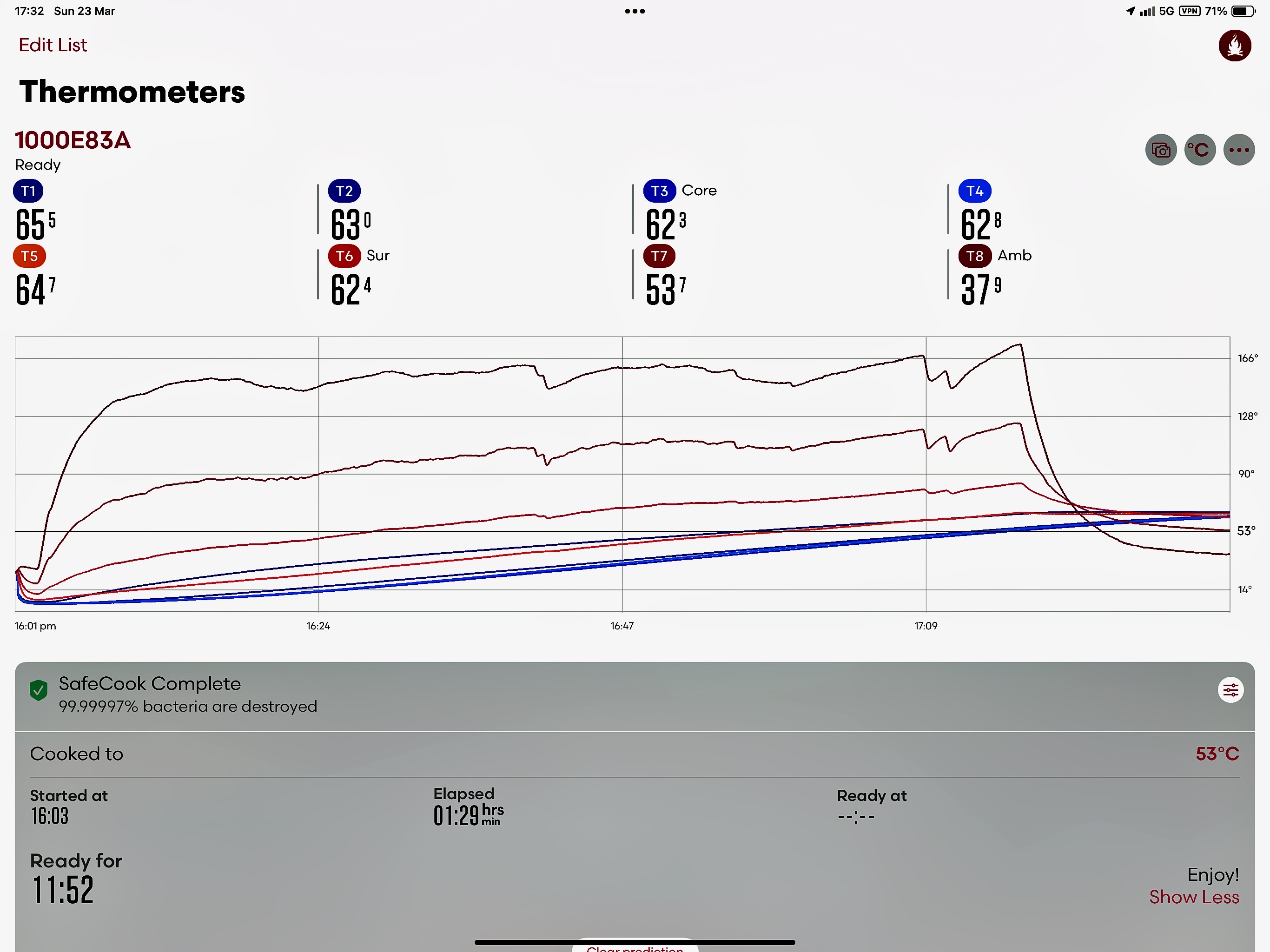
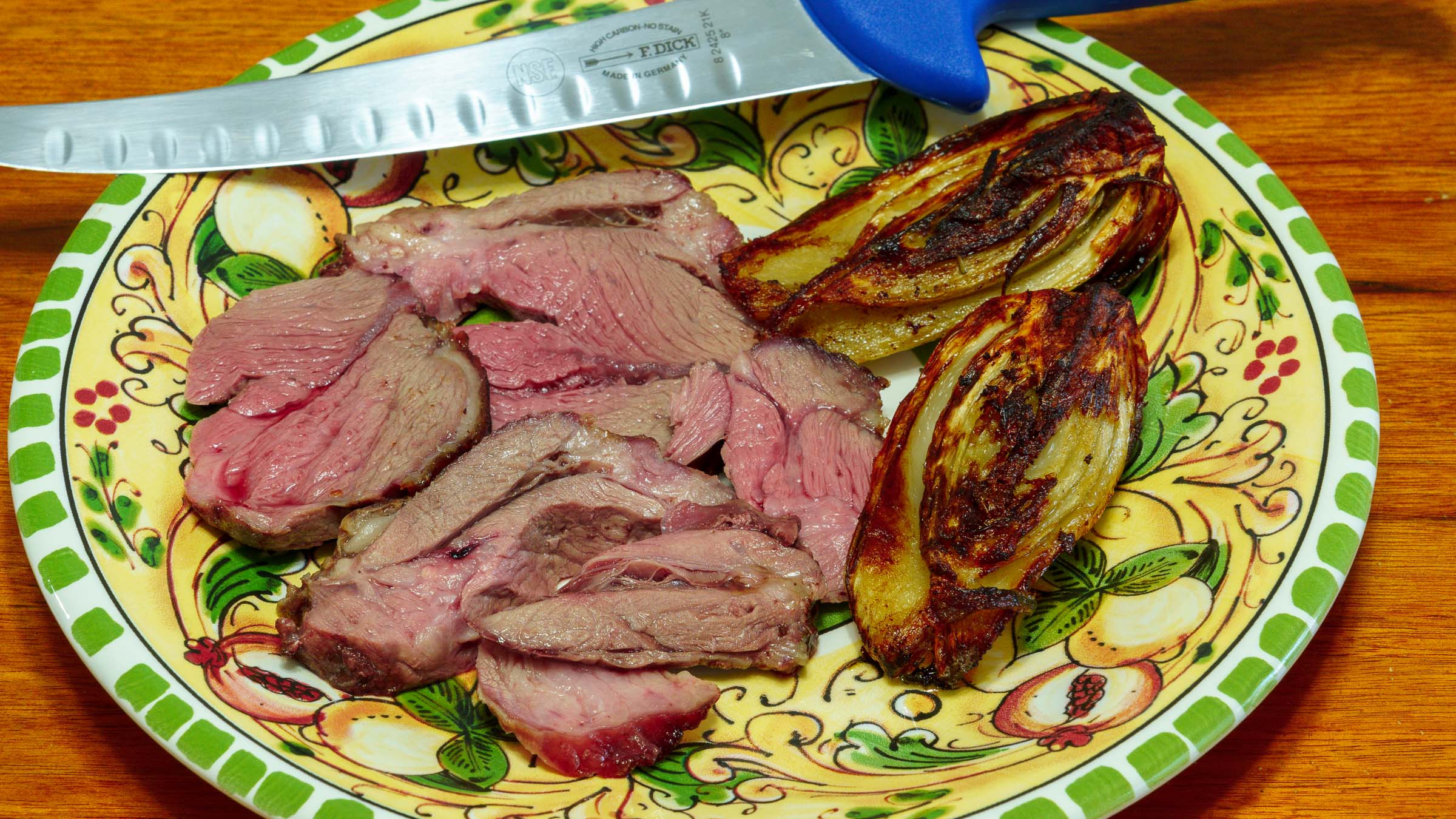
My favourite roast beef is a standing rib roast. The roast beef I cooked tonight was pretty good, but not as good as a standing rib roast.
Photographs
This is a gallery of images. Click on one and scroll through the others.
Sausages for lunch
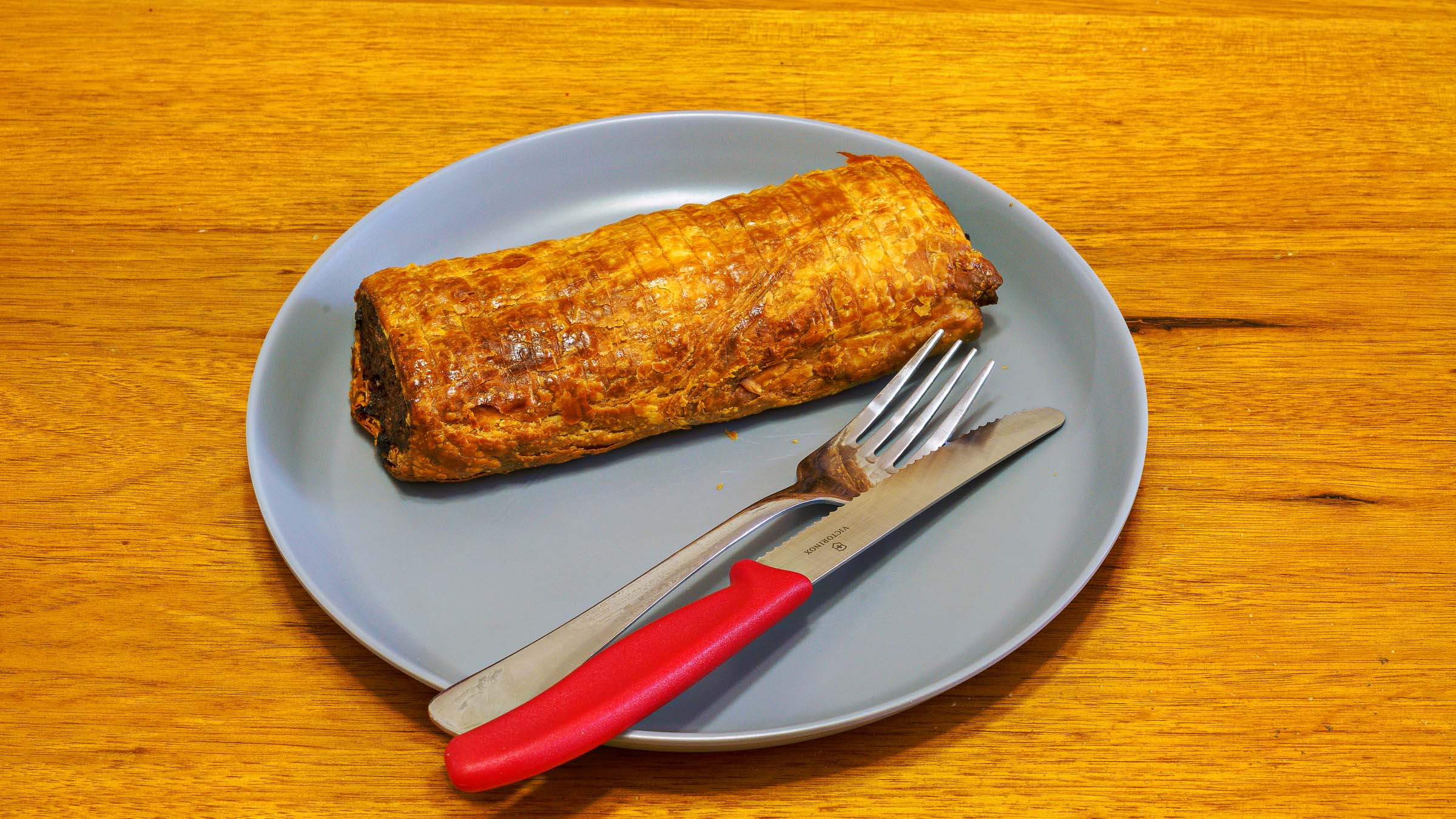
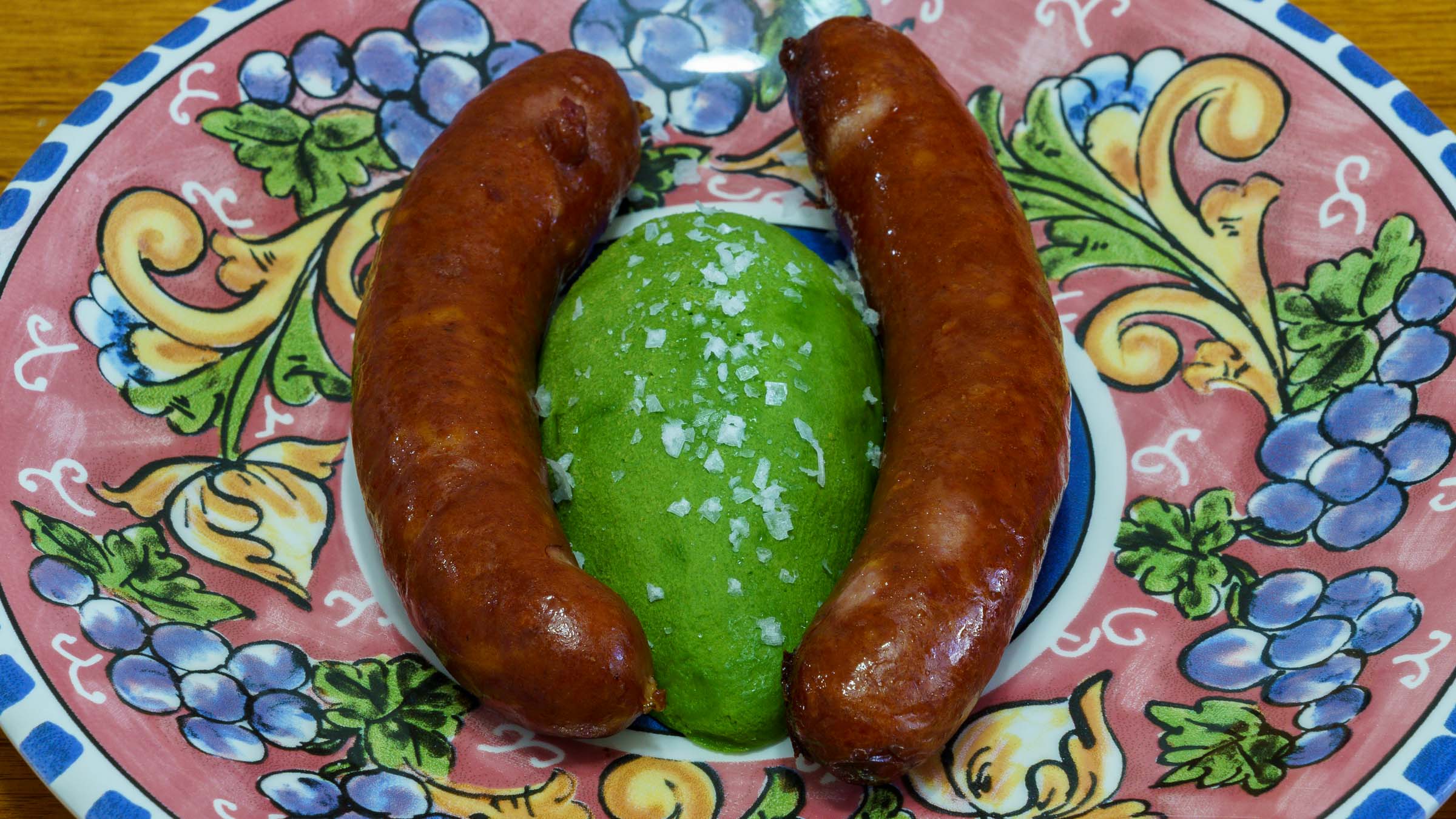
I splurged at lunch and had a couple of cheese kransky snags and a couple of eggs fried in butter. Kransky sausages are made from veal and smoked pork, usually fried or grilled. I bought these snags from my butcher this morning. I heated them on my Weber Q+.
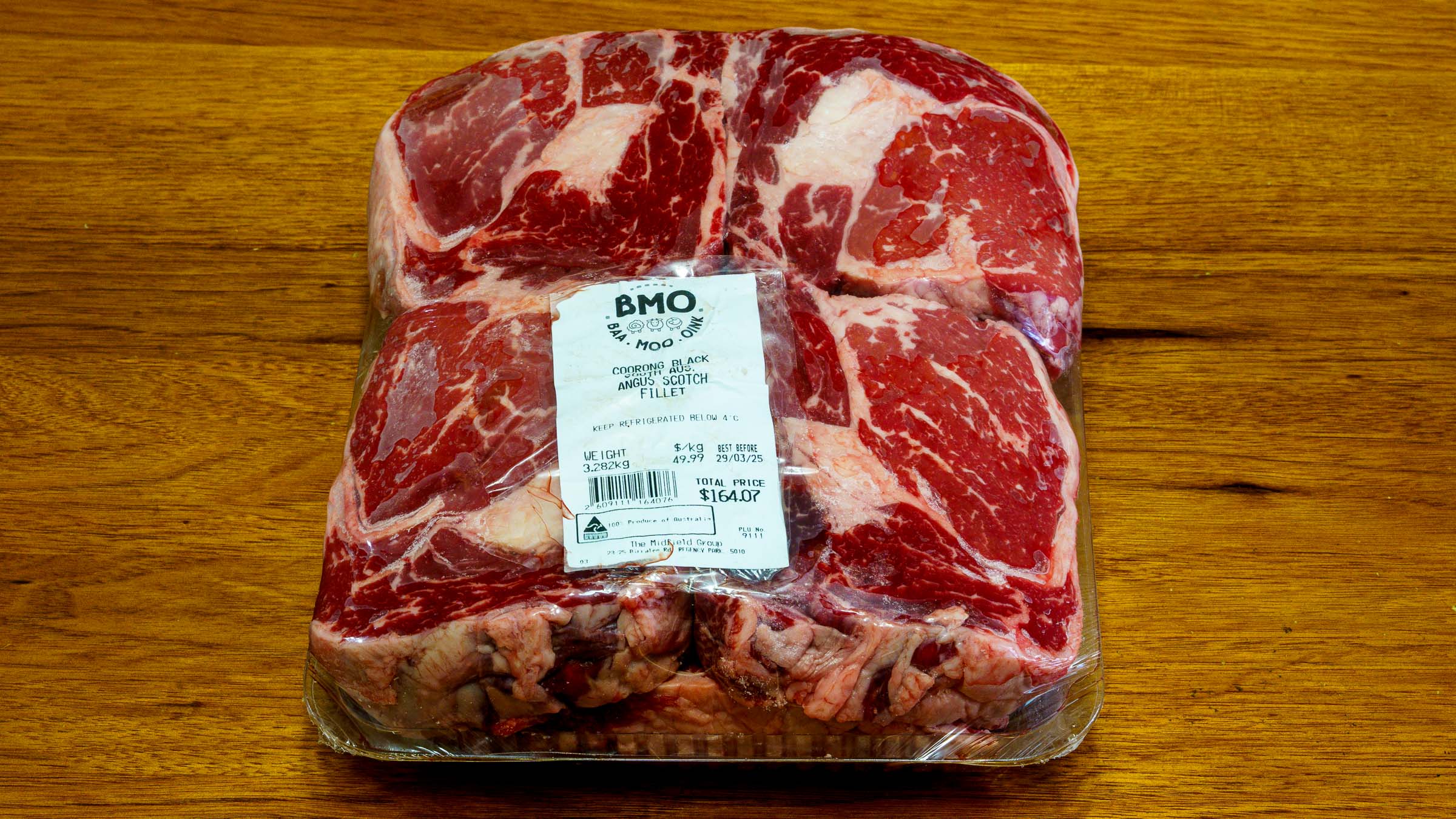
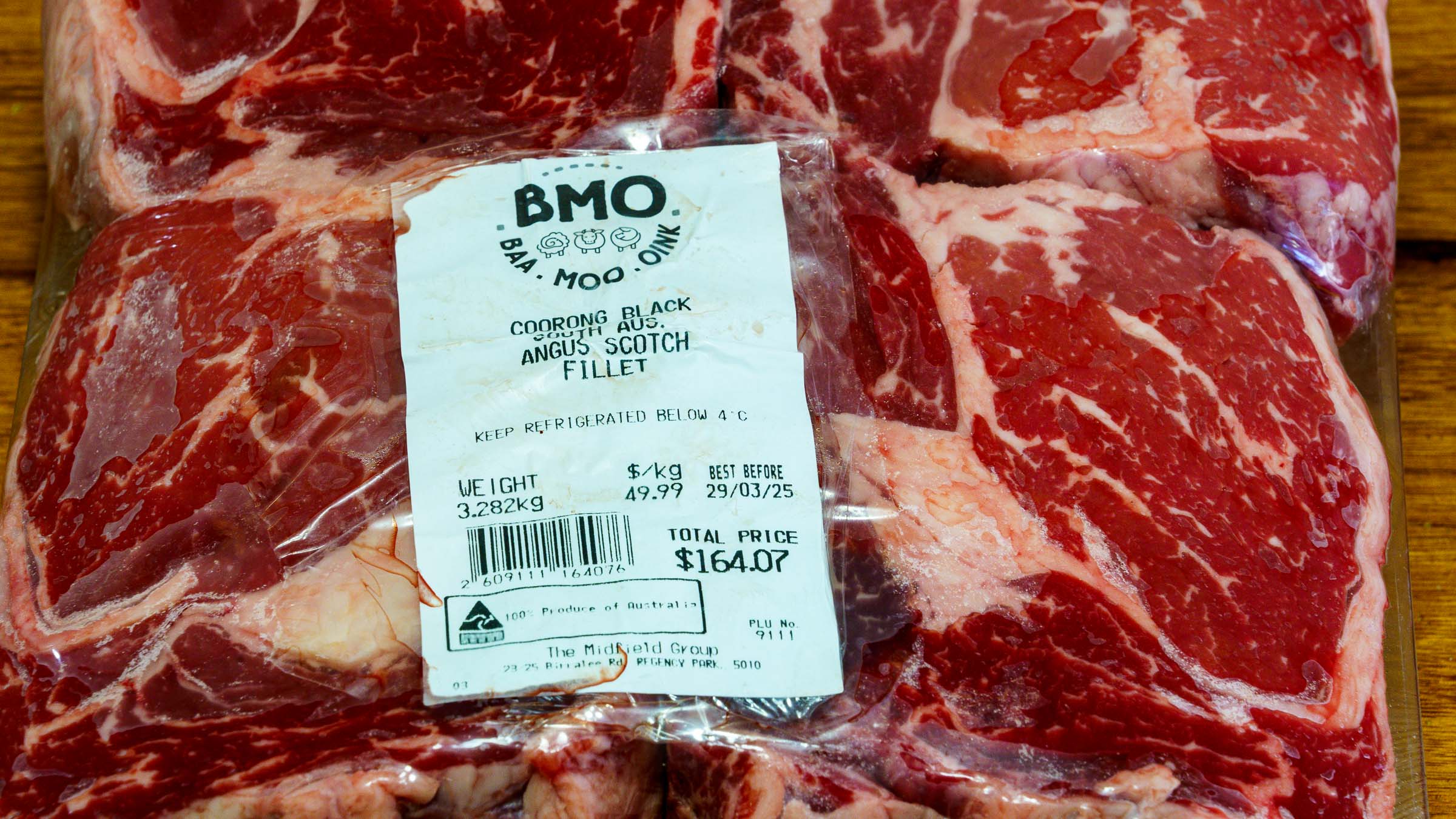
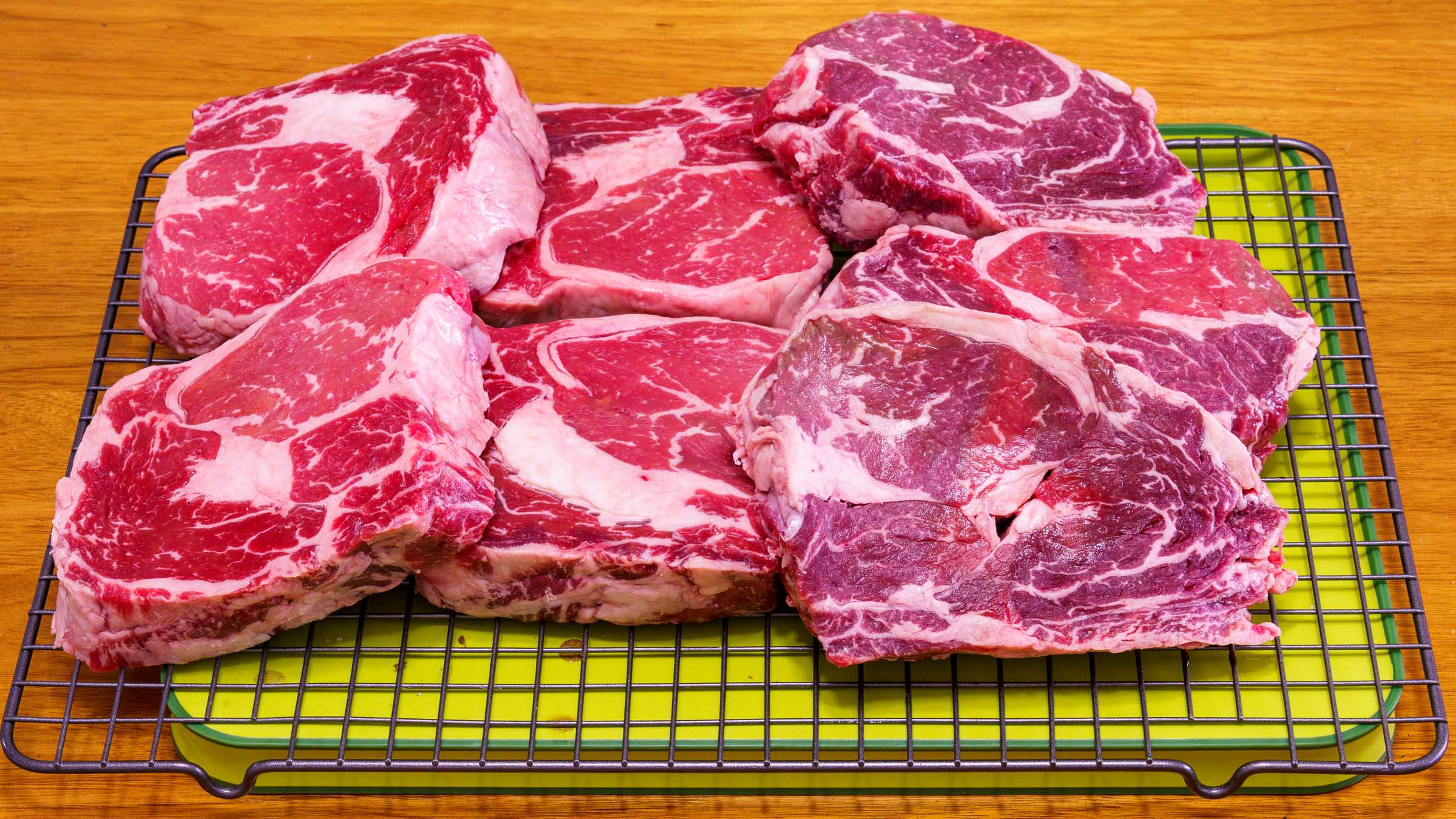
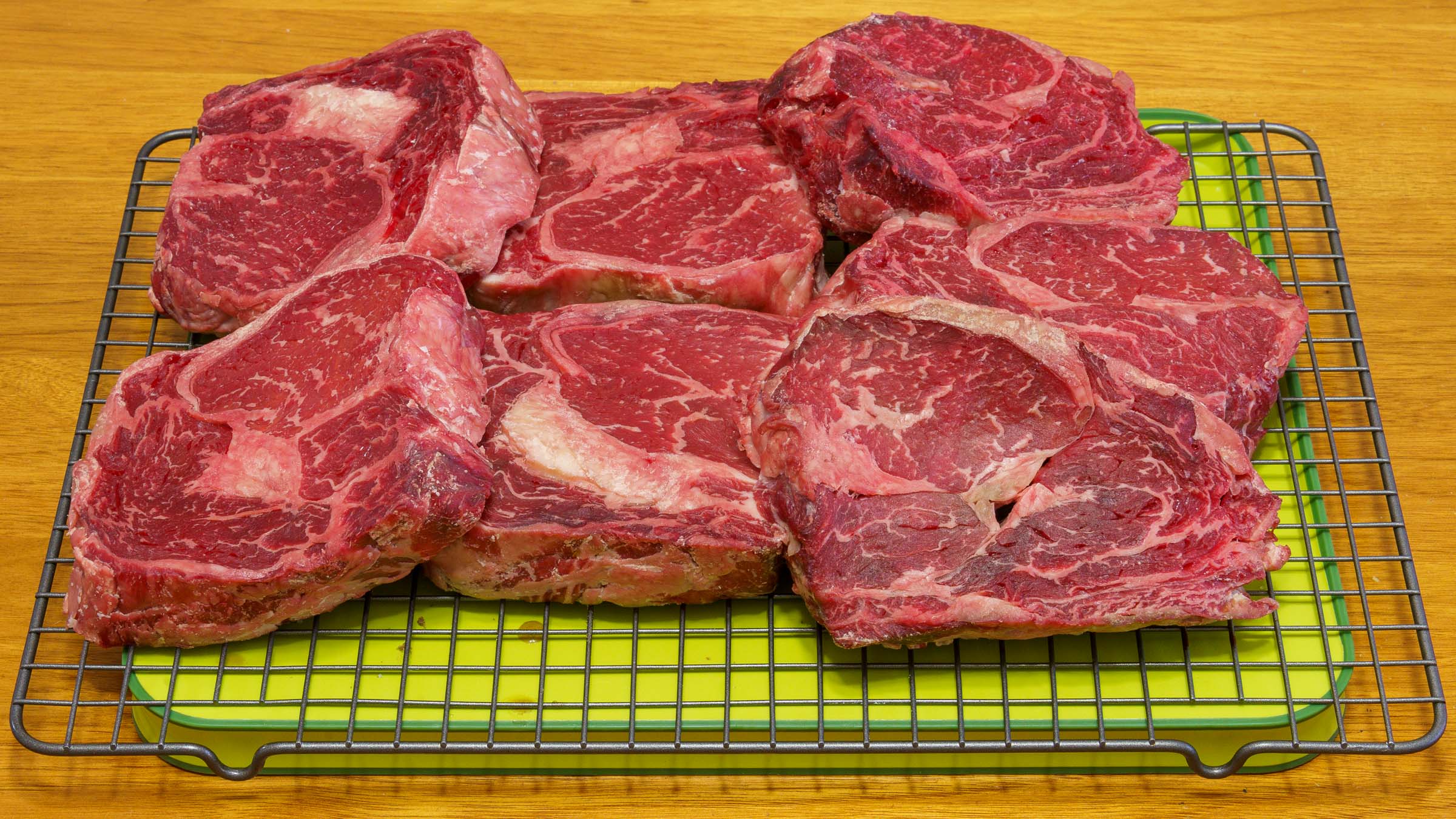
A week or so ago, I bought a lump of beef labelled “economy scotch fillet steak.” It cost about $AUD45. I asked the butcher to cut it into 3 cm slices, and I ended up with five steaks.
From the butcher, each slice weighed about 300 g. The meat costs $AUD29.99/kilogram. I know what some readers are thinking; $AUD30 for a kilogram isn’t cheap. I agree. I can buy chuck or eye round for a lot less. For scotch fillet steak (also known as ribeye steak in North America), it’s possible to buy cheaper quality meat. That said, the upper limit on the cost for a scotch fillet steak can be five or more times the cost I paid for this piece of beef.
I acknowledge that I have a well-paid job and can afford meat at this price. However, I’m conscious that many people cannot afford meat at this price.
While scotch fillet steak is usually tender, cheaper meat can be chewy to tough. A poorly cooked 3 cm steak can be very tough and unpleasant. I think a tough and chewy “economy scotch fillet steak” is poor economy.
Based on the methods available, the best way to approach this was using a water bath and a precision cooker. To save cooking time, I cooked all the steaks at once and refrigerated them in their plastic vacuum-sealed bags. Each day I wanted a steak; I’d pop it into the water bath and heat the steak to 57 °C for about 20 minutes and then sear the meat with a gas torch. Instead of 15 hours of electricity use, I reduced that to about 4 hours and 20 minutes.
I liked this “economy scotch fillet.” When cooked like this, it had a great taste and mouthfeel, and it wasn’t tough.
I agree that $AUD9 a steak isn’t as cheap as $AUD6.50 for 500 g of beef mince, but for me, it means I can eat for less than $20 each day, assuming I’m only eating two meals a day. This includes coffee and carbonated water, too.
If you’re interested in doing this, here is my approach:
Buy meat from a butcher and choose a piece of beef you want.
Ask the butcher to slice the steaks to the thickness you want. This is usually done free of charge.
Remove the steak from the bag and pat dry the surface of the meat with a paper towel (after the dry brining and cooking, the steak weighed a bit over 200 g).
Sear the steak with a gas torch or a hot frypan or over a hot grill.
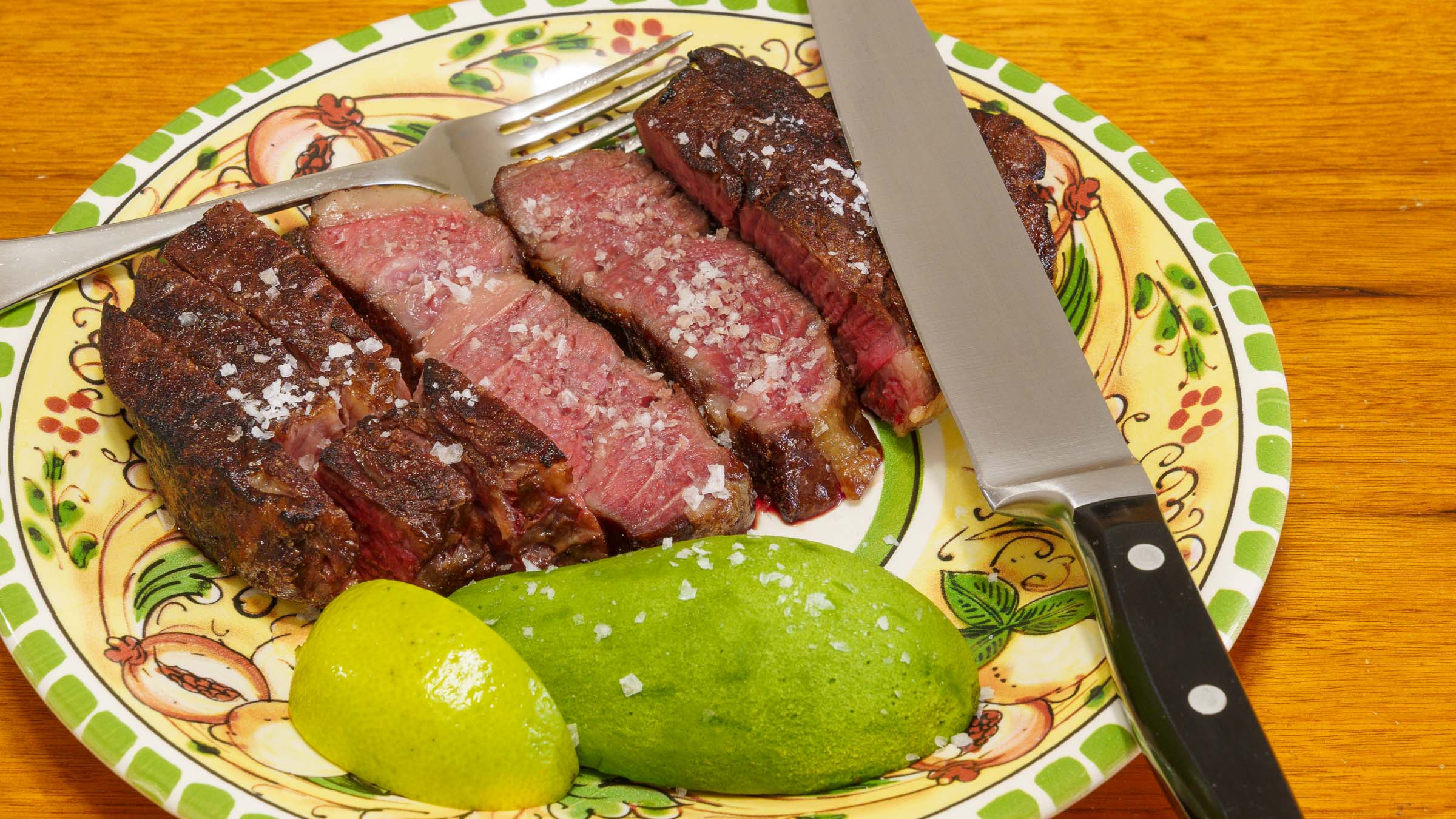
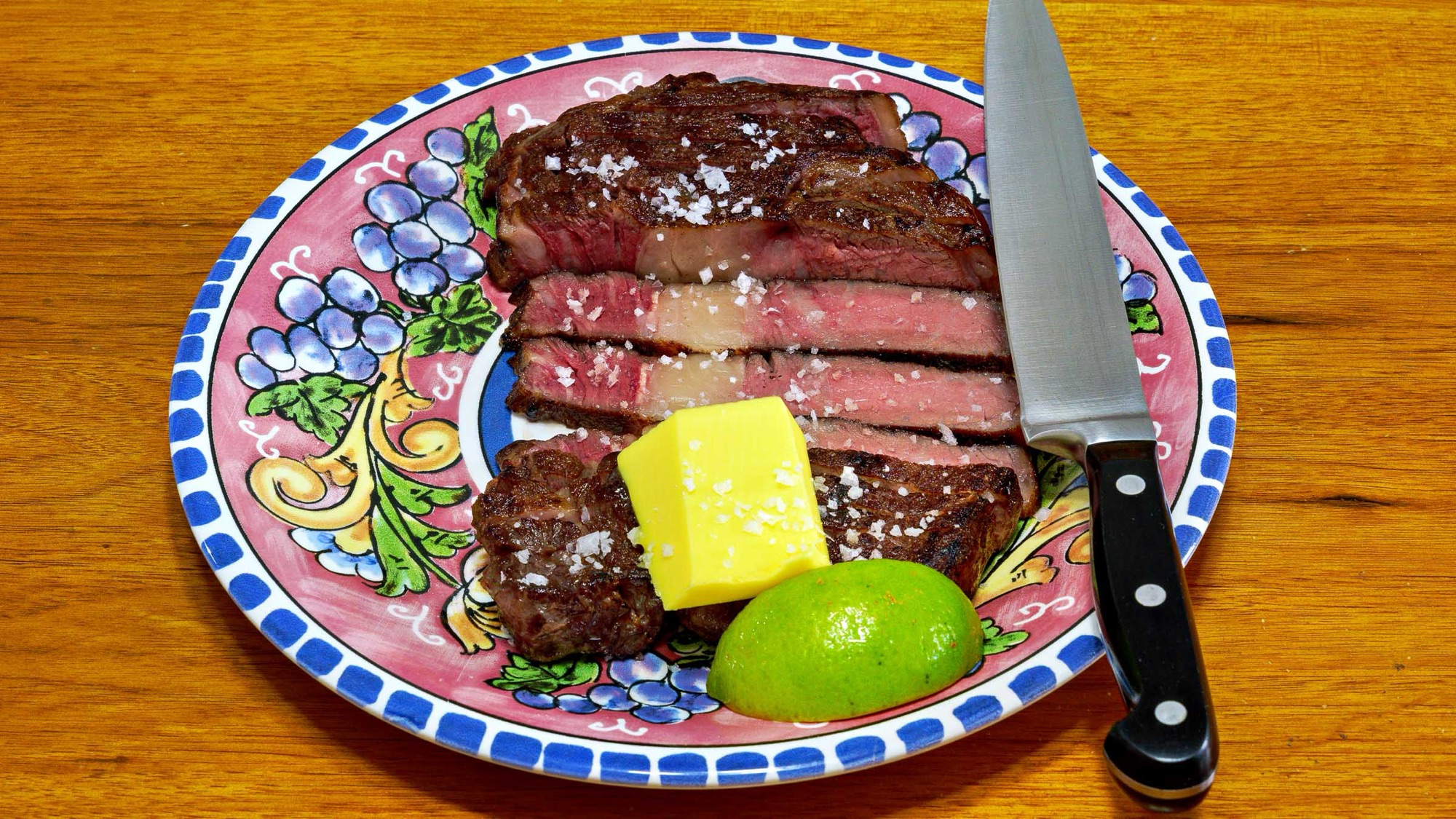
Slice the steak, season the steak, and serve it with some butter.
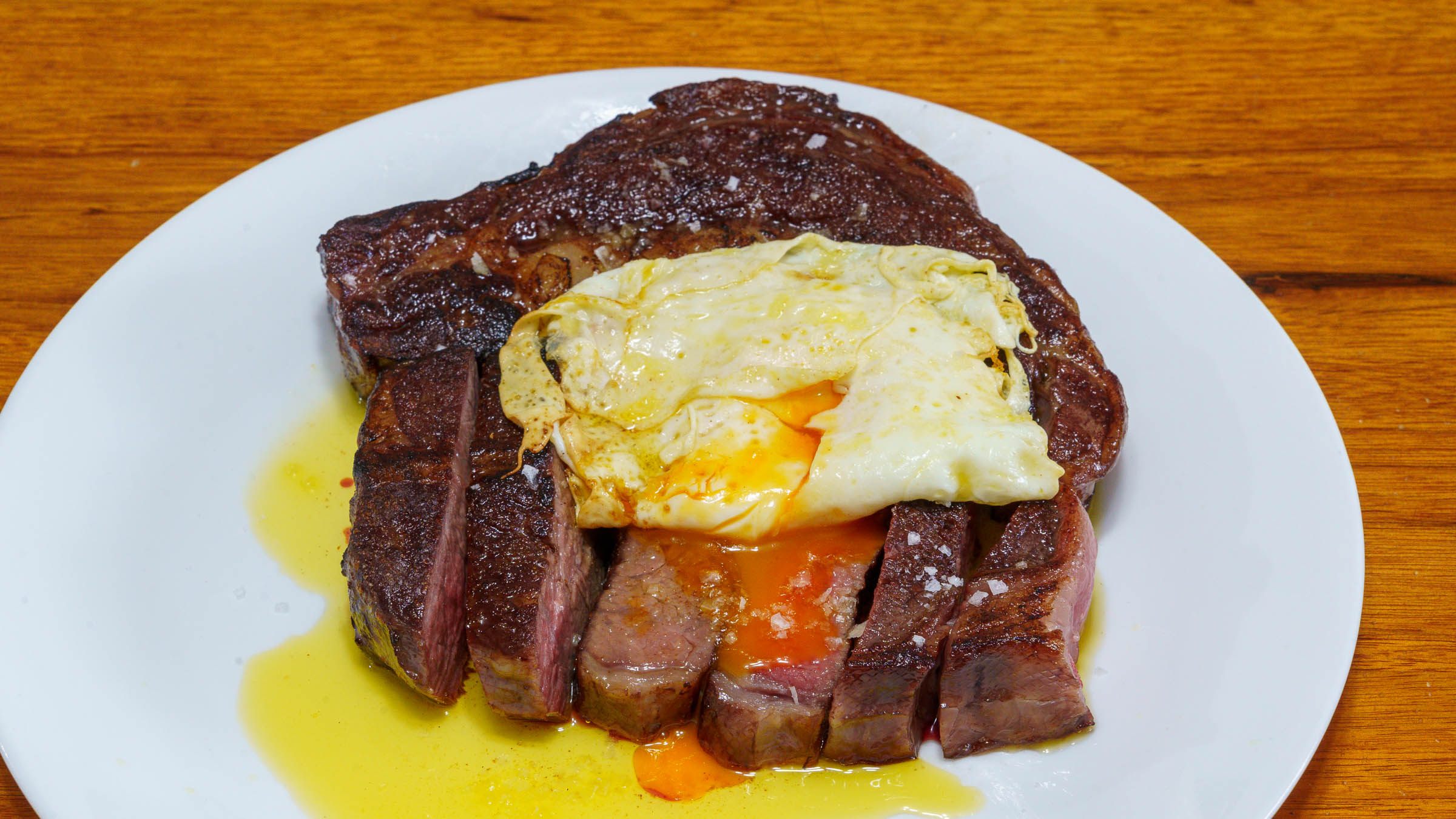
Here are some examples of the steaks I enjoyed from that piece of “economy scotch fillet steak.”
Select one image and then scroll through the gallery.
This week, I had a meeting in Canberra and had to spend a night there.
I’m privileged to be employed and to have my travel and accommodation provided.
The meeting was held at Old Parliament House, so I was accommodated at the Hotel Kurrajong.
The Hotel Kurrajong’s restaurant is named Chifley’s Bar and Grill. It was named after Ben Chifley, the 16th prime minister of Australia. I have no idea if Mr Chifley was fond of a steak and a drink.
On the evening of my arrival, I asked for a table for one and was seated at a table in the middle of the floor.
I asked for the 200-gram tenderloin steak cooked medium rare and the grilled king prawns. I also asked for a béarnaise sauce. After waiting fifteen minutes, the steak arrived with the sauce and plant material that wasn’t mentioned anywhere on the menu. It took me about five minutes to get the attention of a waitstaff member. I asked about the prawns, and after a short wait, I was told they didn’t make it to the notepad. I was offered complimentary accompaniments, which I declined.
The steak was tender and easy to cut with the steak knife. It was bland, though, as was the sauce. The steak was edge-to-edge pink, so I assumed it was cooked in a water bath. Unfortunately, the searing tasted like it was waved in a flame rather than having high heat applied to the surface to get a Maillard reaction. There was no crust. While the steak was tender and easy to chew, it was bland and didn’t have the mouthfeel I hoped for.
The following day at 7 am — after a restless night — I sat at a table near a floor-to-ceiling window. I ordered a cappuccino, a plate of eggs Benedict, and an extra side of grilled bacon. Having been spoiled by the quality of coffee in Adelaide, I was disappointed; the coffee was milky and weak. The eggs, ham, and bacon, though, were good. The breakfast was filling and tasted great. I got through the entire day without eating anything after breakfast.
After thoughts
I’m not a qualified chef, and I’ve never been trained to cook. I’m sure I would not cope with the requirements of working in a restaurant. That said, I prefer cooking and eating my own steak. It tastes better and it’s cheaper.
I need to eat more bacon and eggs and make more Hollandaise sauce.
Home cooked steaks
Compare the restaurant steak with what I cook and eat at home.
I bought this porterhouse steak from my regular butcher as a treat.
Porterhouse (Wagyu)
Wagyu beef is expensive. I don’t think I would ever purchase Wagyu imported from Japan. I’m sure the meat would taste good, but it’s not worth the money.
I chose this piece from the display cabinet because I’m a sucker for nice layer of fat.
On a porterhouse steak, there’s often a band of connective tissue between the fat cap and the muscle meat. You can see some fascial membrane if you look closely. It can be tough and chewy.
The Porterhouse Steak
Anatomy of a Bovine and the Origin of the Porterhouse Steak
Beef cattle are divided into various primal cuts, each offering different textures and flavours. The porterhouse steak is cut from the short loin, a section located in the middle to lower back of the beast. This area includes part of the tenderloin and the top loin, making the porterhouse steak a combination of the tenderloin’s easy chewing and the top loin’s robust flavour. It is distinguished by the “T-bone” that separates these two sections.
International Nomenclature
The porterhouse steak is known by different names in various parts of the world. In the United States and Canada, it retains its original name, “porterhouse.” In the United Kingdom, it may be referred to as a “T-bone” steak, though this can sometimes cause confusion, as a traditional T-bone steak contains a smaller section of the tenderloin compared to the porterhouse. In Italy, it is known as “bistecca alla Fiorentina,” often served with a splash of olive oil and lemon juice.
Ways to Cook a Porterhouse Steak
Cooking a porterhouse steak requires a few key steps:
Seasoning: Start by generously seasoning the steak with salt. For extra flavour, consider a marinade or dry rub with garlic, rosemary, or thyme.
Preheating: Preheat your grill or pan until it is hot. A high heat will sear the outside, creating a delicious crust.
Cooking: Sear the steak on each side, then move it to a cooler part of the grill or reduce the heat in the pan. Cook to your desired doneness, using a meat thermometer to check the internal temperature.
Resting: Let the steak rest for at least 5 minutes before slicing.
Selecting a Porterhouse Steak at the Butcher Shop
When choosing a porterhouse steak, look for the following qualities:
Marbling: Fine streaks of fat within the meat, known as marbling, enhance flavour and tenderness. This is guaranteed with Wagyu beef.
Thickness: Opt for a steak that is at least 3 centimetres thick. Thicker cuts are less likely to overcook and offer a better texture. My piece of meat wasn’t as thick as I’d normally like it, but a thicker steak would have cost considerably more.
Colour: The meat should be a bright, cherry-red colour, indicating freshness. The fat should be a creamy white colour.
Nutritional Value of a Porterhouse Steak
Porterhouse steak is a rich source of nutrients. Here is a breakdown of its nutritional content per 100 grams:
Fats: Approximately 20 grams. This includes both saturated and unsaturated fats.
Protein: Around 28 grams.
Carbohydrates: Virtually none. Steak is a low-carbohydrate food.
Premarket Processes
Before reaching the consumer, porterhouse steaks undergo several premarket processes:
Ageing: Steaks may be dry-aged or wet-aged to enhance flavour and tenderness. Dry-aging involves hanging the meat in a controlled environment, allowing natural enzymes to break down muscle fibres. Wet-aging is done by vacuum-sealing the meat and refrigerating it.
Inspection: In Australia, meat inspection is mandatory to ensure safety and quality. Inspectors check for signs of disease and contamination.
Packaging: The meat is then packaged, often vacuum-sealed to extend shelf life and maintain freshness.
The porterhouse steak is a cut of beef that offers a combination of tenderness and flavour. You can enjoy a satisfying meal by selecting a high-quality steak, cooking it with care, and understanding its nutritional benefits.
Serve the steak with a wedge of lime, some flaky salt, and some butter.
Thoughts on the meal
I don’t know that Wagyu beef is worth the expense. It was a nice piece of steak. It tasted good and it was tender and juicy.
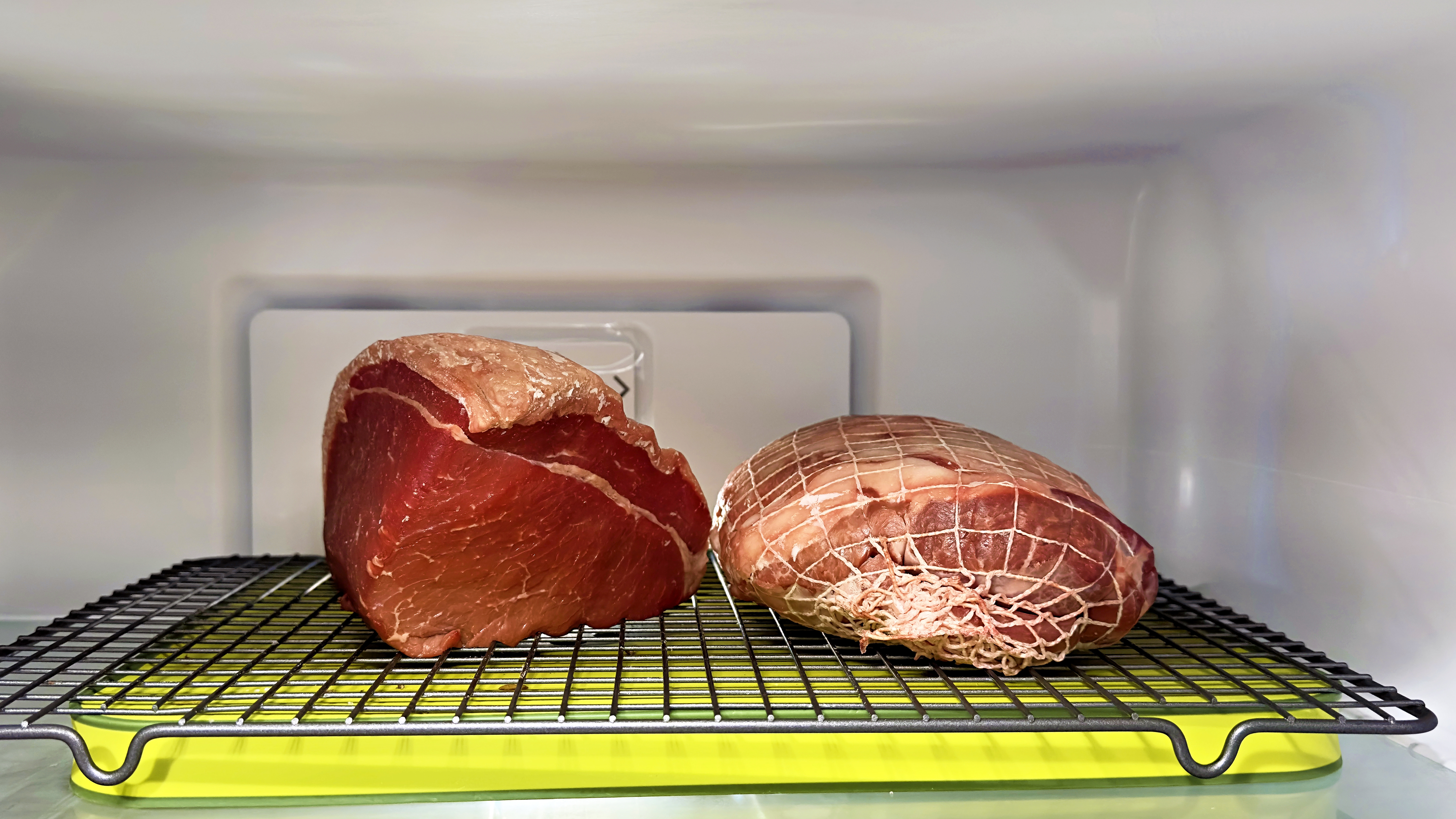
In the dry brining photographs, you’ll see that I also purchased some economy scotch fillet steak. The slices are 3 cm thick. For about $AUD45, that works out to $AUD9 a slice. I’ll see how this works out.
Photographs
This is a gallery of photographs. Click on one and scroll through the gallery.
Dolphins
I was walking this morning and from the Henley Beach Jetty I spotted a pair of dolphins. Sadly in the NRL, South Sydney defeated the Dolphins on Friday evening.
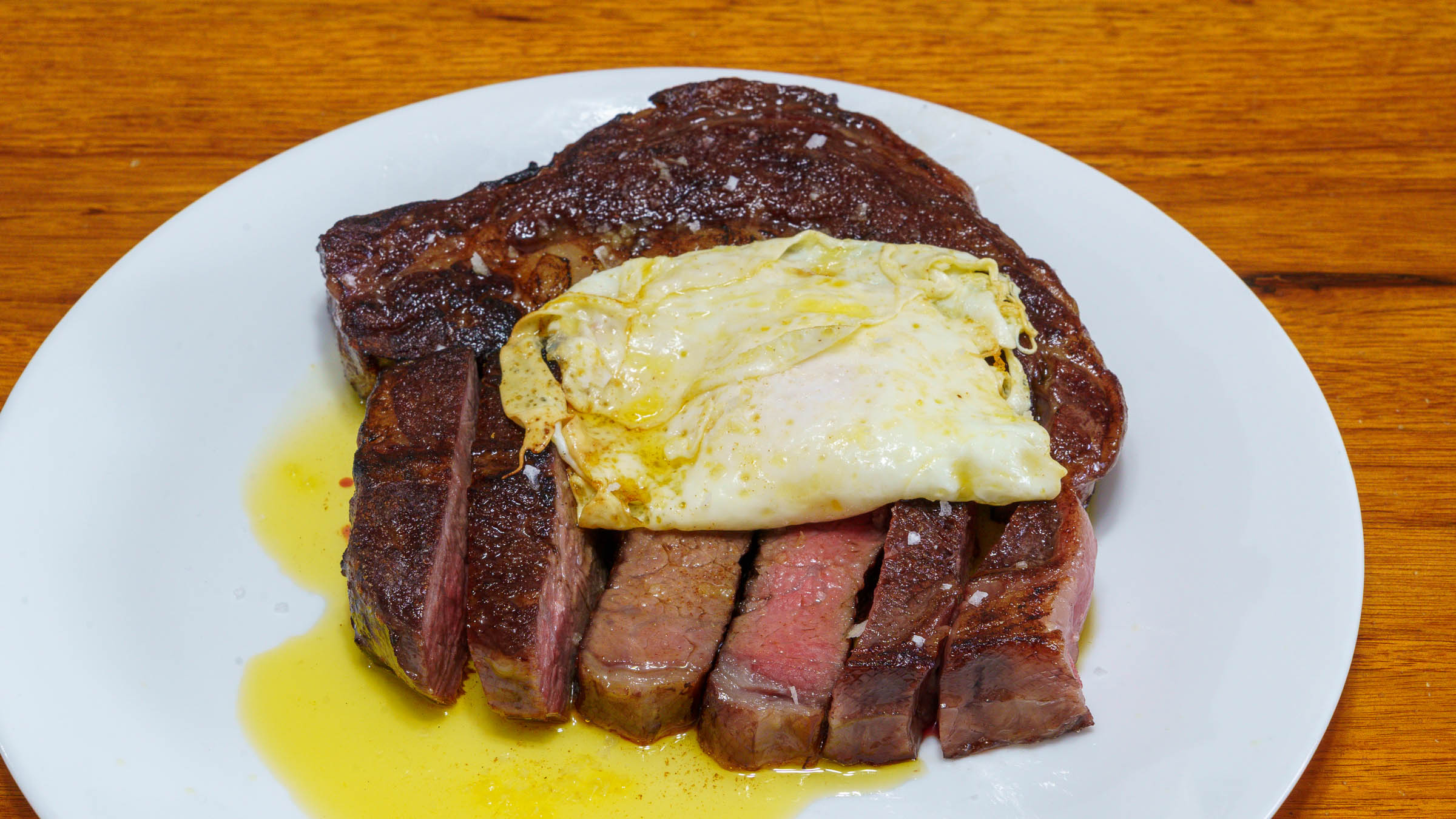
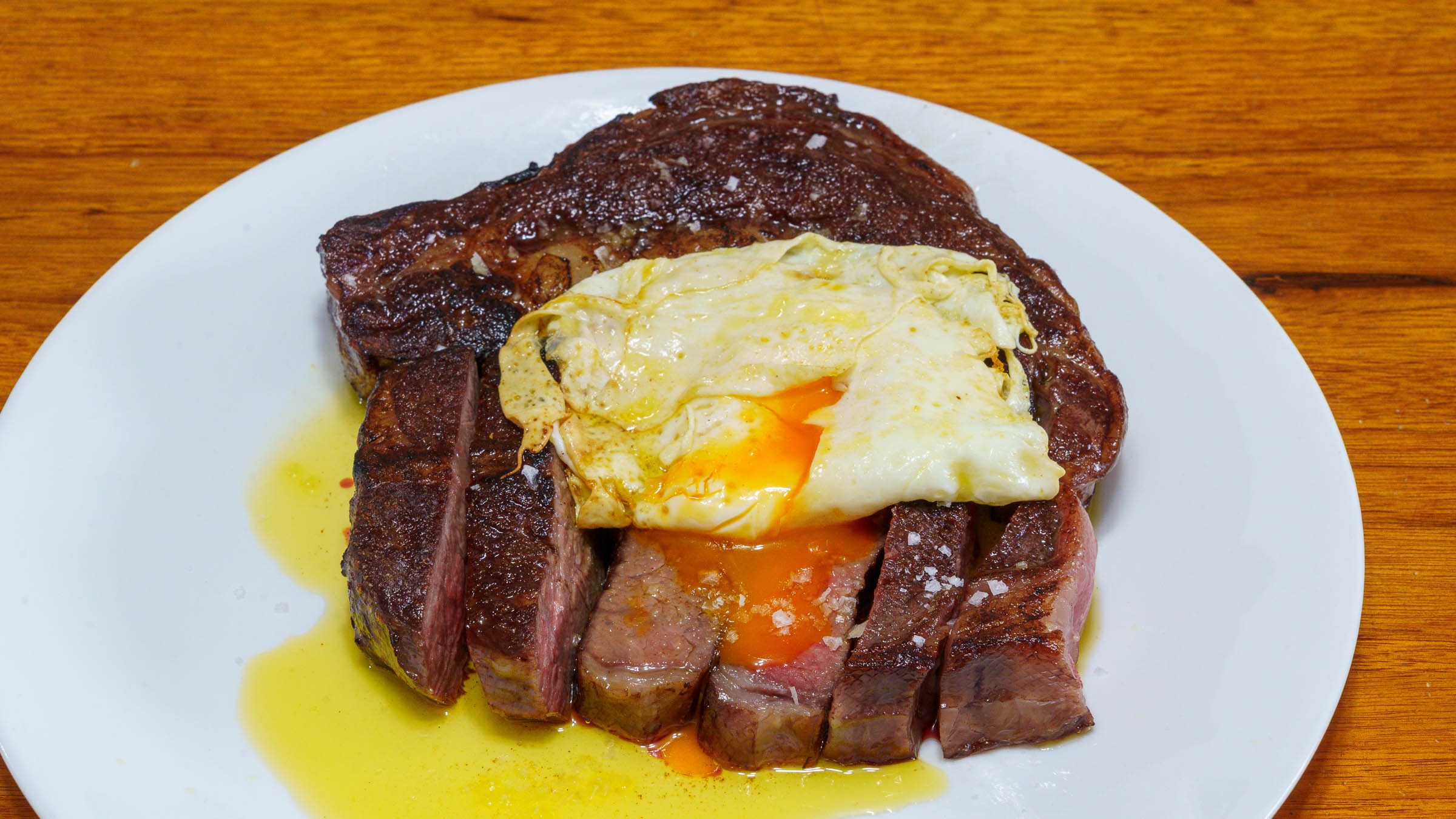
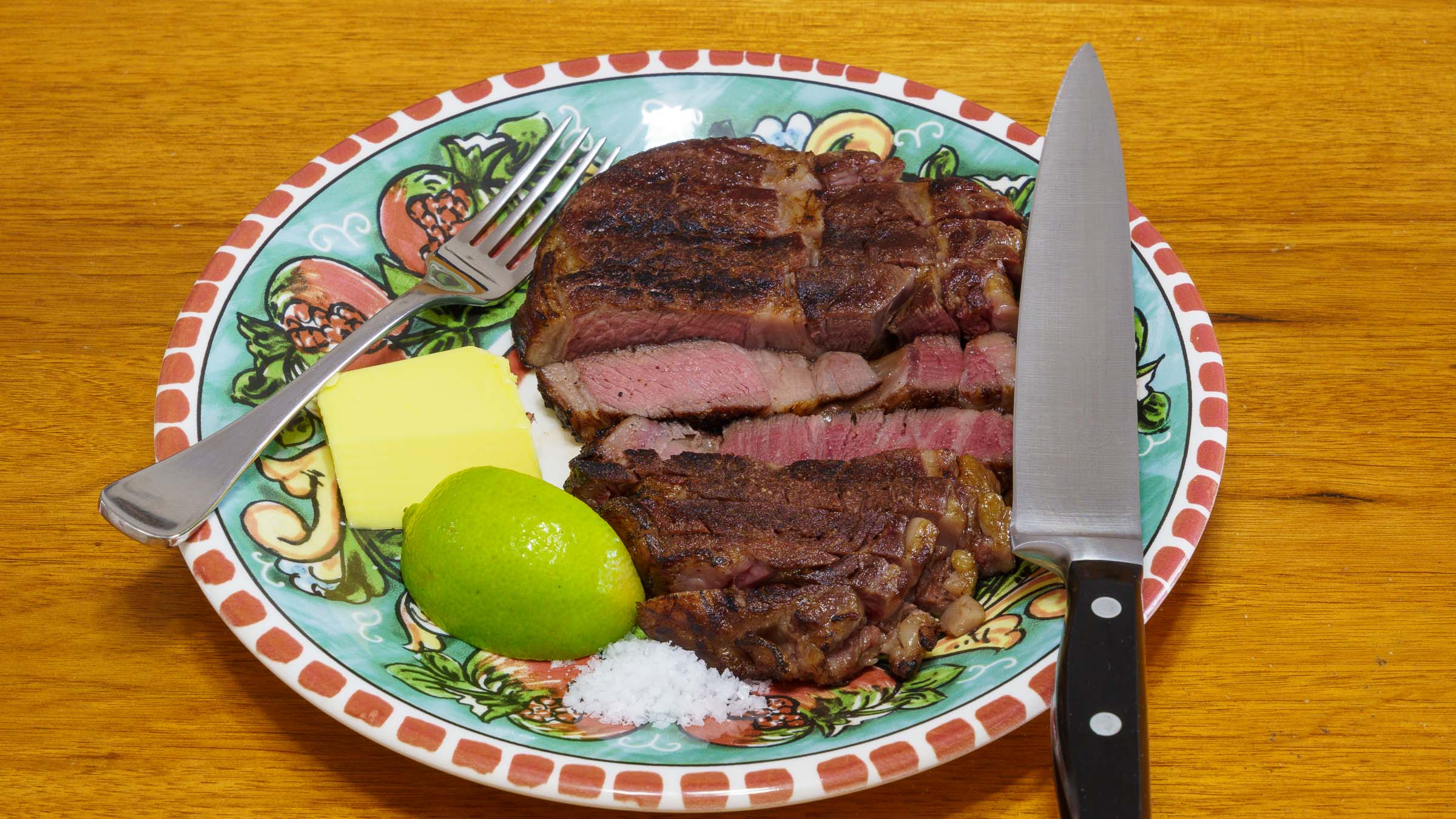
I bought this big juicy bone-in ribeye steak from a local butcher. It was the smallest steak in the display.
Weighing 708 grams (1.56 pounds), including the bone, I thought I could enjoy the deckle meat for tea and keep the fillet portion for cold cuts at lunch.
Recipe
Ingredients
Bone-in ribeye steak
Salt
Equipment
Vacuum chamber
Water bath
Precision cooker
Gas torch
Instructions
Season the steak generously with salt.
Put the steak on a rack, uncovered, and refrigerate overnight.
Place the steak into a vacuum bag and seal it.
Cook the steak for four hours at 57 °C (135 °F) in the water bath.
Remove the meat from the bag and dry the surfaces of the meat with kitchen paper.
Put the fillet meat into a container and put it into the refrigerator. When it’s cold, this meat slices beautifully. Eaten cold, with a little extra salt, it is delicious.
Serve with freshly ground black peppercorns, flaky salt and butter.
A squeeze from a wedge of lime also adds a lovely tart tang to the tongue while enjoying the meat.
Thoughts on the meal
There’s something satisfying about a thick, juicy steak. I appreciate that dry brining the meat helps it maintain a firm texture instead of becoming floppy while still keeping it juicy on the inside. When you squeeze the cooked meat, you can see the delicious juices oozing out.
I like the juicy, tasty, and fatty deckle meat (which is the spinalis muscle).
I enjoy gnawing and sucking on the bone of a bone-in ribeye steak. I prefer the shorter bones; to me, having a long tomahawk steak with an entire rib just feels like showing off and doesn’t serve a practical purpose.
The spinalis muscle is a component of the erector spinæ group, which plays a role in maintaining posture and enables the extension and lateral flexion of the spine. This muscle is the most medial of the erector spinæ muscles and extends along the spine, from the thoracic vertebrae to the cervical vertebrae.
Anatomy
Origin: The spinalis muscle originates from the spinous processes of the thoracic vertebrae and sometimes the last cervical vertebra.
Insertion: It inserts into the spinous processes of the cervical vertebrae.
Parts: The spinalis muscle can be divided into two parts:
Spinalis thoracis: Attaches to the thoracic vertebral spinous processes.
Spinalis cervicis: Continues from the thoracic part and attaches to the cervical vertebral spinous processes.
Function
Extension: The spinalis muscle helps extend the thoracic vertebral column and the neck.
Stabilisation: It plays a role in stabilising the vertebral column during movement.
Meat-to-Fat Ratio
The meat-to-fat ratio of the spinalis muscle in bovines can vary, but it is generally considered to be a well-marbled muscle with a higher fat content compared to other muscles. This marbling contributes to its tenderness and flavour. However, specific ratios can depend on factors such as the breed, diet, and overall health of the animal.
Questions for readers
What is your favourite part of a scotch fillet steak (also known as a ribeye steak in North America)? For a bone-in ribeye steak, do you like to gnaw and suck on the bone with a little added salt?
Do you usually eat a steak in one meal or spread it over several?
Do you like to think about the structure and function of the meat you eat?
Photographs
This is a gallery of images. Click on one and then scroll through them.