Last week on the Lunchbox Envy podcast, the theme was spreads. The hosts made disparaging comments about an Australian food product.
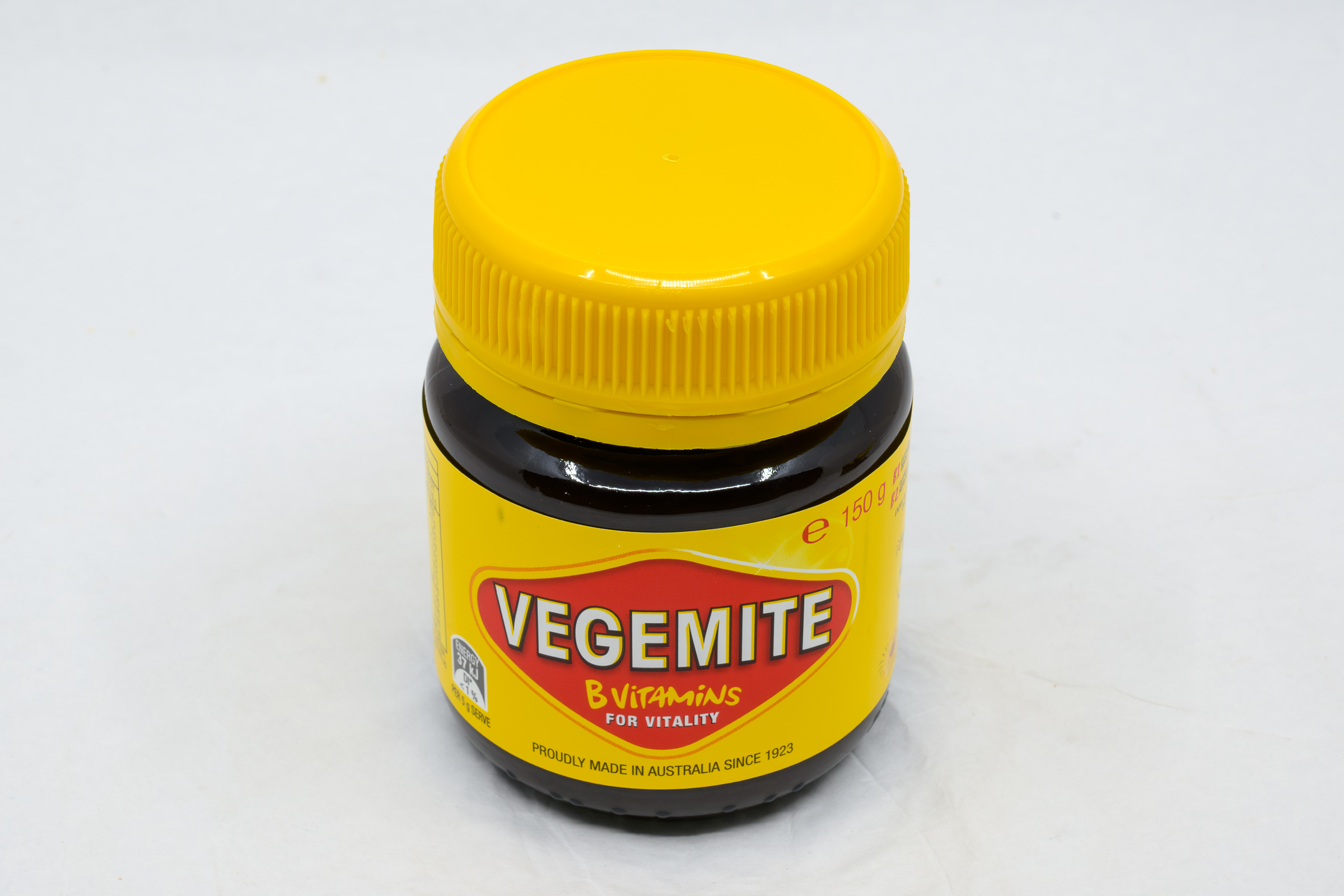
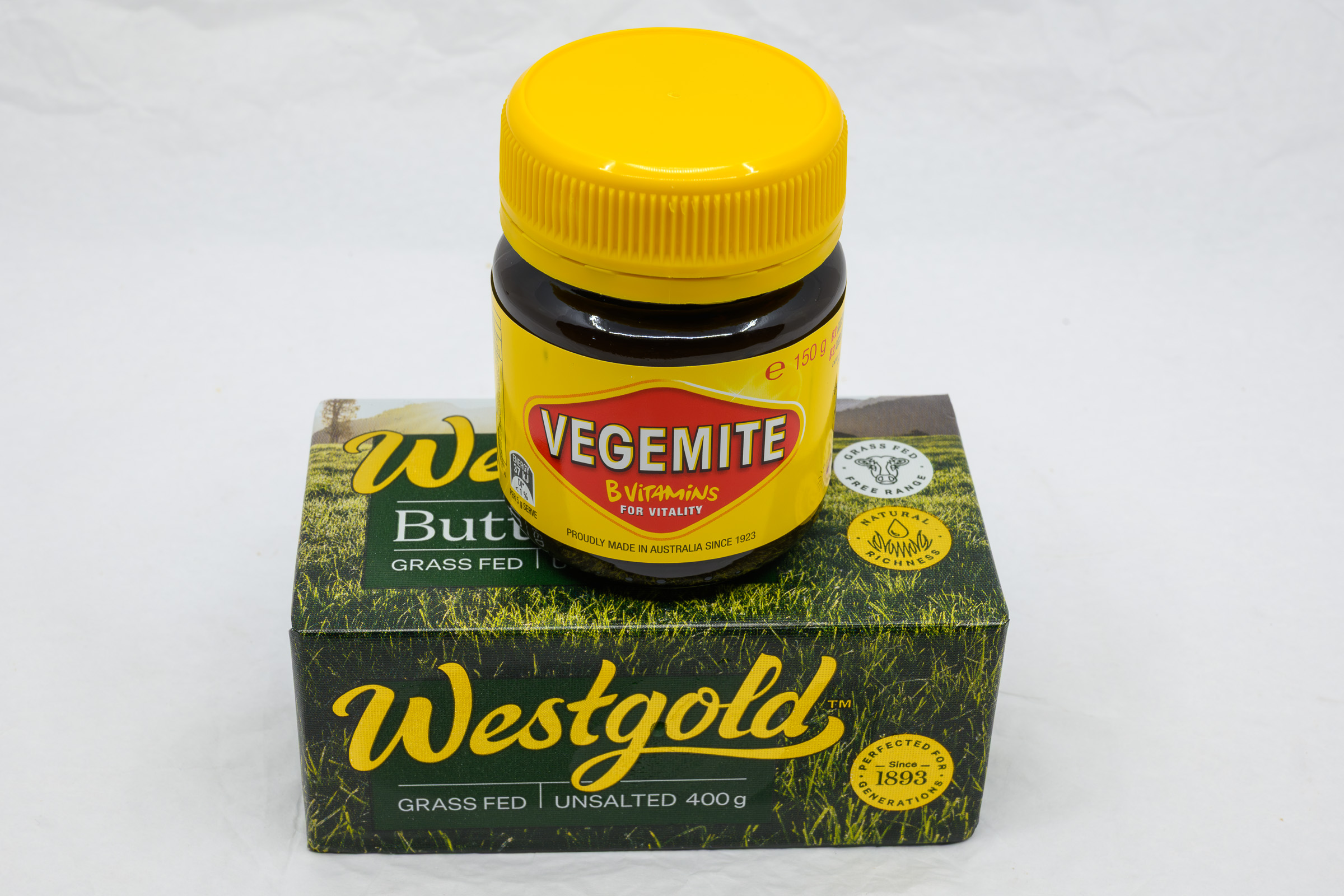
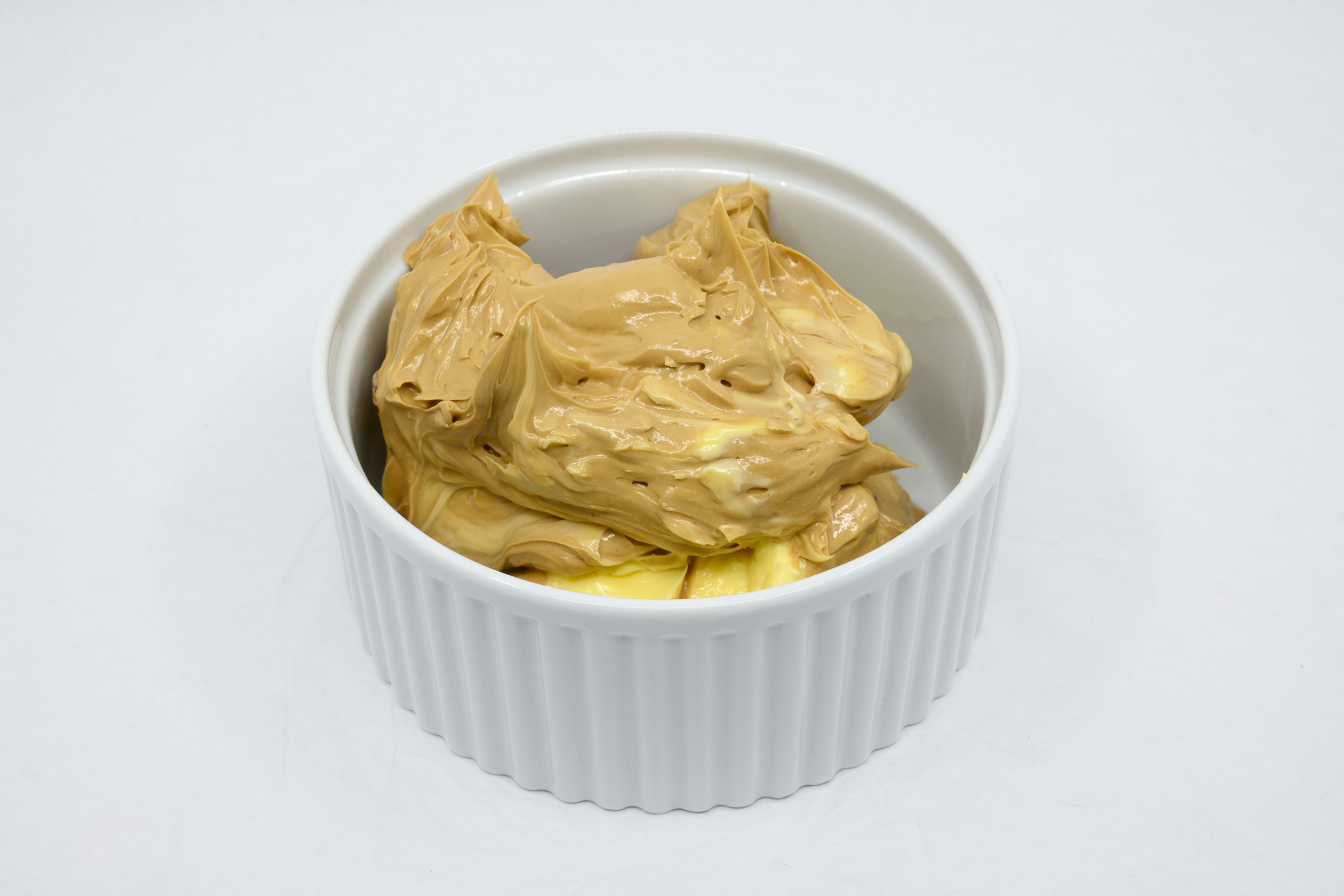
It inspired me to make whipped Vegemite[i] butter using products from Australia and New Zealand.
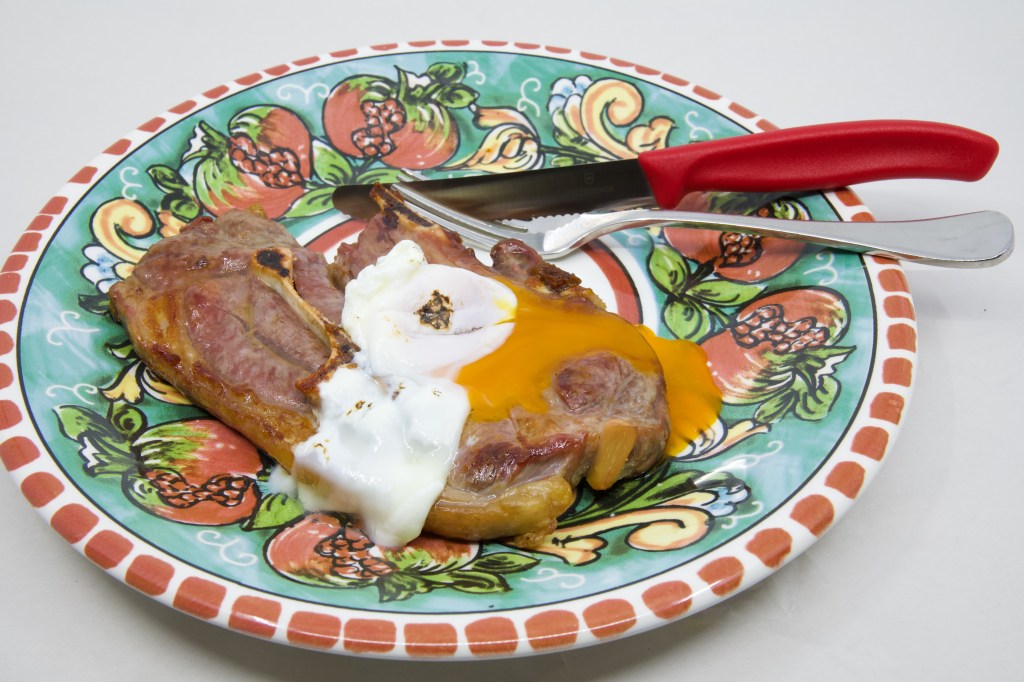
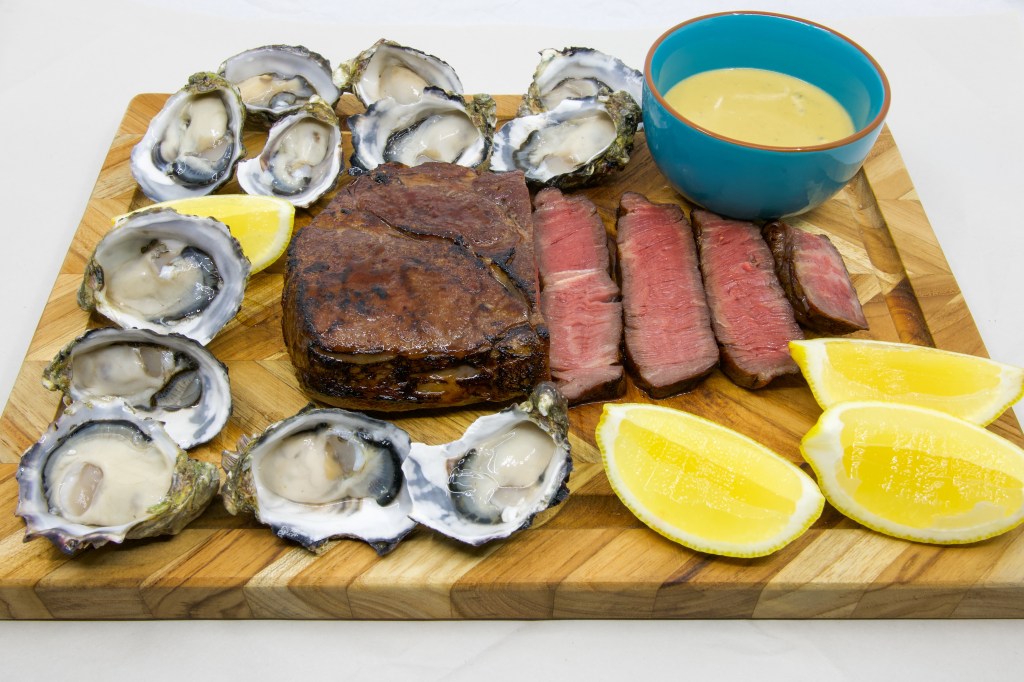
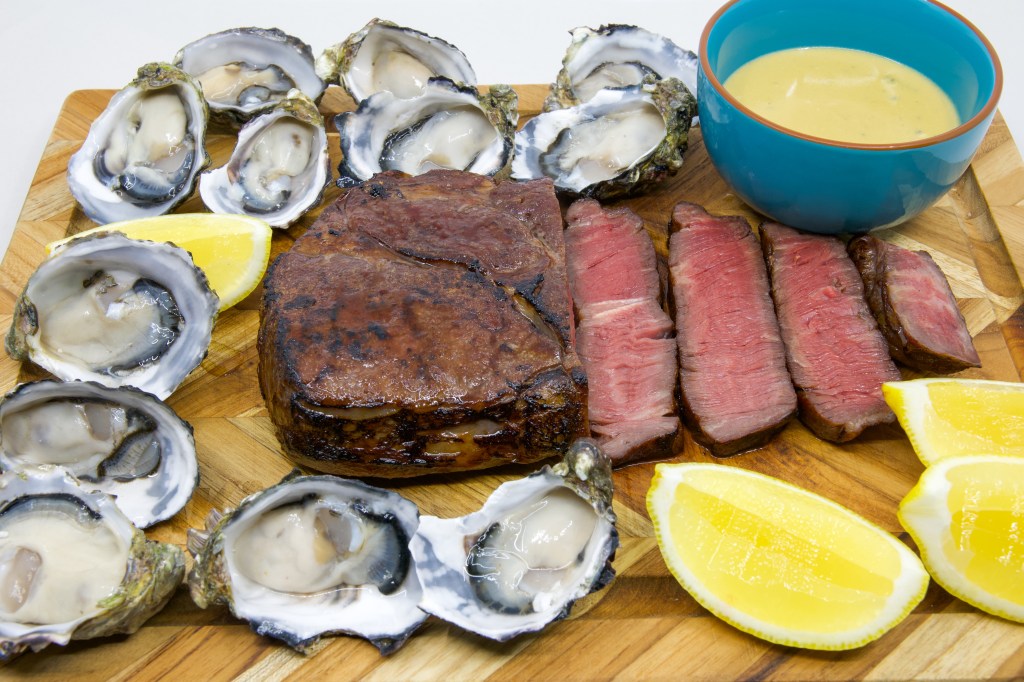
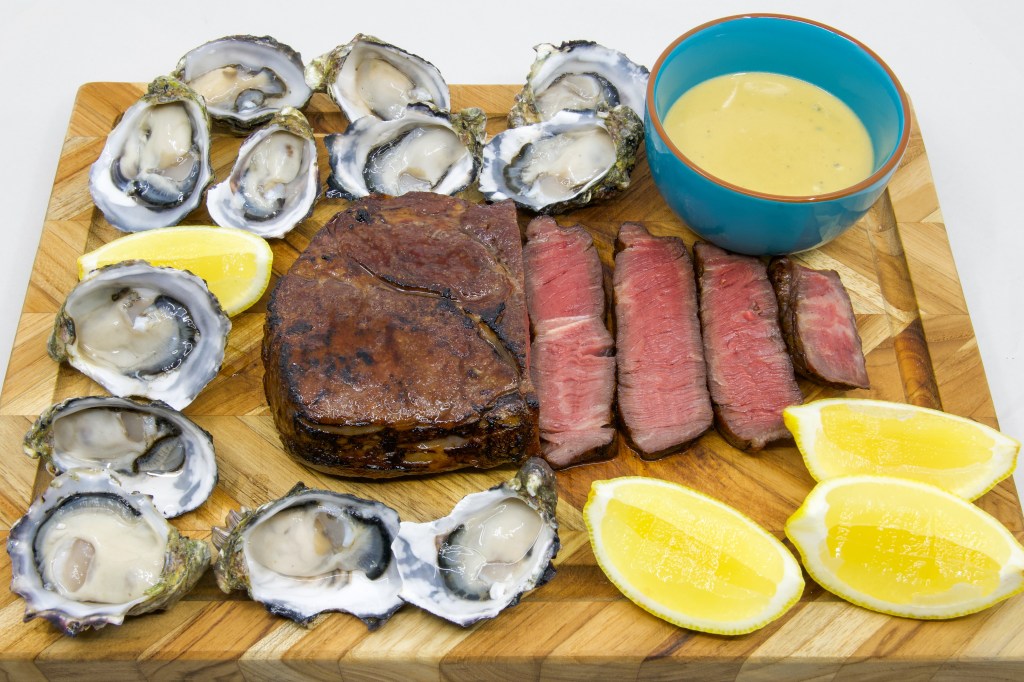
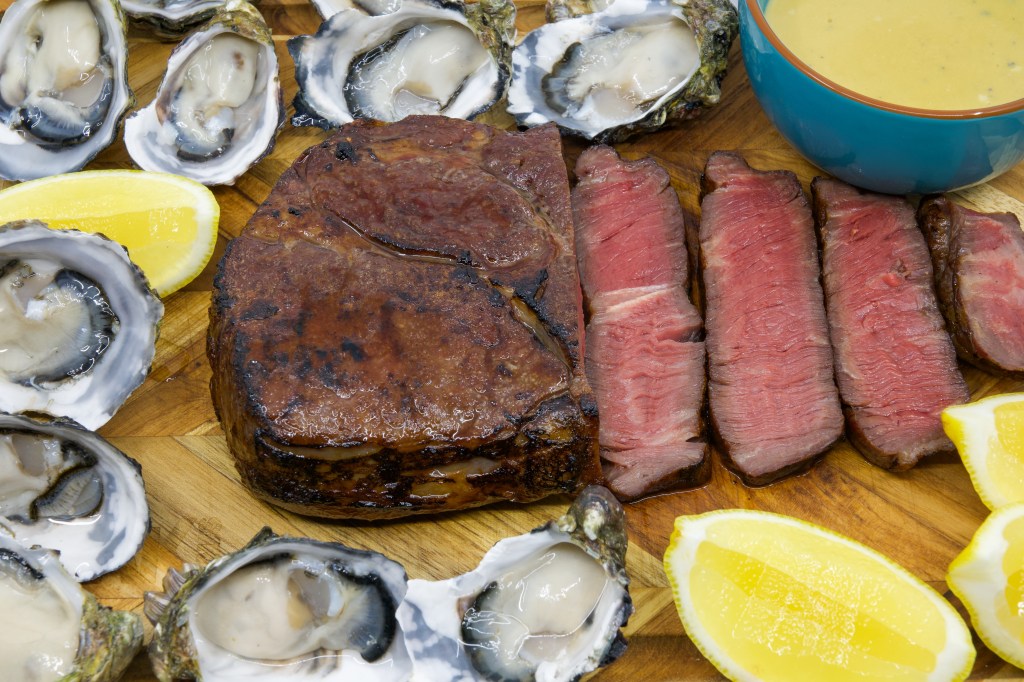
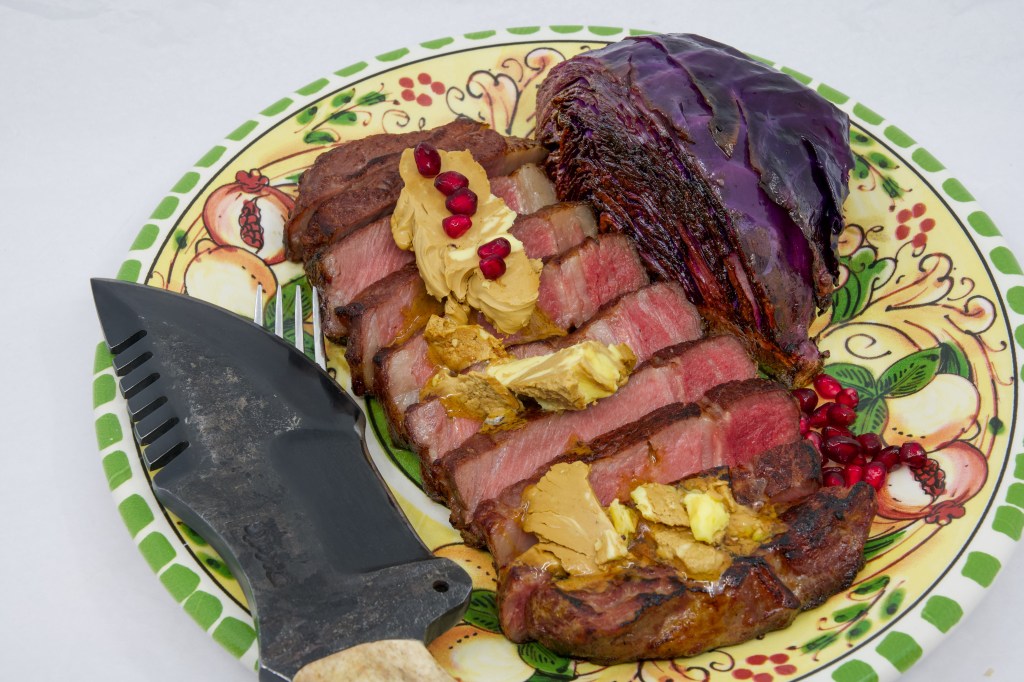
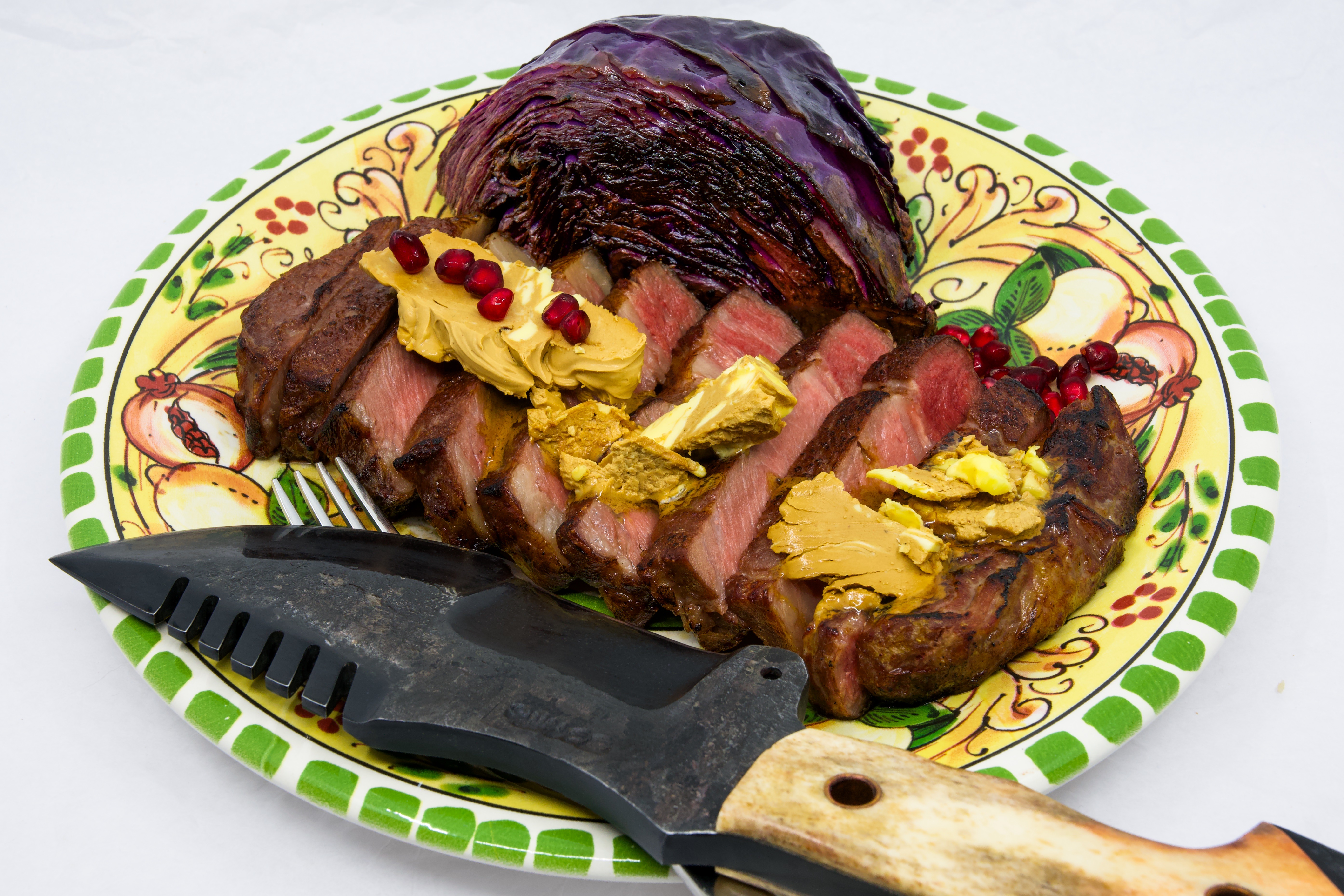
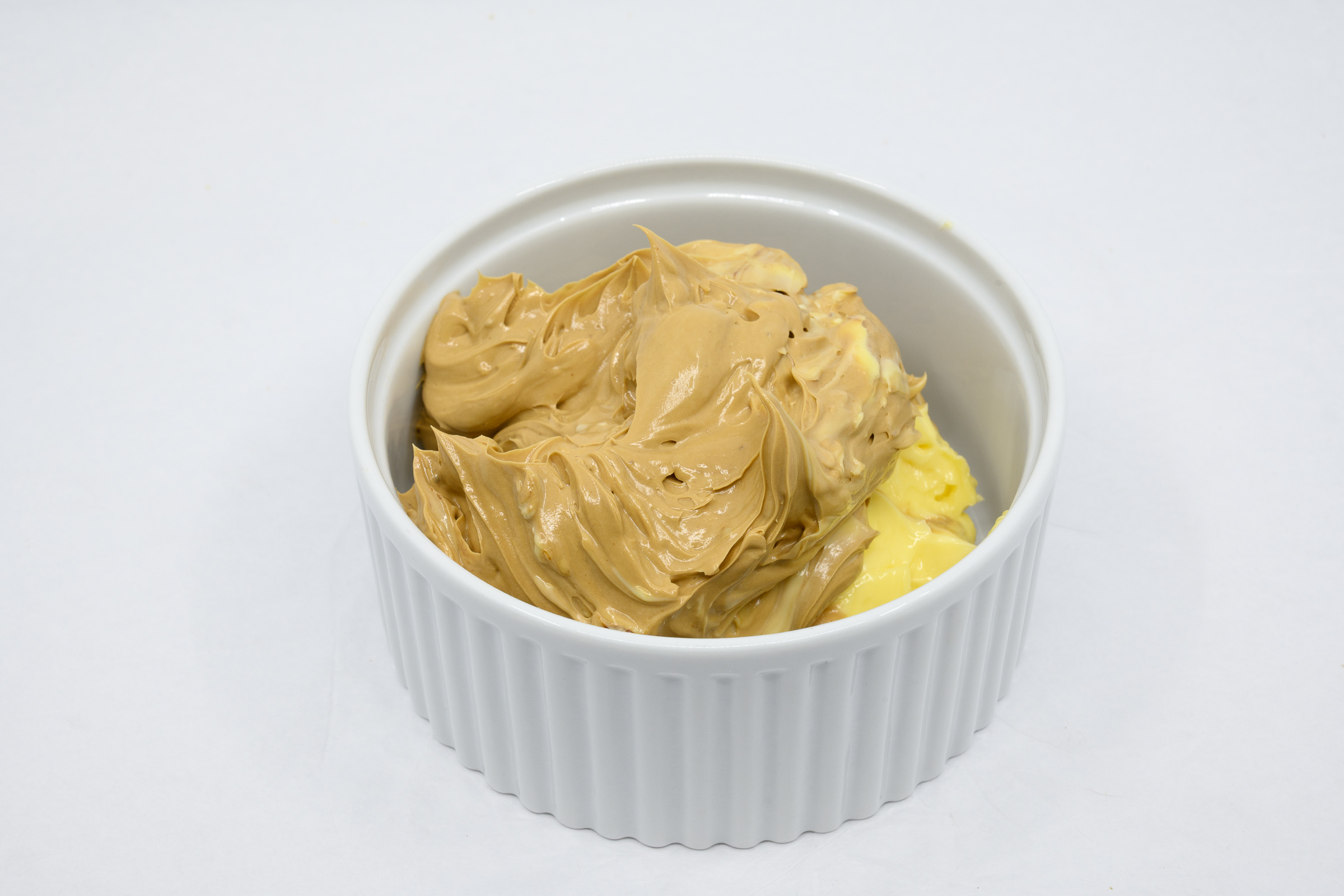
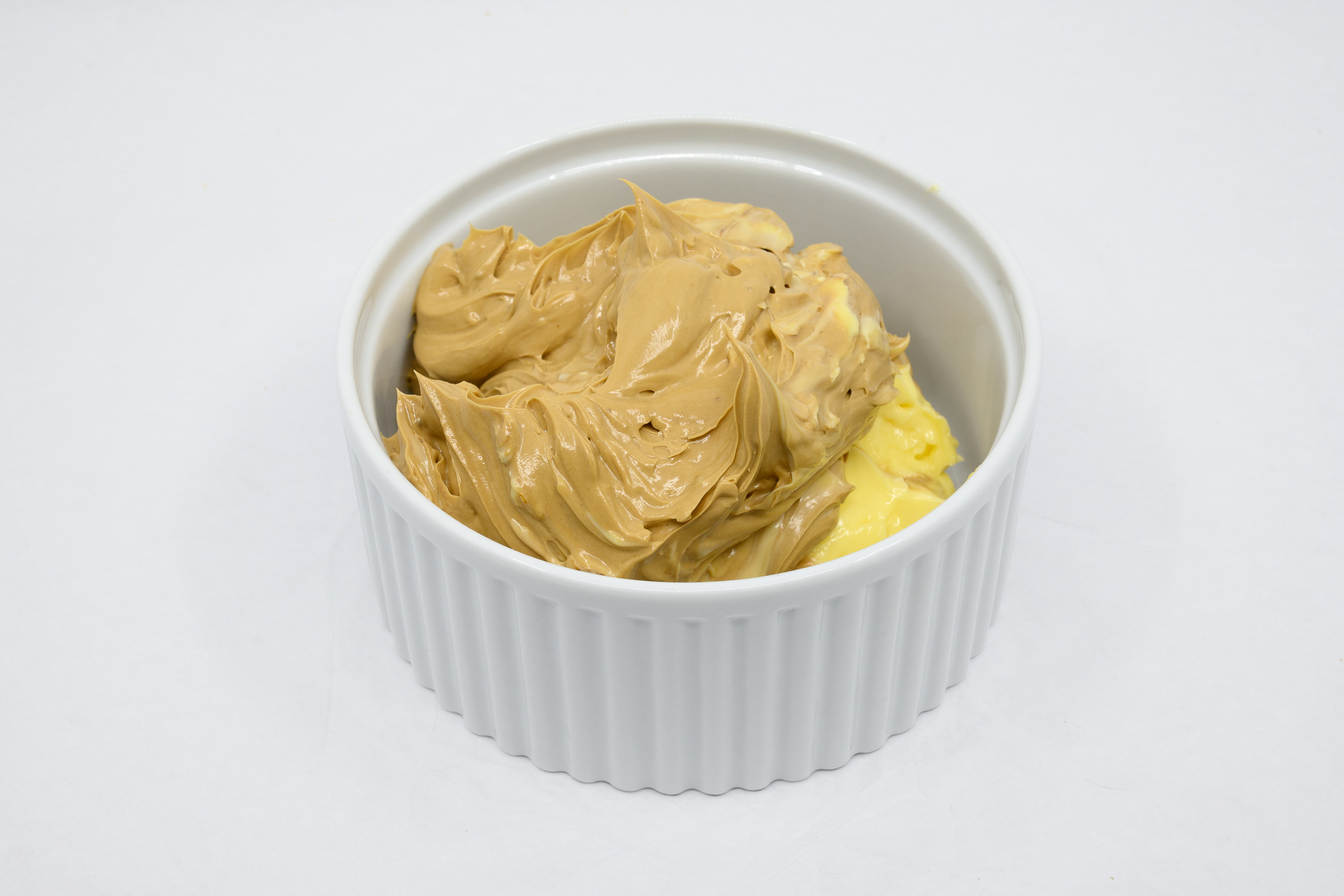
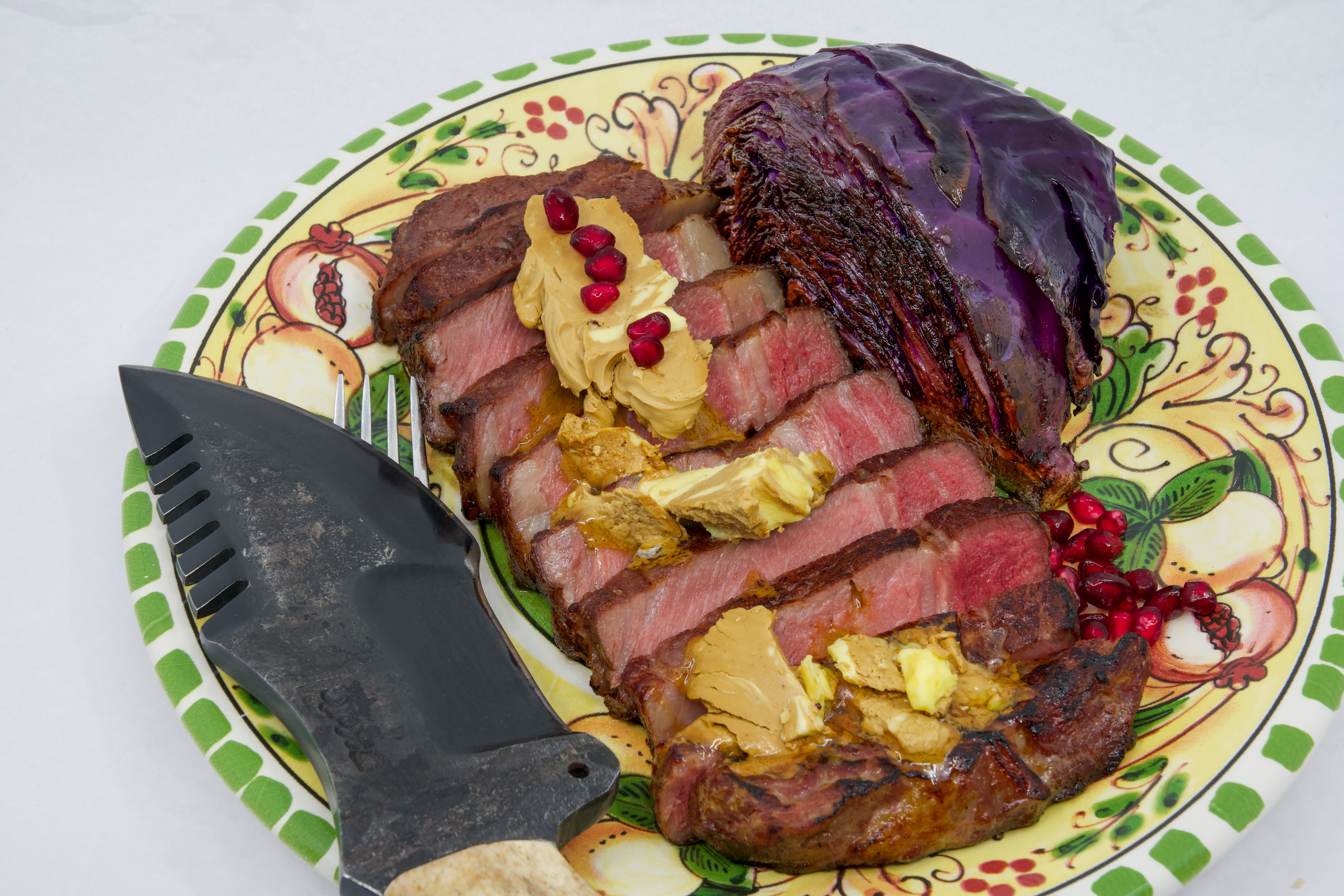
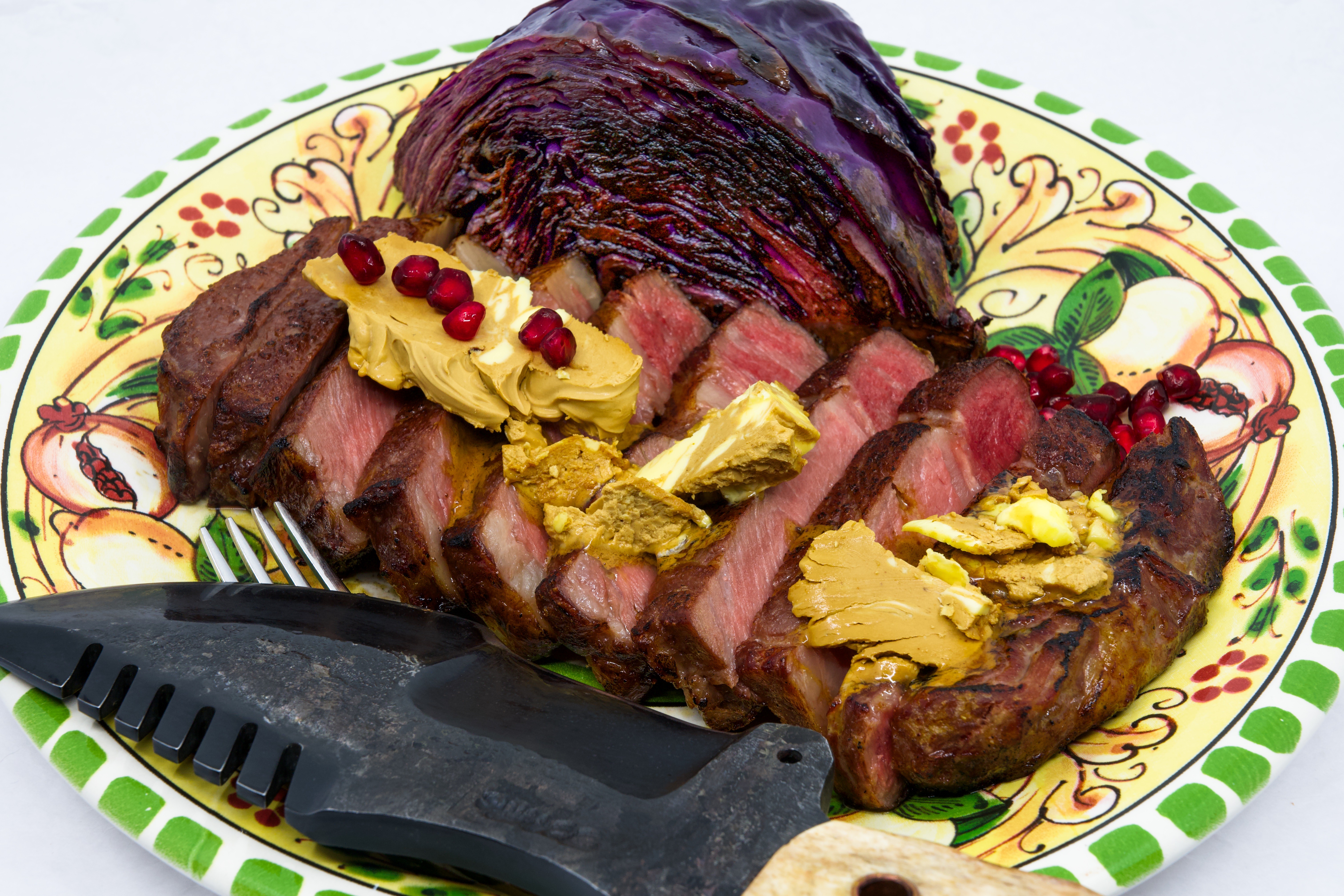
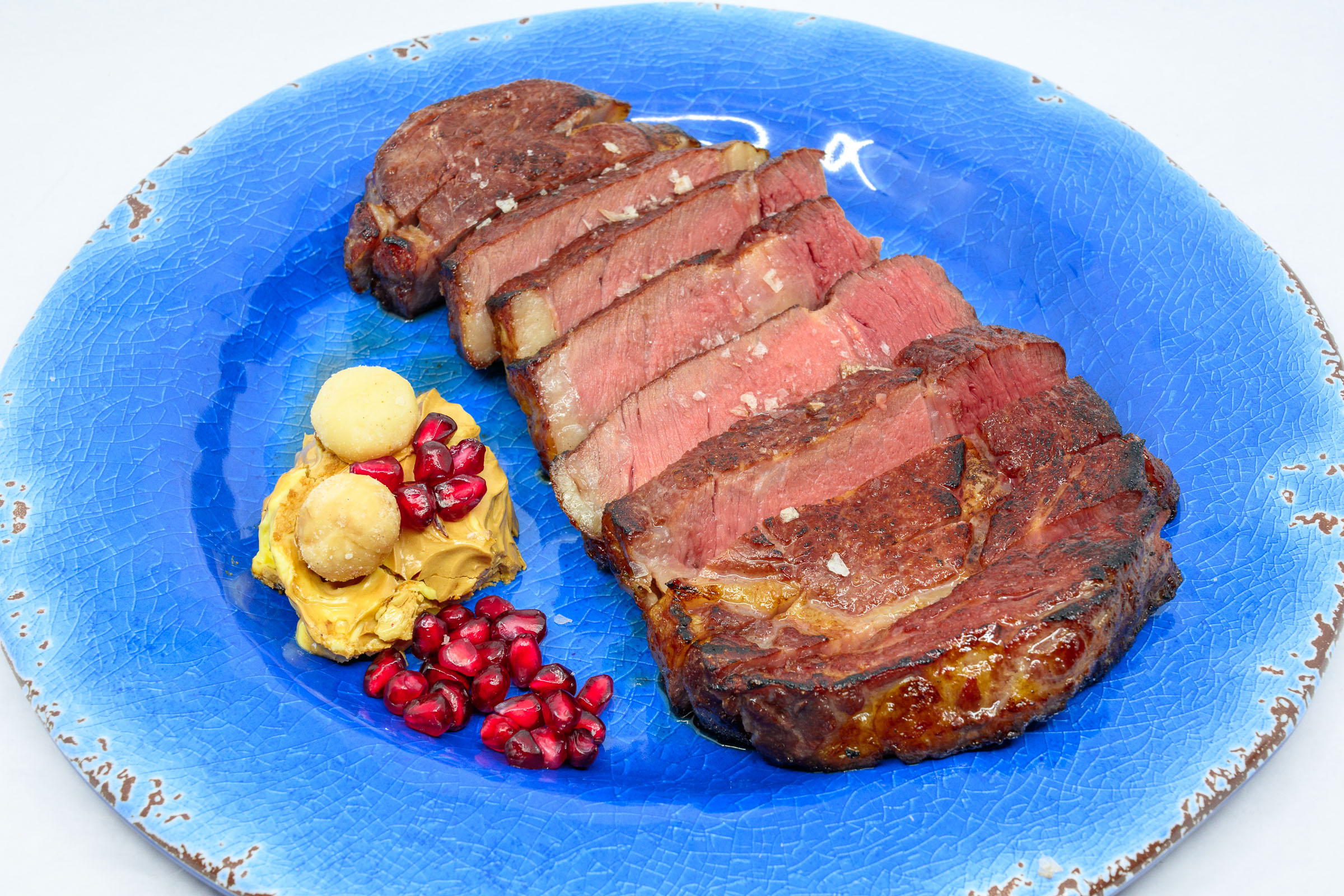
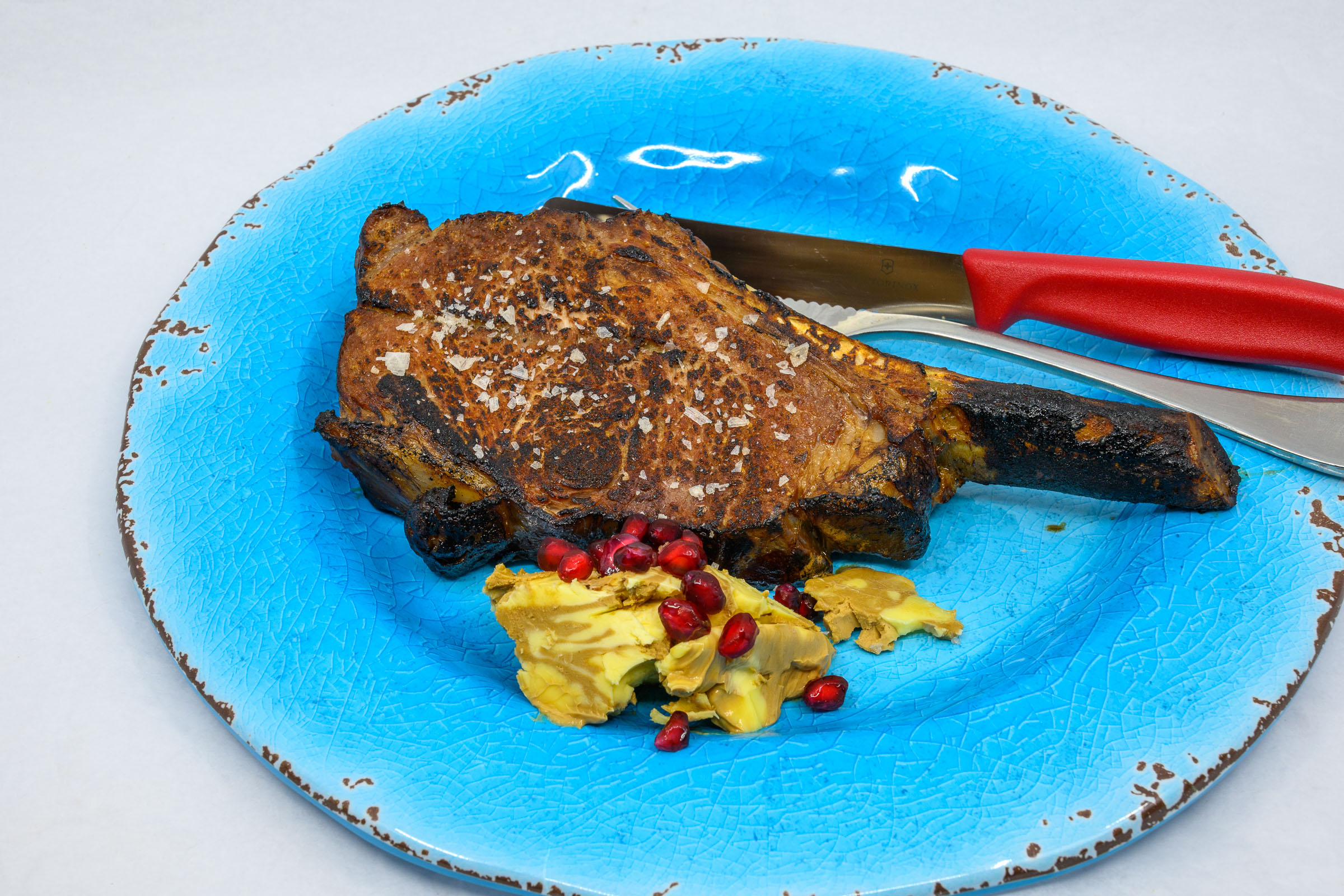
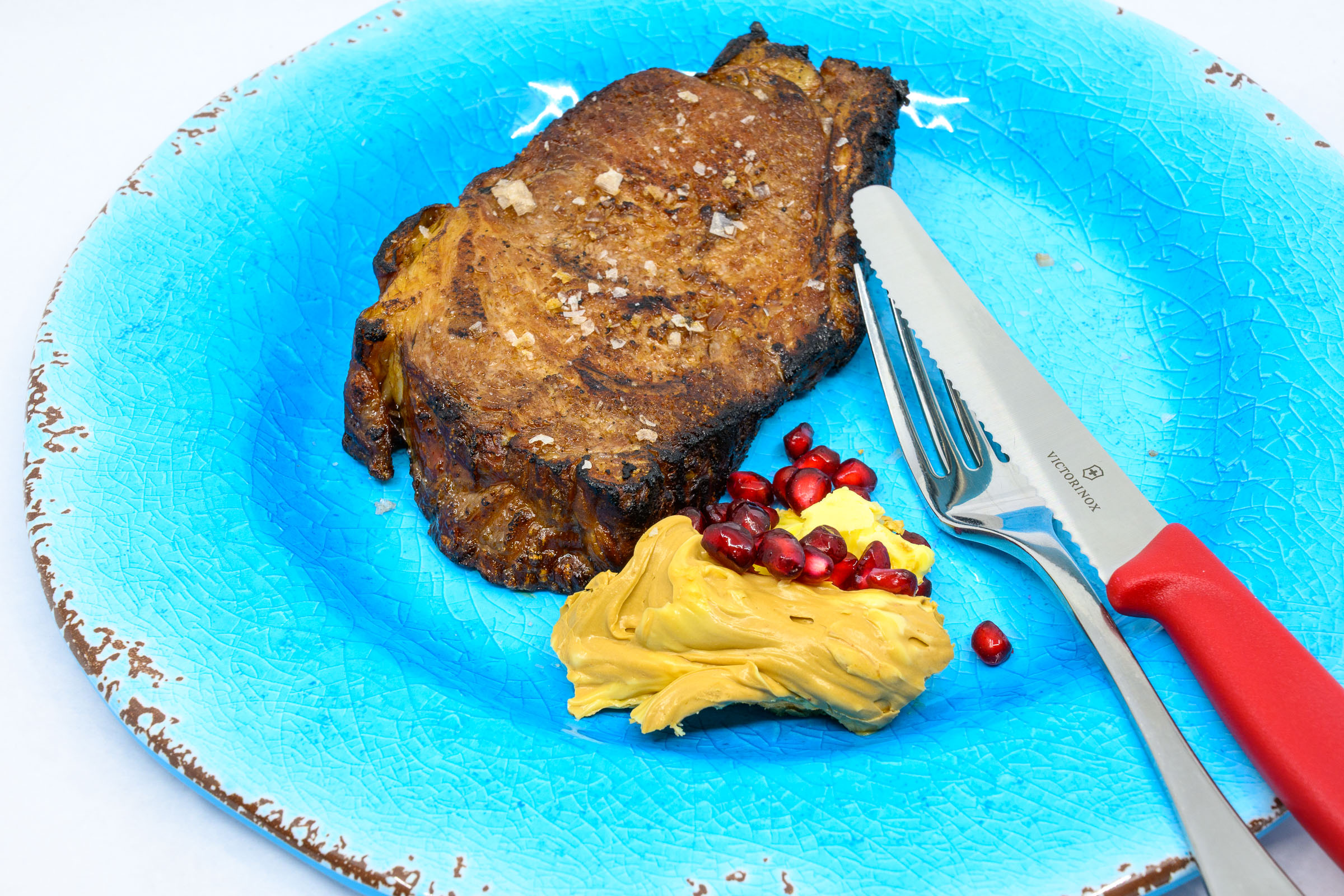
It was easy to make; it just took a few hours for the butter to soften enough to whip into a light, fluffy butter cream. I was surprised by how little Vegemite was needed to alter the colour and turn the whipped butter into a mousse-like, sweet, chocolate-coloured dessert. Instead, I had a light and fluffy bowl of umami goodness. In my mind, I thought it would be perfect to spread on steak.
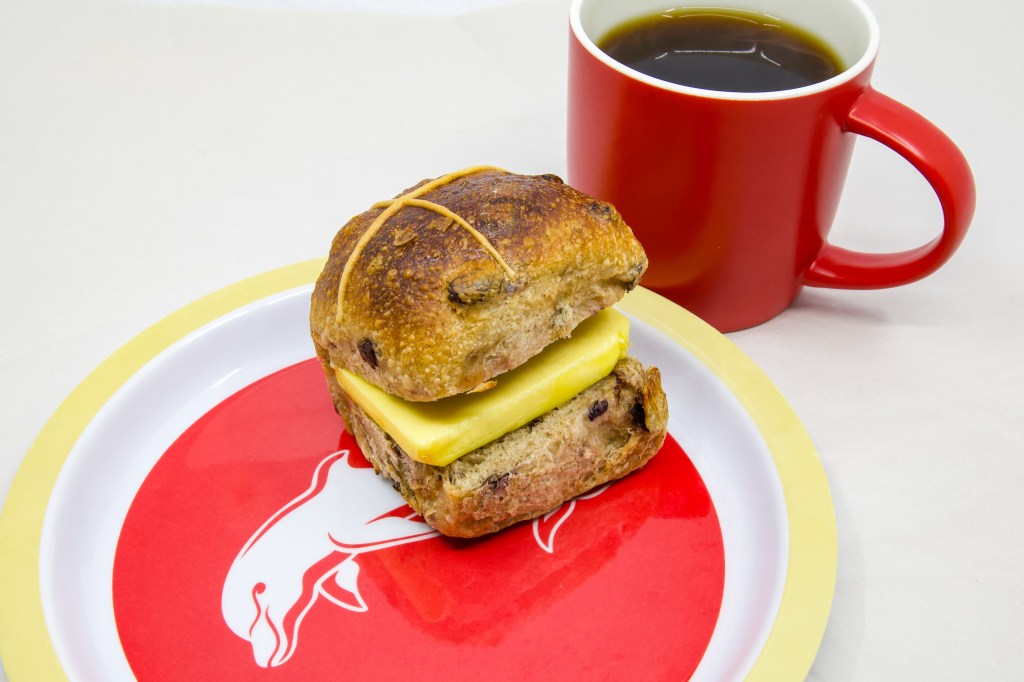
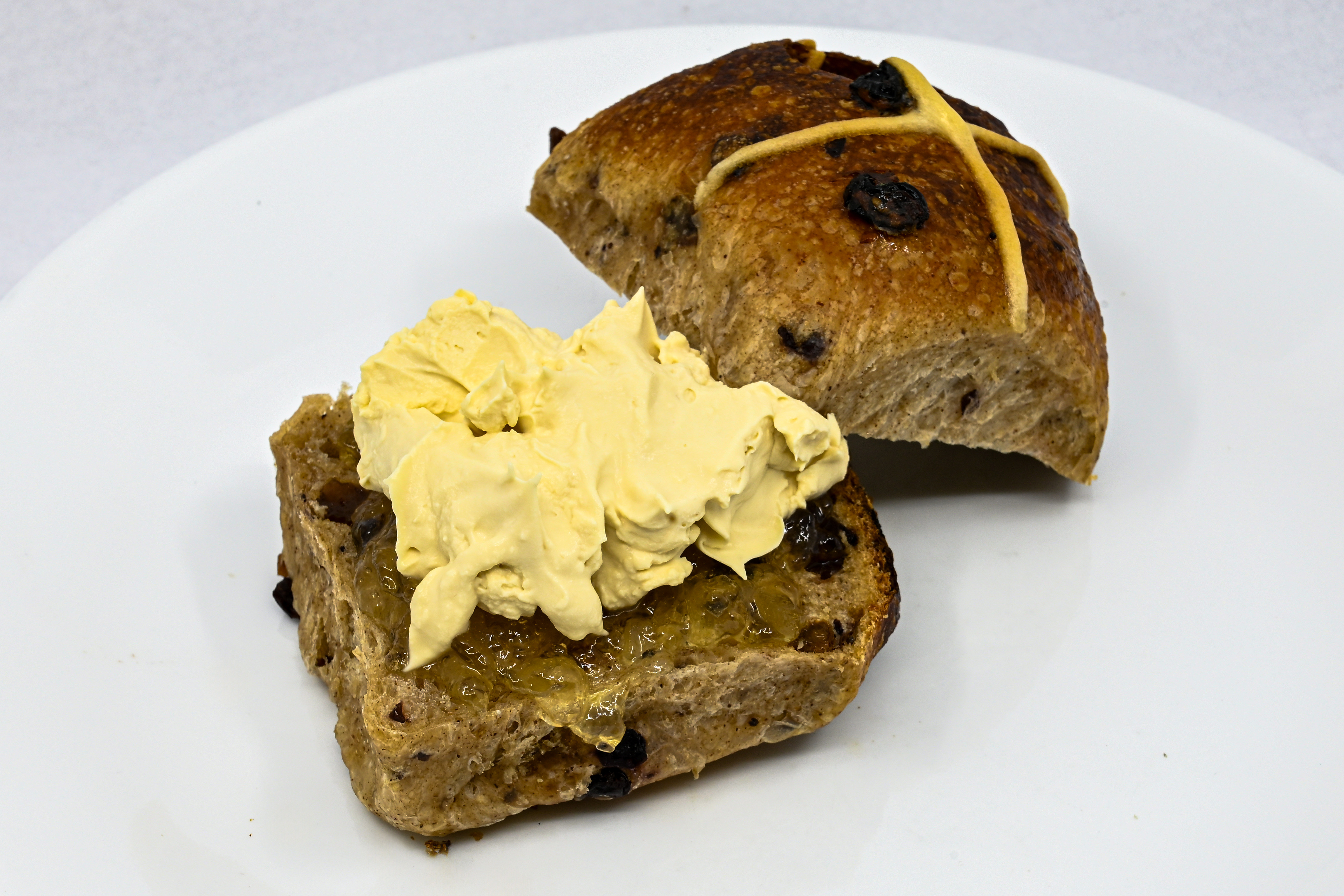
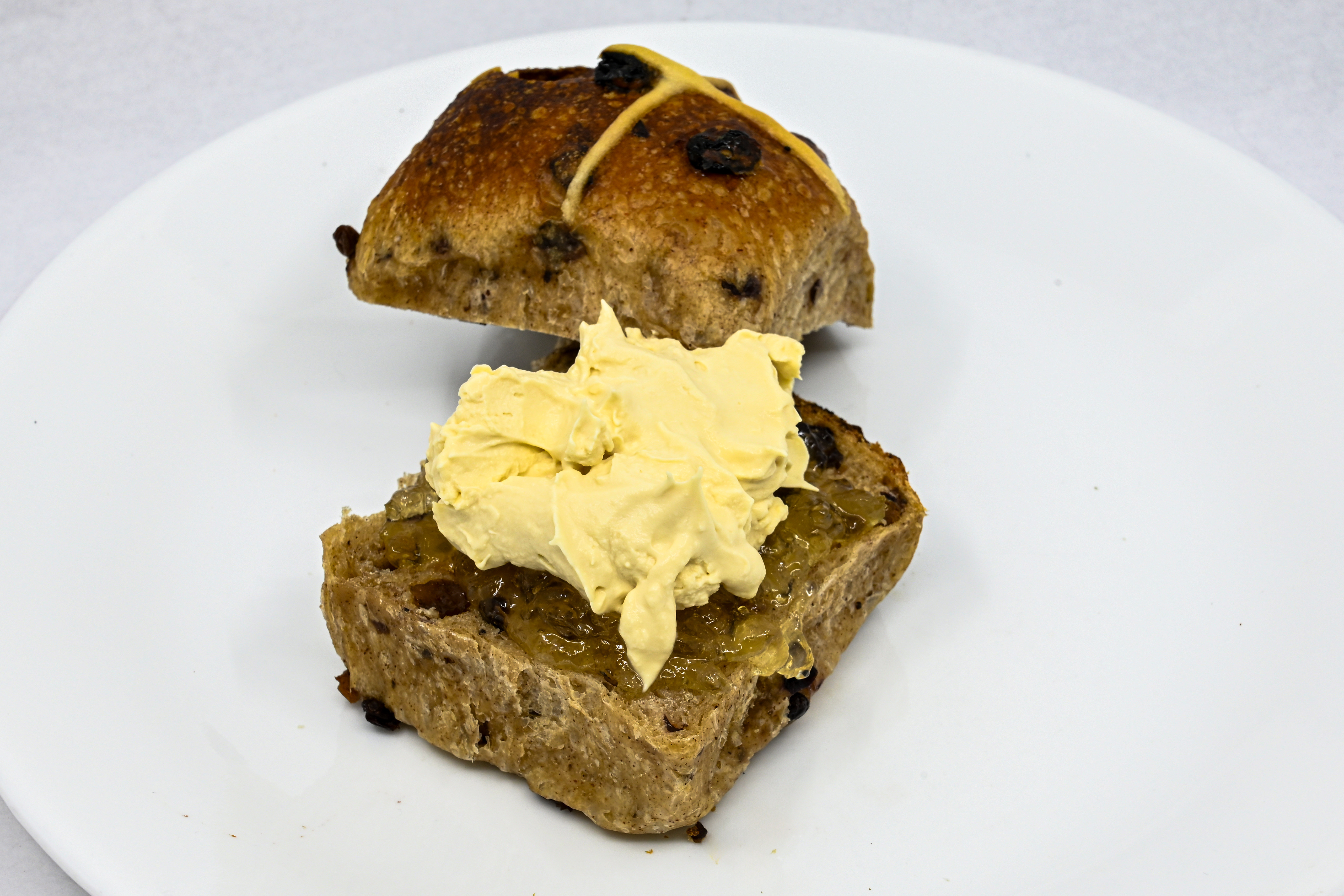
This is NOT whipped Vegemite butter. It is whipped pure pouring cream sitting atop some ginger marmalade on a sourdough Hot Cross Bun.
Recipe
Whipped Vegemite butter
Ingredients
Butter — 200 g
Vegemite — 1 teaspoon
Equipment
Hand-held mixer
Instructions
Allow the butter to get to room temperature.
Place the butter in a bowl and, with a hand-held mixer, whip it until light, fluffy, and well aerated.
Add the teaspoon of Vegemite and continue whipping the Vegemite butter.
Steak
Ingredients
Grass-fed scotch fillet steak
Red cabbage
Equipment
Water bath
Precision cooker
Hooded barbecue grill
Gas torch
Instructions
Cook the steak in the water bath for 2 hours at 57 °C.
Heat the hooded barbecue and plate the cabbage on the cast-iron flat-top.
Sear the steak on the cast-iron flat-top on the barbecue.
Serve the steak with the whipped Vegemite butter.
Dessert — A scone alternative
A sourdough hot cross bun with fruit is a great alternative to a scone. The cream was whipped pure-pouring Cream (300 mL), and the “jam” was Ginger Marmalade (365 g). Marmalade also featured on the “spreads” episode of the Lunchbox Envy podcast.
This is my version of a “Devonshire tea,” only it is a dessert.
Photographs
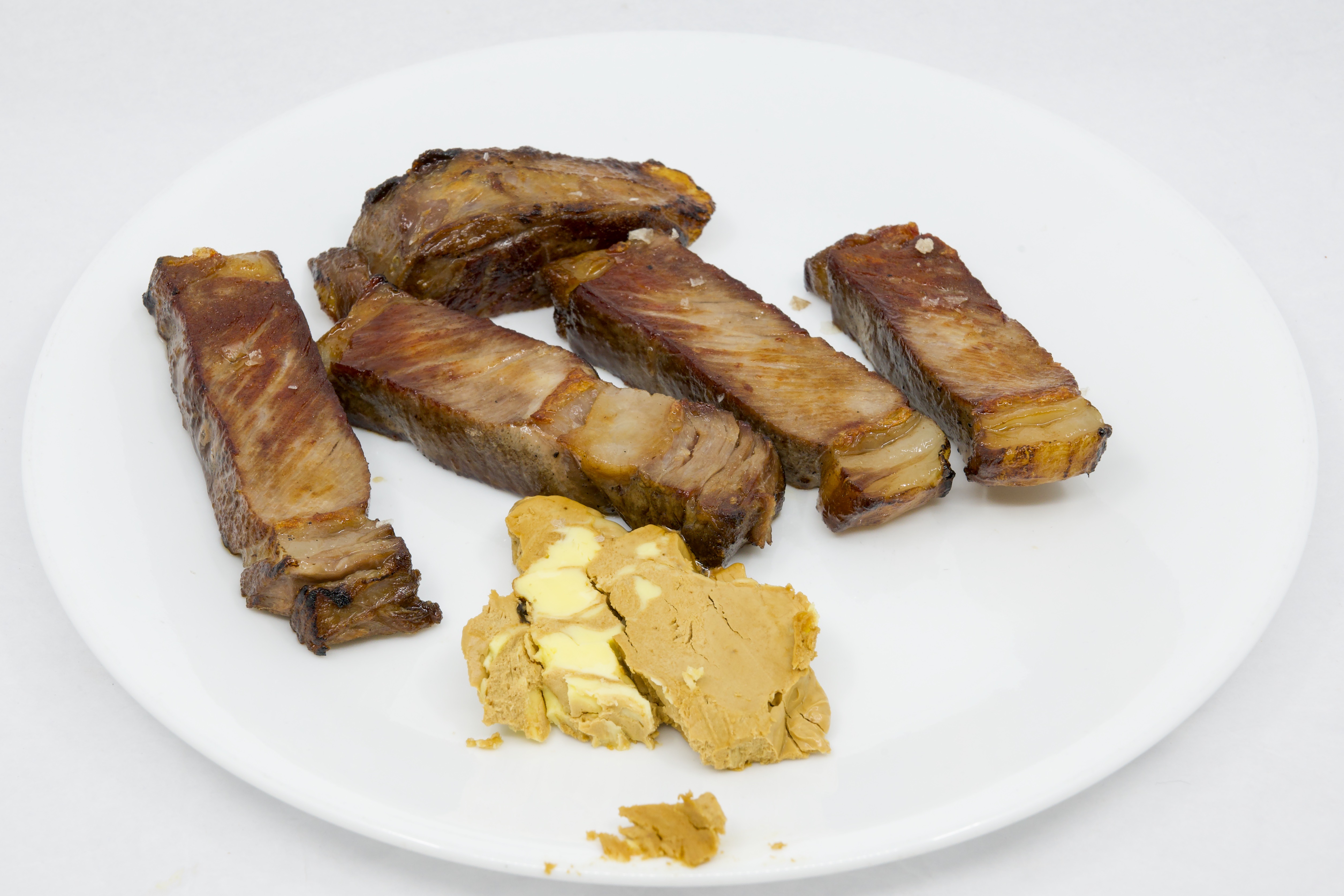
including previous meals with the whipped Vegemite butter.
Vegemite love
When I was in primary school, I used to eat Vegemite sandwiches every day for a year, and the following year I’d alternate with peanut paste sandwiches.
[i] Vegemite is one of Australia’s most iconic flavours, born in the early 1920s when chemist Cyril Callister set out to create a local alternative to British Marmite. Developed in 1922 and first sold in 1923, it was originally called Pure Vegetable Extract before a naming competition produced the now‑famous “Vegemite.” Although it took time to win over Australian households, wartime shortages of imported goods helped it become a national staple, and it has remained deeply woven into Australian food culture ever since.
At its core, Vegemite is made from leftover brewer’s yeast extract—a by‑product of beer production—combined with vegetable extracts, salt, and malt extract. The yeast undergoes autolysis, a process that breaks down the cells and concentrates the savoury, umami‑rich liquid that gives Vegemite its signature flavour. This mixture is then blended into a thick, dark brown paste with a consistency similar to firm jelly. The exact vegetable extract blend remains a closely guarded secret, but the result is unmistakable: salty, slightly bitter, deeply savoury, and intensely aromatic.
Nutritionally, Vegemite is surprisingly dense for such a small serving. A teaspoon delivers around 1.3 grams of protein with minimal fat and carbohydrates, making it extremely low in calories. Its standout feature is its B‑vitamin content—thiamine (B1), riboflavin (B2), niacin (B3), and folate (B9) are all present in significant amounts, with some versions also fortified with vitamins B6 and B12. These micronutrients support energy metabolism and overall wellbeing, which is part of why Vegemite was historically marketed as a health food. The only caution is its naturally high sodium content, though reduced‑salt varieties are now available.
Several weeks have passed since my previous post. Recently, my meals have predominantly consisted of beef and lamb, with occasional salmon.
I have also appreciated the favourable weather conditions and the opportunity for outdoor cooking. However, in my case, this primarily involves using the cast-iron flat top on my Weber Q+ barbecue.
It’s a long weekend, however, with the current heatwave, I think I’ll spend the gazetted public holiday working in the office. One of the benefits will be uncongested roads and good traffic flow.
What else have I been doing?
Apart from work, with new responsibilities and a larger span of control, I have been finding joy in watching Star Trek on my television.
Rather than rewatching old shows, I have been watching Star Trek: Discovery (ST: DIS), Star Trek: Strange New Worlds (ST: SNW), and Star Trek: Picard (ST: PIC).
Since the original series (ST: TOS), Star Trek, through the vision of Gene Roddenberry, has advanced diversity, equity, and inclusion[i] (DEI) as a key foundation for the stories.
DEI is more evident in the three shows I have recently watched. The creators thrust DEI on viewers, and I know that in online forums, the “in your face” approach has upset many people who prefer subtlety over bluntness. I thought it was fine and not over the top. It reflects the society we know now.
Among these new Star Trek iterations, ST: SNW is the standout success (in my opinion). It was fun, with loads of whimsy and humour. The characters were fantastic and the acting superb. On the other hand, in ST: DIS, I liked the darker, edgier characters for their realism, while most of the characters and their actors were simply annoying. Who would have thought I would enjoy Jason Issacs playing Captain Lorca after his portrayal of Lucius Malfoy in the films adapted from JK Rowling’s Harry Potter book series? Michelle Yeoh is also stellar in her roles. Burnham, Book, and Tilly were the most annoying characters. If they had been “killed off” by the writers, I would not have minded.
The enjoyment with ST: PIC was familiarity with characters and actors from Star Trek: The Next Generation (ST: TNG), plus the addition of characters from other series around that time. I am thinking of Seven of Nine, played by Jeri Ryan from Star Trek: Voyager (ST: VOY) and cameos from other characters from ST: VOY and Star Trek: Deep Space Nine (ST: DS9). I particularly enjoyed Commander Worf (played by Michael Dorn) and the change in his character. The humorous quips and his marriage of Klingon warrior philosophy[ii] with pacifism[iii] are welcome changes.
If you grew up with Star Trek and enjoy watching it, I highly recommend these new series. I will also watch Star Trek: Lower Decks and Star Trek Academy at some stage. Of the three series I have just watched, I can see myself happily rewatching ST: SNW and ST: PIC but not ST: DIS.
Do you like Star Trek? Tell me what you think?
Tonight’s meal
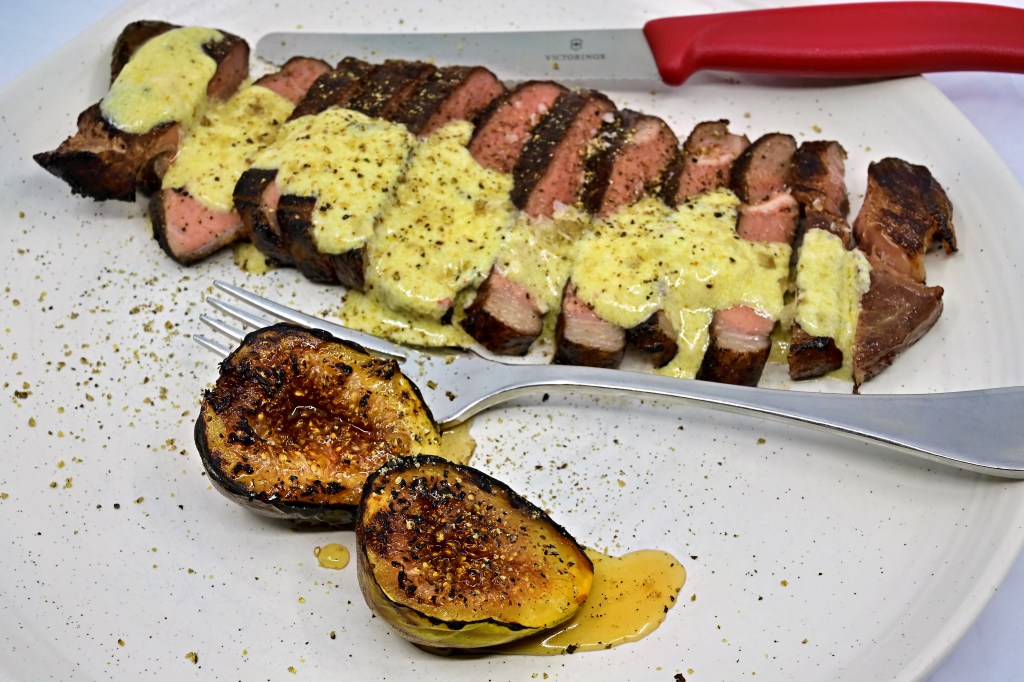
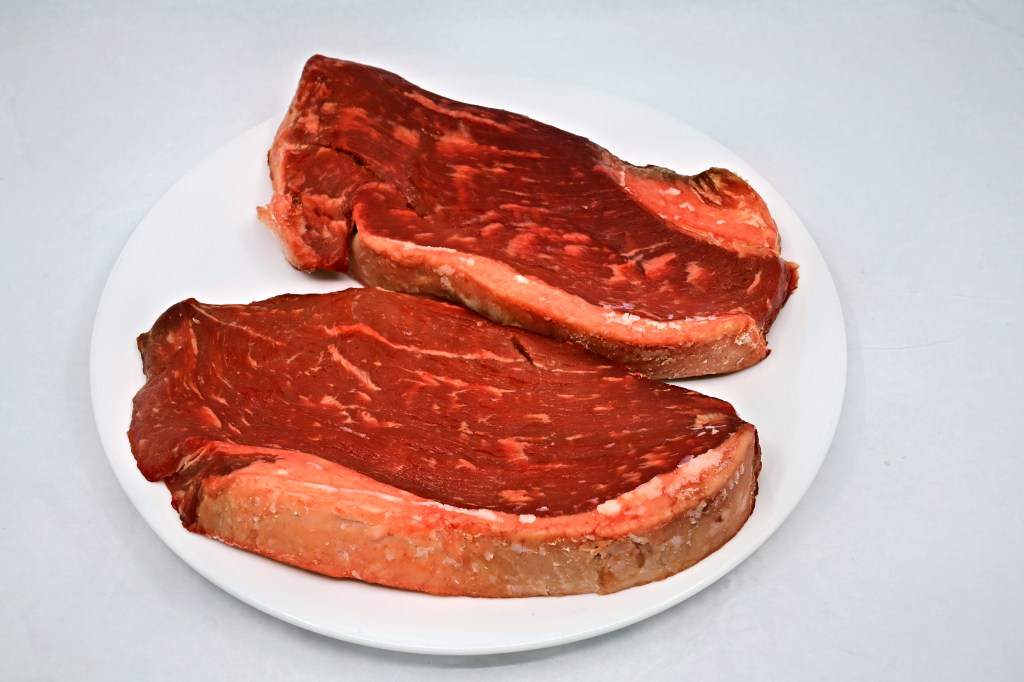
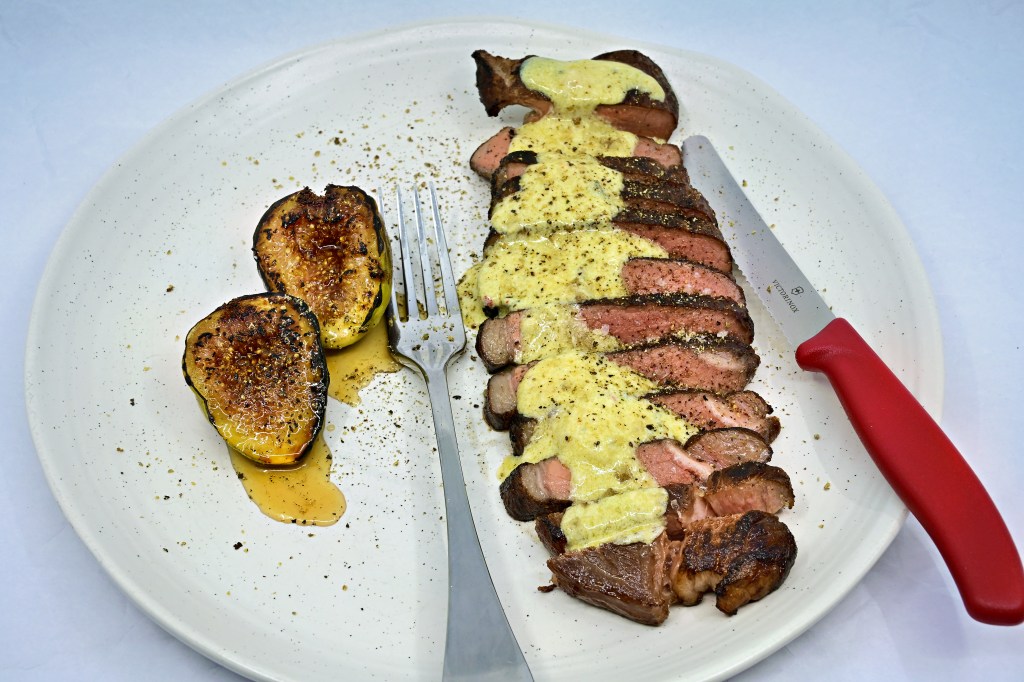
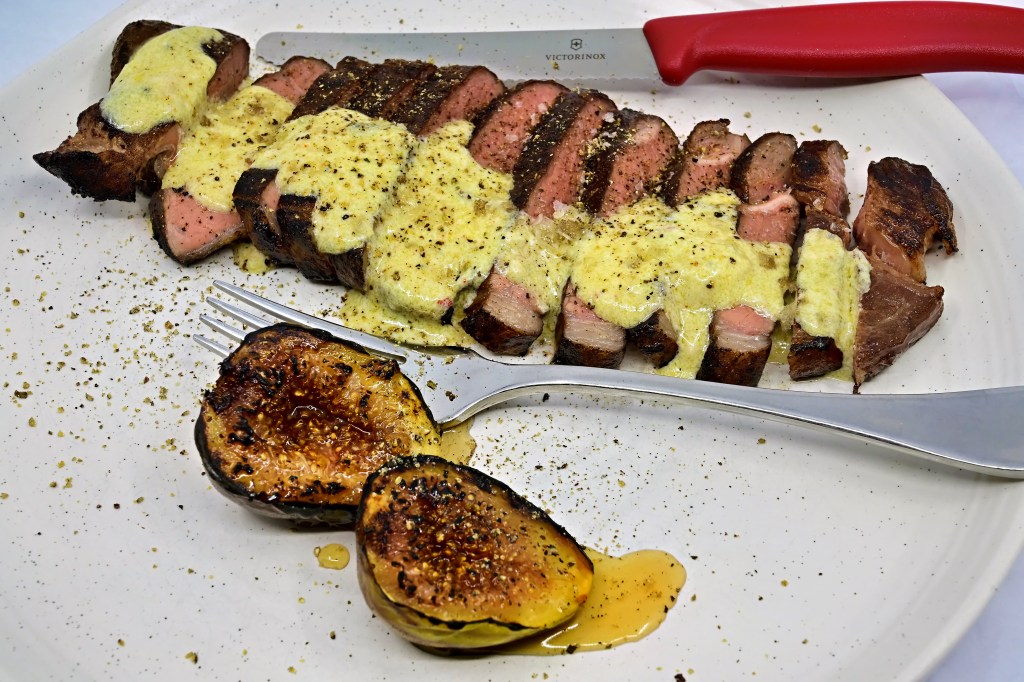
Rump steak with spicy blue vein cheese sauce and honey-drizzled fresh fig.
I know I do not eat a lot of fruit, but when in season, I do enjoy some fruits, like Bowen mangoes and figs. I saw some figs in the supermarket yesterday and bought a couple. At $AUD1.50 each, I should have just bought one.
I also do not use many spices these days. My preference is to focus on the flavour of the main primary produce I am eating. The jalapeño-spiced blue-vein cheese was a concession so I could try it.
Rump steak
I cooked the steak in a water bath at 57 °C for 2 hours. I then seared the steak on a hot cast-iron flat top on my barbecue and augmented the sear with a gas torch.
Cheese sauce
I gently mixed butter, cream, cream cheese, and jalapeño-spiced blue-vein cheese in a small saucepan over low heat until it formed a sauce.
Fig
I washed the fig and then halved it. I warmed and coloured the cut surface on a hot cast-iron flat top in my barbecue. I drizzled some honey over the fig halves. I do not clean the flat top after each use, and I enjoy the crusty flavours that result from many layers of meat and fat.
Photographs
Thoughts on the meal
Do you like figs? I enjoy eating them. The steak was cooked how I like it, and the spicy jalapeño blue vein cheese sauce added a hot and savoury flavour to the sweetness of the fig and honey.
I thought the meal was nicely balanced. I’d happily eat this again. Given I have another rump steak and another fig, it’s likely to happen again soon. 😉
Now watching
After dinner, I’ll watch some “Tulsa King,” a television show starring Sylvester Stallone. Stallone plays an Italian mafia “capo[iv]” after being released from a 25-year prison term.
[i] Diversity, equity, and inclusion (DEI) are interconnected principles that guide efforts to create fair, respectful, and welcoming environments—especially in workplaces, schools, and communities.
[ii] Klingon warrior philosophy, as portrayed in Star Trek, revolves around honour, courage, and an unflinching acceptance of mortality. Strength—both physical and moral—is seen as the core of a meaningful life, and warriors are expected to face challenges directly rather than avoid them. Honour in battle, loyalty to one’s house and comrades, and a willingness to die gloriously rather than live without integrity define the Klingon worldview. It’s a culture that treats conflict not as something to fear, but as the crucible in which character is proven.
[iii] Pacifism is the belief that violence and war are morally wrong and should be avoided in favour of peaceful methods of resolving conflict. At its core, it holds that human life and dignity are best protected through non‑violent action—whether that’s negotiation, protest, civil resistance, or other peaceful strategies. Some pacifists reject all forms of violence, while others allow for limited self‑defence but still see non‑violence as the ethical ideal.
[iv] A mafia capo—short for caporegime or capodecina—is a mid‑level leader in an organised crime family. Think of the structure like a hierarchy, and the capo sits right in the middle.
It is a new year, and I am working in a new agency.
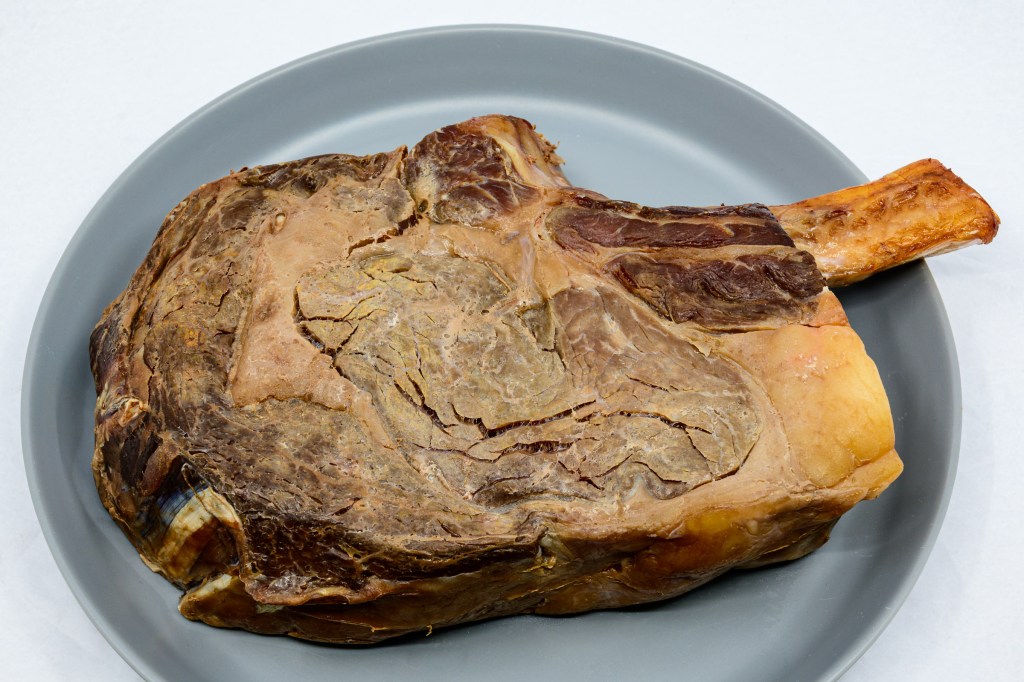
To start a new year, I want a scotch fillet steak on the bone. That is, a bone-in ribeye steak.
Recipe
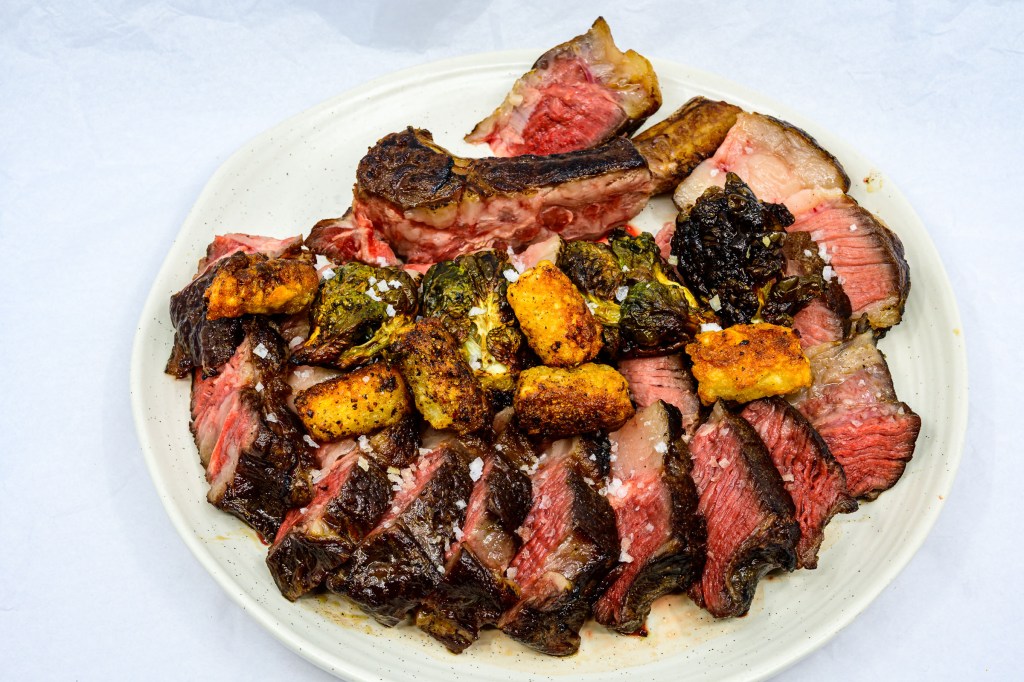
Sous-vide bone-in ribeye steak with potato gems, fried in beef fat.
Ingredients
Steak (it weighed 950 grams with the bone)
Salt
Pepper
Potato gems
Beef fat
Brussels sprouts
Equipment
Water bath
Precision cooker
Barbecue grill with cast-iron flat top.
Aluminium foil tray
Gas torch
Boning knife
Carving knife
Instructions
Steak
Dry-brine the meat
Vacuum-bag the steak, being careful around the rib bone.
Cook the beef at 57 °C for three hours.
Heat the barbecue grill and cast-iron flat-top.
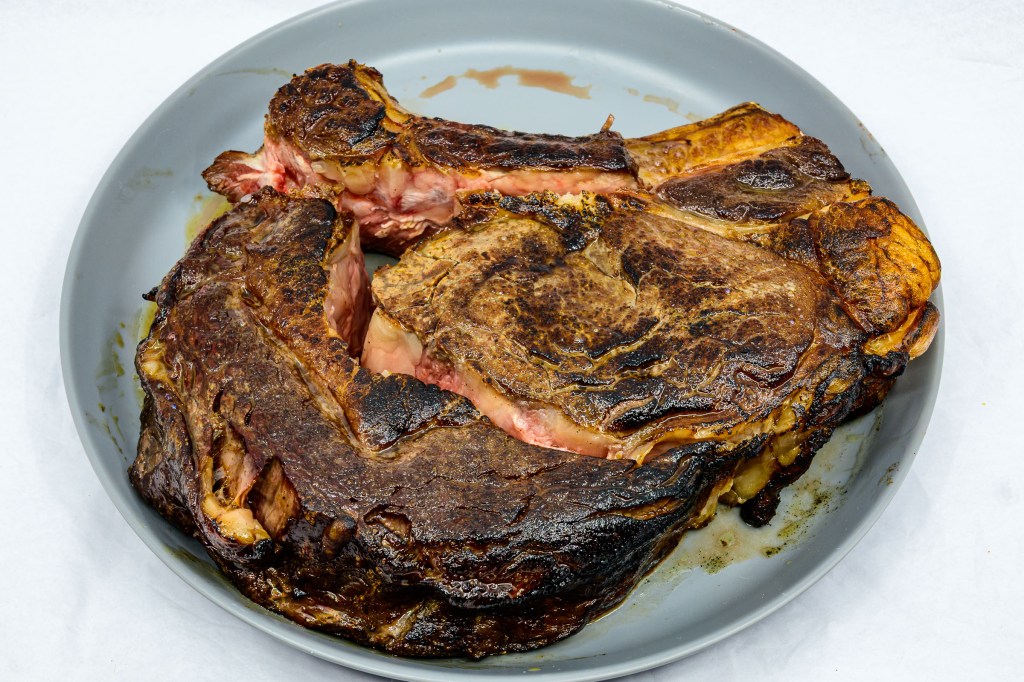
Dry the steak’s surfaces, then sear it over a hot barbecue grill using a gas torch.
Potato gems
Put sufficient leftover beef fat into an aluminium tray and heat while the barbecue is heating for the steak.
Add the potato gems to the hot beef fat and deep fry until golden.
Brussels sprouts
Halve the Brussels sprouts longitudinally.
Deep-fry in the hot beef fat used for the potato gems.
Serving up
Cut the meat from the rib bone with the boning knife.
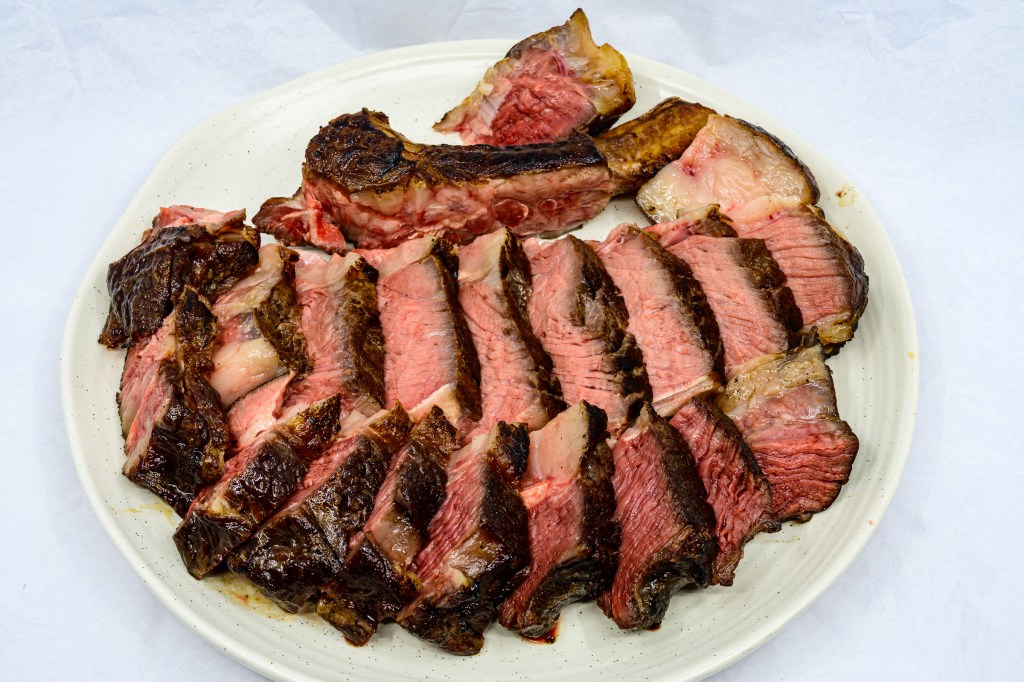
Slice the scotch fillet steak with a carving knife.
Arrange the slices of steak onto a dinner plate.
Season the steak with flaky sea salt and freshly cracked black and white peppercorns.
Cut the bone off with a boning knife and dissect the spinalis from the longissimus dorsi.
Slice the muscle bundles and arrange the bone and meat slices on a dinner plate.
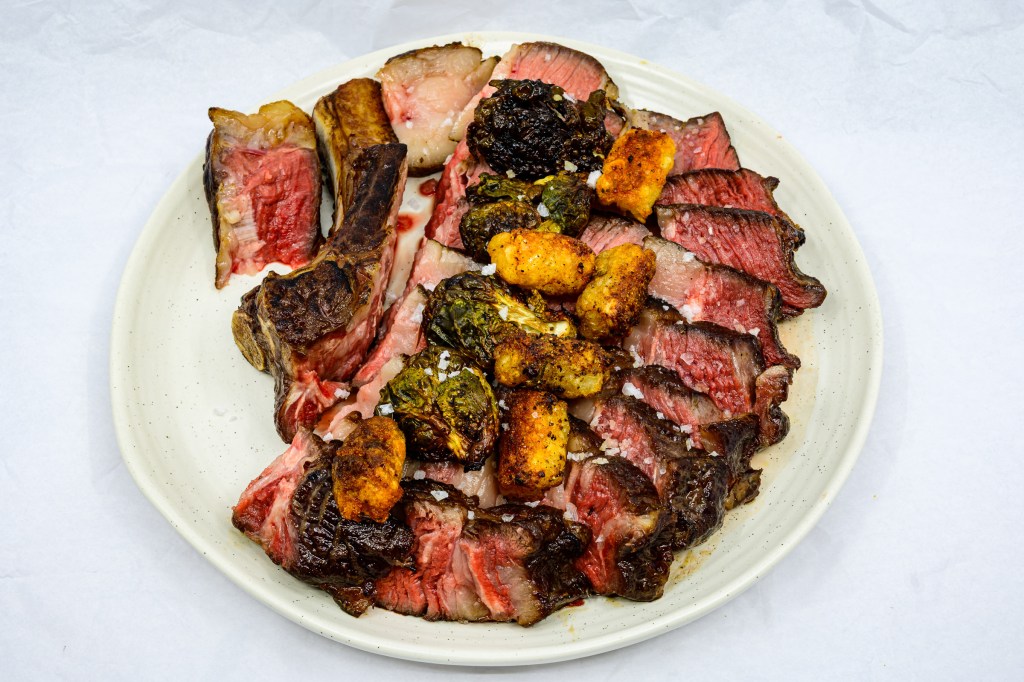
Arrange the Brussels sprouts and potato gems on the sliced steak.
Enjoy almost 1 kg of steak.
Photographs
Here are photographs of the meal. It’s a 950-gram steak including the bone.
Thoughts on the meal
This steak meal is a terrific way to start a new year. It was cooked the way I wanted it. The potato gems and Brussels sprouts were crispy and cooked just the way I like them.
Personal note
It will be good to work at a new agency and play a role in helping people, especially the people I work with.
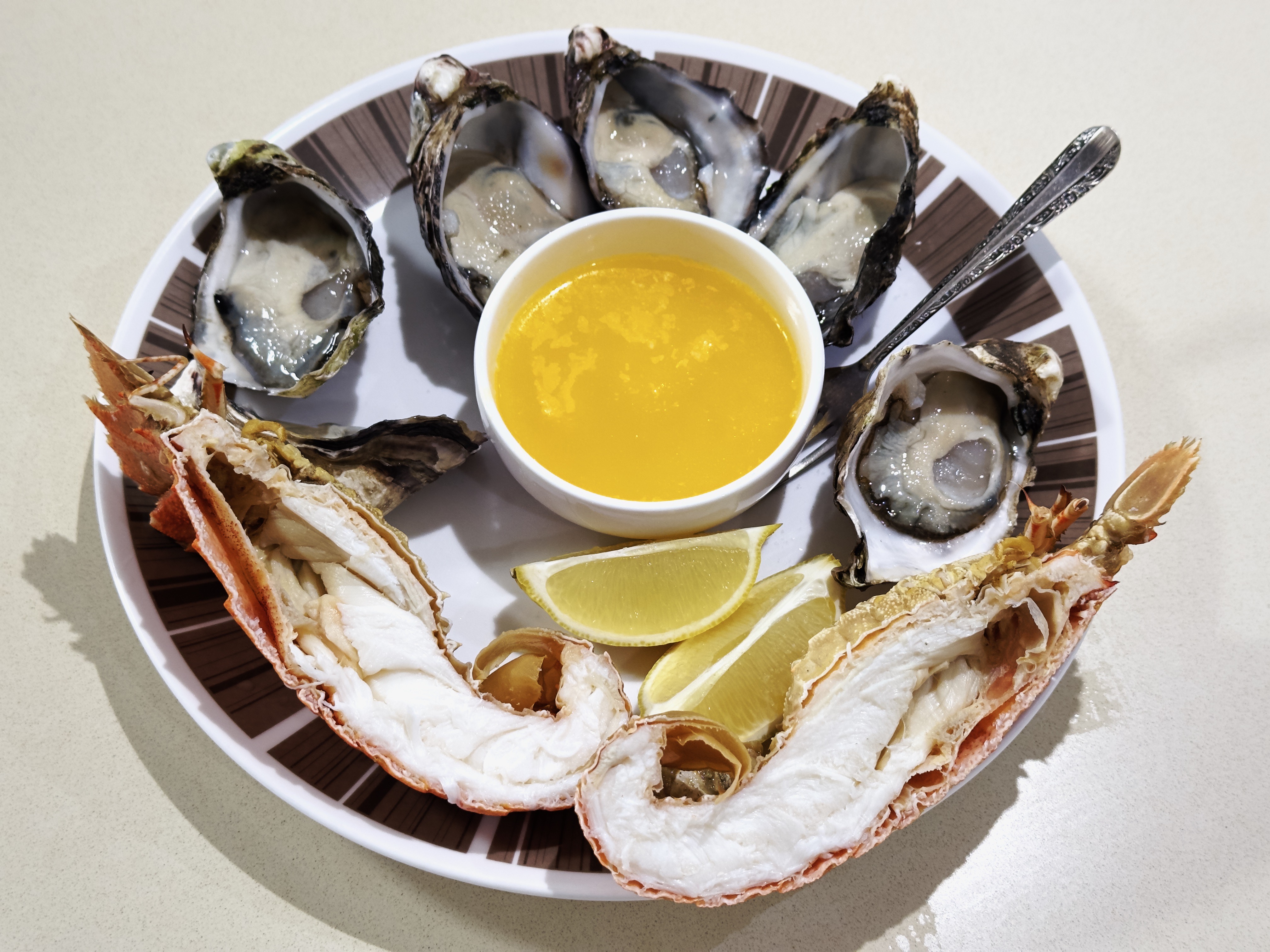
Spent last week with family for Christmas. We ate well. We ate vast amounts of seafood, including oysters, prawns, scallops, squid, Moreton Bay bugs, and fish. On Christmas Day, my nieces also wanted me to cook each of them a fillet steak. Surprised but happy to do it. Took a stainless-steel frypan and a stainless-steel scrubber with me on the flight, which made for a heavy bag. I also ate four servings of Eggs Benedict with bacon. When I weighed in on my return home, there is now a peak in the spreadsheet!
Favourite Christmas meals
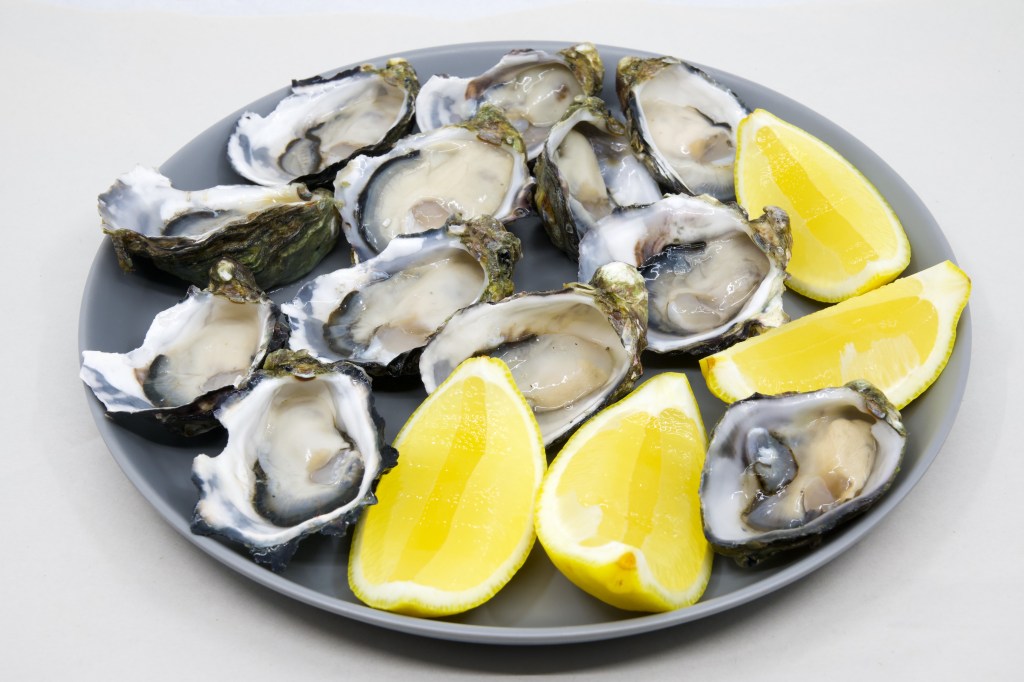
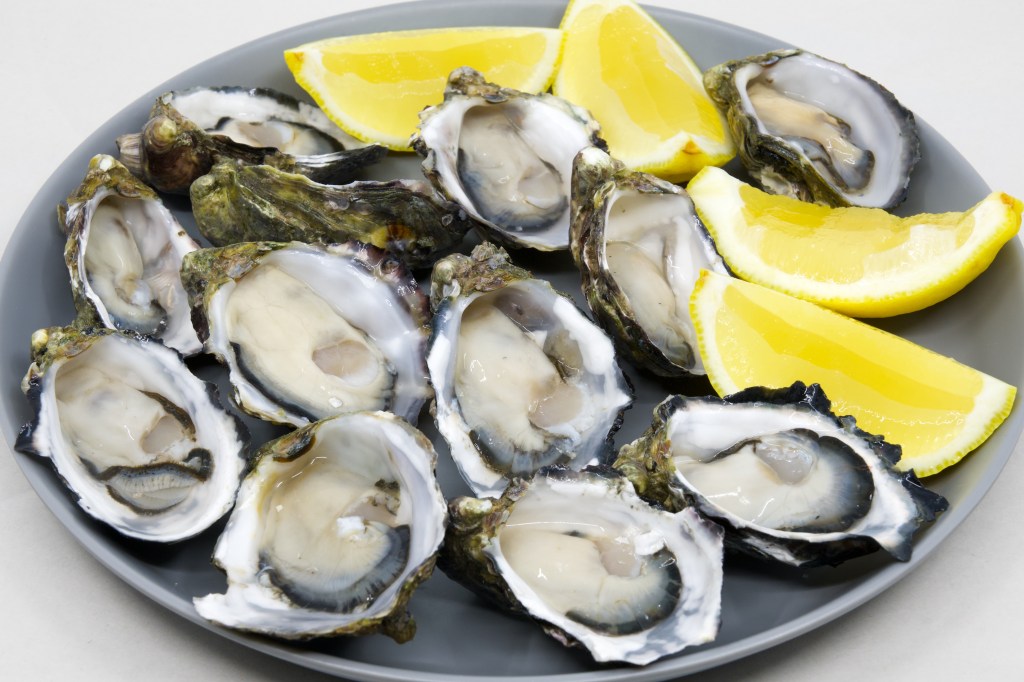
My favourite lunch was a Moreton Bay bug and half a dozen large Pacific oysters. I made it luxurious with a pot of melted grass-fed butter.
My favourite dessert was Christmas cake warmed with microwave radiation and served with vanilla ice cream.
In Australia, the term porterhouse steak refers to what many other countries call a sirloin steak. It’s cut from the short loin section of the cow, sitting just behind the ribs. The meat is leaner than ribeye (scotch fillet), with a firm texture and a beefy flavour.
It gets confusing. I may be wrong about this, but this is my understanding:
🇦🇺 Australia: Porterhouse = Sirloin.
🇺🇸 United States: Porterhouse = A large T-bone steak, cut from the rear end of the short loin, which includes both the tenderloin (eye fillet) and the strip steak (sirloin).
🇬🇧 United Kingdom: Porterhouse is sometimes used interchangeably with T-bone, but definitions vary.
If you ask for a porterhouse in an Australian restaurant or butcher’s shop, don’t expect a massive T-bone with eye fillet attached. You’ll get a steak which is lean, flavoursome, and perfect for sous vide.
💰 Why is Porterhouse Cheaper than Scotch Fillet?
Meat is getting more expensive. Compared with this time last year, it feels like what I now pay for porterhouse is what I was paying for scotch fillet last year.
Scotch fillet[ii] (ribeye) comes from the rib section and is appreciated for its marbling, tenderness, and flavour. Porterhouse, being leaner and less marbled, is generally cheaper. It’s still delicious, but it doesn’t have the same mouthfeel as scotch fillet. For everyday cooking, porterhouse offers more value without compromising on taste. Chuck steak would be cheaper, but chuck is tougher.
🍽️ Recipe
Ingredients
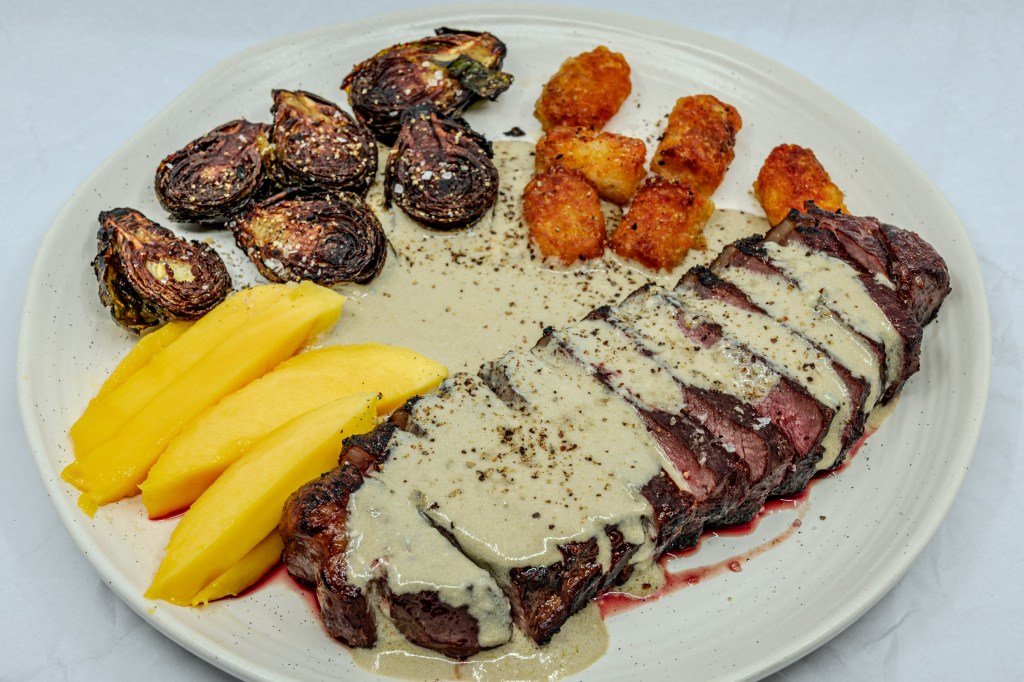
1 × porterhouse steak (375 g)
Flaky salt and freshly cracked black pepper
Brussels sprouts, halved
Frozen potato gems
Blue vein cheese
Pure pouring cream
Cream cheese
Butter
Bowen mango
Method
Sous Vide Steak
Season the porterhouse with salt and pepper.
Seal in a vacuum bag and cook in a water bath at 55 °C for 2 hours.
Remove, pat dry, and sear quickly on a barbecue grill.
Brussels Sprouts
Blanch in salted boiling water for 3 minutes.
Toss on a barbecue grill until caramelised.
Potato Gems
Fry in beef fat until crisp and golden.
Blue Vein Cheese Sauce
Melt butter in a small saucepan.
Add cream cheese and cream and bring to a gentle simmer.
Crumble in blue vein cheese and stir until smooth.
Plate Up
Slice the porterhouse and arrange with mango slices, Brussels sprouts and potato gems.
Drizzle generously with blue vein cheese sauce.
This dish balances the beefiness of porterhouse steak with the creamy, salty blue vein cheese. The potato gems add crunch, while Brussels sprouts bring a nutty sweetness. The Bowen mango adds a fresh sweet flavour.
🥐 Raspberry and Pistachio Cinnamon Scroll
I visited Cannelle Fine Foods[iii] on Hayward Avenue, Torrensville, and picked up a raspberry and pistachio cinnamon scroll.
As seen on their Instagram feed, this scroll is as advertised:
A nice pastry scroll.
Cinnamon icing.
Dried raspberry and crunchy pistachios sprinkled on top for texture and a nutty finish.
It’s a good companion to a strong coffee, balancing richness with sharpness.
🥭 Mango
I don’t eat a lot of fruit these days. I still enjoy a mango. My favourite variety is the Bowen, which is also known as a Kensington Pride.
Bowen Mango: The original name, because the first trees were planted in Bowen, Queensland, in the late 1800s.
Kensington Pride Mango: Later, the variety spread to Kensington Station near Bowen, and growers began calling it “Kensington Pride.” Over time, this name became more widely used across Australia.
In Queensland[iv], many locals still call it the Bowen mango. We had a Bowen mango tree in the backyard of the house I grew up in.
Across most of Australia, it’s marketed and sold as Kensington Pride.
Final Thoughts
Porterhouse steak may not have the gravitas of scotch fillet, but when cooked sous vide and paired with flavours like blue vein cheese, it shines. And finishing with a mango makes for an indulgent evening.
Questions
What do you mean by porterhouse where you live?
Have you noticed a change in meat prices?
Do you like mangoes? What’s your favourite variety for plain eating?
[i] The word porterhouse originally referred to a type of tavern or chophouse in the mid‑18th century where porter (a dark beer) was served. By the early 19th century, the name became associated with a particular cut of beef steak, supposedly popularised in New York or Boston establishments.
[ii]Scotch fillet is the Australian and New Zealand term for the boneless ribeye steak. The word fillet comes from Old French filet (“thread, strip”), later applied to cuts of meat. The Scotch part likely reflects a marketing or culinary association with Scotland, where rib cuts were prized, though the exact origin is unclear.