

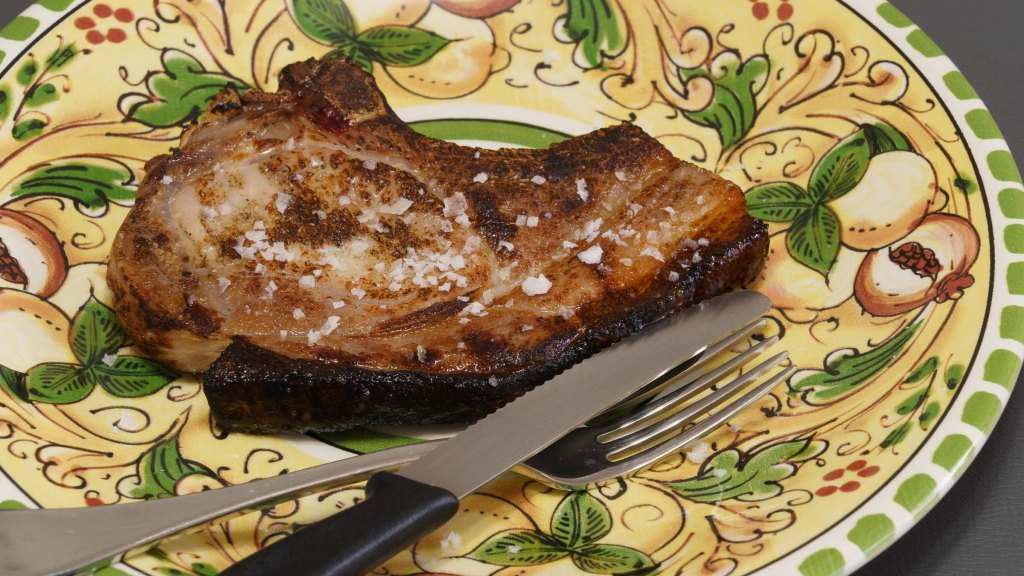

I asked Microsoft Copilot for a description of pork chops.
Here is what was generated.
Jump to the recipe
The Art of Cooking and Eating Pork Chops
Anatomy of a Pig and Pork Chop Origin
Pork chops are cut from the loin of the pig, which extends from the hip to the shoulder and includes the ribcage. The loin is divided into four sections: the blade end (closer to the shoulder), the rib end, the loin centre, and the sirloin end (near the hip). Pork chops can be sourced from any of these sections, with each part providing different textures and flavours.
Terminology for Pork Chops
Pork chops are known by different names in various countries. For instance:
- In the UK, they are often referred to as “pork cutlets.”
- In France, the term “côte de porc” is used.
- In Italy, they are called “braciole di maiale.“
- In Germany, they are known as “Schweinekoteletts.“
Best Ways to Cook Pork Chops
Cooking pork chops well requires attention and respect for the meat. Here are some methods:
- Grilling: This method gives a smoky flavour and charred exterior. Marinating the chops before grilling adds depth to the taste.
- Pan-Seared: Quick and effective, this method involves searing the chops in a hot pan to form a crust, then finishing them in the oven.
- Baking: A slow and gentle method that ensures the meat is juicy and tender. Seasoning or breading can add extra flavour.
- Sous Vide: This technique involves vacuum-sealing the chops and cooking them in a water bath at a precise temperature, ensuring consistent doneness.
Selecting Pork Chops at a Butcher Shop
When choosing pork chops, consider the following:
- Colour: Look for pinkish-red chops with some marbling; avoid chops that are pale or have dark spots.
- Fat Content: Some fat around the edges is desirable as it adds flavour and moisture.
- Bone-In or Boneless: Bone-in chops tend to be juicier and more flavourful, while boneless chops cook more quickly and evenly.
Nutritional Value of Pork Chops
Pork chops are a source of protein and nutrients. Here’s a breakdown of their nutritional content (per 100 grams):
Protein: Approximately 21–26 grams
Fat: Around 9–12 grams, including both saturated and unsaturated fats
Carbohydrates: Negligible, as meat generally doesn’t contain carbs
Pork chops also provide B vitamins, selenium, zinc, and phosphorus.
Premarket Processes
Consumers should be aware of some premarket processes that can affect the quality of pork chops:
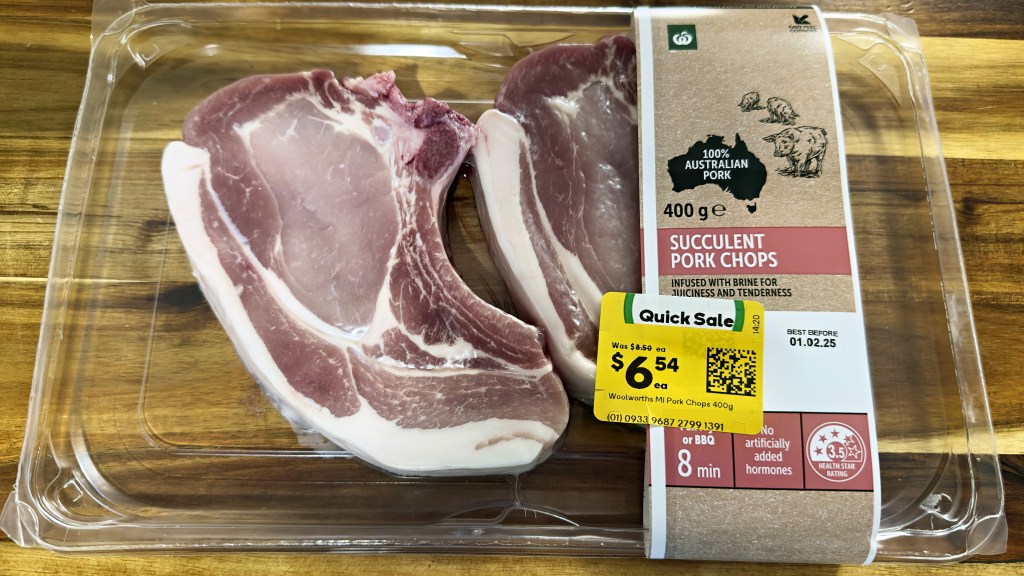
- Water Injection: Some pork chops are injected with a saline solution to enhance juiciness and weight. This process can alter the taste and texture, and it’s essential to read labels carefully.
- Brining: Similar to water injection, brining involves soaking the meat in a saltwater solution, which can improve flavour but also increase sodium content.
Selecting high-quality pork chops and understanding their preparation and nutritional content can elevate your experience. Whether grilled, baked, or pan-seared, pork chops offer a versatile and delicious option.
I also asked Microsoft Copilot to compare and contrast beef and pork.
Alimentary Tract of Pigs and Beef Cattle
Pigs
Type of Stomach: Monogastric (single-chambered)
Diet: Omnivorous, consisting of grains, vegetables, and occasionally meat.
Fermentation Site: Limited fermentation occurs in the caecum and colon.
Process: Food is ingested, passed to the stomach for enzymatic digestion, and then moves to the small intestine where most nutrient absorption occurs. Fibre and other indigestible components are partially fermented in the large intestine.
Beef Cattle
Type of Stomach: Ruminant (four-chambered)
Diet: Herbivorous, primarily grass and other fibrous plant material.
Fermentation Site: Extensive fermentation occurs primarily in the rumen (first chamber).
Process: Food is ingested and initially stored in the rumen, where it is fermented by a complex community of microbes. This produces volatile fatty acids (VFAs), which are a primary energy source. The food then passes through the reticulum, omasum, and abomasum for further digestion and absorption.
Four-Chambered vs Single-Chambered Stomach
Four-Chambered Stomach (Ruminants)
Chambers: Rumen, reticulum, omasum, abomasum.
Function: Rumen is the primary site for microbial fermentation, which breaks down fibrous plant material into VFAs, microbial protein, and gases. The reticulum acts as a sieve, the omasum absorbs water and nutrients, and the abomasum functions similarly to a monogastric stomach, producing acid and enzymes for digestion.
Single-Chambered Stomach (Monogastrics)
Chambers: One main stomach chamber.
Function: Secretes acid and digestive enzymes to break down food into smaller molecules for absorption in the small intestine. Fermentation occurs to a much lesser extent in the large intestine.
Implications for Metabolism and Food Processing
Ruminants (Beef Cattle): Due to their complex stomachs, they efficiently convert fibrous plant material into energy through microbial fermentation. This results in a slow but steady release of energy, suitable for grazing animals that need to extract maximum nutrients from fibrous diets.
Monogastrics (Pigs): They rely more on enzymatic digestion and have limited capacity to ferment fibrous material. Their diet needs to be more easily digestible and nutrient-rich, allowing for quicker energy release and growth.
Quality of Free Fatty Acids
Ruminants: The microbial fermentation process in the rumen saturates fatty acids, leading to higher proportions of saturated fatty acids in their tissues.
Monogastrics: Pigs tend to have higher levels of unsaturated fatty acids in their tissues since their digestive process doesn’t extensively alter the fatty acid profile of their diet.
The differences in digestive anatomy and function between pigs and beef cattle reflect their dietary needs and the nature of their food processing. Ruminants like cattle are specialised to derive energy from fibrous plants through microbial fermentation, while monogastric animals like pigs depend on a more varied diet and enzymatic digestion for nutrient absorption. These differences also influence the types and quality of fatty acids produced within their systems.
Recipe
Because I’m not confident with cooking pork chops, I elected to use a water bath and precision cooker for tonight’s meal.
Ingredients
- Salt
- Pork chop
Equipment
- Water bath
- Precision cooker
- Gas torch
Instructions
- The day before the meal, season the meat with salt, and place the pork chop on a rack, uncovered, in the refrigerator.
- A few hours before eating, place the meat into a plastic bag and vacuum seal it.
- Place the bagged meat into the water bath and cook it at 57 °C for 2 hours.
- When the meat is finished cooking remove the meat from the bag and dry the surfaces with absorbent paper towels.
- Sear the meat with a gas torch.
- Serve the pork chop on a dinner plate.
Thoughts on the meal
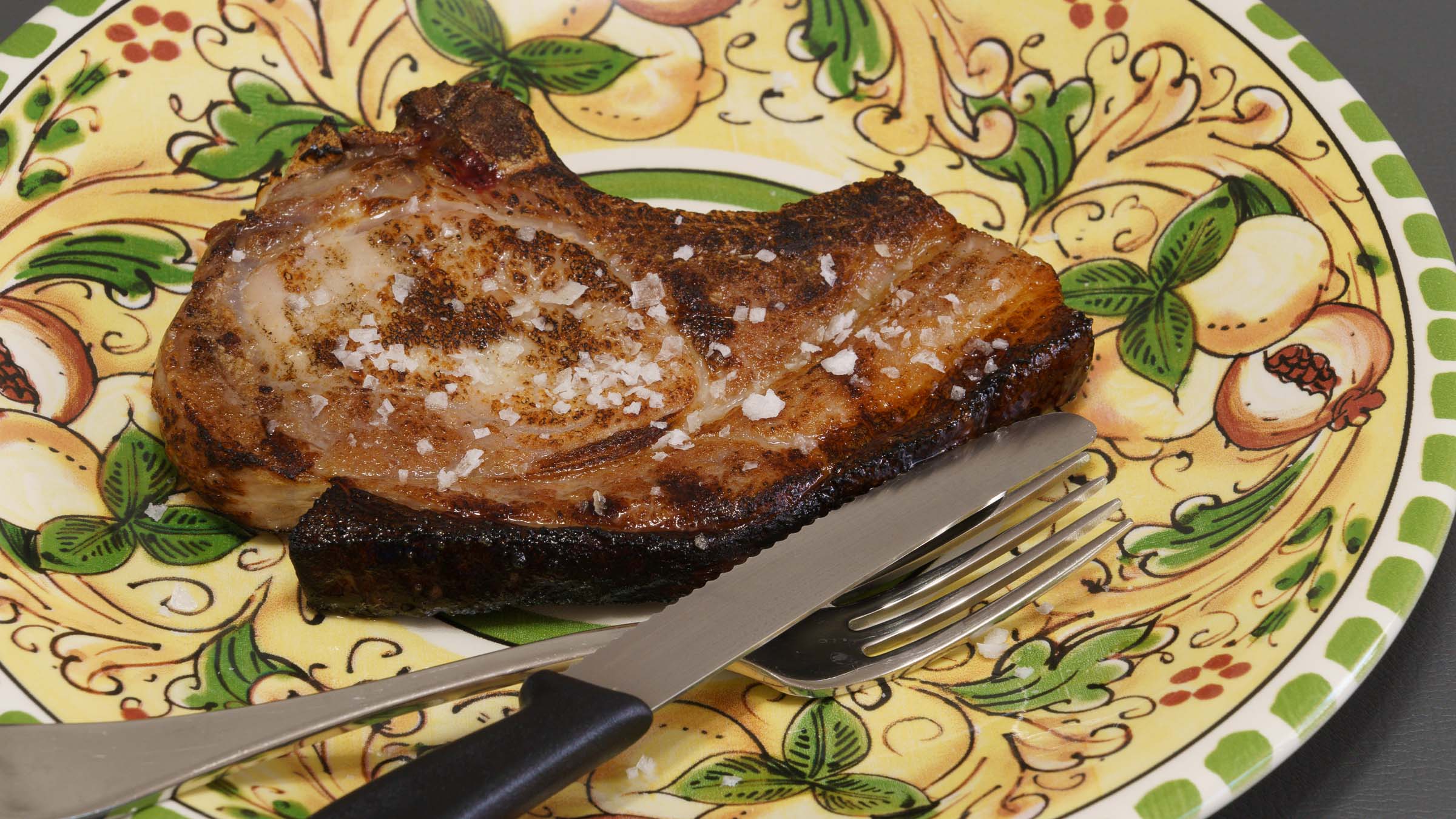
The pork was succulent, tender, and had an enjoyable mouthfeel.
I was pleasantly surprised at how tender the pork was.
The fat was also delicious.
Photographs




Questions
- Do you like pork chops?
- How do you like to cook pork chops?
- What do you like to eat with pork chops?
The second chop


Leave a reply to Jeff the Chef Cancel reply