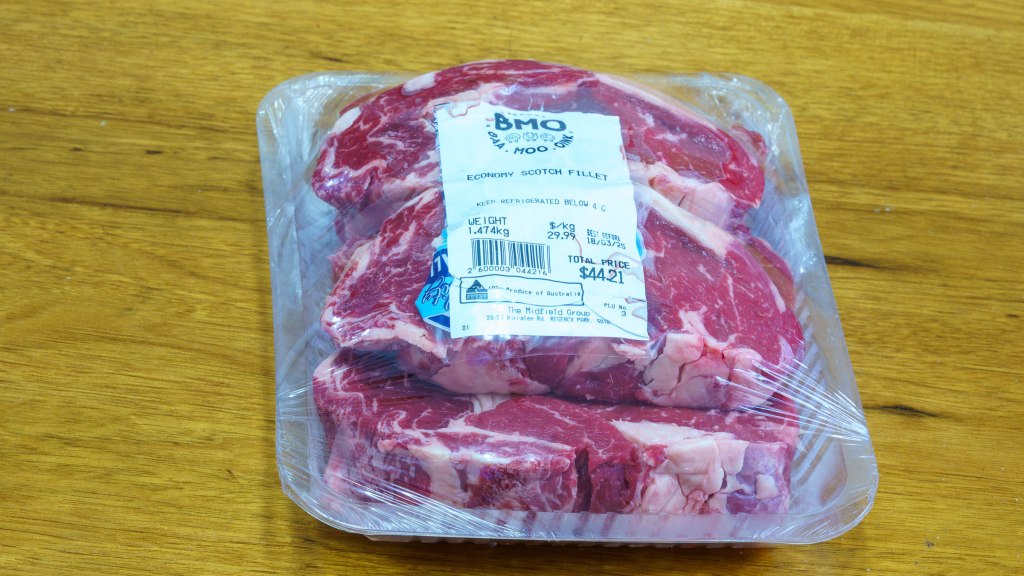
Economy scotch fillet steak

·

A week or so ago, I bought a lump of beef labelled “economy scotch fillet steak.” It cost about $AUD45. I asked the butcher to cut it into 3 cm slices, and I ended up with five steaks.

A photograph of a refrigerator rack with six steak on it. One is a Wagyu porterhouse steak in the top right corner. The other five steaks are economy-grade scotch fillet steak, each slice is about 3 cm thick.

From the butcher, each slice weighed about 300 g. The meat costs $AUD29.99/kilogram. I know what some readers are thinking; $AUD30 for a kilogram isn’t cheap. I agree. I can buy chuck or eye round for a lot less. For scotch fillet steak (also known as ribeye steak in North America), it’s possible to buy cheaper quality meat. That said, the upper limit on the cost for a scotch fillet steak can be five or more times the cost I paid for this piece of beef.

I acknowledge that I have a well-paid job and can afford meat at this price. However, I’m conscious that many people cannot afford meat at this price.

While scotch fillet steak is usually tender, cheaper meat can be chewy to tough. A poorly cooked 3 cm steak can be very tough and unpleasant. I think a tough and chewy “economy scotch fillet steak” is poor economy.

Based on the methods available, the best way to approach this was using a water bath and a precision cooker. To save cooking time, I cooked all the steaks at once and refrigerated them in their plastic vacuum-sealed bags. Each day I wanted a steak; I’d pop it into the water bath and heat the steak to 57 °C for about 20 minutes and then sear the meat with a gas torch. Instead of 15 hours of electricity use, I reduced that to about 4 hours and 20 minutes.

I shared some photographs already in another post (Chifley’s Bar and Grill at the Hotel Kurrajong).

I liked this “economy scotch fillet.” When cooked like this, it had a great taste and mouthfeel, and it wasn’t tough.

I agree that $AUD9 a steak isn’t as cheap as $AUD6.50 for 500 g of beef mince, but for me, it means I can eat for less than $20 each day, assuming I’m only eating two meals a day. This includes coffee and carbonated water, too.

If you’re interested in doing this, here is my approach:

  • Buy meat from a butcher and choose a piece of beef you want.
  • Ask the butcher to slice the steaks to the thickness you want. This is usually done free of charge.
  • Dry brine the meat.
  • Bag and vacuum seal the meat after dry brining.
  • Cook all the steaks for 3 hours at 57 °C.
  • Refrigerate the bags of steak.
  • Warm up the steak for about 20 minutes at 57 °C.
  • Remove the steak from the bag and pat dry the surface of the meat with a paper towel (after the dry brining and cooking, the steak weighed a bit over 200 g).
  • Sear the steak with a gas torch or a hot frypan or over a hot grill.
  • Slice the steak, season the steak, and serve it with some butter.

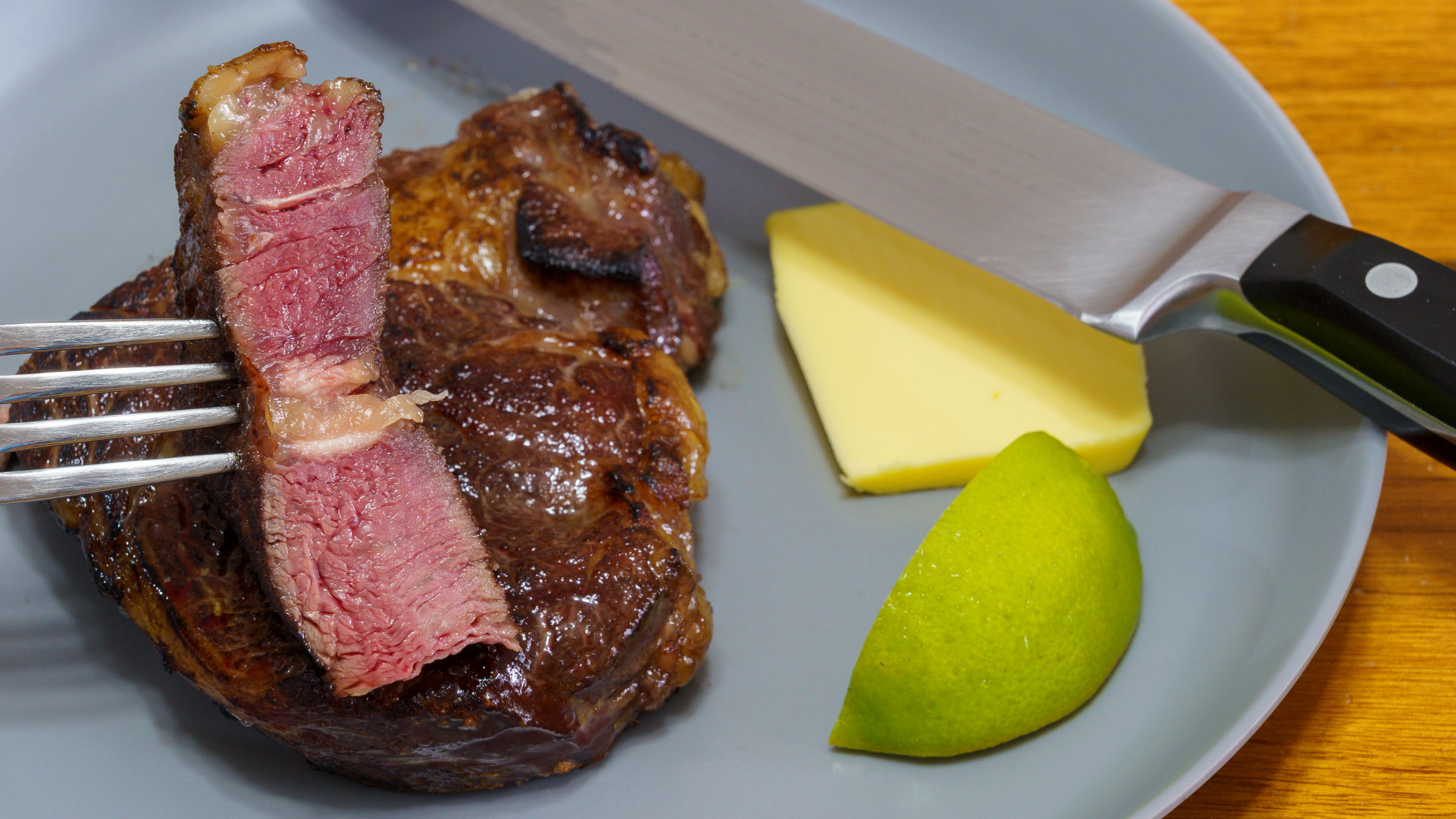
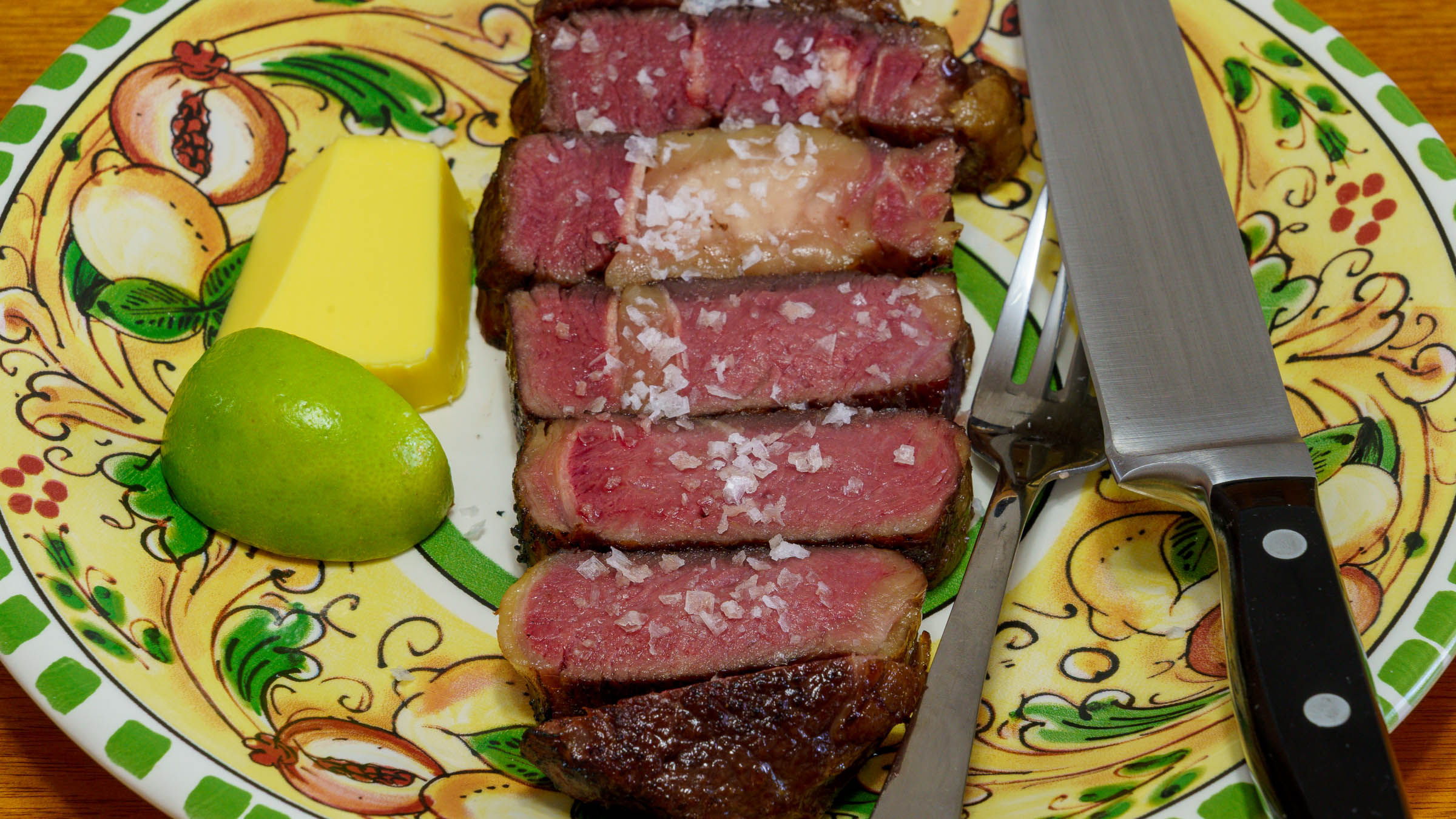
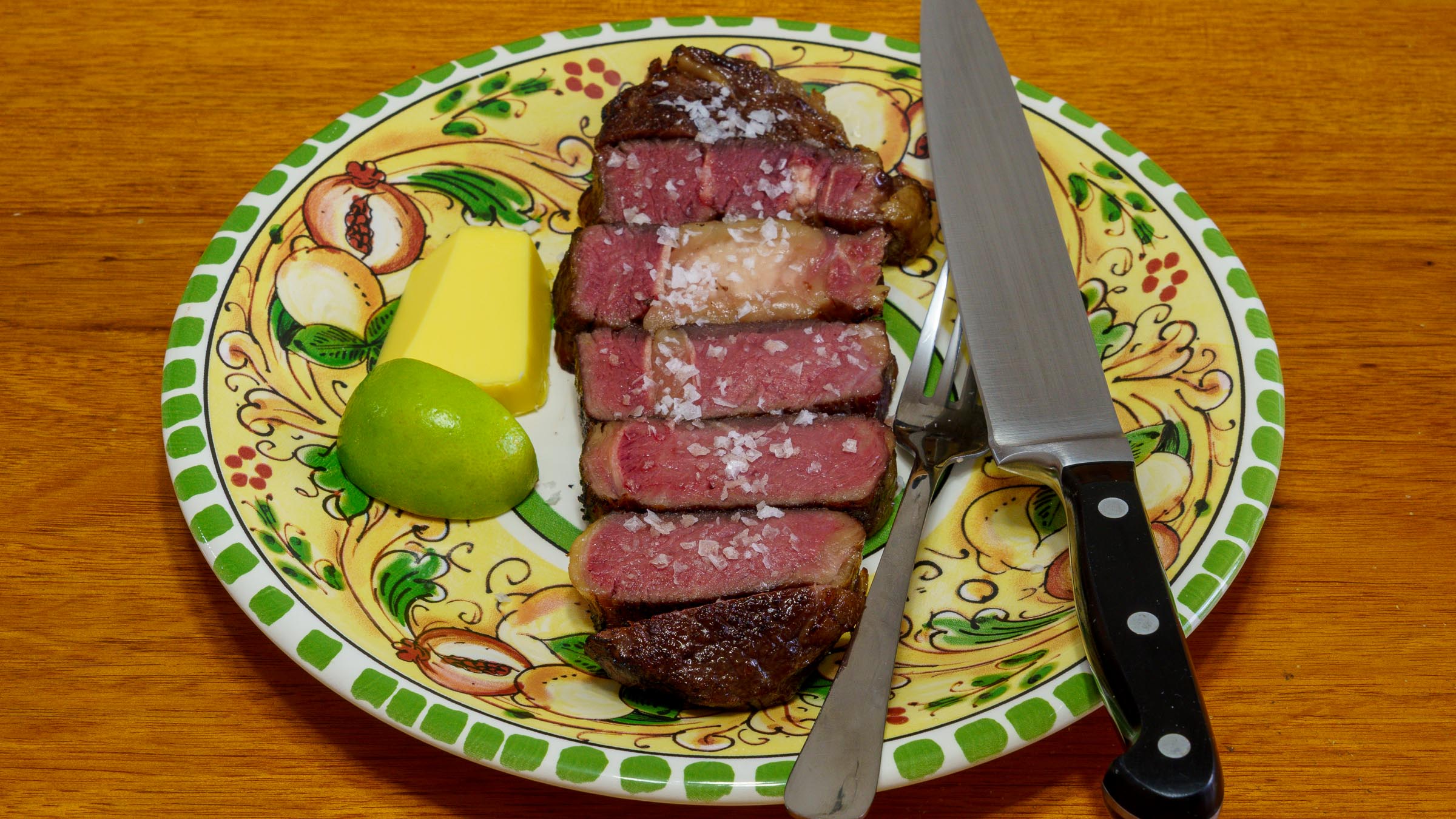
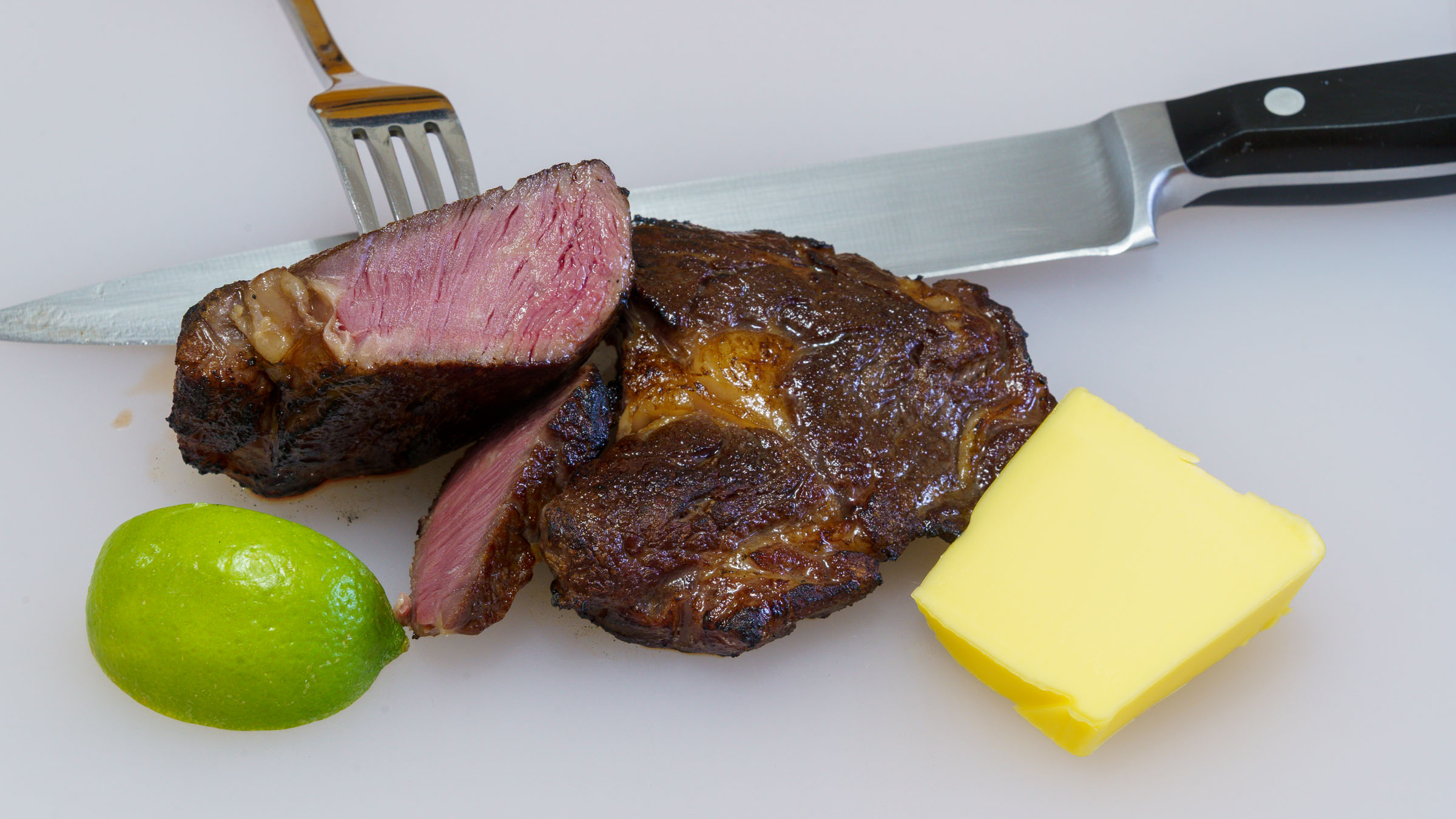
Here are some examples of the steaks I enjoyed from that piece of “economy scotch fillet steak.”

Select one image and then scroll through the gallery.

Comments

8 responses to “Economy scotch fillet steak”

  1. The best steak I’ve ever eaten – Yummy Lummy Avatar

    […] A few weeks ago, I bought a piece of scotch fillet from my butcher. It was labelled “economy” and priced at AUD 29.99 per kilogram. I understand that, for many people, this remains unaffordable. […]

    Like

  2. Lorraine @ Not Quite Nigella Avatar

    Great tips on having your steak Gary! I still haven’t bought a sous vide machine but I am a bit worried about hot plastic and food. What are your thoughts on this? :)

    Liked by 1 person

    1. Gary Avatar

      Thanks, Lorraine. I too have a concern about the amount of plastic use and heating it too. For sous vide cooking, plastic bags are a necessity, I don’t think there are alternatives. I buy BPA free bags and check to see if the manufacturer makes any food-safe claims.
      I also look at this problem in the totality of the synthetic material we’re exposed to in the environment plus balancing it against the benefits of eating and enjoying well cooked food.
      Cooking in a water bath with precise control of temperature has health benefits like pasteurisation of foods which in my mind outweighs the exposure to synthetic materials which may or may not have deleterious health effects.

      Like

      1. Eha Carr Avatar

        Gary – just checking your post, accidentally saw this discussion twixt you and Lorraine. Since this is in my current study area, may I have a word without meaning anything badly!

        1. Do you really think ANY manufacturers advice can be and should be taken at face value? They need to sell their product and will always get around matters in small print and using ‘clever’ verbiage..
        2. Surely we must and are trying to get rid of EACH bit of plastic bit-by- bit, not add to the problem. You said you had UPF related books coming up on your agenda – this very much fits in!
        3. Most of us, very much including me, eat unpasteurized food like milk, cheese (most good ones are unpasteurized!) all the time – in a very long lifetime, taking normal care, I/we have never ever had a problem. Ordinary careful cooking easily takes care of that!

        I truly do not mean to be a ‘smarty-pants’ – by your statements are you implying 99% of the world does not eat ‘well-cooked’ food?

        I am terribly sorry to admit your diet is not particularly varied or suitable for delightful dinner parties or exciting restaurant visits or international food tours which surely are some of the mainstays of a happy and fulfilling life :) ! Or just making friends all over the world!

        with care Eha

        Like

        1. Gary Avatar

          Thanks, Eha, for sharing your opinions.

          Like

          1. Eha Carr Avatar

            Dear Gary – I definitely did not ‘share opinions’ but asked you a few questions in our areas of competence :) !

            Like

  3. Eha Carr Avatar

    Altho’ I am largely into various SE Asian, Middle Eastern and North African cuisines most days I do enjoy the occasional steak and huge salad meal :) ! Oft scotch fillet in that case – usually marinated or dry brined for an hour or two and then put under a very hot grill for a few minutes for ‘blue’ or ‘rare’ . . . oh well . . .

    Like

    1. Gary Avatar

      Thanks, Eha.

      Like

Leave a reply to The best steak I’ve ever eaten – Yummy Lummy Cancel reply

This site uses Akismet to reduce spam. Learn how your comment data is processed.