

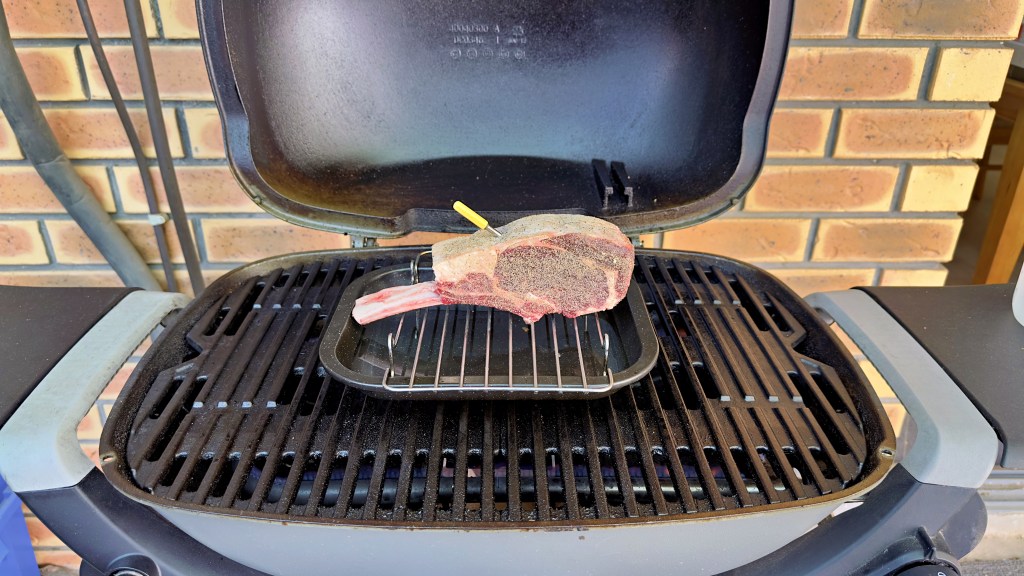
I wanted to cook a steak in the Weber Q+ with a meat thermometer.
In theory, the Weber Q+ should function like an oven. Although it runs on gas instead of electricity, the main difference lies in temperature control. My benchtop oven has a microprocessor-controlled thermostat and heating elements that are less affected by maintenance and wind, resulting in a low coefficient of variation. If my benchtop oven was a laboratory instrument, it would be pretty good. The Weber Q+, however, would not be highly regarded as a laboratory instrument.
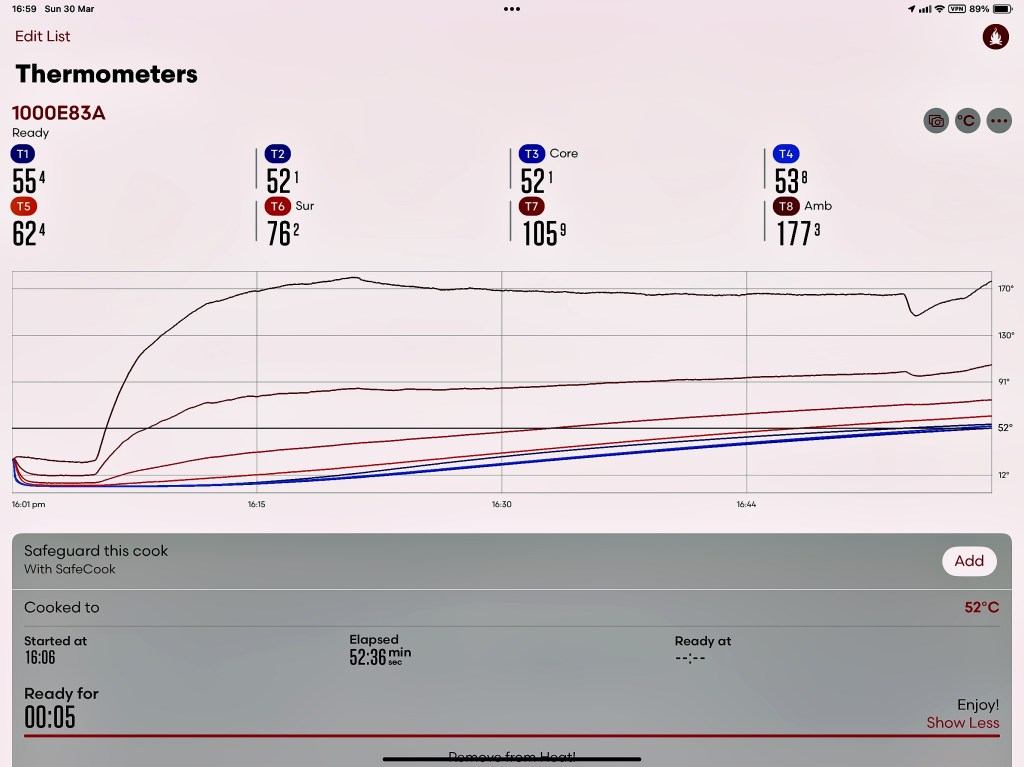
The key to reverse sear success is using a meat thermometer.
I bought this 611 gram steak from my butcher. Normally, I prefer grass-fed rather than grain-fed, but beggars can’t be choosers.

Recipe
Ingredients
- Steak — 611 grams (21.6 ounces/1.35 pounds) with the bone
- Salt — iodised table salt and flaky finishing salt
- Pepper — freshly ground black peppercorns
Equipment
- Weber Q+
- Gas torch
- Meat thermometer
Instructions
- Season the steak with salt and pepper.
- Dry brine the steak overnight.
- Heat the Weber Q+ and set the gas burners to low.
- Insert the meat thermometer into the steak.
- Cook the steak until the internal temperature reaches 55 °C (131 °F).
- Remove the thermometer and sear the steak with a gas torch.
- Rest the meat.
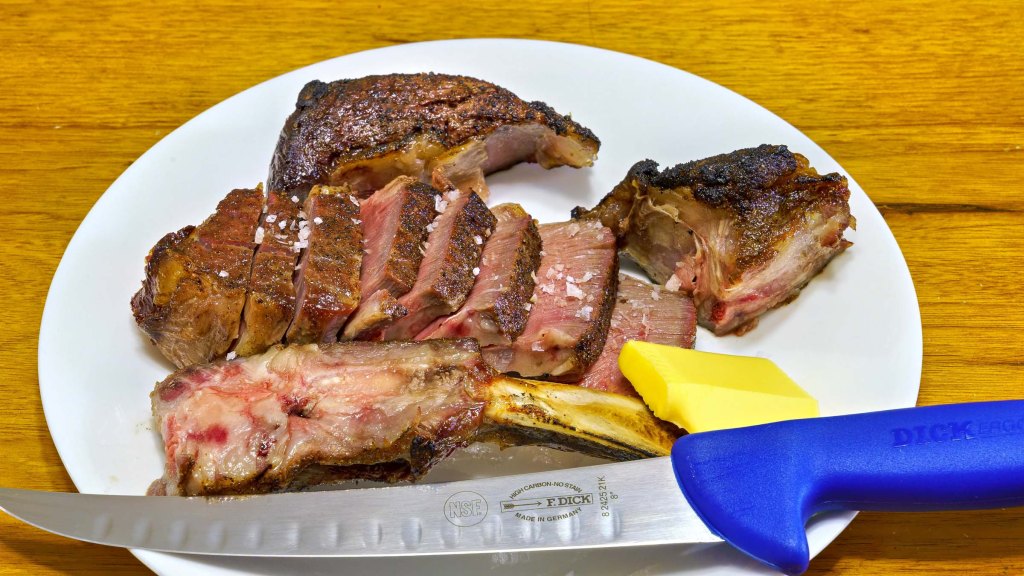
- Slice the meat.
- Arrange the meat.
- Serve the meat.
- Eat the meat.
- Dream about meat.

Thoughts on the meal.
What is reverse sear cooking?
The reverse sear method offers benefits when cooking beef steak, particularly for thicker cuts. Here are some of the key advantages:
Even Cooking:
By slowly heating the steak in the oven at a low temperature, the meat cooks uniformly. This gentle cooking phase means there’s far less variation in doneness across the steak, eliminating the common problem of having a stark contrast between a well-done exterior and an undercooked centre.
Enhanced Crust Formation:
A brief sear delivers a caramelised crust once the steak reaches the desired internal temperature. The Maillard reaction develops a deep, savoury flavour without risking additional interior cooking.
Improved Temperature Control:
The two-stage process means you can monitor and control the internal temperature, reducing the risk of overshooting the target doneness. This control is beneficial for achieving a medium-rare or any other preferred level of doneness.
Moist and Tender Results:
Initially, cooking at a low temperature helps retain the meat juices. When the steak is later seared, the moisture remains, resulting in a tender and flavourful steak.
This method has grown in popularity due to its reliability and the elevated eating experience.
Grass-fed or grain-fed beef?
There are several key differences between grain-fed and grass-fed beef, encompassing rearing practices, nutrition, flavour profiles, and even environmental impact.
Rearing Practices and Diet
Grass-Fed Beef:
Cattle are raised predominantly on pasture. They graze on a natural diet of grass throughout their lives. This method is more reflective of the animal’s natural behaviour and tends to involve more extensive, sometimes free-range, farming practices.
Grain-Fed Beef:
Cattle usually spend the majority of their life grazing on pasture in their early months. However, in many cases, they are later moved to feedlots, where they are finished on an energy-dense diet primarily composed of grains (such as corn or soy). This accelerated feeding process is designed to promote rapid weight gain and increased marbling within the meat.
Nutritional Profile
Grass-Fed:
Leaner Meat: Grass-fed beef generally has lower overall fat content, resulting in a leaner profile.
Favourable Fatty Acids: It tends to have higher levels of omega-3 fatty acids and conjugated linoleic acid (CLA), along with a better omega-3 to omega-6 ratio.
Grain-Fed:
More Marbling: The grain-based diet promotes intramuscular fat development, leading to a richer marbling which can enhance tenderness and flavour.
Higher Caloric Content: The increased fat also means that grain-fed beef may be higher in calories and saturated fat compared to its grass-fed counterpart.
Flavour and Texture
Grass-Fed:
Beef raised on grass often has an earthy flavour that reflects the natural diet of the animal.
Texture: Because the meat is leaner, it can be slightly tougher if not cooked properly. Techniques to ensure optimum tenderness, include slow cooking or sous vide.
Grain-Fed:
Thanks to enhanced marbling from the grain diet, grain-fed beef usually comes out more tender with a rich, buttery flavour that appeals to many who are accustomed to the American style of beef.
Environmental and Ethical Considerations
Grass-Fed:
Sustainability: When managed responsibly (for example, through rotational grazing), grass-fed systems can support soil health and ecosystem diversity.
Animal Welfare: Often, the practices associated with grass-fed beef focus on natural grazing behaviours, which some consumers feel is more humane.
Grain-Fed:
Resource Intensity: Feedlot operations may involve higher concentrations of animals, potentially leading to environmental challenges such as faeces management and greater resource inputs.
Efficiency versus welfare: While these systems are designed for efficient production, they sometimes raise concerns regarding animal welfare and ecological impact.
Cost and Market Availability
Grass-Fed:
Premium Pricing: Because grass-fed beef typically requires longer periods to reach market weight and can be subject to less intensive farming methods, it often comes with a higher price tag.
Grain-Fed:
Cost-Effective: The accelerated growth and production efficiency generally allow for more cost-effective production, making grain-fed beef more widely available and often more affordable.
Summary Comparison
| Aspect | Grass-Fed Beef | Grain-Fed Beef |
| Diet and rearing | Natural pasture diet; free-range grazing | Early pasture then finished on grain feed |
| Fat content | Leaner, lower overall fat | Higher marbling and intramuscular fat |
| Nutritional Benefits | Higher omega-3, CLA, and vitamins | Rich in fat-soluble flavour; higher calories |
| Flavour and texture | Earthier, occasionally gamey; may be tougher | Tender, buttery taste with consistent texture |
| Environmental Impact | Potentially more sustainable with proper grazing practices | More intensive production, potential environmental downsides |
| Cost | Generally premium-priced | Typically, more economical |
Beyond the Basics
In Adelaide, many local farmers emphasise sustainable and ethical practices that mirror the grass-fed system, providing not just great flavour but a connection to more traditional farming.
Different cuts from these methods can require slightly different cooking techniques. For instance, the leaner nature of grass-fed beef often benefits from slower cooking at lower temperatures, while grain-fed cuts are versatile and frequently shine with quick, high-heat sears.
Other thoughts
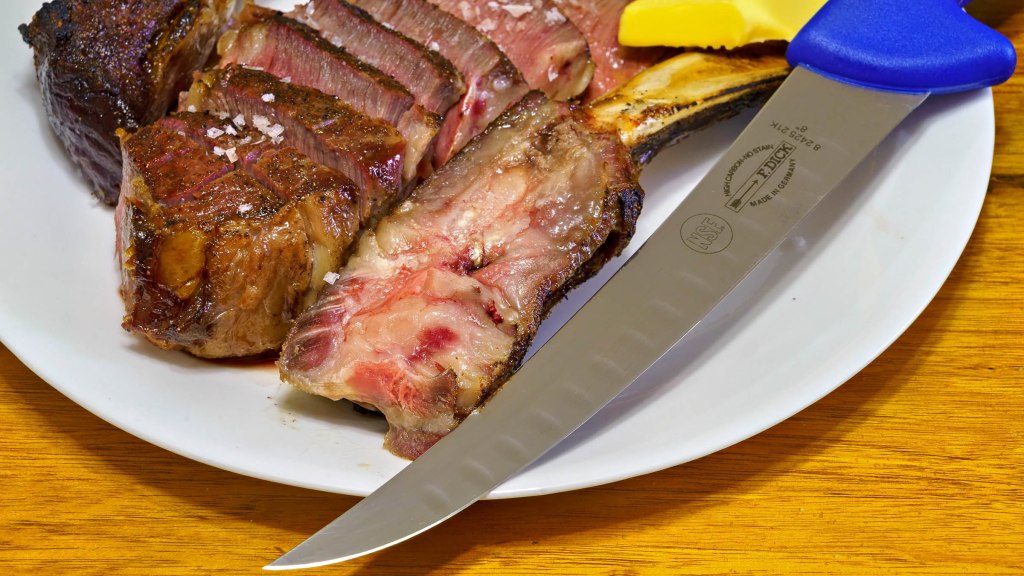
The steak was great. I really like gnawing on the bone too.
Photographs
This is a gallery of photographs. Click on one and scroll through the rest of them.









Leave a reply to Gary Cancel reply