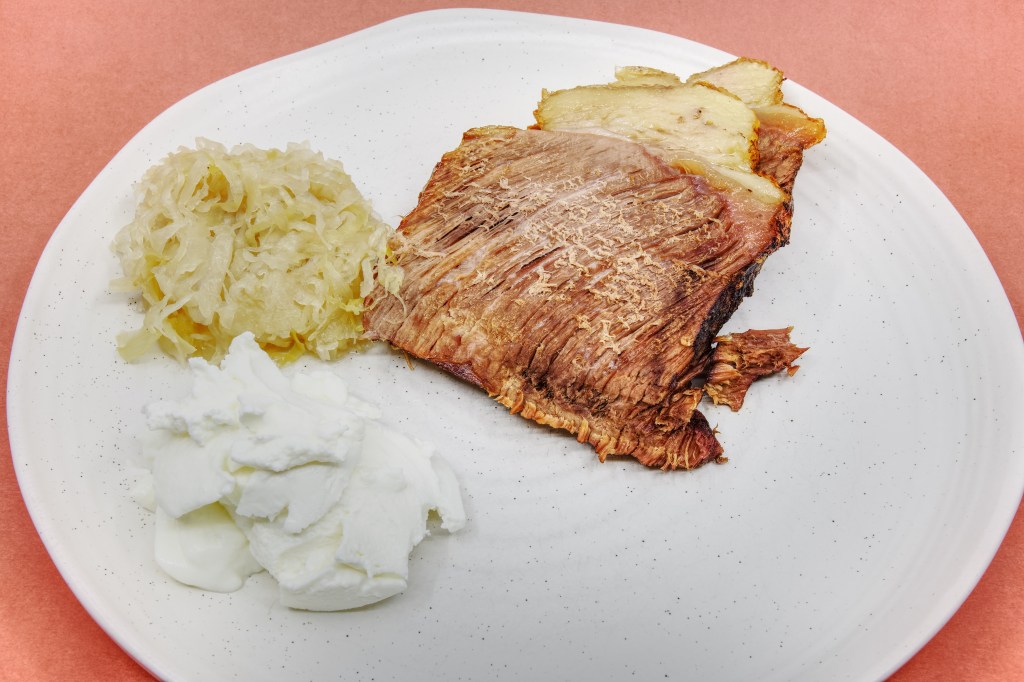
The bolar roast

·

Slow cooker bolar roast sliced and served with Greek-style yoghurt with Polish sauerkraut

The bolar roast is one of those cuts that is often overshadowed by flashier steaks and premium roasts, yet it delivers deep, beefy flavour and value for money.

Where does the bolar roast come from

Anatomically, the bolar roast is taken from the forequarter (shoulder) of the animal, specifically within the chuck primal. This area includes the shoulder blade (scapula), upper foreleg (humerus), and neck muscles. It is a heavily exercised part of the beast that develops robust flavour and significant connective tissue.

The bolar roast is associated with the blade section of the chuck and incorporates muscles such as the supraspinatus and infraspinatus, which sit around the shoulder blade. These muscles are well-marbled and interwoven with fascia, giving the cut its characteristic richness and structure.

Because the shoulder works hard throughout the animal’s life, the bolar roast contains collagen-rich connective tissue. This makes it tough when cooked quickly, but tender when cooked low and slow.

What makes the bolar roast worthwhile?

The bolar roast’s appeal is cheap flavour. Cuts from the chuck primal are known for a deep, beefy taste. Its internal marbling and connective tissue contribute to moisture and richness when properly cooked.

It is a budget-friendly option compared with premium roasting cuts like ribeye or tenderloin, making it economical for people who want flavour without the premium price tag.

This roast costs $AUD18/kg.

Cooking characteristics: why slow is the way to go

Due to its structure, the bolar roast is best cooked using slow-cooking methods. The collagen and connective tissue break down with gentle heat, changing the roast from firm and sinewy to tender.

The best techniques include:

  • Slow roasting at low temperatures
  • Braising
  • Pot roasting
  • Smoking for long, low sessions

These methods allow the connective tissue to dissolve, enriching the cooking liquid and producing a liquor suitable for gravy.

Eating experience

A well-cooked bolar roast offers:

  • Tender slices that hold their shape but yield easily under the knife
  • Rich, beefy flavour that pairs well with sides
  • Luxurious gravy thanks to the melted collagen
  • Versatility — slice it, shred it, or serve it as a centrepiece roast

It’s a cut for Sunday roasts, slow cooker dinners, and hearty winter meals.

Tonight’s dinner

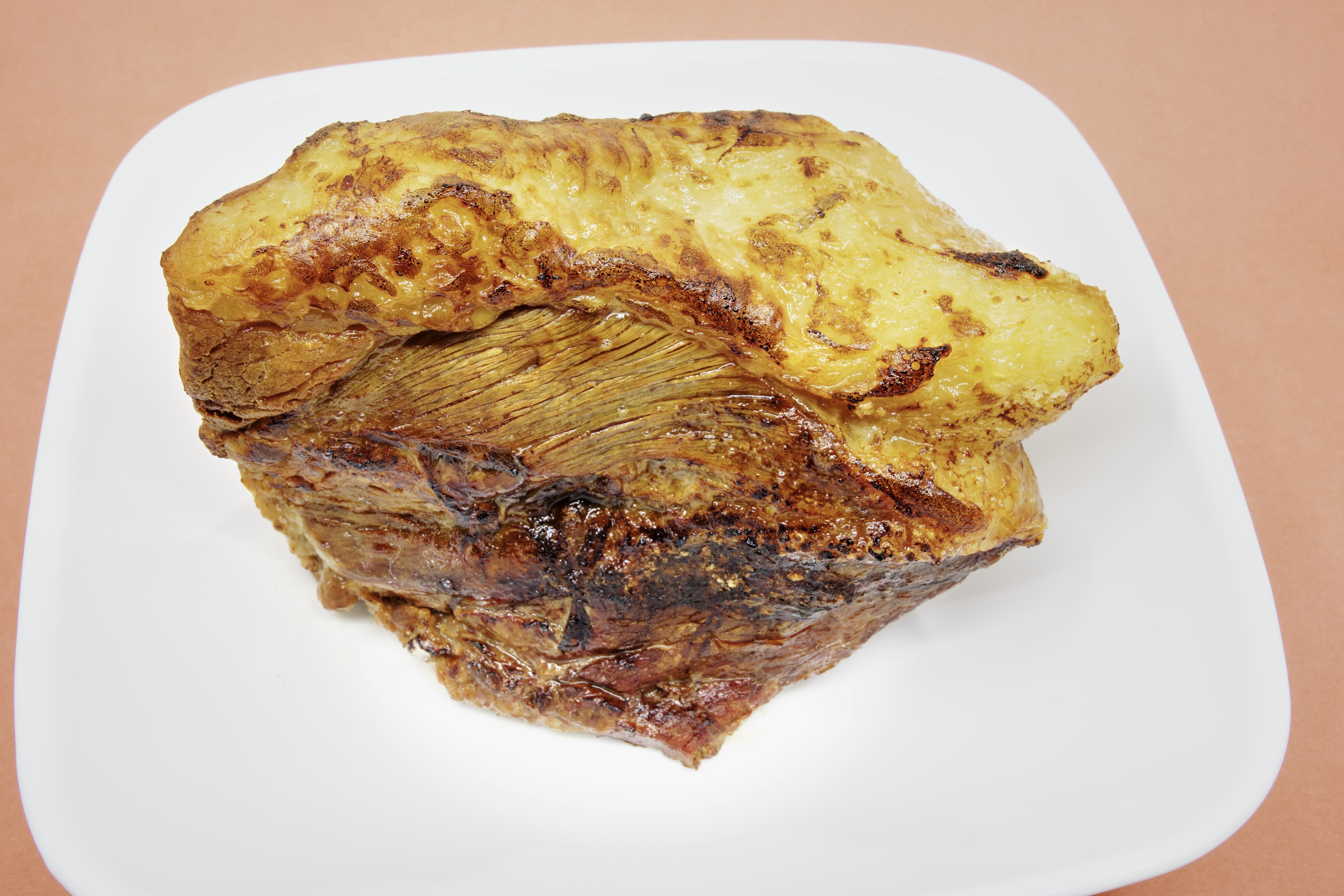
I cooked this roast in my slow cooker on low for eight hours. I seared the surface with a gas torch on a barbecue grill.

Today’s food diary

Lunch

Beef mince cooked with triple-cream truffle brie and some Polish sauerkraut. I cooked a couple of eggs with it, too.

Beef mince cooked with Triple Cream Truffle Brie and Polish sauerkraut and a couple of eggs

Tea

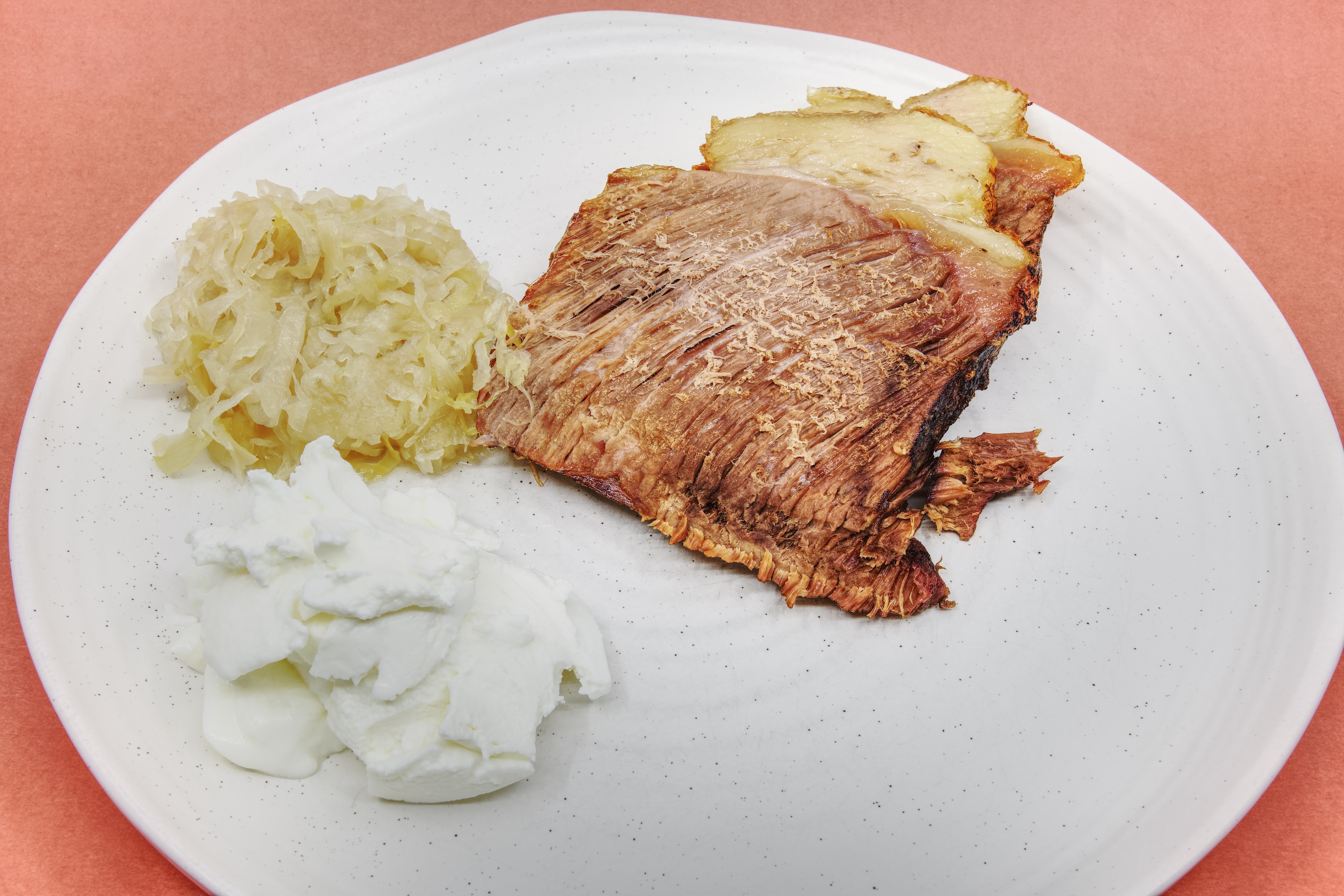
Bolar roast. It looks dry, but when cut against the grain, the meat is tender and not at all chewy. It was delicious with some Greek-style yoghurt and Polish sauerkraut.
Comments

13 responses to “The bolar roast”

  1. Best breakfast sandwich – Yummy Lummy Avatar

    […] protein component came from diced bolar roast, gently reheated in its own cooking liquor. This kept the meat tender, warm, and deeply flavoured. […]

    Liked by 1 person

  2. Lorraine Elliott Avatar
    Lorraine Elliott

    I rarely think to cook a bolar roast but the meat looks really unique with the graining!

    Like

    1. Gary Avatar

      It’s not a cut I’d serve people I love, but for me alone, it was pretty good, especially reheated as hashed beef.

      Like

  3. Eha Carr Avatar

    Just a ‘hello’ and have an interesting Sunday night . . . glad to see the sauerkraut and Greek yoghurt gracing your plate . . . eating meat twice in one day would not be my ‘cup of tea’ but, then, you know that . . . wonder whether you are backing Spain or Argentina in an hour or two . . .

    Like

    1. Gary Avatar

      Thanks, Eha. I’ve not taken any interest in the soccer. I’ve been following the rugby league.

      Liked by 1 person

      1. Eha Carr Avatar

        Oh, I know! I have no interest in any kind of football – but this is a world happening . . . a form of ‘news’ of which I feel I have to be cognizant to ‘belong’ :) ! Altho’ our this year’s fabulous MasterChef comes first naturally :) ! In 20 minutes tonight . . . a fantastic learning curve . . .

        Like

        1. Gary Avatar

          The Rugby League World Cup is being held later this year. I’ll be taking an interest.

          Liked by 1 person

  4. A_Boleyn Avatar

    Never heard of it. Looks like a nice piece of meat.

    Like

    1. Gary Avatar

      Thank you. I wonder what it’s called in your part of the world.

      Like

      1. A_Boleyn Avatar

        Blade roast in Canada, apparently. In the US, it’s a chuck roast or a shoulder roast.

        Like

        1. Gary Avatar

          That makes sense. Is it also a cheaper cut in Canada?

          Like

          1. A_Boleyn Avatar

            Yes. I looked it up as I’ve never bought a blade roast. Only tri-tip roasts for some reason.

            Apparently blade roasts are 30-50 % cheaper than premium cuts and good if planning to braise as they’re a tougher cut of meat. The grocery chain I frequent doesn’t offer more premium cuts. I haven’t been able to find a t-bone or rib eye in some time. I’d have to shop at Freshco or Metro not my usual Food Basics if I wanted good beef roasts.

            Like

            1. Gary Avatar

              I think this bolar or blade roast will be useful for making beef hash as well.

              Liked by 1 person

Comments will be moderated.

This site uses Akismet to reduce spam. Learn how your comment data is processed.