

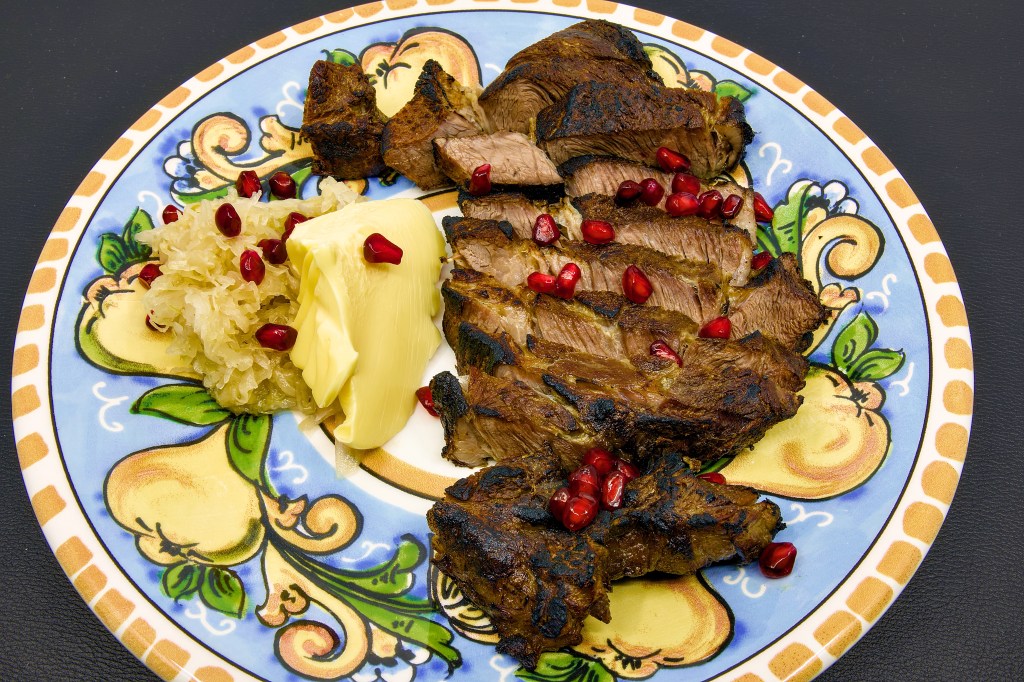
I usually associate chuck steak with slow cooking. It has plenty of beef flavour, but the connective tissue means it benefits from time and moisture.
When I recently visited Melbourne to see her, I enjoyed a chuck steak cooked slowly. I think it may have been cooked “under a vacuum” in a water bath for anywhere between 24 and 72 hours. That’s why it remained medium-rare pink yet tender like a scotch fillet steak.
I wanted to try something different. Instead of pressure-cooking a chuck steak until it was soft enough to pull apart, I wanted to cook it relatively quickly so it stayed intact. Then I could dry the surface, sear it, and eat it more like a conventional steak.
The aim isn’t to transform chuck into a tenderloin or scotch fillet. It’s to soften the meat while retaining some structure and then add a browned crust with a final sear.
Ingredients
- 1 chuck steak, about 350–500 g and preferably 3–4 cm thick
- Salt
- Freshly ground black pepper
- 250 mL salted water
Equipment
- Pressure cooker
- Trivet or rack for the pressure cooker
- Paper towel
- Cast iron flat top and a barbecue grill
- Gas torch
- Tongs
- Sharp knife
Instructions
Season the chuck steak
Pat the steak dry with some paper towel.
Season both sides with salt and black pepper.
If you have the time, salt the steak in advance and leave it uncovered in the refrigerator. Otherwise, season immediately before cooking.
Pressure-cook the steak
Add 250 mL of salted water to the pressure cooker.
Put a trivet into the cooker and place the chuck steak on the trivet so the meat sits above the cooking liquid.
Cook at high pressure for 15 minutes.
After pressure cooking, let the pressure release naturally for 5 minutes, then release the remaining pressure.
I’m deliberately keeping the pressure-cooking time short. I’m not trying to make pulled beef. I want the chuck to soften while retaining enough structure to handle a final high-temperature sear.
Dry the steak
Remove the chuck steak from the pressure cooker.
Pat it thoroughly dry with some paper towels and leave it uncovered for about 5–10 minutes.
Just before searing, pat the surface dry again.
Removing surface moisture is important so the steak browns rather than steams.
Sear
Heat a cast-iron flat plate on the barbecue.
Put the steak into the hot pan and sear it for about 45–60 seconds.
Blast it with a gas torch.
At this stage, I’m not trying to cook the steak significantly more. I want to sear the surface to form a crust.
Rest and slice
Remove the steak from the pan and rest it for about 5 minutes.
Look carefully at the direction of the muscle fibres, and slice the chuck thinly across the grain.
Chuck isn’t naturally as tender as premium steak cuts, so cutting across the grain makes each mouthful easier to chew.
What I’m looking for
I’m not expecting the texture of an eye fillet.
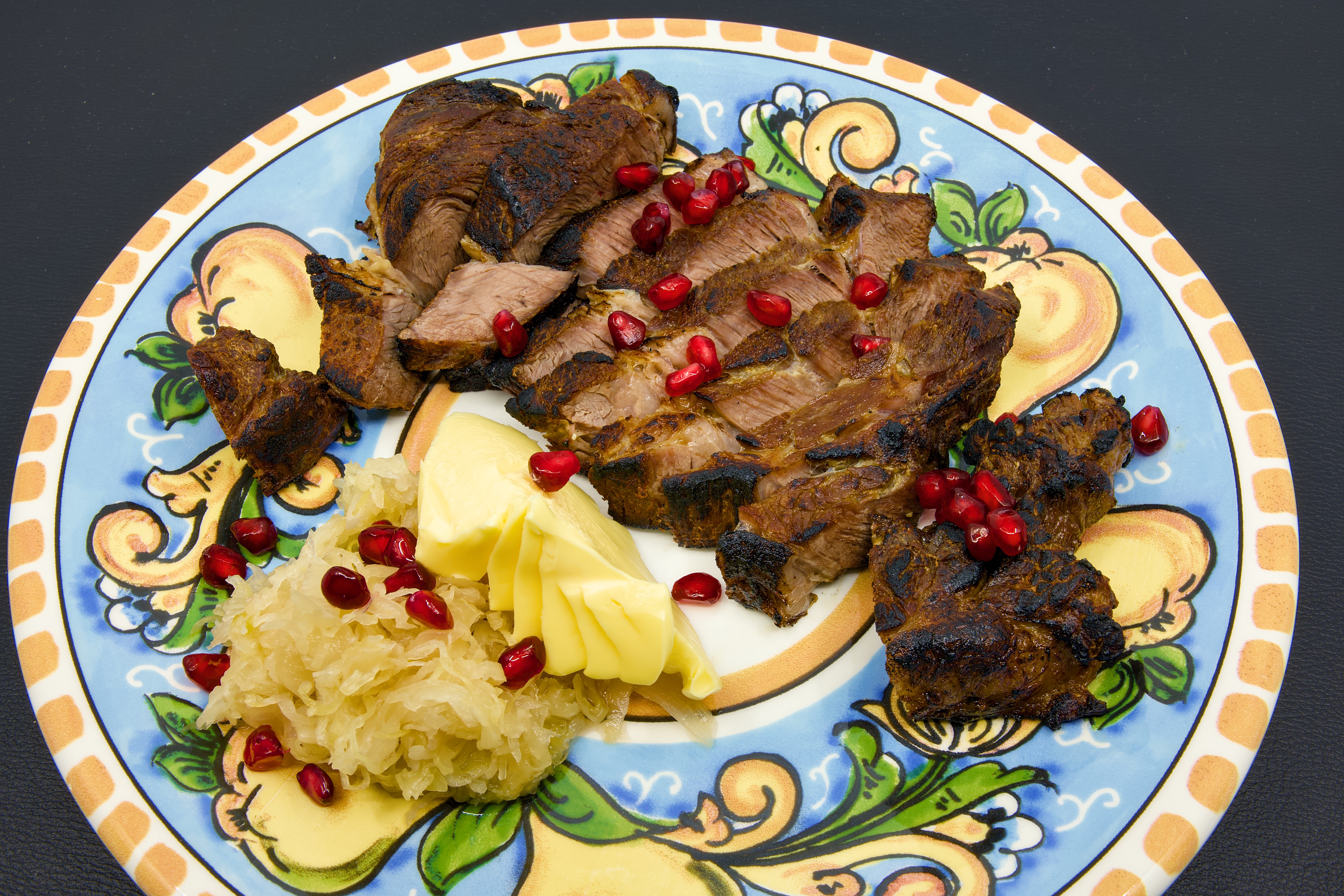
I’m hoping for something between a traditionally cooked steak and slowly braised chuck: a piece of beef that retains its shape and texture, benefits from pressure cooking, and has a good, browned exterior from the final sear.
Serving suggestion
I’d keep the meal relatively simple.
Some possibilities include:
- Sauerkraut and Greek-style yoghurt.
- Potato gems
The chuck should have plenty of beef flavour, so it doesn’t need a complicated sauce.
Final thoughts
This method appeals because it combines two quite different cooking techniques.
Pressure cooking gives the chuck a short period of cooking under heat, moisture, and pressure. The cast-iron flat plate then does something the pressure cooker cannot do particularly well: create a dry, deeply browned surface.
The key is finding the pressure-cooking sweet spot. Too little time and the chuck may remain tough. Too much time and I’ll end up with braised beef that happens to have been seared afterwards.
AI Disclaimer
This blog post has been modified with Microsoft Copilot. Microsoft Copilot corrected grammar, spelling, and tone.

Comments will be moderated.