Tag: Speck

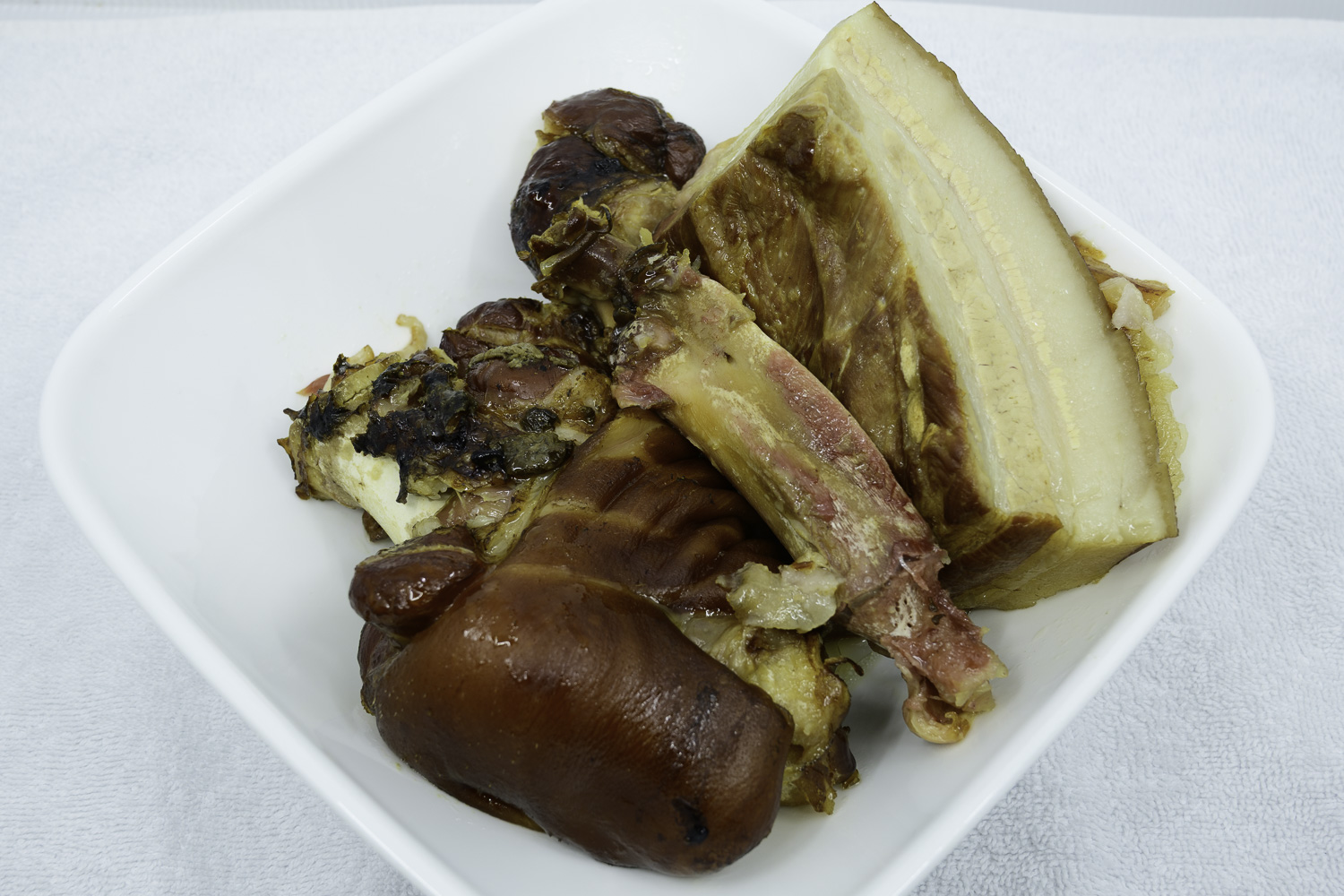
  • Cured pork shoulder hock and speck

    Cured pork shoulder hock and speck


    Cured pork shoulder hock[i] and speck[ii]

    I answered some swine-related questions at work this week, so tonight I thought I’d have some pork.

    Recipe

    Ingredients

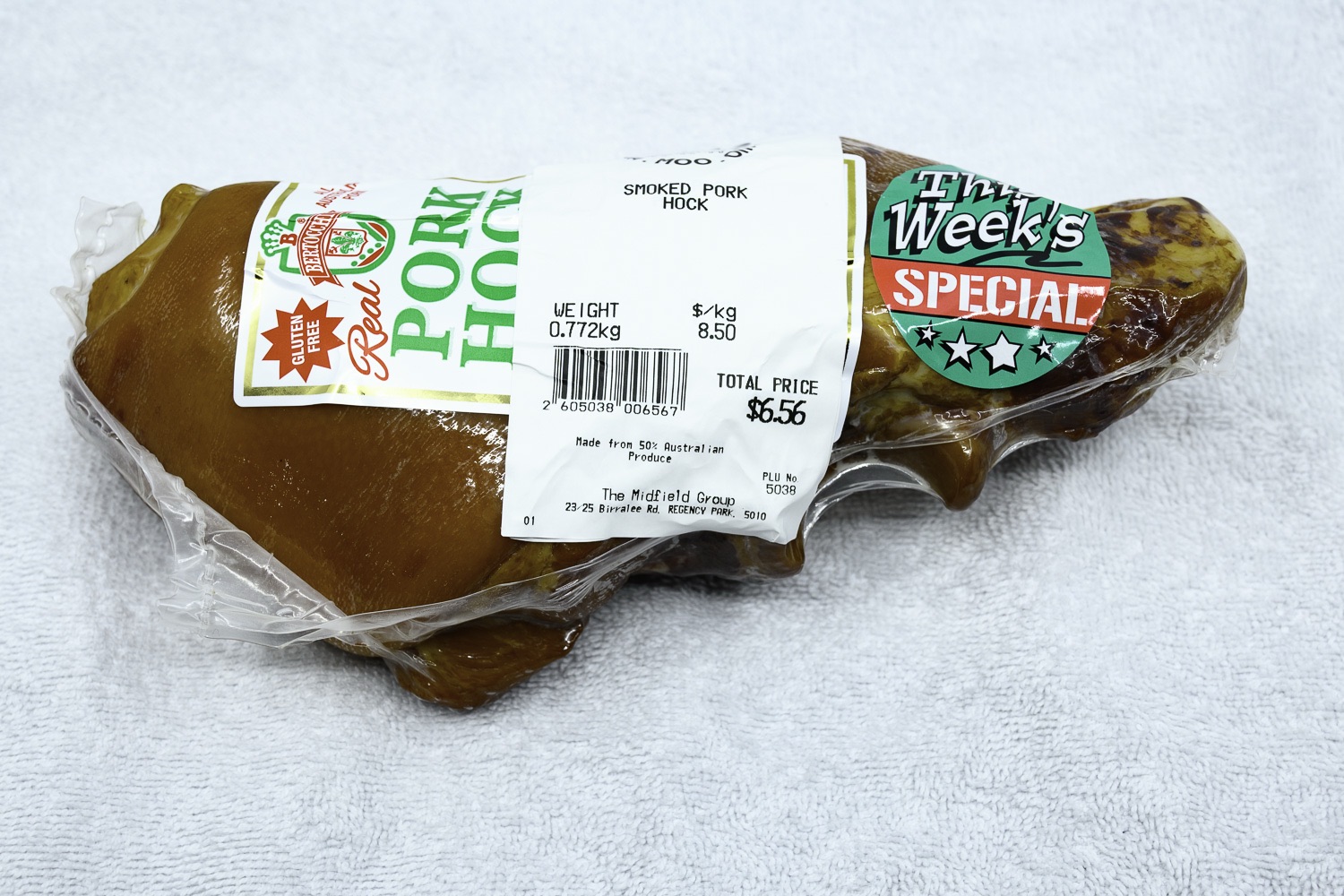
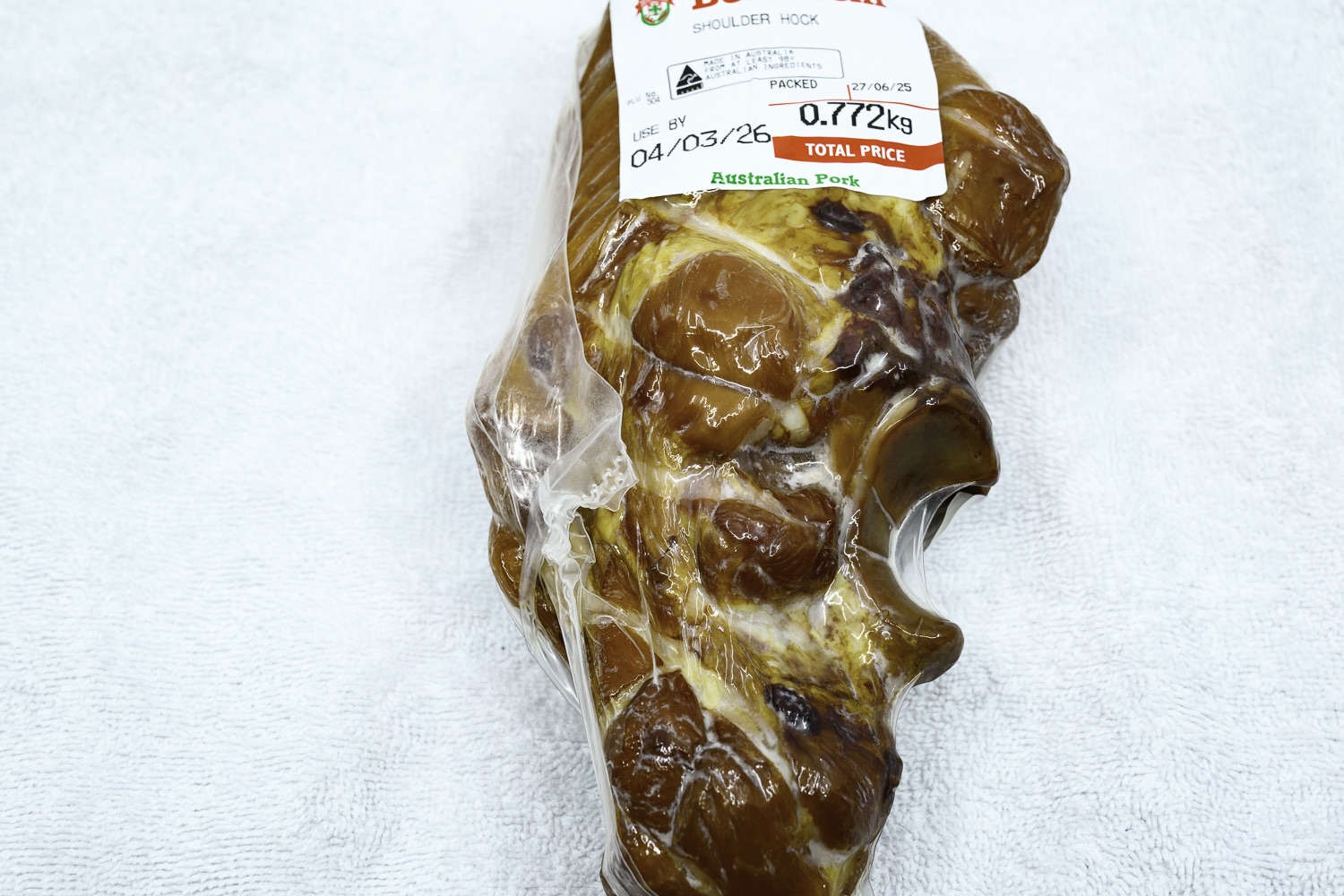
    • Cured pork shoulder hock
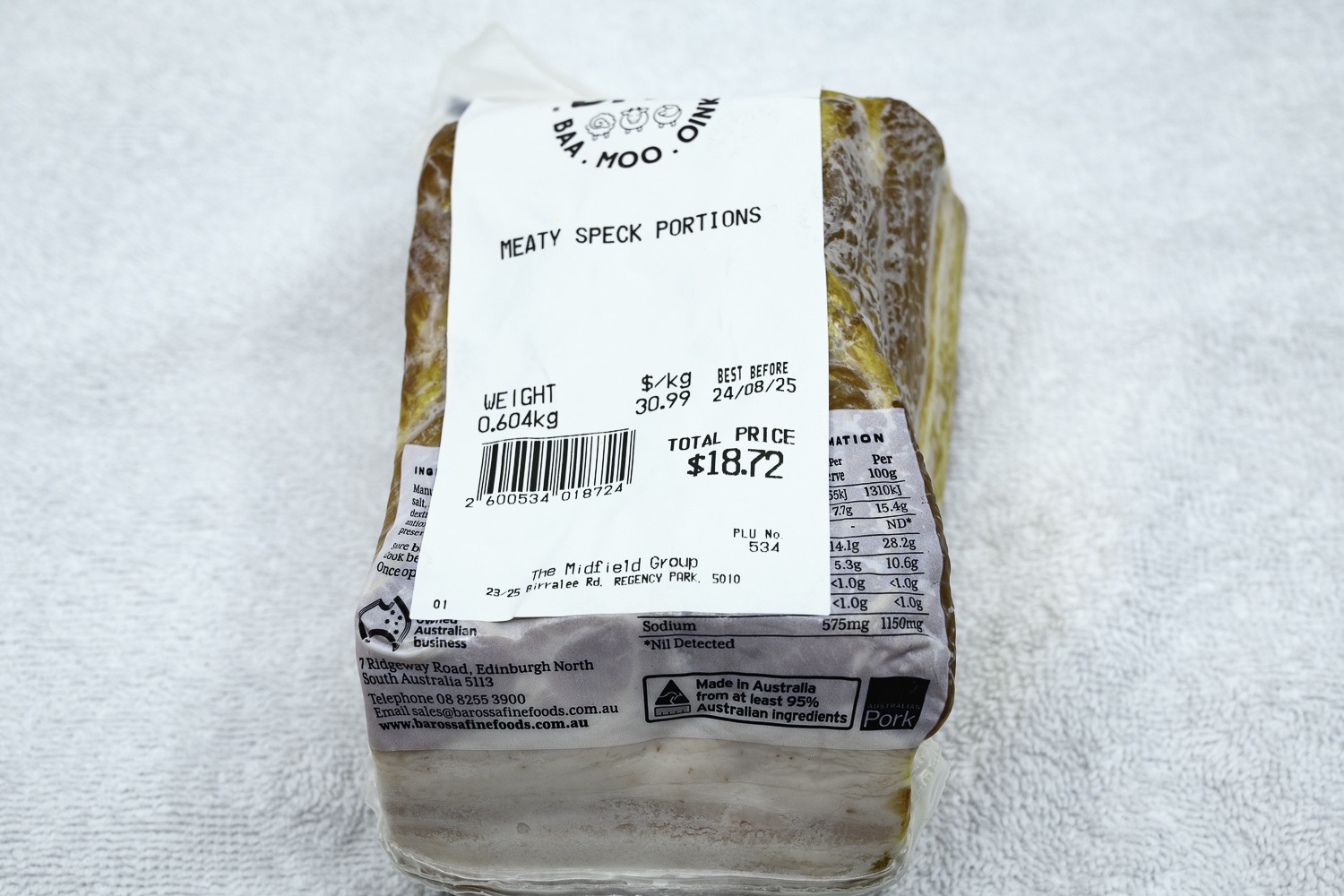
    • Cured pork speck
    • Cabbage
    • Beef fat
    • Salt
    • Water
    • Bowen mango

    Equipment

    • Slow cooker
    • Barbecue grill with a cast-iron hot plate.

    Instructions

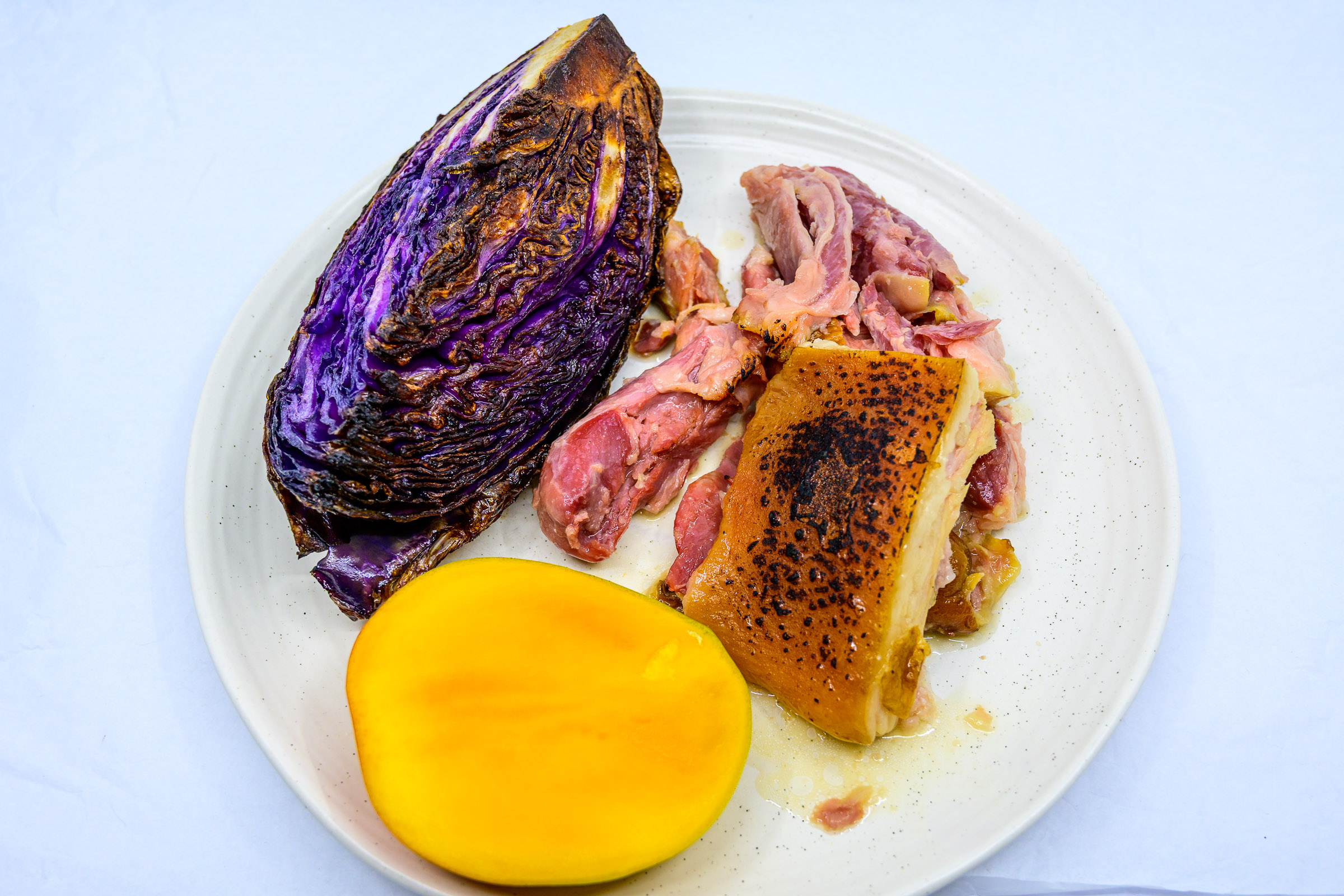
    1. Place the pork products and a cup of water into the slow cooker.
    2. Cook on low heat for 8 hours.
    3. Remove the pork from the slow cooker and dissect out the bones and some of the tougher ligaments.
    4. Pull the meat with a pair of forks.
    5. Place the cabbage into a saucepan and add some boiling water, beef fat, and salt.
    6. “Parboil” the cabbage until it softens a little.
    7. Remove the cabbage from the liquid, drain and remove excess liquid, and freeze.
    8. Heat the barbecue grill and cast-iron hot plate.
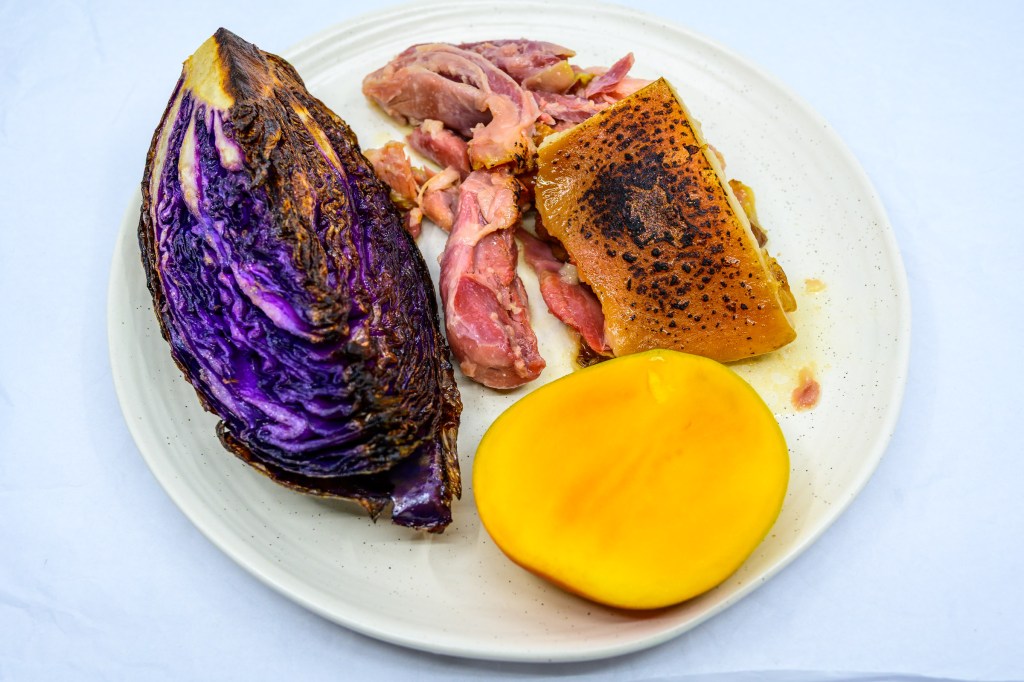
    9. Cook the cabbage on the hot plate until the surfaces have caramelised.
    10. Slice some Bowen mango.
    11. Arrange a dinner plate with the pork, cabbage, and mango.
    12. Season with some flaky salt.

    Thoughts on the meal

    I enjoy slowly cooked pork, especially joints like cured hock. I particularly enjoy fatty products like speck, too.

    Cabbage always goes well with pork, and some fruit “cuts” the flavours nicely.

    Photographs

    This is a gallery of images. Select one and scroll through the gallery.

    Other meals

    I went on a carbohydrate splurge today.

    Morning tea[iii]

    I bought a cream bun and had it with a cup of coffee. It was lovely. The cream was light and not too sweet. The strawberry jam was also nice.

    Cream bun and coffee. The plate for the cream bun is a piece of Dolphins NRL merchandise.

    Lunch

    I made a steak sandwich with some white sourdough bread, which I’d lightly toasted. I also added chunks of butter to some lightly toasted sourdough “croutons.” For contrast, I chomped on a pickled gherkin, too.
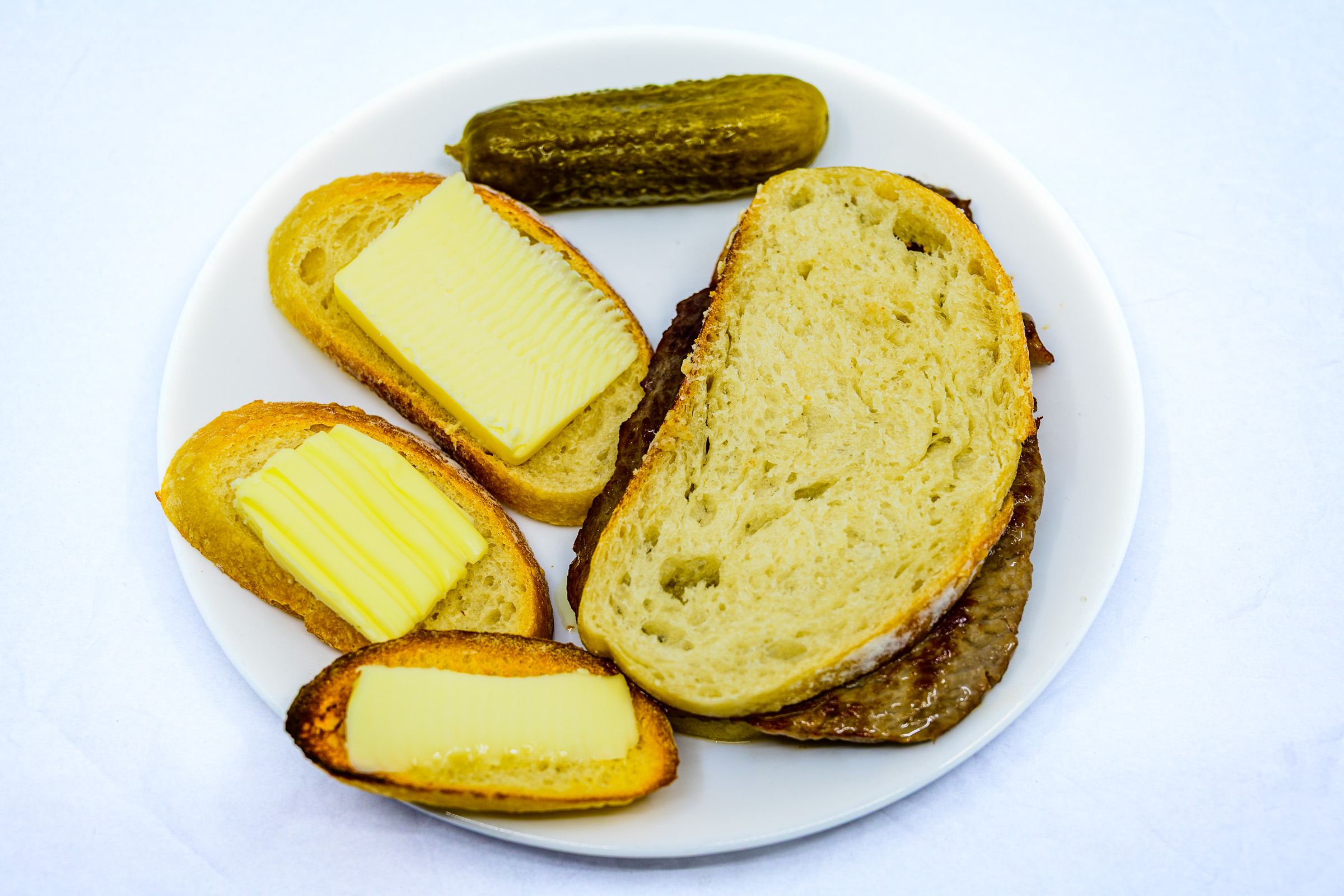
    Scotch fillet steak sandwich with a pickled gherkin plus French butter on toasted sourdough.

    [i] A cured pork shoulder hock is a cut of pork taken from the he pig’s foreleg (the hock), that has been preserved and flavoured through curing—typically with salt, sugar, and sometimes spices. It’s known for its flavour and gelatinous texture, often used to add depth to soups, stews, beans, and braised dishes.

    [ii] Speck is a type of cured, lightly smoked ham from the South Tyrol region of northern Italy. It’s made from pork leg, seasoned with spices like juniper and bay leaves, then smoked and aged in mountain air, giving it a distinctive savory, smoky flavour.

    [iii] In Australian slang, “mornos” means morning tea—a mid-morning break, usually around 10–11 am, where people pause for a snack, a cuppa, or a chat. When working with ADF colleagues, the word “mornos” is commonly used.

  • Speck and hock

    Speck and hock


    It has been a while since I have eaten pork (apart from some ham in last week’s meal). I prefer beef and other ruminant meats.

    While fresh pork is excellent, I also enjoy cured pork products.

    I am combining some speck[i] and a pig’s hock[ii] in the slow cooker. Additionally, I am using leftover beef broth.

    At the end of the cooking, I will have enough meat for a few meals this week. I still have a couple of aliquots from my beef congee, so this week’s lunches will be flavourful.

    The image was generated with Microsoft Copilot. It depicts a pig being processed for speck and smoked hock.

    I instructed Microsoft Copilot to create this image. It is meant to depict the processing of a pig for speck and smoked hock.

    Recipe

    This post really does not constitute a recipe. I am simply adding a few things to a slow cooker and letting it go.

    Ingredients

    • Speck
    • Hock
    • Beef broth

    Equipment

    • Slow cooker

    Instructions

    1. Place the speck and hock into the cooking vessel.
    2. Add some leftover beef broth.
    3. Cook on “high” for 6 hours.
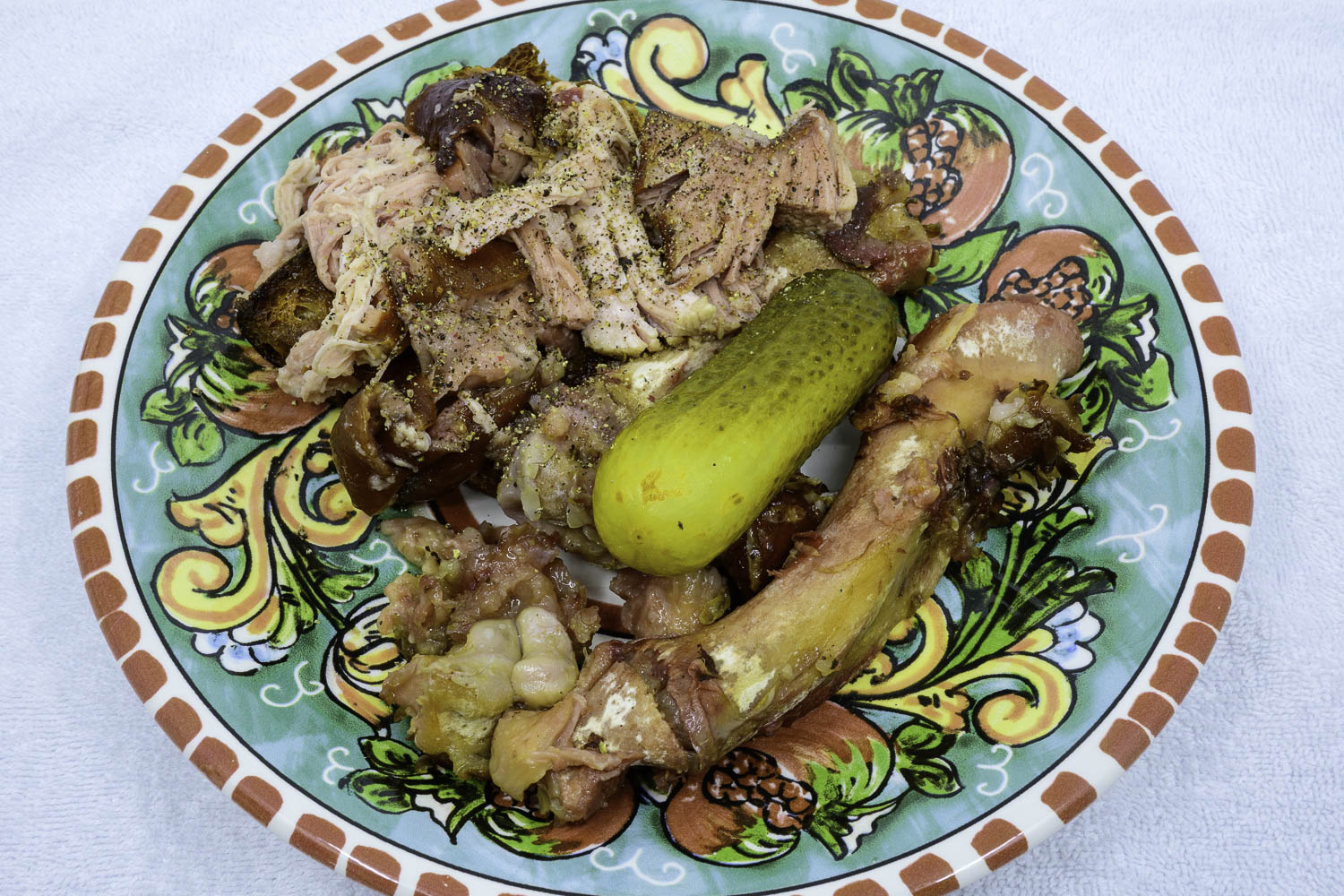
    4. Remove the meat and pull it with a pair of forks, or if you want to really enjoy it, use both hands and squish the meat as you make fists. The result will be warm, moisturised skin on your hands and perfectly pulled pork. Pulling pork is so satisfying.
    5. Filter the cooking liquor through a strainer and refrigerate the filtrate. The following day, you can separate the hardened pork fat, which will also have some beef fat with it. I usually “clean” my fat by putting it into a small saucepan with some water and bringing it to a steady boil for a few minutes. I repeat this process and then pour the fat and water (which will be clear) into an enamel bowl and refrigerate it. The following day, I have a nice disc of clean fat with which I can cook.
    6. Serve your pulled pork with whatever you choose. I’m enjoying my pulled pork with a pickle. If you are in the mood, you could boil some cabbage and make some creamy buttery potato mash.

    Photographs

    Select an image and scroll through the rest.

    Thoughts on the meal

    Speck is an expensive option, and in future I’ll probably look for reduced price pork belly at the butcher. I think pulled pork would be great for pork congee, which may be a future weekend cook. I know the pork fat will combine well with rice.


    [i] Pork speck, a traditional cured meat from South Tyrol, Italy, is a blend of German and Italian culinary traditions. It’s made from deboned pork leg seasoned with salt, pepper, juniper berries, bay leaves, and garlic, then cold-smoked and aged for several months. This results in a deeply flavoured, smoky ham with a firm texture and a savoury, slightly spicy aroma.

    [ii] Pork hock, also called a ham hock or pork knuckle, is the lower part of a pig’s leg, above the foot and below the ham or shoulder. It’s a collagen-rich cut with skin, bone, fat, and some meat, perfect for slow cooking methods like braising, boiling, or roasting.