

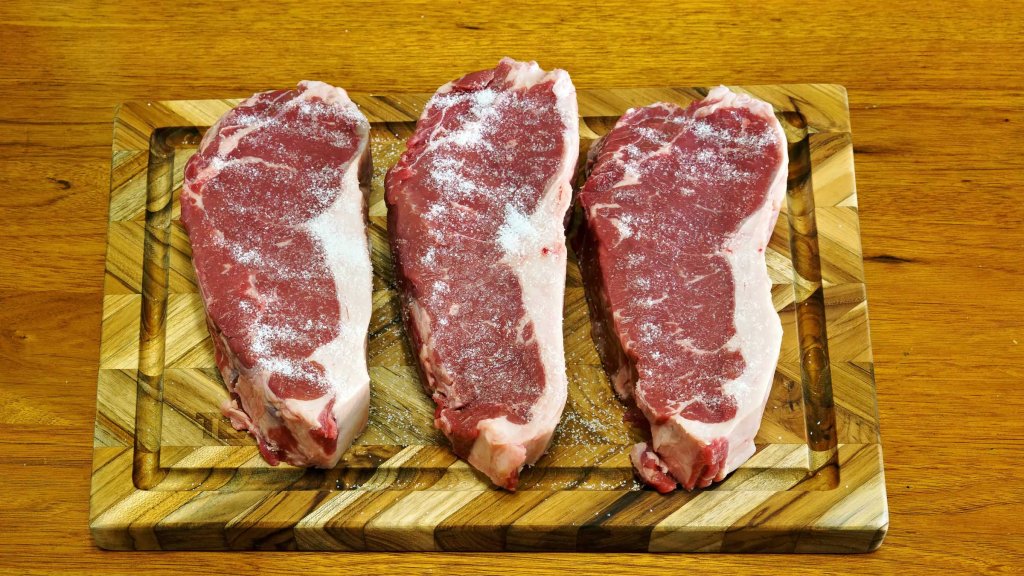
I visited my butcher and bought a lump of boneless sirloin steak. I asked for it to be cut into thick slices.
You can skip to the recipe.
Description and International Nomenclature
In Australia, the boneless sirloin steak is a popular, versatile cut of beef prized for its balanced flavour and firm but tender texture. it is trimmed and free of the bone, lending itself to a wide range of cooking methods and everyday meals. Internationally, a very cut is often simply known as the “sirloin steak” or “striploin steak” – with the United States frequently referring to a similar cut as the “top sirloin steak”, and European markets leaning towards the “sirloin” or “striploin” designation. These nomenclature differences are largely a matter of regional butchery traditions rather than fundamental differences in the meat itself.
Anatomy in Bos taurus
The boneless sirloin steak is sourced from the sirloin region of Bos taurus, the domestic cattle. This area is found in the hindquarter, just in front of the rump. Within this region, the meat is typically divided into the top and bottom sections, with the top sirloin being the preferred portion for its superior tenderness and moderate marbling. Anatomically, the muscle fibres are long and fine, offering both strength and a satisfying chew. Removing the bone results in a clean, easily portioned cut that highlights the natural grain and lean quality of the meat, while still preserving enough intramuscular fat to impart a rich flavour.
Cooking and Eating Characteristics
The boneless sirloin steak exhibits a fine balance between flavour and texture. Its characteristics include:
Flavour and texture: The steak offers a pronounced beefy flavour that’s both rich and satisfying, yet it remains lean enough to avoid overt greasiness. Its firm structure—with well-defined muscle fibres—ensures a pleasant chew without being tough when cooked correctly.
Eating Experience: When cooked to a medium-rare or medium doneness, the steak arrives at the table juicy and tender, providing a contrast between the flavour and the texture of the meat. Overcooking, can quickly render the cut dry due to its lean nature.
Cooking techniques
To optimise the texture and flavour of boneless sirloin steak, several cooking methods are favoured:
Barbecue cooking: A high-temperature barbecue grill plate is good for achieving a seared exterior that locks in juices and producing a caramelised crust. This method preserves the steak’s inherent tenderness while accentuating its beefy flavour.
Pan searing: Using a heavy-based skillet allows for a rapid sear on high heat, which creates a flavourful crust. Finishing in a moderate-heat environment (or even in an oven) ensures that the steak cooks evenly throughout.
Sous vide with a finishing sear: Cooking the steak in a water bath achieves a consistent internal temperature, followed by a quick sear in a hot pan or on the barbecue grill. This method preserves juiciness and tenderness.
Grilling: When using an oven, grilling mimics the high-heat effect of using a hot barbecue grill plate. By monitoring the steak, you can achieve a similar crust and maintain the integrity of the meat’s interior. In North America, this method is called broiling.
Each of these techniques focuses on balancing a well-developed exterior sear with a juicy, evenly cooked interior, all while acknowledging the inherent lean quality and flavour profile of the cut.
Nutritional Profile
The boneless sirloin steak is nutrient dense. There is some variation based on the specific cut and cattle diet, an approximate breakdown per 100 grams is as follows:
| Nutrient | Approximate Value per 100 g |
|---|---|
| Energy | ~210 kcal |
| Protein | 25–30 g |
| Total Fat | 10–12 g |
| Saturated Fat | ~4 g |
| Carbohydrates | 0 g |
Why Some People Do Not Like Boneless Sirloin Steak
The boneless sirloin steak, though widely appreciated, isn’t universally loved. Some common reasons include:
Texture variability: Its firm consistency can be a drawback for those who favour the ultra-tender nature of cuts like the fillet. When overcooked, it can quickly become dry.
Insufficient marbling: Although the sirloin offers a rich beef flavour, some prefer a more buttery, soft texture—often found in more heavily marbled cuts such as scotch fillet.
Flavour intensity: The beefy flavour might be too pronounced for individuals who enjoy subtler flavours or who are sensitive to the inherent intensity of red meat.
Cooking challenges: Achieving the perfect doneness across the entire steak can be challenging. An improperly cooked sirloin may result in an inconsistent texture, causing disappointment.
Ethical and environmental concerns: A subset of consumers opt out of red meat due to ethical, environmental, or dietary reasons, favouring plant-based proteins over traditional meat products.
Many Australians favour the boneless sirloin steak. Its lean yet flavourful properties lend themselves well to various cooking techniques that accentuate its natural qualities.
Recipe
Ingredients
- Sirloin steak (550 grams, Coorong Black Angus)
- Salt — cooking salt to dry brine, and flaky salt for final seasoning.
- Pepper
- Beef fat
- Butter
Equipment
- Water bath
- Precision cooker
- Barbecue grill
- Gas torch
Instructions
- Dry brine the meat.
- Vacuum bag the meat.
- Cook the meat for 3 hours at 57 °C.
- Dry the surface of the meat with kitchen paper.
- Sear the meat on a barbecue grill with a gas torch.
- Slice the meat.
- Salt and pepper the meat.
- Eat the meat.
My thoughts on the meat
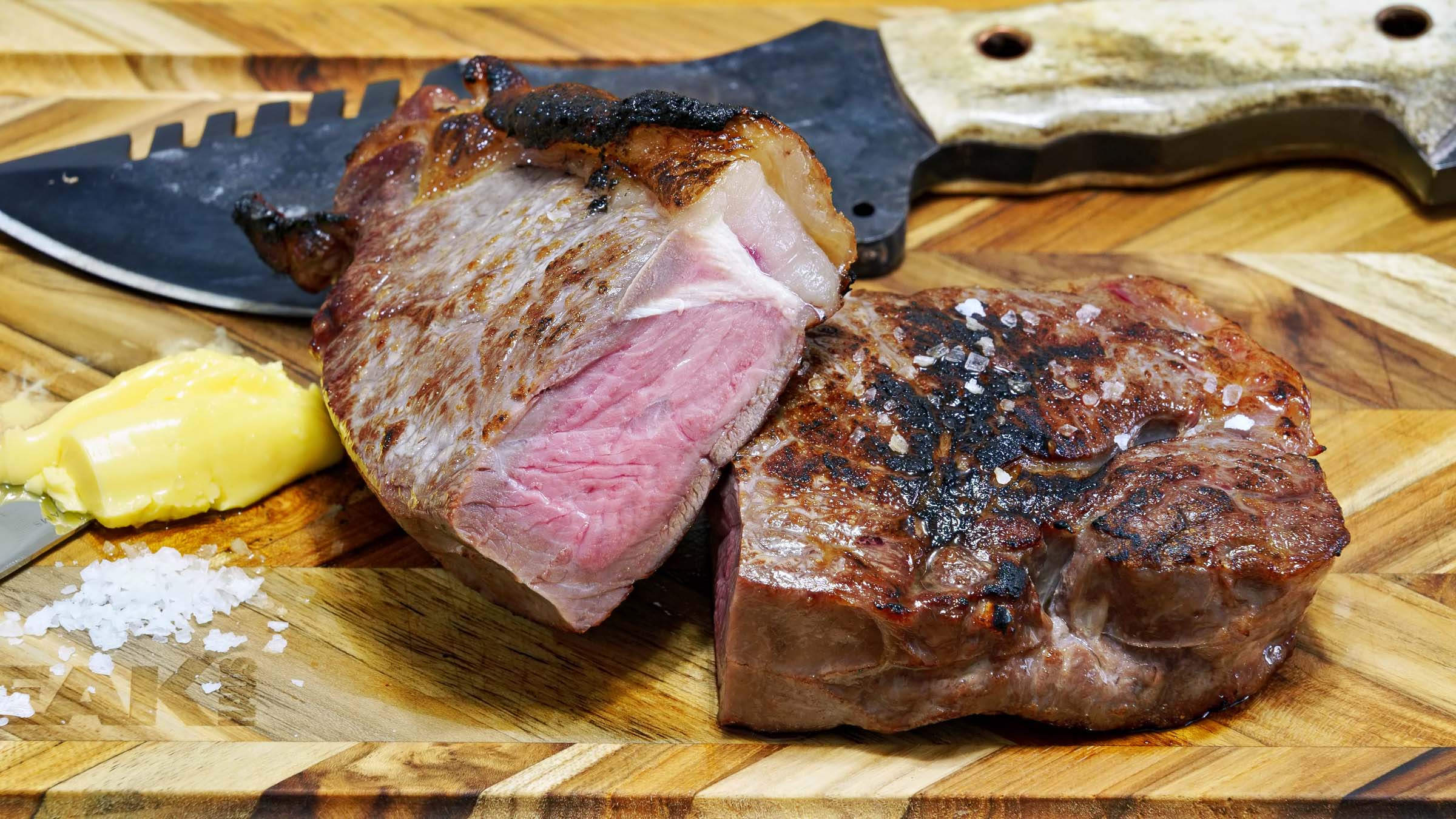
The meat was firm, yet tender and juicy.
I liked having a bit of fat on each piece.
Photographs
This is a gallery of images. Click on one and scroll through them.


Non-food photographs of the day

Why vegans have smaller brains: and how cows reverse climate change
I’m reading this book. When I finish I’ll share a review.
Ellis, David, Alison Morgan, and Anita Tagore. Why Vegans Have Smaller Brains: And How Cows Reverse Climate Change. Whitefox Publishing Ltd, 11 December 2024, 2024.


Comments will be moderated.