Category: Food

  • Corned beef fat sandwich

    Corned beef fat sandwich


    Create an image of a corned beef meal with a 16:9 aspect ratio for the food blog YummyLummy.com. In the image, include slices of corned beef, a bechamel sauce with parsley, plus buttery potato mash on the side of the plate. Give the image a photographic quality and include cutlery, like a knife and fork, in the image.
    Microsoft Copilot generated corned beef meal.

    In the old days (when I was fat[i]), I would cook corned[ii] beef[iii] with vegetables, mustard, garlic, onions, and additives like Worcestershire sauce. I’d eat it with a white sauce made with refined (read ultra-processed) white flour. I usually have boiled potatoes or potato mash with corned beef and white sauce.

    More recently, if I want corned beef, I buy it in a can[iv] and make a corned beef hash (sans spuds[v] and onions). A lot of people give me a condescending attitude when I mention my consumption of canned corned beef. Their scorn and derision humour me.

    This version is simple and is a low-carbohydrate, minimalist version of corned beef. Apart from the fat sandwich of course. 😉

    Create an image of me sitting and eating a corned beef meal with a 16:9 aspect ratio for the food blog YummyLummy.com. In the image, I am seated at the dinner table with a plate in front of me, featuring slices of corned beef, a bechamel sauce with parsley, and buttery potato mash on the side. Give the image an oil paint quality and include me holding cutlery, like a large, sharp knife and fork, in the picture.
    Microsoft Copilot generated image of me with a plate of corned beef, white sauce, and potato mash.

    Recipe

    Ingredients

    • Corned beef silverside[vi]
    • Water

    Equipment

    • Slow cooker
    • Frypan

    Instructions

    1. Unwrap the meat and wash it under running tap water to remove the brine and sugar.
    2. Place the beef into the cooking vessel.
    3. Add a cup of water.
    4. Slowly cook on low heat for eight hours.
    5. Remove the meat from the slow cooker.
    6. Pass the cooking liquor[vii] through a sieve and refrigerate the broth.
    7. With gloved hands, gently dissect the fat from the flesh using fingers to separate the layer of fat according to the fascial plane.
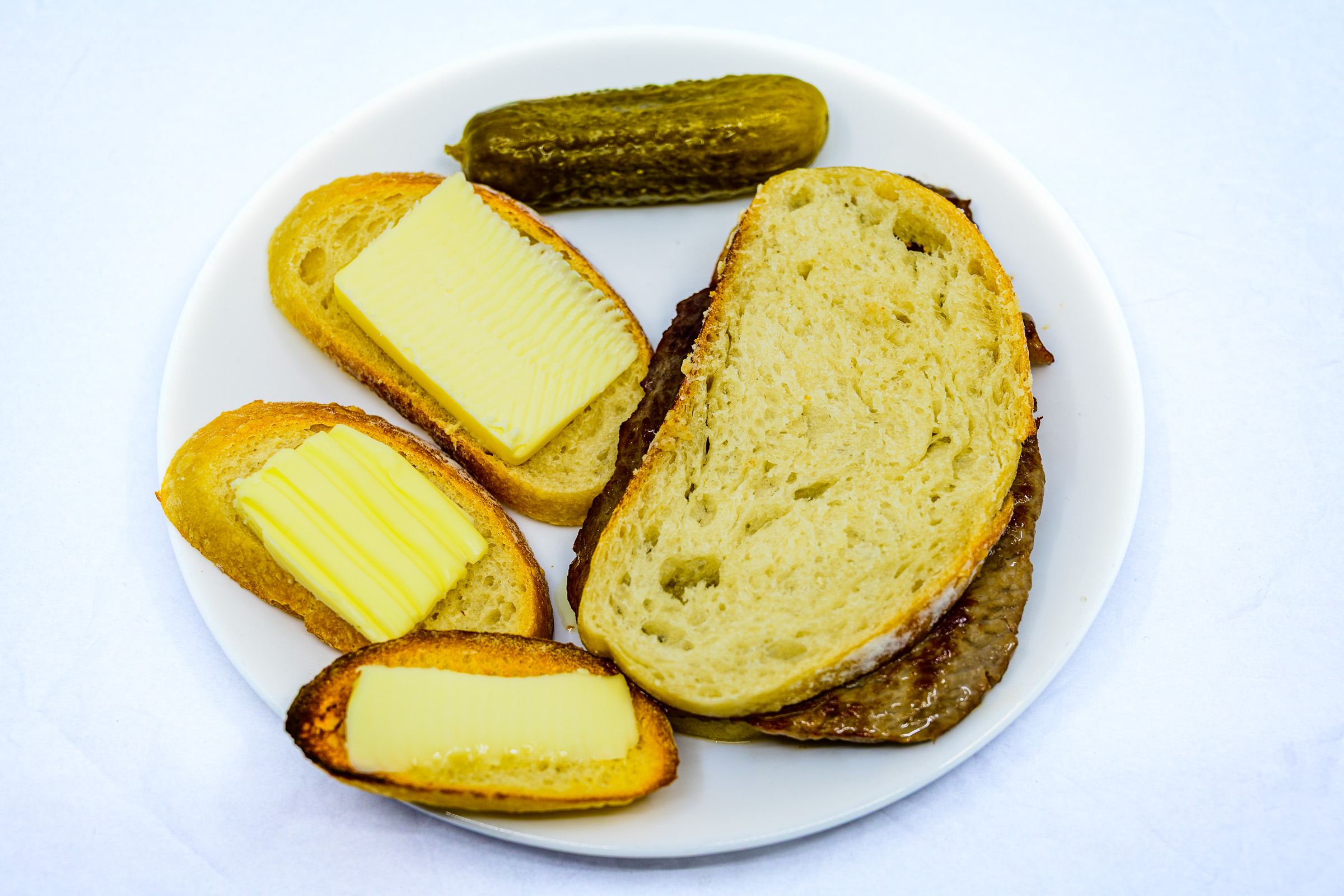
    8. The fat layer makes for a fantastic sandwich on lavishly buttered white sourdough bread[viii]. There’s nothing like the sensation of the beef fat dripping down your hands and forearms as you slowly take bites from the sandwich and masticate the unctuous beef fat. The only reaction you can have is to smile.
    9. Place the beef into a container and seal it. Refrigerate the meat.
    10. Cut the cold meat into lunch-sized portions.
    11. Dice a portion of cold corned beef and place the diced meat in a frypan.
    12. Add beef broth or water to the frypan and bring it to a simmer until the meat fibres start to separate and soften.
    13. After the water has mostly evaporated, turn off the heat, add a dash of cream and stir.

    Beef silverside fat sandwich.

    Ingredients

    • Cooked corned beef.
    • Frozen sourdough baguette — thawed.
    • Grass-fed butter
    • Freshly cracked pepper corns
    • Dijon mustard

    Instructions

    1. Trowel butter onto a piece of thawed sourdough bread. Freezing sourdough bread develops resistant starch.
    2. Add dollops of Dijon mustard.
    3. Apply a layer of warm fat.
    4. Season with freshly cracked peppercorns.
    5. Cover your lap with a large dish drying cloth and wear a bib.
    6. Roll up your sleeves and get stuck into the sandwich.
    7. Rejoice in the feeling of the fat running down your chin and down your forearms.

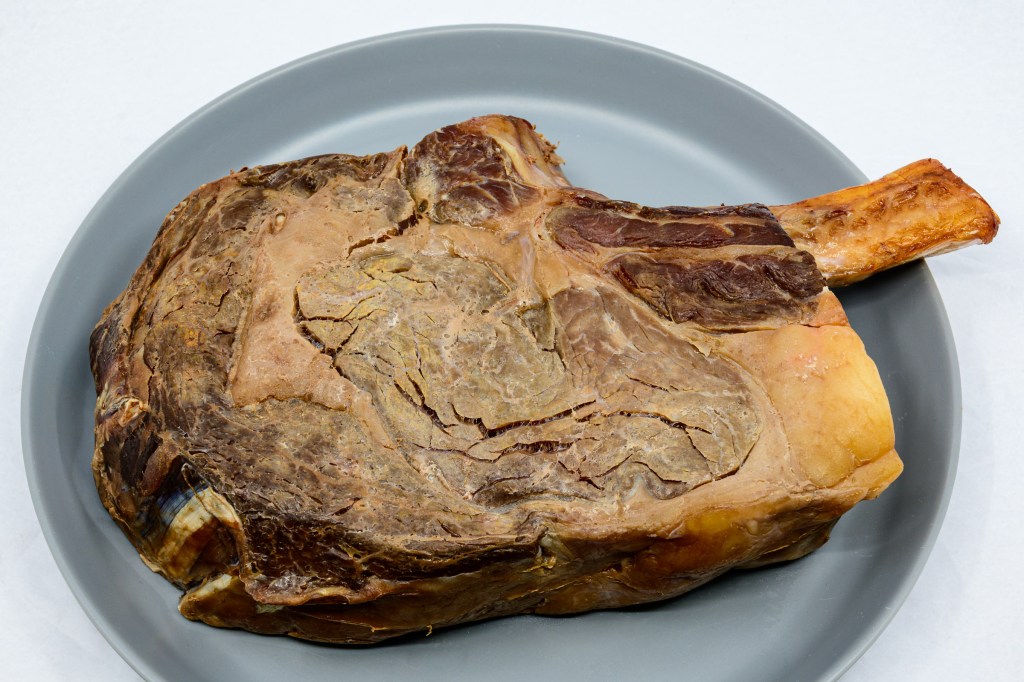
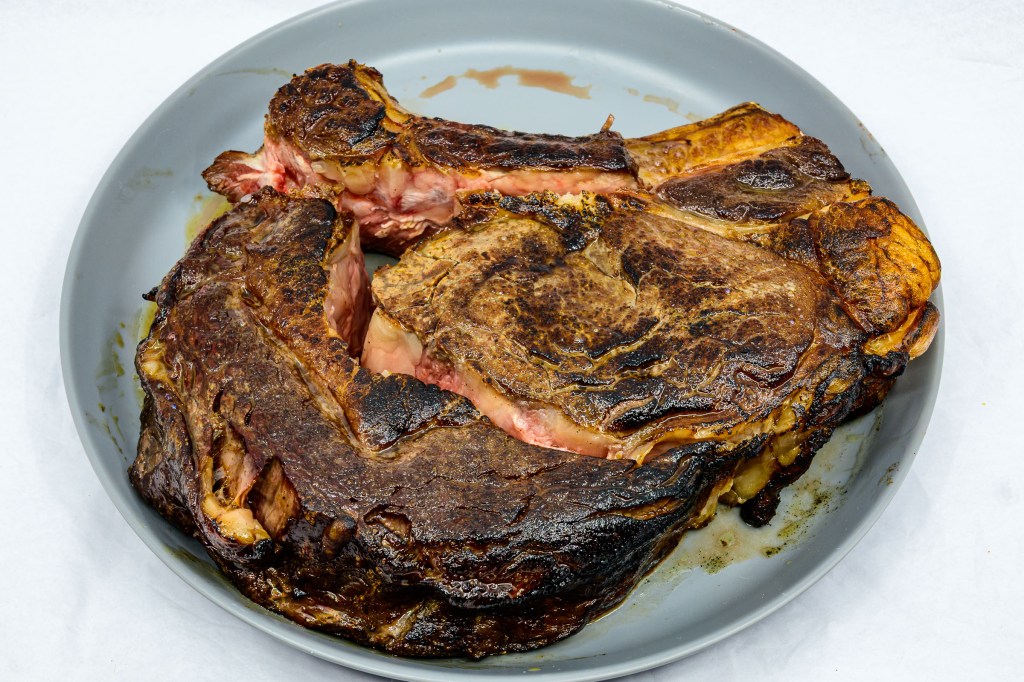
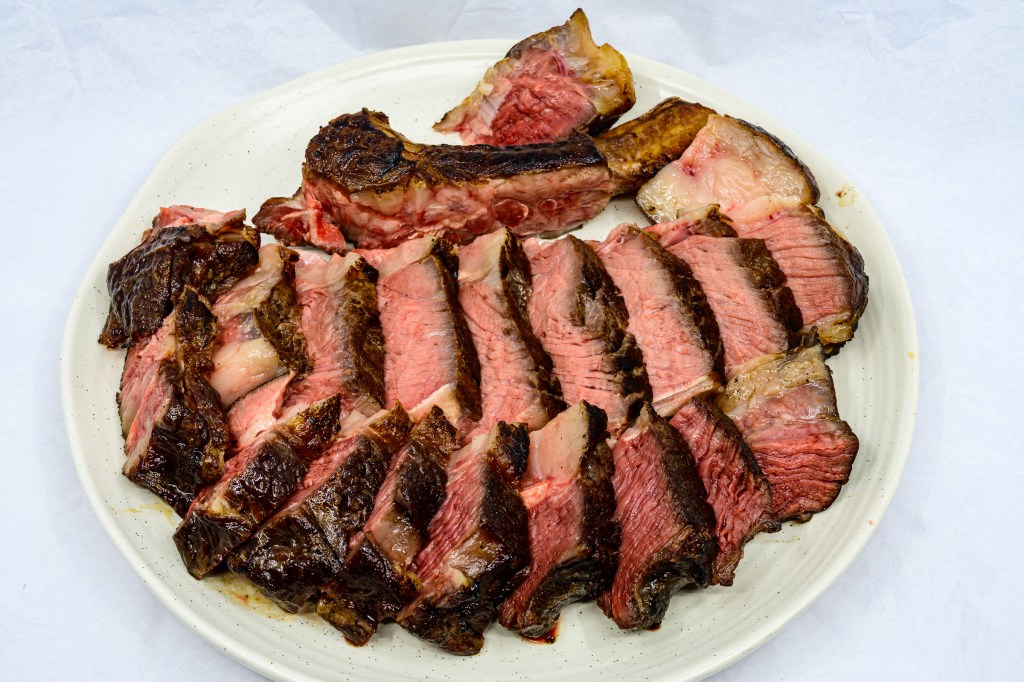
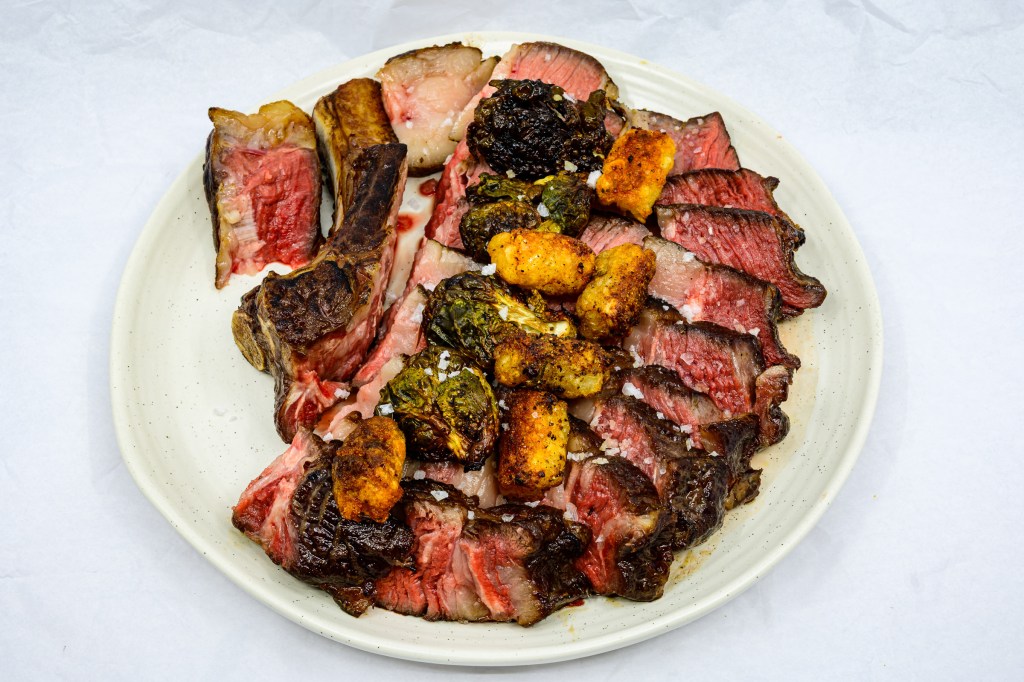
    Photographs[ix]

    These are a gallery of photographs. Select one image and scroll through the rest.

    Thoughts on the meal

    I enjoy corned beef hash[x]; it’s a dish I grew up with. Among many other meals, my dad would often make it. He learned to prepare it during his boyhood in the South Pacific during World War II, where fresh meat was hard to come by. The only options available were tinned meat or local game.

    A piece of corned silverside is an affordable option for bulk meat in lunches.

    This piece of beef cost approximately $AUD20, or $AUD10/kilogram. If I can get four meals (possibly six meals), it will work out to about $AUD5/meal.

    The first meal (the fat sandwich) for this piece of beef brought back some great memories when Mum would make corned beef and I’d get the fat and make a sandwich. I savoured every bite of this open sandwich and enjoyed the contrasting flavours of the pickle.

    Questions

    1. Do you like corned beef?
    2. Do you like fat sandwiches?
    3. How would you make a fat sandwich?

    Stay tuned

    I’ll add photographs of how I use the rest of the beef during the week.

    Endnotesꜜ


    [i] The modern clinical term is “clinical adiposity.” I prefer the term fat because it is universally understood.

    [ii] The term corned comes from the old English word corn, which referred to small, hard particles—not just cereal grains. In the case of corned beef, it refers to the large-grained rock salt (sometimes called “corns” of salt) used in the curing process.

    [iii] Corned beef is a type of salt-cured beef, traditionally made from brisket.

    [iv] Canned corned beef is a shelf-stable meat product made primarily from beef, but it includes ingredients to preserve flavour and texture. The ingredients include sodium nitrite, added salt, and a small amount of sugar (which is disappointing). Cooking can convert the nitrites to nitrates.

    [v] “Spud” is a casual or slang term for a potato. For example, “baked spud” or “mashed spuds.” It is used in many English-speaking countries.

    [vi] Beef silverside is a lean, boneless cut of beef taken from the hindquarter of the cow, specifically from the top portion of the round primal, just above the leg muscles. It’s known for its coarse grain and minimal marbling, which makes it a budget-friendly and versatile option in many cuisines.

    [vii] Juice released from cooked meat.

    [viii] Bread is high carbohydrate and not part of a low carbohydrate diet.

    [ix] A note about the images used in this post. The featured image and a couple of other images were generated with Microsoft Copilot and ChatGPT. I’m conscious that there are some bloggers and readers who oppose the use of large language models for generating content. I’m comfortable with using large language models to help with content on YummyLummy.com

    [x] Corned beef hash is a hearty, savoury dish made by combining chopped or shredded corned beef with diced potatoes and onions, then frying the mixture until it’s golden and crispy. It’s a classic comfort food with roots in frugal cooking—originally designed to use up leftovers, especially from a corned beef dinner.

  • Speck and hock

    Speck and hock


    It has been a while since I have eaten pork (apart from some ham in last week’s meal). I prefer beef and other ruminant meats.

    While fresh pork is excellent, I also enjoy cured pork products.

    I am combining some speck[i] and a pig’s hock[ii] in the slow cooker. Additionally, I am using leftover beef broth.

    At the end of the cooking, I will have enough meat for a few meals this week. I still have a couple of aliquots from my beef congee, so this week’s lunches will be flavourful.

    The image was generated with Microsoft Copilot. It depicts a pig being processed for speck and smoked hock.

    I instructed Microsoft Copilot to create this image. It is meant to depict the processing of a pig for speck and smoked hock.

    Recipe

    This post really does not constitute a recipe. I am simply adding a few things to a slow cooker and letting it go.

    Ingredients

    • Speck
    • Hock
    • Beef broth

    Equipment

    • Slow cooker

    Instructions

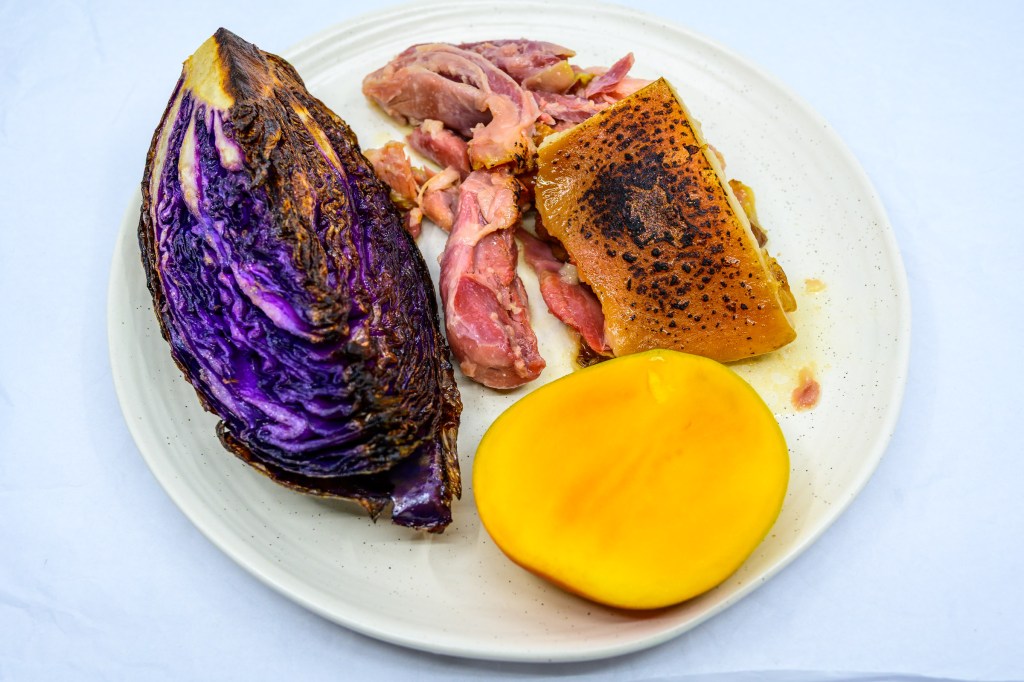
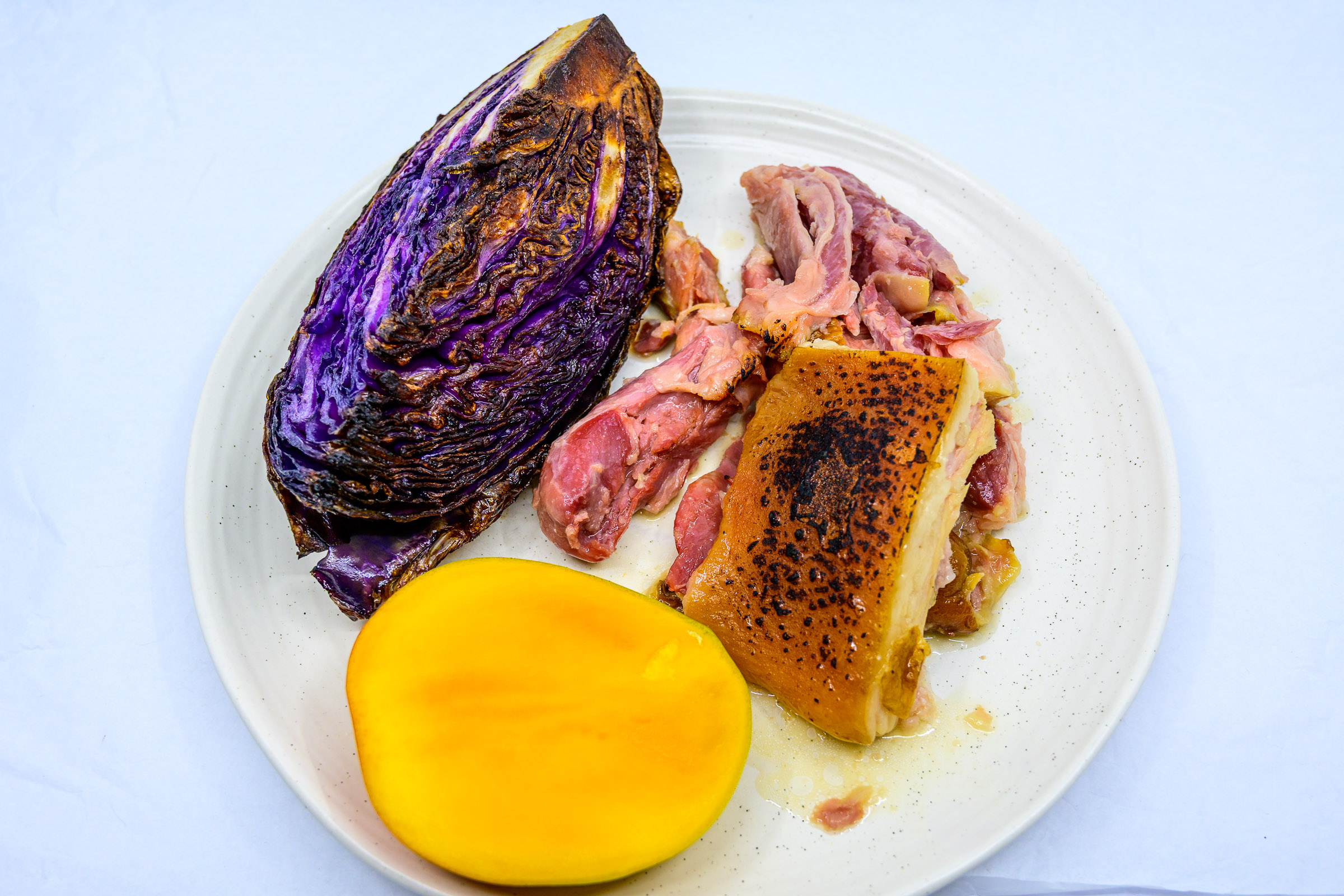
    1. Place the speck and hock into the cooking vessel.
    2. Add some leftover beef broth.
    3. Cook on “high” for 6 hours.
    4. Remove the meat and pull it with a pair of forks, or if you want to really enjoy it, use both hands and squish the meat as you make fists. The result will be warm, moisturised skin on your hands and perfectly pulled pork. Pulling pork is so satisfying.
    5. Filter the cooking liquor through a strainer and refrigerate the filtrate. The following day, you can separate the hardened pork fat, which will also have some beef fat with it. I usually “clean” my fat by putting it into a small saucepan with some water and bringing it to a steady boil for a few minutes. I repeat this process and then pour the fat and water (which will be clear) into an enamel bowl and refrigerate it. The following day, I have a nice disc of clean fat with which I can cook.
    6. Serve your pulled pork with whatever you choose. I’m enjoying my pulled pork with a pickle. If you are in the mood, you could boil some cabbage and make some creamy buttery potato mash.

    Photographs

    Select an image and scroll through the rest.

    Thoughts on the meal

    Speck is an expensive option, and in future I’ll probably look for reduced price pork belly at the butcher. I think pulled pork would be great for pork congee, which may be a future weekend cook. I know the pork fat will combine well with rice.


    [i] Pork speck, a traditional cured meat from South Tyrol, Italy, is a blend of German and Italian culinary traditions. It’s made from deboned pork leg seasoned with salt, pepper, juniper berries, bay leaves, and garlic, then cold-smoked and aged for several months. This results in a deeply flavoured, smoky ham with a firm texture and a savoury, slightly spicy aroma.

    [ii] Pork hock, also called a ham hock or pork knuckle, is the lower part of a pig’s leg, above the foot and below the ham or shoulder. It’s a collagen-rich cut with skin, bone, fat, and some meat, perfect for slow cooking methods like braising, boiling, or roasting.

  • Local lamb chops with potato gems, and blue vein cheese sauce

    Local lamb chops with potato gems, and blue vein cheese sauce


    I’ve been eating a lot of beef lately. I had a craving for some lamb. My butcher sells local lamb.

    Today I’ve consumed more carbohydrates than I’ve eaten in a long time, so I thought I may as well have some potato gems too.

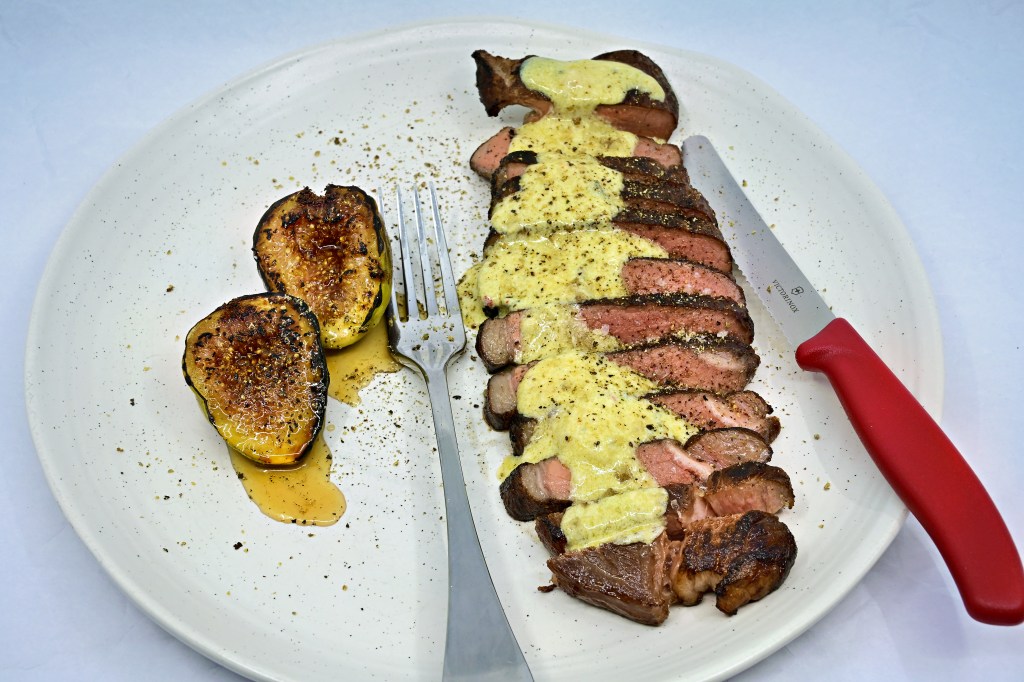
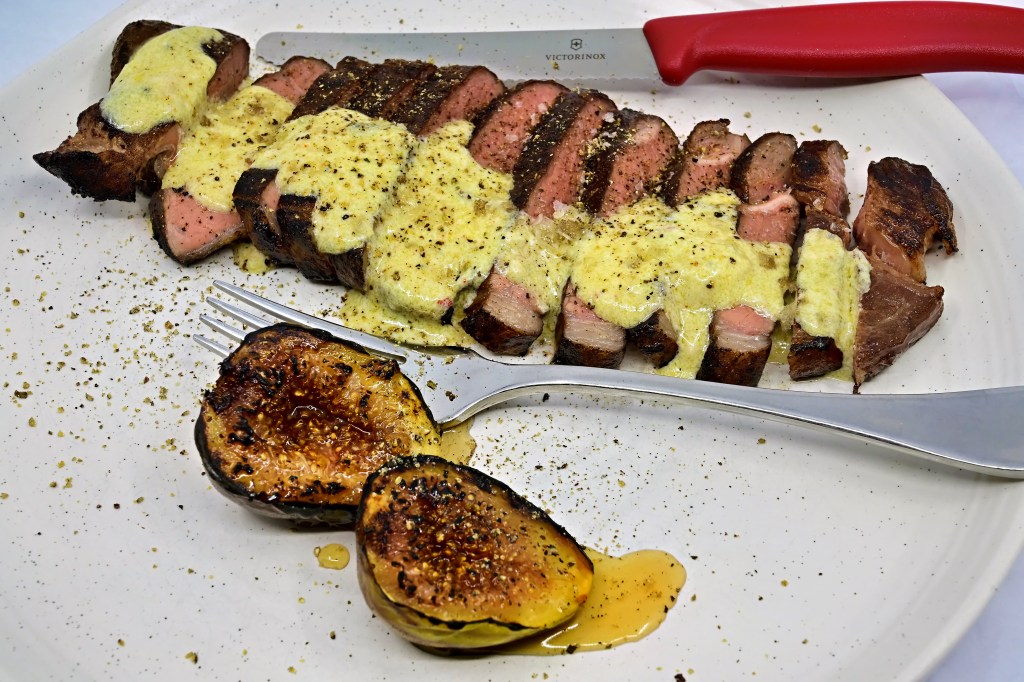
    Local South Australian lamb chops cooked on a Weber Q+ grill with potato gems cooked in beef fat. Served with blue vein cheese sauce with pomegranate arils and lemon zest.

    Recipe

    Ingredients

    • Lamb chops
    • Potato gems
    • Beef fat
    • Lemon zest
    • Pomegranate arils
    • Butter
    • Pure pouring cream (no thickeners)
    • Cream cheese
    • Blue vein cheese
    • Dijon mustard
    • Parmesan cheese
    • Freshly cracked black better

    Equipment

    • Weber Q+ barbecue grill
    • Cast iron grill pan
    • Saucepan
    • Wooden chopstick
    • Micro plane
    • Gas torch

    Instructions

    1. Dry-brine the lamb chops.
    2. Ignite the gas in the Weber Q+ and close the lid. Allow it to heat for 10 minutes.
    3. Cook the potato gems in beef fat in the Weber Q+.
    4. Cook the lamb chops atop the heated cast-iron grill pan with the Weber Q+ lid down.
    5. Melt some butter in a small saucepan and then add a dash of cream. Stir in a dollop of cream cheese and then crumble in the blue vein cheese. Stir the sauce with the chopsticks and add a teaspoon of Dijon mustard. Turn off the gas and keep stirring while the sauce thickens. Add some freshly cracked pepper.
    6. Place the lamb chops and potato gems on a dinner plate. Spoon over the sauce. Place pomegranate arils onto the sauce and then some lemon zest.
    7. Grate some Parmesan cheese with a micro plane over the potato gems and quickly melt with a gas torch.

    Photographs

    Select an image and then scroll through them.

    Thoughts on the meal.

    Lamb chops cooked outside on a barbecue grill on a lovely sunny day are fantastic. The crunchy potato gems are great for mouthfeel. The savoury umami of the blue cheese combined perfectly with the sour lemon zest and sweet crunch of the pomegranate arils. This was a terrific meal. It can be eaten alone, and I’m sure it could be shared.

    Custard hunting

    Custard Hunter meme

    Perryman’s Artisan Bakery

    54 Tynte Street, North Adelaide

    A few friends at work recommended the bee sting bun from Perryman’s Bakery as a fantastic example of a South Australian bee sting bun. This morning, I wanted to go custard hunting and decided to pay a visit. The display showcased so many of my favourite pastries that I couldn’t resist buying an apple turnover and a vanilla slice as well.

    The apple turnover ($5.70) is one of the best I’ve eaten. On picking it up, it was heavy with apple filling. The pastry was light and crispy. The cream was delicious; it wasn’t overly sweet, yet it was light and had substance. I’d rate the apple turnover I tried at 10/10.

    The bee sting bun ($5.70) is the best I’ve eaten (certainly better than the ones I’ve eaten in Victoria). The filling was luscious on my tongue and lips. The bread had dried fruit for an extra treat. The almond flakes were crisp and not bitter, unlike some that can be. I was grateful that when I entered the shop, there were none on display, and when I asked, a fresh bee sting bun was made for me. I’d rate the bee sting bun I tried at 10/10.

    The vanilla slice ($5.80) was good. The vanilla custard was firm but not a stiff gelatinous block of snot like many I’ve eaten in Victoria. The icing was sweet but not sickly. The pastry was on the soft side. I’d rate the vanilla slice I tried at 7.5/10.

    As I was looking around, I could see the bread looked fantastic, and I may come back another day to try the sourdough bread.

    The service was friendly and helpful, and if Australia were a tipping economy, I’d leave money for the person who served me.

  • Beef congee

    Beef congee


    From time to time, I’m adding some starches to my diet. It’s been a while since I’ve eaten any rice. Having just spent a weekend with many Asians, an innate fondness for rice and chopsticks welled up to the surface. I often cook with chopsticks, e.g., when I make blue vein cheese sauce, wooden chopsticks are my go-to tool for stirring and mixing.

    The rice in the congee[i] is problematic. The starch constitutes carbohydrates I do not need. I can partially ameliorate the problem by freezing the cooked rice and converting it to resistant starch to lower the glycaemic index.

    Recipe

    Ingredients

    • Rice
    • Beef broth
    • Beef short ribs
    • Beef chuck steak
    • Water
    • Salt

    Equipment

    • Fast/slow cooker

    Instructions

    1. Wash a cup of uncooked rice and then add it to the slow cooker.
    2. Add a cup of beef broth and enough water to cover the rice by one distal phalange.
    3. Add the beef short ribs and beef chuck.
    4. Add some salt.
    5. Cook for 8 hours.
    6. At the end of 8 hours, add the optional sterilisation by steam under pressure in the pressure cooker. I sometimes do this if I’m using beef broth that has been in the refrigerator for a week or more. While the risk of bacterial contamination is low because of the hygiene precautions I take, this step is belt and braces.
    7. If you use a fast/slow cooker (or similar device), this can be achieved without changing cooking vessels.
    8. Transfer the contents into a large bowl and start to pull the meat and mix it with the rice gruel.
    9. Remove the rib bones.
    10. Refrigerate the congee overnight so the rice develops resistant starch.
    11. Aliquots can now be taken and reheated for small meals, like lunch.

    Reheating

    1. Divide the refrigerated congee into six portions.
    2. Add the portions to vacuum bags and seal the bags.
    3. Reheat the contents in water bath at 80 °C for 45 minutes. The solidified beef fat will melt, and the rice and meat with break up and become softer.
    4. Pour the hot congee into a bowl.
    5. Serve the reheated congee, which has now developed resistant starch, in a bowl and eat with a spoon.
    6. You can add shredded pork and lettuce.

    Photographs

    Select an image and scroll through.

    Thoughts on the meal

    My mother makes my favourite congee. It is chicken congee, and she uses a pressure cooker. She would always use a whole chicken and basic white long-grain rice. Mum would add soy sauce and other Chinese herbs and spices. In serving, we’d have shredded iceberg lettuce, shredded ham, plus extra soy sauce. We’d eat the jook (that’s what we called congee) for an evening meal most of the time in winter. It would keep us warm. If there was any leftover, we may get some reheated for lunch.

    My version of this recipe is a significant departure from my mother’s version. I’m incorporating some of my preferences. There is no soy sauce, no seed oils, no herbs and spices. The flavours come from salt and the meat, and the rib bones, which were in the slow cooker. This congee or jook is also laden with beef fat, gloriously unctuous[ii] beef fat.

    Nutrient values for rice.

    NutrientPer 1 Cup (≈186 g)Per 100 g% Daily Value (1 Cup)
    Calories242 kcal130 kcal~12%
    Carbohydrates53 g28.5 g~18%
    Protein4.4 g2.4 g~9%
    Fat0.4 g0.2 g~1%
    Fibre0.8 g0.4 g~3%
    Sugars0.2 g0.1 g

    Walking Photographs

    Select an image and scroll through.


    [i] noun [mass noun] (in Chinese cooking) broth or porridge made from rice.

    [ii] adjective (of food or drink) having a pleasingly rich taste

  • A long weekend in Maleny

    A long weekend in Maleny


    I spent the recent weekend in Queensland for a family event.

    A couple of nights were spent in Maleny, specifically the Maleny Terrace Cottages. I was with my parents, and we needed access for a wheelchair and a walker. I fortunately had my favourite nephew with me. He is training to be a registered nurse and works in a residential care facility. His assistance was instrumental in the weekend’s success.

    The accommodation was perfect. The kitchen was ideal for a couple of nights away. The gas stove was large, and the refrigerator was enough for a large family.

    The toilet seat reminded me of a toilet seat I saw on Daydream Island many years ago.

    Maleny Hotel

    The first night there, we had a large dinner for about 30 people who were family and friends. We ate at the Maleny Hotel. I went with surf and turf. I ate the steak and prawns, some of the salad, and none of the chips.

    I went exploring for coffee and breakfast the next day.

    Mountain View Café

    Google Maps review I wrote.

    I searched on Google for breakfast close by. Mountain View Café (148 Mountain View Rd, Maleny, Queensland 4552) was at the top of the list.

    When I arrived, it wasn’t busy, which is sometimes a sign that the quality may not be up to par. I had nothing to fear.

    I picked up a menu, secured a table, and looked through the breakfast options.

    I knew the day would be long, and I would deny myself canapés to focus on an evening dinner at the wedding.

    Eggs Benedict was an obvious choice, along with an extra serve of bacon.

    I also asked for a cappuccino in a mug.

    The coffee arrived quickly. It tasted great. I’d happily drink coffee there again. I’d only had a few sips, and the Eggs Benedict arrived. Each muffin half was layered with finely wilted spinach, bacon, a perfectly poached egg, and Hollandaise sauce.

    The muffin was soft and had soaked up the liquid from the spinach. I know some may object to this, but the buttery, moist and soft muffin was delightful. The knife provided was adequate. I didn’t need a sharp steak knife to cut the muffin.

    The bacon was cooked exactly the way I like it. It was well-cooked but not crispy. It wasn’t greasy, and it was streaky bacon, so the amount of fat was spot on for me. I don’t like bacon, which has had the fat trimmed off.

    The eggs were still warm, and the yolk was soft and creamy, not runny.

    The Hollandaise sauce had a nice tangy flavour.

    I’d happily rate this Eggs Benedict highly.

    All up, it was a perfect breakfast. The service was fast and friendly.

    We went for a drive to reconnoitre the venue (The Old Dairy) for the evening’s gathering.

    While there, we were told about the Maleny Bakery Cafe.

    Maleny Bakery Cafe

    Google Maps review I wrote.

    I had the opportunity to sample two notable vanilla slice varieties. These offerings are of comparable quality to those from my favoured establishments like Gumnut Patisserie (Bowral), Dobinsons Bakery (Canberra), and several amazing bakeries in South Australia, including Fat Beagle on Kangaroo Island, The Village Baker (Adelaide), and St Peters Bakehouse and Coffee Shop (Adelaide).

    The Maleny Bakery Cafe (9 Maple St, Maleny, QLD, Australia, Queensland) selections—a classic version and a Dutch variant featuring an additional layer of piped cream and jam—are distinguished by their crisp pastry and creamy, smooth vanilla custard. The top layer is finished with a dusting of icing sugar rather than traditional icing, which perfectly marries the custard and pastry. While I adore passionfruit icing (or fudge as offered by The Village Baker), I found that the classic vanilla slice from Maleny Bakery exceeded my expectations.

    I was with family. We’d purchased three of the classic and three Dutch vanilla slices. I used a serrated bread knife to cut them by turning them on their sides and gently cutting. This worked without causing the fillings to squelch out between the crispy pastry layers.

    I think the Dutch vanilla slice was $7.60 and the classic was $6.80.

    Classic and Dutch vanilla slices from the Maleny Bakery. These were exceptional.

    The Old Dairy

    Dinner at The Old Dairy.

    Other meals from the weekend.