


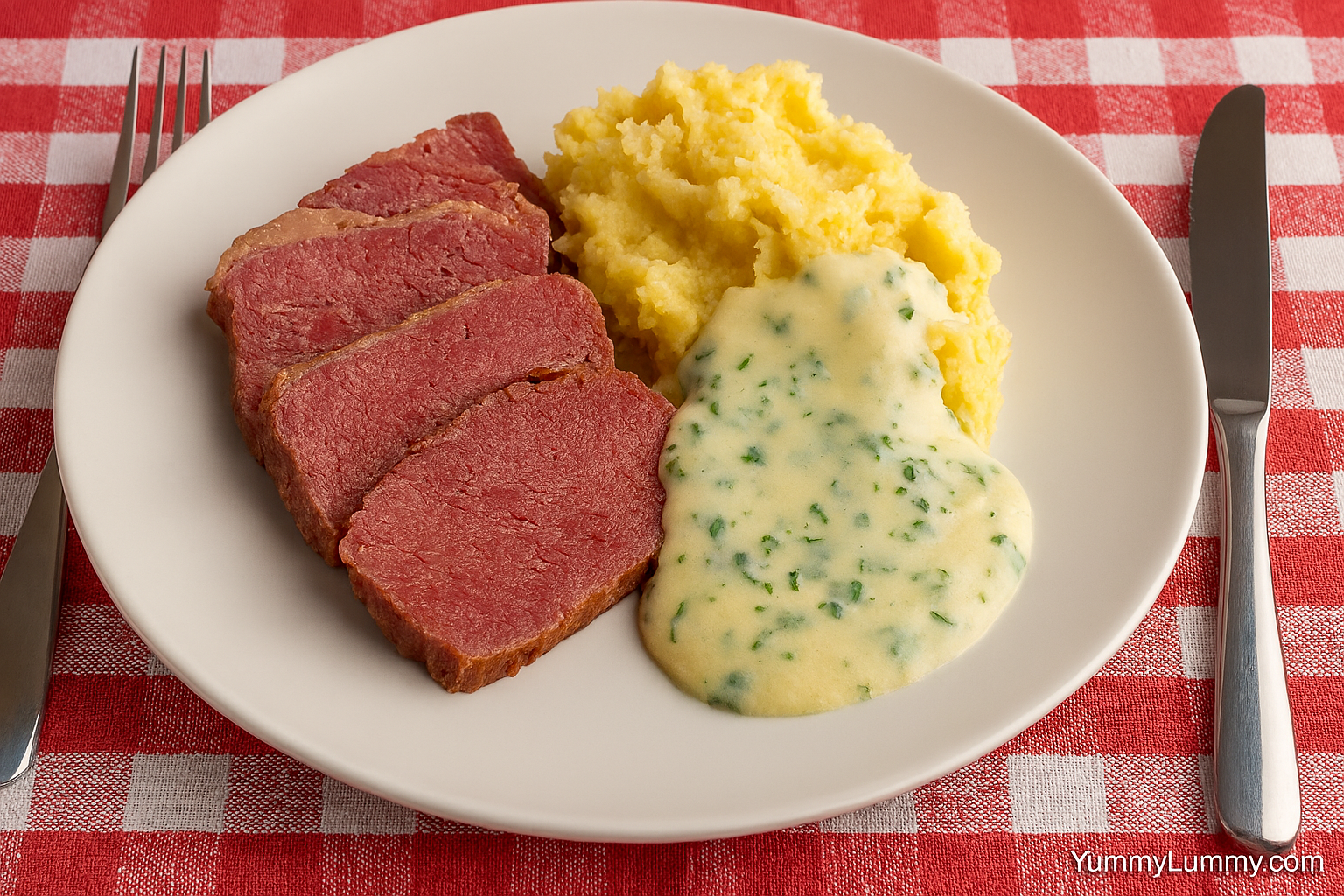
In the old days (when I was fat[i]), I would cook corned[ii] beef[iii] with vegetables, mustard, garlic, onions, and additives like Worcestershire sauce. I’d eat it with a white sauce made with refined (read ultra-processed) white flour. I usually have boiled potatoes or potato mash with corned beef and white sauce.
More recently, if I want corned beef, I buy it in a can[iv] and make a corned beef hash (sans spuds[v] and onions). A lot of people give me a condescending attitude when I mention my consumption of canned corned beef. Their scorn and derision humour me.
This version is simple and is a low-carbohydrate, minimalist version of corned beef. Apart from the fat sandwich of course. 😉

Recipe
Ingredients
- Corned beef silverside[vi]
- Water
Equipment
- Slow cooker
- Frypan
Instructions
- Unwrap the meat and wash it under running tap water to remove the brine and sugar.
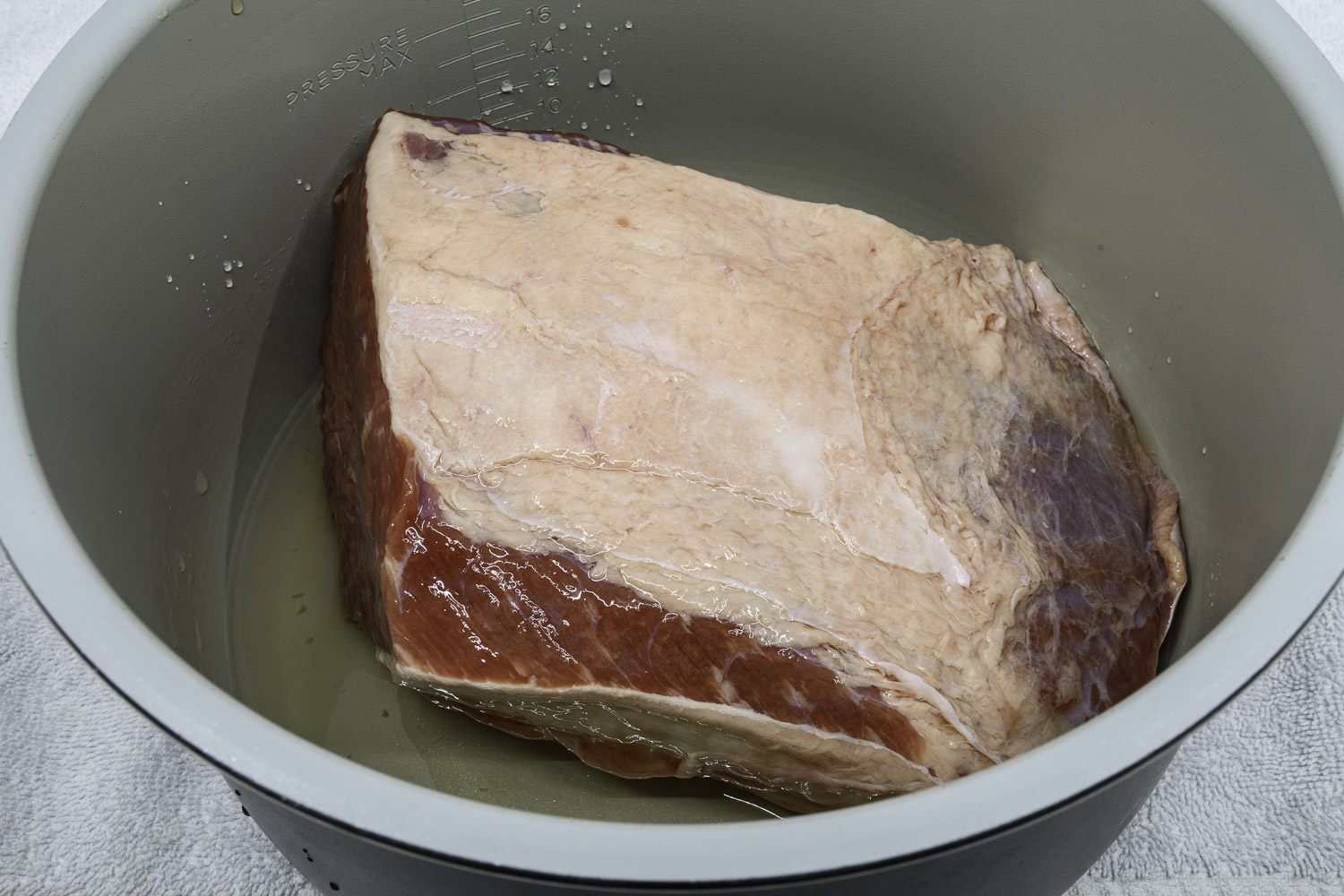
- Place the beef into the cooking vessel.
- Add a cup of water.
- Slowly cook on low heat for eight hours.
- Remove the meat from the slow cooker.
- Pass the cooking liquor[vii] through a sieve and refrigerate the broth.
- With gloved hands, gently dissect the fat from the flesh using fingers to separate the layer of fat according to the fascial plane.
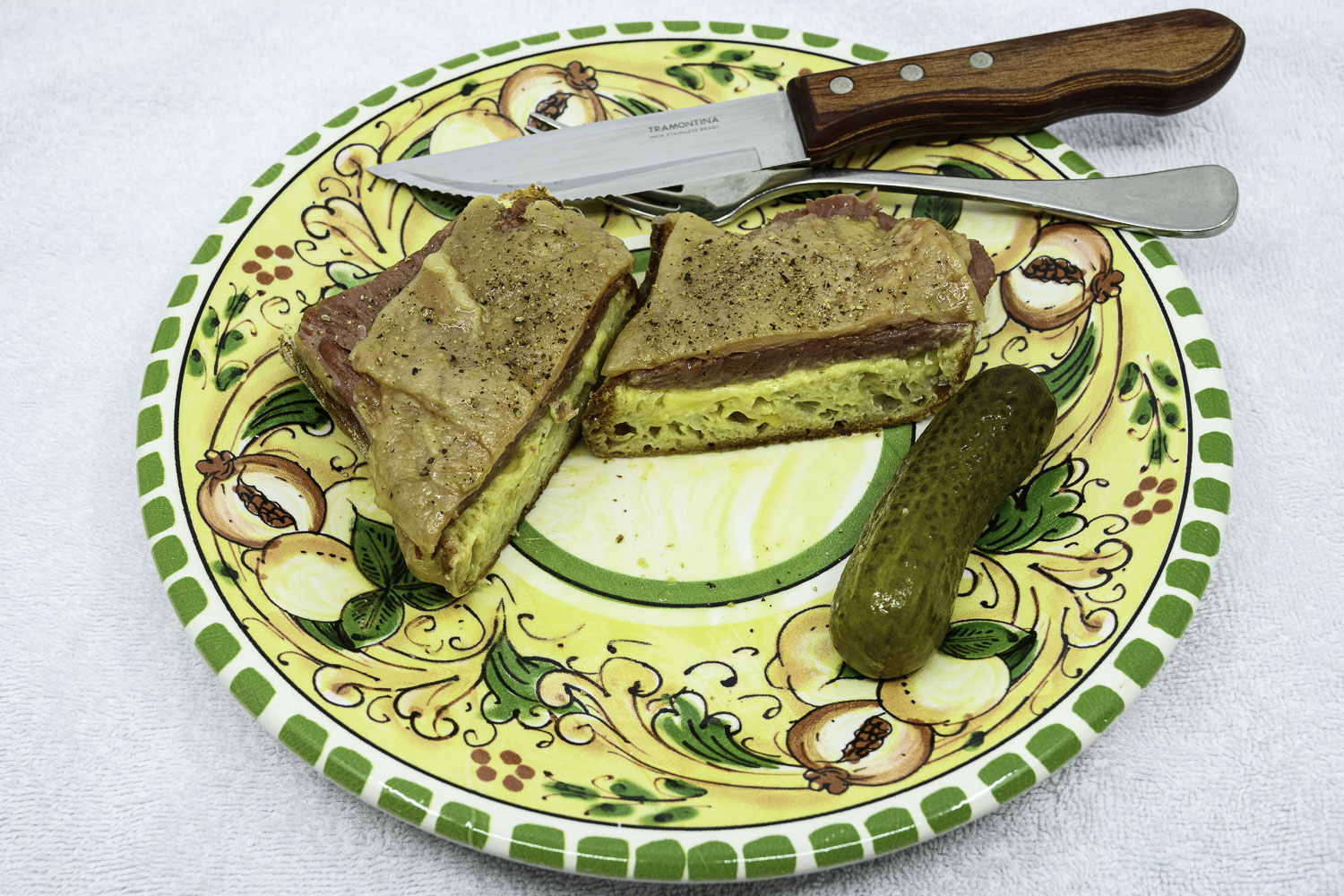
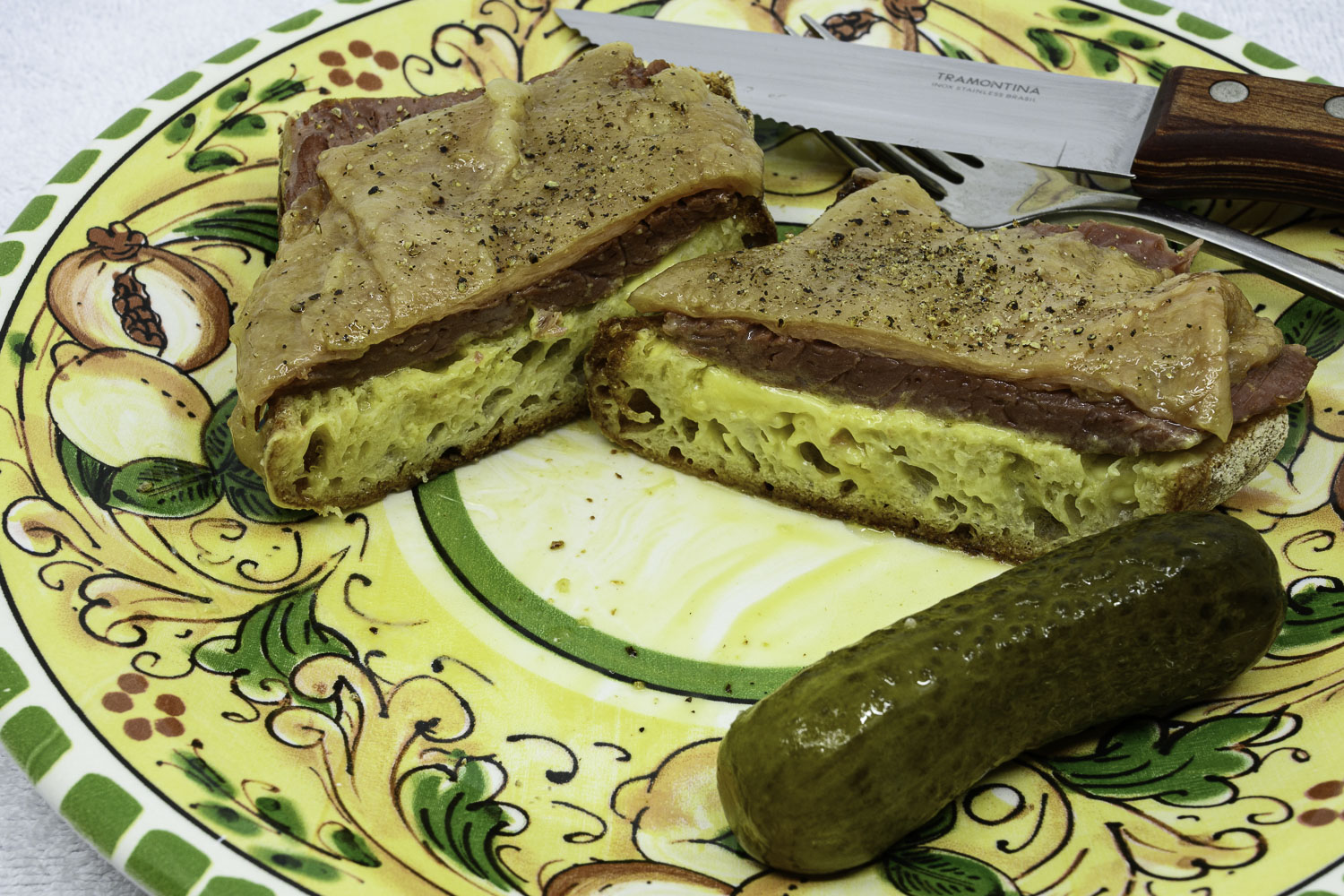
- The fat layer makes for a fantastic sandwich on lavishly buttered white sourdough bread[viii]. There’s nothing like the sensation of the beef fat dripping down your hands and forearms as you slowly take bites from the sandwich and masticate the unctuous beef fat. The only reaction you can have is to smile.
- Place the beef into a container and seal it. Refrigerate the meat.
- Cut the cold meat into lunch-sized portions.
- Dice a portion of cold corned beef and place the diced meat in a frypan.
- Add beef broth or water to the frypan and bring it to a simmer until the meat fibres start to separate and soften.
- After the water has mostly evaporated, turn off the heat, add a dash of cream and stir.
Beef silverside fat sandwich.
Ingredients
- Cooked corned beef.
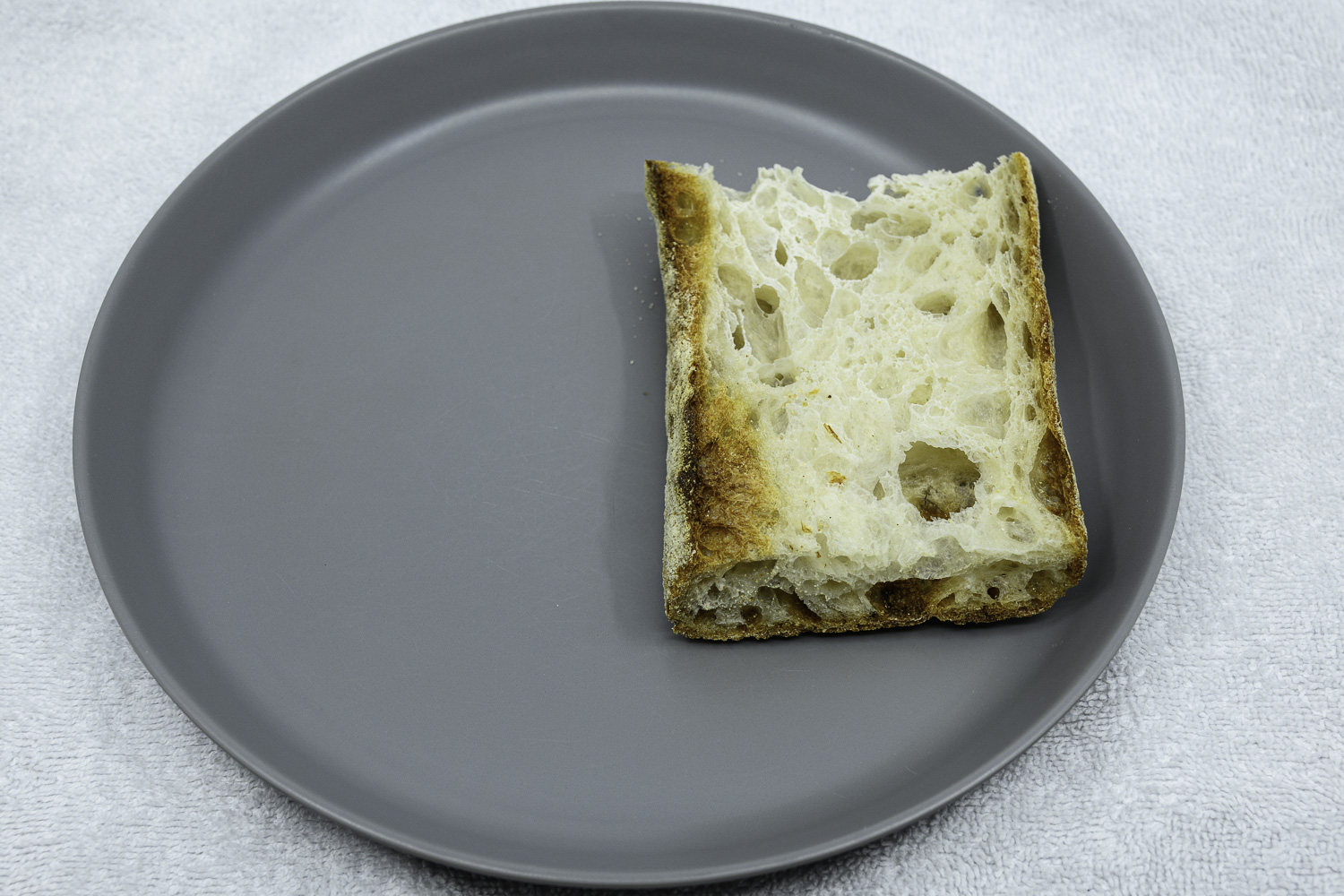
- Frozen sourdough baguette — thawed.
- Grass-fed butter
- Freshly cracked pepper corns
- Dijon mustard
Instructions
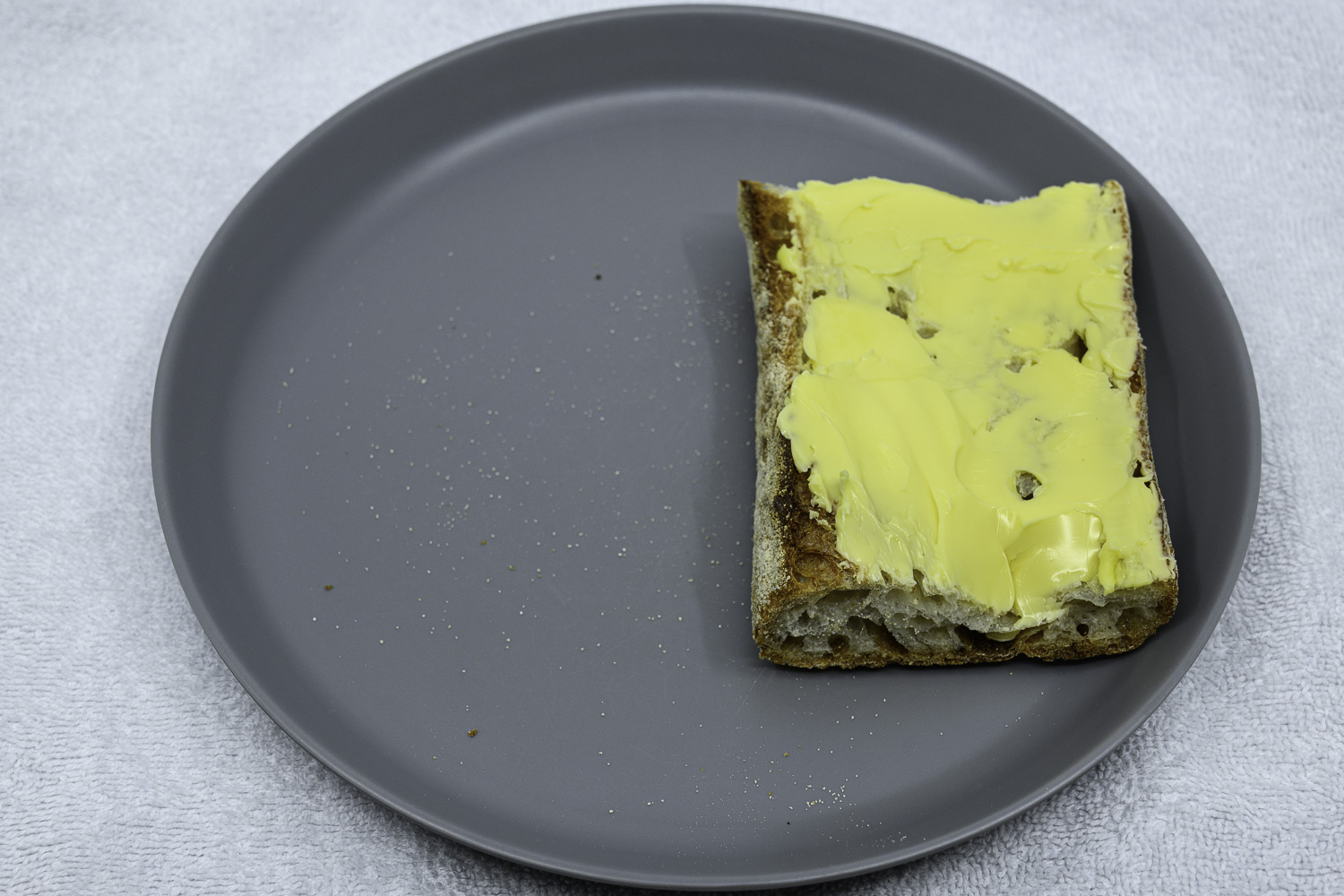
- Trowel butter onto a piece of thawed sourdough bread. Freezing sourdough bread develops resistant starch.
- Add dollops of Dijon mustard.
- Apply a layer of warm fat.
- Season with freshly cracked peppercorns.
- Cover your lap with a large dish drying cloth and wear a bib.
- Roll up your sleeves and get stuck into the sandwich.
- Rejoice in the feeling of the fat running down your chin and down your forearms.
Photographs[ix]
These are a gallery of photographs. Select one image and scroll through the rest.





Thoughts on the meal
I enjoy corned beef hash[x]; it’s a dish I grew up with. Among many other meals, my dad would often make it. He learned to prepare it during his boyhood in the South Pacific during World War II, where fresh meat was hard to come by. The only options available were tinned meat or local game.
A piece of corned silverside is an affordable option for bulk meat in lunches.
This piece of beef cost approximately $AUD20, or $AUD10/kilogram. If I can get four meals (possibly six meals), it will work out to about $AUD5/meal.
The first meal (the fat sandwich) for this piece of beef brought back some great memories when Mum would make corned beef and I’d get the fat and make a sandwich. I savoured every bite of this open sandwich and enjoyed the contrasting flavours of the pickle.
Questions
- Do you like corned beef?
- Do you like fat sandwiches?
- How would you make a fat sandwich?
Stay tuned
I’ll add photographs of how I use the rest of the beef during the week.
Endnotesꜜ
[i] The modern clinical term is “clinical adiposity.” I prefer the term fat because it is universally understood.
[ii] The term corned comes from the old English word corn, which referred to small, hard particles—not just cereal grains. In the case of corned beef, it refers to the large-grained rock salt (sometimes called “corns” of salt) used in the curing process.
[iii] Corned beef is a type of salt-cured beef, traditionally made from brisket.
[iv] Canned corned beef is a shelf-stable meat product made primarily from beef, but it includes ingredients to preserve flavour and texture. The ingredients include sodium nitrite, added salt, and a small amount of sugar (which is disappointing). Cooking can convert the nitrites to nitrates.
[v] “Spud” is a casual or slang term for a potato. For example, “baked spud” or “mashed spuds.” It is used in many English-speaking countries.
[vi] Beef silverside is a lean, boneless cut of beef taken from the hindquarter of the cow, specifically from the top portion of the round primal, just above the leg muscles. It’s known for its coarse grain and minimal marbling, which makes it a budget-friendly and versatile option in many cuisines.
[vii] Juice released from cooked meat.
[viii] Bread is high carbohydrate and not part of a low carbohydrate diet.
[ix] A note about the images used in this post. The featured image and a couple of other images were generated with Microsoft Copilot and ChatGPT. I’m conscious that there are some bloggers and readers who oppose the use of large language models for generating content. I’m comfortable with using large language models to help with content on YummyLummy.com
[x] Corned beef hash is a hearty, savoury dish made by combining chopped or shredded corned beef with diced potatoes and onions, then frying the mixture until it’s golden and crispy. It’s a classic comfort food with roots in frugal cooking—originally designed to use up leftovers, especially from a corned beef dinner.


Leave a reply to Corned beef hash – Yummy Lummy Cancel reply